
2 Corinthians 12:1 to 10 · Passage · Perseverance
Paul's Thorn
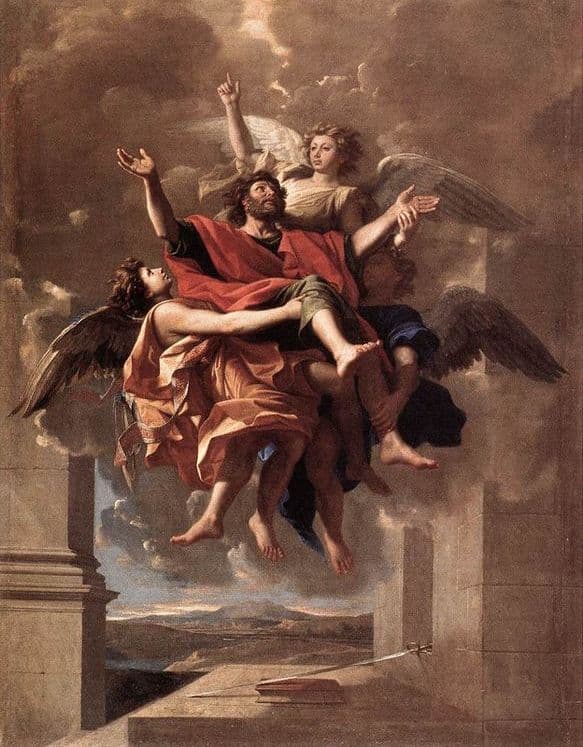
In 2 Corinthians 12:1 to 10 Paul tells of a vision he was given and of the thorn that came after it.
Paul learned to boast in what he had asked God to take away.
But He said to me, “My grace is sufficient for you, for My power is perfected in weakness.” Therefore I will boast all the more gladly in my weaknesses, so that the power of Christ may rest on me.
- The passage
- 2 Corinthians 12:1 to 10
- Book
- 2 Corinthians
- When
- about AD 55 to 56 (probable)
- Hold in memory
- 2 Corinthians 12:9
Summary
Paul's thorn teaches perseverance as endurance under an affliction that God did not remove. Paul says it was given to keep him from becoming conceited after the revelations he received. The Lord answered his pleading with grace, and the thorn stayed with him. The passage shows a believer who endures by trusting the strength that God gives.
- Paul wrote these verses while answering rivals at Corinth whom he called "super-apostles" (2 Corinthians 12:11).
- He dates the vision fourteen years before the letter and says twice that only God knows whether he was in the body (2 Corinthians 12:2 to 3).
- From Irenaeus and Tertullian onward, readers have taken the thorn as persecution, as bodily pain or illness, or as temptation, and the text does not say which it was.
The Thorn in the Flesh
Paul names the thorn and its purpose in one verse.
The passage is Paul's account of a weakness given to him after a vision. It belongs to the value of perseverance because Paul learned to carry the weakness and kept to his work under it.
The question this study answers is why the Lord answered Paul's prayer with grace and left the thorn in place. It gives the passage in six parts, the vision that came first and the readings of the thorn with their holders. It also gives four Greek words and a chain of six texts in which God's strength shows in human weakness.
Just before this passage Paul listed his labours, imprisonments, beatings and dangers (2 Corinthians 11:23 to 33).
or because of these surpassingly great revelations. So to keep me from becoming conceited, I was given a thorn in my flesh, a messenger of Satan, to torment me.The thorn named in this verse is what Paul prays about in the verses that follow.
In the Greek the purpose clause hina me hyperairomai, so that I may not become conceited, stands at the start of the sentence and again at its end.
The thorn is called angelos satana, a messenger of Satan. Its work is kolaphize, a present verb that Strong's entry G2852 glosses as to rap with the fist, so the buffeting goes on.
The life of the apostle, from Tarsus to Rome, is told in a study of its own.
The Passage in Six Parts
Each part carries its own Berean words.
The passage moves in six parts, from a boast Paul is forced into to a boast in his weaknesses.
| Part | Verses | The Berean words | What it does |
|---|---|---|---|
| The boast forced | 2 Corinthians 12:1 | "I must go on boasting" | Paul turns to visions because the dispute at Corinth presses him to boast. |
| The man caught up | 2 Corinthians 12:2 to 4 | "a man in Christ" | A man in Christ is taken up and hears what he may not tell. |
| Boasting only in weakness | 2 Corinthians 12:5 to 6 | "except in my weaknesses" | Paul will boast of the man and refuses to boast of himself. |
| The thorn and its purpose | 2 Corinthians 12:7 | "a messenger of Satan" | The thorn is given to keep Paul from conceit after the revelations. |
| Three prayers | 2 Corinthians 12:8 | "Three times I pleaded with the Lord" | Paul asks for the thorn to be taken away. |
| The answer and the new boast | 2 Corinthians 12:9 to 10 | "My grace is sufficient for you" | The Lord leaves the thorn and gives grace, and Paul delights in weaknesses for Christ's sake. |
What Came Before the Thorn
Paul's account of being caught up comes first and sets the danger the thorn answers.
I know a man in Christ who fourteen years ago was caught up to the third heaven. Whether it was in the body or out of it I do not know, but God knows.The vision is the cause the next verses give for the thorn.
Paul names no year for the vision. Counting back fourteen years from about AD 55 to 56, the date usually given to the letter, places it in the early AD 40s, and that placing is an inference.
Paul calls the place the third heaven in 2 Corinthians 12:2 and Paradise in 2 Corinthians 12:4.
The Greek word paradeisos stands three times in the New Testament. Jesus told the dying thief, "today you will be with Me in Paradise" (Luke 23:43), and the risen Christ promised "the tree of life in the Paradise of God" (Revelation 2:7).
Paul tells the vision in the third person, yet in 2 Corinthians 12:7 he names the revelations as his own.
What Was the Thorn?
The text gives the thorn's purpose, and its readers have named the thorn itself in six ways.
In older Greek the word for thorn ranges from a splinter to a stake, and that range is one reason the thorn is read in more than one way.
Insults and persecutionsJohn Chrysostom
John Chrysostom, in his Homily 26 on 2 Corinthians, read Paul's list in 2 Corinthians 12:10 as naming the weakness. He wrote that in naming the infirmity Paul spoke "not of fevers, nor any return of that sort, nor any other bodily ailment, but of 'injuries, persecutions, distresses.'"
The objection: Paul sets the thorn in his flesh, and Tertullian reports an early tradition of bodily pain.
Pain in the ear or headTertullian; J. B. Lightfoot
Tertullian wrote in On Modesty that Paul's elation was restrained "by means (as they say) of pain in the ear or head." Lightfoot called this report "the earliest tradition of this infirmity."
The objection: Tertullian passes on what others said, and he gives no source for it.
A malady like epilepsy, and the eye viewJ. B. Lightfoot
J. B. Lightfoot weighed that tradition in St. Paul's Epistle to the Galatians, second edition (1870). Unless it is accepted, he wrote, "we should be tempted by the closeness of the parallel to conjecture that it was of the nature of epilepsy."
He reported that the view of "a complaint in the eyes" had "found the largest number of adherents," and he held that it "does not, I think, sufficiently recognize the conditions of the problem."
The eye view is drawn from Paul's words to the Galatians, "you would have torn out your eyes and given them to me" (Galatians 4:15).
The objection: Lightfoot calls his own reading a conjecture, and 2 Corinthians 12 names no illness.
Chronic malariaW. M. Ramsay
W. M. Ramsay wrote in St. Paul the Traveller and the Roman Citizen (1895), "I have suggested that this malady was a species of chronic malaria fever."
The objection: Chrysostom found the weakness in the insults and persecutions of 2 Corinthians 12:10, which a fever does not explain.
Temptation to sinMatthew Henry
Matthew Henry wrote on 2 Corinthians 12:7, "Temptations to sin are most grievous thorns; they are messengers of Satan, to buffet us."
The objection: Paul delights in his weaknesses for the sake of Christ (2 Corinthians 12:10), and a believer cannot delight in a temptation to sin.
An infirmity given against prideIrenaeus
Irenaeus, in Against Heresies, book V, named the purpose and left the nature open. He wrote that man "has been delivered over to his own infirmity, lest, being uplifted, he might fall away from the truth."
The objection: the reading explains why the thorn was given and leaves the question of what it was unanswered.
What the Text Leaves Unsaid
The passage names a purpose, a prayer and an answer, and it leaves three questions open.
The verb edothe, was given, is passive, and Paul does not name the one who gave the thorn.
Paul does not say how long the thorn stayed, and the passage closes with him boasting in weaknesses he still carries.
The answer was given to one man for a stated reason. What Scripture teaches about healing in general is set out in its own study.
The Answer That Left the Thorn
The Lord's reply is one sentence, and Paul's response closes the passage.
Three times I pleaded with the Lord to take it away from me.The verse records the prayer, and the Lord's words in the next verse are the reply to it.
In the Greek the answer opens with arkei, suffices, a present verb. The clause on power ends with teleitai, which means is finished and the Berean renders is perfected.
That is why, for the sake of Christ, I delight in weaknesses, in insults, in hardships, in persecutions, in difficulties. For when I am weak, then I am strong.Its list of hardships shows what Paul bore for Christ once the thorn had stayed.
Skeuos, a vessel
23 uses in the canon
The noun skeuos (G4632) means a vessel or implement. The Lord used it of Paul, "My chosen instrument" (Acts 9:15), and Paul used it for the "jars of clay" that hold the treasure (2 Corinthians 4:7).
Skolops, a thorn
1 use in the canon
The noun skolops (G4647) stands only once in the New Testament, in "a thorn in my flesh." Strong's entry glosses it as a point or prickle, figuratively a bodily annoyance or disability.
Moria, foolishness
5 uses in the canon
The noun moria (G3472) means foolishness. Paul uses it of "the message of the cross," which seems foolish to those who are perishing.
Astheneia, weakness
24 uses in the canon
The noun astheneia (G769) means feebleness of mind or body, and by implication a malady. It stands twice in 2 Corinthians 12:9, and in Galatians 4:13 Paul says he first preached to the Galatians "because of an illness."
How the Passage Has Been Taught
A bishop of the third century and a commentator of the eighteenth read the Lord's answer.
died 258 · Cyprian
Cyprian of Carthage applied the answer of 2 Corinthians 12:9 to every believer under weakness in his treatise On the Mortality.
“When some infirmity and weakness and desolation attacks us, then our power is made perfect, and our faith is crowned if it has stood firm through temptation.”
Cyprian · Treatise VII. On the Mortality 12 · on 2 Corinthians 12:9Patristic
1662 to 1714 · Matthew Henry
Matthew Henry set Paul's three prayers beside the three prayers of Christ.
Read the page on Matthew Henry
“Christ himself prayed to his Father thrice. As troubles are sent to teach us to pray, so they are continued to teach us to continue instant in prayer. We have an account of the answer given to the apostle's prayer, that, although the trouble was not removed, yet an equivalent should be granted: My grace is sufficient for thee.”
Matthew Henry · Commentary on the Whole Bible · on 2 Corinthians 12:8Puritan
Books to Read Next
Two books of the nineteenth century weigh the bodily readings, and a sermon of 1872 preaches the passage.
Charles Spurgeon preached on 2 Corinthians 12:7 to 9 in his sermon No. 1084, "The Thorn in the Flesh" (1872), printed in The Metropolitan Tabernacle Pulpit.
St. Paul's Epistle to the Galatians
J. B. Lightfoot · 1870
Its dissertation on Paul's infirmity in the flesh weighs the readings of the thorn held in his day.
Read it at the Internet ArchiveSt. Paul the Traveller and the Roman Citizen
W. M. Ramsay · 1895
Its fifth chapter sets out his suggestion that the thorn was chronic malaria.
Read it at the Internet ArchiveThe Pattern Traced Upward
Six texts show God's power where human strength runs out.
The six texts are arranged by depth rather than by date, from the message of the cross to Paul's own boast in weakness. Judges and 1 Samuel were written long before Paul's letters.
For the message of the cross is foolishness to those who are perishing, but to us who are being saved it is the power of God.The pattern begins in the gospel itself, where a crucified Messiah is the power of God.
But God chose the foolish things of the world to shame the wise; God chose the weak things of the world to shame the strong.Paul reads the humble members of the church at Corinth as the same choice of God at work.
Then the LORD said to Gideon, “You have too many people for Me to deliver Midian into their hands, lest Israel glorify themselves over Me, saying, ‘My own hand has saved me.’The LORD cut Gideon's army to three hundred men before the battle, so that Israel could credit the victory only to Him.
And all those assembled here will know that it is not by sword or spear that the LORD saves; for the battle is the LORD’s, and He will give all of you into our hands.”David faced Goliath with a sling and named the LORD as the One who would win the fight.
Now we have this treasure in jars of clay to show that this surpassingly great power is from God and not from us.Paul applies the pattern to his own ministry, where the gospel is the treasure and its messenger is the jar.
If I must boast, I will boast of the things that show my weakness.Paul ends his list of hardships with a boast in weakness, and the thorn of the next chapter is his chief example.
Paul's thorn stands at the top of the chain because there the pattern is lived by one man, in his own body and his own prayers.
Judges 7:2, 1 Samuel 17:47, 2 Corinthians 4:7, 2 Corinthians 11:30
Sources
Scripture is the Berean Standard Bible.
- STEP Bible, Translators Amalgamated Greek New Testament, the tagged Greek text (Tyndale House, Cambridge), CC BY 4.0.
- James Strong, A Concise Dictionary of the Words in the Greek Testament (1890), with the site's counts of use.
- John Chrysostom, Homilies on 2 Corinthians, Homily 26, on 2 Corinthians 12:10, Nicene and Post-Nicene Fathers, first series, volume 12.
- Tertullian, On Modesty, chapter 13, Ante-Nicene Fathers, volume 4.
- Irenaeus, Against Heresies, book V, on 2 Corinthians 12:7, Ante-Nicene Fathers, volume 1.
- Cyprian of Carthage, Treatise VII, On the Mortality, 12, Ante-Nicene Fathers, volume 5.
- Matthew Henry, Commentary on the Whole Bible (1710), on 2 Corinthians 12:7 and 2 Corinthians 12:8.
- J. B. Lightfoot, St. Paul's Epistle to the Galatians, second edition (1870), dissertation "St. Paul's Infirmity in the Flesh".
- W. M. Ramsay, St. Paul the Traveller and the Roman Citizen (1895), chapter V, section 2, "The 'thorn in the flesh'".
- Charles Spurgeon, The Metropolitan Tabernacle Pulpit, Sermon No. 1084, "The Thorn in the Flesh" (1872)
Keep Studying
Studies1
People and groups9
Show the next 3 titles
Places1