
Judges 7:2
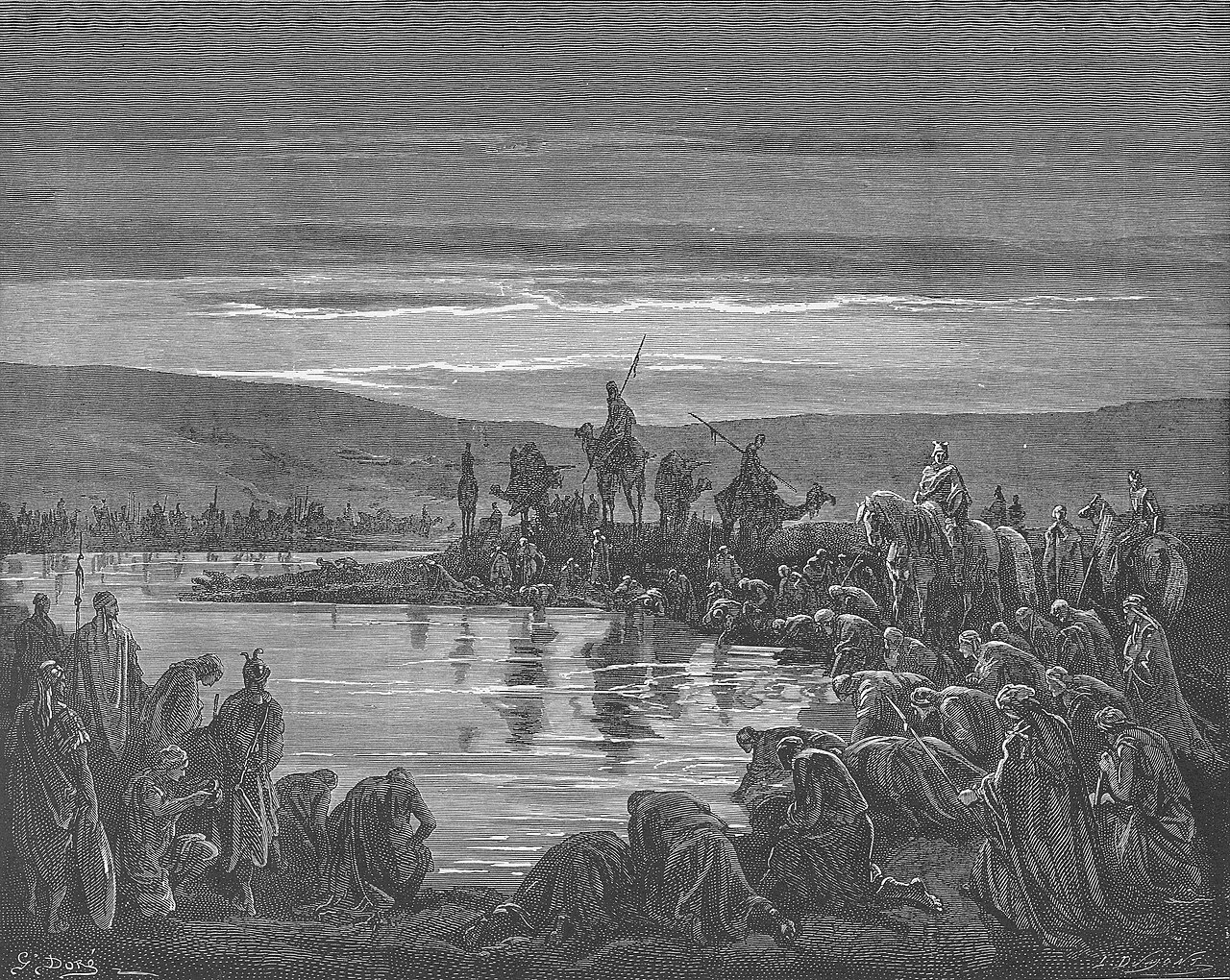
in Judges 7Then the LORD said to Gideon, “You have too many people for Me to deliver Midian into their hands, lest Israel glorify themselves over Me, saying, ‘My own hand has saved me.’
BSB
The same verse in ASV and KJV ▾
ASV
And Jehovah said unto Gideon, The people that are with thee are too many for me to give the Midianites into their hand, lest Israel vaunt themselves against me, saying, Mine own hand hath saved me.
KJV
And the Lord said unto Gideon, The people that are with thee are too many for me to give the Midianites into their hands, lest Israel vaunt themselves against me, saying, Mine own hand hath saved me.
⋯
This verse in Judges 7
Commentary
8 notes on this verseThe people that are with thee are too many - Had he led up a numerous host against his enemies, the excellence of the power by which they were discomfited might have appeared to be of man and not of God. By the manner in which this whole transaction was conducted, both the Israelites and Midianites must see that the thing was of God. This would inspire the Israelites with confidence, and the Midianites with fear.
This site's exposition
camped beside the spring of Harod
on Judges 7:1-3
The name Jerubbaal, given at 6:32 when Gideon pulled down his father's altar, sends Israel's leader into the field under a name that argues with Baal. Harod means trembling, and verse 3 sends home the "fearful and trembling", "twenty-two thousand of them". The proclamation carries out Deuteronomy 20:8, where the law told the officers to send the fearful home before a battle.
This site's exposition
My own hand has saved me
Adam Clarke says the reduction speaks to both armies. Israel would gain confidence and Midian would learn fear, since both would see that the victory came from God. The danger the LORD names is a boast made against himself.
The record, by era
The Church Fathers1 voice
Against the Midianites, also, who, as the book of Judges relates, had filled all places like locusts, Gideon was ordered to lead a few men into battle. It was not that he did not have many in his army, but that he was forbidden to …
The Puritans and the Awakening3 voices
Too many - For my purpose; which is, so to deliver Israel, that it may appear to be my own act, that so I may have all the glory, and they may be the more strongly obliged to serve me. This may help us to understand those providences, which sometimes seem to weaken the church of Christ. Its friends are too many, too mighty, too wise, for God to work deliverance by.
And the Lord said unto Gideon, the people that are with thee are too many,....
This is the reason here given by him who knows the pride that is in men's hearts: Lest Israel vaunt themselves against me. Justly were those denied the honour of the success. My own hand hath saved me is a word that must never come out of the mouth of such as shall be saved.
The Nineteenth Century1 voice
A commentator
Jamieson, Fausset & Brown1802–1910
Commentary Critical and Explanatory on the Whole Bible (1871)
proposed
the Lord said unto Gideon, The people . . . are too many--Although the Israelitish army mustered only thirty-two thousand (or one-sixth of the Midianitish host), the number was too great, for it was the Lord's purpose to teach Israel a memorable lesson of dependence on Him.
quarantine:debris (2026-07-29) — starts-lowercase
How the passage was read
What the Jewish commentators add
On the verses either side of this one
Of signal valley ridge. Overlooking the plain. This is Targum Yonasan’s interpretation. The ridge overlooked the plain, and was thus suitable as an observation post. הַמּוֹרֶה connotes instruction, observation, as in "instructs by gesturing." 2 Mishlei,:13. From there they would observe, and then signal instructions to the valley.
This section is reception history: how the passage was read and kept in the Jewish tradition. Where a reading parts from an essential of the Christian faith, the section says so at that point.
Texts and citation data: Sefaria; each excerpt follows its version’s licence. 5 further sources are cited on this chapter that carry no English text this site may quote or only restate the verse.
The words behind it
20 Hebrew wordsEvery Hebrew word of this verse in the order it stands, with what it means and the door to its own study. The last column counts the times a word stands in the whole Bible: the rarer the word, the more the places it appears belong together.
| Hebrew | Sound | Meaning | Word study | In the Bible |
|---|---|---|---|---|
| וַיֹּ֤אמֶר | vaiyomer | and he said | H559 → | 5305 times |
| יְהוָה֙ | yahweh | Yahweh | H3068 → | 6520 times |
| אֶל־ | ʾel- | to | H413 → | 5510 times |
| גִּדְע֔וֹן | gidon | Gideon | H1439 → | 39 times |
| רַ֗ב | rav | [is too] numerous | H7227 → | 454 times |
| הָעָם֙ | haam | the people | H5971 → | 1873 times |
| אֲשֶׁ֣ר | ʾasher | which | H834 → | 5497 times |
| אִתָּ֔ךְ | ʾitakh | [is] with you | H854 → | 929 times |
| מִתִּתִּ֥י | mititi | than to give I | H5414 → | 2011 times |
| אֶת־ | ʾet- | <obj.> | H853 → | 10935 times |
| מִדְיָ֖ן | midyan | Midian | H4080 → | 59 times |
| בְּיָדָ֑ם | beyadam | in hand their | H3027 → | 1618 times |
| פֶּן־ | pen- | lest | H6435 → | 133 times |
| יִתְפָּאֵ֨ר | yitpaer | it should glorify itself | H6286 → | |
| עָלַ֤י | ʾalai | over me | H5921 → | 5755 times |
| יִשְׂרָאֵל֙ | yisrael | Israel | H3478 → | 2507 times |
| לֵאמֹ֔ר | lemor | <to> saying | H559 → | 5305 times |
| יָדִ֖י | yadi | hand my | H3027 → | 1618 times |
| הוֹשִׁ֥יעָה | hoshiah | it has delivered | H3467 → | 206 times |
| לִּֽי׃ | li | <to> <the> me |
וַיֹּ֤אמֶרand he said
vaiyomerH559 →5305 times
יְהוָה֙Yahweh
yahwehH3068 →6520 times
אֶל־to
ʾel-H413 →5510 times
גִּדְע֔וֹןGideon
gidonH1439 →39 times
רַ֗ב[is too] numerous
ravH7227 →454 times
הָעָם֙the people
haamH5971 →1873 times
אֲשֶׁ֣רwhich
ʾasherH834 →5497 times
אִתָּ֔ךְ[is] with you
ʾitakhH854 →929 times
מִתִּתִּ֥יthan to give I
mititiH5414 →2011 times
אֶת־<obj.>
ʾet-H853 →10935 times
מִדְיָ֖ןMidian
midyanH4080 →59 times
בְּיָדָ֑םin hand their
beyadamH3027 →1618 times
פֶּן־lest
pen-H6435 →133 times
יִתְפָּאֵ֨רit should glorify itself
yitpaerH6286 →
עָלַ֤יover me
ʾalaiH5921 →5755 times
יִשְׂרָאֵל֙Israel
yisraelH3478 →2507 times
לֵאמֹ֔ר<to> saying
lemorH559 →5305 times
יָדִ֖יhand my
yadiH3027 →1618 times
הוֹשִׁ֥יעָהit has delivered
hoshiahH3467 →206 times
לִּֽי׃<to> <the> me
li
A shaded row is a word that stands 400 times or fewer in the Bible.
The walk
8 stopsEach card is a verse this one points to, and under it the verses that one points to in turn. Where several paths arrive at the same place, that place is listed first: the text keeps returning to it.
Through
Zechariah 4:6So he said to me, “This is the word of the LORD to Zerubbabel: Not by might nor by power, but by My Spirit, says the LORD of Hosts.
it leads to
- 2 Chronicles 32:7–8
“Be strong and courageous! Do not be afraid or discouraged before the king of Assyria and the vast army with him, for there is a greater One with us than with him.
- 2 Corinthians 10:4–5
The weapons of our warfare are not the weapons of the world. Instead, they have divine power to demolish strongholds.
- 1 Corinthians 2:4–5
My message and my preaching were not with persuasive words of wisdom, but with a demonstration of the Spirit’s power,
- Psalms 33:16
No king is saved by his vast army; no warrior is delivered by his great strength.
- Isaiah 11:2–4
The Spirit of the LORD will rest on Him—the Spirit of wisdom and understanding, the Spirit of counsel and strength, the Spirit of knowledge and fear of the LORD.
- 2 Chronicles 32:7–8
Through
2 Corinthians 4:7Now we have this treasure in jars of clay to show that this surpassingly great power is from God and not from us.
it leads to
- 2 Corinthians 5:1
Now we know that if the earthly tent we live in is dismantled, we have a building from God, an eternal house in heaven, not built by human hands.
- 2 Corinthians 3:5–6
Not that we are competent in ourselves to claim that anything comes from us, but our competence comes from God.
- Ephesians 2:8–9
For it is by grace you have been saved through faith, and this not from yourselves; it is the gift of God,
- 2 Corinthians 5:1
Where this verse is studied
On this page
About Judges
Who and where
1 name in this verse with a page on the site.
This page draws on Adam Clarke, Commentary on the Bible; Albert Barnes, Notes on the Old Testament; Jamieson, Fausset & Brown, Commentary Critical and Explanatory on the Whole Bible; John Gill, Exposition of the Old Testament (1748-1763); John Wesley, Explanatory Notes upon the Old Testament; Keil and Delitzsch, Biblical Commentary on the Old Testament: Joshua, Judges, Ruth; Matthew Henry, Commentary on the Whole Bible and Salvian the Presbyter, THE GOVERNANCE OF GOD 7.8-9.