
Place
Gaza
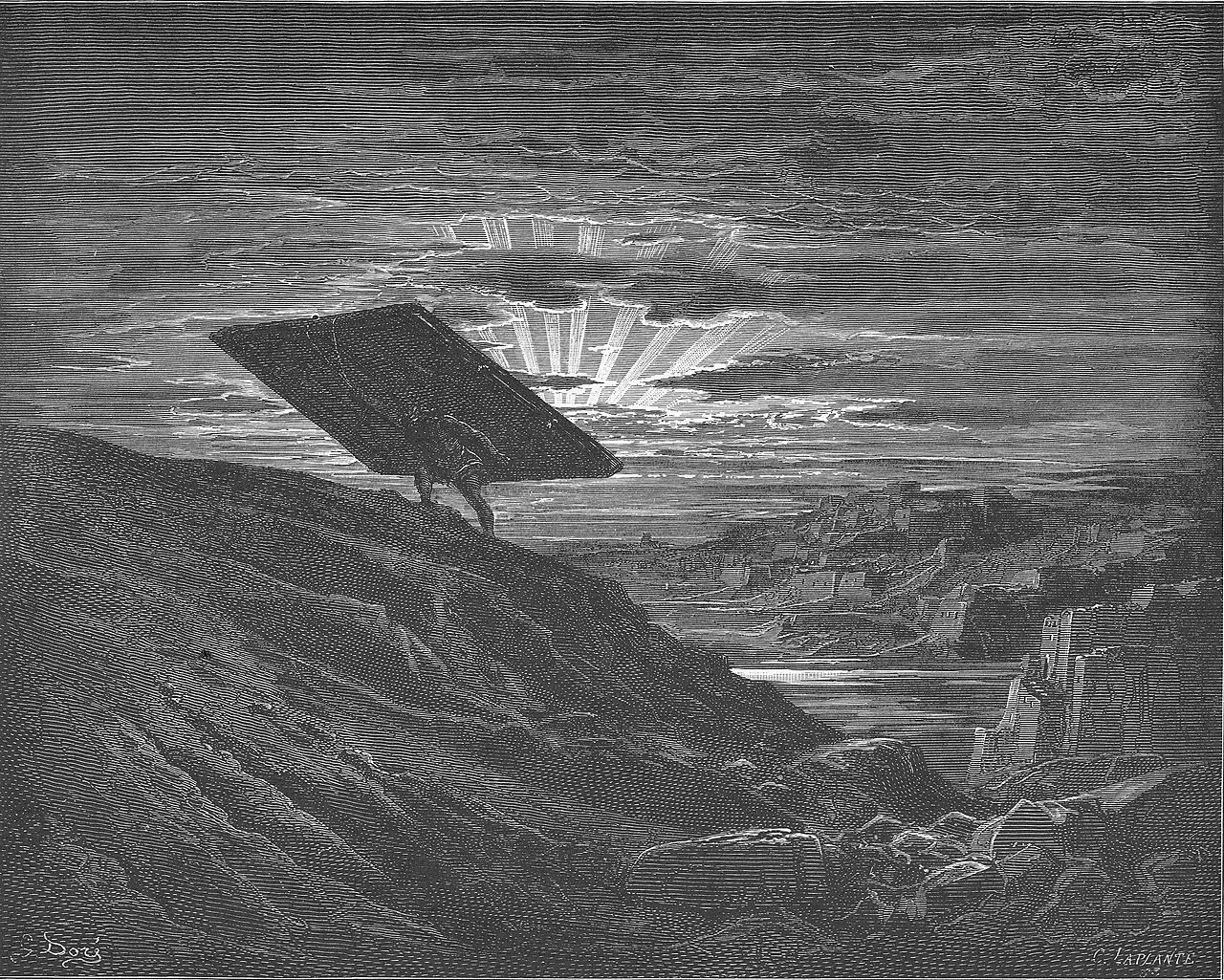
Gustave Doré, La Sainte Bible (Tours: Alfred Mame et fils, 1866). Public domain.
Summary
Chief Philistine city of the coastal road, judged in Amos 1:6-8 and Zephaniah 2:4; scene of Samson's end (Judg 16).
- Gaza was the southernmost of the five Philistine cities and marks the edge of Canaan's border already in Genesis 10:19.
- Samson died in Gaza, pulling down the temple of Dagon on the Philistine lords who had blinded him.
- Jeremiah, Amos, Zephaniah and Zechariah all pronounce judgment on Gaza, though not always for the same charge.
- Solomon's kingdom reached "to Gaza" at its widest extent, and Hezekiah later struck the Philistines as far as Gaza.
- Philip met the Ethiopian eunuch on the desert road to Gaza and told him the good news about Jesus.
On this page
In Scripture
- Verses
- 21
- Books
- 12
Near Gaza
- Lachish39 km · 24 mi E
- Ziklag45 km · 28 mi E
- Beersheba50 km · 31 mi SE
- The Valley of Elah53 km · 33 mi E
- Mamre63 km · 39 mi E
- Hebron63 km · 39 mi E
Straight-line distances, computed from the gazetteer coordinates.
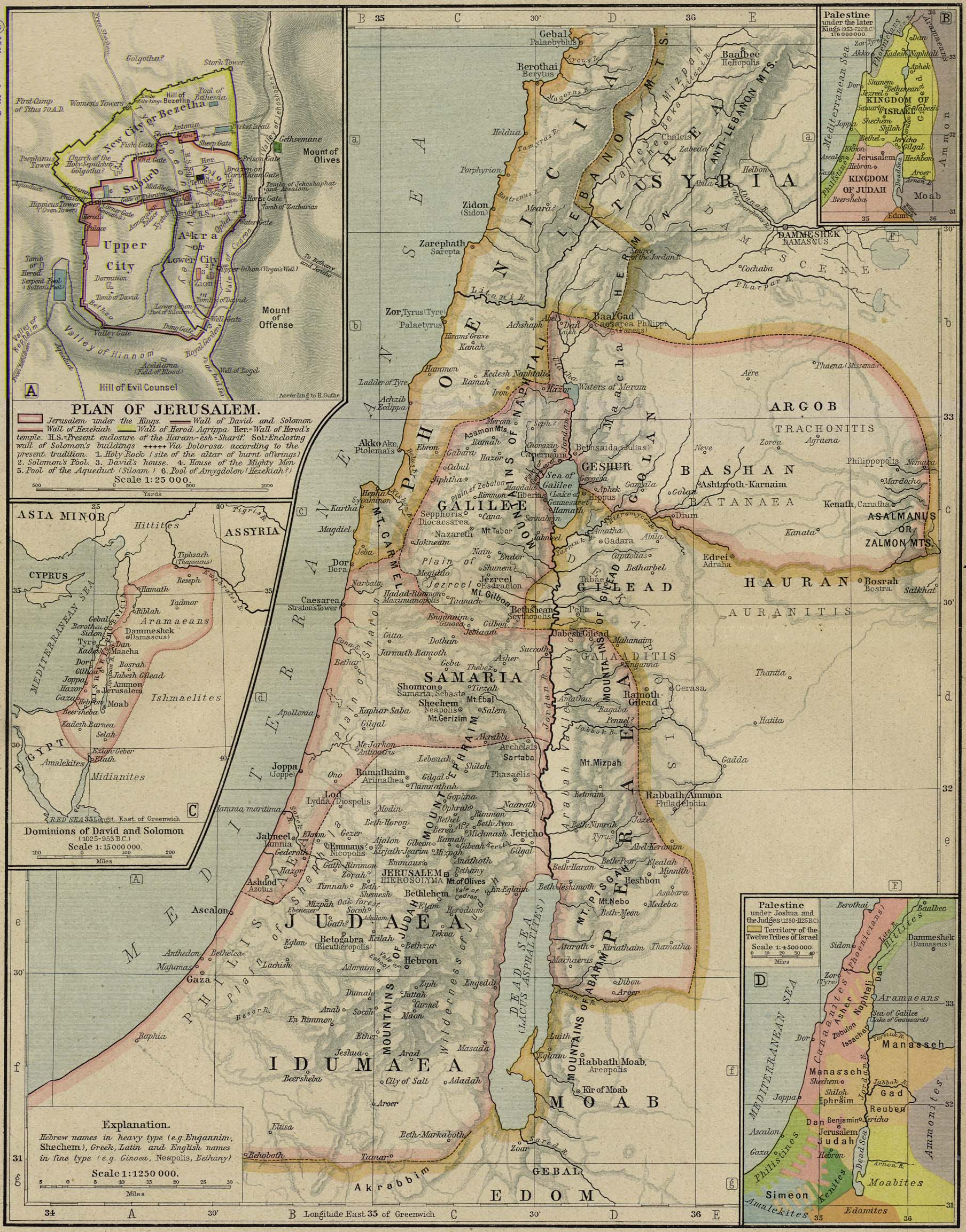
Where it is
the country around it
- Coordinates
- 31.5248° N, 34.4334° Efind it on the Atlas →
- Region
- Philistine coast
- Kind of place
- City
1 place the record names with Gaza, the farthest 79 km away
- Located: the gazetteer fixes one site
- Placed: the point stands for an area, or is rounded
- A dashed line ends at a place the gazetteer does not fix
Not located: Egypt, Canaan, Edom. The gazetteer records no location for them, so they are not marked.
Why Gaza matters
Samson's end at Gaza
Judges 16, in the order it happens
Read Judges 16, in the order it happens
- Samson goes to GazaJudges 16:1One day Samson went to Gaza, where he saw a prostitute and went in to spend the night with her.
- Samson carries off the city gatesJudges 16:3But Samson lay there only until midnight, when he got up, took hold of the doors of the city gate and both gateposts, and pulled them out, bar and all. Then he put them on his shoulders and took them to the top of the mountain overlooking Hebron.
- Samson reveals the secret of his strengthJudges 16:17Samson told her all that was in his heart: “My hair has never been cut, because I have been a Nazirite to God from my mother’s womb. If I am shaved, my strength will leave me, and I will become as weak as any other man.”
- The Philistines blind Samson and bring him to GazaJudges 16:21Then the Philistines seized him, gouged out his eyes, and brought him down to Gaza, where he was bound with bronze shackles and forced to grind grain in the prison.
- The lords gather to sacrifice to DagonJudges 16:23Now the lords of the Philistines gathered together to offer a great sacrifice to their god Dagon. They rejoiced and said, “Our god has delivered Samson our enemy into our hands.”
- Samson's last prayerJudges 16:28Then Samson called out to the LORD: “O Lord GOD, please remember me. Strengthen me, O God, just once more, so that with one vengeful blow I may pay back the Philistines for my two eyes.”
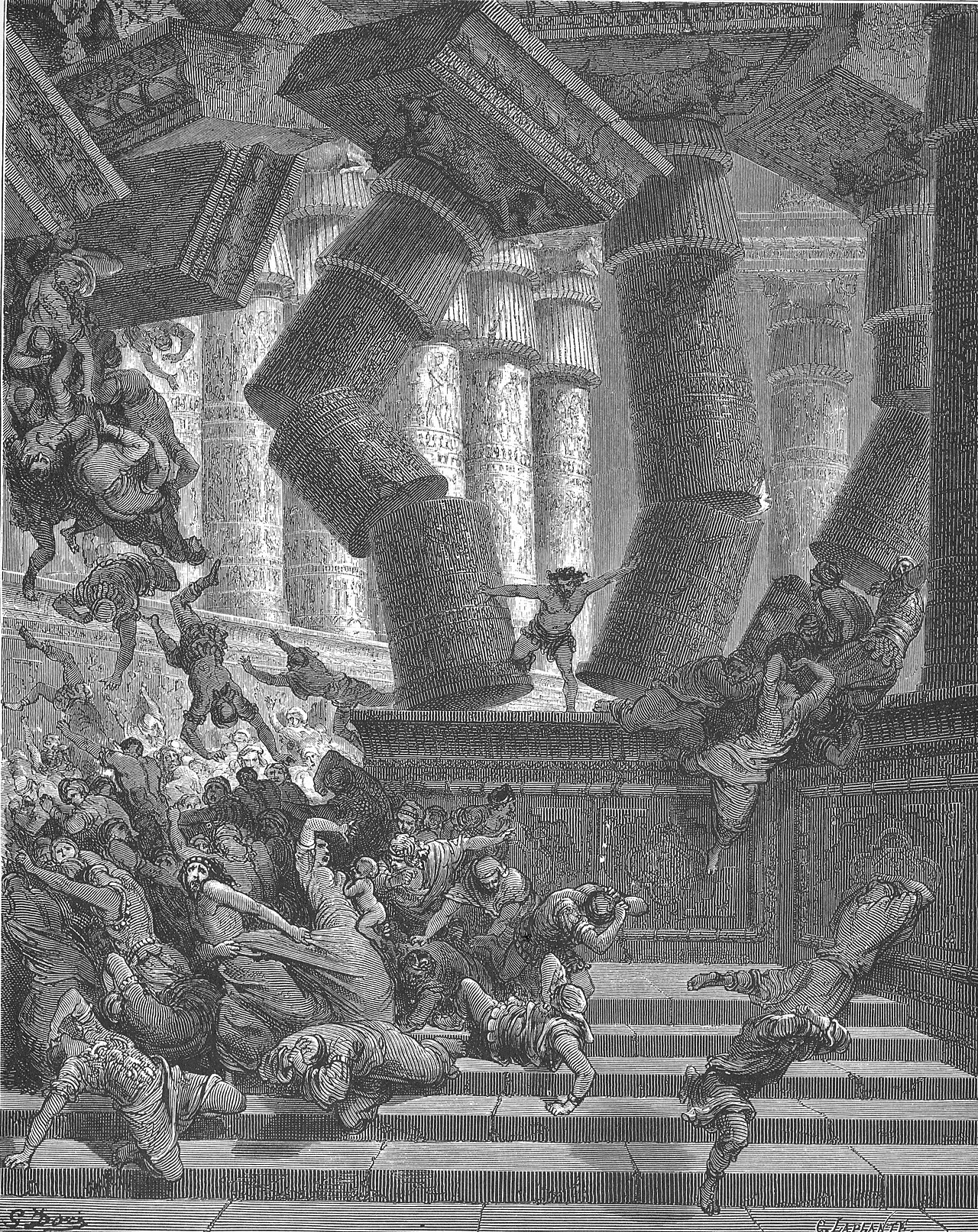
- The temple fallsJudges 16:30Samson said, “Let me die with the Philistines.” Then he pushed with all his might, and the temple fell on the lords and all the people in it. So in his death he killed more than he had killed in his life.
What happened here, in order
in the order the canon tells it
- Gaza marks the border of CanaanGenesis 10:19and the borders of Canaan extended from Sidon toward Gerar as far as Gaza, and then toward Sodom, Gomorrah, Admah, and Zeboiim, as far as Lasha.
- Joshua's southern campaign reaches to GazaJoshua 10:41Joshua conquered the area from Kadesh-barnea to Gaza, and the whole region of Goshen as far as Gibeon.
- The Anakim survive only at Gaza, Gath and AshdodJoshua 11:22No Anakim were left in the land of the Israelites; only in Gaza, Gath, and Ashdod did any survive.
- Gaza heads the five Philistine cities, still unpossessedJoshua 13:3All the territory of the Philistines and the Geshurites, from the Shihor east of Egypt to the territory of Ekron on the north (considered to be Canaanite territory)—that of the five Philistine rulers of Gaza, Ashdod, Ashkelon, Gath, and Ekron, as well as that of the Avvites;
- Gaza listed within Judah's allotted borderJoshua 15:47Ashdod, with its towns and villages; Gaza, with its towns and villages, as far as the Brook of Egypt and the coastline of the Great Sea.
- Judah captures Gaza, Ashkelon and EkronJudges 1:18And Judah also captured Gaza, Ashkelon, and Ekron—each with its territory.
- Gaza sends a gold tumor as a guilt offering1 Samuel 6:17As a guilt offering to the LORD, the Philistines had sent back one gold tumor for each city: Ashdod, Gaza, Ashkelon, Gath, and Ekron.
- Solomon's dominion reaches to Gaza1 Kings 4:24For Solomon had dominion over everything west of the Euphrates—over all the kingdoms from Tiphsah to Gaza—and he had peace on all sides.
- Hezekiah defeats the Philistines as far as Gaza2 Kings 18:8He defeated the Philistines as far as Gaza and its borders, from watchtower to fortified city.
- The word against Gaza, before Pharaoh strikes it downJeremiah 47:1This is the word of the LORD that came to Jeremiah the prophet about the Philistines before Pharaoh struck down Gaza.
- Gaza shaves its head in mourningJeremiah 47:5The people of Gaza will shave their heads in mourning; Ashkelon will be silenced. O remnant of their valley, how long will you gash yourself?
- Amos names Gaza's specific crimeAmos 1:6-7This is what the LORD says: “For three transgressions of Gaza, even four, I will not revoke My judgment, because they exiled a whole population, delivering them up to Edom. So I will send fire upon the walls of Gaza, to consume its citadels.
- Gaza will be abandonedZephaniah 2:4For Gaza will be abandoned, and Ashkelon left in ruins. Ashdod will be driven out at noon, and Ekron will be uprooted.
- Gaza will writhe in agony, its king cut offZechariah 9:5Ashkelon will see and fear; Gaza will writhe in agony, as will Ekron, for her hope will wither. There will cease to be a king in Gaza, and Ashkelon will be uninhabited.
- Philip sent south on the desert road to GazaActs 8:26Now an angel of the Lord said to Philip, “Get up and go south to the desert road that goes down from Jerusalem to Gaza.”
Gaza in Scripture
21 verses name it, in 12 books
Open a book to read its mentions here. Text: Berean Standard Bible.
Old TestamentNew Testamentsegment width = share of mentions
Old Testament11 books · 20 mentions
Genesis1 mention
Deuteronomy1 mention
Joshua4 mentions
- Joshua 10:41Joshua conquered the area from Kadesh-barnea to Gaza, and the whole region of Goshen as far as Gibeon.
- Joshua 11:22No Anakim were left in the land of the Israelites; only in Gaza, Gath, and Ashdod did any survive.
- Joshua 13:3All the territory of the Philistines and the Geshurites, from the Shihor east of Egypt to the territory of Ekron on the north (considered to be Canaanite territory)—that of the five Philistine rulers of Gaza, Ashdod, Ashkelon, Gath, and Ekron, as well as that of the Avvites;
- Joshua 15:47Ashdod, with its towns and villages; Gaza, with its towns and villages, as far as the Brook of Egypt and the coastline of the Great Sea.
Judges4 mentions
- Judges 1:18And Judah also captured Gaza, Ashkelon, and Ekron—each with its territory.
- Judges 6:4encamping against them as far as Gaza and destroying the produce of the land. They left Israel with no sustenance, neither sheep nor oxen nor donkeys.
- Judges 16:1One day Samson went to Gaza, where he saw a prostitute and went in to spend the night with her.
- Judges 16:21Then the Philistines seized him, gouged out his eyes, and brought him down to Gaza, where he was bound with bronze shackles and forced to grind grain in the prison.
1 Samuel1 mention
1 Kings1 mention
2 Kings1 mention
Jeremiah3 mentions
- Jeremiah 25:20all the mixed tribes; all the kings of Uz; all the kings of the Philistines: Ashkelon, Gaza, Ekron, and the remnant of Ashdod;
- Jeremiah 47:1This is the word of the LORD that came to Jeremiah the prophet about the Philistines before Pharaoh struck down Gaza.
- Jeremiah 47:5The people of Gaza will shave their heads in mourning; Ashkelon will be silenced. O remnant of their valley, how long will you gash yourself?
Amos2 mentions
Zephaniah1 mention
New Testament1 book · 1 mention
Common questions
Why does Gaza appear in Genesis 10, centuries before Israel exists?
Genesis 10 describes the borders of Canaan's descendants, and it uses Gaza as a fixed landmark to say where that border ends: "as far as Gaza." The text is not claiming Gaza belonged to any particular nation at that point, only using it the way a map uses a city to mark an edge.
Was Gaza ever actually held by Israel?
Readers differ; the positions are named
Judges 1:18 says Judah captured Gaza, Ashkelon and Ekron. But Joshua 13:3 lists Gaza among the land that "remains" under Philistine rule, Joshua 11:22 says Anakim survived at Gaza, and by Judges 16 the city has its own Philistine lords and a working temple of Dagon with no sign of Israelite control. Both texts stand as they are; this page does not decide whether the capture in Judges 1:18 was brief, partial, or reversed. The ancient Greek Septuagint of Judges 1:18 reads the opposite of the Hebrew, that Judah did not capture Gaza, Ashkelon and Ekron, which would remove the tension; most English versions follow the Hebrew text instead.
What happened to Samson at Gaza, and why does the story end in a temple?
Judges 16 opens with Samson's first visit to Gaza, where he carries off the city gates by night. He returns at the story's end as a blinded prisoner after Delilah's betrayal, brought out to entertain the Philistine lords at a feast to their god Dagon. Samson's last prayer asks God for strength "just once more," and he pulls down the temple's two central pillars, killing more Philistines in his death than in his life.
What did the prophets hold against Gaza, and is the charge always the same?
No. Amos names a specific crime: Gaza "exiled a whole population, delivering them up to Edom," language most naturally read as trading captured people into slavery. Jeremiah, Zephaniah and Zechariah each pronounce broader judgment on Gaza alongside the rest of Philistia, without repeating Amos's particular charge.
Why does the road to Gaza matter in Acts 8?
Gaza had marked the southern gateway out of Judah in every earlier era of the story: the border of Canaan, the limit of Joshua's and Solomon's reach, the edge of Hezekiah's victory. Acts 8:26 sends Philip down that same route, and there an Ethiopian court official hears the good news about Jesus and is baptized.
Notable art
1 verified piece depicting Gaza
Sources cited
- OpenBible.info Bible Geocoding: Gazaread 2026-08-20The coordinates on this page. Used under CC-BY with attribution to OpenBible.info.
- Gustave Doré, La Sainte Bible (Tours: Alfred Mame et fils, 1866)The two engravings on this page. Public domain.
- "Tell el-Ajjul", Wikipedia, citing Flinders Petrie's excavation reportsPetrie's 1930-1934 excavation, his initial identification of the site with ancient Gaza, and the modern correction, used in why_it_matters.
- "Judges 1", Wikipedia, textual variants section, and Sefaria, Judges 1:18The Septuagint's negative reading of Judges 1:18 against the Masoretic Text, used in the common_questions entry on whether Gaza was held by Israel.
Keep studying
On this page
Studies5
Lives that run through it2
Doorway2
Keep this page