
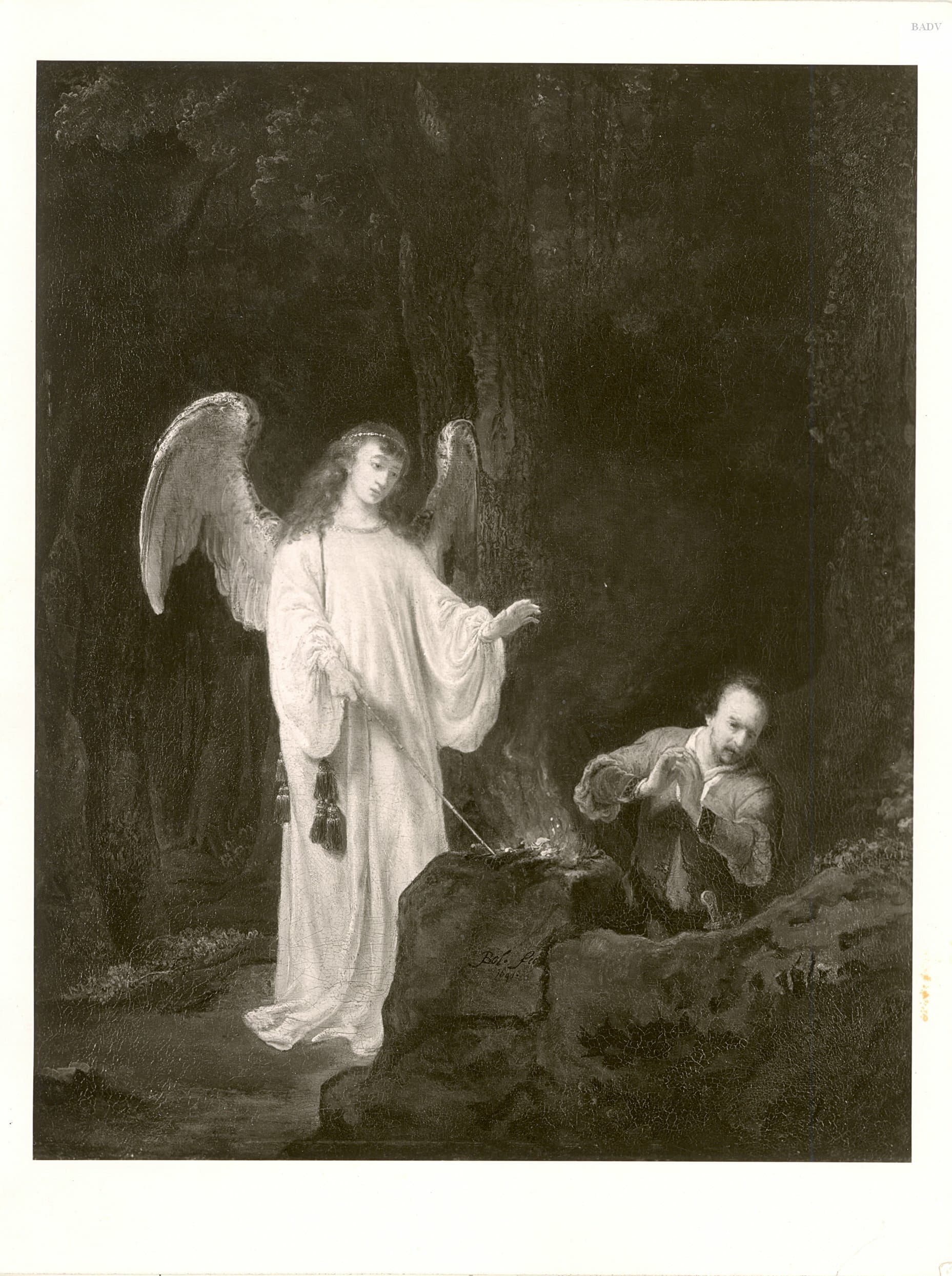
Judges 6:11 to 40 · Story · Fear
Gideon the Least
Gideon was a man of Manasseh, from the clan of Abiezer at Ophrah.
Gideon asked God for a sign three times before he led Israel out against Midian.
But the LORD said to him, “Peace be with you. Do not be afraid, for you will not die.”
- Where
- Ophrah
- Who
- Gideon
- When
- The days of the judges, under Midian's oppression (Judges 6:1)
Summary
In Judges 6 and 7 the LORD saves Israel from Midian through Gideon, a man who answered his call with questions. The LORD met him with His presence, His peace and His Spirit, and before the battle with a dream overheard in the enemy camp. Gideon's first task was at home, where his father kept an altar to Baal.
- When Israel cried out because of Midian, the LORD first sent a prophet to remind them that He had brought them out of Egypt (Judges 6:7 to 10).
- The three hundred men who lapped the water were the ones the LORD kept for the battle (Judges 7:7).
- Readers differ on whether the fleece was faith or doubt and on why Hebrews names Gideon among the faithful.
A Thresher in a Winepress
Judges 6 opens with Israel's sin and Midian's raids.
Gideon the Least is a story of the trial of fear from Judges 6 and 7. It asks how the LORD dealt with a servant whose fear kept returning, and what He gave him each time.
The study sets the story in Midian's raids and follows Gideon from the winepress to the camp of Midian. It reads the LORD's words to him at each turn and the law that sent the fearful home before the battle. It also weighs two questions on which interpreters differ, with the holders of each reading and the objection to it.
The LORD gave Israel into the hand of Midian for seven years, and whenever Israel planted, the raiders came like locusts and left no food in the land (Judges 6:1 to 5).
Then the angel of the LORD came and sat down under the oak in Ophrah that belonged to Joash the Abiezrite, where his son Gideon was threshing wheat in a winepress to hide it from the Midianites.The place of the threshing shows the fear of the whole land in one man's work, done out of the raiders' sight.
Gideon's Fears and What Followed
Gideon's fears and the answers to them run from Judges 6:13 to Judges 7:15.
Gideon's fear came back at every stage of his call, and each time a word, a sign or a gift of strength met it.
| The fear or the question | What followed |
|---|---|
| Gideon asks why Israel suffers (Judges 6:13) | "Go in the strength you have" |
| Gideon counts himself the least (Judges 6:15) | "Surely I will be with you" |
| Gideon asks for a sign (Judges 6:17) | "I will stay until you return" |
| Gideon cries out at the sight of the angel (Judges 6:22) | "The LORD Is Peace" |
| Gideon fears his family and his town (Judges 6:27) | "Let Baal contend with him" |
| Midian's allies gather against Israel (Judges 6:33) | "So the Spirit of the LORD came" |
| "If You are going to save Israel by my hand" (Judges 6:36) | "Only the fleece was dry" |
| "if you are afraid to do so" (Judges 7:10) | "your hands will be strengthened" |
| Gideon hears a Midianite tell his dream (Judges 7:13) | "he bowed in worship" |
"If You are going to save Israel by my hand" (Judges 6:36), "if you are afraid to do so" (Judges 7:10), Gideon hears a Midianite tell his dream (Judges 7:13)
Mighty Man of Valor
Gideon's first answers to his call were questions.
And the angel of the LORD appeared to Gideon and said, “The LORD is with you, O mighty man of valor.” “Please, my Lord,” Gideon replied, “if the LORD is with us, why has all this happened to us? And where are all His wonders of which our fathers told us, saying, ‘Has not the LORD brought us up out of Egypt?’ But now the LORD has forsaken us and delivered us into the hand of Midian.”The greeting and the reply sit side by side, so the reader hears the promise of God's presence and the doubt it met.
“Please, my Lord,” Gideon replied, “how can I save Israel? Indeed, my clan is the weakest in Manasseh, and I am the youngest in my father’s house.”Gideon measures himself by his clan and his place among his brothers, and the LORD answers by naming His own presence.
Gideon spoke with the angel and heard the LORD answer him, and the text moves between the two names (Judges 6:12 to 16 and Judges 6:22 to 23).
Peace Be with You
The sign Gideon asked for brought him a new fear.
Then the angel of the LORD extended the tip of the staff that was in his hand and touched the meat and the unleavened bread. And fire flared from the rock and consumed the meat and the unleavened bread. Then the angel of the LORD vanished from his sight. When Gideon realized that it was the angel of the LORD, he said, “Oh no, Lord GOD! I have seen the angel of the LORD face to face!”Gideon's cry in Judges 6:22 is the fear the LORD answers in the next verse.
Read the page on Matthew Henry
“Ever since man has by sin exposed himself to God's wrath and curse an express from heaven has been a terror to him, as he scarcely dares to expect good tidings thence; at least, in this world of sense, it is a very awful thing to have any sensible conversation with that world of spirits to which we are so much strangers.”
Matthew Henry · Commentary on the Whole Bible · on Judges 6:22Puritan
An Altar Torn Down by Night
Judges 6:25 to 32 tells the night Baal's altar fell.
So Gideon took ten of his servants and did as the LORD had told him. But because he was too afraid of his father’s household and the men of the city, he did it by night rather than in the daytime.Gideon's first act of obedience was done in fear, so the LORD's servant is shown obeying before his fear is gone.
Adam Clarke's Commentary (1832) took the ten servants as a sign of faith: "it is probable that he had preserved the true faith, and had not bowed his knee to the image of Baal".
The Spirit and the Fleece
The fleece came after the Spirit of the LORD had come upon Gideon.
So the Spirit of the LORD came upon Gideon, who blew the ram’s horn and rallied the Abiezrites behind him.The Spirit came upon Gideon before he asked for the fleece, so the sign was asked by a man already sent.
The Fearful Sent Home
The law of Moses gave the fearful leave to go home before a battle.
At the spring of Harod the LORD had Gideon proclaim, “Whoever is fearful and trembling may turn back and leave Mount Gilead,” and twenty-two thousand men turned back (Judges 7:3).
Jamieson, Fausset and Brown, in their Commentary Critical and Explanatory (1871), noted that "This proclamation was in terms of an established law", and pointed to Deuteronomy 20:8.
Then the officers shall speak further to the army, saying, “Is any man afraid or fainthearted? Let him return home, so that the hearts of his brothers will not melt like his own.”The law gives its own reason for sending the fearful home, since fear spreads from one heart to the hearts beside it.
Faith, Doubt and the Verdict of Hebrews
Two readings weigh the fleece, and a third reads Hebrews 11:32.
The fleece was the care of a man of faithAlbert Barnes
Albert Barnes, in his Notes on Judges 6:36, wrote that Gideon's caution "does not imply doubts as to God's faithfulness or power to fulfill His promise", and called him "a worthy example of faith".
Against this reading, the LORD had already promised to be with him (Judges 6:16), and Gideon himself begged God to hold back His anger before the second test (Judges 6:39).
The fleece strengthened a faith that needed strengthJohn Wesley
John Wesley, in his Explanatory Notes upon the Old Testament (1765), read the request as made "In a way of humble supplication, for the strengthening his own faith".
Against this reading, the text records no rebuke, and God granted both signs as Gideon asked (Judges 6:38 and Judges 6:40).
Hebrews names Gideon for a faith that was halting and still approvedJohn Calvin
John Calvin wrote on Hebrews 11:32 in his Commentaries on the Epistle of Paul the Apostle to the Hebrews. He judged that “Gideon was slower to take up arms than what he ought to have been; nor did he venture without some hesitation to commit himself to God.”
He concluded, “Thus, in all the saints, something reprehensible is ever to be found; yet faith, though halting and imperfect, is still approved by God.”
Against this reading, Hebrews 11:32 to 34 names what these judges did through faith and none of their faults, and Hebrews 11:39 says, “These were all commended for their faith”.
Named Among the Faithful
The story ends in the New Testament's verdict on Gideon.
And what more shall I say? Time will not allow me to tell of Gideon, Barak, Samson, Jephthah, David, Samuel, and the prophets, who through faith conquered kingdoms, administered justice, and gained what was promised; who shut the mouths of lions, quenched the raging fire, and escaped the edge of the sword; who gained strength from weakness, became mighty in battle, and put foreign armies to flight.Hebrews places Gideon first in a list whose deeds include strength gained out of weakness, the course of his whole story.
A reader whose fear weighs on body or mind may seek medical care beside prayer, never in its place.
Sources
Scripture is the Berean Standard Bible.
- Matthew Henry, Commentary on the Whole Bible (1710), on Judges 6:22.
- Adam Clarke, Commentary on the Bible (1832), on Judges 6:27.
- Robert Jamieson, A. R. Fausset and David Brown, Commentary Critical and Explanatory on the Whole Bible (1871), on Judges 7:3.
- Albert Barnes, Notes, Explanatory and Practical, on the Old and New Testaments (1832 to 1869), on Judges 6:36.
- John Wesley, Explanatory Notes upon the Old Testament (1765), on Judges 6:36.
- John Calvin, Commentaries on the Epistle of Paul the Apostle to the Hebrews, translated and edited by John Owen (the translator's preface dated Thrussington, August 1853), on Hebrews 11:32 to 34.
Keep Studying
Places2
Symbols1