
Concept
Soteriologyalso b'rith · diathekeCovenant
God binding himself by oath: the legal spine the whole Bible is built on, cut in blood and never revoked.
#covenant
- 122passages
- 92original words
- 1approved connection
- 240cross-references
The words behind it
Hebrew and Greek standing in the 18 passages listed below, not a lexicon of "covenant" itself. The number on each word is how often it occurs in those passages; the connecting words the languages use everywhere are set aside so the words that carry meaning can be seen.
Hebrew92
82 more hebrew words ▾
The passages
The first 18 of 122 passages this site attaches to the concept, in canon order. Each row says where it came from.
Old Testament18
- Genesis 2:16topical floor
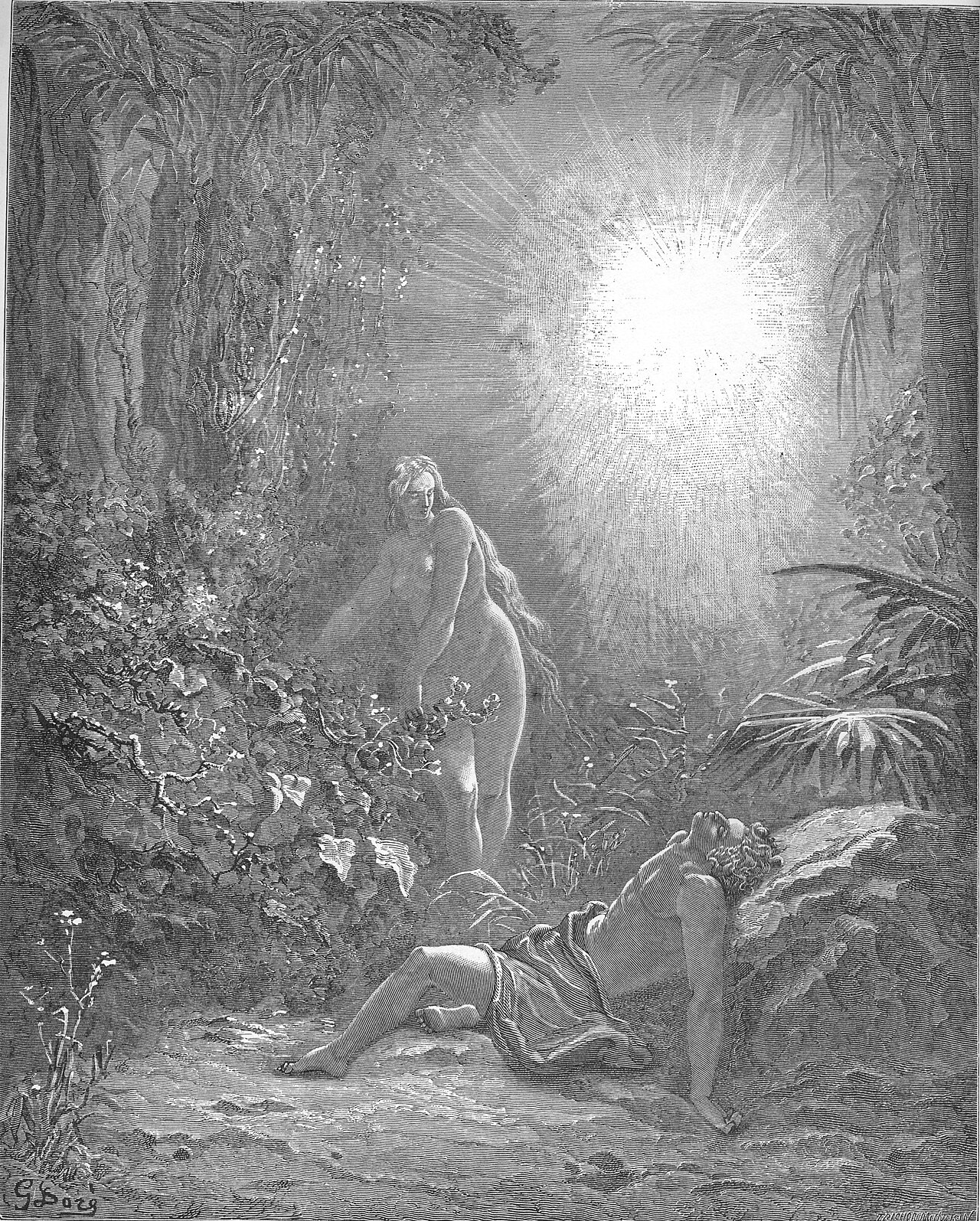
And the LORD God commanded him, “You may eat freely from every tree of the garden,
Commentary on Genesis 2:161 voice
“Knowing once more how the will of man could sway to either side, in anticipation God secured the grace given them by a command and by the place where he put them. For he brought them into his own garden and gave them a law so that, if they kept the grace and remained good, they might still keep the life in paradise without sorrow or pain or care, besides having the promise of incorruption in heaven.”
Athanasius of Alexandria · On the Incarnation of the Word 3.4Patristic
- Genesis 2:17topical floor
but you must not eat from the tree of the knowledge of good and evil; for in the day that you eat of it, you will surely die.”
Commentary on Genesis 2:172 voices
“What is the difference between saying 'ye shall die' and 'ye shall die the death'? We ought to point out that there is nothing superfluous in the command of God. Here is my solution. Since life and death are contradictory ideas, in unaffected language we say 'we live in life' and 'die in death.'”
Ambrose of Milan · On ParadisePatristic
“Knowing once more how the will of man could sway to either side, in anticipation God secured the grace given them by a command and by the place where he put them. For he brought them into his own garden and gave them a law so that, if they kept the grace and remained good, they might still keep the life in paradise without sorrow or pain or care, besides having the promise of incorruption in heaven.”
Athanasius of Alexandria · On the Incarnation of the Word 3.4Patristic
- Genesis 8:16topical floor
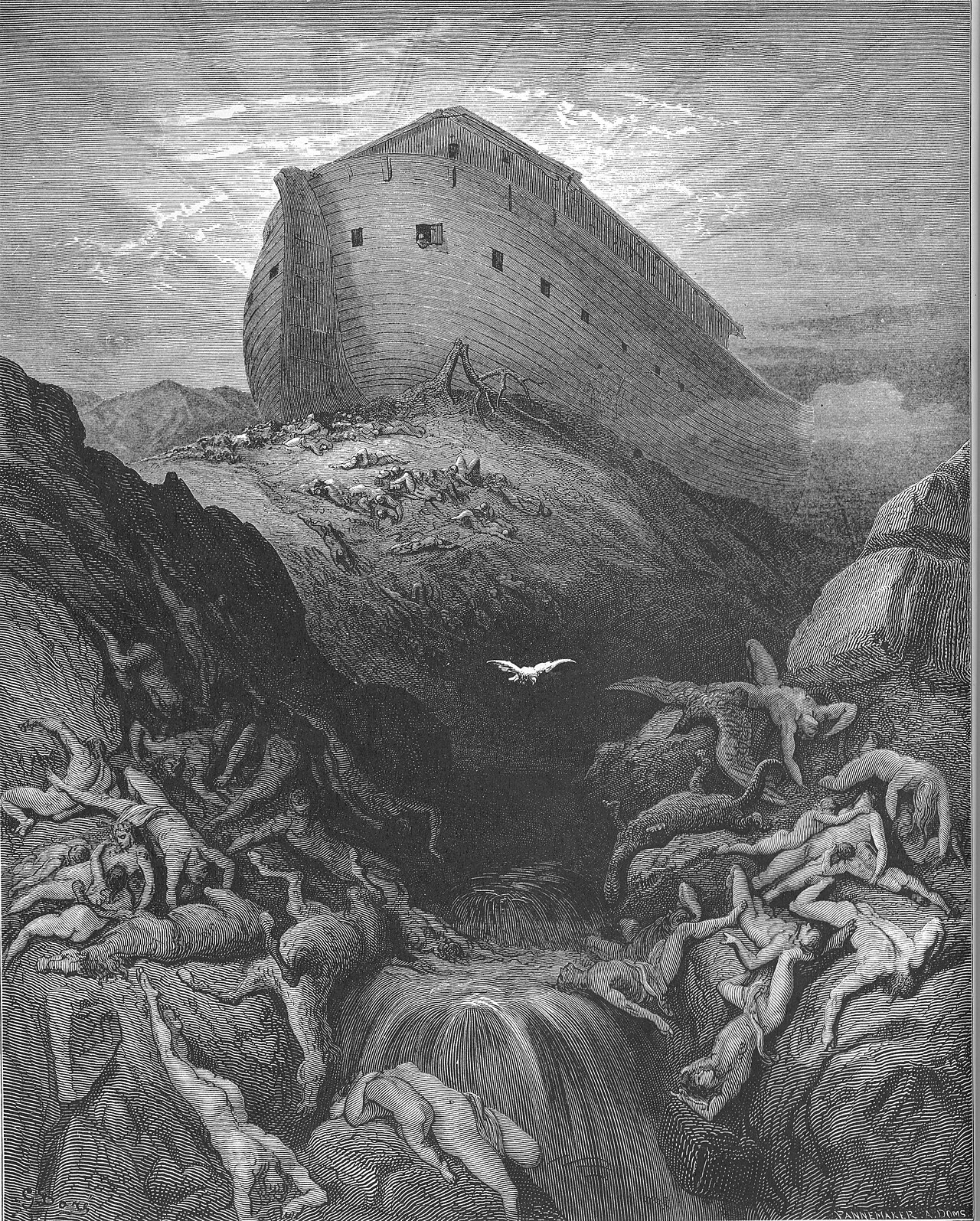
“Come out of the ark, you and your wife, along with your sons and their wives.
Commentary on Genesis 8:161 voice
“When Noah was ordered to enter the ark and was entrusted with the safeguarding of the seed of the earth, he was given this command, which reads, ‘Go forth from the ark, you and your wife, and your sons and your sons' wives with you.’ He had separated them from their wives, so that with the help of chastity they might escape the deep and that worldwide destruction. However, after the cessation of the flood, the command was ‘Go forth from the ark, you and your wife, and your sons and your sons' wives with you.’”
John Damascene · Orthodox Faith 4.24Patristic
- Genesis 8:20topical floor
Then Noah built an altar to the LORD. And taking from every kind of clean animal and clean bird, he offered burnt offerings on the altar.(opening verse of the passage)
Commentary on Genesis 8:202 voices
“And Noah builded an altar - Hitherto he had done nothing without particular instructions and commands from God but altars and sacrifices being already of Divine institution, he did not stay for a particular command thus to express his thankfulness.”
John Wesley · Explanatory Notes upon the Old Testament, 1765Evangelical
“Noah builded an altar - As we have already seen that Adam, Cain, and Abel, offered sacrifices, there can be no doubt that they had altars on which they offered them; but this, builded by Noah, is certainly the first on record. It is worthy of remark that, as the old world began with sacrifice, so also did the new. Religion or the proper mode of worshipping the Divine Being, is the invention or institution of God himself; and sacrifice, in the act and design, is the essence of religion.”
Adam Clarke · Commentary on the BibleEvangelical
- Genesis 9:1topical floor
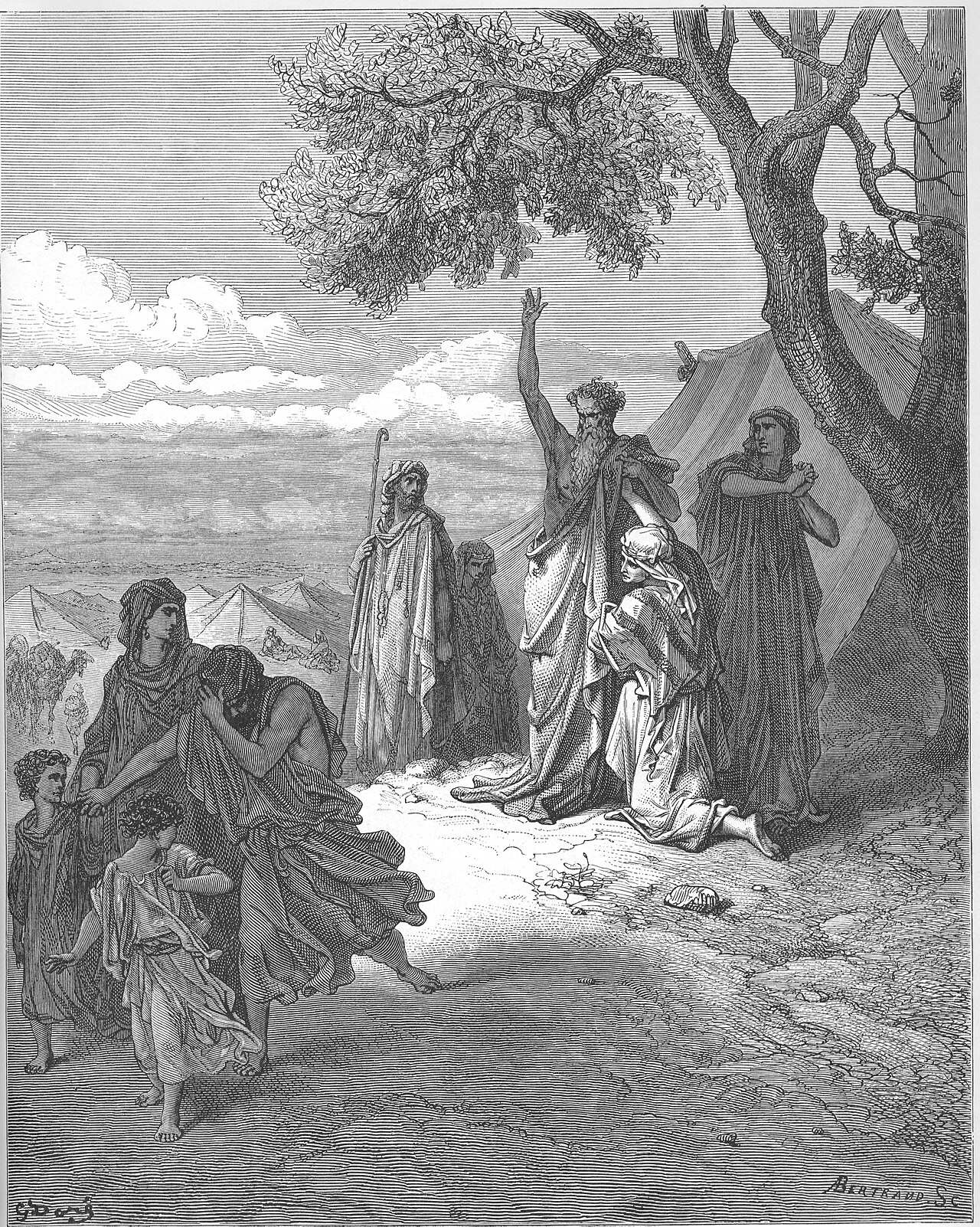
And God blessed Noah and his sons and said to them, “Be fruitful and multiply and fill the earth.(opening verse of the passage)
Commentary on Genesis 9:11 voice
“And God blessed Noah--Here is republished the law of nature that was announced to Adam, consisting as it originally did of several parts. Be fruitful, &c.--The first part relates to the transmission of life, the original blessing being reannounced in the very same words in which it had been promised at first [Ge 1:28].”
Jamieson, Fausset & Brown · Commentary Critical and Explanatory on the Whole Bible, 1871Reformed
- Genesis 9:8topical floor
Then God said to Noah and his sons with him,(opening verse of the passage)
- Genesis 12:1topical floor
Then the LORD said to Abram, “Leave your country, your kindred, and your father’s household, and go to the land I will show you.(opening verse of the passage)
Commentary on Genesis 12:12 voices
“Get out for thyself (so some read it), that is, for thy own good. Note, Those who leave their sins, and turn to God, will themselves be unspeakable gainers by the change, Prov. ix. This command which God gave to Abram is much the same with the gospel call by which all the spiritual seed of faithful Abram are brought into covenant with God.”
Matthew Henry · Commentary on the Whole Bible, 1710Puritan
“This call included two promises: the first, showing the land of his future posterity; and the second, that in his posterity all the earth was to be blessed (Ge 12:2). Abraham obeyed, and it is frequently mentioned in the New Testament as a striking instance of his faith (Heb 11:8).”
Jamieson, Fausset & Brown · Commentary Critical and Explanatory on the Whole Bible, 1871Reformed
- Genesis 15:1topical floor
After these events, the word of the LORD came to Abram in a vision: “Do not be afraid, Abram. I am your shield, your very great reward.”
Commentary on Genesis 15:12 voices
“You have probably heard a great many sermons on the first part of the text, ‘I am your shield,’ so, on this occasion, I am going to leave that portion in order to more fully consider the second part—‘I am your exceeding great reward.’ Notice, first, the circumstances under which these words were spoken to Abraham. It must have been in his memory that not very long before, he had parted from his nephew, Lot, and had given him his choice as to which way he would go with his flocks and his herds.”
Charles Spurgeon · The Metropolitan Tabernacle Pulpit, Sermon No. 2814: “Abraham's Great Reward” (lightly modernized text, CCEL edition), 1903
“The word of the Lord came unto Abram - That is, God manifested himself to Abram, in a vision - Which supposeth Abram awake, and some sensible token of the presence of the divine glory, saying, Fear not Abram - Abram might fear lest the four kings he had routed, should rally and fall upon him.”
John Wesley · Explanatory Notes upon the Old Testament, 1765Evangelical
- Genesis 15:9topical floor
And the LORD said to him, “Bring Me a heifer, a goat, and a ram, each three years old, along with a turtledove and a young pigeon.”(opening verse of the passage)
Commentary on Genesis 15:92 voices
“God appointed that each of the beasts used for his service should be three years old, because then they were at their full growth and strength. God must be served with the best we have. We do not read that God gave Abram particular directions how to manage these, knowing that he was well versed in the custom of sacrifices.”
John Wesley · Explanatory Notes upon the Old Testament, 1765Evangelical
“Take me a heifer - עגלה eglah, a she-calf; a she-goat, עז ez, a goat, male or female, but distinguished here by the feminine adjective; משלשת meshullesheth, a three-yearling; a ram, איל ayil; a turtle-dove, תר tor, from which come turtur and turtle; young pigeon, גוזל gozal, a word signifying the young of pigeons and eagles. See Deu 32:11. It is worthy of remark, that every animal allowed or commanded to be sacrificed under the Mosaic law is to be found in this list.”
Adam Clarke · Commentary on the BibleEvangelical
- Genesis 15:18listed key text
On that day the LORD made a covenant with Abram, saying, “To your descendants I have given this land—from the river of Egypt to the great River Euphrates—(opening verse of the passage)
Commentary on Genesis 15:182 voices
“The Lord made a covenant - כרת ברית carath berith signifies to cut a covenant, or rather the covenant sacrifice; for as no covenant was made without one, and the creature was cut in two that the contracting parties might pass between the pieces, hence cutting the covenant signified making the covenant.”
Adam Clarke · Commentary on the BibleEvangelical
“He had said before, To thy seed will I give this land, ch. xii. But here he says, I have given it; that is, (1.) I have given the promise of it, the charter is sealed and delivered, and cannot be disannulled. Note, God's promises are God's gifts, and are so to be accounted.”
Matthew Henry · Commentary on the Whole Bible, 1710Puritan
- Genesis 17:1topical floor
When Abram was ninety-nine years old, the LORD appeared to him and said, “I am God Almighty. Walk before Me and be blameless.(opening verse of the passage)
Commentary on Genesis 17:12 voices
“What God requires that we should be to him. The covenant is mutual: Walk before me, and be thou perfect, that is, upright and sincere; for herein the covenant of grace is well-ordered that sincerity is our gospel perfection.”
Matthew Henry · Commentary on the Whole Bible, 1710Puritan
“BELOVED, all Scripture is the Word of God but some Scripture is expressly so. Much of its teaching comes through inspired men but some of it was spoken by God's own mouth, directly and without instrumentality. Such are the Words now before us which were of old spoken to Abram by the Almighty God. These sentences ought for this reason to be regarded with peculiar reverence and considered with double attention. The glow of Divinity is fresh upon the lines— bend, then, your souls to the understanding of them.”
Charles Spurgeon · The Metropolitan Tabernacle Pulpit, Sermon No. 1082: “The Life, Walk and Triumph of Faith” (lightly modernized text, CCEL edition), 1872
- Genesis 17:19topical floor
But God replied, “Your wife Sarah will indeed bear you a son, and you are to name him Isaac. I will establish My covenant with him as an everlasting covenant for his descendants after him.
Commentary on Genesis 17:191 voice
“If Abraham, in his prayer for Ishmael, meant that he would have the covenant made with him, and the promised seed to come from him, then God did not answer him in the letter, but in that which was equivalent, nay, which was every way better. (1.) God repeats to him the promise of a son by Sarah: She shall bear thee a son indeed.”
Matthew Henry · Commentary on the Whole Bible, 1710Puritan
- Genesis 21:22topical floor
At that time Abimelech and Phicol the commander of his army said to Abraham, “God is with you in all that you do.(opening verse of the passage)
Commentary on Genesis 21:222 voices
“Abimelech and Phichol--Here a proof of the promise (Ge 12:2) being fulfilled, in a native prince wishing to form a solemn league with Abraham. The proposal was reasonable, and agreed to [Ge 21:24].”
Jamieson, Fausset & Brown · Commentary Critical and Explanatory on the Whole Bible, 1871Reformed
“At that time - This may either refer to the transactions recorded in the preceding chapter, or to the time of Ishmael’s marriage, but most probably to the former. God is with thee - מימרא דיי meimera daiya, the Word of Jehovah; see before, Gen 15:1. That the Chaldee paraphrasts use this term, not for a word spoken, but in the same sense in which St. John uses the λογος του Θεου, the Word of God, (Joh 1:1), must be evident to every unprejudiced reader. See on Gen 15:1 (note).”
Adam Clarke · Commentary on the BibleEvangelical
- Genesis 21:27topical floor
So Abraham brought sheep and cattle and gave them to Abimelech, and the two men made a covenant.(opening verse of the passage)
Commentary on Genesis 21:272 voices
“And Abraham reproved Abimelech because of a well--Wells were of great importance to a pastoral chief and on the successful operation of sinking a new one, the owner was solemnly informed in person.”
Jamieson, Fausset & Brown · Commentary Critical and Explanatory on the Whole Bible, 1871Reformed
“Took sheep and oxen - Some think that these were the sacrifices which were offered on the occasion, and which Abraham furnished at his own cost, and, in order to do Abimelech the greater honor, gave them to him to offer before the Lord.”
Adam Clarke · Commentary on the BibleEvangelical
- Genesis 22:16topical floor
saying, “By Myself I have sworn, declares the LORD, that because you have done this and have not withheld your only son,
Commentary on Genesis 22:161 voice
“Abraham lifted up his eyes . . . and behold . . . a ram, &c.--No method was more admirably calculated to give the patriarch a distinct idea of the purpose of grace than this scenic representation: and hence our Lord's allusion to it (Joh 8:56).”
Jamieson, Fausset & Brown · Commentary Critical and Explanatory on the Whole Bible, 1871Reformed
- Genesis 26:3topical floor
Stay in this land as a foreigner, and I will be with you and bless you. For I will give all these lands to you and your offspring, and I will confirm the oath that I swore to your father Abraham.
Commentary on Genesis 26:31 voice
“Sojourn in this land - In Gerar, whither he had gone, Gen 26:1, and where we find he settled, Gen 26:6, though the land of Canaan in general might be here intended. That there were serious and important reasons why Isaac should not go to Egypt, we may be fully assured, though they be not assigned here; it is probable that even Isaac himself was not informed why he should not go down to Egypt. I have already supposed that God saw trials in his way which he might not have been able to bear.”
Adam Clarke · Commentary on the BibleEvangelical
- Genesis 26:26topical floor
Later, Abimelech came to Isaac from Gerar, with Ahuzzath his adviser and Phicol the commander of his army.(opening verse of the passage)
Commentary on Genesis 26:262 voices
“Then Abimelech went to him--As there was a lapse of ninety years between the visit of Abraham and of Isaac, the Abimelech and Phichol spoken of must have been different persons' official titles. Here is another proof of the promise (Ge 12:2) being fulfilled, in an overture of peace being made to him by the king of Gerar.”
Jamieson, Fausset & Brown · Commentary Critical and Explanatory on the Whole Bible, 1871Reformed
“(Verse 26.) And Abimelech went to him from Gerar, and Ahuzzath his counselor, and Phicol the commander of his army. Regarding Ahuzzath his counselor, in Hebrew it means his group of friends: it signifies not so much a single person as a crowd of friends who came with the king, among whom was also Phicol the commander of his army.”
Jerome · Hebrew Questions on GenesisPatristic
- Genesis 26:30topical floor
So Isaac prepared a feast for them, and they ate and drank.
Commentary on Genesis 26:302 voices
“He made them a feast - Probably on the sacrifice that was offered on the occasion of making this covenant. This was a common custom.”
Adam Clarke · Commentary on the BibleEvangelical
“Then Abimelech went to him--As there was a lapse of ninety years between the visit of Abraham and of Isaac, the Abimelech and Phichol spoken of must have been different persons' official titles. Here is another proof of the promise (Ge 12:2) being fulfilled, in an overture of peace being made to him by the king of Gerar.”
Jamieson, Fausset & Brown · Commentary Critical and Explanatory on the Whole Bible, 1871Reformed
Approved connections
1 link an editor approved, each with the reason it was kept.
- covenant contrastGalatians 4:24
Paul's own two-covenants allegory: Hagar/Sinai/bondage vs Sarah/Jerusalem-above/freedom - an explicit covenant-contrast text.
text (allegoreo). framework: covenantal reads church continuity
Voices on these passages
Commentary matched to the verses above, each named with its source: the full pool sits on each verse page.
“Knowing once more how the will of man could sway to either side, in anticipation God secured the grace given them by a command and by the place where he put them. For he brought them into his own garden and gave them a law so that, if they kept the grace and remained good, they might still keep the life in paradise without sorrow or pain or care, besides having the promise of incorruption in heaven.”
Athanasius of Alexandria · On the Incarnation of the Word 3.4Patristic
Genesis 2:16
“What is the difference between saying 'ye shall die' and 'ye shall die the death'? We ought to point out that there is nothing superfluous in the command of God. Here is my solution. Since life and death are contradictory ideas, in unaffected language we say 'we live in life' and 'die in death.'”
Ambrose of Milan · On ParadisePatristic
Genesis 2:17
“When Noah was ordered to enter the ark and was entrusted with the safeguarding of the seed of the earth, he was given this command, which reads, ‘Go forth from the ark, you and your wife, and your sons and your sons' wives with you.’ He had separated them from their wives, so that with the help of chastity they might escape the deep and that worldwide destruction. However, after the cessation of the flood, the command was ‘Go forth from the ark, you and your wife, and your sons and your sons' wives with you.’”
John Damascene · Orthodox Faith 4.24Patristic
Genesis 8:16
Study it deeper
4 moves a student can make from here. Every one opens a tool on this site.
Trace one word to every place it stands
A word page lists every verse that word occurs in, with its definition and its range of meaning. Start with the roots that occur most under the passages above.
Walk out from the passages
The passages above carry 240 cross-references between them, links from the Treasury of Scripture Knowledge, the great 1830s reference work, together with the reader-voted index at OpenBible.info. The most-linked destinations:
Read the whole chapter around it
A verse quoted alone can mean almost anything. Open Genesis 2 in the reader, where the Hebrew or Greek sits under every line.
See everywhere else it appears
The search page is a doorway: it returns verses, word studies, people, places and studies for one term at once.
Where this comes from
A biblical covenant is not a contract between equals. It is a sworn bond, ratified by blood, in which God takes the obligation on himself: in Genesis 15 Abraham sleeps while God alone passes between the pieces.
Hebrew בְּרִית (b'rith) occurs about 285 times, Greek διαθήκη 33; the Greek word means a will, and a will takes force by a death (Hebrews 9:16-17). The Bible's two halves are named for it.