
Genesis 12:1
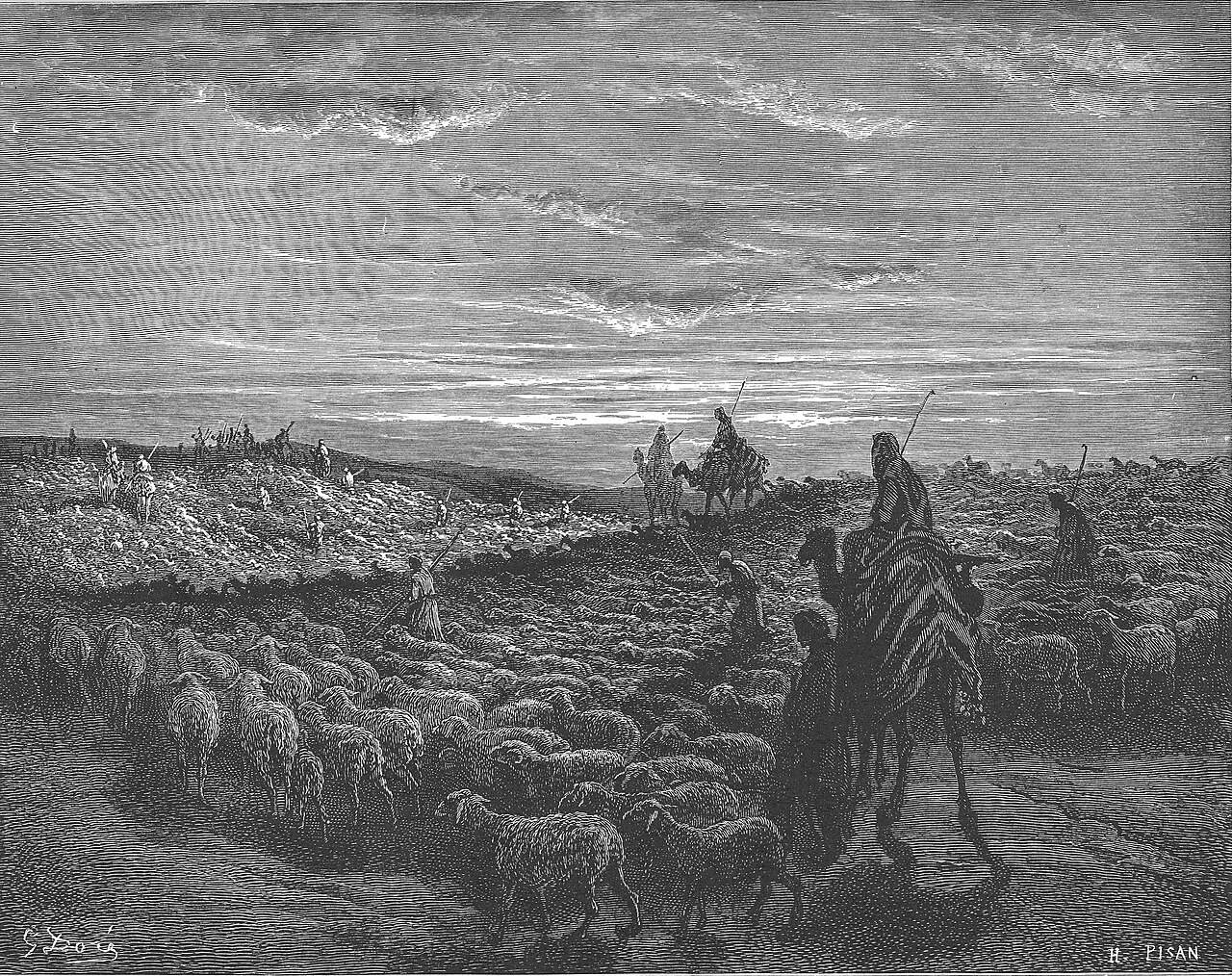
in Genesis 12Then the LORD said to Abram, “Leave your country, your kindred, and your father’s household, and go to the land I will show you.
BSB
The same verse in ASV and KJV ▾
ASV
Now Jehovah said unto Abram, Get thee out of thy country, and from thy kindred, and from thy father’s house, unto the land that I will show thee:
KJV
Now the Lord had said unto Abram, Get thee out of thy country, and from thy kindred, and from thy father’s house, unto a land that I will shew thee:
⋯
This verse in Genesis 12
Commentary
18 notes on this verseA commentator
Jamieson, Fausset & Brown1802–1910
Commentary Critical and Explanatory on the Whole Bible (1871)
This call included two promises: the first, showing the land of his future posterity; and the second, that in his posterity all the earth was to be blessed (Ge 12:2). Abraham obeyed, and it is frequently mentioned in the New Testament as a striking instance of his faith (Heb 11:8).
This site's exposition
Leave your country, your kindred
on Genesis 12:1-3
The command separates Abram from three things in rising order of cost, his country, his kindred, his father's household. The promises answer each loss, a great nation, a great name, and blessing for all the families. Galatians 3:8 takes that last clause as the gospel announced to Abraham in advance.
The record, by era
The Church Fathers5 voices
The right thing to do, brothers and sisters, is to believe God before he pays up anything, because just as he cannot possibly lie, so he cannot deceive. For he is God. That's how our ancestors believed him. That's how Abraham believed him. There's a faith for you that really deserves to be admired and made widely known. He had received nothing from him, and he believed his promise. We do not yet believe him, though we have already received so much. Was Abraham ever in a position to say to him, "I will believe you, because you promised me that and paid up"? No, he believed from the very first command given, without having received anything else at all. "Go out from your country," he was told, "and from your kindred, and go into a country which I will give you." And he believed straightaway, and [God] didn't give him that country but kept it for his seed.
Some were reached by the Word of God through the law of promise and the discernment of the good inherent in them from their first formation. They did not hesitate but followed it readily as did Abraham, our father.
When the sacred lesson was read just now, we heard the Lord say to blessed Abraham, "Leave your country, your kinsfolk and your father's house." Now everything that was written in the Old Testament, dearly beloved, provided a type and image of the New Testament.
"Leave your kinsfolk." Our kinsfolk is understood as those vices and sins that are in part born with us in some way and are increased and nourished after infancy by our bad acts.
"Leave your father's house." This we ought to accept in a spiritual manner, dearly beloved. The devil was our father before the grace of Christ; of him the Lord spoke in the Gospel when he rebuked the Jews: "The father from whom you are is …
11 more voices on this verse
The Church Fathers4 voices
It is not by chance that God orders Abraham to leave his land and his relatives but because he sees in him something that makes him worthy of being the object of divine concern, that is, his faith in God.
A commentator
Philoxenus of Mabbug13 Ascetic Discourses, Discourse 4 -- On Faith: First Discourse on Simplicity · Written before 523.
proposed
Abraham, who was called, went forth after God, and he was not a judge of the voice which came to him, and he was not held back by race and kinsfolk, nor by country and friends, nor by any of the many other human ties.
A commentator
Clement of RomeClement's First Letter to the Corinthians, Chapter 10 · Written before 99.
proposed
Abraham, styled "the friend," [Isaiah 41:8] was found faithful, inasmuch as he rendered obedience to the words of God. He, in the exercise of obedience, went out from his own country, and from his kindred, and from his father's house, in order that, by forsaking a small territory, and a weak family, and an insignificant house, he might inherit the promises of God. For God said to him, "Get you out from your country, and from your kindred, and from your father's house, into the land which I shall show you. And I will make you a great nation, and will bless you, and make your name great, and you shall be blessed. And I will bless them that bless you, and curse them that curse you; and in you shall all the families of the earth be blessed." [Genesis 12:1-3] And again, on his departing from Lot, God said to him, "Lift up your eyes, and look from the place where you now are, northward, and southward, and eastward, and westward; for all the land which you see, to you will I give it, and to your seed forever. And I will make your seed as the dust of the earth, [so that] if a man can number the dust of the earth, then shall your seed also be numbered." [Genesis 13:14-16] And again [the Scripture] says, "God brought forth Abram, and spoke unto him, Look up now to heaven, and count the stars if you are able to number them; so shall your seed be. And Abram believed God, and it was counted to him for righteousness." [Genesis 15:5-6] On account of his faith and hospitality, a son was given him in his old age; and in the exercise of obedience, he offered him as a sacrifice to God on one of the mountains which He showed him.
Abraham represents the mind. In fact Abraham signifies passage. Therefore, in order that the mind, which in Adam had allowed itself to run to pleasure and to bodily attractions, should turn toward the ideal form of virtue, a wise man has been proposed to us as an example to imitate. Actually Abraham in Hebrew signifies "father," in the sense that the mind, with the authority, the judgment and the solicitude of a father, governs the entire person. This mind then was in Haran, that is, in caverns, subject to the different passions.
The Medieval Church1 voice
And the Lord said to Abram, "Go out from your land, and from your kindred, and from your father's house to the land that I will show you.
The Puritans and the Awakening3 voices
Get out for thyself (so some read it), that is, for thy own good. Note, Those who leave their sins, and turn to God, will themselves be unspeakable gainers by the change, Prov. ix. This command which God gave to Abram is much the same with the gospel call by which all the spiritual seed of faithful Abram are brought into covenant with God.
Now the Lord had said unto Abram,....
Get out for thyself (so some read it), that is, for thy own good. Note, Those who leave their sins, and turn to God, will themselves be unspeakable gainers by the change, Prov. ix. This command which God gave to Abram is much the same with the gospel call by which all the spiritual seed of faithful Abram are brought into covenant with God.
The Nineteenth Century3 voices
A commentator
Jamieson, Fausset & Brown1802–1910
Commentary Critical and Explanatory on the Whole Bible (1871)
proposed
This call included two promises: the first, showing the land of his future posterity; and the second, that in his posterity all the earth was to be blessed (Ge 12:2). Abraham obeyed, and it is frequently mentioned in the New Testament as a striking instance of his faith (Heb 11:8).
Get thee out of thy country - There is great dissension between commentators concerning the call of Abram; some supposing he had two distinct calls, others that he had but one. At the conclusion of the preceding chapter, Gen 11:31, we find Terah and all his family leaving Ur of the Chaldees, in order to go to Canaan. This was, no doubt, in consequence of some Divine admonition. While resting at Haran, on their road to Canaan, Terah died, Gen 11:32; and then God repeats his call to Abram, and orders him to proceed to Canaan, Gen 12:1. Dr. Hales, in his Chronology, contends for two calls: “The first,” says he, “is omitted in the Old Testament, but is particularly recorded in the New, Act 7:2-4: The God of glory appeared to our father Abraham while he was (at Ur of the Chaldees) in Mesopotamia, Before He Dwelt In Canaan; and said unto him, Depart from thy land, and from thy kindred, and come into the land (γην, a land) which I will show thee. Hence it is evident that God had called Abram before he came to Haran or Charran.” The Second Call is recorded only in this chapter: “The Lord said (not Had said) unto Abram, Depart from thy land, and from thy kindred, and from thy father’s house, unto The Land, הארץ HA-arets, (Septuagint, Την γην), which I will show thee.” “The difference of the two calls,” says Dr. Hales, “more carefully translated from the originals, is obvious: in the former the land is indefinite, which was designed only for a temporary residence; in the latter it is definite, intimating his abode. A third condition is also annexed to the latter, that Abram shall now separate himself from his father’s house, or leave his brother Nahor’s family behind at Charran.
A commentator
Albert Barnes1798–1870
Notes, Explanatory and Practical, on the Old and New Testaments (1832-1869)
proposed
- The Call of Abram 6. שׁכם shekem Shekem, “the upper part of the back.” Here it is the name of a person, the owner of this place, where afterward is built the town called at first Shekem, then Flavia Neapolis, and now Nablous. אלון 'ēlôn “the oak;” related: “be lasting, strong.” מורה môreh In Onkelos “plain;” Moreh, “archer, early rain, teacher.” Here the name of a man who owned the oak that marked the spot. In the Septuagint it is rendered ὑψηγήν hupseegeen.
How the passage was read
What the Jewish commentators add
AND THE ETERNAL SAID UNTO ABRAHAM ‘LECH LECHA’ (GET THEE OUT). This means, “For your own benefit and for your own good. And there I will make of you a great nation whilst here you will not merit the privilege of having children.” Thus the language of Rashi.
This section is reception history: how the passage was read and kept in the Jewish tradition. Where a reading parts from an essential of the Christian faith, the section says so at that point.
Texts and citation data: Sefaria; each excerpt follows its version’s licence. 4 further sources are cited on this chapter that carry no English text this site may quote or only restate the verse.
The words behind it
14 Hebrew wordsEvery Hebrew word of this verse in the order it stands, with what it means and the door to its own study. The last column counts the times a word stands in the whole Bible: the rarer the word, the more the places it appears belong together.
| Hebrew | Sound | Meaning | Word study | In the Bible |
|---|---|---|---|---|
| וַיֹּ֤אמֶר | vaiyomer | and he said | H559 → | 5305 times |
| יְהוָה֙ | yahweh | Yahweh | H3068 → | 6520 times |
| אֶל־ | ʾel- | to | H413 → | 5510 times |
| אַבְרָ֔ם | ʾavram | Abram | H87 → | 61 times |
| לֶךְ־ | lekh- | go | H1980 → | 1546 times |
| לְךָ֛ | lekha | for <the> yourself | ||
| מֵאַרְצְךָ֥ | meartzekha | from land your | H776 → | 2504 times |
| וּמִמּֽוֹלַדְתְּךָ֖ | umimoladtekha | and from kindred your | H4138 → | 22 times |
| וּמִבֵּ֣ית | umibeit | and from [the] household of | H1004 → | 2046 times |
| אָבִ֑יךָ | ʾavikha | father your | H1 → | 1212 times |
| אֶל־ | ʾel- | to | H413 → | 5510 times |
| הָאָ֖רֶץ | haaretz | the land | H776 → | 2504 times |
| אֲשֶׁ֥ר | ʾasher | which | H834 → | 5497 times |
| אַרְאֶֽךָּ׃ | ʾareka | I will show you | H7200 → | 1300 times |
וַיֹּ֤אמֶרand he said
vaiyomerH559 →5305 times
יְהוָה֙Yahweh
yahwehH3068 →6520 times
אֶל־to
ʾel-H413 →5510 times
אַבְרָ֔םAbram
ʾavramH87 →61 times
לֶךְ־go
lekh-H1980 →1546 times
לְךָ֛for <the> yourself
lekha
מֵאַרְצְךָ֥from land your
meartzekhaH776 →2504 times
וּמִמּֽוֹלַדְתְּךָ֖and from kindred your
umimoladtekhaH4138 →22 times
וּמִבֵּ֣יתand from [the] household of
umibeitH1004 →2046 times
אָבִ֑יךָfather your
ʾavikhaH1 →1212 times
אֶל־to
ʾel-H413 →5510 times
הָאָ֖רֶץthe land
haaretzH776 →2504 times
אֲשֶׁ֥רwhich
ʾasherH834 →5497 times
אַרְאֶֽךָּ׃I will show you
ʾarekaH7200 →1300 times
A shaded row is a word that stands 400 times or fewer in the Bible.
The walk
8 stopsEach card is a verse this one points to, and under it the verses that one points to in turn. Where several paths arrive at the same place, that place is listed first: the text keeps returning to it.
Through
Hebrews 11:8By faith Abraham, when called to go to a place he would later receive as his inheritance, obeyed and went, without knowing where he was going.
it leads to
- Acts 7:2–4
And Stephen declared: “Brothers and fathers, listen to me! The God of glory appeared to our father Abraham while he was still in Mesopotamia, before he lived in Haran,
Reached by 2 separate paths from here.
- Genesis 12:1–4
Then the LORD said to Abram, “Leave your country, your kindred, and your father’s household, and go to the land I will show you.
- Matthew 7:24–25
Therefore everyone who hears these words of Mine and acts on them is like a wise man who built his house on the rock.
- Genesis 15:7–8
The LORD also told him, “I am the LORD, who brought you out of Ur of the Chaldeans to give you this land to possess.”
- Genesis 22:18
And through your offspring all nations of the earth will be blessed, because you have obeyed My voice.”
- Acts 7:2–4
Through
Isaiah 51:2Look to Abraham your father, and to Sarah who gave you birth. When I called him, he was but one; then I blessed him and multiplied him.
it leads to
- Ezekiel 33:24
“Son of man, those living in the ruins in the land of Israel are saying, ‘Abraham was only one man, yet he possessed the land. But we are many; surely the land has been…
- Galatians 3:9–14
So those who have faith are blessed along with Abraham, the man of faith.
- Romans 4:1–5
What then shall we say that Abraham, our forefather, has discovered?
- Ezekiel 33:24
Where this verse is studied
On this page
Studies21
On this verse
On this chapter
About Genesis
This page draws on 16 works. Open the list of works
This page draws on Adam Clarke, Commentary on the Bible; Albert Barnes, Notes, Explanatory and Practical, on the Old and New Testaments (1832-1869); Ambrose of Milan, ON ABRAHAM 2.1-2; Anthony the Great, LETTER 1; Augustine of Hippo, SERMON 113A.10; Bede, Commentary on Genesis (Hexaemeron); Caesarius of Arles, SERMON 81.1; Caesarius of Arles, SERMON 81.2; Caesarius of Arles, SERMON 81.3; Clement of Rome, Clement's First Letter to the Corinthians, Chapter 10; Didymus the Blind, On Genesis; Jamieson, Fausset & Brown, Commentary Critical and Explanatory on the Whole Bible; John Calvin, Commentary on Genesis; John Gill, Exposition of the Old Testament (1748-1763); Matthew Henry, Commentary on the Whole Bible and Philoxenus of Mabbug, 13 Ascetic Discourses, Discourse 4 -- On Faith: First Discourse on Simplicity.