
Study trail
The Covenants
God's unfolding promises to humanity, each covenant building toward the ultimate fulfillment in Christ.
Where this trail goes
A covenant is God binding Himself with a promise, and the whole Bible is built on a chain of them. This walk follows that chain through eight verses: a rainbow over a judged world, a call to one man in Ur, a smoking firepot passing between cut pieces, a nation gathered at a mountain, a king promised an everlasting throne, a prophet announcing something new, a cup lifted the night before a cross, and a letter explaining what it all meant.
Watch two things as you walk. First, who does the binding: again and again it is God who says "I will." Second, the one covenant with an "if", Sinai, and what its condition exposes. By the last stop, the pattern is unmistakable: every promise has been driving toward one Person and one poured-out cup.
The route
The stops are in the order the Bible presents them.
The route: 8 stops, Genesis 9:11 to Hebrews 8:6
8 stops, in order
Stop 1 of 8: Genesis 9:11
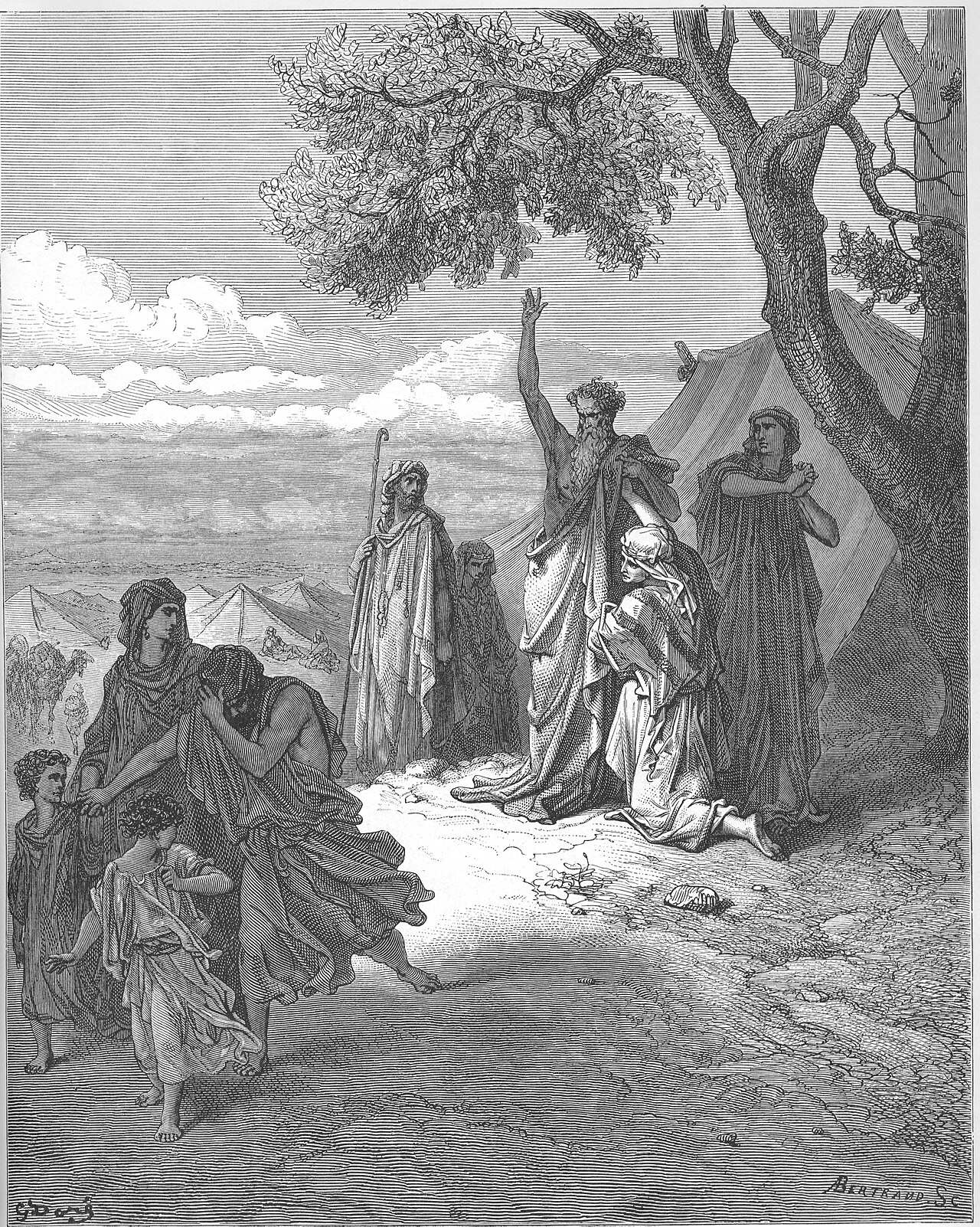
And I establish My covenant with you: Never again will all life be cut off by the waters of a flood; never again will there be a flood to destroy the earth.A covenant is a binding agreement, sworn once and kept for good.
Covenant enters Scripture here: after judgment, God binds Himself first, unconditionally, to all flesh.
The Noahic covenant is unconditional and universal, made with Noah, his descendants, and
"every living creature,"
with no clause for anyone to keep. The sign is a weapon: the Hebrew word is the ordinary one for a war bow, hung in the clouds and pointed away from the earth.
Show more on this stopthe exposition
The exposition on this verse
Then God said to Noah and his sons with him: The word covenant first enters the Bible at 6:18, spoken to this same man. Here it is established on the far side of the water, and it runs one way: God binds Himself and asks nothing back. The promise is exact: no flood will destroy the earth again.
all life be cut off: What God said in His heart at 8:21 He now says to Noah as a covenant. Isaiah 54:9 holds up this oath from the days of Noah as the pattern for God's pledge to Zion. Cut off is karath, the verb for making a covenant.
This exposition draws on Jamieson, Fausset & Brown, Commentary Critical and Explanatory on the Whole Bible; John Calvin, Commentary on Genesis and Matthew Henry, Commentary on the Whole Bible.
Stop 2 of 8: Genesis 12:1
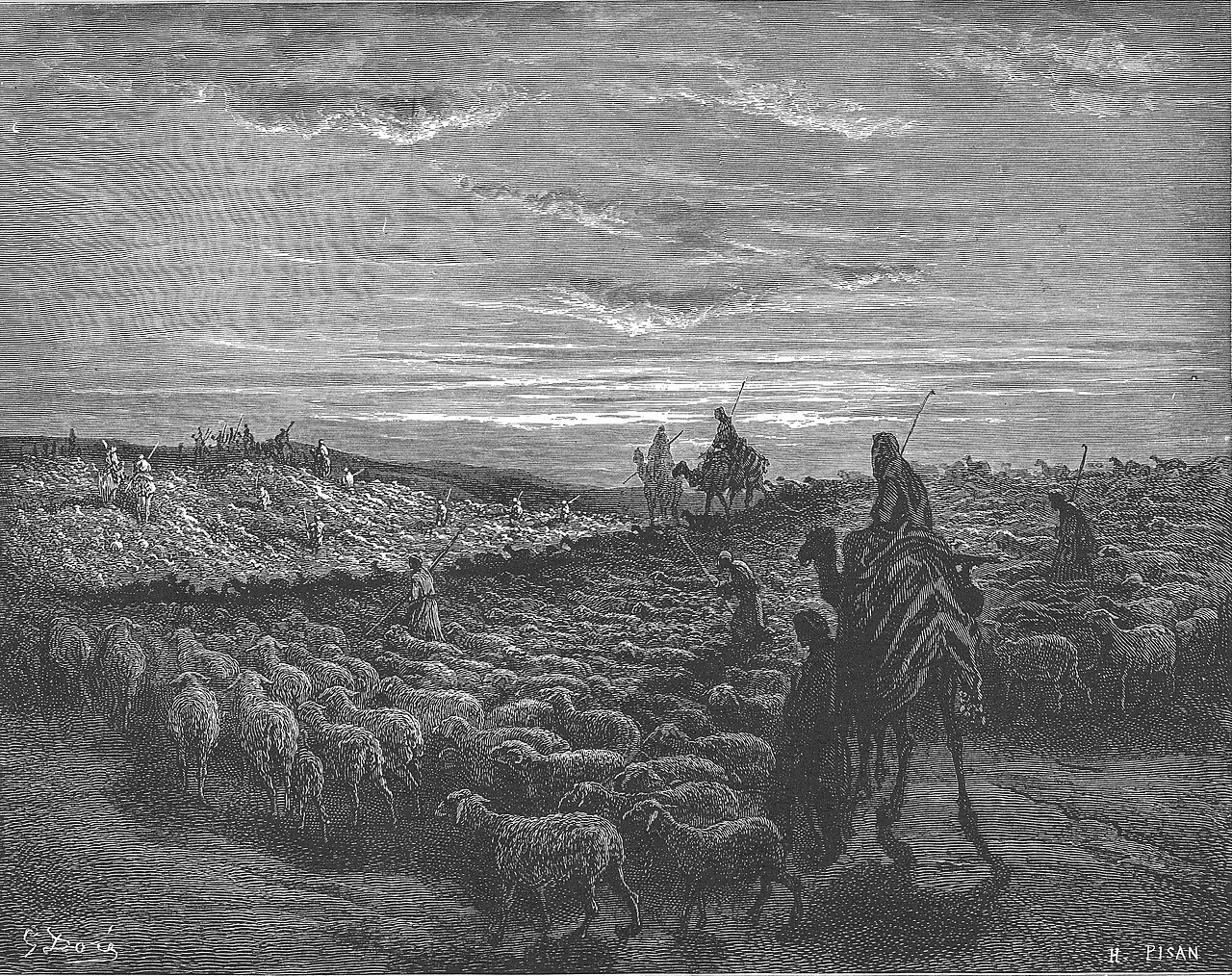
Then the LORD said to Abram, “Leave your country, your kindred, and your father’s household, and go to the land I will show you.The promise narrows to one man so blessing can eventually reach every family on earth.
Seven "I will
" clauses and not one "
if you.
" Land, seed and blessing are pledged to a childless man in Ur, and Paul reads the last clause, "
in thee shall all families of the earth be blessed", as the gospel preached beforehand (Galatians 3:8).
Show more on this stopthe exposition
The exposition on this verse
Leave your country, your kindred: The command separates Abram from three things in rising order of cost, his country, his kindred, his father's household. The promises answer each loss, a great nation, a great name, and blessing for all the families. Galatians 3:8 takes that last clause as the gospel announced to Abraham in advance.
This exposition draws on John Calvin, Commentary on Genesis and Matthew Henry, Commentary on the Whole Bible.
Stop 3 of 8: Genesis 15:18
On that day the LORD made a covenant with Abram, saying, “To your descendants I have given this land—from the river of Egypt to the great River Euphrates—God alone swears the oath, 'unto thy seed have I given', a grant, not a negotiation.
Abram cuts the animals in half, and in the ordinary ceremony both parties walk the aisle of blood together. Abram is put to sleep, and a smoking furnace and a burning lamp pass through alone. God takes both sides of the oath, which is why the promise cannot fail on Abram's performance (Hebrews 6:13–18).
Show more on this stopthe exposition
The exposition on this verse
the LORD made a covenant with Abram: The grant is in the past tense, the land already given to his descendants. The boundaries run from the river of Egypt as far as the Euphrates, and the peoples sitting on that ground are listed by name. Ten are counted here, where Deuteronomy 7:1 later counts seven.
This exposition draws on Adam Clarke, Commentary on the Bible and John Gill, Exposition of the Old Testament.
Stop 4 of 8: Exodus 19:5
Now if you will indeed obey My voice and keep My covenant, you will be My treasured possession out of all the nations—for the whole earth is Mine.A covenant is a binding agreement, sworn once and kept for good.
The one covenant with an 'if': Sinai's condition exposes the human side that will break.
Sinai is the one conditional covenant in the chain:
"If ye will obey my voice indeed... then."
Israel answers
"All that the LORD hath spoken we will do"
before hearing the terms, and breaks them before Moses comes down the mountain.
Show more on this stopthe rest of the note and the exposition
More from the trail's own note
The law's stated job is to expose sin, not to remove it (Romans 3:20).
The exposition on this verse
you will indeed obey My voice: The Hebrew segullah, treasured possession, occurs here for the first time in Scripture. It is used of a personal hoard a king keeps apart from the public treasury, so the word carries private ownership.
This exposition draws on John Gill, Exposition of the Old Testament and Keil and Delitzsch, Biblical Commentary on the Old Testament: The Pentateuch.
Stop 5 of 8: 2 Samuel 7:12
And when your days are fulfilled and you rest with your fathers, I will raise up your descendant after you, who will come from your own body, and I will establish his kingdom.The seed becomes a king: the promise now carries a throne that must stand forever.
David offers to build God a house; God answers that He will build David one: a seed, a throne, and a kingdom established for ever. The dynasty ends at the exile with no king on the throne, and the promise sits open for six centuries until Gabriel quotes it to Mary word for word (Luke 1:32–33).
Show more on this stopthe exposition
The exposition on this verse
I will raise up your descendant after you: The house becomes a seed, a kingdom, and a throne established for ever. The nearest fulfillment is Solomon, who will build the house for my name that David himself wanted to build. Hebrews 1:5 and Luke 1:32-33 carry the same throne of his father David forward to Christ.
This exposition draws on Jamieson Fausset and Brown, Commentary Critical and Explanatory on the Whole Bible and Matthew Henry, Commentary on the Whole Bible.
Stop 6 of 8: Jeremiah 31:31
Behold, the days are coming, declares the LORD, when I will make a new covenant with the house of Israel and with the house of Judah.A covenant is a binding agreement, sworn once and kept for good.
After the broken covenant, God promises a new one: written on hearts, not stone.
This is the only Old Testament verse that uses the phrase
"a new covenant,"
and it was spoken while Jerusalem was falling. It carries four promises: law written on hearts, God as their God, everyone knowing Him, and sins remembered no more.
Show more on this stopthe rest of the note and the exposition
More from the trail's own note
Hebrews 8 quotes the passage in full.
The exposition on this verse
I will make a new covenant: “I will make a new covenant with the house of Israel and with the house of Judah” is the only use in the Old Testament. The terms are inward, “I will put My law in their minds.” Hebrews 8:8-12 quotes the passage, the longest Old Testament quotation in the New.
This exposition draws on Carl Friedrich Keil, The Prophecies of Jeremiah and Matthew Henry, Commentary on the Whole Bible.
Stop 7 of 8: Matthew 26:28
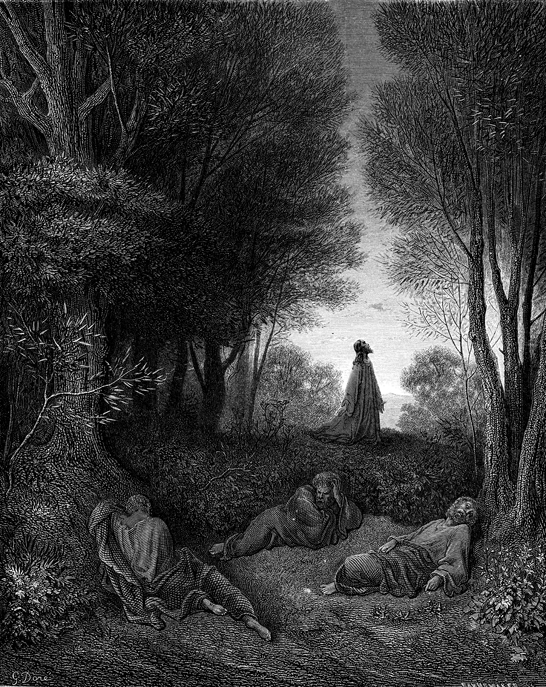
This is My blood of the covenant, which is poured out for many for the forgiveness of sins.A covenant is a binding agreement, sworn once and kept for good.
Jeremiah's promise gets a night and a price: the new covenant is cut in Jesus' blood.
Jesus lifts the cup and says
"this is my blood of the new testament"
, enacting Jeremiah 31 at a table, before the cross, in front of witnesses. The covenant is ratified the way Genesis 15 was: by blood, with one party paying for both.
Show more on this stopthe exposition
The exposition on this verse
this is My body: Jesus takes bread, speaks a blessing and breaks it, saying "this is My body," then gives the cup to all. He builds the meal the church still keeps on the Passover bread and cup. "This is My blood of the covenant" echoes the covenant sealed in blood at Exodus 24:8.
My blood of the covenant: Adam Clarke notes that Luke and Paul give the saying as the cup being the new covenant in his blood. John Wesley and John Gill read the wine as a sign of the blood, and Charles Spurgeon argues against transubstantiation. Wesley reads many as all the children of Adam.
This exposition draws on Adam Clarke, Commentary on the Bible; Charles Spurgeon, The Metropolitan Tabernacle Pulpit, Sermon No. 1971: “The Blood Shed For Many” (lightly modernized text, CCEL edition); John Calvin, Commentary on a Harmony of the Evangelists; John Gill, Exposition of the New Testament (1746-1748); John Wesley, Explanatory Notes upon the New Testament and Matthew Henry, Commentary on the Whole Bible.
Stop 8 of 8: Hebrews 8:6
Now, however, Jesus has received a much more excellent ministry, just as the covenant He mediates is better and is founded on better promises.A covenant is a binding agreement, sworn once and kept for good.
The landing: Christ mediates the better covenant, and every earlier promise reads forward to Him.
Hebrews returns the verdict: a better covenant, on better promises, with a better mediator. The argument is not that the first was bad but that it was a shadow with an expiry built in:
"in that he saith, A new covenant, he hath made the first old."
It was written while the temple was still standing.
Show more on this stopthe exposition
The exposition on this verse
a much more excellent ministry: Jesus has received a much more excellent ministry, diaphoroteros, as mediator, mesites, of a covenant that is better and is founded on better promises. Moses mediated the old covenant, whose law was written on stone. Jeremiah's promise, quoted next, writes the new one on the heart.
This exposition draws on John Owen, An Exposition of the Epistle to the Hebrews and Matthew Henry, Commentary on the Whole Bible.
What this trail means
Lay the eight stops side by side and the pattern speaks. At nearly every stop, God is the one talking and God is the one promising: "I will establish my covenant" (Genesis 9:11), "unto thy seed have I given this land" (Genesis 15:18), "I will set up thy seed after thee" (2 Samuel 7:12), "I will make a new covenant" (Jeremiah 31:31). These are not contracts negotiated between equals. They are commitments God makes and God keeps.
Sinai stands apart on purpose. Exodus 19:5 is the covenant with a condition, "if ye will obey my voice indeed," and Israel's history answers that "if." Jeremiah says it plainly: a new covenant is coming, unlike the one they broke. The problem was never God's faithfulness; it was the human side of the agreement.
So the new covenant solves the human side. Jesus takes the cup and declares the promise fulfilled in His own blood, "poured out for many unto remission of sins" (Matthew 26:28). Hebrews 8:6 then names Him the mediator of "a better covenant, enacted upon better promises," better because the keeping of it rests on Him. From Noah's rainbow to David's throne, every covenant was a down payment. The risen Son of David is where the "I will" of God lands, and it cannot be broken.
Show the verses this closing names7 verses
And I establish My covenant with you: Never again will all life be cut off by the waters of a flood; never again will there be a flood to destroy the earth.On that day the LORD made a covenant with Abram, saying, “To your descendants I have given this land—from the river of Egypt to the great River Euphrates—Now if you will indeed obey My voice and keep My covenant, you will be My treasured possession out of all the nations—for the whole earth is Mine.And when your days are fulfilled and you rest with your fathers, I will raise up your descendant after you, who will come from your own body, and I will establish his kingdom.Behold, the days are coming, declares the LORD, when I will make a new covenant with the house of Israel and with the house of Judah.This is My blood of the covenant, which is poured out for many for the forgiveness of sins.Now, however, Jesus has received a much more excellent ministry, just as the covenant He mediates is better and is founded on better promises.Show what you now know
- One covenant in the chain is conditional, Sinai, and it is the one Israel broke before Moses came off the mountain.
- The rest are pledges God swore to keep Himself. In Genesis 15 He walked the blood aisle alone.
- Each covenant adds and never cancels: preservation, a people, a land, a law that exposes sin, a throne, and a heart that can keep it.
- The New Covenant was promised while Jerusalem burned and enacted over a cup, in blood, by the mediator Hebrews calls better.