
Concept
SoteriologyThe Abrahamic Covenant
Land, seed, and blessing sworn to one man: unconditional, and the root every later promise grows from.
#covenant#abraham
- 5passages
- 35original words
- 1approved connection
- 115cross-references
The words behind it
Hebrew and Greek standing in the 5 passages listed below, not a lexicon of "the abrahamic covenant" itself. The number on each word is how often it occurs in those passages; the connecting words the languages use everywhere are set aside so the words that carry meaning can be seen.
Hebrew26
16 more hebrew words ▾
The passages
Every passage this site attaches to the concept, in canon order. Each row says where it came from.
Old Testament4
- Genesis 12:1listed key text
Then the LORD said to Abram, “Leave your country, your kindred, and your father’s household, and go to the land I will show you.(opening verse of the passage)
Commentary on Genesis 12:12 voices
“Get out for thyself (so some read it), that is, for thy own good. Note, Those who leave their sins, and turn to God, will themselves be unspeakable gainers by the change, Prov. ix. This command which God gave to Abram is much the same with the gospel call by which all the spiritual seed of faithful Abram are brought into covenant with God.”
Matthew Henry · Commentary on the Whole Bible, 1710Puritan
“This call included two promises: the first, showing the land of his future posterity; and the second, that in his posterity all the earth was to be blessed (Ge 12:2). Abraham obeyed, and it is frequently mentioned in the New Testament as a striking instance of his faith (Heb 11:8).”
Jamieson, Fausset & Brown · Commentary Critical and Explanatory on the Whole Bible, 1871Reformed
- Genesis 15:5listed key text
And the LORD took him outside and said, “Now look to the heavens and count the stars, if you are able.” Then He told him, “So shall your offspring be.”(opening verse of the passage)
Commentary on Genesis 15:52 voices
“Abram feared he should have no child at all, but God tells him his descendents should be so many as not to be numbered. So illustrious, as the stars of heaven for splendour; for to them pertained the glory, Rom. ix, 4. Abram's seed according to the flesh were like the dust of the earth, Chap. xiii, 16, but his spiritual seed are like the stars of heaven.”
John Wesley · Explanatory Notes upon the Old Testament, 1765Evangelical
“What is the meaning then of the expression ‘he brought him outside’? The prophet is as it were led out, so that he goes outside of the body and sees the limitations imposed by the flesh that is his garment and the infusion of the Holy Spirit who makes a kind of visible descent. We too must exit from the confinement of this our temporary dwelling.”
Ambrose of Milan · On AbrahamPatristic
- Genesis 15:18listed key text
On that day the LORD made a covenant with Abram, saying, “To your descendants I have given this land—from the river of Egypt to the great River Euphrates—(opening verse of the passage)
Commentary on Genesis 15:182 voices
“The Lord made a covenant - כרת ברית carath berith signifies to cut a covenant, or rather the covenant sacrifice; for as no covenant was made without one, and the creature was cut in two that the contracting parties might pass between the pieces, hence cutting the covenant signified making the covenant.”
Adam Clarke · Commentary on the BibleEvangelical
“He had said before, To thy seed will I give this land, ch. xii. But here he says, I have given it; that is, (1.) I have given the promise of it, the charter is sealed and delivered, and cannot be disannulled. Note, God's promises are God's gifts, and are so to be accounted.”
Matthew Henry · Commentary on the Whole Bible, 1710Puritan
- Genesis 17:7listed key text
I will establish My covenant as an everlasting covenant between Me and you and your descendants after you, to be your God and the God of your descendants after you.(opening verse of the passage)
Commentary on Genesis 17:72 voices
“The covenant of grace is everlasting; it is from everlasting in the counsels of it, and to everlasting in the consequences of it; and the external administration of it is transmitted, with the seal of it, to the seed of believers, and the internal administration of it by the Spirit to Christ's seed in every age. This is a covenant of exceeding great and precious promises.”
John Wesley · Explanatory Notes upon the Old Testament, 1765Evangelical
“An everlasting covenant - ברית עולם berith olam. See note on Gen 13:15. Here the word olam is taken in its own proper meaning, as the words immediately following prove - to be a God unto thee, and thy seed after thee; for as the soul is to endure for ever, so it shall eternally stand in need of the supporting power and energy of God; and as the reign of the Gospel dispensation shall be as long as sun and moon endure, and its consequences eternal, so must the covenant be on which these are founded.”
Adam Clarke · Commentary on the BibleEvangelical
New Testament1
- Galatians 3:8listed key text
The Scripture foresaw that God would justify the Gentiles by faith, and foretold the gospel to Abraham: “All nations will be blessed through you.”(opening verse of the passage)
Commentary on Galatians 3:82 voices
“God justifieth the Jews, too, ‘by faith, not by works.’ But he specifies the Gentiles in particular here, as it was their case that was in question, the Galatians being Gentiles. preached before the gospel--‘announced beforehand the Gospel.’ For the ‘promise’ was substantially the Gospel by anticipation.”
Jamieson, Fausset & Brown · Commentary Critical and Explanatory on the Whole Bible, 1871Reformed
“(Verse 8, 9.) But the Scripture, foreseeing that by faith God would justify the Gentiles, foretold to Abraham that all nations would be blessed in him. So then, those who are of faith are blessed with faithful Abraham. Not that the Scripture itself, namely the ink and the parchment, which are insensible, can foreknow the future; but rather the Holy Spirit and the senses, hidden in the letter, have foretold things to come many centuries later.”
Jerome · Commentary on GalatiansPatristic
Approved connections
1 link an editor approved, each with the reason it was kept.
- covenant enactmentGenesis 15:18
“Unto thy seed have I given this land, from the river of Egypt unto the great river, the river Euphrates” (Gen 15:18). It is a grant covenant, enacted in the cutting ceremony: God alone passes between the pieces, so the promise rests on him alone. Where scholars push back: Whether the land grant awaits a literal future fulfillment for Israel or is taken up in the new creation is a standing division between readers.
text; Weinfeld70 (cite-only)
Voices on these passages
Commentary matched to the verses above, each named with its source: the full pool sits on each verse page.
“Get out for thyself (so some read it), that is, for thy own good. Note, Those who leave their sins, and turn to God, will themselves be unspeakable gainers by the change, Prov. ix. This command which God gave to Abram is much the same with the gospel call by which all the spiritual seed of faithful Abram are brought into covenant with God.”
Matthew Henry · Commentary on the Whole BiblePuritan
Genesis 12:1
“Abram feared he should have no child at all, but God tells him his descendents should be so many as not to be numbered. So illustrious, as the stars of heaven for splendour; for to them pertained the glory, Rom. ix, 4. Abram's seed according to the flesh were like the dust of the earth, Chap. xiii, 16, but his spiritual seed are like the stars of heaven.”
John Wesley · Explanatory Notes upon the Old TestamentEvangelical
Genesis 15:5
“The Lord made a covenant - כרת ברית carath berith signifies to cut a covenant, or rather the covenant sacrifice; for as no covenant was made without one, and the creature was cut in two that the contracting parties might pass between the pieces, hence cutting the covenant signified making the covenant.”
Adam Clarke · Commentary on the BibleEvangelical
Genesis 15:18
Study it deeper
5 moves a student can make from here. Every one opens a tool on this site.
Trace one word to every place it stands
A word page lists every verse that word occurs in, with its definition and its range of meaning. Start with the roots that occur most under the passages above.
Walk out from the passages
The passages above carry 115 cross-references between them, links from the Treasury of Scripture Knowledge, the great 1830s reference work, together with the reader-voted index at OpenBible.info. The most-linked destinations:
Read it in both testaments
Set the earliest passage beside the New Testament one and ask what changed and what did not, the shape of the abrahamic covenant before Christ and after him.
Read the whole chapter around it
A verse quoted alone can mean almost anything. Open Genesis 12 in the reader, where the Hebrew or Greek sits under every line.
See everywhere else it appears
The search page is a doorway: it returns verses, word studies, people, places and studies for one term at once.
Where this comes from
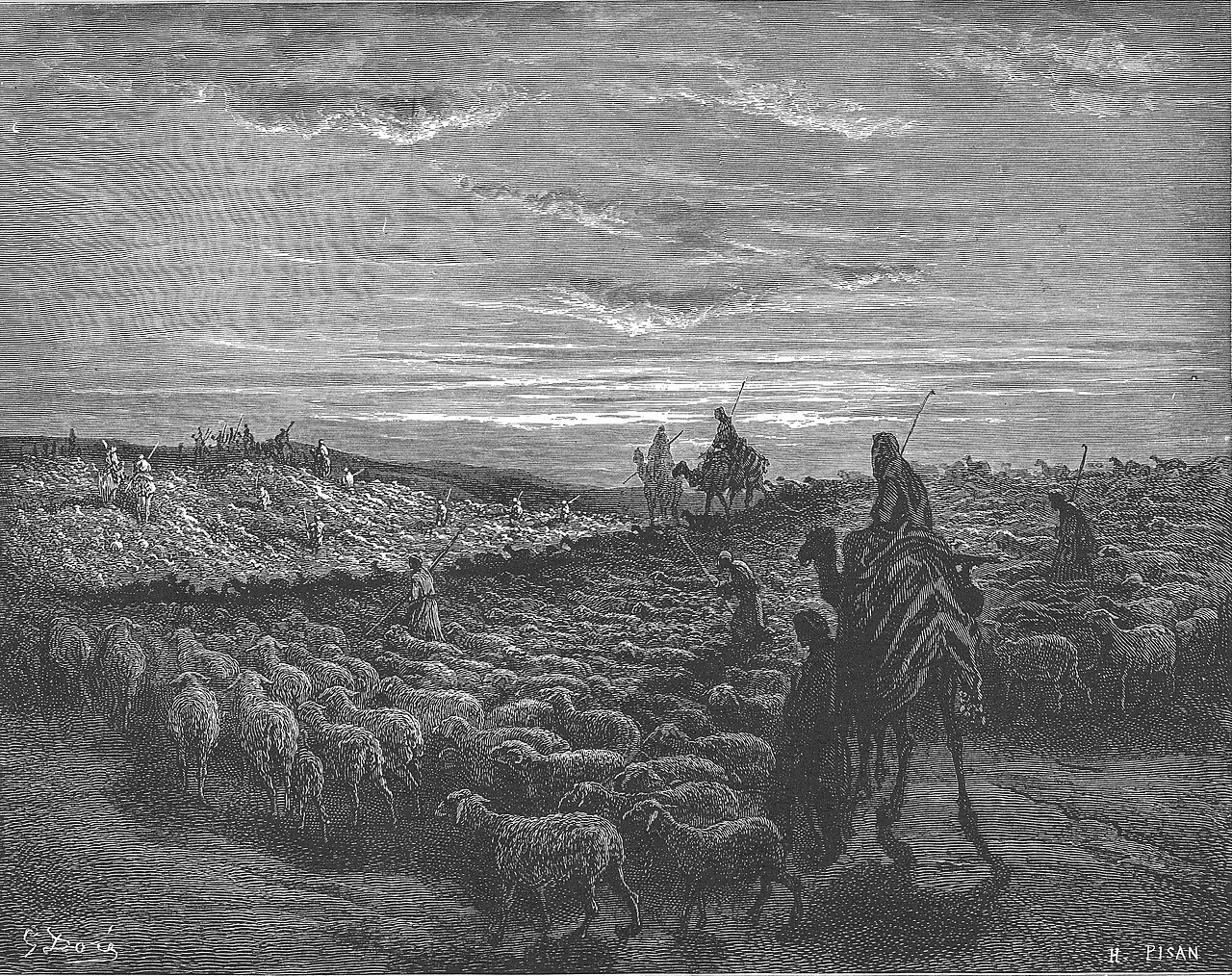
God calls Abram out of Ur with three promises: a land, a nation from his body, and blessing for "all families of the earth." In Genesis 15 he ratifies it alone, walking the blood path himself while Abram lies in a deep sleep: the covenant rests on God's oath, not Abraham's performance.
Paul reads the blessing as the gospel preached in advance (Galatians 3:8), which is why Gentiles are in it at all.