
Concept
SoteriologyThe Davidic Covenant
A house, a kingdom, and a throne established forever: the promise that makes a coming King inevitable.
#covenant#kingship
- 6passages
- 43original words
- 1approved connection
- 128cross-references
The words behind it
Hebrew and Greek standing in the 6 passages listed below, not a lexicon of "the davidic covenant" itself. The number on each word is how often it occurs in those passages; the connecting words the languages use everywhere are set aside so the words that carry meaning can be seen.
Hebrew24
14 more hebrew words ▾
The passages
Every passage this site attaches to the concept, in canon order. Each row says where it came from.
Old Testament4
- 2 Samuel 7:11listed key text
and have done since the day I appointed judges over My people Israel. I will give you rest from all your enemies. The LORD declares to you that He Himself will establish a house for you.(opening verse of the passage)
Commentary on 2 Samuel 7:111 voice
“The Lord - will make thee a house - Thou hast in thy heart to make me a house; I have it in my heart to make thee a house: thy family shall be built up, and shall prosper in the throne of Israel; and thy spiritual posterity shall remain for ever. God is the author of all our holy purposes, as well as of our good works, he first excites them; and if we be workers together with him, he will crown and reward them as though they were our own, though he is their sole author.”
Adam Clarke · Commentary on the BibleEvangelical
- 2 Samuel 7:12approved connection
And when your days are fulfilled and you rest with your fathers, I will raise up your descendant after you, who will come from your own body, and I will establish his kingdom.
Commentary on 2 Samuel 7:122 voices
“I will set - I will set up in thy throne, thy posterity, first Solomon, and then others successively, and at last the Messiah. So the following words may be understood, part of his posterity in general, part of Solomon, and part of Christ only, according to the different nature of the several passages.”
John Wesley · Explanatory Notes upon the Old Testament, 1765Evangelical
“But by a special ordinance and promise of God, his successor was to be a son born after this time; and the departure from the established usage of the East in fixing the succession, can be accounted for on no other known ground, except the fulfilment of the divine promise.”
Jamieson, Fausset & Brown · Commentary Critical and Explanatory on the Whole Bible, 1871Reformed
- 2 Samuel 7:16listed key text
Your house and kingdom will endure forever before Me, and your throne will be established forever.”(opening verse of the passage)
Commentary on 2 Samuel 7:161 voice
“David's house and kingdom have long since come to an end; it is only the Messiah's kingdom that is everlasting, and of the increase of his government and peace there shall be no end. The supposition of committing iniquity cannot indeed be applied to the Messiah himself, but it is applicable (and very comfortable) to his spiritual seed.”
Matthew Henry · Commentary on the Whole Bible, 1710Puritan
- Psalm 89:34listed key text
I will not violate My covenant or alter the utterance of My lips.(opening verse of the passage)
Commentary on Psalm 89:342 voices
“My covenant will I not break. It is his own covenant. He devised it, drew up the draft of it, and voluntarily entered into it: he therefore thinks much of it. It is not a man's covenant, but the Lord claims it as his own. It is an evil thing among men for one to be a ‘covenant breaker’, and such an opprobrious epithet shall never be applicable to the Most High. Nor alter the thing that is gone out of my lips.”
Charles Spurgeon · The Treasury of David, Vol. 4, 1874
“Then--when the covenant was established, of whose execution the exalted views of God now given furnish assurance. thou . . . to thy holy one--or godly saint, object of favor (Ps 4:3). Nathan is meant (2Sa 7:17; 1Ch 17:3-15). laid help--literally, ‘given help.’ David was chosen and then exalted.”
Jamieson, Fausset & Brown · Commentary Critical and Explanatory on the Whole Bible, 1871Reformed
New Testament2
- Luke 1:32listed key text
He will be great and will be called the Son of the Most High. The Lord God will give Him the throne of His father David,(opening verse of the passage)
Commentary on Luke 1:322 voices
“He shall be called the Son of the Highest - In this respect also: and that in a more eminent sense than any, either man or angel, can be called so. The Lord shall give him the throne of his father David - That is, the spiritual kingdom, of which David's was a type.”
John Wesley · Explanatory Notes upon the New Testament, 1755Evangelical
“(de fide ad Theod.) But this name was given anew to the Word in adaptation to His nativity in the flesh; as that prophecy saith, Thou shalt be called by a new name which the mouth of the Lord hath named. (Is. 62:2.) (contra Julian lib. viii.) Not however from Joseph proceeded the most pure descent of Christ. For from one and the same line of connection had sprung both Joseph and the Virgin, and from this the only-begotten had taken the form of man.”
Cyril of Alexandria · Catena Aurea by AquinasPatristic
- Acts 2:30listed key text
But he was a prophet and knew that God had promised him on oath that He would place one of his descendants on his throne.(opening verse of the passage)
Commentary on Acts 2:302 voices
“The Psalm is then affirmed to have had its only proper fulfilment in JESUS, of whose resurrection and ascension they were witnesses, while the glorious effusion of the Spirit by the hand of the ascended One, setting an infallible seal upon all, was even then witnessed by the thousands who stood listening to Him.”
Jamieson, Fausset & Brown · Commentary Critical and Explanatory on the Whole Bible, 1871Reformed
“Then he proceeds to speak confidently to them concerning the patriarch David, that he was dead and buried, and that his sepulchre is with them to this day. He said, ‘But since he was a prophet, and knew that God had sworn with an oath to him, that of the fruit of his body one should sit in his throne; foreseeing this, he spake of the resurrection of Christ, that He was not left in hell, neither did His flesh see corruption.”
Irenaeus · Against Heresies Book IIIPatristic
Approved connections
1 link an editor approved, each with the reason it was kept.
- covenant enactment2 Samuel 7:12
enduring house/throne/kingdom, a royal grant (Weinfeld) sworn to David (2 Sam 7:8-16)
text; Weinfeld70
Voices on these passages
Commentary matched to the verses above, each named with its source: the full pool sits on each verse page.
“The Lord - will make thee a house - Thou hast in thy heart to make me a house; I have it in my heart to make thee a house: thy family shall be built up, and shall prosper in the throne of Israel; and thy spiritual posterity shall remain for ever. God is the author of all our holy purposes, as well as of our good works, he first excites them; and if we be workers together with him, he will crown and reward them as though they were our own, though he is their sole author.”
Adam Clarke · Commentary on the BibleEvangelical
2 Samuel 7:11
“I will set - I will set up in thy throne, thy posterity, first Solomon, and then others successively, and at last the Messiah. So the following words may be understood, part of his posterity in general, part of Solomon, and part of Christ only, according to the different nature of the several passages.”
John Wesley · Explanatory Notes upon the Old TestamentEvangelical
2 Samuel 7:12
“David's house and kingdom have long since come to an end; it is only the Messiah's kingdom that is everlasting, and of the increase of his government and peace there shall be no end. The supposition of committing iniquity cannot indeed be applied to the Messiah himself, but it is applicable (and very comfortable) to his spiritual seed.”
Matthew Henry · Commentary on the Whole BiblePuritan
2 Samuel 7:16
Study it deeper
5 moves a student can make from here. Every one opens a tool on this site.
Trace one word to every place it stands
A word page lists every verse that word occurs in, with its definition and its range of meaning. Start with the roots that occur most under the passages above.
Walk out from the passages
The passages above carry 128 cross-references between them, links from the Treasury of Scripture Knowledge, the great 1830s reference work, together with the reader-voted index at OpenBible.info. The most-linked destinations:
Read it in both testaments
Set the earliest passage beside the New Testament one and ask what changed and what did not, the shape of the davidic covenant before Christ and after him.
Read the whole chapter around it
A verse quoted alone can mean almost anything. Open 2 Samuel 7 in the reader, where the Hebrew or Greek sits under every line.
See everywhere else it appears
The search page is a doorway: it returns verses, word studies, people, places and studies for one term at once.
Where this comes from
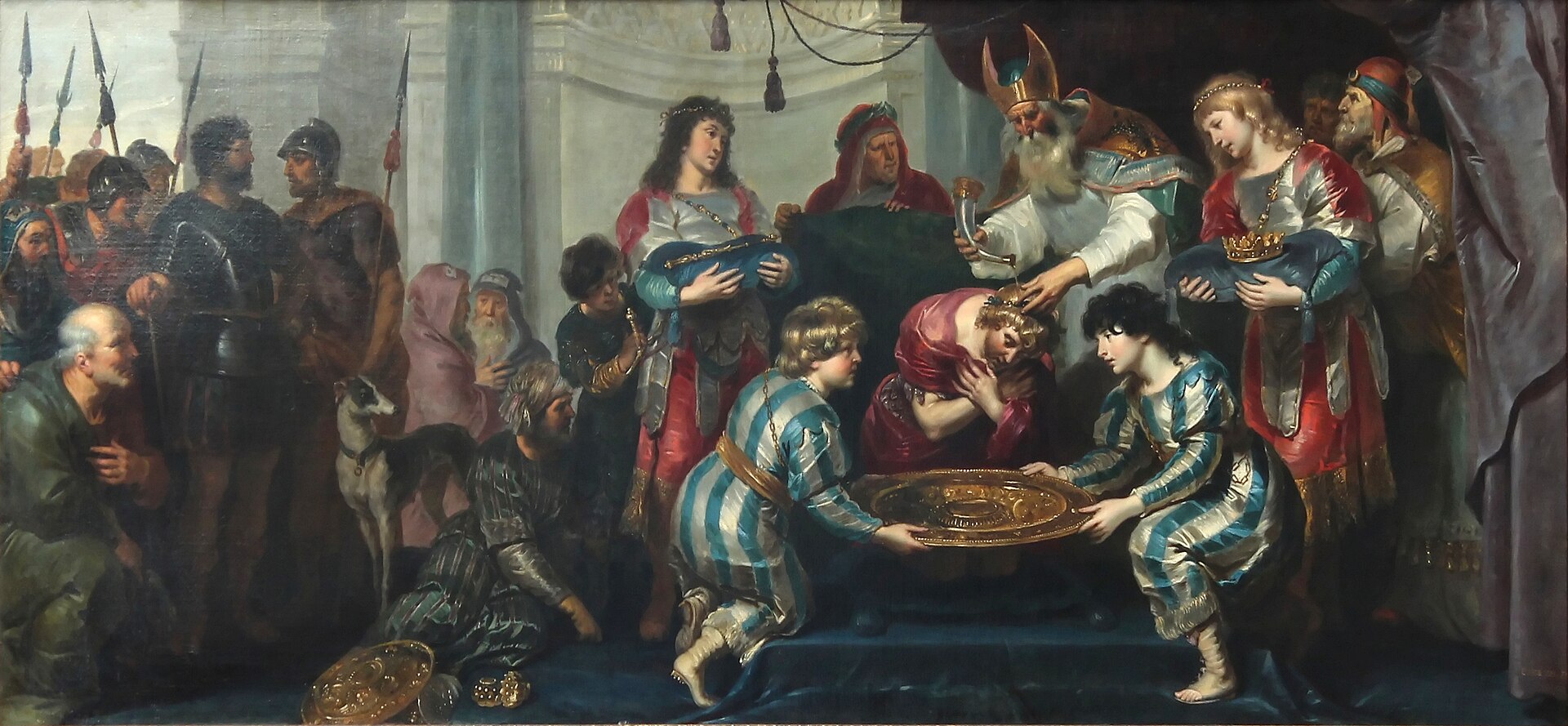
David wants to build God a house; God answers that he will build David one (2 Samuel 7:11). The grant is unconditional in its continuance: discipline for a wayward son, but "my mercy shall not depart away from him."
Psalm 89 holds God to it out loud during a season when the throne is empty, and Gabriel repeats it word for word to a girl in Nazareth: "the Lord God shall give unto him the throne of his father David" (Luke 1:32).