
Concept
Soteriologyalso PesachPassover
A lamb without blemish, blood on the doorposts, judgment passing over the house: Israel's founding night and the calendar of the cross.
#feast#typology
- 70passages
- 87original words
- 221cross-references
- 1thread through it
The words behind it
Hebrew and Greek standing in the 18 passages listed below, not a lexicon of "passover" itself. The number on each word is how often it occurs in those passages; the connecting words the languages use everywhere are set aside so the words that carry meaning can be seen.
Hebrew87
77 more hebrew words ▾
The passages
The first 18 of 70 passages this site attaches to the concept, in canon order. Each row says where it came from.
Old Testament18
- Genesis 22:7thread stop
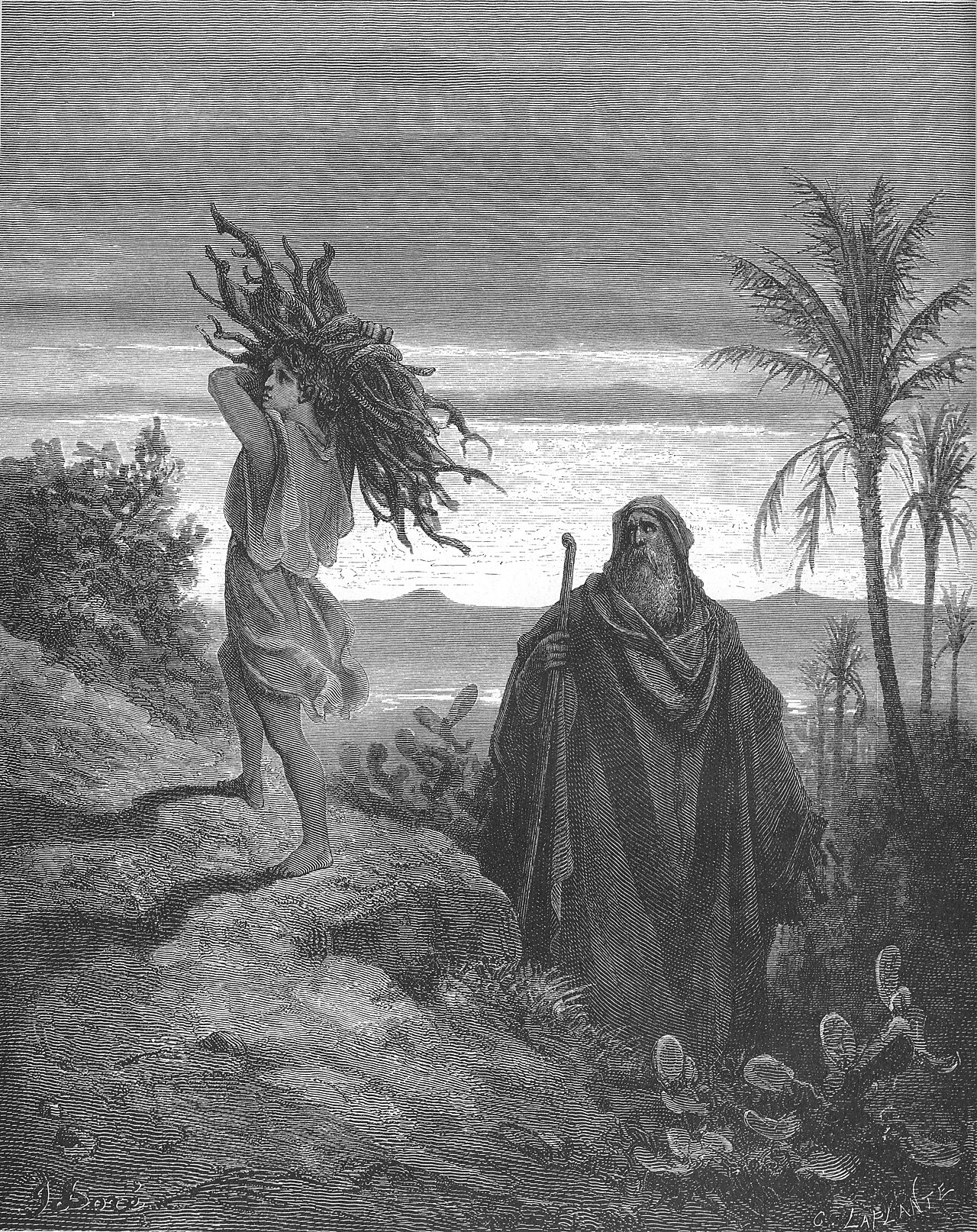
Then Isaac said to his father Abraham, “My father!” “Here I am, my son,” he replied. “The fire and the wood are here,” said Isaac, “but where is the lamb for the burnt offering?”(opening verse of the passage)
Commentary on Genesis 22:72 voices
Behold the fire and the wood, but where is the lamb? - This is, 1. A trying question to Abraham; how could he endure to think that Isaac is himself the lamb? 'Tis a teaching question to us all, that when we are going to worship God, we should seriously consider whether we have every thing ready, especially the lamb for a burnt-offering.
John Wesley· Explanatory Notes upon the Old Testament, 1765Evangelical
Therefore he brings his well-beloved son to be sacrificed, and offered promptly him whom he had received late; nor is he restrained by being called by the name of father, when his son called him "Father," and he replied, "My son." Dear pledges of love are these names, but the commands of God are loved still more. And so although their hearts felt for each other, their purpose remained firm.
Ambrose of Milan· On the Decease of His Brother Satyrus, Book 2, Section 97Patristic
- Exodus 12:3listed key text
Tell the whole congregation of Israel that on the tenth day of this month each man must select a lamb for his family, one per household.(opening verse of the passage)
Commentary on Exodus 12:32 voices
It is observable that, amid all the hurry and bustle of such a departure, their serious attention was to be given to a solemn act of religion. a lamb for an house--a kid might be taken (Ex 12:5). The service was to be a domestic one, for the deliverance was to be from an evil threatened to every house in Egypt.
Jamieson, Fausset & Brown· Commentary Critical and Explanatory on the Whole Bible, 1871Reformed
A lamb - The Hebrew word is general, meaning either a sheep or a goat - male or female - and of any age; the age and sex are therefore epecially defined in the following verse. The direction to select the lamb on the tenth day, the fourth day before it was offered, was intended to secure due care in the preparation for the great national festival. The custom certainly fell into desuetude at a later period, but probably not before the destruction of the temple.
Albert Barnes· Notes, Explanatory and Practical, on the Old and New Testaments (1832-1869)Evangelical
- Exodus 12:8topical floor
They are to eat the meat that night, roasted over the fire, along with unleavened bread and bitter herbs.
Commentary on Exodus 12:82 voices
And they shall eat the flesh in that night, roast with fire,.... The night of the fourteenth of Nisan; and as the Jews reckoned their days from the evening preceding, this must be the beginning of the fifteenth day, which being observed, will serve to reconcile some passages relating to this ordinance.
John Gill· Exposition of the Old Testament (1748-1763)Reformed
They shall eat the flesh - roast with fire - As it was the ordinary custom of the Jews to boil their flesh, some think that the command given here was in opposition to the custom of the Egyptians, who ate raw flesh in honor of Osiris. The Ethiopians are to this day remarkable for eating raw flesh, as is the case with most savage nations. Unleavened bread - מצות matstsoth, from מצה matsah, to squeeze or compress, because the bread prepared without leaven or yeast was generally compressed, sad or heavy, as we term it.
Adam Clarke· Commentary on the BibleEvangelical
- Exodus 12:13listed key text
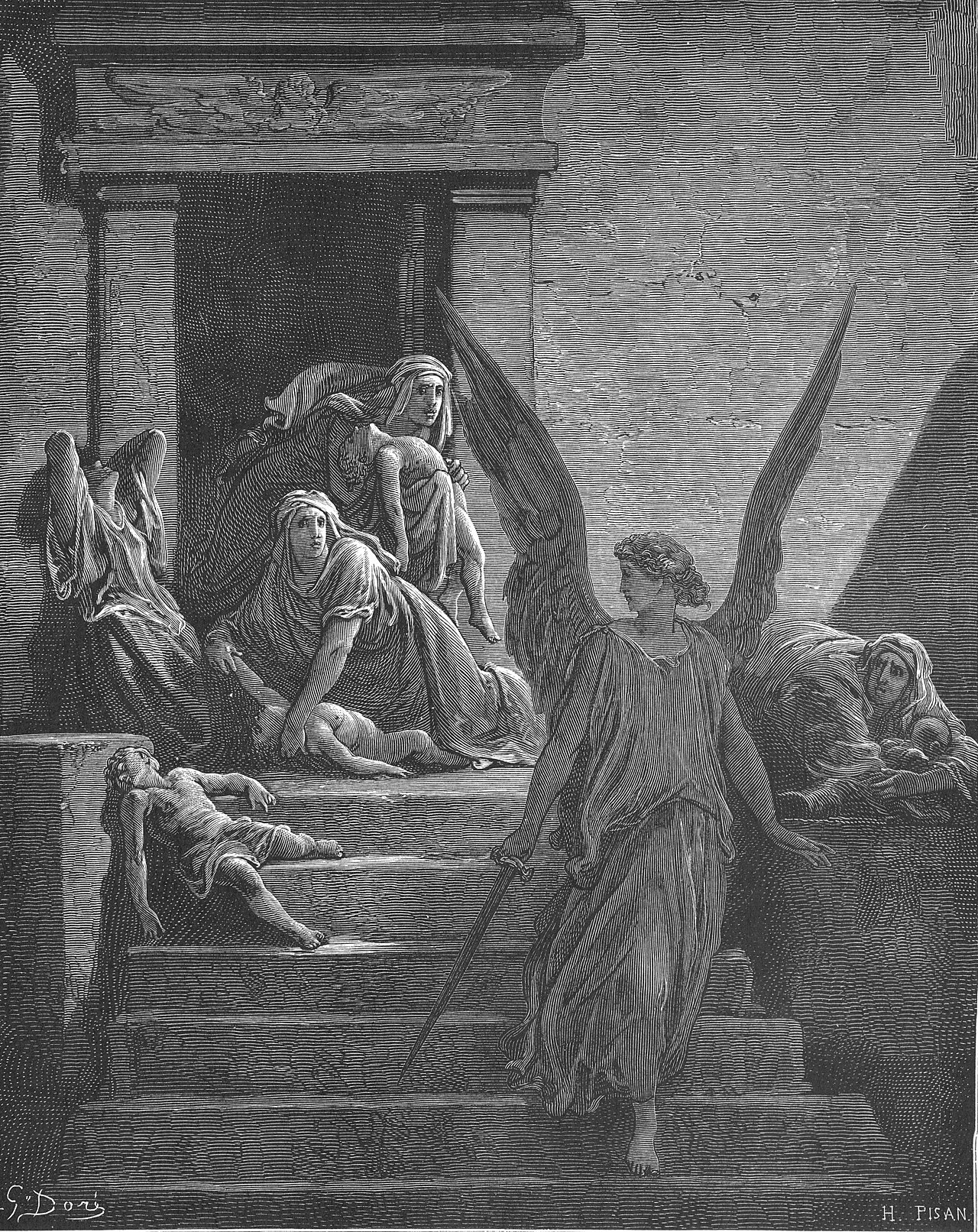
The blood on the houses where you are staying will distinguish them; when I see the blood, I will pass over you. No plague will fall on you to destroy you when I strike the land of Egypt.(opening verse of the passage)
Commentary on Exodus 12:132 voices
Moses does not mention the fulfillment, in this chapter, yet he speaks of it Num. xxxiii. It is very probable that the idols which the Egyptians worshipped were destroyed, those of metal melted, those of wood consumed, and those of stone broken to pieces, whence Jethro infers ( ch. xviii. 11 ), The Lord is greater than all gods.
Matthew Henry· Commentary on the Whole Bible, 1710Puritan
Original sin could not have easily been forgiven, if a victim had not been offered for it, if that sacred blood of propitiation had not been shed. Even then the words in Exodus were not vainly said of our Lord: "I shall see the blood …
Caesarius of Arles· SERMON 11.5Patristic
- Exodus 12:15topical floor
For seven days you must eat unleavened bread. On the first day you are to remove the leaven from your houses. Whoever eats anything leavened from the first day through the seventh must be cut off from Israel.(opening verse of the passage)
Commentary on Exodus 12:152 voices
Now, without doubt, there was much of the gospel in this ordinance; it is often referred to in the New Testament, and, in it, to us is the gospel preached, and not to them only, who could not stedfastly look to the end of these things, Heb. iv. The paschal lamb was typical. Christ is our Passover, 1 Cor. v. 7 .
Matthew Henry· Commentary on the Whole Bible, 1710Puritan
A figurative allusion to this is made (1Co 5:7). The exclusion of leaven for seven days would not be attended with inconvenience in the East, where the usual leaven is dough kept till it becomes sour, and it is kept from one day to another for the purpose of preserving leaven in readiness.
Jamieson, Fausset & Brown· Commentary Critical and Explanatory on the Whole Bible, 1871Reformed
- Exodus 12:21topical floor
Then Moses summoned all the elders of Israel and told them, “Go at once and select for yourselves a lamb for each family, and slaughter the Passover lamb.(opening verse of the passage)
Commentary on Exodus 12:211 voice
Draw out - i. e. draw the lamb from the fold and then take it to the house. The passover - The word is here applied to the lamb; an important fact, marking the lamb as the sign and pledge of the exemption of the Israelites.
Albert Barnes· Notes, Explanatory and Practical, on the Old and New Testaments (1832-1869)Evangelical
- Exodus 12:46listed key text
It must be eaten inside one house. You are not to take any of the meat outside the house, and you may not break any of the bones.(opening verse of the passage)
Commentary on Exodus 12:462 voices
In one house shall it be eaten - In one family, if that be large enough; if not, a neighboring family might be invited, Exo 12:4. Thou shalt not carry forth aught of the flesh - Every family must abide within doors because of the destroying angel, none being permitted to go out of his house till the next day, Exo 12:
Adam Clarke· Commentary on the BibleEvangelical
And that prophecy also is fulfilled, "A bone of Him shall not be broken." (Ex. xii. 46; Num. ix. 12.) For even if this was said with reference to the lamb of the Jews, still it was for the sake of the reality that the type preceded, and in Him the prophecy was more fully accomplished. On this account the Evangelist brought forward the Prophet. For since by continually producing himself as witness he would have seemed unworthy of credit, he brings Moses to help him, and saith, that neither did this come to pass without a purpose, but was written before of old. And this is the meaning of the words, "A bone of Him shall not be broken."
John Chrysostom· HOMILIES ON THE GOSPEL OF JOHN 85, 407Patristic
- Exodus 12:48topical floor
If a foreigner resides with you and wants to celebrate the LORD’s Passover, all the males in the household must be circumcised; then he may come near to celebrate it, and he shall be like a native of the land. But no uncircumcised man may eat of it.
Commentary on Exodus 12:481 voice
If in sincerity, and with that zeal which the thing required and deserves, we give up ourselves to God, we shall, with ourselves, give up all we have to him, and do our utmost that all ours may be his too. Here is an early indication of favour to the poor Gentiles, that the stranger, if circumcised, stands upon the same level with the home-born Israelite.
Matthew Henry· Commentary on the Whole Bible, 1710Puritan
- Exodus 12:49topical floor
The same law shall apply to both the native and the foreigner who resides among you.”
Commentary on Exodus 12:491 voice
One law shall be to him that is homeborn, and unto the stranger--This regulation displays the liberal spirit of the Hebrew institutions. Any foreigner might obtain admission to the privileges of the nation on complying with their sacred ordinances. In the Mosaic equally as in the Christian dispensation, privilege and duty were inseparably conjoined.
Jamieson, Fausset & Brown· Commentary Critical and Explanatory on the Whole Bible, 1871Reformed
- Exodus 13:3topical floor
So Moses told the people, “Remember this day, the day you came out of Egypt, out of the house of slavery; for the LORD brought you out of it by the strength of His hand. And nothing leavened shall be eaten.
Commentary on Exodus 13:31 voice
There shall no leavened bread, &c.--The words are elliptical, and the meaning of the clause may be paraphrased thus:--"For by strength of hand the Lord brought you out from this place, in such haste that there could or should be no leavened bread eaten."
Jamieson, Fausset & Brown· Commentary Critical and Explanatory on the Whole Bible, 1871Reformed
- Exodus 13:6topical floor
For seven days you are to eat unleavened bread, and on the seventh day there shall be a feast to the LORD.
Commentary on Exodus 13:61 voice
It was, however, only a prospective observance; we read of only one celebration of the passover during the protracted sojourn in the wilderness [Nu 9:5]; but on their settlement in the promised land, the season was hallowed as a sacred anniversary [Jos 5:10], in conformity with the directions here given.
Jamieson, Fausset & Brown· Commentary Critical and Explanatory on the Whole Bible, 1871Reformed
- Exodus 23:15topical floor
You are to keep the Feast of Unleavened Bread as I commanded you: At the appointed time in the month of Abib you are to eat unleavened bread for seven days, because that was the month you came out of Egypt. No one may appear before Me empty-handed.(opening verse of the passage)
Commentary on Exodus 23:151 voice
Three times . . . keep a feast . . . in the year--This was the institution of the great religious festivals--"The feast of unleavened bread," or the passover--"the feast of harvest," or pentecost--"the feast of ingathering," or the feast of tabernacles, which was a memorial of the dwelling in booths in the wilderness, and which was observed in the seventh month (Ex 12:2).
Jamieson, Fausset & Brown· Commentary Critical and Explanatory on the Whole Bible, 1871Reformed
- Exodus 29:38thread stop
This is what you are to offer regularly on the altar, each day: two lambs that are a year old.(opening verse of the passage)
Commentary on Exodus 29:382 voices
This daily service, a lamb offered upon the altar every morning, and every evening, typified the continual intercession which Christ ever lives to make in the virtue of his satisfaction for the continual sanctification of his church: though he offered himself once for all, yet that one offering thus becomes a continual offering.
John Wesley· Explanatory Notes upon the Old Testament, 1765Evangelical
Exo 29:38 The continual burnt-offering - The primary purpose of the national altar is here set forth. The victim slain every morning and every evening was an acknowledgment that the life of the people belonged to Yahweh; the offering of meal was an acknowledgment that all their works rightly done were His due (see Lev. 2); while the incense symbolized their daily prayers. Exo 29:39 At even - See Exo 12:6. Exo 29:40 A tenth deal - i. e. the tenth part of an Ephah; it is sometimes called an Omer (Exo 16:36; see Lev 23:13).
Albert Barnes· Notes, Explanatory and Practical, on the Old and New Testaments (1832-1869)Evangelical
- Exodus 34:18topical floor
You are to keep the Feast of Unleavened Bread. For seven days at the appointed time in the month of Abib, you are to eat unleavened bread as I commanded you. For in the month of Abib you came out of Egypt.
Commentary on Exodus 34:181 voice
Moses bowed . . . and worshipped--In the East, people bow the head to royalty, and are silent when it passes by, while in the West, they take off their hats and shout.
Jamieson, Fausset & Brown· Commentary Critical and Explanatory on the Whole Bible, 1871Reformed
- Leviticus 23:4topical floor
These are the LORD’s appointed feasts, the sacred assemblies you are to proclaim at their appointed times.(opening verse of the passage)
Commentary on Leviticus 23:42 voices
Divine wisdom was manifested in fixing them at those periods; in winter, when the days were short and the roads broken up, a long journey was impracticable; while in summer the harvest and vintage gave busy employment in the fields. Besides, another reason for the choice of those seasons probably was to counteract the influence of Egyptian associations and habits.
Jamieson, Fausset & Brown· Commentary Critical and Explanatory on the Whole Bible, 1871Reformed
These are the feasts of the Lord - Or rather, the solemnities: (for the day of atonement was a fast:) and so the word is used, Isaiah xxxiii, 20, where Zion is called the city of our solemnities.
John Wesley· Explanatory Notes upon the Old Testament, 1765Evangelical
- Leviticus 23:6topical floor
On the fifteenth day of the same month begins the Feast of Unleavened Bread to the LORD. For seven days you must eat unleavened bread.
- Numbers 9:2topical floor
“The Israelites are to observe the Passover at its appointed time.(opening verse of the passage)
Commentary on Numbers 9:21 voice
Let the children of Israel also keep the passover,.... Though this ordinance was enjoined the people of Israel, and observed by them at the time of their coming out of Egypt, and had been since repeated, Lev 23:5; yet without a fresh precept, or an explanation of the former, they seemed not to be obliged, or might not be sensible that they were obliged to keep it, until they came into the land of Canaan, Exo 12:25; and therefore a new order is given them to observe it: at his appointed season; and what that season is is next declared.
John Gill· Exposition of the Old Testament (1748-1763)Reformed
- Numbers 9:6topical floor
But there were some men who were unclean due to a dead body, so they could not observe the Passover on that day. And they came before Moses and Aaron that same day(opening verse of the passage)
Commentary on Numbers 9:62 voices
Certain men - Probably Mishael and Elizaphan, who buried their cousins, Nadab and Abihu, within a week of this Passover Lev 10:4-5.
Albert Barnes· Notes, Explanatory and Practical, on the Old and New Testaments (1832-1869)Evangelical
Hence arose a kind of discrepancy; because, whilst the unclean were not permitted to approach the sacred feast, it was sinful to neglect this exercise of religion. Even Moses confessed that he was perplexed as to this matter, since he sought for time to inquire of God.
John Calvin· Commentaries, 1554Reformed
Voices on these passages
Commentary matched to the verses above, each named with its source: the full pool sits on each verse page.
Behold the fire and the wood, but where is the lamb? - This is, 1. A trying question to Abraham; how could he endure to think that Isaac is himself the lamb? 'Tis a teaching question to us all, that when we are going to worship God, we should seriously consider whether we have every thing ready, especially the lamb for a burnt-offering.
John Wesley· Explanatory Notes upon the Old TestamentEvangelical
Genesis 22:7
It is observable that, amid all the hurry and bustle of such a departure, their serious attention was to be given to a solemn act of religion. a lamb for an house--a kid might be taken (Ex 12:5). The service was to be a domestic one, for the deliverance was to be from an evil threatened to every house in Egypt.
Jamieson, Fausset & Brown· Commentary Critical and Explanatory on the Whole BibleReformed
Exodus 12:3
And they shall eat the flesh in that night, roast with fire,.... The night of the fourteenth of Nisan; and as the Jews reckoned their days from the evening preceding, this must be the beginning of the fifteenth day, which being observed, will serve to reconcile some passages relating to this ordinance.
John Gill· Exposition of the Old Testament (1748-1763)Reformed
Exodus 12:8
Study it deeper
5 moves a student can make from here. Every one opens a tool on this site.
Trace one word to every place it stands
A word page lists every verse that word occurs in, with its definition and its range of meaning. Start with the roots that occur most under the passages above.
Walk out from the passages
The passages above carry 221 cross-references between them, links from the Treasury of Scripture Knowledge, the great 1830s reference work, together with the reader-voted index at OpenBible.info. The most-linked destinations:
Hebrews 11:28→Deuteronomy 24:18→Deuteronomy 5:15→Exodus 20:2→
Read the whole chapter around it
A verse quoted alone can mean almost anything. Open Genesis 22 in the reader, where the Hebrew or Greek sits under every line.
See everywhere else it appears
The search page is a doorway: it returns verses, word studies, people, places and studies for one term at once.
Walk it stop by stop
A thread takes the passages in order and stops at each one with commentary, so the idea unfolds instead of arriving all at once.
Where this comes from
Exodus 12 sets the pattern: the lamb is chosen on the tenth day, kept until the fourteenth, killed at evening, and not a bone of it broken. The blood does not improve the household; it marks it, and the destroyer passes over.
Jesus dies at that feast, on that day, with the same detail preserved: "a bone of him shall not be broken" (John 19:36), and Paul states the identification flatly: "Christ our passover is sacrificed for us" (1 Corinthians 5:7).