
Subject
Covenant
The binding promises God makes, from Noah to the New, each with its own sign.
Part of What God has promised
Also called: testament, oath, promise, treaty, cutting a covenant, berith, diatheke
This subject covers the binding promises God makes: who the parties are, what the terms say, what sign marks each one, and the order they come in. A page on one single covenant carries that covenant's own text and history. What God's kindness does inside a person belongs to Grace, and how a person is brought in belongs to Salvation.
What Covenant covers, and where it stops
This subject covers the binding promises God makes: who the parties are, what the terms say, what sign marks each one, and the order they come in. A page on one single covenant carries that covenant's own text and history. What God's kindness does inside a person belongs to Grace, and how a person is brought in belongs to Salvation.
Summary
A covenant is a sworn promise between named parties, with stated terms and usually a sign to mark it. God cuts one after another across the Bible, and five of the six carry a sign of their own.
- The Hebrew word is berith. The Greek is diatheke. The Bible's own idiom is to cut a covenant.
- The word first appears at Genesis 6:18, with Noah. Whether Eden holds a formal covenant is a question careful readers still argue.
- After Eden the chain runs Noah, Abraham, Moses at Sinai, David, and the New covenant.
- The five signs are the rainbow, circumcision, the Sabbath, an unending throne, and the cup Jesus named.
On this page, 14 sections
The one drawing
Across the canon
Old Testament
New Testament
The other 52 books of the canon carry none.
2 passages
Eden
The word covenant is not used here, and Eden carries no sign. The parts of one are: a command, a penalty for breaking it, and a promise given after the man and the woman fail.
But of the tree of the knowledge of good and evil, thou shalt not eat of it: for in the day that thou eatest thereof thou shalt surely die.And I will put enmity between thee and the woman, and between thy seed and her seed; it shall bruise thy head, and thou shalt bruise his heel.2 passages
Noah
The first covenant Scripture names by the word. It is made with every living creature and asks nothing in return, and Genesis 9:13 names its sign: the rainbow God sets in the cloud.
But with thee will I establish my covenant; and thou shalt come into the ark, thou, and thy sons, and thy wife, and thy sons’ wives with thee.I do set my bow in the cloud, and it shall be for a token of a covenant between me and the earth.4 passages
Abraham
The promise narrows to one family and carries three gifts: a land, an offspring, and a blessing that reaches every family of the earth. Genesis 17:11 names its sign: circumcision, cut into the body of every male.
In the same day the Lord made a covenant with Abram, saying, Unto thy seed have I given this land, from the river of Egypt unto the great river, the river Euphrates:And I will establish my covenant between me and thee and thy seed after thee in their generations for an everlasting covenant, to be a God unto thee, and to thy seed after thee.And ye shall circumcise the flesh of your foreskin; and it shall be a token of the covenant betwixt me and you.And in thy seed shall all the nations of the earth be blessed; because thou hast obeyed my voice.3 passages
Moses at Sinai
One rescued nation is given a constitution. Here the promise comes with conditions, blood is thrown on the people to seal it, and Exodus 31:17 names its sign: the Sabbath, kept week by week.
Now therefore, if ye will obey my voice indeed, and keep my covenant, then ye shall be a peculiar treasure unto me above all people: for all the earth is mine:And Moses took the blood, and sprinkled it on the people, and said, Behold the blood of the covenant, which the Lord hath made with you concerning all these words.It is a sign between me and the children of Israel for ever: for in six days the Lord made heaven and earth, and on the seventh day he rested, and was refreshed.2 passages
David
The promise narrows again, to one royal line. David asks to build God a house and God promises to build him one, and its mark is the thing promised in 2 Samuel 7:16: a throne that does not end. This is the one covenant given no ritual token.
And thine house and thy kingdom shall be established for ever before thee: thy throne shall be established for ever.Although my house be not so with God; yet he hath made with me an everlasting covenant, ordered in all things, and sure: for this is all my salvation, and all my desire, although he make it not to grow.4 passages
The New covenant
Jeremiah promises a covenant unlike the one made at Sinai. Luke 22:20 names its sign: the cup Jesus lifted at the Passover table. Hebrews reads the whole chain as arriving here.
Behold, the days come, saith the Lord, that I will make a new covenant with the house of Israel, and with the house of Judah:But this shall be the covenant that I will make with the house of Israel; After those days, saith the Lord, I will put my law in their inward parts, and write it in their hearts; and will be their God, and they shall be my people.Likewise also the cup after supper, saying, This cup is the new testament in my blood, which is shed for you.And for this cause he is the mediator of the new testament, that by means of death, for the redemption of the transgressions that were under the first testament, they which are called might receive the promise of eternal inheritance.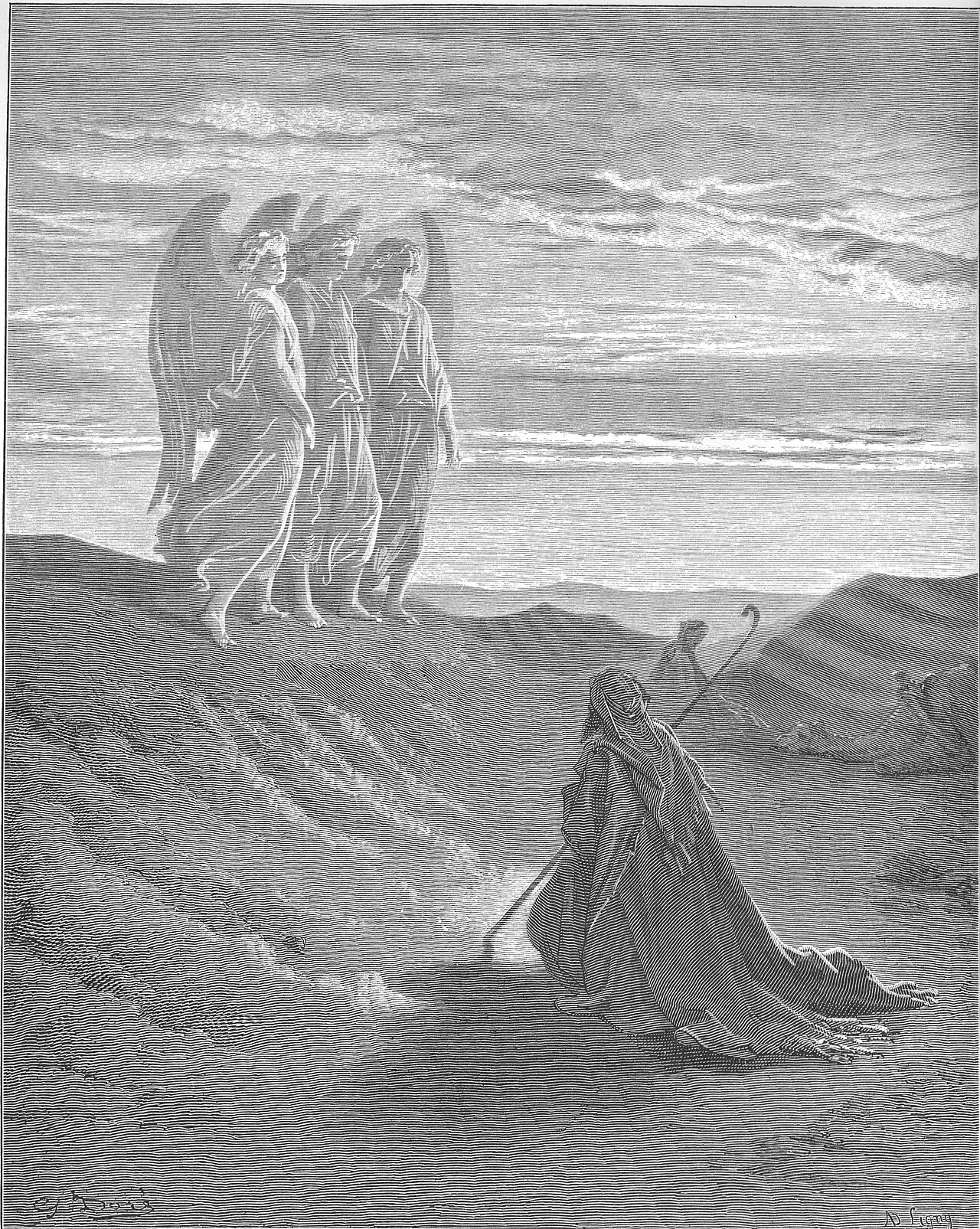
Covenant in Scripture, in full
In Scripture a covenant is not a vague feeling. It is a formal, oath-bound promise between named parties, with a stated promise and usually a visible sign to mark it.
(The Hebrew word is berith; the Greek is diathēkē.) The Bible's own idiom for making one is karath berith, literally "to cut a covenant," recalling the ancient Near Eastern rite behind Genesis 15: Abram divides a heifer, a goat, and a ram, and a smoking furnace and burning lamp — God alone, Abram asleep — passes between the pieces.
Israel's covenants tend to follow one of two ancient legal patterns — a distinction that goes back to George Mendenhall and Moshe Weinfeld and is now used everywhere. One is conditional, like a great king's treaty with a lesser king: "if you obey…", the pattern at Sinai. The other is unconditional, like a king's outright grant of land to a servant who has already proved loyal — the pattern of the promises to Abraham and David.
That contrast is why Genesis 15 and 2 Samuel 7 read as one-sided gift while Exodus 19–24 reads as a two-sided agreement. It is a lens, not a verdict: Gary Knoppers and others have shown that many surviving ancient grants were themselves conditional, so the pattern illuminates these texts rather than settling them.
Across the Old Testament the covenants run in a widening, then narrowing, then widening again arc. Eden supplies covenantal content — a command with a sanction, and the first redemptive promise (Genesis 3:15) — though the word berith itself does not appear until Genesis 6:18, with Noah; whether Eden counts as a formal covenant is itself a live question among careful readers.
The Noahic covenant (Genesis 9) is the broadest in scope — every living creature, all generations — and needs no obedience to stand; its sign is the rainbow, a natural rather than a ritual token. The Abrahamic covenant narrows the promise to one family and three intertwined gifts — land, seed, and a blessing that will reach "all the families of the earth" — sealed unilaterally in the cutting ceremony and marked by circumcision.
The Mosaic covenant narrows further still, giving one redeemed nation a constitution: blessing and curse, contingent on obedience, ratified in the blood thrown on the altar and the people at Sinai. The Davidic covenant narrows again to one royal line, promising David an enduring house and throne in grant-type, unconditional language even while the nation's fortunes under that throne remain conditional.
Every earlier covenant converges on the New. Jeremiah's oracle (31:31–34) promises a covenant unlike Sinai's: God's law no longer on stone but written on the heart, sins remembered no more, the knowledge of God no longer mediated by a caste of teachers. Jesus takes up the cup at the Last Supper and names it: "this cup is the new covenant in my blood" — the same "blood of the covenant" language Moses used at Sinai, now re-grounded in his own death.
Hebrews treats this as the climax of the whole covenant story: Christ is called the "surety of a better covenant" and its "mediator," and the writer quotes Jeremiah's promise in full as something already begun — better because its sacrifice is once for all and its access is direct.
Paul carries the covenant argument straight into how the church understands itself. Galatians reads Abraham's "seed" as a grammatical singular pointing to one person, Christ, and insists that the law given four centuries later does not annul the earlier promise; his Hagar-and-Sarah allegory in Galatians 4 names two covenants outright. Second Corinthians 3 contrasts the ministry of the old covenant, "the letter," with the new covenant "of the Spirit."
Romans keeps the ledger honest on both sides: "the covenants" still belong to Israel as a present-tense possession even after the cross (Romans 9:4), and Paul ties a future application of covenant mercy explicitly to Israel's own restoration (Romans 11:27) — the same tension Hosea may be naming centuries earlier when he charges Israel with having "transgressed the covenant, like Adam" (Hosea 6:7). That line is genuinely contested.
The Hebrew can also be read "like men" — which is how the KJV printed on this page renders it — or "at Adam," the town named in Joshua 3:16. The argument for a covenant with Adam rests on the first of those three readings, and readers should know it.
Here is the honest tension worth naming. The New Covenant was cut "with the house of Israel and the house of Judah." Does it now belong to the church in full? Or does the church share in its blessings today, while its complete, national fulfillment for Israel is still to come?
This site's tradition reads it the second way — already inaugurated for all who are in Christ, not yet consummated for national Israel — while the older Reformed reading, that the church simply is the covenant community Jeremiah foresaw, is a substantial and well-published alternative worth reading in its own right. The covenants never blur into one generic promise. Each keeps its own people, its own sign, and its own open question — even though all of them come from the same faithful God.
4 voices
What teachers have said
Henry reads the covenant of grace as held for us by a Mediator, which is why he calls it always new and never in danger.
“And, as the mercy of God flows to us through him, so the promise of God is, through him, firm to us: My covenant shall stand fast with him, both the covenant of redemption made with him and the covenant of grace made with us in him. The new covenant is therefore always new, and firmly established, because it is lodged in the hands of a Mediator”
Matthew Henry · Commentary on the Whole Bible, 1710
Irenaeus reads the promise God gave Abraham as standing still, and quotes back the words God spoke over the land.
“Thus, then, the promise of God, which He gave to Abraham, remains stedfast. For thus He said: ‘Lift up thine eyes, and look from this place where now thou art, towards the north and south, and east and west.”
Irenaeus · Against Heresies 5.32.2
Written before 202.
Clarke gives the covenant's short form, the sentence the whole arrangement comes down to on both sides.
“To make a covenant - To renew the covenant under which the whole people were constantly considered, and of which circumcision was the sign; and the spirit of which was, I will be your God: Ye shall be my people.”
Adam Clarke · Commentary on the Bible
Written before 1832.
Jamieson, Fausset and Brown are reading Ezekiel 16:59, where God answers Jerusalem for despising the oath she swore.
“As thou hast despised it, so will I despise thee. No covenant is one-sided; where Israel broke faith, God's promise of favor ceased.”
Jamieson, Fausset & Brown · Commentary Critical and Explanatory on the Whole Bible, 1871
The open question
Where the covenant is contested
Jeremiah says the new covenant is cut with the house of Israel and the house of Judah. Does it now belong to the church in full, or does the church share its blessings while its national fulfilment for Israel is still to come?
The church is the covenant community Jeremiah foresaw. The promises to Israel are kept in Christ and in the people who are His, Jew and Gentile together, so the new covenant is fulfilled now and has no separate national future.
- In that he saith, A new covenant, he hath made the first old. Now that which decayeth and waxeth old is ready to vanish away. Hebrews 8:13
- And if ye be Christ’s, then are ye Abraham’s seed, and heirs according to the promise. Galatians 3:29
Held by: The older Reformed reading, argued from Hebrews 8 and Galatians 3:29, and held across covenant theology.
The new covenant is begun for everyone who is in Christ and not yet finished for national Israel. Romans 9:4 keeps the covenants in Israel's possession after the cross and Romans 11:27 ties covenant mercy to Israel's own restoration.
- Who are Israelites; to whom pertaineth the adoption, and the glory, and the covenants, and the giving of the law, and the service of God, and the promises;Romans 9:4
- For this is my covenant unto them, when I shall take away their sins.Romans 11:27
Held by: The dispensational reading, and any reading that takes Romans 11 as a future for the nation.
This site's tradition
This site's tradition, Wesleyan-Pentecostal, holds the second reading: God has a plan for Israel, and the church shares the new covenant's blessings now. Replacement theology, the teaching that the church has taken Israel's place and its promises, is condemned here. The first reading is held by serious readers of the same texts and is presented at its own strength.
Read more at Covenant Theology and Dispensationalism, which reads seven test passages both ways.
Read more at Israel and the Olive Tree, which takes Romans 9 to 11 in order.
Where it leads
Everything the site holds on covenant
On this page
Studies10
The words underneath
Each card is one Hebrew or Greek word behind covenant. It gives the sense, the count across the canon, and the number in Strong's 1890 concordance.
berith: covenant
Hebrew · H1285Strong's entry: a compact (because made by passing between pieces of flesh)
the compact sealed and binding two parties together
284 times in the Old Testament · berith, in full →
shaba: to swear
Hebrew · H7650Strong's entry: to seven oneself, i.e. swear (as if by repeating a declaration seven times)
covenant oaths sworn as if repeated seven times over
186 times in the Old Testament · shaba, in full →
diatheke: covenant
Greek · G1242Strong's entry: properly, a disposition, i.e. (specially) a contract (especially a devisory will)
the word behind "New Testament" itself
33 times in the New Testament · diatheke, in full →
karath: to cut: cut
Hebrew · H3772Strong's entry: to cut (off, down or asunder); by implication, to destroy or consume; specifically, to covenant (i.e. make an alliance or bargain, originally by cutting flesh and passing between the pieces)
covenants were literally cut, sealed between divided pieces
288 times in the Old Testament · karath, in full →
15 verses
The complete list
This subject carries 34 curated verses. 19 of them are quoted above, and the other 15 stand here, book by book. Open a book to read the references with a clause of each verse.
Isaiah2
Ezekiel2
2 Corinthians1
Galatians2
What God has promised
The subjects beside it
On this page
Subjects2