
On this page, 7 sections
The one drawing
Across the canon
Old Testament
New Testament
The other 57 books of the canon carry none.
12 passages
Where Scripture speaks
The passages this subject stands on, in canon order.
and if My people who are called by My name humble themselves and pray and seek My face and turn from their wicked ways, then I will hear from heaven, forgive their sin, and heal their land.Let the wicked man forsake his own way and the unrighteous man his own thoughts; let him return to the LORD, that He may have compassion, and to our God, for He will freely pardon.“Yet even now,” declares the LORD, “return to Me with all your heart, with fasting, weeping, and mourning.”When God saw their actions—that they had turned from their evil ways—He relented from the disaster He had threatened to bring upon them.and saying, “Repent, for the kingdom of heaven is near.”From that time on Jesus began to preach, “Repent, for the kingdom of heaven is near.”I will get up and go back to my father and say to him, “Father, I have sinned against heaven and against you.But Zacchaeus stood up and said to the Lord, “Look, Lord, half of my possessions I give to the poor, and if I have cheated anyone, I will repay it fourfold.”Repent, then, and turn back, so that your sins may be wiped away,First to those in Damascus and Jerusalem, then to everyone in the region of Judea, and then to the Gentiles, I declared that they should repent and turn to God, performing deeds worthy of their repentance.Godly sorrow brings repentance that leads to salvation without regret, but worldly sorrow brings death.Therefore, keep in mind how far you have fallen. Repent and perform the deeds you did at first. But if you do not repent, I will come to you and remove your lampstand from its place.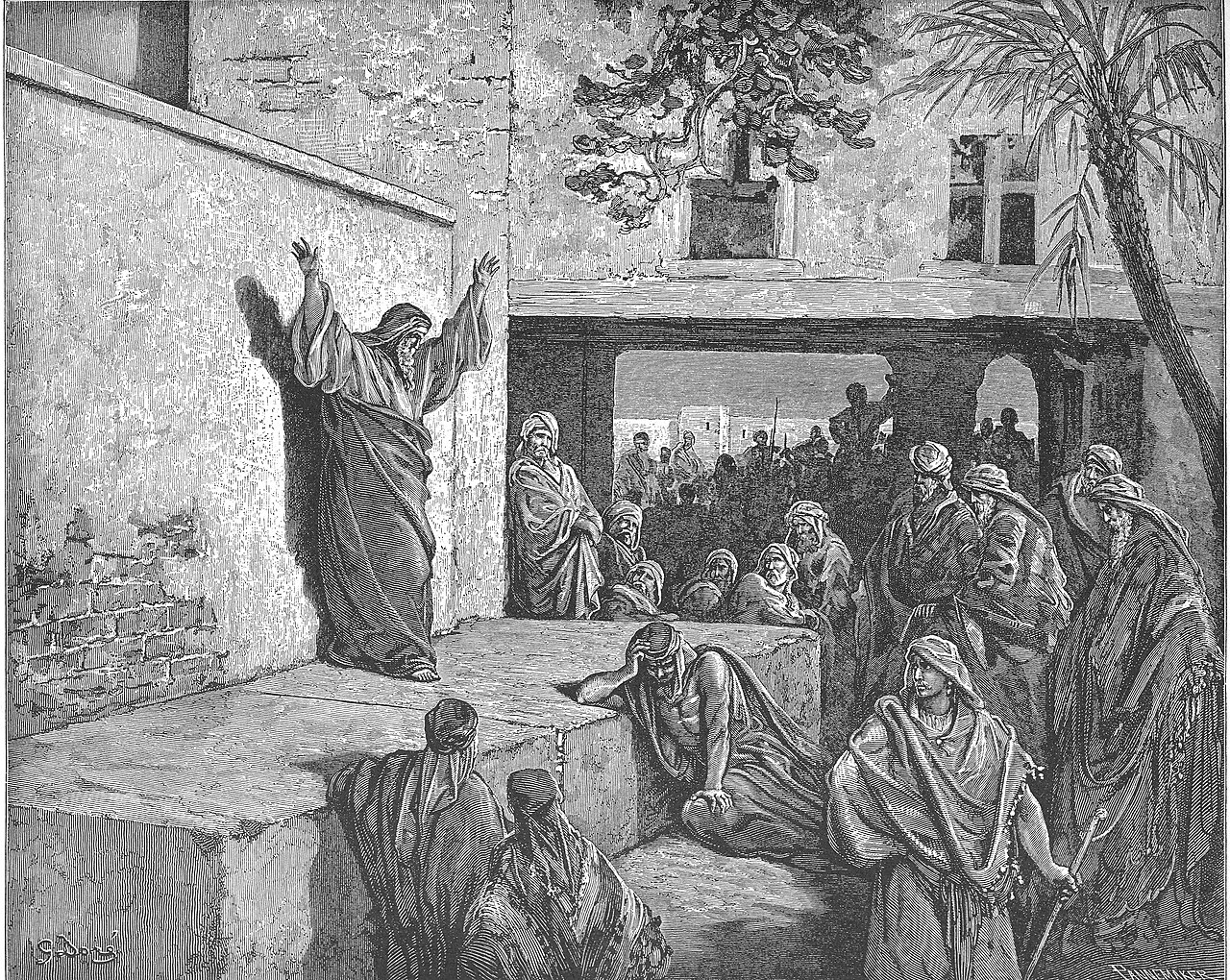
Repentance in Scripture, in full
Repentance is not the same thing as feeling bad. A person can feel terrible about getting caught and never change a single thing. Biblical repentance means turning around: walking away from one direction and toward another, starting in the heart and showing up in the feet.
The invitation runs through the whole Old Testament. God tells his people through Solomon's prayer that if they humble themselves, pray, seek his face, and turn from their wicked ways, he will hear from heaven and heal their land (2 Chronicles 7:14). Isaiah widens the same call to anyone: let the wicked forsake his way, and return to the LORD, who will freely pardon (Isaiah 55:7).
Joel makes the inward nature of repentance explicit. He tells Israel to tear their hearts, not just their clothes, when they turn back to the LORD (Joel 2:12-13). Outward signs of sorrow were common in the ancient world. God kept insisting that the sorrow had to be real.
The book of Jonah gives repentance one of its most surprising stories. Jonah preached a short, harsh sermon to Nineveh, a city he did not even want to see saved, and the whole city (from the king down), turned from its evil ways. God saw what they did and relented from the disaster he had planned (Jonah 3:10). Repentance changed the outcome, because it changed the people first.
John the Baptist opened his ministry with one word repeated everywhere: repent, because the kingdom of heaven was near (Matthew 3:2). Jesus began his own public preaching with the very same word (Matthew 4:17). Repentance was not a side note to the gospel. It was the door into it.
Jesus told a story about a son who demanded his inheritance early, wasted it in a distant country, and ended up feeding pigs. At his lowest point he decided to go home and tell his father he had sinned against heaven (Luke 15:18). His father did not wait for a perfect apology. He ran to meet him. Zacchaeus shows the same turn in real life: a dishonest tax collector who, after meeting Jesus, promised to give half his goods to the poor and repay anyone he had cheated four times over (Luke 19:8).
Peter preached repentance as the very first response to the good news about Jesus, telling the crowd in Jerusalem to repent and turn to God so their sins could be wiped away (Acts 3:19). Paul later summarized his own decades of preaching the same way: he told people everywhere to repent, turn to God, and live in a way that proved the change was real (Acts 26:20).
Paul draws the sharpest line of all between two kinds of sorrow. Godly sorrow, he says, produces a repentance that leads to salvation and leaves no regret, while worldly sorrow only leads to death (2 Corinthians 7:10). One sorrow turns a person toward God. The other simply spirals.
Repentance is where every person's story meets the gospel. It is the turn away from self and toward the God who, in Christ, ran out to meet the returning long before the return was even finished.
4 voices
What teachers have said
Repentance came by John, grace by Christ. He, as the Lord, gives the one; the other is proclaimed, as it were, by the servant.
Ambrose of Milan · Concerning Repentance 2.6.44-49
Written before 397.
Repentance consists in no longer doing the same things, for he who reverts to the same sins is like a dog returning to his vomit.
John Chrysostom · Commentary on John 34
Written before 407.
Nevertheless, no matter how great our crimes, their forgiveness should never be despaired of in holy Church for those who truly repent, each according to the measure of his sin.
Augustine of Hippo · Enchiridion 17:65
Written before 430.
The repentance and conversion of sinners on earth are matter of joy and rejoicing in heaven. It is possible that the greatest sinners may be brought to repentance. While there is life there is hope, and the worst are not to be despaired of; and the worst of sinners, if they repent and turn, shall find mercy.
Matthew Henry · Commentary on the Whole Bible, 1710
Where it leads
Everything the site holds on repentance
On this page
Studies1
The words underneath
Each card is one Hebrew or Greek word behind repentance. It gives the sense, the count across the canon, and the number in Strong's 1890 concordance.
nacham: to be sorry: comfort
Hebrew · H5162Strong's entry: properly, to sigh, i.e. breathe strongly; by implication, to be sorry, i.e. (in a favorable sense) to pity, console or (reflexively) rue; or (unfavorably) to avenge (oneself)
used of both God and man 'repenting'
108 times in the Old Testament · nacham, in full →
metanoeo: to repent
Greek · G3340Strong's entry: to think differently or afterwards, i.e. reconsider (morally, feel compunction)
the New Testament's word for repentance
34 times in the New Testament · metanoeo, in full →
shub: to return: return
Hebrew · H7725Strong's entry: to turn back (hence, away) transitively or intransitively, literally or figuratively (not necessarily with the idea of return to the starting point); generally to retreat; often adverbial, again
the Hebrew root behind every call to repent
1,056 times in the Old Testament · shub, in full →
Character
The subjects beside it
On this page
Subjects28