
Jonah 3:10
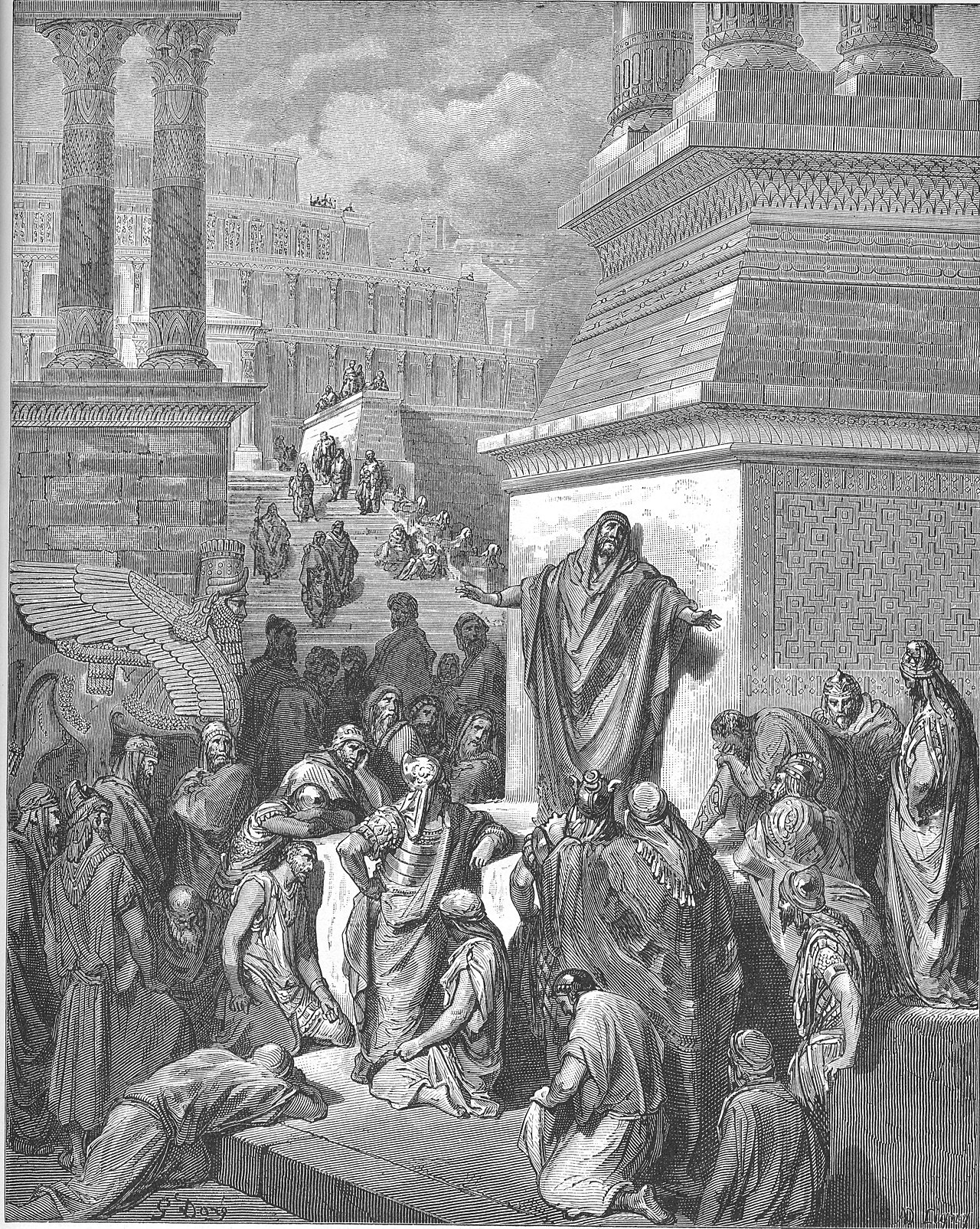
in Jonah 3When God saw their actions—that they had turned from their evil ways—He relented from the disaster He had threatened to bring upon them.
BSB
The same verse in ASV and KJV ▾
ASV
And God saw their works, that they turned from their evil way; and God repented of the evil which he said he would do unto them; and he did it not.
KJV
And God saw their works, that they turned from their evil way; and God repented of the evil, that he had said that he would do unto them; and he did it not.
⋯
This verse in Jonah 3
Commentary
16 notes on this verseAnd Gods saw their works - They repented, and brought forth fruits meet for repentance; works which showed that they did most earnestly repent. He therefore changed his purpose, and the city was saved. The purpose was: If the Ninevites do not return from their evil ways, and the violence that is in their hands, within forty days, I will destroy the city. The Ninevites did return, etc., and therefore escaped the threatened judgment. Thus we see that the threatening was conditional.
This site's exposition
When God saw their actions
God "saw their actions" and answers the hope of verse 9 with His own turning. The threat of verse 4 was a warning the city could answer. Calvin and Keil both note that this mercy falls on the capital of Assyria, the power that would later destroy Israel.
The record, by era
The Church Fathers5 voices
In uncertainty they repented and obtained certain mercy.
Now, if [forgiveness of sin had not] been predicted of Christ, I should find in the Creator examples of such benignity as would hold out to me the promise of similar affections also in the Son of whom he is the Father. I see how the Ninevites obtained forgiveness of their sins from the Creator—not to say from Christ [by way of anticipation], even then, because from the beginning he was acting in the Father's name.
These things, dearly beloved, we are writing, not only to warn you but also to remind ourselves; for we are in the same arena, and the same contest lies before us. For this reason let us abandon empty and silly concerns and come to the glorious and holy rule of our tradition. Let us see what is good and pleasing and acceptable in the sight of our Maker. Let us fix our gaze on the blood of Christ and realize how precious it is to his Father, seeing that it was poured out for our salvation and brought the grace of conversion to the whole world. Let us look back over all the generations and learn that from generation to generation the Lord has given an opportunity of repentance to all who would return to him. Noah preached penance, and those who heeded were saved. Then Jonah announced destruction to the Ninevites and they repented of their sins, besought God in prayer and, estranged though they were from God, obtained salvation.
For God even preferred that His own prediction should fall to the ground, so that the city should not fall. Or rather, the prophecy did not even so fall to the ground. For if indeed while the men continued in the same wickedness, the sentence had not taken effect, some one perhaps might have brought a charge against what was uttered. But if when they had changed, and desisted from their iniquity, God also desisted from His wrath, who shall be able any longer to find fault with the prophecy, or to convict the things spoken of falsehood. The same law indeed which God had laid down from the beginning, publishing it to all men by the prophet, was on that occasion strictly observed. What then is this law? "I shall speak a sentence," saith He, "concerning a nation or a kingdom, to pluck up, and to pull down, and to destroy it; and it shall be, that if they repent of their evil, I will also repent of the wrath which I said I would do unto them." Guarding then this law, he saved those who were converted and released from His wrath those who desisted from their wickedness.
Let us imitate the spiritual wisdom of the barbarians. They repented even on uncertain grounds! For the sentence had no such clause, "If ye turn and repent, I will set up the city;" but simply, "Yet three days, and Nineveh shall be overthrown." What then said they? "Who knoweth whether God will repent of the evil He said He would do unto us?" Who knoweth? They know not the end of the event, and yet they do not neglect repentance! They are unacquainted with God's method of shewing mercy, and yet they change upon the strength of uncertainties! For neither was it in their power to look at other Ninevites who had repented and been saved; nor had they read prophets; nor had they heard patriarchs; nor had they enjoyed counsel, or partaken of admonition; nor had they persuaded themselves that they should certainly propitiate God by repentance. For the threatening did not imply this: but they were doubtful, and hesitating concerning it; and yet they repented with all diligence. What reason then shall we have to urge, when those, who had no ground for confidence as to the issue, are seen to have exhibited so great a change; but thou who hast ground of confidence in the mercy of God, and who hast frequently received many pledges of His care, and hast heard prophets, and apostles, and hast been instructed by actual events; hast yet no emulation to reach the same measure of virtue as these did! Great assuredly was their virtue! but greater by far was the mercy of God!… For that fear was the cause of its safety. The threatening effected the deliverance from the peril. The sentence of overthrow put a stop to the overthrow. O strange and astonishing event! the sentence threatening death, brought forth life!… Was Nineveh overthrown? Was the city destroyed? […]
9 more voices on this verse
The Church Fathers3 voices
And that these words are not a vain boast, shall be made manifest to you from things that have already happened. What could be more stupid than the Ninevites? What more devoid of understanding? Yet, nevertheless, these barbarian, foolish people, who had never yet heard any one teaching them wisdom, who had never received such precepts from others, when they heard the prophet saying, "Yet three days, and Nineveh shall be overthrown," laid aside, within three days, the whole of their evil customs. The fornicator became chaste; the bold man meek; the grasping and extortionate moderate and kind; the slothful industrious. They did not, indeed, reform one, or two, or three, or four vices by way of remedy, but the whole of their iniquity. But whence does this appear, says some one? From the words of the prophet; for the same who had been their accuser, and who had said, that "the cry of their wickedness hath ascended up even to heaven:" himself again bears testimony of an opposite kind, by saying, "God saw that every one departed from their own evil ways." He does not say, from fornication, or adultery, or theft, but from their "own evil ways." And how did they depart? As God knew, not as man judged of the matter. After this are we not ashamed, must we not blush, if it turns out that in three days only the barbarians laid aside all their wickedness, but that we, who have been urged and taught during so many days, have not got the better of one bad habit? These men had, moreover, gone to the extreme of wickedness before; for when you hear it said, "The cry of their wickedness is come up before me;" you can understand nothing else than the excess of their wickedness. Nevertheless, within three days they were capable of being transformed to a state of complete virtue.
In old time the Ninevites sinned, and they did the things which ye too now are doing. Let us see however what it was that availed them. For as in the case of the sick, physicians apply many remedies; howbeit the man of understanding regardeth not that the sick person has tried this and that, but what was of service to him; such must be also our inquiry here. What then was it that availed those barbarians? They applied fasting unto the wounds, yea applied extreme fasting, lying on the ground too, putting on of sackcloth, and ashes, and lamentations; they applied also a change of life. Let us then see which of these things made them whole. And whence, saith one, shall we know? If we come to the Physician, if we ask Him: for He will not hide it from us, but will even eagerly disclose it. Rather that none may be ignorant, nor need to ask, He hath even set down in writing the medicine that restored them. What then is this? "God," saith He, "saw that they turned every one from his evil way, and He repented of the evil that He had said He would do unto them." He said not, He saw [their] fasting and sackcloth and ashes. And I say not this to overturn fasting, (God forbid!) but to exhort you that with fasting ye do that which is better than fasting, the abstaining from all evil.
"And God saw their works, that they turned from their evil way; and God repented of the evil, that he had said that he would do unto them; and he did it not." LXX: 'God saw their works since they turned from their wicked ways. And God repented for their wickedness that he had said he would do to them and he did not do it.'
The Medieval Church1 voice
For if the world is converted, God is converted; and when the sinners change their life, He will change His sentence.
The Puritans and the Awakening3 voices
Thus he spared Nineveh, and did not the evil which he said he would do against it. Here were no sacrifices offered to God, that we read of, to make atonement for sin, but the sacrifice of God is a broken spirit; a broken and contrite heart, such as the Ninevites now had, it what he will not despise; it is what he will give countenance to and put honour upon.
And God saw their words, that they turned from their evil way,....
Jonah's commission is renewed and readily obeyed. By this it appears that God was perfectly reconciled to Jonah, that he employed him again in his service; and the commission anew given him was an evidence of the remission of his former disobedience.
The Nineteenth Century2 voices
A commentator
Jamieson, Fausset & Brown1802–1910
Commentary Critical and Explanatory on the Whole Bible (1871)
proposed
God repented of the evil--When the message was sent to them, they were so ripe for judgment that a purpose of destruction to take effect in forty days was the only word God's righteous abhorrence of sin admitted of as to them. But when they repented, the position in which they stood towards God's righteousness was altered.
A commentator
Albert Barnes1798–1870
Notes, Explanatory and Practical, on the Old and New Testaments (1832-1869)
proposed
And God saw their works - o “He did not then first see them; He did not then first see their sackcloth when they covered themselves with it. He had seen them long before He sent the prophet there, while Israel was slaying the prophets who announced to them the captivity which hung over them. He knew certainly, that if He were to send the prophets far off to the Gentiles with such an announcement, they would hear and repent.” God saw them, looked upon them, approved them, accepted the Ninevites not for time only, but, as many as persevered, for eternity. It was no common repentance. It was the penitence, which our Lord sets forth as the pattern of true repentance before His coming Mat 12:41. “The men of Nineveh shall rise in judgment with this generation and shall condemn it, because they repented at the preaching of Jonah, and behold a greater than Jonah is here.” They believed in the one God, before unknown to them; they humbled themselves; they were not ashamed to repent publicly; they used great strictness with themselves; but, what Scripture chiefly dwells upon, their repentance was not only in profession, in belief, in outward act, but in the fruit of genuine works of repentance, a changed life out of a changed heart. “God saw their works, that they turned from their evil way.” Their whole way and course of life was evil; they broke off, not the one or other sin only, but all “their” whole “evil way” . “The Ninevites, when about to perish, appoint them a first; in their bodies they chasten their souls with the scourge of humility; they put on hair-cloth for raiment, for ointment they sprinkle themselves with ashes; and, prostrate on the ground, they lick the dust. They publish their guilt with groans and lay open their secret misdeeds. […]
How the passage was read
What the Jewish commentators add
and God will relent —He will think about the evil to repent of it.
This section is reception history: how the passage was read and kept in the Jewish tradition. Where a reading parts from an essential of the Christian faith, the section says so at that point.
Texts and citation data: Sefaria; each excerpt follows its version’s licence. 2 further sources are cited on this chapter that carry no English text this site may quote or only restate the verse.
The words behind it
18 Hebrew wordsEvery Hebrew word of this verse in the order it stands, with what it means and the door to its own study. The last column counts the times a word stands in the whole Bible: the rarer the word, the more the places it appears belong together.
| Hebrew | Sound | Meaning | Word study | In the Bible |
|---|---|---|---|---|
| וַיַּ֤רְא | vaiyar' | and he saw | H7200 → | |
| הָֽאֱלֹהִים֙ | haelohim | <the> God | H430 → | 2601 times |
| אֶֽת־ | ʾet- | <obj.> | H853 → | 10935 times |
| מַ֣עֲשֵׂיהֶ֔ם | maaseihem | deeds their | H4639 → | |
| כִּי־ | ki- | that | H3588 → | 4482 times |
| שָׁ֖בוּ | shavu | they turned back | H7725 → | 1056 times |
| מִדַּרְכָּ֣ם | midarkam | from way their | H1870 → | |
| הָרָעָ֑ה | haraah | <the> evil | H7451 → | 662 times |
| וַיִּנָּ֣חֶם | vaiyinachem | and he relented | H5162 → | 108 times |
| הָאֱלֹהִ֗ים | haelohim | <the> God | H430 → | 2601 times |
| עַל־ | ʾal- | on | H5921 → | 5755 times |
| הָרָעָ֛ה | haraah | the evil | H7451 → | 662 times |
| אֲשֶׁר־ | ʾasher- | which | H834 → | 5497 times |
| דִּבֶּ֥ר | diber | he had said | H1696 → | |
| לַעֲשׂוֹת־ | laasot- | to do | H6213 → | 2628 times |
| לָהֶ֖ם | lahem | to <the> them | ||
| וְלֹ֥א | velo' | and not | H3808 → | 5168 times |
| עָשָֽׂה׃ | ʾasah | he did [it] | H6213 → | 2628 times |
וַיַּ֤רְאand he saw
vaiyar'H7200 →
הָֽאֱלֹהִים֙<the> God
haelohimH430 →2601 times
אֶֽת־<obj.>
ʾet-H853 →10935 times
מַ֣עֲשֵׂיהֶ֔םdeeds their
maaseihemH4639 →
כִּי־that
ki-H3588 →4482 times
שָׁ֖בוּthey turned back
shavuH7725 →1056 times
מִדַּרְכָּ֣םfrom way their
midarkamH1870 →
הָרָעָ֑ה<the> evil
haraahH7451 →662 times
וַיִּנָּ֣חֶםand he relented
vaiyinachemH5162 →108 times
הָאֱלֹהִ֗ים<the> God
haelohimH430 →2601 times
עַל־on
ʾal-H5921 →5755 times
הָרָעָ֛הthe evil
haraahH7451 →662 times
אֲשֶׁר־which
ʾasher-H834 →5497 times
דִּבֶּ֥רhe had said
diberH1696 →
לַעֲשׂוֹת־to do
laasot-H6213 →2628 times
לָהֶ֖םto <the> them
lahem
וְלֹ֥אand not
velo'H3808 →5168 times
עָשָֽׂה׃he did [it]
ʾasahH6213 →2628 times
A shaded row is a word that stands 400 times or fewer in the Bible.
The walk
8 stopsEach card is a verse this one points to, and under it the verses that one points to in turn. Where several paths arrive at the same place, that place is listed first: the text keeps returning to it.
Through
Jeremiah 18:8But if that nation I warned turns from its evil, then I will relent of the disaster I had planned to bring.
it leads to
- Jeremiah 26:13
So now, correct your ways and deeds, and obey the voice of the LORD your God, so that He might relent of the disaster He has pronounced against you.
Reached by 2 separate paths from here.
- Ezekiel 18:21
But if the wicked man turns from all the sins he has committed, keeps all My statutes, and does what is just and right, he will surely live; he will not die.
- Jeremiah 26:13
Through
Luke 15:20So he got up and went to his father. But while he was still in the distance, his father saw him and was filled with compassion. He ran to his son, embraced him, and…
it leads to
- Psalms 103:10–13
He has not dealt with us according to our sins or repaid us according to our iniquities.
- Psalms 86:5
For You, O Lord, are kind and forgiving, rich in loving devotion to all who call on You.
- Psalms 86:15
But You, O Lord, are a compassionate and gracious God, slow to anger, abounding in loving devotion and faithfulness.
- Ephesians 2:13
But now in Christ Jesus you who once were far away have been brought near through the blood of Christ.
- Deuteronomy 30:2–4
and when you and your children return to the LORD your God and obey His voice with all your heart and all your soul according to everything I am giving you today,
- Psalms 103:10–13
Through
Exodus 32:14So the LORD relented from the calamity He had threatened to bring on His people.
it leads to
- Psalms 106:45
And He remembered His covenant with them, and relented by the abundance of His loving devotion.
- Psalms 106:45
Where this verse is studied
On this page
Studies10
About Jonah
This page draws on 15 works. Open the list of works
This page draws on Adam Clarke, Commentary on the Bible; Albert Barnes, Notes, Explanatory and Practical, on the Old and New Testaments (1832-1869); Augustine of Hippo, EXPLANATION OF THE PSALMS 50; Carl Friedrich Keil, The Twelve Minor Prophets; Clement of Rome, 1 CLEMENT 7; Haimo of Auxerre, Commentary (church-history corpus); Jamieson, Fausset & Brown, Commentary Critical and Explanatory on the Whole Bible; Jerome, Commentary on Jonah, Chapter 3; John Calvin, Commentaries on the Twelve Minor Prophets; John Chrysostom, HOMILIES CONCERNING THE STATUES 5; John Chrysostom, HOMILIES CONCERNING THE STATUES 20; John Chrysostom, HOMILIES ON 2 CORINTHIANS 4; John Gill, Exposition of the Old Testament (1748-1763); Matthew Henry, Commentary on the Whole Bible and Tertullian, AGAINST MARCION 4.10.