
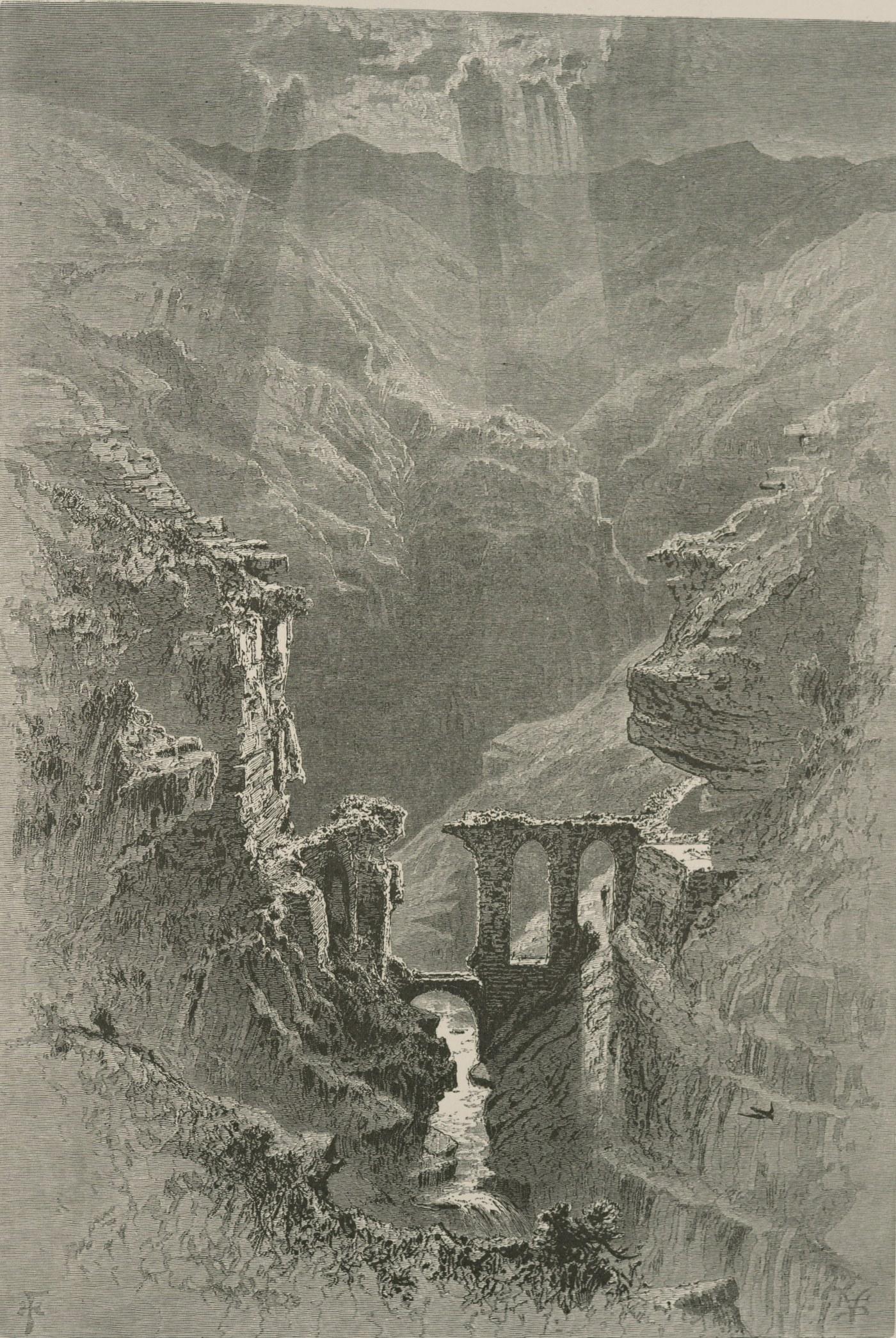
Ruins in the Gorge of the Wady Kelt, the Valley of Achor, 1881. Public domain.
Hosea 2:15 · Place · Featured Study
The Valley of Achor, a Door of Hope
Israel's first judgment in the land fell here, and two prophets later named it for hope and rest.
A pile of rocks over Achan gave the valley its name of trouble.
There I will give back her vineyards and make the Valley of Achor into a gateway of hope. There she will respond as she did in the days of her youth, as in the day she came up out of Egypt.
There I will give back her vineyards and make the Valley of Achor into a gateway of hope. There she will respond as she did in the days of her youth, as in the day she came up out of Egypt.
- Region
- On the northern border of Judah, by the border list of Joshua 15:7
- First named
- Joshua 7:24 “…and brought them to the Valley of Achor.”
- Last named
- Hosea 2:15 “…her vineyards and make the Valley of Achor…”
Summary
This study asks where the Valley of Achor lay and why Hosea called it a gateway of hope. It gives the valley on a map, its verses, its Hebrew words and four readings.
- The commentators disagreed on where the valley lay.
- The old Greek versions rendered Hosea's phrase in three ways.
- Readers have taken the door of hope as repentance, as a new entry, as the gospel and as a lesson of judgment.
The Valley Where Achan Was Stoned
Joshua 7 ends with a pile of rocks and a name for the place.
“Why have you brought this trouble upon us?” said Joshua. “Today the LORD will bring trouble upon you!” And all Israel stoned him to death. Then they stoned the others and burned their bodies.Joshua's judgment of Achan comes before the valley is named.
And they heaped over Achan a large pile of rocks that remains to this day. So the LORD turned from His burning anger. Therefore that place is called the Valley of Achor to this day.Hosea takes up the name given in this verse.
The Hebrew verb akar, to bring trouble, stands twice in Joshua 7:25, and the name Achor in Joshua 7:26 sounds like it.
Adam Clarke, on Joshua 7:25, noted that the valley is called the valley of Achor and never the valley of Achan. He added that some have supposed Achar was the man's own name, as 1 Chronicles 2:7 and some manuscripts and ancient versions read it.
The Valley on the Atlas
Joshua names five places near the valley, and the plate prints four of them.
Gilgal, Jericho and Ai, the places of Joshua 4 to 8, stand close together on the plate, north of the Dead Sea.
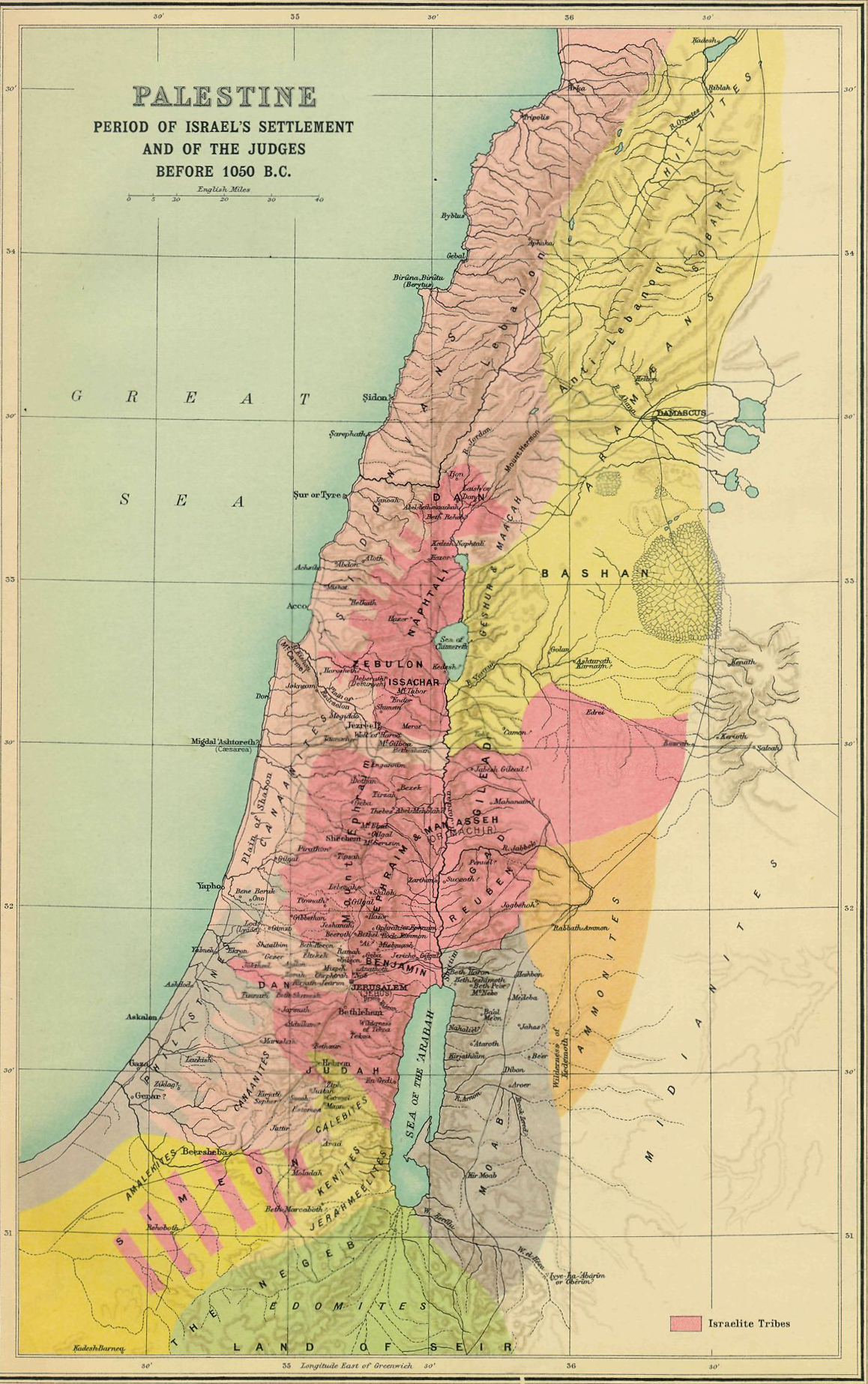
- GilgalIsrael camped here after crossing the Jordan.Joshua 4:19
- JerichoAchan took some of the things devoted to destruction.Joshua 7:1
- AiIsrael's defeat here brought Achan's sin to light.Joshua 7:5
- JerusalemThe border of Judah ran along the southern slope of the city.Joshua 15:8
- The Valley of AchorJudah's border went up from the valley toward Gilgal.Joshua 15:7
George Adam Smith, Atlas of the Historical Geography of the Holy Land (1915), plate: Palestine, Period of Israel's Settlement and of the Judges. Public domain.
The fifth number marks the valley by the border list of Joshua 15:7.
The Valley Through Scripture
Five verses name the valley or the trouble that named it.
Joshua and Chronicles remember a judgment, and Isaiah and Hosea promise rest and hope.
- Joshua 7:24
- Joshua and all Israel bring Achan and all he had to the valley.
- Joshua 15:7
- The valley marks a point on the line of Judah's land.
3The name in the line of Judah
- 1 Chronicles 2:7
- The Chronicler calls Achar the one who brought trouble upon Israel.
- Isaiah 65:10
- The valley will be a resting place for herds for the LORD's people who seek Him.
- Hosea 2:15
- The LORD will make the valley a gateway of hope.
The rows follow the order of the canon.
Door and Hope in Hosea's Hebrew
Hosea's phrase joins the Hebrew words for an opening and for hope.
“Therefore, behold, I will allure her and lead her to the wilderness, and speak to her tenderly.This verse opens the promise the valley belongs to.
The Hebrew of the promise reads petach tiqvah, an opening of hope, and the Berean renders it a gateway of hope. Petach is the common word for a doorway or entrance, and tiqvah is a word for hope.
Jerome, in his commentary on Hosea, set the old Greek versions side by side. The Septuagint, the old Greek translation of the Old Testament, read the phrase as opening understanding, Symmachus as the door of hope and Theodotion as renewing patience.
A Second Entry Into the Land
The promise stands beside Israel's first coming into the land.
The promise ends with the day Israel came up out of Egypt. Matthew Henry read Hosea 2:14 to 15 by the Exodus.
“This is expressed here with an allusion to God's dealings with that people when he brought them out of Egypt, through the wilderness to Canaan, as their forlorn and deplorable condition in their captivity was compared to their state in Egypt in the day that they were born,”
Matthew Henry · Commentary on the Whole Bible · on Hosea 2:14 to 15Puritan
Where the Valley Lay
The commentators put the valley in two places, and a picture printed in 1881 names a third.
Adam Clarke put the valley north of Jericho near Gilgal and named it, with Sharon, among the most fertile parts of Judea. Matthew Henry reported readers who took it for the valley of Engedi, famous for vineyards.
A picture printed in 1881, in a volume edited by Colonel Wilson, titles the gorge of the Wady Kelt the Valley of Achor.
How the Door of Hope Has Been Read
Henry, Wesley, Jerome and Theodoret read the promise in four ways.
Trouble for sin opens hopeMatthew Henry; Jamieson, Fausset and Brown
Matthew Henry read the name itself as the lesson, that sincere sorrow for sin leads to hope rather than to ruin. Jamieson, Fausset and Brown found trouble and hope joined in this valley.
A new entry into the landJohn Wesley; Matthew Henry; Jerome
Wesley and Henry give this reading in A Second Entry Into the Land. Jerome read the vineyards given back in the promise beside the first journey, when Moses and Aaron led the people out of Egypt.
The promise kept in the gospelMatthew Henry
Matthew Henry read the promise as kept in the gospel.
“This promise of Israel's singing has its accomplishment in the gospel of Christ, which furnishes us with abundant matter for joy and praise, and wherever it is received in its power enlarges the heart in joy and praise; and this is that land flowing with milk and honey which the valley of Achor opens a door of hope to.”
Matthew Henry · Commentary on the Whole Bible · on Hosea 2:15Puritan
A judgment that teachesTheodoret of Cyrus
“Just as those at that early time have learned through Achan's punishment how serious is the transgression of the law, in the same manner these will come to the realization of their own trespasses through the captivity.”
Theodoret of Cyrus · Commentary on Hosea 2 · on Hosea 2:15Patristic
Books to Read Next
Charles Spurgeon preached on the verse at least twice.
A Door of Hope, sermon 2750 in The Metropolitan Tabernacle Pulpit
Charles Spurgeon · 1901
Spurgeon's later sermon reads the door of hope as the way of faith.
The Backslider's Door of Hope, sermon 2569 in The Metropolitan Tabernacle Pulpit
Charles Spurgeon · 1898
Spurgeon preached the verse to those who had gone back from God, after a sermon on the sin described earlier in the chapter.
Betrothed Forever
The betrothal of Hosea 2 stands four verses after the valley.
So I will betroth you to Me forever; I will betroth you in righteousness and justice, in loving devotion and compassion.Here the tender words of Hosea 2:14 reach their end.
Paul wrote to the church at Corinth that he had promised them to one husband, to present them as a pure virgin to Christ (2 Corinthians 11:2). Hosea's promise asks the reader to answer the LORD as Israel answered Him in the days of her youth.
Sources
Scripture is the Berean Standard Bible.
- The Hebrew text of Joshua 7:25 to 26 and Hosea 2:15, word by word, with Strong's numbers.
- Strong's Concordance, entries H5911, H5916, H6607 and H8615.
- The commentators' notes on Hosea 2:14 to 15, Joshua 7:24 to 26 and Isaiah 65:10.
- Matthew Henry, Commentary on the Whole Bible (1710), on Hosea 2:14 to 15.
- John Wesley, Explanatory Notes upon the Old Testament (1765), on Hosea 2:15.
- Adam Clarke, Commentary on the Bible (1832), on Joshua 7:25 and Isaiah 65:10.
- Jamieson, Fausset and Brown, Commentary Critical and Explanatory on the Whole Bible (1871), on Hosea 2:15.
- Jerome, Commentary on Hosea, on Hosea 2:14 and 2:15.
- Theodoret of Cyrus, Commentary on Hosea, on Hosea 2:15.
- Charles Spurgeon, The Metropolitan Tabernacle Pulpit, sermons 2750 and 2569.
- George Adam Smith, Atlas of the Historical Geography of the Holy Land (1915), plate: Palestine, Period of Israel's Settlement and of the Judges, public domain.
Keep Studying
Read it4
Studies1
Symbols1
People and groups3
Values1