
Acts 3:19
in Acts 3Repent, then, and turn back, so that your sins may be wiped away,
BSB
The same verse in ASV and KJV ▾
ASV
Repent ye therefore, and turn again, that your sins may be blotted out, that so there may come seasons of refreshing from the presence of the Lord;
KJV
Repent ye therefore, and be converted, that your sins may be blotted out, when the times of refreshing shall come from the presence of the Lord;
⋯
This verse in Acts 3
Commentary
18 notes on this verseRepent ye therefore,.... The Ethiopic version adds, "and be baptized"; see Gill on Act 2:38, and be converted. The apostle's sense is, repent of the sin of crucifying Christ, which is what he had been charging them with, and turn unto him, and acknowledge him as the Messiah; receive his doctrines, and submit to his ordinances; externally reform in life and conversation, and bring forth fruits meet for repentance, such as will show it to be true and genuine: that your sins may be blotted out; or forgiven, see Psa 51:
This site's exposition
Repent ye therefore, and be converted
on Acts 3:19-21
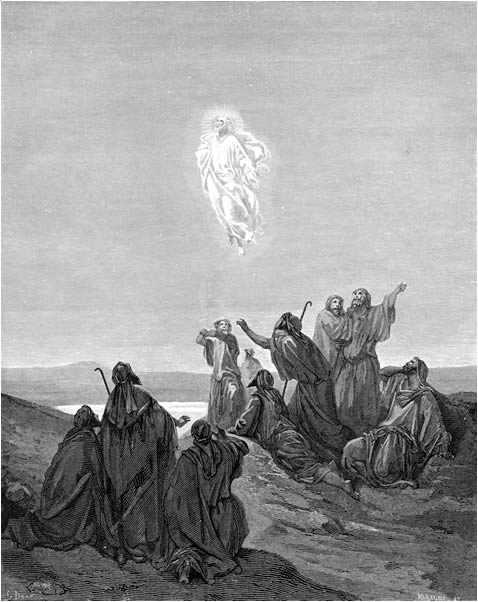
Repent ye therefore, and be converted, that your sins may be blotted out, when the times of refreshing shall come from the presence of the Lord: the call answers 2:38's repent and be baptized with a wider promise, refreshing from God's own presence, and the bench notes the phrase's kinship with Old Testament language for restoration and rest. And he shall send Jesus Christ, which before was preached unto you names a second coming already anticipated in this early sermon, tying the ascension of chapter one to a future the whole church still watches for. Whom the heaven must receive until the times of restitution of all things: the traditions divide over how literally to read this restitution, some hearing a renewed creation, some a restored Israel, some both together, and the exposition names the range without settling it, since the text itself points forward rather than defining the term.
The record, by era
The Church Fathers5 voices
"Repent ye therefore," he says, "and be converted." He does not add, "from your sins;" but, "that your sins, may be blotted out," means the same thing. And then he adds the gain: "So shall the times of refreshing come from the presence of the Lord." This betokens them in a sad state, brought low by many wars. For it is to the case of one on fire, and craving comfort, that the expression applies.
"Repent ye therefore." "Why? For either it was through ignorance, or by the dispensation of God." "That your sins may be blotted out." I do not mean the crimes committed at the Crucifixion; perhaps they were through ignorance; but so that your other sins may be blotted out: this only. "So shall the times of refreshing come unto you." Here he speaks of the Resurrection, obscurely. For those are indeed times of refreshing, which Paul also looked for, when he said, "We that are in this tabernacle do groan, being burthened."
meaning the resurrection from the dead in its proper time.
Therefore he says: "Repent," not concerning those things done on the cross (for he had said concerning those, that they were in ignorance), but concerning other sins.
And by saying, "times of refreshing," he indicates that many hardships are about to happen to them, and that wars will be brought about. For this word would be fitting to one who weeps and longs for relief. "That times of refreshing may come," he …
11 more voices on this verse
The Medieval Church1 voice
He speaks not of that transgression of the Jews which they dared to commit at the time of the crucifixion, since he said above: "However, I know that you, as well as your rulers, did this in ignorance" (v. 17). What then was the meaning …
The Reformation1 voice
Pardon is ready and easy: only repent of evil deeds, not only what they just did, but all of them, and turn to the new life. Confess Jesus, whom they formerly denied, as king and ruler of the universe.
The Puritans and the Awakening3 voices
Be converted - Be turned from sin and Satan unto God. But this term, so common in modern writings, very rarely occurs in Scripture: perhaps not once in the sense we now use it, for an entire change from vice to holiness. That the times of refreshing - Wherein God largely bestows his refreshing grace, may come - To you also.
Whenever he has a mouth to speak, you must have an ear to hear. Whatever he saith to you, though ever so displeasing to flesh and blood, bid it welcome." Speak, Lord, for thy servant hears. A good reason is here given why we should be observant of, and obedient to, the word of Christ; for it is at our peril if we turn a deaf ear to his call and a stiff neck to his yoke (
quarantine:debris (2026-07-29) — unbalanced-parens+odd-straight-quotes
22 ), as a debt is crossed and blotted out when it is remitted. It intimates that when God forgives sin he remembers it no more against the sinner; it is forgotten, as that which is blotted out; all the bitter things written against the sinner ( Job xiii.
quarantine:debris (2026-07-29) — leading-citation-number
The Nineteenth Century6 voices
A commentator
Albert Barnes1798–1870
Notes, Explanatory and Practical, on the Old and New Testaments (1832-1869)
Repent ye - See the notes on Mat 3:2. Therefore - Because of your sin in putting Jesus to death, and “because” he is the Messiah, and God through him is willing to show mercy to the chief of sinners. And be converted - This expression conveys an idea not at all to be found in the original. It conveys the idea of “passivity,” be “converted,” as if they were to yield to some foreign influence I that they were now resisting. But the idea of being “passive” in this is not conveyed by the original word.
A commentator
Jamieson, Fausset & Brown1802–1910
Commentary Critical and Explanatory on the Whole Bible (1871)
And now, brethren--Our preacher, like his Master, "will not break the bruised reed." His heaviest charges are prompted by love, which now hastens to assuage the wounds it was necessary to inflict.
A commentator
Jamieson, Fausset & Brown1802–1910
Commentary Critical and Explanatory on the Whole Bible (1871)
proposed
when the times of refreshing shall come--rather, "in order that the times of refreshing may come"; that long period of repose, prosperity and joy, which all the prophets hold forth to the distracted Church and this miserable world, as eventually to come, and which is here, as in all the prophets, made to turn upon the national conversion of Israel.
quarantine:debris (2026-07-29) — starts-lowercase
AFTER the notable miracle of healing the lame man, when the wondering people clustered round about Peter and John, they were not at all at a loss for a subject upon which to address them. Those holy men were brimful of the gospel, and therefore they had but to run over spontaneously, speaking of that topic which laid nearest to their hearts. To the Christian minister it should never be difficult to speak of Christ; and in whatever position he may be placed, he should never have to ask himself, “What is an appropriate subject for this people?” for the gospel is always in season, always appropriate, and if it be but spoken from the heart, it will be sure to work its way. Turning to the assembled multitude, Peter began at once to preach to them the gospel without a single second’s hesitation. Oh! blessed readiness of a soul on fire with the Spirit, Lord, grant it to us evermore. Observe how earnestly Peter turns aside their attention from himself and his brother John to the Lord Jesus Christ. “Why look ye so earnestly on us, as though by our own power or holiness we had made this man to walk?” The object of the Christian minister should always be to withdraw attention from himself to his subject, so that it should not be said, “How well he spake!” but, “Upon what weighty matters he treated!” They are priests of Baal, who, with their gaudy dresses, and their pretensions to a mysterious power, would have you look to themselves as the channels of grace, as though by their priestcraft, if not by their holiness, they could work miracles; but they are true messengers of God who continually say, “Look not on us as though we could do anything: the whole power to bless you lies in Jesus Christ, and in the gospel of his salvation.” It is noteworthy that Peter, in addressing this crowd, came at once to the very essence and bowels of his message.
AFTER the notable miracle of healing the lame man, when the wondering people clustered round about Peter and John, they were not at all at a loss for a subject upon which to address them. Those holy men were brimful of the gospel, and therefore they had but to run over spontaneously, speaking of that topic which laid nearest to their hearts. To the Christian minister it should never be difficult to speak of Christ; and in whatever position he may be placed, he should never have to ask himself, “What is an appropriate subject for this people?”
Repent ye therefore - Now that ye are convinced that this was the Messiah, let your minds be changed, and your hearts become contrite for the sins you have committed. And be converted - ΕπιϚρεψατε, Turn to God through this Christ, deeply deploring your transgressions, and believing on his name; that your sins may be blotted out, which are not only recorded against you, but for which you are condemned by the justice of God; and the punishment due to them must be executed upon you, unless prevented by your repentance, and turning to him whom ye have pierced. The blotting out of sins may refer to the ceremony of the waters of jealousy, where the curse that was written in the book was to be blotted out with the bitter water. See the note on Num 5:23. Their sins were written down against them, and cried aloud for punishment; for they themselves had said, His blood be upon us, and upon our children, Mat 27:25; and unless they took refuge in this sacrificial blood, and got their sins blotted out by it, they could not be saved. When the times of refreshing shall come - Dr. Lightfoot contends, and so ought all, that ὁπως αν ελθωσι καιροι αναψυξεως, should be translated, That the times of refreshing May come. Αναψυξις, signifies a breathing time, or respite, and may be here applied to the space that elapsed from this time till the destruction of Jerusalem by the Romans. This was a time of respite, which God gave them to repent of their sins, and be converted to himself. Taking the word in the sense of refreshment in general, it may mean the whole reign of the kingdom of grace, and the blessings which God gives here below to all genuine believers, peace, love, joy, and communion with himself. See on Act 3:21 (note).
The words behind it
10 Greek wordsEvery Greek word of this verse in the order it stands, with what it means and the door to its own study. The last column counts the times a word stands in the whole Bible: the rarer the word, the more the places it appears belong together.
| Greek | Sound | Meaning | Word study | In the Bible |
|---|---|---|---|---|
| μετανοήσατε | metanoesate | do repent | G3340 → | 34 times |
| οὖν | oun | therefore | G3767 → | 497 times |
| καὶ | kai | and | G2532 → | 9120 times |
| ἐπιστρέψατε | epistrepsate | do turn again | G1994 → | 36 times |
| εἰς | eis | for | G1519 → | 1755 times |
| τὸ | to | the | G3588 → | 19766 times |
| ἐξαλειφθῆναι | exaleiphthenai | blotting out | G1813 → | |
| ὑμῶν | humon | of your | G4771 → | 2973 times |
| τὰς | tas | <the> | G3588 → | 19766 times |
| ἁμαρτίας, | hamartias | sins, | G266 → | 173 times |
μετανοήσατεdo repent
metanoesateG3340 →34 times
οὖνtherefore
ounG3767 →497 times
καὶand
kaiG2532 →9120 times
ἐπιστρέψατεdo turn again
epistrepsateG1994 →36 times
εἰςfor
eisG1519 →1755 times
τὸthe
toG3588 →19766 times
ἐξαλειφθῆναιblotting out
exaleiphthenaiG1813 →
ὑμῶνof your
humonG4771 →2973 times
τὰς<the>
tasG3588 →19766 times
ἁμαρτίας,sins,
hamartiasG266 →173 times
A shaded row is a word that stands 400 times or fewer in the Bible.
The walk
8 stopsEach card is a verse this one points to, and under it the verses that one points to in turn. Where several paths arrive at the same place, that place is listed first: the text keeps returning to it.
Through
Isaiah 43:25I, yes I, am He who blots out your transgressions for My own sake and remembers your sins no more.
it leads to
- Hebrews 8:12
For I will forgive their iniquities and will remember their sins no more.”
- Micah 7:18–19
Who is a God like You, who pardons iniquity and passes over the transgression of the remnant of His inheritance—who does not retain His anger forever, because He delights in loving devotion?
- Hebrews 10:17
Then He adds: “Their sins and lawless acts I will remember no more.”
- Jeremiah 31:34
No longer will each man teach his neighbor or his brother, saying, ‘Know the LORD,’ because they will all know Me, from the least of them to the greatest, declares the LORD. For I…
- Isaiah 1:18
“Come now, let us reason together,” says the LORD. “Though your sins are like scarlet, they will be as white as snow; though they are as red as crimson, they will become like wool.
- Hebrews 8:12
Through
Acts 2:38Peter replied, “Repent and be baptized, every one of you, in the name of Jesus Christ for the forgiveness of your sins, and you will receive the gift of the Holy Spirit.
it leads to
- Acts 22:16
And now what are you waiting for? Get up, be baptized, and wash your sins away, calling on His name.’
- Mark 16:16
Whoever believes and is baptized will be saved, but whoever does not believe will be condemned.
- Acts 8:12
But when they believed Philip as he preached the gospel of the kingdom of God and the name of Jesus Christ, they were baptized, both men and women.
- Acts 22:16
About Acts
This page draws on 13 works. Open the list of works
This page draws on Adam Clarke, Commentary on the Bible; Albert Barnes, Notes, Explanatory and Practical, on the Acts of the Apostles; Albert Barnes, Notes, Explanatory and Practical, on the Old and New Testaments (1832-1869); Charles Spurgeon, The Metropolitan Tabernacle Pulpit, Sermon No. 804: “Apostolic Exhortation” (lightly modernized text, CCEL edition); Erasmus of Rotterdam, Commentary (church-history corpus); Jamieson, Fausset & Brown, Commentary Critical and Explanatory on the Whole Bible; John Chrysostom, Homily on Acts 9; John Gill, Exposition of the New Testament (1746-1748); John Wesley, Explanatory Notes upon the New Testament; Matthew Henry, Commentary on the Whole Bible; Oecumenius, Commentary on Acts; Tertullian, On the Resurrection of the Flesh and Theophylact of Ohrid, Commentary on Acts.