

Philippians 2 · Value 6 of 41 · Featured Study
Humility
Humility is the lowly mind that God dwells with and rewards with grace.
On the night before He died, Jesus knelt and washed His disciples' feet.
And being found in appearance as a man, He humbled Himself and became obedient to death—even death on a cross.
- Anchor text
- Philippians 2:5 to 11 “Let this mind be in you which…”
- Its opposite
- Pride, self-exaltation and contempt for others
- Hold in memory
- Philippians 2:8, Micah 6:8
Summary
Humility is the lowly mind before God and toward other people, and Scripture commands it in the Law, the Prophets, the Writings and the letters of the apostles. It names the lowly mind with four Hebrew and Greek words, rests it on God's nearness to the lowly, and sets pride against it.
- Both Testaments promise grace to the humble and opposition to the proud.
- The ground of Christian humility is the Son of God, who humbled Himself to the cross and was raised up by God.
- Scripture warns of a humility that is only a show.
What Humility Is
Four words of Hebrew and Greek carry what Scripture means by humility.
The humble person knows his place before God and puts the good of others before his own. The psalms and the proverbs praise this lowly mind, and Jesus and His apostles make it the mark of His followers. Jesus said that He came "not to be served, but to serve" (Matthew 20:28). The question for every reader is why God lifts up the lowly and brings down the haughty, and what a lowly mind looks like in a life. This study gives the words Scripture uses for humility, its key texts, where it is commanded and why, how Jesus lived it, the people who humbled themselves, its practice and what stands against it.
Anavah, humility
5 uses in the canon
The Hebrew noun anavah (Strong's H6038) is the word Proverbs uses for humility. The lexicon gives its sense as modesty in a person and clemency in God.
Anav, humble
22 uses in the canon
The adjective anav (H6035) describes the humble and the lowly. The lexicon says it can mean low in mind, that is gentle, or low in circumstances.
Tapeinophrosyne, lowliness of mind
7 uses in the canon
The Greek noun tapeinophrosyne (G5012) joins the words for low and for mind. Paul and Peter use it for the humility believers put on.
Tapeinos, lowly
8 uses in the canon
The adjective tapeinos (G5011) means low or lowly, and Mary uses it of the humble whom God lifts up.
Anavah, humility, Anav, humble, Tapeinophrosyne, lowliness of mind, Tapeinos, lowly, The Hebrew and Greek Words for Humility, the study in brief
The Key Texts, from the Law to the Epistles
Twelve texts run from Israel's forty years in the wilderness to the letters of Paul and Peter.
The 12 texts in canon order.
- History
- Wisdom
- Wisdom
- Wisdom
- Prophets
- Prophets
- Prophets
- Gospels
- Gospels
- Acts and Epistles
- Acts and Epistles
Each station opens its verse page.
Micah 6:8, Zephaniah 2:3, Matthew 11:29, Luke 14:11, Philippians 2:3, 1 Peter 5:5 to 6
Law
Remember that these forty years the LORD your God led you all the way in the wilderness, so that He might humble you and test you in order to know what was in your heart, whether or not you would keep His commandments. He humbled you, and in your hunger He gave you manna to eat, which neither you nor your fathers had known, so that you might understand that man does not live on bread alone, but on every word that comes from the mouth of the LORD.
The LORD humbled Israel in the wilderness to teach them to live on His word.
History
and if My people who are called by My name humble themselves and pray and seek My face and turn from their wicked ways, then I will hear from heaven, forgive their sin, and heal their land.
The LORD promises to hear and forgive a people who humble themselves and pray.
Wisdom
My heart is not proud, O LORD, my eyes are not haughty. I do not aspire to great things or matters too lofty for me. Surely I have stilled and quieted my soul; like a weaned child with his mother, like a weaned child is my soul within me.
David sets a quieted soul like a weaned child against a proud heart.
Wisdom
He mocks the mockers, but gives grace to the humble.
The wise teacher sets God's scorn for mockers against His favor to the lowly.
Wisdom
The rewards of humility and the fear of the LORD are wealth and honor and life.
The teacher joins humility to the fear of the LORD and names its reward.
Prophets
For thus says the One who is high and lifted up, who inhabits eternity, whose name is Holy: “I dwell in a high and holy place, and with the oppressed and humble in spirit, to restore the spirit of the lowly and revive the heart of the contrite.
The verse joins God's holiness to His nearness, the two sides of the ground of humility.
Isaiah 57:15BSB
Prophets
He has shown you, O man, what is good. And what does the LORD require of you but to act justly, to love mercy, and to walk humbly with your God?
The prophet sums up what the LORD requires, and walking humbly with God is the third part.
Micah 6:8BSB
Prophets
Seek the LORD, all you humble of the earth who carry out His justice. Seek righteousness; seek humility. Perhaps you will be sheltered on the day of the LORD’s anger.
The humble of the earth are told to seek humility before the day of the LORD's anger.
Gospels
Take My yoke upon you and learn from Me; for I am gentle and humble in heart, and you will find rest for your souls.
Jesus sets His own humility as the lesson His followers learn.
Gospels
For everyone who exalts himself will be humbled, and the one who humbles himself will be exalted.”
Jesus sets the reversal of the high and the low as the rule of His kingdom.
Luke 14:11BSB
Acts and Epistles
Do nothing out of selfish ambition or empty pride, but in humility consider others more important than yourselves.
The verse opens the passage on the mind of Christ, the anchor of this value.
Acts and Epistles
Young men, in the same way, submit yourselves to your elders. And all of you, clothe yourselves with humility toward one another, because, “God opposes the proud, but gives grace to the humble.” Humble yourselves, therefore, under God’s mighty hand, so that in due time He may exalt you.
Peter tells every believer to put on humility and to wait for God to lift them up.
2 Chronicles 7:14, Psalm 131:1 to 2, Proverbs 3:34, Proverbs 22:4, Isaiah 57:15, Micah 6:8, Zephaniah 2:3, Matthew 11:29 and 3 more
Where Scripture Commands Humility
Each speaker who commands humility gives a reason for it.
The command comes from every kind of speaker in Scripture. It stands in the Law, in the LORD's answer to Solomon's prayer, in the songs and sayings of the psalmists and the wise, and in the warnings of the prophets.
Jesus made humility the way into His kingdom and gave the same rule in the temple courts and in His parables.
The apostles give the reason from the book of Proverbs, where grace is promised to the humble.
Has not My hand made all these things? And so they came into being,” declares the LORD. “This is the one I will esteem: he who is humble and contrite in spirit, who trembles at My word.Of all the things His hand has made, God sets His regard on one kind of person.
Isaiah 66:2
Humility Rests on God's Nearness
The high and holy God attends to the lowly and dwells with the contrite.
Scripture grounds humility first in who God is. He is high, yet He is near to the brokenhearted, and He does not despise "a broken and a contrite heart" (Psalm 51:17).
Though the LORD is on high, He attends to the lowly; but the proud He knows from afar.The psalm sets God's height beside His care for the lowly.
Psalm 138:6, The Incarnation, the study in brief
Jesus and Humility
The Gospels show Jesus riding into Jerusalem on a donkey and washing His disciples' feet, and Paul traces His humbling to the cross.
Into Jerusalem on a donkeyMatthew 21
Jesus rode into Jerusalem on a donkey in the week of His death, and Matthew says the ride fulfilled the prophet's word (Matthew 21:4 to 5).
Rejoice greatly, O Daughter of Zion! Shout in triumph, O Daughter of Jerusalem! See, your King comes to you, righteous and victorious, humble and riding on a donkey, on a colt, the foal of a donkey.
Zechariah 9:9BSB The prophet foretells a King who comes humble, riding on a donkey.
Read the page on the Entry into Jerusalem 11 sections, 15 verses set out
A towel and a basinJohn 13
At the supper before the Passover, Jesus laid aside His outer garments, wrapped a towel around His waist and washed the disciples' feet. When He came to Simon Peter, Peter refused.
“Never shall You wash my feet!” Peter told Him. Jesus answered, “Unless I wash you, you have no part with Me.”
John 13:8BSB Jesus answers Peter's refusal with the words that make the washing a sign of belonging to Him.
Obedient to death on a crossPhilippians 2
Paul sets out the whole descent for a church he has just told to do nothing out of selfish ambition. The Son, existing in the form of God, "emptied Himself, taking the form of a servant", and God then "exalted Him to the highest place" (Philippians 2:9). Between the two, Paul names the Son's humility as obedience to the death of the cross (Philippians 2:8).
Read the study He Humbled Himself 8 sections, 8 verses set out
A towel and a basin (John 13), Obedient to death on a cross (Philippians 2)
Who Humbled Themselves
Five people in Scripture humbled themselves before God, from Abraham pleading for Sodom to Paul the least of the apostles.
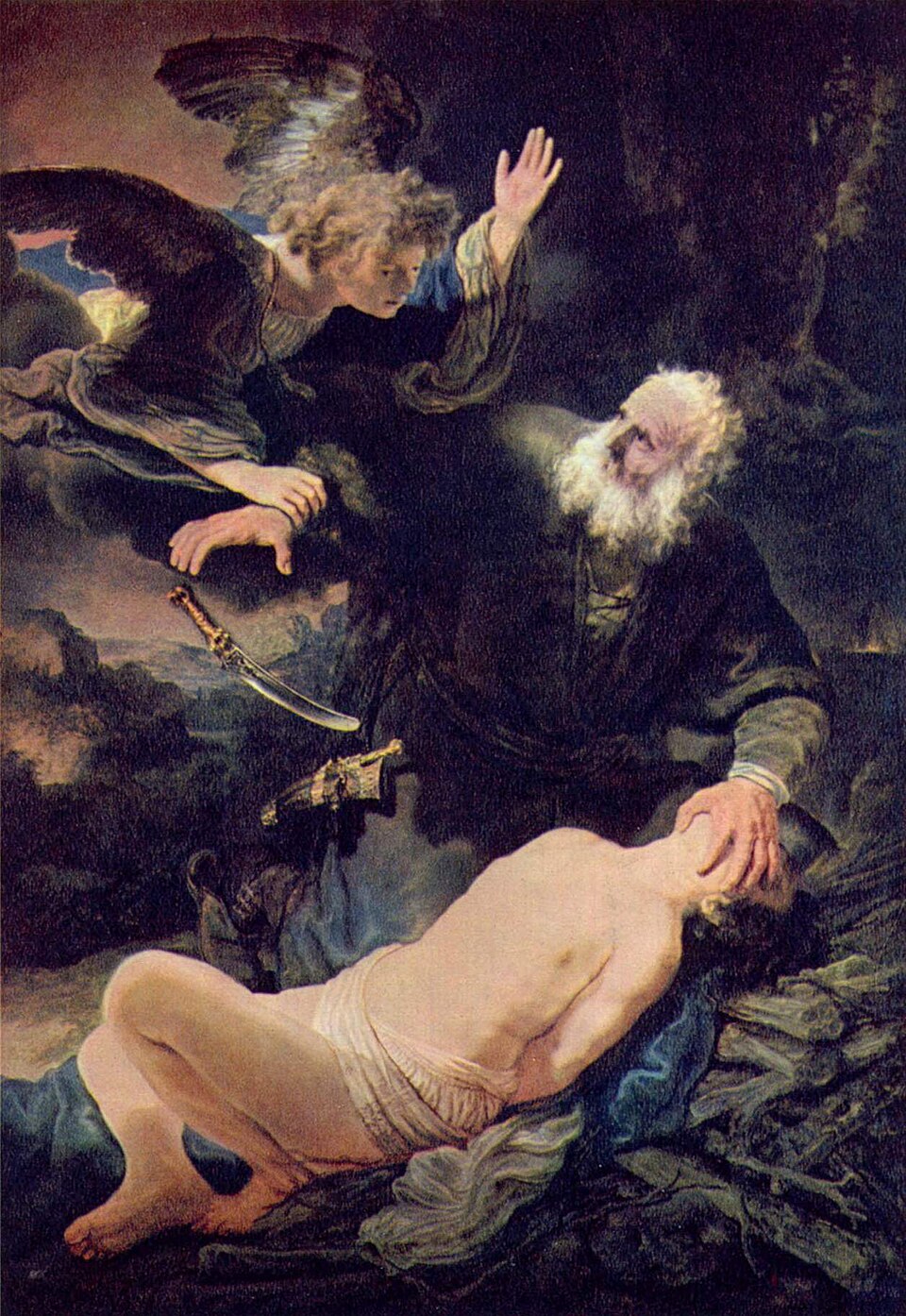
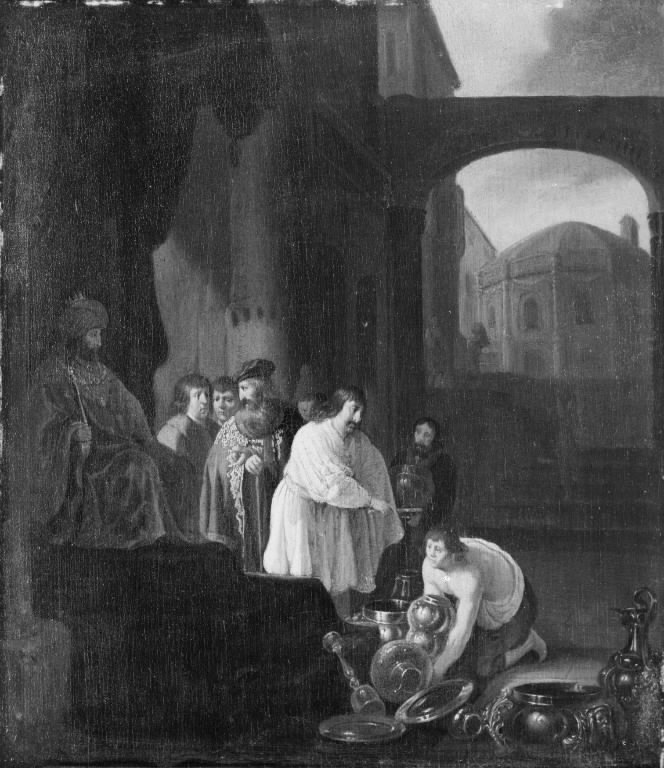
After his heart grew proud, he humbled the pride of his heart with the people of Jerusalem.
2 Chronicles 32:26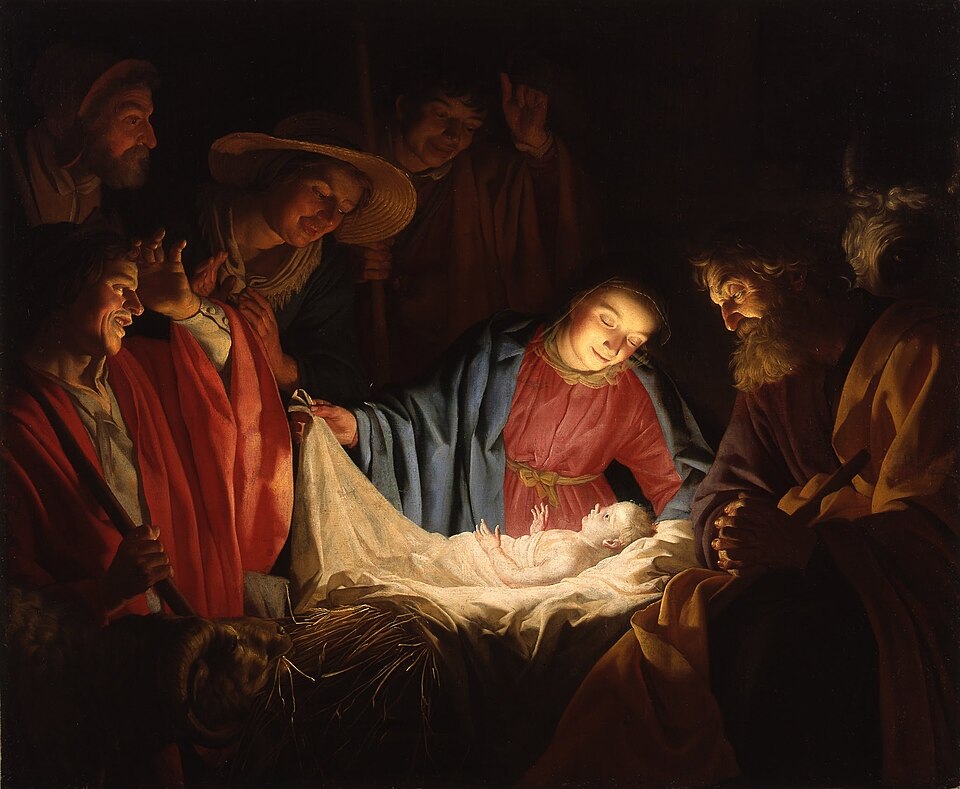

When his disciples told him that all were going to Jesus, he said that he must decrease.
John 3:30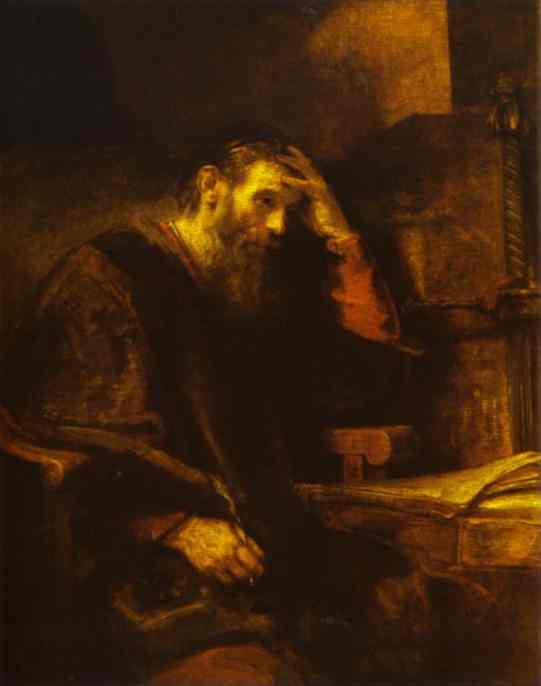
He called himself the least of the apostles, unworthy of the name because he had persecuted the church.
1 Corinthians 15:9
Mary, John the Baptist, Paul
The Practice of Humility
Scripture names eight practices of humility, each with the verse that gives it.
- 1Humble yourself before the LordJames tells believers to humble themselves before the Lord, who will lift them up.James 4:10
- 2Look to the interests of othersPaul tells each believer to care for what other people need as well as for what he needs himself.Philippians 2:4
- 3Take the lowest placeJesus tells a guest at a wedding feast to sit in the last place and wait for the host to call him up.Luke 14:10
- 4Serve one another in lovePaul tells the Galatians to use their freedom to serve one another in love.Galatians 5:13
- 5Bear with one anotherPaul joins humility to gentleness and patience in bearing with one another in love.Ephesians 4:2
- 6Keep company with the lowlyPaul tells the church at Rome to enjoy the company of the lowly and not to be conceited.Romans 12:16
- 7Boast only in knowing the LORDJeremiah tells the wise, the strong and the rich to boast only that they know the LORD.Jeremiah 9:24
- 8Call yourself an unworthy servantJesus tells His disciples to say, after doing all they were told, that they have only done their duty.Luke 17:10
Look to the interests of others, Take the lowest place, Serve one another in love, Bear with one another, Keep company with the lowly, Boast only in knowing the LORD, Call yourself an unworthy servant
What Stands Against Humility
Pride and a false humility both stand against the lowly mind.
Proverbs sets pride against humility, and Isaiah says that on the day of the LORD "The proud look of man will be humbled" (Isaiah 2:11).
Scripture also warns against a counterfeit. Paul writes of a "false humility" joined to the worship of angels and the harsh treatment of the body. Such rules have "an appearance of wisdom", he says, but they are "of no value against the indulgence of the flesh" (Colossians 2:23).
Everyone who is proud in heart is detestable to the LORD; be assured that he will not go unpunished.
The LORD finds the proud heart detestable and promises that it will be punished.
A man’s pride will bring him low, but a humble spirit will obtain honor.
The proverb sets the fall of the proud beside the honour of the lowly in spirit.
Now about food sacrificed to idols: We know that we all have knowledge. Knowledge puffs up, but love builds up.
Paul shows that even true knowledge can feed pride where love is missing.
He must not be a recent convert, or he may become conceited and fall under the same condemnation as the devil.
Paul warns that a new convert made an overseer may become conceited and fall as the devil fell.
Proverbs 29:23, 1 Corinthians 8:1, 1 Timothy 3:6
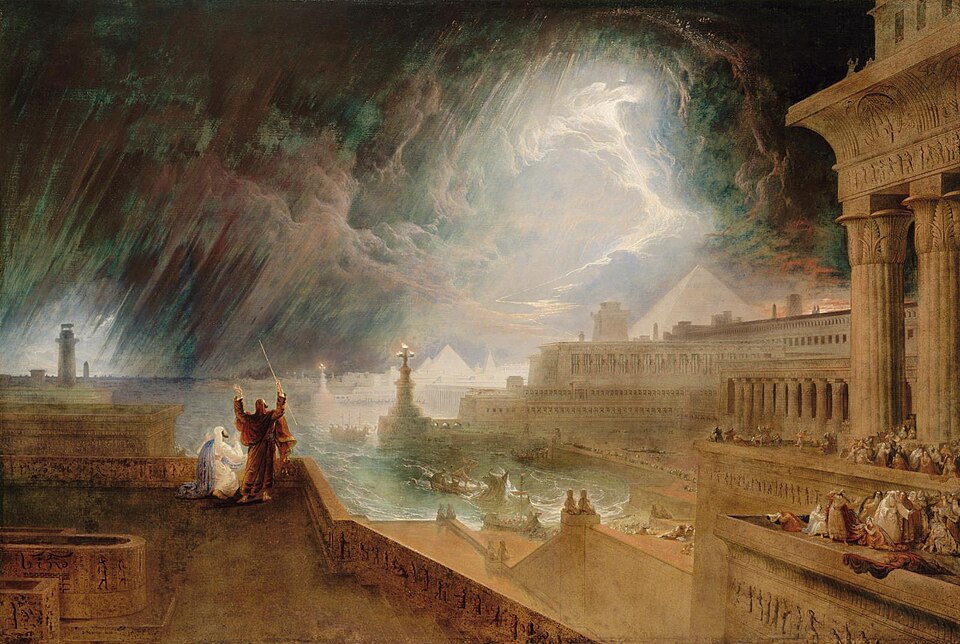
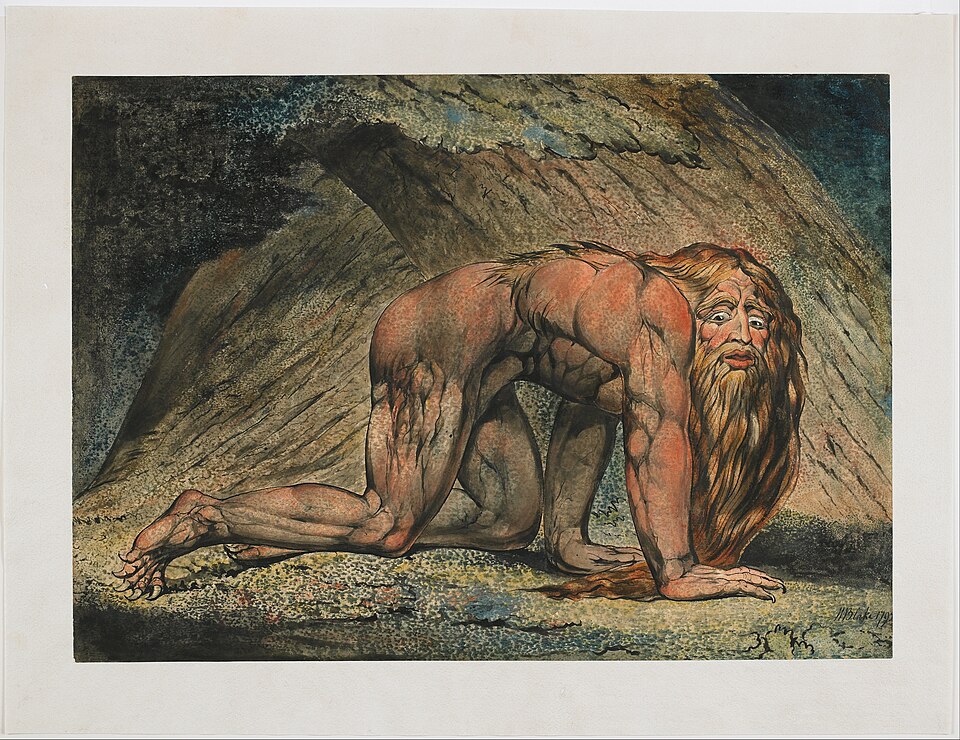
He boasted of the great Babylon he had built, and he was driven from among men.
Daniel 4:30
Proverbs 16:5, Proverbs 29:23, 1 Corinthians 8:1, 1 Timothy 3:6, Pharaoh, Nebuchadnezzar, Pride Goes Before a Fall, the study in brief
Humility in the Stories of the Bible
Three stories tell of humility in the wilderness, in the temple and in captivity in Babylon.
Moses and the complaint of Miriam and AaronNumbers 12
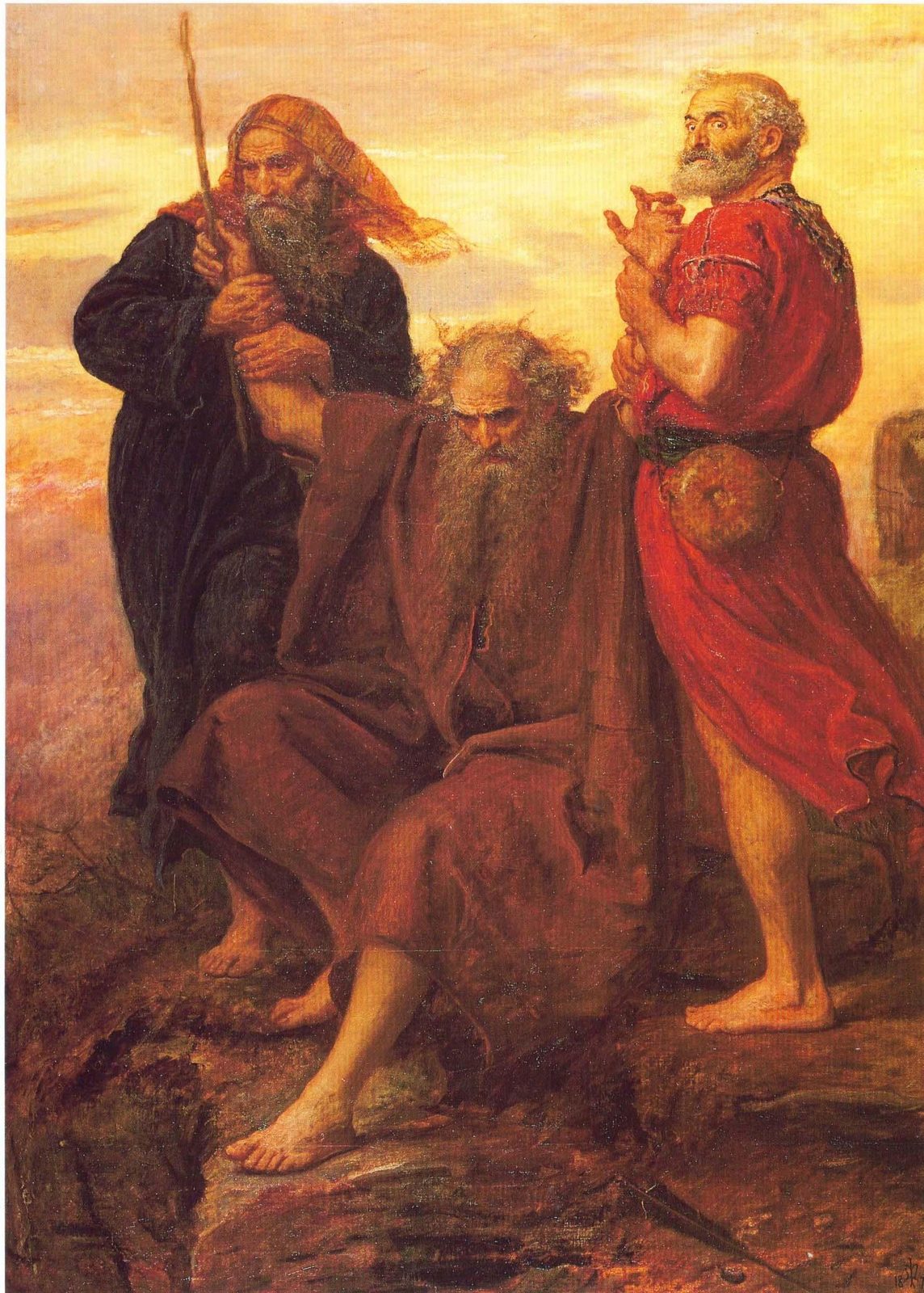
Miriam and Aaron spoke against Moses because of the Cushite woman he had married, and they asked whether the LORD had spoken only through Moses. The LORD heard it and called the three of them out to the Tent of Meeting.
Now Moses was a very humble man, more so than any man on the face of the earth.
Numbers 12:3BSB The narrator gives the reason the LORD took up the cause of His servant.
Read the study Moses, the Most Humble Man 10 sections, 7 verses set out
The Pharisee and the tax collectorLuke 18
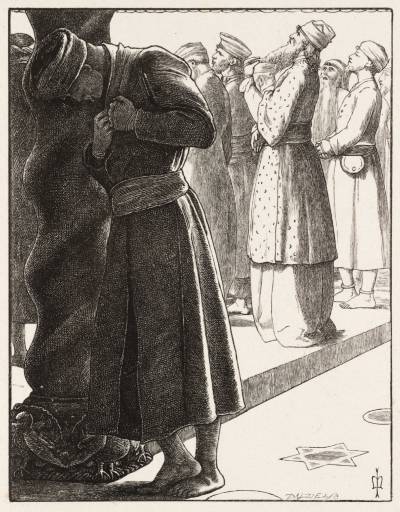
Jesus told this parable to some who trusted in their own righteousness and viewed others with contempt (Luke 18:9). A Pharisee thanked God that he was not like other men, and a tax collector stood at a distance, beat his breast and asked God for mercy.
I tell you, this man, rather than the Pharisee, went home justified. For everyone who exalts himself will be humbled, but the one who humbles himself will be exalted.”
Luke 18:14BSB Jesus gives the verdict on the two men and the rule that closes the parable.
Read the study The Pharisee and the Tax Collector 9 sections, 6 verses set out
Manasseh in Babylon2 Chronicles 33
Manasseh led Judah and Jerusalem astray, so that they did greater evil than the nations the LORD had destroyed. The commanders of the king of Assyria captured him, put a hook in his nose, bound him with bronze shackles and took him to Babylon (2 Chronicles 33:9 to 11).
And in his distress, Manasseh sought the favor of the LORD his God and earnestly humbled himself before the God of his fathers. And when he prayed to Him, the LORD received his plea and heard his petition; so He brought him back to Jerusalem and to his kingdom. Then Manasseh knew that the LORD is God.
2 Chronicles 33:12 to 13BSB The Chronicler records that the LORD heard the humbled king and restored him.
The Pharisee and the tax collector (Luke 18), Manasseh in Babylon (2 Chronicles 33)
Humility in the Church's History
Three accounts, from Augustine to Thomas à Kempis, tell how the church taught and sought humility.
Augustine of Hippo410
A Greek student named Dioscorus sent Augustine a long list of questions on the dialogues of Cicero, on the eve of a voyage, because he feared being thought "illiterate and stupid" if he could not answer them (Letter 118, sections 1 to 3, translated by J. G. Cunningham, 1887).
Augustine answered with the way to the truth instead: "In that way the first part is humility; the second, humility; the third, humility." He took his pattern from an orator who, asked the first rule of eloquence, answered "Delivery" three times (section 22).
Read the study Augustine's Three Answers 7 sections, 4 verses set out
Benedict of Nursia480 to 547
Chapter 7 of the Rule of Saint Benedict sets out twelve degrees of humility as the rungs of the ladder Jacob saw in his dream. The Rule reads the ladder this way: "we descend by self-exaltation and ascend by humility" (translated by Leonard J. Doyle).
Thomas à Kempis1380 to 1471
The Imitation of Christ, most probably the work of Thomas à Kempis of the Brothers of the Common Life, gives its second chapter to thinking humbly of oneself. It sets "a lowly peasant who serveth God" above "a proud philosopher who watcheth the stars and neglecteth the knowledge of himself" (translated by William Benham).
The same chapter says, "A lowly knowledge of thyself is a surer way to God than the deep searching of man's learning."
Benedict of Nursia (480 to 547), Thomas à Kempis (1380 to 1471)
Voices on Humility, by Century
Three voices from the fifth century to the nineteenth, each quoted from a work in the public domain under the line that says what he teaches.
died 444 · Cyril of Alexandria
Commentary on the Gospel of Luke, Sermon 102
Fifth century. Honour is God's gift to give, and the rule of virtue is a lowly mind.
The quotation1 quotation
“If then any one wish to be set above others, let him win it by the decree of heaven, and be crowned by those honours which God bestows. Let him surpass the many by having the testimony of glorious virtues; but the rule of virtue is a lowly mind that loves not boasting: yes! it is humility. And this the blessed Paul also counted worthy of all esteem: for he writes to such as are eagerly desirous of saintly pursuits, ‘Love humility.’”
Cyril of Alexandria · Commentary on the Gospel of Luke, Sermon 102 · on Luke 14:11Patristic
1662 to 1714 · Matthew Henry
Commentary on the Whole Bible
Eighteenth century. The humblest Christians are the best Christians and the most like Christ.
The quotation1 quotation
“Note, The humblest Christians are the best Christians, and most like to Christ, and highest in his favour; are best disposed for the communications of divine grace, and fittest to serve God in this world, and enjoy him in another.”
Matthew Henry · Commentary on the Whole Bible · on Matthew 18:4Puritan
1802 to 1910 · Jamieson, Fausset & Brown
Commentary Critical and Explanatory on the Whole Bible
Nineteenth century. Pride made clothing needful, and the Christian clothes himself in humility.
The quotation1 quotation
“Clothing was the original badge of man's sin and shame. Pride caused the need of man's clothing, and pride still reigns in dress; the Christian therefore clothes himself in humility (1Pe 3:3, 4). God provides him with the robe of Christ's righteousness, in order to receive which man must be stripped of pride.”
Jamieson, Fausset & Brown · Commentary Critical and Explanatory on the Whole Bible · on 1 Peter 5:5Reformed
How Humility Has Been Taught
Chrysostom, Wesley and Andrew Murray taught humility in the fourth, eighteenth and nineteenth centuries.
Chrysostom taught that the Son's lowering of Himself answers the fear that humility costs a person his rights1 paragraph
John Chrysostom, preaching on Philippians 2, said that Paul wrote for those who fear being "deprived of their proper right, and debased" when they are lowly. To take away that fear Paul pointed to the Son, who was equal to the Father and still made Himself lowly (Homily 7 on Philippians, translated by John A. Broadus, 1889).
Wesley read walking humbly as fellowship with God1 paragraph
John Wesley explained the third requirement of Micah 6:8 in one line of his Explanatory Notes upon the Old Testament (1765). To walk humbly with God, he wrote, is to "Keep up a constant fellowship with God, by humble, holy faith."
Andrew Murray called humility the root of every virtue2 paragraphs
Andrew Murray wrote a short book on humility. Its preface names three motives for it, because humility becomes a person "as a creature, as a sinner, as a saint."
Its first chapter calls humility "the place of entire dependence on God". Murray wrote that it is "the first duty and the highest virtue of the creature, and the root of every virtue".
Where the Science Speaks
Studies of humility find it hard to measure, and the measures they have link it with openness and with honest work.
Psychologists have found humility hard to study. Davis and others (2011) wrote that its study "has progressed slowly due to measurement problems", and they built a sixteen-item scale that treats humility as a judgment others make of a person.
Leary and others (2017) defined intellectual humility as "the degree to which people recognize that their beliefs might be wrong" and found it linked with openness, curiosity and low dogmatism. A review of many studies of the honesty and humility trait at work found it linked with less harmful conduct at work, a correlation of minus 0.44 (Lee, Berry and Gonzalez-Mulé, 2019).
These studies rest on questionnaires and correlations. Scripture commands humility because of who God is and who Christ is, so the research can stand only as a later and smaller witness beside it.
Studies of Humility
Each study takes one part of humility further, grouped by the texts, the stories and the words.
The texts
2 studies
- Passages and psalms · 8 verses set outHe Humbled Himself
Philippians 2:1 to 11 joins Paul's call to count others above oneself with the story of the Son's descent and exaltation.
- Passages and psalms · 8 verses set outPride Goes Before a Fall
Proverbs says that pride goes before destruction, and Daniel 4 tells how the king of Babylon was brought low until he praised the King of heaven.
- Passages and psalms · 8 verses set outHe Humbled Himself
The stories
4 studies
- Stories · 6 verses set outThe Pharisee and the Tax Collector
Luke 18:9 to 14 sets a Pharisee's prayer of self-praise beside the prayer of a tax collector.
- Stories · 7 verses set outMoses, the Most Humble Man
Numbers 12 calls Moses the most humble man on earth in the middle of a quarrel with his brother and sister.
- Stories · 4 verses set outAugustine's Three Answers
Augustine's Letter 118 of 410 answered a student's questions about Cicero with a lesson on pride and praise.
- Subjects · 12 versesPride
The oldest sin: the self enthroned where God belongs.
- Stories · 6 verses set outThe Pharisee and the Tax Collector
The words
1 study
- Symbols and words · 9 verses set outThe Hebrew and Greek Words for Humility
Three Hebrew words and a Greek family of five carry humility in Scripture, from Proverbs to the letters of Paul and Peter.
- Symbols and words · 9 verses set outThe Hebrew and Greek Words for Humility

Pride Goes Before a Fall, The Pharisee and the Tax Collector, Moses, the Most Humble Man, Augustine's Three Answers, Pride, The Hebrew and Greek Words for Humility
Where Readers Disagree
Each reading names its holders, the work where it stands and the objection raised against it.
Below others or true to oneself
Read the study of the Hebrew and Greek Words for Humility 8 sections, 9 verses set out
| Reading | Held by | Work | Objection |
|---|---|---|---|
| Humility places oneself below others | Benedict of Nursia (Monastic) | Benedict, The Rule of Saint Benedict, chapter 7 (the seventh degree) | Romans 12:3 asks each believer to "think of yourself with sober judgment", which asks for a true estimate of oneself. |
| Humility is a true knowledge of oneself before God | Thomas à Kempis; John Calvin (Devotional; Reformed) | The Imitation of Christ, book 1, chapter 2; Calvin, Institutes 2.2.11 | Philippians 2:3 asks the believer to count others more important than himself, which goes beyond an accurate view of oneself. |
Justified, or more justified (Luke 18:14)
Read the study of The Pharisee and the Tax Collector 9 sections, 6 verses set out
| Reading | Held by | Work | Objection |
|---|---|---|---|
| The tax collector went home justified and the Pharisee did not | Irenaeus (Patristic) | Irenaeus, Against Heresies, book 4 | The Greek of Luke 18:14 is a comparison, "compared with that one", and Tertullian read it as "more justified". |
| The tax collector went home more justified than the Pharisee | Tertullian (Patristic) | Tertullian, On Prayer, chapter 17, translated by S. Thelwall, Ante-Nicene Fathers, volume 3 | The saying that closes the parable sets the one who exalts himself against the one who humbles himself, and only the humbled one is exalted. |
Humble or afflicted (Numbers 12:3)
Read the study Moses, the Most Humble Man 10 sections, 7 verses set out
| Reading | Held by | Work | Objection |
|---|---|---|---|
| Moses was meek and took no notice of the reproach | John Wesley (Methodist) | Wesley, Explanatory Notes upon the Old Testament (1765), on Numbers 12:3 | Adam Clarke asked how Moses could write such praise of himself, and he read the word as depressed or afflicted. |
| Moses was afflicted more than any man | Adam Clarke (Methodist) | Clarke, Commentary on the Bible (1832), on Numbers 12:3 | The verse stands as the reason the LORD defended Moses, which fits the sense humble, and the lexicon gives the word both senses. |
Sources
Scripture is the Berean Standard Bible.
- STEP Bible, Translators Brief lexicon of Extended Strongs for Hebrew and for Greek (Tyndale House, Cambridge), CC BY 4.0.
- Augustine of Hippo, Letter 118, to Dioscorus (A.D. 410), sections 1 to 3 and 22, translated by J. G. Cunningham, Nicene and Post-Nicene Fathers, first series, volume 1 (Buffalo: Christian Literature Publishing, 1887)
- Augustine of Hippo, The City of God, book 14, chapter 13, translated by Dods, Nicene and Post-Nicene Fathers, first series, volume 2 (Buffalo: Christian Literature Publishing, 1887)
- Augustine of Hippo, Tractate 58 on the Gospel of John, section 4, translated by John Gibb, Nicene and Post-Nicene Fathers, first series, volume 7 (Buffalo: Christian Literature Publishing, 1888)
- John Chrysostom, Homily 7 on Philippians, translated by John A. Broadus, Nicene and Post-Nicene Fathers, first series, volume 13 (Buffalo: Christian Literature Publishing, 1889)
- The Rule of Saint Benedict, chapter 7, translated by Leonard J. Doyle (Collegeville: The Order of St. Benedict, 1948)
- Thomas à Kempis, The Imitation of Christ, book 1, chapter 2, translated by William Benham.
- John Calvin, Institutes of the Christian Religion, book 2, chapter 2, section 11, translated by Henry Beveridge (first published 1845)
- Andrew Murray, Humility: The Beauty of Holiness (New York: Fleming H. Revell), preface and chapter 1.
- John Wesley, Explanatory Notes upon the Old Testament (1765), on Micah 6:8.
- D. E. Davis and others, Relational humility: conceptualizing and measuring humility as a personality judgment, Journal of Personality Assessment 93(3): 225 to 234 (2011)
- M. R. Leary and others, Cognitive and Interpersonal Features of Intellectual Humility, Personality and Social Psychology Bulletin 43(6): 793 to 813 (2017)
- Y. Lee, C. M. Berry and E. Gonzalez-Mulé, The importance of being humble: a meta-analysis and incremental validity analysis of the relationship between honesty-humility and job performance, Journal of Applied Psychology 104(12): 1535 to 1546 (2019)
- Irenaeus, Against Heresies, book 4, and Tertullian, On Prayer, chapter 17 (translated by S. Thelwall, Ante-Nicene Fathers, volume 3), on Luke 18:9 to 14.
- Adam Clarke, Commentary on the Bible (1832), and John Wesley, Explanatory Notes upon the Old Testament (1765), on Numbers 12:3.
Keep Studying
Read it1
In this value6
People and groups8
Show the next 2 titles
Doctrines2