
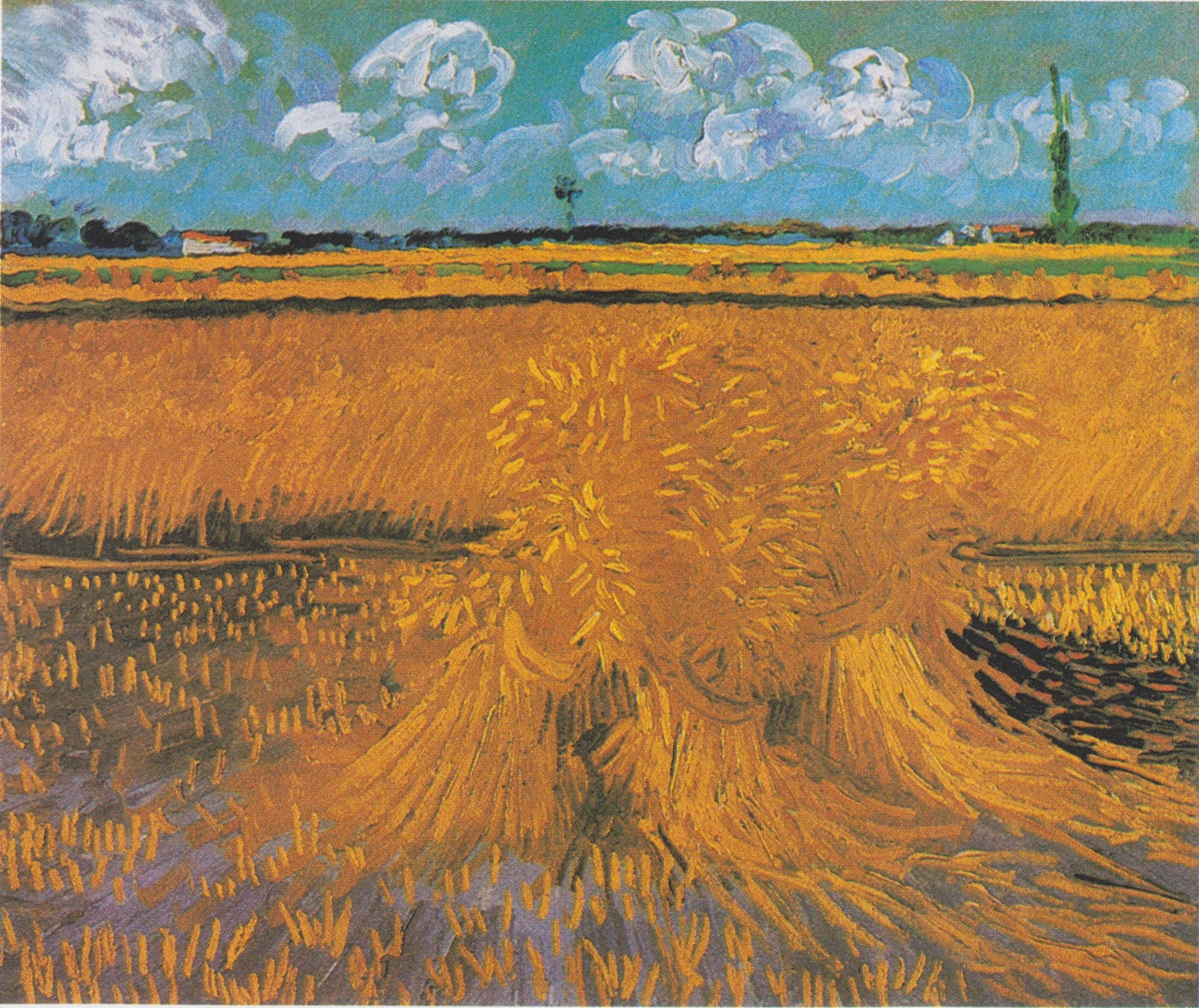
Psalm 126 · Passage · Failure and Restoration
The God Who Restores
Psalm 126 and Jeremiah 30 speak of the LORD restoring Zion after the exile.
The noun behind “the captives” in Psalm 126:1 stands nowhere else in the Old Testament.
Those who sow in tears will reap with shouts of joy.
- The passage
- Psalm 126:1 to 6, Jeremiah 30:17, Jeremiah 30:1 to 24
- Books
- Psalms, Jeremiah
- Hold in memory
- Jeremiah 30:17
Summary
Psalm 126 is the song of a people already home whose restoring was not yet complete. Jeremiah 30 is the LORD's word to Zion at a time when no remedy was left to her. Both texts call the people Zion, and both set the hope of a ruined people on the LORD's own action.
- The psalm's first three verses look back on a restoration already given, and its fourth asks the LORD to give it again.
- Jeremiah 30 names Zion's sins as the cause of her wound and the LORD as her healer.
- The Hebrew phrase shuv shevut, used in both texts, is read as restoring captives by Albert Barnes on Psalm 126 and as restoring fortunes by A. F. Kirkpatrick and W. Volck.
When the LORD Restored Zion
Psalm 126 opens with the memory of a homecoming too good to believe.
The God Who Restores studies Psalm 126 and Jeremiah 30:17. It belongs to the trial of failure and restoration, because both texts speak to a people whose ruin had come and whose restoring was still awaited. Its question is what the LORD restores to Zion, and how a people waiting for it are to pray and work.
It follows the psalm verse by verse and sets the wound and the cure of Jeremiah 30 beside it in one figure. It gives the readings of two questions on the psalm's words, with the holders of each and the objections made to them.
The title of Psalm 126 reads “A Song of degrees” in the King James Version. Its Hebrew word is ma'alah, which Strong's Concordance glosses as an elevation and, literally, “a journey to a higher place”.
When the LORD restored the captives of Zion, we were like dreamers.The verse stands here because it names the event the whole psalm remembers and the wonder of those who lived through it.
Psalm 126:2 records the laughter of the returned and says that the nations saw what the LORD had done for them.
From the Wound to the Harvest
The first group draws on Jeremiah 30:12 to 17, and the second on Psalm 126:3 to 6.
Jeremiah 30 climbs from the wound to its cure, and Psalm 126 from the homecoming to the harvest.
| Rung | The step | The Berean words |
|---|---|---|
| Jeremiah 30 | ||
| 1 | The wound | Jeremiah 30:12, “Your injury is incurable; your wound is grievous.” |
| 2 | Its cause | Jeremiah 30:15, “Because of your great iniquity and your numerous sins I have done these things to you.” |
| 3 | The cure | Jeremiah 30:17, “But I will restore your health and heal your wounds, declares the LORD, because they call you an outcast, Zion, for whom no one cares.” |
| Psalm 126 | ||
| 4 | The restoration remembered | Psalm 126:3, “The LORD has done great things for us; we are filled with joy.” |
| 5 | The prayer | Psalm 126:4, “Restore our captives, O LORD, like streams in the Negev.” |
| 6 | The harvest | Psalm 126:6, “He who goes out weeping, bearing a trail of seed, will surely return with shouts of joy, carrying sheaves of grain.” |
5, 6
Restore Our Captives, O LORD
The streams of the Negev and the sowing in tears give the prayer its pictures.
The prayer of Psalm 126:4 uses the phrase shuv shevut, the verb shuv with the noun shevut. The Berean text renders it “Restore our captives” in Psalm 126:4 and “I will restore the fortunes of Jacob’s tents” in Jeremiah 30:18.
Spurgeon drew from the prayer a lesson for faith in a time of trouble.
“Turn again our captivity, O Lord. Remembering the former joy of a past rescue they cry to Jehovah for a repetition of it. When we pray for the turning of our captivity, it is wise to recall former instances thereof: nothing strengthens faith more effectually than the memory of a previous experience. ‘The Lord hath done’ harmonizes well with the prayer, ‘Turn again.’ The text shows us how wise it is to resort anew to the Lord, who in former times has been so good to us.”
Charles Spurgeon · The Treasury of David, Vol. 7 · on Psalm 126:4
A. F. Kirkpatrick, in the Cambridge Bible (1906), described the Negev as “the arid waterless district to the south of Judah”, “where in summer all the brooks dry up, and are only filled by the autumn rains.”
Kirkpatrick read the sowing in tears against the life of the returned community. He set the weeping at the founding of the Second Temple (Ezra 3:12) and the joy at its completion (Ezra 6:16) as “only illustrations of the general truth”.
A Wound Only the LORD Could Heal
The oracle of Jeremiah 30:12 to 17 moves from an incurable wound to its cure.
A. W. Streane, in the Cambridge Bible on Jeremiah (1913), wrote that after the gloom of the earlier chapters “the whole tone here is that of hope.” C. F. Keil headed Jeremiah 30 to 33 “The Announcement of Deliverance for All Israel.”
For behold, the days are coming, declares the LORD, when I will restore from captivity My people Israel and Judah, declares the LORD. I will restore them to the land that I gave to their fathers, and they will possess it.’”The verse stands here because it opens the four chapters of hope with the LORD's own pledge.
The LORD tells Zion that her allies have abandoned her: “All your lovers have forgotten you; they no longer seek you” (Jeremiah 30:14). Keil explained the turn of Jeremiah 30:16 to 17 by Zion's helplessness, “because Israel, although punished for his sins, is destitute of help.”
The word for “health” in Jeremiah 30:17 is arukah, which Strong's glosses “wholeness (literally or figuratively)”. Streane preferred a rendering that speaks of new flesh growing over the wound. The word for “outcast” comes from nadach, to push off or banish.
The return that Jeremiah promised came after the exile in Babylon.
The LORD Who Restores
The psalm gives its singers two things to do while they wait, to pray and to go on working.
The psalm's first singers were Zion's returned exiles, and its promise is about a harvest of the land. A believer who takes the promise for himself reads it by likeness, trusting the LORD who restored Zion.
Joel tells the same turn from loss to plenty for a land stripped by locusts.
Two Questions on the Psalm's Words
The readings run from Jerome's Latin rendering to Kirkpatrick's commentary of 1906.
The return from Babylon rememberedA. F. Kirkpatrick; Franz Delitzsch; John Calvin
Kirkpatrick wrote, “No doubt the restoration from exile in Babylon is meant”. Franz Delitzsch, in his Biblical Commentary on the Psalms (English edition 1871), heard in the first three verses “the exiles at home again upon the soil of their fatherland”. John Calvin, in his commentary on the Psalms, read the deliverance as proof “that the prophecy of Jeremiah, which had assigned seventy years as the term of the captivity, was truly fulfilled.”
Against it, Delitzsch reports that Jerome rendered the laughter of Psalm 126:2 as future.
A deliverance still to comeExpositors named by Delitzsch, Luther among them
Delitzsch reported expositors who “transfer the grateful retrospect” of the first three verses “into the future”, and he named Luther among the translators.
Against it, Delitzsch answered that the reading is refuted by Psalm 85, which also gives thanks for a restoration already given, and is silenced “when brought face to face with the requirements of the syntax.”
Bringing back the captivesThe ancient versions; Albert Barnes
Albert Barnes wrote that the noun of Psalm 126:1 “means properly return; and then, those returning. The ancient versions render it captivity.” He took the verse to speak of those coming home to Zion.
Against it, the same phrase stands in Job 42:10, where no captivity is recorded, and the Berean text renders it there “restored his prosperity.”
Restoring the fortunesA. F. Kirkpatrick; W. Volck; Albert Barnes on Job
Kirkpatrick offered “Restore our fortunes” as the alternative rendering of Psalm 126:4. W. Volck, in the New Schaff-Herzog Encyclopedia of Religious Knowledge, wrote that after the exile “this phrase means to restore and not to return captives”. Barnes held that in Job 42:10 the language of a return from captivity is used of restoration from any great calamity.
Against it, Jeremiah 30:3 joins the phrase to the people's return to the land, and Strong's first gloss of shevut is “exile, concretely, prisoners”.
My People and Your God
Jeremiah 30:22 closes the promise of healing and rebuilding.
“And you will be My people, and I will be your God.”The verse stands here because it names what the healing and the rebuilding are for, a people who belong to the LORD again.
The psalm closes on a harvest field and the prophecy on a covenant.
Sources
Scripture is the Berean Standard Bible.
- STEP Bible, Translators Amalgamated Hebrew Old Testament (Tyndale House, Cambridge), CC BY 4.0.
- STEP Bible TBESH lexicon (Tyndale House, Cambridge), CC BY 4.0, with the glosses of James Strong, Strong's Exhaustive Concordance of the Bible (1890)
- A. F. Kirkpatrick, The Book of Psalms, Cambridge Bible for Schools and Colleges (1906), on Psalm 126.
- Franz Delitzsch, Biblical Commentary on the Psalms (Edinburgh, T. & T. Clark, 1871), on Psalm 126.
- A. W. Streane, Jeremiah and Lamentations, Cambridge Bible for Schools and Colleges (1913), on Jeremiah 30.
- C. F. Keil, The Prophecies of Jeremiah (Edinburgh, T. & T. Clark, 1873 and 1874), on Jeremiah 30.
- The New Schaff-Herzog Encyclopedia of Religious Knowledge, vol. 6 (Funk and Wagnalls; the Baker Book House reprint of 1953), article Joel by W. Volck.
- Charles Spurgeon, The Treasury of David, Vol. 7 (1885), on Psalm 126:4.
- John Calvin, Commentaries, on Psalm 126:1.
- Albert Barnes, Notes, Explanatory and Practical, on the Old and New Testaments (1832 to 1869), on Psalm 126:1.
- Albert Barnes, Notes, Explanatory and Practical, on the Old and New Testaments (1832 to 1869), on Job 42:10.
Keep Studying
Studies1
In this trial6
People and groups8