
Lukechapter 22
71 verses · Luke · about AD 62 · The Gospels
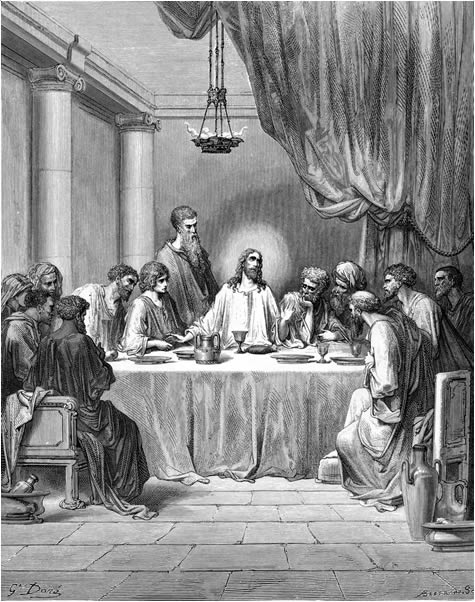
In the same way, after supper He took the cup, saying, “This cup is the new covenant in My blood, which is poured out for you.
Introduction
Luke, The Gospels, Luke Overview.
Luke wrote this for Theophilus and for churches that kept the Lord's Supper in their own homes and needed to know where it began. The chapter covers a single night, from the preparation of a festival meal to the first hearing before the council. It is the longest of the three chapters that tell of the Passion in this Gospel. Listen for the talk at the table, where teaching, warning and promise are given at one meal. Listen too for how the Lord speaks to each disciple who is about to fail him. A reader learns here that failure was foreseen before it came.
Context
- Who
- A Greek reader who knew what a benefactor was and what a public title cost
- What
- The Passover meal and the first Lord's Supper, the prayer on the Mount of Olives, the arrest, Peter's denial and the hearing before the council.
- Where
- An upper room in Jerusalem, the Mount of Olives, and the courtyard of the high priest's house.
- When
- The Passover of about AD 30 or 33, from the day of Unleavened Bread through the night to daybreak.
- Why
- To show that Jesus went to his death knowingly, gave his disciples the meal that remembers it, and prepared them for their own failure.
Historical context
The Passover meal followed a set order by this period: cups of wine at fixed points, unleavened bread, bitter herbs, and the retelling of the exodus. Luke records two cups, which fits that structure, and the bread and cup Jesus reinterprets sit inside a liturgy every Jewish guest at the table had performed since childhood.
Show the rest of the historical context, 4 more paragraphs
The sign for finding the room was a man carrying a jar of water, conspicuous because carrying water was women's work, and therefore a reliable prearranged signal in a city packed for the festival.
The dispute about greatness draws a comparison Luke's Greek reader would feel immediately. Kings of the Gentiles lord it over them, Jesus says, and those in authority over them are called benefactors, and that was a genuine honorific, stamped on coins and carved on monuments, awarded to rulers who funded games and buildings while taxing the people who paid for them. Jesus says: not so with you.
The two swords, and Peter's use of one, sit against a real background: travellers carried weapons on dangerous roads, and Galilee had a reputation for armed resistance. The arrest party comes at night, away from the crowds, precisely because a daylight arrest during the festival risked a riot.
The night hearing at the high priest's house, followed by a council at daybreak, moves at a speed that later Jewish rules for capital cases would not have allowed, which is one reason Luke separates the informal night questioning from the formal morning session.
Significance
The words over the cup, the new covenant in my blood, poured out for you, gave Luke's readers the meaning of the meal they kept repeating in their own houses.
Show the rest of the significance, 1 more paragraph
And Luke alone records the sentence spoken to Peter before the failure: I have prayed for you, that your faith may not fail; and when you have turned again, strengthen your brothers. A church whose members would be interrogated needed to know that the collapse was foreseen and the restoration was already assigned.
The heads below are this chapter's scenes. The numbered points under each are its verses.
Satan Enters Judas; the Room Prepared
Luke 22:1-2
the Feast of Unleavened Bread: Luke names two feasts as one, the Feast of Unleavened Bread, called the Passover. By the first century they had merged into one week-long observance.
for they feared the people: Adam Clarke reads the fear as evidence that most of the people held Jesus to be at least a prophet. He judges the crowd that later called for his blood to have been a mob gathered by the chief priests and Pharisees. The fear shaped the whole plot.
Luke 22:2
“They feared the people - The great mass of the people seem to have been convinced that Christ was at least a prophet sent from God; and it is likely they kept steady in their attachment to him. The multitude, who are represented as clamouring for his blood at the crucifixion, appear to have been a mere mob, formed out of the creatures of the chief priests and Pharisees.”
Adam Clarke · Commentary on the Bible (1810-1826)evangelical
Luke 22:3-6
Then Satan entered Judas Iscariot: , who was one of the Twelve; Luke names the spiritual power at work alongside the man's own choice. The chief priests agreed to give him money; Matthew's Gospel names the sum, thirty pieces of silver, the price of a slave under Exodus 21:32.
Luke 22:3
“Then entered Satan into Judas - It is not necessary to suppose that Satan entered personally into the body of Judas, but only that he brought him under his influence; he filled his mind with an evil passion, and led him on to betray his Master. The particular passion of which Satan made use was “avarice” - probably the besetting sin of Judas. To show its exceeding evil and baseness, it is only necessary to say that when it produced its “appropriate” effect in this case, it led to the betraying and crucifixion of the Son of God.”
2 more voices on this verse
Luke 22:3
“It was the devil's work, who thought hereby to ruin Christ's undertaking, to have broken his head; but it proved only the bruising of his heel. Whoever betrays Christ, or his truths or ways, it is Satan that puts them upon it.”
Matthew Henry · Commentary on the Whole Bible (1707-1721)puritan
Luke 22:3
“Satan, seeing this door into his heart standing wide open, determines to enter by it, but cautiously (2Co 2:11); first merely "putting it into his heart to betray Him" (Joh 13:2), suggesting the thought to him that by this means he might enrich himself. (3) This thought was probably converted into a settled purpose by what took place in Simon's house at Bethany.”
Jamieson, Fausset & Brown · Commentary Critical and Explanatory on the Whole Bible (1871)reformed
temple officers: Adam Clarke takes the temple officers as the commanders of the priests who kept guard at the temple, and he cites Josephus for them. Theophylact reads them as overseers who kept good order among the people. Judas went to the men who could make an arrest.
Luke 22:4
“And captains - Among the priests who were in waiting at the temple, some were appointed φυλακες, for a guard to the temple; and over these were Ϛρατηγοι commanding officers: both sorts are mentioned by Josephus, War, b. vi. c. 5. s. 3. Bp. Pearce, See another sense of captains, in the note on Mat 27:65 (note). Dr. Lightfoot supposes these to have been the captains over the watches; for in three places the priests kept watch and ward in the temple, viz. in Beth Abtenes, in Beth Nitsots, and in Beth Mokad.”
Adam Clarke · Commentary on the Bible (1810-1826)evangelical
agreed to give him money: Luke gives no sum. John Gill and Adam Clarke supply it from Matthew 26:15, thirty pieces of silver, and Clarke calls it the common price of the meanest slave. Gill reads the priests' delight as relief, since a disciple now offered them the private arrest they wanted.
Luke 22:5
“And they were glad,.... For nothing could be more opportune and agreeable to them, than that one of his disciples should meet them at this juncture, and offer to put him into their hands in the most private manner; and covenanted to give him money. The Ethiopic version read, "thirty pieces of silver"; which was the sum they agreed to give him, and he accepted of; see Mat 26:15.”
1 more voice on this verse
Luke 22:5
“They - covenanted to give him money - Matthew says thirty pieces, or staters, of silver, about 4£. 10s. English, the common price of the meanest slave. See the note on Mat 26:15.”
Adam Clarke · Commentary on the Bible (1810-1826)evangelical
in the absence of a crowd: The condition answers verse 2, where the priests feared the people. Adam Clarke holds that most of the people still counted Jesus a prophet, so an arrest in public risked an uproar. Judas offered what the priests lacked, a time and place away from the crowds.
Luke 22:6
“And sought opportunity to betray him unto them, without the crowds, that is, when he saw Him standing by Himself apart, in the absence of the multitude.”
Theophylact of Ohrid · written before 1107 · Catena Aurea by Aquinaspatristic
2 more voices on this verse
Luke 22:6
“And he promised - That is, to do it - εξωμολογησε: or, He accepted the proposal. See Wakefield.”
Adam Clarke · Commentary on the Bible (1810-1826)evangelical
Luke 22:6
“Now many shudder at the wickedness of Judas, yet do not guard against it. For whosoever despises the laws of truth and love, betrays Christ who is truth and love. Above all, when he sins not from infirmity or ignorance, but after the likeness of Judas seeks opportunity, when no one is present, to change truth for a lie, virtue for crime.”
Bede · written before 735 · Catena Aurea by Aquinaspatristic
Luke 22:7-10
the day of Unleavened Bread: On the day of Unleavened Bread Jesus sent Peter and John to prepare the Passover. Asked where, He gives a sign: a man carrying a jug of water will meet them. Carrying water was ordinarily women's work in that culture, so the man would be easy to spot.
Luke 22:7
“Then came the day of unleavened bread,.... The first of them, the fourteenth day of the month Nisan: when the passover must be killed; that is, the passover lamb, as the Persic version renders it; and which, according to the law in Exo 12:6 was to be done between the two evenings; See Gill on Mat 26:17.”
2 more voices on this verse
Luke 22:7
“By its shadows, the law prefigured from of old the mystery of Christ. He is himself the witness of this when he said to the Jews, "If you would have believed Moses, you would have also believed me, for he wrote concerning me." Christ is presented everywhere by means of shadows and types, both as slain for us, as the innocent and true Lamb, and as sanctifying us by his life-giving blood. We further find the words of the holy prophets in complete agreement with those of most wise Moses.”
Cyril of Alexandria · written before 444 · Commentary on Luke, Homily 141patristic
Luke 22:7
“Christ was made under the law, and observed the ordinances of it, particularly that of the passover, to teach us in like manner to observe his gospel institutions, particularly that of the Lord's supper, and not to neglect them. It is probable that he went to the temple to preach in the morning, when he sent Peter and John another way into the city to prepare the passover.”
Matthew Henry · Commentary on the Whole Bible (1707-1721)puritan
Jesus sent Peter and John: John Gill notes that servants were commonly sent ahead to prepare the Passover for their masters. Here the task goes to two of the closest disciples. Luke alone names the pair, and the same two will stand together again in the early chapters of Acts.
Luke 22:8
“And he sent Peter and John,.... That is, Jesus sent them, as the Syriac, Persic, and Ethiopic versions express it; these were two favourite disciples of Christ, and were now sent by him from Bethany to Jerusalem: saying, go and prepare us the passover, that we may eat; it together; so servants used to be sent, to go and prepare the passover for their masters; See Gill on Mat 26:17.”
The question concerns a house within Jerusalem. Gill points out that the city was already fixed, since Deuteronomy 16:2 required the Passover to be eaten at the place the Lord would choose. The disciples needed only the room.
Luke 22:9
“And they said unto him, where wilt thou that we prepare? Meaning, not in what village, town, or city, for it was a fixed and determined thing, that the passover should be eaten at Jerusalem, and nowhere else; see Deu 16:2, but in what house in Jerusalem?”
a man carrying a jug of water: Ambrose finds two things in the sign. Jesus knows what will happen in another place, and he chooses a humble house over the palaces of nobles. Ambrose also notes that the man is left unnamed, and the sign kept the place from Judas until the meal.
Luke 22:10
“First observe the greatness of His divine power. He is talking with His disciples, yet knows what will happen in another place. Next behold His condescension, in that He chooses not the person of the rich or powerful, but seeks after the poor, and prefers a mean inn to the spacious palaces of nobles. Now the Lord was not ignorant of the name of the man whose mystery He knew, and that he would meet the disciples, but he is mentioned without a name, that he may be counted as ignoble.”
Ambrose of Milan · written before 397 · Catena Aurea by Aquinaspatristic
Luke 22:11-13
the owner of that house: He will show them a large upper room, already furnished, spread with cushions for the reclining posture of a formal meal. They found it just as Jesus had told them. And they prepared the Passover, securing the lamb, unleavened bread, bitter herbs and wine the meal required.
Luke 22:11
“Let us then ascend with the Lord united to us, to the upper part in which is the guestchamber, which is shown by the understanding, that is, the goodman of the house, to every one of the disciples of Christ. But this upper room of our house must be large enough to receive Jesus the Word of God, who is not comprehended but by those who are greater in comprehension.”
Origen of Alexandria · written before 253 · Catena Aurea by Aquinaspatristic
1 more voice on this verse
Luke 22:11
“As if to say, We have no abode, we have no place of shelter. Let those hear this, who busy themselves in building houses. Let them know that Christ, the Lord of all places, had not where to lay His head.”
Bede · written before 735 · Catena Aurea by Aquinaspatristic
a large upper room, already furnished: John Gill takes furnished to mean supplied with all that was needed to eat and drink at the Passover. The room was ready. Gill reads the command to make preparations as the preparing of the Passover itself and everything proper to it.
Luke 22:12
“And he shall show you a large upper room furnished,.... With all things necessary, to eat and drink out of, at the passover; there make ready. The Ethiopic version adds, "for us", as in Mar 14:15. The Persic version renders it, "there prepare a place"; but this was prepared already; the words design the preparation of the passover, and every thing proper for it.”
found it just as Jesus had told them: Everything fell out as Jesus had said, so his foreknowledge is shown before the meal begins. Cyril of Alexandria dwells on who sat at that table. Jesus admitted Judas to the meal from loving-kindness, though Satan was already lodging within him.
Luke 22:13
“When then the disciples had prepared the passover, Christ ate it with them, being long-suffering towards the traitor, and deigning to admit him to the table from His infinite loving-kindness: for he was already a traitor, because Satan was lodging within him. And what did Christ also say to the holy apostles? "I have desired a desire to eat this passover with you." Let us examine the deep purport of this expression: let us search out the meaning concealed therein, and what it is which the Saviour intends.”
Cyril of Alexandria · written before 444 · Commentary on Luke, Homily 141patristic
This Is My Body: the Table and the Betrayer
Luke 22:14-16
When the hour had come: Jesus tells His apostles, I have eagerly desired to eat this Passover with you before My suffering. The Greek doubles the verb, a Hebrew idiom that raises the longing to its greatest strength. He will not eat it again until it is fulfilled in the kingdom of God.
Luke 22:14
“And when the hour was come,.... When it was evening, the last of the two evenings, when it was dark, at least after six o'clock; See Gill on Mat 26:20. he sat down; or lay along on a couch, as was the custom; see the note, as before: and the twelve apostles with him; for Judas, after he had made his bargain with the chief priests, Scribes, and elders, came and took his place with the rest of the apostles, both to cover his sin, and to watch the best opportunity of betraying his master.”
Albert Barnes reads the doubled Greek as Hebrew for great desire. Jamieson, Fausset and Brown link the suffering named here to 1 Corinthians 5:7, which names Christ the Passover lamb. Cyril of Alexandria reads this as the last Passover of the type, giving way to the true Lamb.
Luke 22:15
“He says, "I will no longer come near to such a Pascha as this," one that consisted in the typical eating. A lamb of the flock was killed to be the type of the true Lamb until it is fulfilled in the kingdom of God, that is, until the time has appeared in which the kingdom of heaven is preached. This is fulfilled in us, who honor the worship that is superior to the law, even the true Pascha. A lamb of the flock does not sanctify those who are in Christ. Christ sanctifies us.”
Cyril of Alexandria · written before 444 · Commentary on Luke, Homily 141patristic
1 more voice on this verse
Luke 22:15
“With desire I have desired - This is a Hebrew form of expression, and means “I have greatly desired.” The reasons why he desired this we may suppose to have been: 1. That, as he was about to leave them, he was desirous once of seeing them together, and of partaking with them of one of the religious privileges of the Jewish dispensation.”
Adam Clarke reads fulfilled as the completion, in Christ's death, of what the Passover foreshadowed. Hippolytus of Rome holds that Jesus ate a supper before the Passover and suffered at the feast itself. Verse 18 repeats the vow over the cup.
Luke 22:16
“Until it be fulfilled in the kingdom of God - That is, until that of which the passover is a type is fulfilled in my death, through which the kingdom of God, or of heaven, (See Mat 3:2), shall be established among men.”
Adam Clarke · Commentary on the Bible (1810-1826)evangelical
1 more voice on this verse
Luke 22:16
“Now that neither in the first nor in the last there was anything false is evident; for he who said of old, "I will not any more eat the passover," probably partook of supper before the passover. But the passover He did not eat, but He suffered; for it was not the time for Him to eat.”
Hippolytus of Rome · written before 235 · Hippolytus Dogmatical and Historical Fragmentspatristic
Luke 22:17-18
divide it among yourselves: He gave thanks for the cup and said to them, Take this and divide it among yourselves. Luke places it, one of several Passover cups, before the bread of verse 19. He will not drink of the fruit of the vine from now on until the kingdom of God comes.
Luke 22:17
“When he came to his passion, he wanted to declare to Abraham and those with him the good news of the opening of the inheritance. After he gave thanks while holding the cup and then drank from it … he promised that he would again drink of the produce of the vine with his disciples. Christ thus showed the inheritance of the earth, in which the new produce of the vine is drunk, and the physical resurrection of his disciples.”
Irenaeus · written before 202 · Against Heresies 5.33.1patristic
1 more voice on this verse
Luke 22:17
“And he took the cup and gave thanks - This was not the “sacramental” cup, for that was taken “after” supper, Luk 22:20. This was one of the cups which were usually taken during the celebration of the Passover, and pertained to that observance. “After” he had kept this in the usual manner, he instituted the supper which bears his name, using the bread and wine which had been prepared for the Passover, and thus ingrafted the Lord’s Supper on the Passover, or superseded the Passover by another ordinance, which was intended to be perpetual.”
Theophylact takes the kingdom of God here as the resurrection, since it destroyed death. On his reading the vow looks to the risen Christ, who ate and drank with his disciples to prove the resurrection real. It pairs with the vow in verse 16.
Luke 22:18
“The resurrection is called the kingdom of God, because it has destroyed death. Therefore David also says, The Lord reigneth: He hath put on beauty, (Ps. 93:1.) that is, a beautiful robe, having put off the corruption of the flesh. (Isa. 63:1.) But when the resurrection comes, He again drinks with His disciples; to prove that the resurrection was not a shadow only.”
Theophylact of Ohrid · written before 1107 · Catena Aurea by Aquinaspatristic
He took the bread, gave thanks: Jesus said, This is My body, given for you; do this in remembrance of Me. The disputed word is the verb is: Roman Catholic and Lutheran traditions read a real presence, and Reformed and Zwinglian traditions read a memorial sign. Luke and Paul alone record the command to remember.
Luke 22:19
“Took bread - See the nature and design of the Lord’s Supper explained in the notes on Mat 26:26-29 (note). This do in remembrance of me - That the Jews, in eating the passover, did it to represent the sufferings of the Messiah, as evident from the tract Pesachim, fol. 119, quoted by Schoettgen. Why do we call this the great hallel? (i.e. the hymn composed of several psalms, which they sung after the paschal supper). Ans. Because in it these five things are contained: 1. The exodus from Egypt. 2. The dividing of the Red Sea.”
Adam Clarke · Commentary on the Bible (1810-1826)evangelical
3 more voices on this verse
Luke 22:19
“And he took bread - Namely, some time after, when supper was ended, wherein they had eaten the paschal lamb. This is my body - As he had just now celebrated the paschal supper, which was called the passover, so in like figurative language, he calls this bread his body.”
John Wesley · Explanatory Notes upon the New Testament (1755)evangelical
Luke 22:19
“Israel ate the meat of a dumb lamb to complete the Passover. Having done so, they smeared their doorposts with blood and laughed at the destroyer. We eat of the Word of the Father, the Son, our Savior. We have the lintels of our hearts sealed with the blood of the new covenant.”
Athanasius of Alexandria · written before 373 · Festal Letter 4patristic
Luke 22:19
“The breaking of Christ's body as a sacrifice for us is here commemorated by the breaking of bread; and the sacrifices under the law were called the bread of our God ( Lev. xxi. 6, 8, 17 ): This is my body which is given for you. And there is a feast upon that sacrifice instituted, in which we are to apply it to ourselves, and to take the benefit and comfort of it.”
Matthew Henry · Commentary on the Whole Bible (1707-1721)puritan
after supper He took the cup: The cup of the new covenant in My blood recalls Jeremiah 31:31 and the covenant blood of Exodus 24:8. Verses 19b-20 stand in the majority of manuscripts, and a few early Western witnesses lack them.
Luke 22:20
“Likewise also the cup after supper,.... Both after the passover, and the Lord's supper; that is, he took the cup after they had eaten the bread, and gave thanks over it, and gave it to his disciples, bidding them drink of it, as in Mat 26:27, See Gill on Mat 26:27, saying, this cup is the New Testament in my blood, which is shed for you. The Ethiopic version reads, "for many"; as in Mat 26:28 where it is added, "for the remission of sins"; See Gill on Mat 26:28.”
2 more voices on this verse
Luke 22:20
“By uniting flesh that was subject to death to himself, the Word being God and life drove corruption away from it. Christ also made it to be the source of life. The body of him who is the life must be this.Do not doubt what I have said but rather accept the word in faith, having gathered proofs from a few examples. When you place a piece of bread into wine, oil, or any other liquid, you find that it becomes charged with the quality of that particular thing.”
Cyril of Alexandria · written before 444 · Commentary on Luke, Homily 142patristic
Luke 22:20
“This cup is the New Testament - Here is an undeniable figure, whereby the cup is put for the wine in the cup. And this is called, The New Testament in Christ's blood, which could not possibly mean, that it was the New Testament itself, but only the seal of it, and the sign of that blood which was shed to confirm it.”
John Wesley · Explanatory Notes upon the New Testament (1755)evangelical
ConnectionsExodus 24:8, Jeremiah 31:31
Luke 22:21-23
The hand of My betrayer: Jesus says the Son of Man will go as it has been determined, yet pronounces woe on the man who betrays Him. The text holds God's plan and Judas's guilt together.
Luke 22:21
“The hand of him that betrayeth me is with me on the table - It is evident Christ spake these words before he instituted the Lord's Supper: for all the other evangelists mention the sop, immediately after receiving which he went out: John xiii, 30.”
John Wesley · Explanatory Notes upon the New Testament (1755)evangelical
2 more voices on this verse
Luke 22:21
“The hand of him that betrayeth me, etc. - What can be desired more, says Dr. Lightfoot, as a demonstration that Judas was present at the eucharist? And, whereas the contrary is endeavored to be proved out of John 13, nothing is made out of nothing; for there is not one syllable throughout that whole chapter of the paschal supper, but of a supper before the feast of the passover.”
Adam Clarke · Commentary on the Bible (1810-1826)evangelical
Luke 22:21
“By placing this after the institution of the Lord's supper, though in Matthew and Mark it is placed before it, it seems plain that Judas did receive the Lord's supper, did eat of that bread and drink of that cup; for, after the solemnity was over, Christ said, Behold, the hand of him that betrayeth me is with me on the table.”
Matthew Henry · Commentary on the Whole Bible (1707-1721)puritan
as it has been determined: Adam Clarke notes that Greek and Latin writers used the verb for going away as a word for dying. God decreed the death, yet Judas bears the woe. Tertullian reads the woe as the threat of an angry Master against so great a sin.
Luke 22:22
"Woe," says He, "to that man by whom the Son of man is betrayed!" Now it is certain that in this woe must be understood the imprecation and threat of an angry and incensed Master, unless Judas was to escape with impunity after so vast a sin.
Tertullian · written before 220 · Against Marcion Book IVpatristic
1 more voice on this verse
Luke 22:22
“The Son of man goeth - That is, he is about to die, Απερχεσθαι, οιχεσθαι, abire, going, going away, and departing, are used, by the best Greek and Latin writers, for death and dying. See Rosenmuller.”
Adam Clarke · Commentary on the Bible (1810-1826)evangelical
which of them was going to do this: John Gill places an earlier hint at a supper in Bethany, where the disciples only looked at one another in dismay. Now they question each other openly. Matthew Henry calls what follows a self-contradiction of the deceitful heart, for the same men soon argue over who is greatest.
Luke 22:23
“And they began to inquire among themselves,.... Two days before, at the supper in Bethany, when the same thing was hinted to them, they looked at one another, Joh 13:22 as persons in the utmost surprise and consternation, not being able, for a while, either to speak to Christ, or one another; but now they inquired among themselves, and of Christ likewise, Mat 26:21 which of them it was that should do this thing; so barbarous, shocking, and horrible.”
1 more voice on this verse
Luke 22:23
“What a self-contradiction is the deceitful heart of man! See what Christ said to this dispute. He was not sharp upon them, as might have been expected (he having so often reproved them for this very thing), but mildly showed them the sin and folly of it.”
Matthew Henry · Commentary on the Whole Bible (1707-1721)puritan
Greatness, Sifting Like Wheat, and Two Swords
Luke 22:24-27
A dispute also arose: The dispute over which of them was the greatest arose just after He spoke of His body given for them. He answers with His own example: I am among you as one who serves.
Luke 22:24
“And there was also a strife among them,.... The Persic version reads, "at a certain time there was a contention among the apostles"; and some think, that this refers to the time when the mother of Zebedee's two sons asked the favour of Christ, to set one of them at his right hand, and the other at his left, in his kingdom; which greatly incensed the other disciples, and occasioned a dispute about precedence; when our Lord interposed, and used much the same arguments as here; and which, it is thought, Luke here inserts out of the proper place.”
2 more voices on this verse
Luke 22:24
“There was also a strife among them - There are two different instances of this sort of contention or strife mentioned by the evangelists, each of which was accompanied with very different circumstances; one by Matthew, in Mat 18:1, etc., by Mark, Mar 9:33, etc.; and by Luke, in Luk 9:46, etc. That contention cannot have been the same with this which is mentioned here.”
Adam Clarke · Commentary on the Bible (1810-1826)evangelical
Luke 22:24
“There was also a contention among them - It is highly probable, this was the same dispute which is mentioned by St. Matthew and St. Mark: and consequently, though it is related here, it happened some time before.”
John Wesley · Explanatory Notes upon the New Testament (1755)evangelical
call themselves benefactors: Albert Barnes explains a benefactor as one who bestows favor on another. He holds that Jesus leaves civil rule its place and sets his own kingdom on another footing. John Gill hears a warning against heathen rank.
Luke 22:25
“The kings of the Gentiles - The kings of the “nations,” or of the earth. They do this, and it is to be expected of them, and it is right. Our Lord does not mean to say that it was wrong that there should be such authority, but that “his” kingdom was to be of a different character, and they were not to expect it there. Over them - That is, over the “nations.” Are called benefactors - The word “benefactor” is applied to one who bestows “favor” on another.”
2 more voices on this verse
Luke 22:25
“And he said unto them,.... The disciples; that is, Jesus said to them, as the Syriac and Persic versions express: the kings of the Gentiles exercise lordship over them; by which our Lord would dissuade his disciples from seeking to introduce a superiority over one another, since this was the practice of the Heathens, of the men of the world, of ignorant Gentiles; whereas Christ's kingdom was a spiritual kingdom, and not of this world, and therefore, not to be managed in such a way.”
Luke 22:25
“But it must be observed, that not every kind of respect and deference to others betokens humility, for you may defer to a person for the world's sake, for fear of his power, or regard to your own interest. In that case you seek to advance yourself, not to honour another. Therefore there is one form of the precept given to all men, namely, that they boast not about precedence, but strive earnestly for humility.”
Ambrose of Milan · written before 397 · Catena Aurea by Aquinaspatristic
the greatest among you should be like the youngest: Adam Clarke reports Lightfoot's guess that Peter was the eldest and that the strife lay between him and James and John. The youngest held the lowest place. Matthew Henry points to the washing of the disciples' feet as Christ's own example of the leader who serves.
Luke 22:26
“Now Christ was among his disciples just like one that waited at table. He was so far from taking state, or taking his ease, by commanding their attendance upon him, that he was ready to do any office of kindness and service for them; witness his washing their feet.”
Matthew Henry · Commentary on the Whole Bible (1707-1721)puritan
1 more voice on this verse
Luke 22:26
“Let him be as the younger - Dr. Lightfoot justly conjectures that Peter was the eldest of all the disciples; and he supposes that the strife was kindled between him and the sons of Zebedee, James and John. These three disciples were those whom Christ had distinguished by peculiar marks of his favor; and therefore it is natural to conclude that the strife lay between these three, the two brothers and Peter. Shall we or Peter be at the head? Neither, says our Lord.”
Adam Clarke · Commentary on the Bible (1810-1826)evangelical
But I am among you as one who serves: Charles Spurgeon observes that Jesus points to himself as the pattern, which no modest mere man would do so constantly. Cyril of Alexandria recalls that the seraphim praise him. The one served by all creation takes the servant's place at this table.
Luke 22:27
“In the passage that has just been read, Christ says, "For which is the chief, he that reclines at table, or he that serves? Is it not he that reclines? But I am in the midst of you as he that serves." When Christ says this, who can be so obstinate and unyielding as not to put away all pride and banish from his mind the love of empty honor? Christ is ministered to by the whole creation of rational and holy beings. He is praised by the seraphim. He is tended by the services of the universe.”
Cyril of Alexandria · written before 444 · Commentary on Luke, Homily 143patristic
1 more voice on this verse
Luke 22:27
“OBSERVE, dear Friends, that our Lord, in order to impress a great practical Truth of God upon His 12 Apostles, refers them to Himself. He very often does so, quoting His own doings as an example to His servants. Does not this fact give us a hint that there is someone greater than a man here, for no mere man, modest and true and right-minded, would continually make himself the object of imitation! We would not consider it right if we found Abraham, or Moses, or David constantly pointing to himself as an example.”
Charles Spurgeon · written before 1892 · The Metropolitan Tabernacle Pulpit, Sermon No. 2514: “Servus Servorum” (lightly modernized text, CCEL edition)Particular Baptist
Luke 22:28-30
stood by Me in My trials: Jesus speaks to the twelve who stood by Him in His trials, just after their argument over greatness. The same verb, bestow, names the Father's grant to the Son and the Son's grant to them.
Luke 22:28
“Ye are they which have continued with me,.... From the beginning of his ministry, to that very time, they abode by him, and never departed from him, when others withdrew and walked no more with him: in my temptations: not in the wilderness by Satan; for they were not with him then, not being as yet called to be his disciples and followers: but in his afflictions, by the reproaches, and cavils, and ensnaring questions of the Scribes and Pharisees, and their attempts upon him to take away his life by stoning, &c. which were trials and temptations to him.”
just as My Father has bestowed one on Me: Jamieson, Fausset and Brown marvel that one within hours of arrest dispenses kingdoms. John Wesley reads the grant as a kingdom for every one of the twelve, with no primacy for one. Albert Barnes adds that the Son's kingdom came without pomp.
Luke 22:29
“And I appoint unto you a kingdom - He assures them here that they should “have” a kingdom - their expectations would be realized. They had continued with him; they had seen how “he” had lived, and to what trials he had been subjected; they had all along expected a kingdom, and he assures them that they should not be disappointed. As my Father ... - They had seen how God had appointed a kingdom to “him.” It was not with pomp, and splendor, and external glory, but it was in poverty, want, persecution, and trial.”
2 more voices on this verse
Luke 22:29
“And I - Will preserve you in all your temptations, till ye enter into the kingdom of glory: appoint to you - By these very words. Not a primacy to one, but a kingdom to every one: on the same terms: as my Father hath appointed to me - Who have fought and conquered.”
John Wesley · Explanatory Notes upon the New Testament (1755)evangelical
Luke 22:29
“I appoint, &c.--Who is this that dispenses kingdoms, nay, the Kingdom of kingdoms, within an hour or two of His apprehension, and less than a day of His shameful death?”
Jamieson, Fausset & Brown · Commentary Critical and Explanatory on the Whole Bible (1871)reformed
sit on thrones, judging the twelve tribes of Israel: Cyril of Alexandria reads the table through earthly custom, where a guest at a king's table holds high honor. Adam Clarke points to Matthew 19:28 for the thrones. He reports from Epiphanius that Marcion cut the whole verse.
Luke 22:30
“By means of the things of our present life He describes spiritual things. For they exercise a high privilege with earthly kings, who sit at their table as guests. So then by man's estimation He shows who shall be rewarded by Him with the greatest honours.”
Cyril of Alexandria · written before 444 · Catena Aurea by Aquinaspatristic
1 more voice on this verse
Luke 22:30
“Sit on thrones - See on Mat 19:28 (note). Marcion left the whole of this verse out, according to Epiphanius: probably because he did not understand it.”
Adam Clarke · Commentary on the Bible (1810-1826)evangelical
Luke 22:31-32
Simon, Simon, Satan has asked: to sift each of you like wheat, and the you is plural in the Greek. Then it turns singular: I have prayed for you, Simon, that your faith will not fail. Peter's later work follows: when you have turned back, strengthen your brothers.
Luke 22:31
“Peter, though ready in spirit, was still weak in the body and was being prepared emotionally to deny the Lord; for he could not match the steadfastness of divine intention. The passion of the Lord has imitators, but not equals. Thus, I do not criticize him for his denial, but praise him for his tears. It is one thing to share in a common human condition, and another to possess a special virtue. And therefore, he is instructed to be cautious, not forced to deny.”
Ambrose of Milan · written before 397 · Exposition of the Gospel of Luke 10.52patristic
that your faith will not fail: Adam Clarke presses the verb as an utter failing. Peter's faith did fail, he says, yet Peter did not fall away finally as Judas did. Jamieson, Fausset and Brown read the charge to strengthen the brothers as Peter's bitter experience turned to their help.
Luke 22:32
“But I have prayed--have been doing it already. for thee--as most in danger. (See on Lu 22:61, 62.) fail not--that is, entirely; for partially it did fail. converted--brought back afresh as a penitent disciple. strengthen, &c.--that is, make use of thy bitter experience for the fortifying of thy tempted brethren.”
Jamieson, Fausset & Brown · Commentary Critical and Explanatory on the Whole Bible (1871)reformed
2 more voices on this verse
Luke 22:32
“Beware then of boasting, beware of the world; he is commanded to strengthen his own brethren, who said, Master, we have left all, and followed thee. (Matt. 19:27.)”
Ambrose of Milan · written before 397 · Catena Aurea by Aquinaspatristic
Luke 22:32
“I have prayed for thee - From the natural forwardness and impetuosity of thy own spirit, thou wilt be brought into the most imminent danger; but I have supplicated for thee, that thy faith may not utterly fail - εκλειπῃ, from εκ, out, and λειπω, I fail, to fall utterly or entirely off. Peter’s faith did fail, but not utterly: he did fall, but he did not fall off, apostatize, or forsake his Master and his cause finally, as Judas did.”
Adam Clarke · Commentary on the Bible (1810-1826)evangelical
Luke 22:33-34
Peter says, I am ready to go with You even to prison and to death. Jesus answers, I tell you, Peter, the rooster will not crow today until you have denied three times that you know Me. He names the number and the time, after His prayer of verse 32.
Luke 22:33
“Judas never protested thus against denying Christ, though often warned of it; for his heart was as fully set in him to the evil as Peter's was against it. Note, All the true disciples of Christ sincerely desire and design to follow him, whithersoever he goes, and whithersoever he leads them, though into a prison, though out of the world.”
Matthew Henry · Commentary on the Whole Bible (1707-1721)puritan
1 more voice on this verse
Luke 22:33
“I am ready, &c.--honest-hearted, warmly-attached disciple, thinking thy present feelings immovable as a rock, thou shalt find them in the hour of temptation unstable as water: "I have been praying for thee," therefore thy faith shall not perish; but thinking this superfluous, thou shalt find that "he that trusteth in his own heart is a fool" (Pr 28:26).”
Jamieson, Fausset & Brown · Commentary Critical and Explanatory on the Whole Bible (1871)reformed
the rooster will not crow today: Matthew and Mark place the crowing in the night. Adam Clarke reconciles the accounts by noting that the Jewish day began at evening.
Luke 22:34
“It shall not be the time of cock crowing this day - The common time of cock crowing (which is usually about three in the morning) probably did not come till after the cock which Peter heard had crowed twice, if not oftener.”
John Wesley · Explanatory Notes upon the New Testament (1755)evangelical
1 more voice on this verse
Luke 22:34
“The cock shall not crow this day - Mat 26:34, and Mar 14:30, say, this night; both expressions are right, because the Jewish day, of twenty-four hours, began with the evening, and ended at the evening of the following day. On Peter’s denial, see the notes on Mat 26:31-35 (note).”
Adam Clarke · Commentary on the Bible (1810-1826)evangelical
Luke 22:35-38
without purse or bag or sandals: In chapters 9 and 10 He sent them without purse or bag or sandals; now the one without a sword should buy one. He cites Isaiah 53:12 of Himself, He was numbered with the transgressors.
Luke 22:35
“But now--that you are going forth not as before on a temporary mission, provided for without purse or scrip, but into scenes of continued and severe trial, your methods must be different; for purse and scrip will now be needed for support, and the usual means of defense.”
Jamieson, Fausset & Brown · Commentary Critical and Explanatory on the Whole Bible (1871)reformed
1 more voice on this verse
Luke 22:35
“O Lord, why do you command me to buy a sword, which you forbid me to strike with? Why do you tell me to have what you forbid me to draw? Unless perhaps it is for the purpose of defense, not necessary vengeance; and I may seem able to be avenged, but unwilling. However, the law does not forbid retaliation, and therefore perhaps you offer two swords to Peter: 'It is enough,' you say, as if it were allowed until the Gospel; so that there may be instruction in the law of equity, and perfection in the Gospel of goodness.”
Ambrose of Milan · written before 397 · Exposition of the Gospel of Luke 10.53-55patristic
the one without a sword should sell his cloak and buy one: The rule of the earlier missions is now reversed. John Wesley reads the sword as a figure for a time of extreme danger. Basil of Caesarea takes the command as a prophecy that the apostles would take up the sword.
Luke 22:36
“He that hath no sword - Bishop Pearce supposes that the word μαχαιραν, sword, has been inserted here from what is said in Luk 22:38, as it is evident our Lord never intended to make any resistance, or to suffer a sword to be used on the occasion; see Mat 26:52. The word stands rather oddly in the passage: the verse, translated in the order in which it stands, is as follows: And he who hath none, let him sell his garment and buy - a sword.”
Adam Clarke · Commentary on the Bible (1810-1826)evangelical
1 more voice on this verse
Luke 22:36
“You will want every thing. He that hath no sword, let him sell his garment and buy one - It is plain, this is not to be taken literally. It only means, This will be a time of extreme danger.”
John Wesley · Explanatory Notes upon the New Testament (1755)evangelical
Jesus cites Isaiah 53:12 of himself. Albert Barnes stresses that he was counted among transgressors, treated as they are and put to death in their company, while innocent himself. John Gill reads the word fulfilled as pointing to an accomplishment still ahead at the cross.
Luke 22:37
“For I say unto you, that this that is written,.... In Isa 53:12 must yet be accomplished; it having not been as yet; at least not so perfectly fulfilled: and he was reckoned among the transgressors.”
Cross references
Luke 22:37
- QuotingIsaiah 53:12“Therefore I will allot Him a portion with the great, and He will divide the spoils with the strong, because He has poured out His life unto death, and He was numbered with the transgressors. Yet He bore the sin of many and made intercession for the transgressors.”
'he was reckoned among the transgressors' ('this that is written must be accomplished in me')
ConnectionsIsaiah 53:12
John Wesley notes that many Galileans carried swords against robbers on the roads. He reads the reply as a check on taking the command literally.
Luke 22:38
“These things then God prophesied concerning what should befall the country of the Jews, but the disciples understood not the depth of His words, thinking they had need of swords against the coming attack of the traitor. Whence it follows; But they said, Lord, behold, here are two swords.”
Cyril of Alexandria · written before 444 · Catena Aurea by Aquinaspatristic
1 more voice on this verse
Luke 22:38
“Here are two swords - Many of Galilee carried them when they travelled, to defend themselves against robbers and assassins, who much infested their roads. But did the apostles need to seek such defense? It is enough - I did not mean literally, that every one of you must have a sword.”
John Wesley · Explanatory Notes upon the New Testament (1755)evangelical
Prayer on the Mount of Olives
Luke 22:39-40
went out as usual: Jesus went out as usual to the Mount of Olives, the habit Luke recorded at 21:37, and the disciples followed Him. At the place He charged the disciples, Pray that you will not enter into temptation. He repeats the charge at verse 46, before Peter's denials that night.
Luke 22:39
“The Savior stayed in Jerusalem during the day, evidently teaching the Israelites and revealing to them the way of the kingdom of heaven. When the evening came, he continued with the holy disciples on the Mount of Olives at a spot called Gethsemane. The wise evangelist Matthew tells us this.…"Taking with him Peter and the two sons of Zebedee, he began to be sorrowful and troubled.”
Cyril of Alexandria · written before 444 · Commentary on Luke, Homily 146patristic
Tertullian observes that the disciples were tempted all the same. They chose sleep over prayer and deserted their Lord.
Luke 22:40
“And when he was at the place,.... In the garden, at Gethsemane, which was at the foot of the Mount of Olives; he said unto them; to the disciples, as the Persic version reads; pray that ye enter not into temptation. This, according to the Evangelists Matthew and Mark, was said to them after he had prayed the first time, and returned to the disciples, and found them sleeping; See Gill on Mat 26:41.”
1 more voice on this verse
Luke 22:40
“This passage He confirms by subsequent ones, saying, "Pray that ye be not tempted; " yet they were tempted, (as they showed) by de-setting their Lord, because they had given way rather to sleep than prayer.”
Tertullian · written before 220 · On Prayerpatristic
Luke 22:41-42
He withdrew about a stone’s throw: beyond them and asked, Father, if You are willing, take this cup from Me. The cup is an image of God's wrath at Psalm 75:8 and Isaiah 51:17, the judgment He was about to bear. The close, Yours be done, echoes Matthew 6:10.
Luke 22:41
“And he was withdrawn from them,.... That is, from the three disciples, Peter, James, and John, whom he took along with him, leaving the rest at some further distance; and from these he removed, about a stone's cast; fifty, or sixty feet from the place where they were: and kneeled down and prayed; the following prayer.”
1 more voice on this verse
Luke 22:41
“But not to do good by words only, He went forward a little and prayed; as it follows, And he was withdrawn from them about a stone's cast. You will every where find Him praying apart, to teach you that with a devout mind and quiet heart we should speak with the most high God. He did not betake Himself to prayer, as if He was in want of another's help, who is the Almighty power of the Father, but that we may learn not to slumber in temptation, but rather to be instant in prayer.”
Cyril of Alexandria · written before 444 · Catena Aurea by Aquinaspatristic
Athanasius reads the prayer as showing two wills in Christ. The human will, weak with the flesh, shrank from the Passion, and the divine will embraced it. The cup echoes Psalm 75:8 and Isaiah 51:17, where it holds God's wrath.
Luke 22:42
“Consequently, while he had naturally the power of willing as God and as man, the human will followed after and was subordinated to his will, not being motivated by its own opinion but wanting what his divine will wanted. With the permission of the divine will, he suffered what was naturally proper to him. When he begged to be spared death, he did so naturally, with his divine will wanting and permitting. He was thus in agony and afraid. Then, when his divine will wanted his human will to choose death, it freely accepted the passion.”
John Damascene · written before 749 · Orthodox Faith 3.18patristic
4 more voices on this verse
Luke 22:42
Something in the passage has perhaps escaped our notice. You will find it out by noting how the cup is mentioned in the three Gospels. Matthew writes that the Lord said, "Father, if it is possible, let this cup pass from me." Luke writes, "Father, if you are willing, remove this cup from me." Mark writes, "Abba, Father, all things are possible to you, remove this cup from me." Every martyrdom completed by death for whatever motive is called a cup. See whether you cannot say with him, "Let this cup pass from me." ...
Origen of Alexandria · written before 253 · Exhortation to Martyrdom 29patristic
Luke 22:42
“You have heard Christ say, "Father, if you will, remove this cup from me." Was then his passion an involuntary act? Was the need for him to suffer or the violence of those who plotted against him stronger than his own will? We say no. His passion was a voluntary act, although in another respect it was severe, because it implied the rejection and destruction of the synagogue of the Jews.…Since it was impossible for Christ not to endure the passion, he submitted to it, because God the Father so willed it with him.”
Cyril of Alexandria · written before 444 · Commentary on Luke, Homily 147patristic
Luke 22:42
He was altogether in all, and everywhere; and though He filleth the universe up to all the principalities of the air, He stripped Himself again. And for a brief space He cries that the cup might pass from Him, with a view to show truly that He was also man. But remembering, too, the purpose for which He was sent, He fulfils the dispensation (economy) for which He was sent, and exclaims, "Father, not my will," and, "The spirit is willing, but the flesh is weak."
Hippolytus of Rome · written before 235 · Hippolytus Dogmatical and Historical Fragmentspatristic
Luke 22:42
“The Lord also, when He had wished to demonstrate to us, even in His own flesh, the flesh's infirmity, by the reality of suffering, said, "Father, remove this Thy cup; "and remembering Himself, added, "save that not my will, but Thine be done." Himself was the Will and the Power of the Father: and yet, for the demonstration of the patience which was due, He gave Himself up to the Father's Will.”
Tertullian · written before 220 · On Prayerpatristic
Note on the text · Luke 22:43-44
Two of the most intense verses in the Gospels are missing from some of the earliest manuscripts and present in others, and there is a serious argument that they were removed rather than added, because they show Jesus in anguish.
The witnesses, and what each reads here
- An early Luke papyrus (P75) and Codex Vaticanus · 3rd, 4th centuriesWithout the two verses, the prayer is followed directly by Jesus rising and coming to the disciples.
- Codex Sinaiticus · 4th century, with later correctionsThe original scribe wrote the verses; a corrector marked them for removal; a later corrector reinstated them. The manuscript preserves the dispute in its own margins.
- Codex Bezae and Old Latin manuscripts · 5th century and later, reflecting an older Western textThe verses in full.
- Justin Martyr, Irenaeus, and Hippolytus · about AD 150-235Refer to the bloody sweat, the earliest evidence of any kind for this passage, predating every surviving manuscript on either side.
- A number of later Greek manuscripts · 9th century onwardInclude the verses but mark them with critical symbols in the margin, showing that scribes knew some copies lacked them.
Luke 22:43-44
an angel from heaven appeared: These verses stand in the majority of ancient manuscripts, though some early witnesses omit them. Justin Martyr and Irenaeus cited them in the second century.
Luke 22:43
“There appeared an angel - from heaven - It was as necessary that the fullest evidence should be given, not only of our Lord’s Divinity, but also of his humanity: his miracles sufficiently attested the former; his hunger, weariness, and agony in the garden, as well as his death and burial, were proofs of the latter. As man, he needs the assistance of an angel to support his body, worn down by fatigue and suffering. See at the end of Luk 22:44 (note).”
Adam Clarke · Commentary on the Bible (1810-1826)evangelical
1 more voice on this verse
Luke 22:43
“I SUPPOSE that this incident happened immediately after our Lord's first prayer in the Garden of Gethsemane. His pleading became so fervent, so intense, that it forced from Him a bloody sweat. He was, evidently, in a great agony of fear as He prayed and wrestled even unto blood. We are told, by the writer of the Epistle to the Hebrews, that He "was heard in that He feared." It is probable that this angel came in answer to that prayer.”
Charles Spurgeon · written before 1892 · The Metropolitan Tabernacle Pulpit, Sermon No. 2769: “The Weakened Christ Strengthened” (lightly modernized text, CCEL edition)Particular Baptist
His sweat became like drops of blood: John Wesley takes the drops as sweat forced out by distress of soul and running together into thick drops. Jamieson, Fausset and Brown note that the word means clots. Matthew Henry draws the lesson that the stronger the agony, the more earnest prayer should be.
Luke 22:44
“And now, He is "in an agony, and prays more earnestly"--even Christ's prayer, it seems, admitted of and now demanded such increase--"and His sweat was as it were great drops [literally, 'clots'] of blood falling down to the ground." What was this? Not His proper sacrificial offering, though essential to it.”
Jamieson, Fausset & Brown · Commentary Critical and Explanatory on the Whole Bible (1871)reformed
4 more voices on this verse
Luke 22:44
“He prayed more earnestly - Even with stronger cries and tars: and his sweat - As cold as the weather was, was as it were great drops of blood - Which, by the vehement distress of his soul, were forced out of the pores, in so great a quantity as afterward united in large, thick, grumous drops, and even fell to the ground.”
John Wesley · Explanatory Notes upon the New Testament (1755)evangelical
Luke 22:44
“Many are shocked at this place who turn the sorrows of the Saviour to an argument of inherent weakness from the beginning, rather than taken upon Him for the time. But I am so far from considering it a thing to be excused, that I never more admire His mercy and majesty; for He would have conferred less upon me had He not taken upon Him my feelings. For He took upon Him my sorrow, that upon me He might bestow His joy. With confidence therefore I name His sadness, because I preach His cross.”
Ambrose of Milan · written before 397 · Catena Aurea by Aquinaspatristic
Luke 22:44
“OUR Lord, after having eaten the Passover and celebrated the supper with His disciples, went with them to the Mount of Olives and entered the Garden of Gethsemane. What induced Him to select that place to be the scene of His terrible agony? Why there, in preference to anywhere else would He be arrested by His enemies? May we not conceive that as in a garden Adam's self-indulgence ruined us, so in another garden the agonies of the second Adam should restore us? Gethsemane supplies the medicine for the ills which followed upon the forbidden fruit of Eden.”
Luke 22:44
“Note, Prayer, though never out of season, is in a special manner seasonable when we are in an agony; and the stronger our agonies are the more lively and frequent our prayers should be. Now it was that Christ offered up prayers and supplications with strong crying and tears, and was heard in that he feared ( Heb. v. 7 ), and in his fear wrestled, as Jacob with the angel.”
Matthew Henry · Commentary on the Whole Bible (1707-1721)puritan
Luke 22:45-46
When Jesus rose from prayer: and returned to the disciples, He found them asleep, exhausted from sorrow, and Luke alone names sorrow as the cause. He repeats the command of verse 40: Get up and pray so that you will not enter into temptation.
Luke 22:45
“When he rose from prayer, he found them sleeping, unconcerned in his sorrows; but see what a favourable construction is here put upon it, which we had not in the other evangelists--they were sleeping for sorrow.”
Matthew Henry · Commentary on the Whole Bible (1707-1721)puritan
The charge repeats verse 40 almost word for word. John Gill notes that the Arabic version adds that Jesus woke them before rebuking them. Luke records one return to the sleeping disciples, where Matthew and Mark record three.
Luke 22:46
“And said unto them, why sleep ye?.... The Arabic version prefaces this with these words, "and he awaked them"; and then rebuked them for sleeping, adding, rise and pray, lest ye enter into temptation; together with words recorded in Mat 26:45.”
The Kiss, the Sword, and the Severed Ear
Luke 22:47-48
While He was still speaking: , a crowd arrived, led by the man called Judas, one of the Twelve. His kiss, the customary greeting of a disciple to a rabbi, here signals the arrest. Jesus calls him by name: Judas, are you betraying the Son of Man with a kiss?
Luke 22:47
“See this explained in Mat 26:48-56. Luk 22:48 Betrayest thou the Son of man with a kiss? - By the “Son of man” was evidently meant “the Messiah.” Judas had had the most satisfactory evidence of that, and did not doubt it. A kiss was the sign of affection. By that slight artifice Judas thought to conceal his base purpose. Jesus with severity reproaches him for it. Every word is emphatic. “Betrayest” thou - dost thou violate all thy obligations of fidelity, and deliver thy Master up to death?”
1 more voice on this verse
Luke 22:47
“The great significance of divine power, the great discipline of virtue. And the plan of betrayal is revealed, and yet patience is not denied. You have shown, Lord, who would betray, while you reveal hidden things. You have also shown whom he would deliver, while you say: Son of man; because flesh, not divinity, can be understood. However, the fact that he handed him over contradicts even more the ungrateful, that he, although being the Son of God, yet wanted to be the Son of man for our sake.”
Ambrose of Milan · written before 397 · Exposition of the Gospel of Luke 10.63-64patristic
A sign of friendship became the signal for the arrest. Adam Clarke reads the question as exposing that pretense, a friend's greeting given while handing Jesus to his enemies. He links the deed to verse 3, where Satan entered Judas.
Luke 22:48
“Betrayest thou the Son of man with a kiss? - Dost thou attempt to kiss me as a friend, while thou art delivering me up into the hands of my enemies? We need not wonder at all this, as Satan himself had entered into the heart of this traitor, see Luk 22:3; consequently we can expect nothing from him but what is fell, deceitful, and cruel.”
Adam Clarke · Commentary on the Bible (1810-1826)evangelical
Luke 22:49-51
One disciple, with a sword of verse 38, struck the servant of the high priest, cutting off his right ear; John's Gospel names him Peter. Jesus touched the man’s ear and healed him, the last miracle before the cross, for one of His captors; Luke alone records it.
Luke 22:49
“When they which were about him,.... That is, the eleven disciples that were about Christ, and with him in the garden: saw what would follow; that their Lord and master was about to be betrayed by Judas, and would be seized, and carried away by the multitude, that were with him: they said unto him, Lord, shall we smite with the sword? or "swords", as the Syriac and Persic versions read; with the two swords which they had along with them.”
1 more voice on this verse
Luke 22:49
“The blessed disciples, wounded with the prodding of divine love, drew their swords to repel the attack. Christ would not permit this, but he rebuked Peter, saying, "Put your sword into its sheath; for all who have taken swords shall die by swords." In this, he gave us a pattern of the way in which we must hold on by our love for him and of the extent to which the burning zeal of our piety may proceed. He does not want us to use swords to resist our enemies.”
Cyril of Alexandria · written before 444 · Commentary on Luke, Homily 148patristic
cutting off his right ear: The swords of verse 38 are now drawn. John Gill draws on John 18:10 to name the striker Peter and the servant Malchus, and he thinks the blow was aimed at the head. Ambrose explains Peter's zeal from Phinehas, counted righteous for striking down the sacrilegious.
Luke 22:50
“For Peter being well versed in the law, and full of ardent affection, knowing that it was counted righteousness in Phineas that he had killed the sacrilegious persons, struck the High Priest's servant. The Lord in wiping away the bloody wounds, conveyed thereby a divine mystery, namely, that the servant of the prince of this world, not by the condition of His nature but by guilt, should receive a wound on the ear, for that he had not heard the words of wisdom.”
Ambrose of Milan · written before 397 · Catena Aurea by Aquinaspatristic
1 more voice on this verse
Luke 22:50
“And one of them smote the servant of the high priest,.... The person that drew his sword, and performed this daring action, not waiting for an answer from Christ, was Peter, and the high priest's servant, that he smote, was Malchus; both which we learn from Joh 18:10 and cut off his right ear; he aimed, no doubt, at his head, but missing his blow, took off his right ear.”
And He touched the man’s ear and healed him: Luke alone records the healing. Ambrose marvels that the wound is healed by touch alone.
Luke 22:51
“Understand, if you can, how the pain of a healthy right hand escaping touch flees, and wounds are healed not by ointment but by touch. The clay recognizes its potter, and the flesh follows the hand of its Master; for as he wills, the Creator restores his work. Thus elsewhere does sight return to the blind man, when mud spread over his eyes as if it had returned to nature, is reformed.”
Ambrose of Milan · written before 397 · Exposition of the Gospel of Luke 10.70patristic
1 more voice on this verse
Luke 22:51
“Suffer ye thus far - Or, Suffer me to go thus far. As they had now a firm hold of Christ, Mat 26:50, he wished them to permit him to go as far as Malchus, whose ear was cut off, that he might heal it. See the objections brought against this interpretation answered by Kypke; and see the examples he produces. However, the words may be understood as an address to his disciples: Let them proceed; make no resistance; for in this way only are the Scriptures to be fulfilled.”
Adam Clarke · Commentary on the Bible (1810-1826)evangelical
Luke 22:52-53
temple officers, and elders: Jesus names the arrest as the hour that belongs to them and to the power of darkness. The words recall verse 3, where Satan entered Judas.
Luke 22:52
“So they came and arrested him, who were about to perish with a more severe loss of their pursuit: neither did they understand the unhappy mystery, nor did they worship such a compassionate affection of piety, which even allowed their enemies not to be wounded. They were inflicting death justly: he was healing the wounds of his persecutors.”
Ambrose of Milan · written before 397 · Exposition of the Gospel of Luke 10.71patristic
Adam Clarke refers the daily teaching to the four days before. Cyril of Alexandria hears that they could not take him before he willed it. The hour is a short time permitted them, and Clarke adds that neither they nor the prince of darkness can move beyond it.
Luke 22:53
“I was daily with you in the temple - Alluding to the four preceding days, during the whole of which he taught in the temple, see Luk 21:37, and Mat 21:17. This is your hour, and the power of darkness - That is, the time in which you are permitted to unrein your malice; which ye could not do before, because God did not permit you; and so perfectly are ye under his control that neither you nor the prince of darkness can proceed a hair’s breadth against me but through this permission: see at the end of the chapter.”
Adam Clarke · Commentary on the Bible (1810-1826)evangelical
1 more voice on this verse
Luke 22:53
“Whereby He does not blame the chiefs of the Jews that they had not sooner prepared their murderous designs against Him, but convicts them of having presumptuously supposed they had attacked Him against His will; as if He says, "Ye did not take Me then, because I willed it not, but neither could ye now, did I not of My own accord surrender Myself into your hands." Hence it follows, But this is your hour, that is, a short time is permitted you to exercise your vengeance against Me, but the Father's will agrees with Mine.”
Cyril of Alexandria · written before 444 · Catena Aurea by Aquinaspatristic
Peter's Denial and the Council at Daybreak
Then they seized Jesus: , led Him away, and took Him into the house of the high priest. And Peter followed at a distance. The house was that of Annas and then Caiaphas, father-in-law and son-in-law, and its courtyard is where Peter will deny Jesus three times before dawn.
Luke 22:54
“The wretched men understood not the mystery, nor had reverence unto an outpouring of compassion so merciful, that even His enemies He suffered not to be wounded. For it is said, Then look they him, &c. When we read of Jesus being holden, let us guard against thinking that He is holden with respect to His divine nature, and unwilling through weakness, for He is held captive and bound according to the truth of His bodily nature. Rightly he followed afar off, soon about to deny, for he could never have denied if he had clung close to Christ.”
Ambrose of Milan · written before 397 · Catena Aurea by Aquinaspatristic
Luke 22:55-57
in the middle of the courtyard: Peter sat down among them by the fire in the courtyard. A servant girl looked intently at him and said, This man also was with Him. Peter, who had vowed at verse 33 to follow Jesus to prison and death, answers, Woman, I do not know Him.
Luke 22:55
“And by this time there was a fire burning in the house of the High Priest; as it follows, And when they had kindled a fire, &c. Peter came to warm himself, because his Lord being taken prisoner, the heart of his soul had been chilled in him.”
Ambrose of Milan · written before 397 · Catena Aurea by Aquinaspatristic
seated in the firelight: Adam Clarke notes that the verb means she looked at him intently. Ambrose asks why a woman is the first to name him. He answers that the sex which sinned first is redeemed through the Lord's Passion, and a woman receives the first news of the resurrection.
Luke 22:56
“What does it mean that the first witness proclaims him, when men could certainly recognize him more; unless it seemed that this sex had sinned unto the death of the Lord, so that this sex might be redeemed through the passion of the Lord? And therefore, the woman receives the first mystery of the resurrection, and she keeps the commandments; in order to abolish the ancient error of transgression.”
Ambrose of Milan · written before 397 · Exposition of the Gospel of Luke 10.73patristic
1 more voice on this verse
Luke 22:56
“A certain maid beheld him - Or, Attentively beholding him, ατενισασα. And this she did by the help of the light of the fire at which Peter sat.”
Adam Clarke · Commentary on the Bible (1810-1826)evangelical
Ambrose says Peter denied because he promised rashly, which recalls his vow at verse 33. He notes the place, the hall where Jesus stood bound. The first challenge came from a servant girl, and the denial came at once.
Luke 22:57
“Peter denied, because he promised rashly. He does not deny on the mount, nor in the temple, nor in his own house, but in the judgment-hall of the Jews. There he denies where Jesus was bound, where truth is not. And denying Him he says, I know him not. It were presumptuous to say that he knew Him whom the human mind can not grasp. For no one knoweth the Son but the Father. (Matt. 11:17).”
Ambrose of Milan · written before 397 · Catena Aurea by Aquinaspatristic
Luke 22:58-60
someone else saw him and said: Someone else called him one of them; Peter answered, Man, I am not. After about an hour, another man said Peter was with Him, for he too is a Galilean; Matthew and Mark name his accent. While he was still speaking, the rooster crowed, as Jesus said at verse 34.
Luke 22:58
“Another man saw him and said - Observe here, in order to reconcile the four evangelists, that divers persons concurred in charging Peter with belonging to Christ. The maid that led him in, afterward seeing him at the fire, first put the question to him, and then positively affirmed, that he was with Christ.”
John Wesley · Explanatory Notes upon the New Testament (1755)evangelical
1 more voice on this verse
Luke 22:58
“For he preferred to deny himself rather than Christ, or because he seemed to deny being of the company of Christ, he truly denied himself.”
Ambrose of Milan · written before 397 · Catena Aurea by Aquinaspatristic
About an hour passed between the second challenge and the third. This time the accuser gives a reason, and Matthew 26:73 names Peter's speech as the sign of his Galilean origin. Ambrose observes that Peter denied in the place where Jesus was bound, where, in his words, truth is not.
Luke 22:59
“He is also asked a third time; for it follows, And about the space of one hour after, another confidently affirmed, saying, Of a truth this fellow also was with him.”
Ambrose of Milan · written before 397 · Catena Aurea by Aquinaspatristic
1 more voice on this verse
Luke 22:59
“But he adds, For he is a Galilæan; not that the Galilæans spoke a different language from the inhabitants of Jerusalem, who indeed were Hebrews, but that each separate province and country having its own peculiarities could not avoid a vernacular tone of speech. It follows, And Peter said, Man, I know not what thou sayest.”
Bede · written before 735 · Catena Aurea by Aquinaspatristic
While he was still speaking, the rooster crowed: The crowing lands on the third denial, as verse 34 foretold. Ambrose reads the reply as a refusal of the bystanders' blasphemies, and he declines to excuse Peter by it, since an open confession is required. He adds that Peter answered without deliberation and afterward came to himself and wept.
Luke 22:60
“That is, I know not your blasphemies. But we make excuse for him. He did not excuse himself. For an involved answer is not sufficient for our confessing Jesus, but an open confession is required. And therefore Peter is not represented to have answered this deliberately, for he afterwards recollected himself, and wept.”
Ambrose of Milan · written before 397 · Catena Aurea by Aquinaspatristic
Luke 22:61-62
turned and looked at Peter: And the Lord turned and looked at Peter, a detail Luke alone gives. Then Peter remembered the word that the Lord had spoken to him, that he would deny Him three times before the rooster crowed. And he went outside and wept bitterly.
Luke 22:61
“Lastly, those whom Jesus looks upon weep for their sins. Hence it follows, And Peter remembered the word of the Lord, how he had said to him, Before the cock crow, thou shalt deny me thrice. And he went out, and wept bitterly. Why did he weep? Because he sinned as man. I read of his tears, I do not read of his confession. Tears wash away an offence which it is shame to confess in words. The first and second time he denied and wept not, for as yet our Lord had not looked upon him.”
Ambrose of Milan · written before 397 · Catena Aurea by Aquinaspatristic
1 more voice on this verse
Luke 22:61
“PETER'S fall, as we noticed in our reading, is four times recorded, at considerable length, but it is not once excused. There is not, in any one of the records, a single word said by way of palliation of his great guilt. John pictures Peter's sin in colors of an almost neutral tint, yet he does not lessen its gravity. Why, do you think, is this sad record thus given four times? Is it not in order that we should give it fourfold attention?”
Charles Spurgeon · written before 1892 · The Metropolitan Tabernacle Pulpit, Sermon No. 2771: “Peter's Fall and Restoration” (lightly modernized text, CCEL edition)Particular Baptist
wept bitterly: Ambrose finds no words of excuse from Peter, only tears. He holds that tears wash away the sin which shame is too modest to confess. Adam Clarke notes that several good manuscripts omit the name Peter in this verse, and Griesbach left it out.
Luke 22:62
“Why did he weep? Because guilt overtook him: I am accustomed to weeping, if guilt is lacking to me, that is, if I do not avenge myself, if I do not obtain what I wickedly desire. Peter was grieved and wept; because he erred as a man. I do not find what he said, I find that he wept: I read his tears, I do not read satisfaction: but what cannot be defended, can be washed away. Tears wash away the sin, which shame is too modest to confess with words. And tears seek both forgiveness and modesty.”
Ambrose of Milan · written before 397 · Exposition of the Gospel of Luke 10.88patristic
1 more voice on this verse
Luke 22:62
“And Peter went out - The word Peter is omitted by BDKLM, and many other good MSS., with some of the ancient versions. Griesbach leaves it out of the text.”
Adam Clarke · Commentary on the Bible (1810-1826)evangelical
Luke 22:63-65
began to mock Him: The men who were holding Jesus began to mock Him and beat Him. Blindfolding Him, they kept demanding that He prophesy who hit Him, making a game of His office as a prophet. Luke sums up the rest as many other blasphemous things, all before any formal trial.
Luke 22:63
“And the men that held Jesus,.... Whilst he was before the sanhedrim; and were either the Roman soldiers, or the servants of the high priest, who kept hold of him all the while, lest he should get away; though there was no reason for it; his time was come, nor would he escape out of their hands, though he could easily have rescued himself: mocked him; insulted him, and gave him very opprobrious language, and used him in a very scurrilous way, and even spit upon him; and smote him.”
3 more voices on this verse
Luke 22:63
"For the men who held Him mocked and struck Him, saying, Prophesy, who is he that struck You?" "But He, when He was reviled, reviled not again: and when He suffered, He threatened not, but committed His cause to Him that judges righteously." Well therefore might we utter that which was said of certain men by one of the holy prophets, "The heavens were astonished thereat, and shuddered very greatly, says the Lord."
Cyril of Alexandria · written before 444 · Commentary on the Gospel of Luke, Sermon 150patristic
Luke 22:63
“Mocked him, and smote him - This and the following verses are placed by Matthew and Mark before the relation of Peter’s denial. For their explanation, see on Mat 26:67, Mat 26:68 (note).”
Adam Clarke · Commentary on the Bible (1810-1826)evangelical
Luke 22:63
“I SUPPOSE that all this cruelty took place while our Lord was before Caiaphas, in the dead of night, before the Sanhedrim had been fully gathered together to hold their trial at daybreak. His enemies were in so great a hurry to condemn Him that as soon as He arrived at the high priest's house, they had a kind of preliminary examination that they might try the tack upon which they meant to sail in endeavoring to procure a conviction against Him.”
Charles Spurgeon · written before 1892 · The Metropolitan Tabernacle Pulpit, Sermon No. 2825: “Majesty in Misery” (lightly modernized text, CCEL edition)Particular Baptist
John Gill compares the blindfold to a children's game and reads the taunt as mockery of his prophetic office. Theophylact sees the Lord of prophets derided as false. He adds that they covered his face so they might hide it from themselves.
Luke 22:64
“And when they had blindfolded him,.... Or put a veil, or linen cloth over his eyes, as children do at play, to make themselves some sport with him: they struck him on the face; on that part of it which was not covered, either with their hands, or with rods: and asked him, saying, prophesy, who is it that smote thee? hereby deriding his prophetic office, and using such language as children do at blindman's buff; See Gill on Mat 26:68.”
1 more voice on this verse
Luke 22:64
“Likewise the Lord of prophets is derided as a false prophet. It follows, And they blindfolded him. This they did as a dishonour to Him who wished to be accounted by the people as a prophet. But He who was struck with the blows of the Jews, is struck also now by the blasphemies of false Christians. And they blindfolded Him, not that He should not see their wickedness, but that they might hide His face from them.”
Theophylact of Ohrid · written before 1107 · Catena Aurea by Aquinaspatristic
many other blasphemous things against Him: John Wesley observes the irony of the word. The accusers charged Jesus with blasphemy for claiming to be God's Son, and Luke fixes the charge on them, because he was the Son. John Gill lists the likely slanders, from sabbath breaker to one who dealt with familiar spirits.
Luke 22:65
“Many other things blasphemously spake they against him - The expression is remarkable. They charged him with blasphemy, because he said he was the Son of God: but the evangelist fixes that charge on them, because he really was so.”
John Wesley · Explanatory Notes upon the New Testament (1755)evangelical
1 more voice on this verse
Luke 22:65
“And many other things blasphemously spake they,.... As denying and ridiculing his deity, and divine sonship; mocking at, and burlesquing his offices, of prophet, priest, and king; asserting him to be a mere man, and a very wicked one; a profane sinner, a glutton, and a winebibber; a sabbath breaker, a blasphemer, and a seditious person; and one that had a devil, or dealt with familiar spirits: and thus spake they against him; his person, office, and character.”
Luke 22:66-68
At daybreak the council: met in a formal daylight session of the Sanhedrin, after the night hearings before Annas and Caiaphas. Asked if He is the Christ, He replies, If I tell you, you will not believe. Matthew and Mark record a search for false witness in the night.
Luke 22:66
“They all said, Art thou then the Son of God? - Both these, the Son of God, and the Son of man, were known titles of the Messiah; the one taken from his Divine, and the other from his human nature.”
John Wesley · Explanatory Notes upon the New Testament (1755)evangelical
John Gill compares the demand with John 10:24, where Jesus was asked to speak plainly. Cyril of Alexandria asks why they questioned him at all. The law and the prophets already portrayed the Christ for anyone who searched them.
Luke 22:67
“Saying, art thou the Christ,.... The Messiah, promised and prophesied of by Moses, and all the prophets, and long expected by us: "tell us". The Ethiopic version adds, openly; tell us frankly, freely, plainly, as in Joh 10:24. And he said unto them, if I tell you, you will not believe.”
1 more voice on this verse
Luke 22:67
“But tell me, why do you question Him, and wish to learn of Himself, whether He be the Christ? For it is easy enough to obtain the knowledge of Him from the law and the prophets. Search the writings of Moses: you will see Him depicted there in manifold ways. For He was sacrificed as a lamb: He vanquished the destroyer by His blood: and was prefigured also in many other forms. Examine too the writings of the prophets; you will hear them proclaiming His divine and wonderful miracles.”
Cyril of Alexandria · written before 444 · Commentary on the Gospel of Luke, Sermon 150patristic
you will not answer: Theophylact recalls the times these leaders fell silent under his questions. They gave no answer about the baptism of John, and none about David's Lord in Psalm 110. Jesus names a pattern the council had already shown.
Luke 22:69-71
the Son of Man will be: His claim that the Son of Man will be seated at the right hand of the power of God joins Daniel 7:13-14 and Psalm 110:1. Asked if He is the Son of God, Jesus replies, You say that I am, an idiom with the force of yes.
Luke 22:69
“Hereafter shall the son of man,.... Meaning himself, who was truly man, and then in a low and mean form, and thought by the Jews to be a mere man; though this character was known by them to belong to the Messiah, especially what follows; as that he should sit on the right hand of the power of God: as he did after his resurrection, and ascension, and which was manifest by the destruction of their nation, city, and temple; See Gill on Mat 27:64.”
2 more voices on this verse
Luke 22:69
“Whenever sitting and a throne are spoken of God, His kingly and supreme majesty is signified. For we do not imagine any judgment-seat to be placed, on which we believe the Lord of all takes His seat; nor again, that in any wise right hand or left hand appertain to the Divine nature; for figure, and place, and sitting, are the properties of bodies.”
Cyril of Alexandria · written before 444 · Catena Aurea by Aquinaspatristic
Luke 22:69
“Hereafter - From this very time, απο του νυν. The kingdom of God is now going to be set up. See the note on Mat 16:27, Mat 16:28.”
Adam Clarke · Commentary on the Bible (1810-1826)evangelical
Ambrose says the Lord let his accusers prove him a king, so that they confess the very truth they charge. The reply turns the question back on them. Tertullian argues that their words at this point may be read as a statement as well as a question.
Luke 22:70
“The Lord had rather prove Himself a King than call Himself one, that they might have no excuse for condemning Him, when they confess the truth of that which they lay against Him. It follows, And he said, Ye say that I am.”
Ambrose of Milan · written before 397 · Catena Aurea by Aquinaspatristic
The council treats the reply of verse 70 as a confession. Adam Clarke explains their reasoning, that a man who claimed to be the Son of God was guilty of blasphemy. John Gill and Clarke both note that the council then resolved to take him to Pilate.
Luke 22:71
“We ourselves have heard - We have heard him profess himself the Son of God; he is therefore guilty of blasphemy, and, as an impious pretender to a Divine mission, we must proceed against and condemn him to death. See the note on Mat 26:66. Thus they proceeded as far as they could; he must now be brought before Pilate, as the Jews had no power to put him to death. His trial before Pilate is related in the subsequent chapter.”
Adam Clarke · Commentary on the Bible (1810-1826)evangelical
1 more voice on this verse
Luke 22:71
“By what means, however, are you going to prove to us that they pronounced the sentence "Ergo tu filius Dei es" interrogatively, and not affirmatively?”
Tertullian · written before 220 · Against Marcion Book IVpatristic
This site records the readings below for this chapter. Spelling and word-order differences that change no meaning are passed over.
- The angel in Gethsemane and the sweat like drops of blood Luke 22:43-44, at the verse ↑
Keep studying
Studies26
- The Covenants
- Forgiving Yourself: What Scripture Says
- Gethsemane (The Garden Called the Oil Press)
- Hospitality
- Jesus on Discipleship
- Jesus on the Kingdom
Show the next 6 titles
Words12
Sources for this chapter
The summary
Jamieson, Fausset & Brown, Commentary Critical and Explanatory; John Calvin, Commentaries; John Wesley, Explanatory Notes Upon the New Testament and Matthew Henry, Complete Commentary.
The context
Albert Barnes, Notes on the Book of Isaiah; C. F. Keil, The Prophecies of Jeremiah; Franz Delitzsch, Biblical Commentary on the Prophecies of Isaiah and John Calvin, Commentary on Jeremiah and Lamentations.
The exposition
Adam Clarke, Commentary on the Bible; Albert Barnes; Ambrose of Milan; Athanasius of Alexandria, Catena Aurea by Aquinas; Basil of Caesarea, Catena Aurea by Aquinas; Charles Spurgeon, The Metropolitan Tabernacle Pulpit, Sermon No. 2514, Servus Servorum; Cyril of Alexandria; Hippolytus of Rome, Hippolytus Dogmatical and Historical Fragments; J. C. Ryle, Expository Thoughts on the Gospels, Luke; Jamieson, Fausset & Brown, Commentary Critical and Explanatory on the Whole Bible; John Calvin, Commentary on a Harmony of the Evangelists; John Gill; John Wesley, Explanatory Notes upon the New Testament; Matthew Henry, Commentary on the Whole Bible; Tertullian and Theophylact of Ohrid.
The painting
The Last Supper, Gustave Doré (engraving), public domain