
Luke 22:25
in Luke 22So Jesus declared, “The kings of the Gentiles lord it over them, and those in authority over them call themselves benefactors.
BSB
The same verse in ASV and KJV ▾
ASV
And he said unto them, The kings of the Gentiles have lordship over them; and they that have authority over them are called Benefactors.
KJV
And he said unto them, The kings of the Gentiles exercise lordship over them; and they that exercise authority upon them are called benefactors.
⋯
This verse in Luke 22
Commentary
16 notes on this verseBut it must be observed, that not every kind of respect and deference to others betokens humility, for you may defer to a person for the world's sake, for fear of his power, or regard to your own interest. In that case you seek to advance yourself, not to honour another. Therefore there is one form of the precept given to all men, namely, that they boast not about precedence, but strive earnestly for humility.
This site's exposition
which of them should be accounted the greatest
on Luke 22:24-27
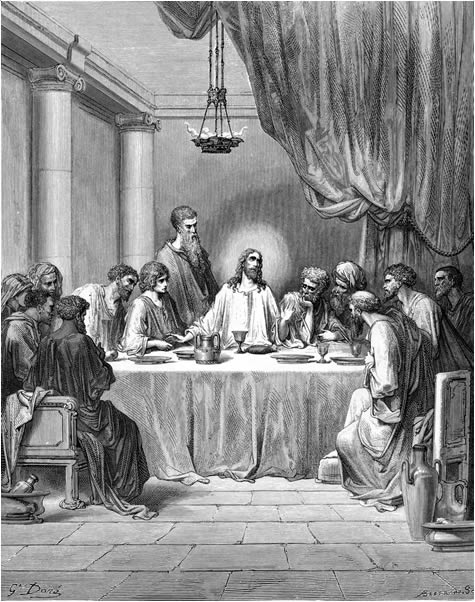
There was also a strife among them, which of them should be accounted the greatest, the dispute erupting at the very table where Jesus has just spoken of his own body given and blood shed, a contrast the bench reads as almost unbearable in its timing. He answers by naming the world's pattern first, the kings of the Gentiles exercise lordship, and they that exercise authority are called benefactors, flattering titles masking domination, but ye shall not be so, he that is greatest among you let him be as the younger, and he that is chief as he that doth serve. For whether is greater, he that sitteth at meat, or he that serveth, I am among you as he that serveth, Jesus stating his own example as the argument's final proof, the very meal he is serving them at that table the visible form of the principle he teaches.
The record, by era
The Church Fathers4 voices
A commentator
Lucius Caecilius Firmianus LactantiusThe Divine Institutes Book 5 (Chapter VI) · Written before 325.
proposed
Therefore the change of the age and the expulsion of justice is to be deemed nothing else, as I have said, than the laying aside of divine religion, which alone effects that man should esteem man dear, and should know that he is bound to him by the tie of brotherhood, since God is alike a Father to all, so as to share the bounties of the common God and Father with those who do not possess them; to injure no one, to oppress no one, not to close his door against a stranger, nor his ear against a suppliant, but to be bountiful, beneficent, and liberal, which Tullius thought to be praises suitable to a king. This truly is justice, and this is the golden age.
Soft words are also given them by their subjects, as it follows, And they that exercise authority upon them are called benefactors. Now they truly as alien from the sacred law are subject to these evils, but your preeminence is in humility, as it follows, But ye shall not be so.
Let us avoid the love of pride and deliver ourselves from the blame attached to the desire for leadership. To act this way makes us like Christ, who submitted to empty himself for our sakes. Arrogance and haughtiness of mind make us plainly resemble the princes of the Gentiles, who always love to act arrogantly. It may even be fitting in their case. "They are called," he says, "benefactors that are flattered as such by their inferiors." Let them be like this. They are not within the pale of the sacred laws or obedient to the Lord's will. They are the victims of these afflictions. It should not be so with us. Let our exaltation rather consist in humility and our glorying in not loving glory. Let our desire be for those things that please God, while we keep in mind what the wise man says to us, "The greater you are, humble yourself the more, and you will find grace before the Lord." He rejects the proud and counts the boastful as his enemies but crowns with honors the meek and lowly in mind.
(Hom. 65. in Matt.) He mentions the Gentiles, to show thereby how faulty it was. For it is of the Gentiles to seek after precedence.
The Medieval Church1 voice
But he said to them: "The kings of the Gentiles exercise lordship over them, and those in authority over them are called benefactors. But it shall not be so among you. Rather, the greatest among you must become like the youngest, and the leader like …
9 more voices on this verse
The Medieval Church2 voices
Rather let us look not what carnal disciples did, but what their spiritual Master commanded; for it follows, And he said unto them, The kings of the Gentiles, &c.
Secondly, as regards the teaching, repressing arrogance, he adds: He said moreover to them: The kings of the Gentiles lord it over them, through the summit of excellence, according to that word of Judith 1: "Arphaxad, king of the Medes, had subjugated many nations to …
The Puritans and the Awakening2 voices
And he said unto them,.... The disciples; that is, Jesus said to them, as the Syriac and Persic versions express: the kings of the Gentiles exercise lordship over them; by which our Lord would dissuade his disciples from seeking to introduce a superiority over one another, since this was the practice of the Heathens, of the men of the world, of ignorant Gentiles; whereas Christ's kingdom was a spiritual kingdom, and not of this world, and therefore, not to be managed in such a way.
If they have that which is confessedly the greater honour, of being benefactors, let them despise the less, of being rulers. (2.) It was to make themselves unlike the disciples of Christ, and unlike Christ himself: " You shall not be so, "
The Nineteenth Century5 voices
A commentator
Albert Barnes1798–1870
Notes, Explanatory and Practical, on the Old and New Testaments (1832-1869)
The kings of the Gentiles - The kings of the “nations,” or of the earth. They do this, and it is to be expected of them, and it is right. Our Lord does not mean to say that it was wrong that there should be such authority, but that “his” kingdom was to be of a different character, and they were not to expect it there. Over them - That is, over the “nations.” Are called benefactors - The word “benefactor” is applied to one who bestows “favor” on another.
A commentator
Jamieson, Fausset & Brown1802–1910
Commentary Critical and Explanatory on the Whole Bible (1871)
proposed
there was--or "had been," referring probably to some symptoms of the former strife which had reappeared, perhaps on seeing the whole paschal arrangements committed to two of the Twelve.
quarantine:debris (2026-07-29) — starts-lowercase
A commentator
J.C. Ryle1816–1900
Expository Thoughts on the Gospels: Luke (lightly modernized text, Grace Gems edition) (1858)
proposed
Let us observe, in this passage — how firmly pride and love of preeminence can stick to the hearts of Christian men. We are told that "There was a dispute among the disciples, as to which of them should be considered the greatest." The strife was one which had been rebuked by our Lord on a former occasion. The ordinance which the disciples had just been receiving, and the circumstances under which they were assembled — made the strife particularly inappropriate. And yet at this very season, the last quiet time they could spend with their Master before His death — this little flock begins a dispute, as to who should be the greatest! Such is the heart of man — ever weak, ever deceitful, ever ready, even at its best times, to turn aside to what is evil! The sin before us is a very old one. Ambition, self-esteem, and self-conceit — lie deep at the bottom of all men's hearts, and often in the hearts where they are least suspected! Thousands imagine that they are humble — who cannot bear to see an equal more honored and favored than themselves. Few indeed can be found who rejoice heartily in a neighbor's promotion over their own heads. The quantity of envy and jealousy in the world, is a glaring proof of the prevalence of pride. Men would not envy a brother's advancement — if they had not a secret thought that their own merit was greater than his. Let us live on our guard against this great evil — if we make any profession of serving Christ. The harm that it has done to the Church of Christ, is far beyond calculation. Let us learn to take pleasure in the prosperity of others — and to be content with the lowest place for ourselves. The rule given to the Philippians should be often before our eyes, "In lowliness of mind let each esteem others better than themselves."
A commentator
J.C. Ryle1816–1900
Expository Thoughts on the Gospels: Luke (lightly modernized text, Grace Gems edition) (1858)
proposed
Let us observe, in this passage — how firmly pride and love of preeminence can stick to the hearts of Christian men. We are told that "There was a dispute among the disciples, as to which of them should be considered the greatest." The strife was one which had been rebuked by our Lord on a former occasion. The ordinance which the disciples had just been receiving, and the circumstances under which they were assembled — made the strife particularly inappropriate.
Are called benefactors - The very Greek word used by the evangelist, ευεργεται, was the surname of some of the Ptolemies of Egypt; Ptolemy Euergetes, i.e. the Benefactor. It was a custom among the ancient Romans to distribute part of the lands which they had conquered on the frontiers of the empire to their soldiers; those who enjoyed such lands were called beneficiarii, beneficed persons; and the lands themselves were termed beneficia, benefices, as being held on the beneficence of the sovereign; and it is no wonder that such sovereigns, however tyrannical or oppressive they might have been in other respects, were termed benefactors by those who were thus dependent on their bounty.
The words behind it
16 Greek wordsEvery Greek word of this verse in the order it stands, with what it means and the door to its own study. The last column counts the times a word stands in the whole Bible: the rarer the word, the more the places it appears belong together.
| Greek | Sound | Meaning | Word study | In the Bible |
|---|---|---|---|---|
| ὁ | ho | <the> | G3588 → | 19766 times |
| δὲ | de | And | G1161 → | 2765 times |
| εἶπεν | eipen | He said | G2036 → | 925 times |
| αὐτοῖς· | autois | to them; | G846 → | 5565 times |
| οἱ | hoi | The | G3588 → | 19766 times |
| βασιλεῖς | basileis | kings | G935 → | 114 times |
| τῶν | ton | of the | G3588 → | 19766 times |
| ἐθνῶν | ethnon | Gentiles | G1484 → | 161 times |
| κυριεύουσιν | kurieuousin | rule over | G2961 → | |
| αὐτῶν, | auton | them, | G846 → | 5565 times |
| καὶ | kai | and | G2532 → | 9120 times |
| οἱ | hoi | those | G3588 → | 19766 times |
| ἐξουσιάζοντες | exousiazontes | exercising authority over | G1850 → | |
| αὐτῶν | auton | them | G846 → | 5565 times |
| εὐεργέται | euergetai | benefactors | G2110 → | |
| καλοῦνται. | kalountai | are called. | G2564 → | 147 times |
ὁ<the>
hoG3588 →19766 times
δὲAnd
deG1161 →2765 times
εἶπενHe said
eipenG2036 →925 times
αὐτοῖς·to them;
autoisG846 →5565 times
οἱThe
hoiG3588 →19766 times
βασιλεῖςkings
basileisG935 →114 times
τῶνof the
tonG3588 →19766 times
ἐθνῶνGentiles
ethnonG1484 →161 times
κυριεύουσινrule over
kurieuousinG2961 →
αὐτῶν,them,
autonG846 →5565 times
καὶand
kaiG2532 →9120 times
οἱthose
hoiG3588 →19766 times
ἐξουσιάζοντεςexercising authority over
exousiazontesG1850 →
αὐτῶνthem
autonG846 →5565 times
εὐεργέταιbenefactors
euergetaiG2110 →
καλοῦνται.are called.
kalountaiG2564 →147 times
A shaded row is a word that stands 400 times or fewer in the Bible.
Where this verse is studied
On this page
Studies12
On this verse
About Luke
This page draws on 16 works. Open the list of works
This page draws on Adam Clarke, Commentary on the Bible; Albert Barnes, Notes, Explanatory and Practical, on the Gospels; Albert Barnes, Notes, Explanatory and Practical, on the Old and New Testaments (1832-1869); Ambrose of Milan, Catena Aurea by Aquinas; Bede, On the Gospel of Luke; Bede, Catena Aurea by Aquinas; Bonaventure, Commentary on Luke, Chapter 22; Cyril of Alexandria, Catena Aurea by Aquinas; Cyril of Alexandria, COMMENTARY ON LUKE, HOMILY 143; J.C. Ryle, Expository Thoughts on the Gospels: Luke (lightly modernized text, Grace Gems edition); Jamieson, Fausset & Brown, Commentary Critical and Explanatory on the Whole Bible; John Chrysostom, Catena Aurea by Aquinas; John Gill, Exposition of the New Testament; John Gill, Exposition of the New Testament (1746-1748); Lucius Caecilius Firmianus Lactantius, The Divine Institutes Book 5 (Chapter VI) and Matthew Henry, Commentary on the Whole Bible.