

Hebrews 13 · Value 17 of 41 · Featured Study
Hospitality
Hospitality is the welcome of the stranger and the guest into one's home, food and care.
Job counted his open door among the proofs of his integrity: “my door has been open to the traveler.”
Do not neglect to show hospitality to strangers, for by so doing some people have entertained angels without knowing it.
- Anchor text
- Hebrews 13:2 “Do not neglect to show hospitality to…”
- Its opposite
- The closed door, which turns the stranger away
- Hold in memory
- Hebrews 13:2
Summary
Scripture tells hospitality as a chain of open doors. Abraham ran to three strangers at Mamre, a woman of Shunem built a room for a prophet, and Rahab hid two spies under the flax on her roof. Jesus came as a guest whom one village turned away and others received, and He was the host at the supper and on the shore. The first churches met in the houses of those who opened them, Lydia's at Philippi among the first.
- God loves the foreigner and gives him food and clothing, and the law told Israel to love the foreigner because Israel had been one in Egypt.
- Paul and Peter made hospitality a duty of every believer and a requirement of every overseer.
- Jesus taught that whoever receives His messengers receives Him, and the King of Matthew 25 counts the stranger taken in as done to Himself.
- Scripture names guests a believer may refuse, among them the false teacher of 2 John 10.
What Hospitality Is
Four words of Greek and Hebrew carry what Scripture means by the guest, the stranger and the welcome.
What does Scripture mean by hospitality, and why does it lay the welcome of strangers on God's people? This study of hospitality answers from the text in order. It gives the Greek and Hebrew words, the key texts and the commands, and it shows the ground of hospitality in God and its shape in Christ. It then names the people who welcomed strangers, the practice Scripture describes and the closed door that stands against it. The stories from the Bible and from the church's history follow, with the voices who taught the duty and the three questions on which readers disagree. Six studies take each part further.
Philoxenia, hospitality
2 uses in the canon
The Greek noun philoxenia (G5381) means hospitableness, as in Paul's charge “Share with the saints who are in need. Practice hospitality.”
Philoxenos, hospitable
3 uses in the canon
The Greek adjective philoxenos (G5382) means fond of guests, and Peter asks it of every believer: “Show hospitality to one another without complaining.”
Xenos, stranger and guest
14 uses in the canon
The Greek xenos (G3581) means a foreigner and, by extension, a guest or the host who receives one. John praises Gaius for serving the brothers “especially since they are strangers to you.”
Ger, the foreigner
92 uses in the canon
The Hebrew ger (H1616) is properly a guest and by implication a foreigner living among Israel. Moses commands, “So you also must love the foreigner, since you yourselves were foreigners in the land of Egypt.”
The lexicon in full
Philoxenia, hospitality, Philoxenos, hospitable, Xenos, stranger and guest, Ger, the foreigner
The Key Texts on Receiving the Stranger
The key texts carry the welcome of the stranger from the law of Moses to the letters of Paul and John.
Law
You must treat the foreigner living among you as native-born and love him as yourself, for you were foreigners in the land of Egypt. I am the LORD your God.
The holiness code sets the foreigner beside the neighbour as one Israel must love.
Prophets
Isn’t it to share your bread with the hungry, to bring the poor and homeless into your home, to clothe the naked when you see him, and not to turn away from your own flesh and blood?
Isaiah names the fast God chooses, and it opens the home to the homeless.
Isaiah 58:7BSB
Gospels
He who receives you receives Me, and he who receives Me receives the One who sent Me.
Jesus tells the Twelve, as He sends them out, that a house which receives them receives Him.
Gospels
But when you host a banquet, invite the poor, the crippled, the lame, and the blind, and you will be blessed. Since they cannot repay you, you will be repaid at the resurrection of the righteous.”
At a Pharisee's table Jesus tells His host whom to invite and when the repayment comes.
Epistles
An overseer, then, must be above reproach, the husband of but one wife, temperate, self-controlled, respectable, hospitable, able to teach,
Paul lists hospitality among the marks of an overseer of the church.
Epistles
and well known for good deeds such as bringing up children, entertaining strangers, washing the feet of the saints, imparting relief to the afflicted, and devoting herself to every good work.
Paul names the good deeds of a widow the church enrols, and receiving strangers is among them.
Epistles
Therefore we ought to support such men, so that we may be fellow workers for the truth.
John tells the church that those who support travelling workers share in their work for the truth.
3 John 1:8BSB
Isaiah 58:7, Matthew 10:40, Luke 14:13 to 14, 1 Timothy 3:2, 1 Timothy 5:10, 3 John 1:8
Where Scripture Commands Hospitality
Moses, Jesus and the apostles each command God's people to receive the stranger and the guest.
The law of Moses gave the foreign resident a place under the LORD's protection, and it forbade Israel to exploit or oppress him (Exodus 22:21).
Jesus sent His disciples out to live on the welcome of the houses they entered. He told the seventy-two, “Stay at the same house, eating and drinking whatever you are offered” (Luke 10:7).
The apostles made the welcome a mark of the church's leaders and of its members. Paul wrote that an elder “must be hospitable” (Titus 1:8), and the churches of his letters met in the homes of those who opened them.
Hospitality Rests on God's Own Welcome
God loves the foreigner, His people live as foreigners with Him, and He sets a table for all the peoples.
Moses gave Israel the reason before the command. The LORD “executes justice for the fatherless and widow, and He loves the foreigner, giving him food and clothing” (Deuteronomy 10:18).
Israel itself lived as God's guest. The LORD said of the land, “you are but foreigners and residents with Me” (Leviticus 25:23), and David prayed, “For I am a foreigner dwelling with You, a stranger like all my fathers” (Psalm 39:12).
God is also the host. The psalmist says, “You prepare a table before me in the presence of my enemies” (Psalm 23:5), and Isaiah sees that “the LORD of Hosts will prepare a banquet for all the peoples” (Isaiah 25:6). Paul tells Gentile believers that “you are no longer strangers and foreigners, but fellow citizens with the saints and members of God’s household” (Ephesians 2:19).
Accept one another, then, just as Christ accepted you, in order to bring glory to God.Paul makes Christ's welcome of believers the measure of their welcome of one another.
Christ, the Guest and the Host
Jesus was refused and received as a guest, taught that the stranger taken in is Himself, and keeps a table for His people.
A Samaritan village “refused to welcome Him, because He was heading for Jerusalem” (Luke 9:53). At Jericho the crowd grumbled at His choice of host, “He has gone to be the guest of a sinful man!” (Luke 19:7).
When Jesus came to that place, He looked up and said, “Zacchaeus, hurry down, for I must stay at your house today.”Jesus names Himself the guest before Zacchaeus can offer, and the welcome follows.
After His resurrection He was the host on the shore of the lake. He told the fishermen, “Come, have breakfast” (John 21:12).
He taught that a welcome given to the least is given to Him. “Whoever welcomes one of these little children in My name welcomes Me” (Mark 9:37).
For I was hungry and you gave Me something to eat, I was thirsty and you gave Me something to drink, I was a stranger and you took Me in,Matthew sets the stranger beside the hungry, the naked, the sick and the prisoner.
He told His disciples that He goes “to prepare a place for you” (John 14:2). He says to the church at Laodicea, “If anyone hears My voice and opens the door, I will come in and dine with him, and he with Me” (Revelation 3:20). At Emmaus two disciples pressed a stranger to stay, and He was known to them at their table.
But they pleaded with Him, “Stay with us, for it is nearly evening and the day is almost over.” So He went in to stay with them.The welcome comes before the recognition in this account.
And He took the bread, gave thanks and broke it, and gave it to them, saying, “This is My body, given for you; do this in remembrance of Me.”At His last supper Jesus is the host, and the meal He gives is Himself.
Luke 24:29, Luke 22:19
Who Welcomed the Stranger
Six hosts of the Gospels, Acts and the letters are remembered by name for the welcome they gave.
Mary the mother of Mark
Peter went from prison “to the house of Mary the mother of John, also called Mark, where many people had gathered together and were praying.”
Acts 12:12Paul writes from his chains that Onesiphorus “has often refreshed me and was unashamed of my chains.”
2 Timothy 1:16
Mary the mother of Mark, Prisca and Aquila, Onesiphorus, Philemon
The Practice of Hospitality
Scripture names seven acts of hospitality, each in the words of the verse that shows it.
- 1Go out to meet the guest“Come, you who are blessed by the LORD,” said Laban. “Why are you standing out here? I have prepared the house and a place for the camels.”Genesis 24:31
- 2Wash the traveller's feet“So he brought him to his house and fed his donkeys. And they washed their feet and ate and drank.”Judges 19:21
- 3Set a meal before him“Then he brought them into his home and set a meal before them.”Acts 16:34
- 4Prepare a room“In the meantime, prepare a guest room for me, because I hope that through your prayers I will be restored to you.”Philemon 1:22
- 5Leave the gleanings“It is to be left for the foreigner, the fatherless, and the widow, so that the LORD your God may bless you in all the work of your hands.”Deuteronomy 24:19
- 6Welcome the traveller in the Lord“Welcome her in the Lord in a manner worthy of the saints, and assist her with anything she may need from you.”Romans 16:2
- 7Send the guest on his way“You will do well to send them on their way in a manner worthy of God.”3 John 1:6
Wash the traveller's feet, Set a meal before him, Prepare a room, Leave the gleanings, Welcome the traveller in the Lord, Send the guest on his way
What Stands Against Hospitality
The town that leaves the traveller in the square, the rich man who keeps his bread and the host who neglects his guest stand against hospitality.
Nabal refused his bread to David's young men and called them “men whose origin I do not know” (1 Samuel 25:11). Jesus told Simon the Pharisee, “When I entered your house, you did not give Me water for My feet” (Luke 7:44).
History
They stopped to go in and lodge in Gibeah. The Levite went in and sat down in the city square, but no one would take them into his home for the night.
The town's refusal opens the darkest story in the book of Judges.
Judges 19:15BSB
Prophets
Now this was the iniquity of your sister Sodom: She and her daughters were arrogant, overfed, and complacent; they did not help the poor and needy.
Ezekiel names the sin of Sodom as a refusal to help the poor, the opposite of the open door.
Prophets
“Then I will draw near to you for judgment. And I will be a swift witness against sorcerers and adulterers and perjurers, against oppressors of the widowed and fatherless, and against those who defraud laborers of their wages and deny justice to the foreigner but do not fear Me,” says the LORD of Hosts.
The last of the prophets counts the wronged foreigner among those God will defend.
Malachi 3:5BSB
Epistles
So if I come, I will call attention to his malicious slander against us. And unsatisfied with that, he refuses to welcome the brothers and forbids those who want to do so, even putting them out of the church.
It shows that a closed door can stand inside the church as well as outside it.
3 John 1:10BSB
Ezekiel 16:49, Malachi 3:5, 3 John 1:10
Judges 19:15, Ezekiel 16:49, Malachi 3:5, 3 John 1:10, Sodom and Gomorrah, the study in brief
Hospitality in the Stories of the Bible
Four stories tell of a patriarch, a woman of Jericho, a woman of Shunem and a seller of purple who opened their doors.
Abraham's three visitorsGenesis 18
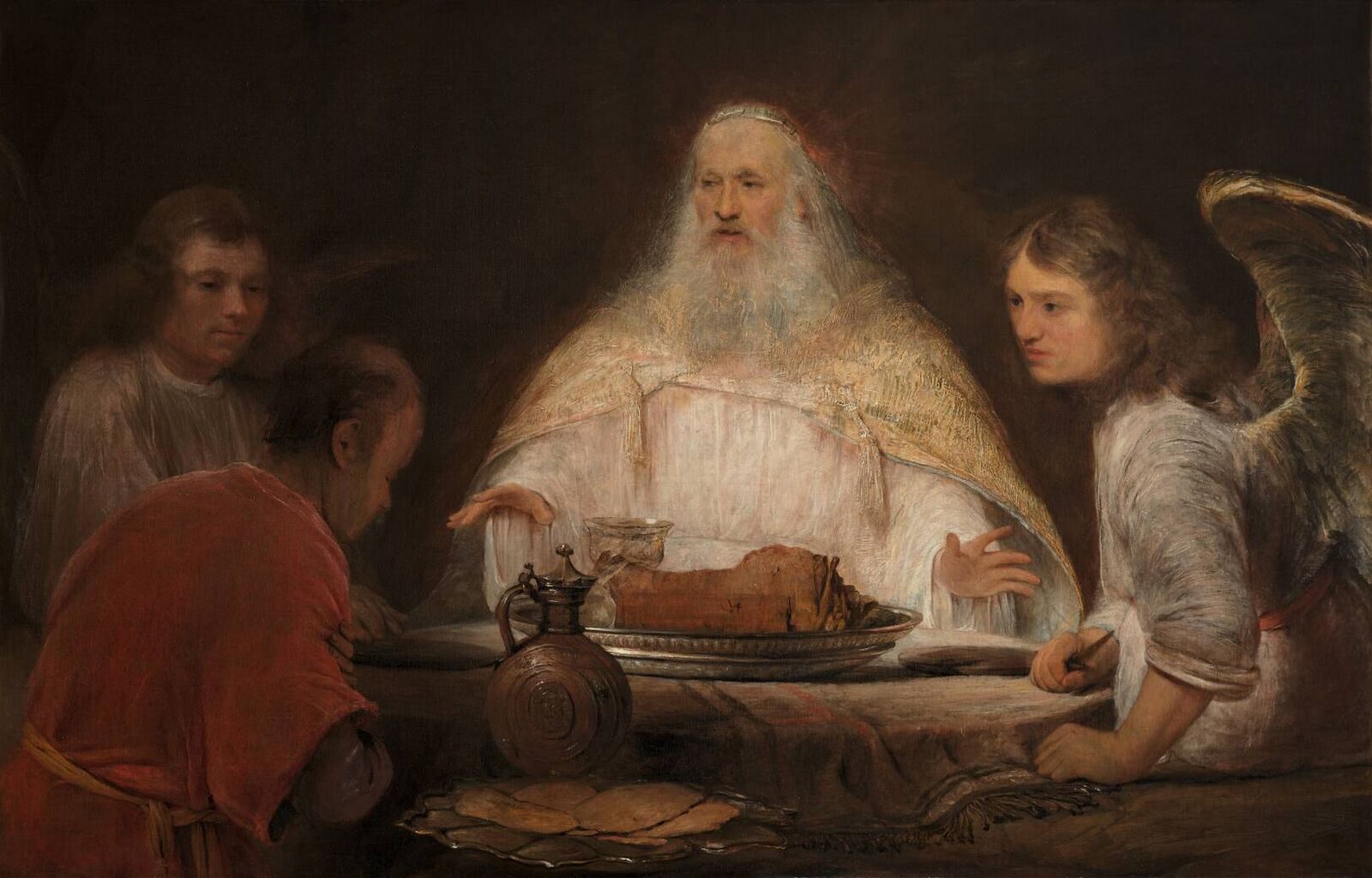
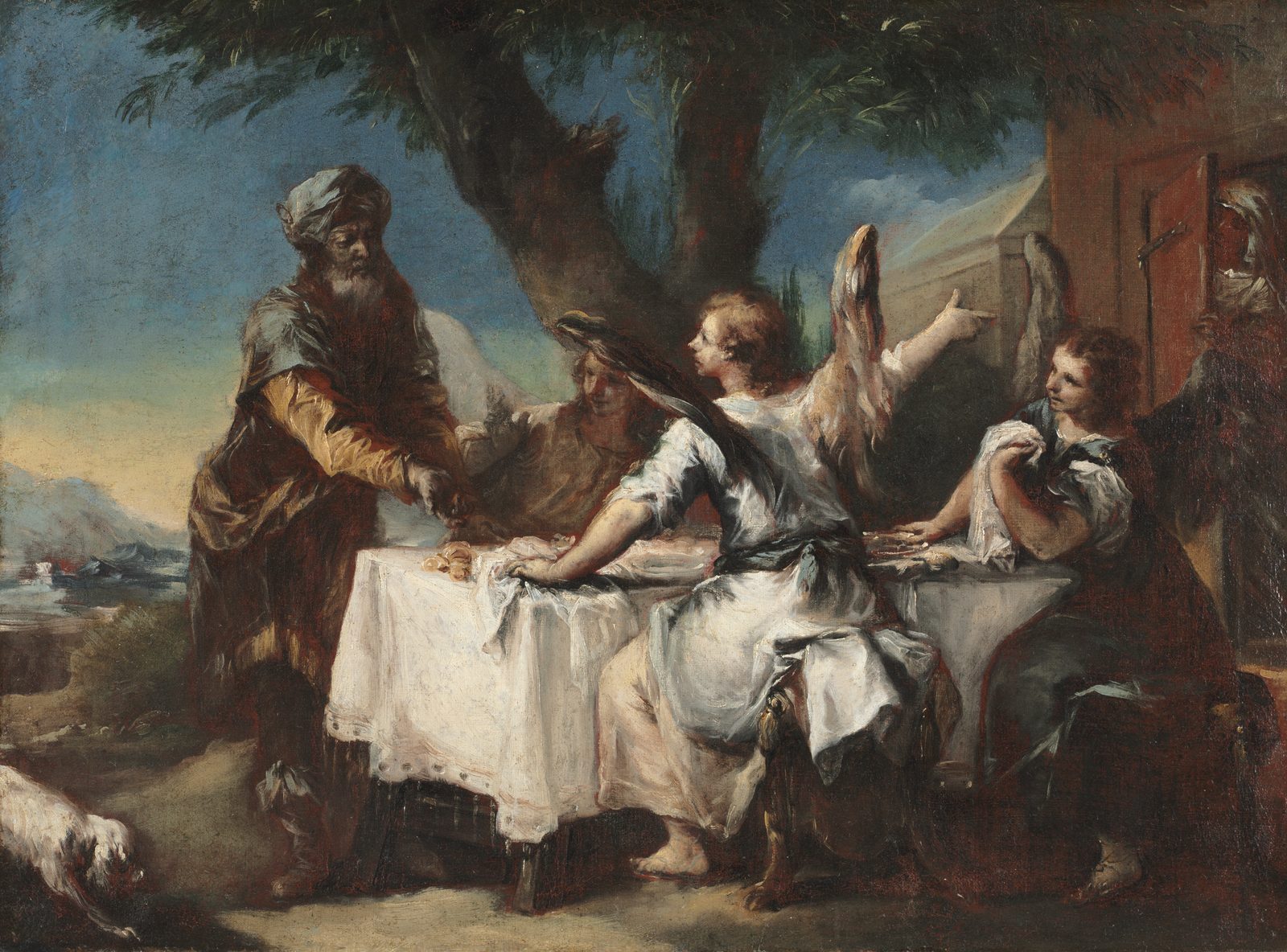
In the heat of the day Abraham looked up from his tent at Mamre and saw three men. “When he saw them, he ran from the entrance of his tent to meet them and bowed low to the ground” (Genesis 18:2). He brought water for their feet, had Sarah bake bread, chose a calf from the herd and stood by them under the tree as they ate.
Read the study of Abraham's three visitors 11 sections, 10 verses set out
Rahab hides the spiesJoshua 2
Joshua sent two spies to Jericho, and they stayed in the house of a woman named Rahab. When the king sent for them, she had already hidden them: “Rahab had taken them up to the roof and hidden them among the stalks of flax that she had laid out there” (Joshua 2:6). Hebrews names her welcome an act of faith, “because she welcomed the spies in peace” (Hebrews 11:31).
Read the study of Rahab and the scarlet cord 8 sections, 9 verses set out
The room on the roof at Shunem2 Kings 4
A prominent woman of Shunem persuaded the prophet Elisha to eat at her house whenever he passed by. She told her husband, “Please let us make a small room upstairs and put in it a bed, a table, a chair, and a lamp for him” (2 Kings 4:10). She asked for nothing in return, and God gave her a son. When the boy died, she rode to Elisha at Mount Carmel, and the prophet raised him.
Read the study of the Shunammite woman and Elisha 11 sections, 11 verses set out
Lydia opens her houseActs 16
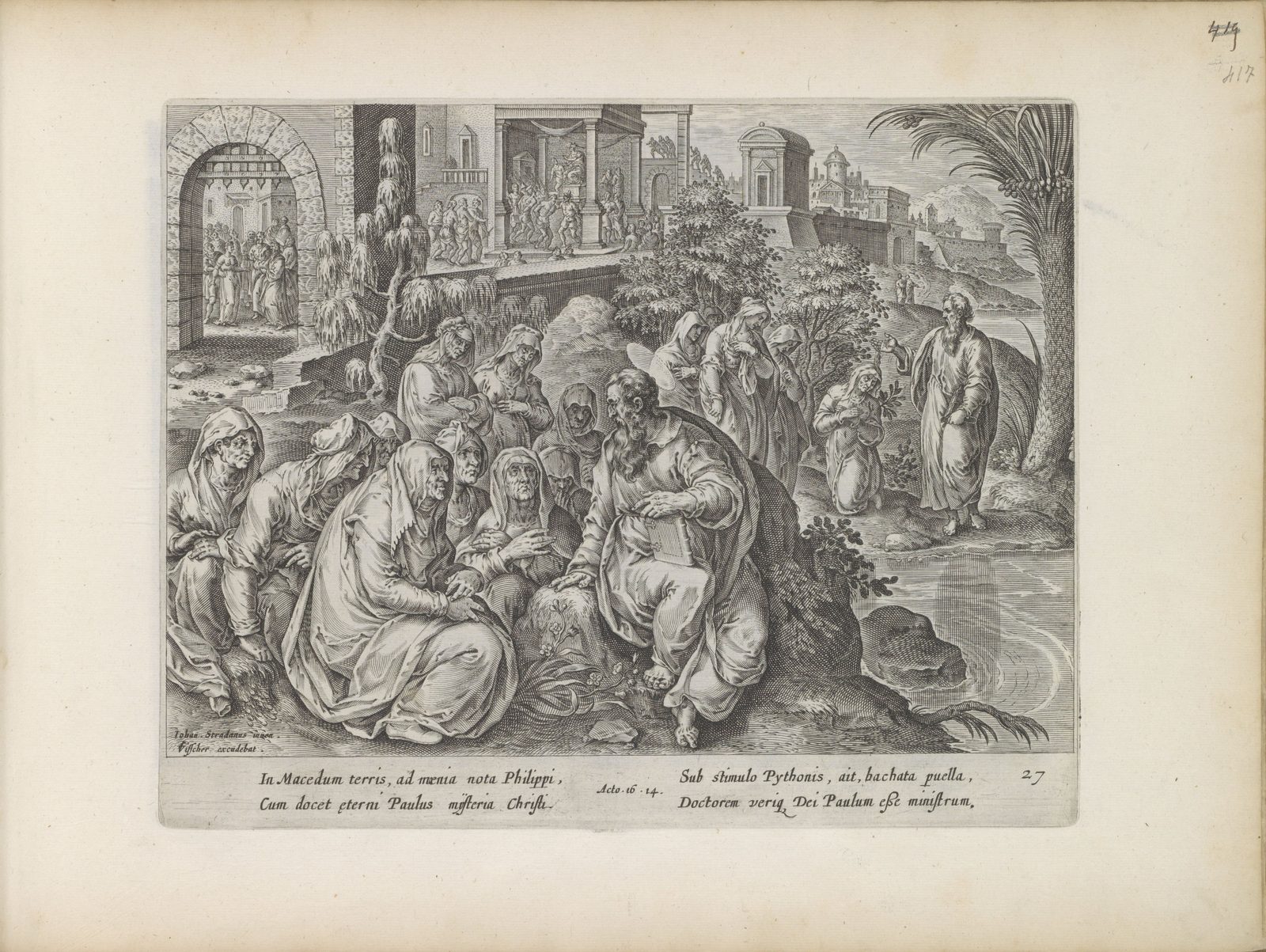
At Philippi Paul spoke to the women at the place of prayer by the river, and the Lord opened the heart of Lydia, a dealer in purple cloth from Thyatira. After her household was baptized, she urged them, “If you consider me a believer in the Lord, come and stay at my house” (Acts 16:15). When Paul and Silas came out of prison, they went to her house to encourage the brothers.
Read the study of Lydia and the house church 11 sections, 10 verses set out
Rahab hides the spies (Joshua 2), The room on the roof at Shunem (2 Kings 4), Lydia opens her house (Acts 16)
Hospitality in the Church's History
Four accounts tell of a church manual's rule for guests, a bishop's house for the sick, a widow's hospital and a monastery's guest house.
The Didacheabout 100
The Didache, a short church manual, told congregations to receive a travelling apostle “as the Lord” and to keep him a day, or two if there was need (chapters 11 and 12, translated by M. B. Riddle, 1886). A teacher who stayed a third day or asked for money was to be counted a false prophet. The rule shows a church that welcomed teachers and guarded its welcome.
Basil of Caesareathe fourth century
Gregory of Nazianzus told in his funeral oration for Basil (Oration 43, section 63, translated by C. G. Browne and J. E. Swallow, 1894) of the house of care Basil built outside Caesarea. “Go forth a little way from the city,” Gregory wrote, “and behold the new city, the storehouse of piety.” There the sick were nursed, and Basil greeted the lepers and “saluted them as brethren”.
Fabiola399
Jerome wrote after her death that Fabiola, a Roman widow, sold her property for the poor and “was the first person to found a hospital, into which she might gather sufferers out of the streets” (Letter 77, translated by W. H. Fremantle, 1893). With Pammachius she bought a house at Portus, the harbour of Rome, and Jerome wrote that “a home for strangers has been established at Portus”. The claim that she was the first is Jerome's.
Benedict of Nursiathe sixth century
Benedict's Rule for his monks gave a chapter to the reception of guests (chapter 53, translated by Leonard J. Doyle, 1948). It opens, “Let all guests who arrive be received like Christ”. It tells the abbot to give guests water for their hands and says, “let both Abbot and community wash the feet of all guests.”
Basil of Caesarea (the fourth century), Fabiola (399), Benedict of Nursia (the sixth century)
Voices on Hospitality, by Century
Four quotations from the fourth century to the nineteenth, each under the line it teaches.
died 397 · Ambrose of Milan
On Abraham
A fourth-century reading: all people are guests in this world, and a harsh host may be refused the eternal dwellings.
The quotation1 quotation
“Hospitality is good, it has its reward, first the gratitude of man, and then, what is greater, the reward of God. We are all guests in this abode; for a time we have a place to stay: we are emigrating soon. Let us beware that if we have been harsh or negligent in receiving guests, even the holy hostels may be denied to us after the course of this life. Hence in the Gospel the Savior says: Make friends for yourselves with unjust wealth, so that they may receive you into eternal dwellings.”
Ambrose of Milan · On Abraham · on Genesis 18:2Patristic
1509 to 1564 · John Calvin
Commentaries
A sixteenth-century reading: helping strangers who cannot repay holds the chief place among the works of charity.
The quotation1 quotation
“And this was done designedly, in order that he, receiving them as men, might give proof of his charity. For angels do not need those services of ours, which are the true evidences of charity. Moreover, hospitality holds the chief place among these services; because it is no common virtue to assist strangers, from whom there is no hope of reward.”
John Calvin · Commentaries · on Genesis 18:2Reformed
1662 to 1714 · Matthew Henry
Commentary on the Whole Bible
An eighteenth-century reading: persecution and exile made believers the proper guests of one another.
The quotation1 quotation
“The proper objects of Christian hospitality are one another. The nearness of their relation, and the necessity of their condition in those times of persecution and distress, obliged Christians to be hospitable one to another. Sometimes Christians were spoiled of all they had, and were driven away to distant countries for safety.”
Matthew Henry · Commentary on the Whole Bible · on 1 Peter 4:9Puritan
1802 to 1910 · Jamieson, Fausset & Brown
Commentary Critical and Explanatory on the Whole Bible
A nineteenth-century reading: a stranger at the door may be better than he looks.
The quotation1 quotation
“To obviate the natural distrust felt of strangers, Paul says, an unknown guest may be better than he looks: he may be unexpectedly found to be as much a messenger of God for good, as the angels (whose name means messenger) are; nay more, if a Christian, he represents Christ Himself.”
Jamieson, Fausset & Brown · Commentary Critical and Explanatory on the Whole Bible · on Hebrews 13:2Reformed
Matthew Henry, Jamieson, Fausset & Brown
How Hospitality Has Been Taught
Clement of Rome, Justin Martyr, Augustine of Hippo and Theodoret of Cyrus taught hospitality from the first century to the fifth.
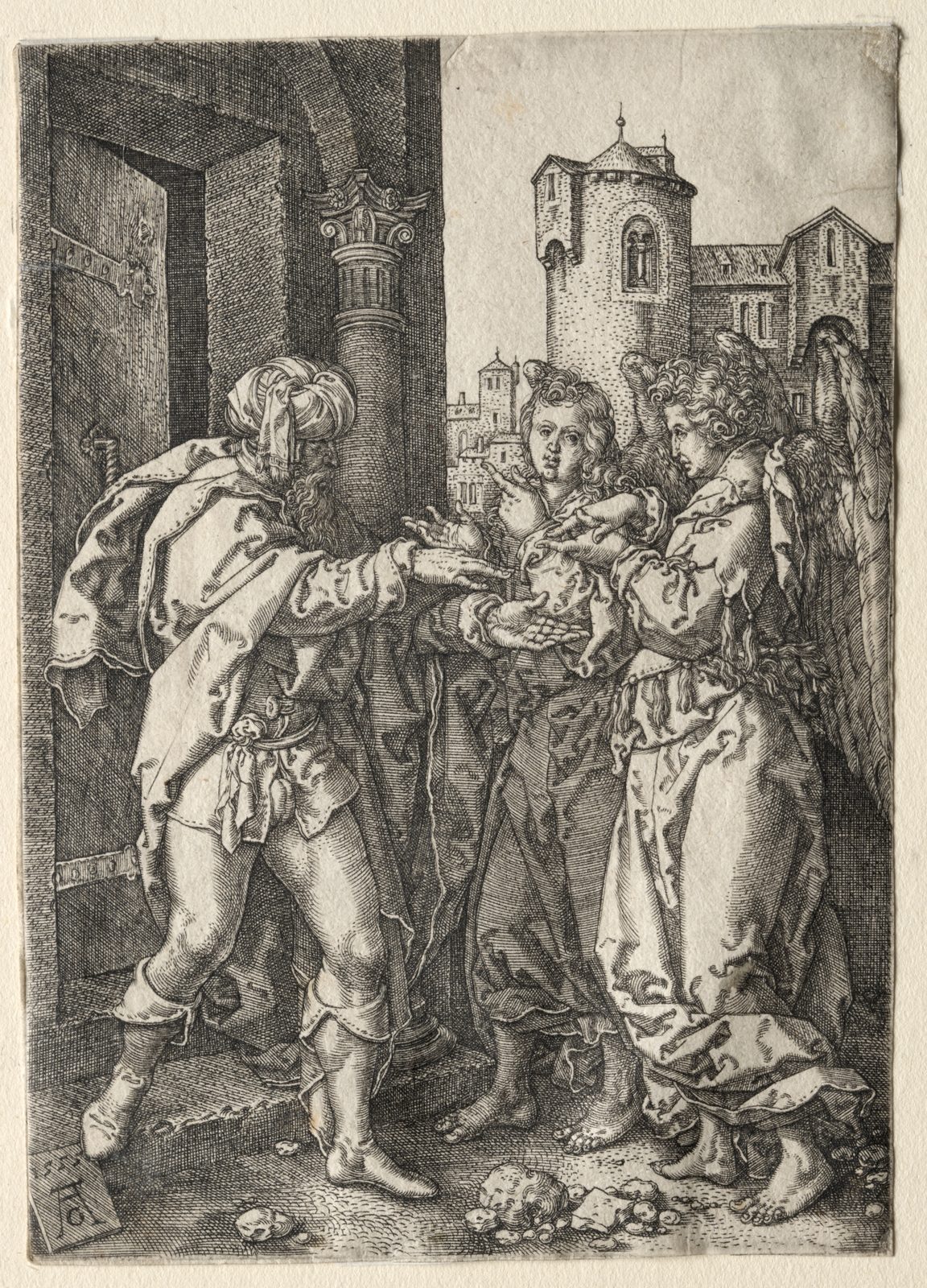
Clement of Rome held up Lot's welcome of the two angels as a reason God spared him.1 paragraph
Clement wrote to the church at Corinth in his First Letter to the Corinthians, chapter 11. He said that “On account of his hospitality and godliness, Lot was saved out of Sodom”.
Justin Martyr taught that the one who appeared to Abraham at Mamre was God the Word, sent by the Father.1 paragraph
Justin argued with Trypho in his Dialogue (chapter 56, translated by Marcus Dods and George Reith, Ante-Nicene Fathers, volume 1). He said that “He who appeared to Abraham under the oak in Mamre is God, sent with the two angels in His company to judge Sodom by Another who remains ever in the supercelestial places”.
Augustine of Hippo taught that the three visitors were angels, through whom the Lord appeared to Abraham.1 paragraph
Augustine wrote of the visit in The City of God (book 16, chapter 29). He said that God “appeared again to Abraham at the oak of Mamre in three men, who it is not to be doubted were angels, although some think that one of them was Christ”.
Theodoret of Cyrus taught that Paul's charge reaches every person in need as well as the guest.1 paragraph
Theodoret wrote on Romans 12:13 in his Interpretation of the Letter to the Romans. He said that Paul calls saints “also those (wherever they may come from) who are in any kind of need.”
Six Studies of Hospitality
Each study takes one part of hospitality into more depth.
The texts
2 studies
- Passages and psalms · 10 verses set outEntertaining Angels Unaware
The passage opens the last chapter of Hebrews, after the warning of chapter 12 that God is a consuming fire, and turns the letter to the daily conduct of the church.
- Doctrines · 10 verses set outHospitality in Israel and the Early Church
How the law of Moses, the sending of the disciples and the letters of the apostles made the welcome of strangers a duty, and how the first churches lodged their travelling teachers.
- Passages and psalms · 10 verses set outEntertaining Angels Unaware
The stories
3 studies
- Stories · 10 verses set outAbraham's Three Visitors
Genesis 18:1 to 15 tells of the meal Abraham gave three visitors at the Oaks of Mamre and of the son the LORD promised to Sarah there.
- Stories · 10 verses set outLydia and the House Church
Acts 16:11 to 40 records the stay of Paul and Silas in a Roman colony, from the Sabbath at the river to their release from prison.
- Stories · 11 verses set outThe Shunammite Woman and Elisha
The story stands in 2 Kings 4:8 to 37 and 8:1 to 6, among the deeds of the prophet Elisha.
- Stories · 10 verses set outAbraham's Three Visitors
The words
1 study
- Symbols and words · 10 verses set outThe Words Philoxenia and Ger
The Hebrew ger and the Greek philoxenia lead a small family of words for the sojourner, the guest and the host, from the Law to the letters of the apostles.
- Symbols and words · 10 verses set outThe Words Philoxenia and Ger
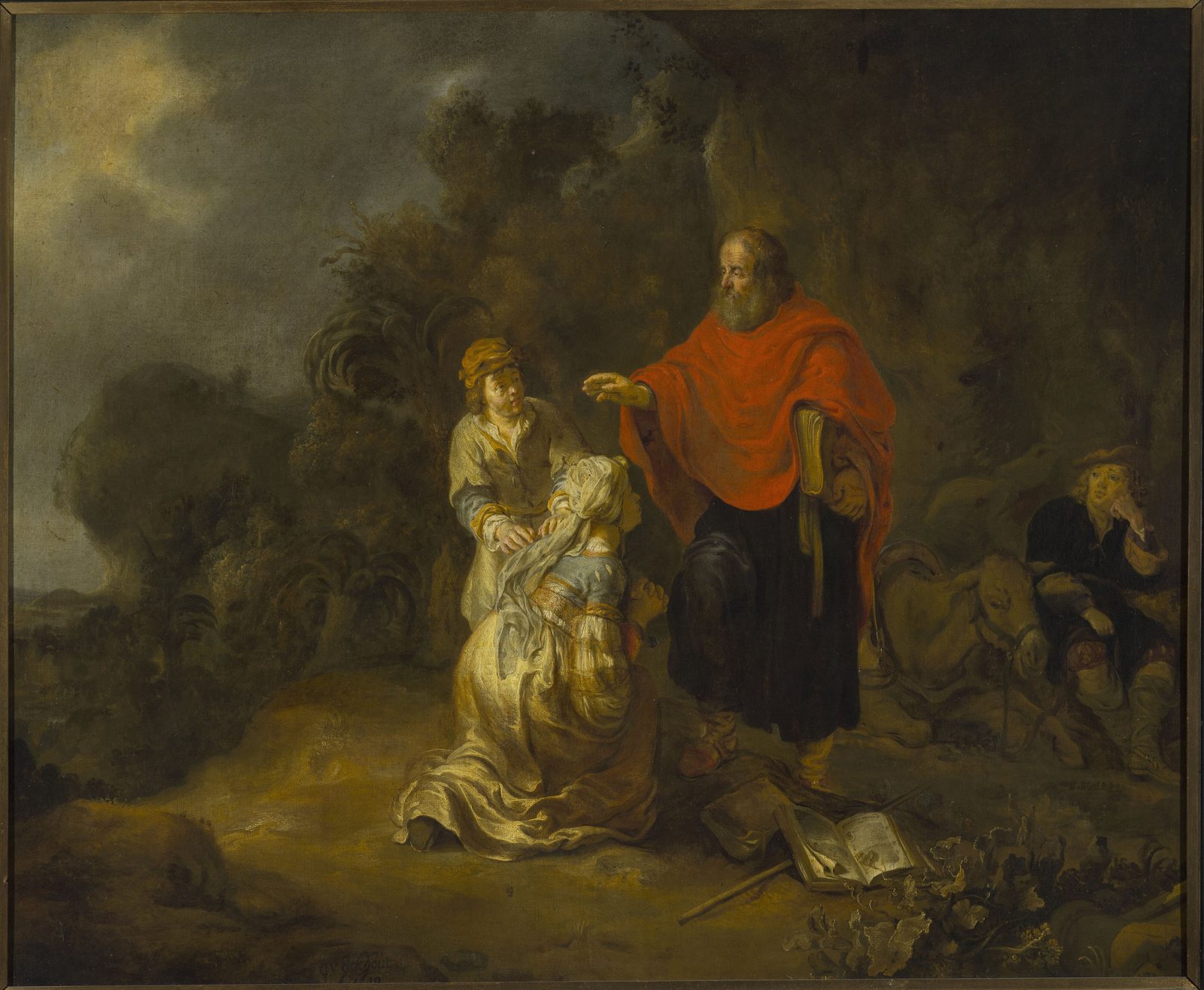
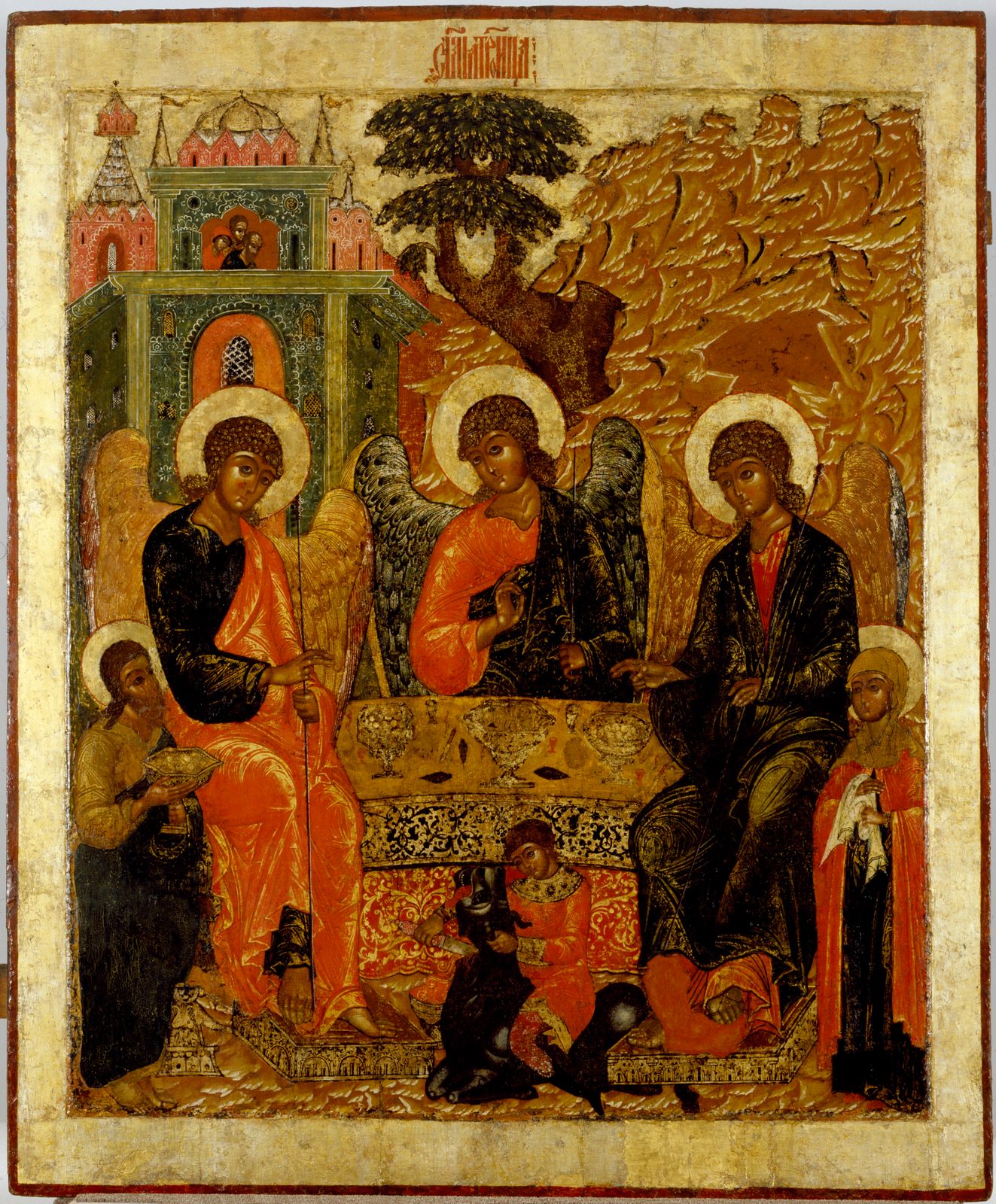
Hospitality in Israel and the Early Church, Abraham's Three Visitors, Lydia and the House Church, The Shunammite Woman and Elisha, The Words Philoxenia and Ger
Where Readers Disagree
Eight readings answer three questions, each with its holders, the work that argues it and the objection raised against it.
Who the three visitors at Mamre were
Read the study of Abraham's three visitors 11 sections, 10 verses set out
| Reading | Held by | Work | Objection |
|---|---|---|---|
| Three angels in human form, through whom the LORD appeared | Augustine of Hippo; Matthew Henry (Patristic; Reformed) | Augustine, The City of God, book 16, chapter 29; Henry, Commentary on the Whole Bible (1710), on Genesis 18:1 | Abraham speaks to the three as one, “My lord” (Genesis 18:3), and the one who stays with him while the two go on is called the LORD (Genesis 18:22). |
| God the Word with two angels, sent by the Father | Justin Martyr (Patristic) | Justin Martyr, Dialogue with Trypho, chapter 56 | Augustine answered that Lot also spoke to the two angels as one Lord, so the singular address does not show that one of the three was Christ. |
| A figure of the Trinity shown to Abraham | Bonaventure (Medieval Franciscan) | Bonaventure, Disputed Questions on the Mystery of the Trinity, question 1 (1257) | The text sends two of the three on to Sodom as angels (Genesis 19:1) and keeps one with Abraham, so the three are not drawn as equals. |
God the Word with two angels, sent by the Father, A figure of the Trinity shown to Abraham
What Hebrews 13:2 holds out
Read the study of entertaining angels unaware 8 sections, 10 verses set out
| Reading | Held by | Work | Objection |
|---|---|---|---|
| It recalls Abraham and Lot, who received angels as men | Adam Clarke (Methodist) | Clarke, Commentary on the Bible (1832), on Genesis 18:2 | A reason drawn from the past alone would hold out nothing to a host today, and some readers find a present hope in the clause. |
| The unknown guest may be a messenger of God, and a Christian guest represents Christ | Robert Jamieson, A. R. Fausset and David Brown (Scottish Presbyterian and Anglican) | Jamieson, Fausset and Brown, Commentary Critical and Explanatory on the Whole Bible (1871), on Hebrews 13:2 | The verb looks back to those who “have entertained angels”, and the letter makes no promise about any present guest. |
| The honour already given to past hosts, with the future reward left unspoken | John Chrysostom (Patristic) | Chrysostom, Homilies on Hebrews, homily 33, on Hebrews 13:2 | Jesus does promise a reward to come for those who receive His messengers (Matthew 10:41 to 42). |
The unknown guest may be a messenger of God, and a Christian guest represents Christ, The honour already given to past hosts, with the future reward left unspoken
Whom a believer may refuse
Read the study of hospitality in Israel and the early church 11 sections, 10 verses set out
| Reading | Held by | Work | Objection |
|---|---|---|---|
| No stranger in need, for Christ comes as the stranger | John Chrysostom (Patristic) | Chrysostom, Homilies on the Acts of the Apostles, homily 45 | 2 John 10 forbids receiving into one's home a teacher who does not bring the teaching of Christ. |
| The teacher who denies Christ, and the guest who would live on the church | The Didache, an anonymous church manual (Early Christian) | The Didache, chapters 11 and 12, translated by M. B. Riddle, 1886 | The refusal of 2 John falls on a false teacher, and Romans 12:13 and Matthew 25:35 set no such test for the hungry stranger. |
Sources
Scripture is the Berean Standard Bible.
- STEP Bible, Translators Brief lexicon of Extended Strongs for Hebrew and for Greek (Tyndale House, Cambridge), CC BY 4.0, with the Greek brief lexicon based on Abbott-Smith (1922)
- The Didache, or Teaching of the Twelve Apostles, chapters 11 and 12, translated by M. B. Riddle, 1886.
- Gregory of Nazianzus, Oration 43, the funeral oration on Basil the Great, section 63, translated by C. G. Browne and J. E. Swallow, 1894.
- Jerome, Letter 77 to Oceanus, sections 6 and 10, translated by W. H. Fremantle, 1893.
- Benedict of Nursia, Rule for Monasteries, chapter 53, translated by Leonard J. Doyle (Collegeville: St. John's Abbey, 1948)
- Justin Martyr, Dialogue with Trypho, chapter 56, translated by Marcus Dods and George Reith.
- Augustine of Hippo, The City of God, book 16, chapter 29.
- John Chrysostom, Homilies on the Acts of the Apostles, homily 45.
- John Chrysostom, Homilies on Hebrews, homily 33, on Hebrews 13:2.
- Theodoret of Cyrus, Interpretation of the Letter to the Romans, on Romans 12:13.
- Clement of Rome, First Letter to the Corinthians, chapter 11.
- Ambrose of Milan, On Abraham, on Genesis 18:2.
- John Calvin, Commentaries on the First Book of Moses called Genesis (1554), on Genesis 18:2.
- Matthew Henry, Commentary on the Whole Bible (1710), on Genesis 18:1 and 1 Peter 4:9.
- Adam Clarke, Commentary on the Bible (1832), on Genesis 18:2 and Hebrews 13:2.
- Robert Jamieson, A. R. Fausset and David Brown, Commentary Critical and Explanatory on the Whole Bible (1871), on Hebrews 13:2.
- Bonaventure, Disputed Questions on the Mystery of the Trinity, question 1 (1257)
Keep Studying
Studies7
In this value6
People and groups28