
Luke 22:26
in Luke 22But you shall not be like them. Instead, the greatest among you should be like the youngest, and the one who leads like the one who serves.
BSB
The same verse in ASV and KJV ▾
ASV
But ye shall not be so: but he that is the greater among you, let him become as the younger; and he that is chief, as he that doth serve.
KJV
But ye shall not be so: but he that is greatest among you, let him be as the younger; and he that is chief, as he that doth serve.
⋯
This verse in Luke 22
Commentary
17 notes on this verseBut it must be observed, that not every kind of respect and deference to others betokens humility, for you may defer to a person for the world's sake, for fear of his power, or regard to your own interest. In that case you seek to advance yourself, not to honour another. Therefore there is one form of the precept given to all men, namely, that they boast not about precedence, but strive earnestly for humility.
This site's exposition
A dispute also arose
on Luke 22:24-27
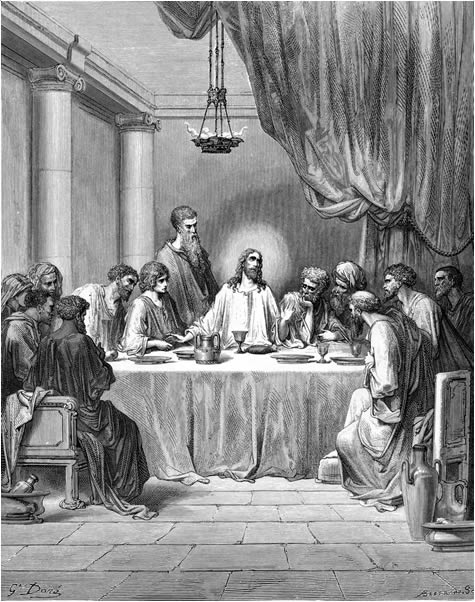
A dispute also arose among the disciples as to which of them would be considered the greatest, just after He spoke of His body given for them. He sets Gentile kings, who lord it over them, against His own example: I am among you as one who serves.
This site's exposition
the greatest among you should be like the youngest
Adam Clarke reports Lightfoot's guess that Peter was the eldest and that the strife lay between him and James and John. The youngest held the lowest place. Matthew Henry points to the washing of the disciples' feet as Christ's own example of the leader who serves.
The record, by era
The Church Fathers3 voices
Soft words are also given them by their subjects, as it follows, And they that exercise authority upon them are called benefactors. Now they truly as alien from the sacred law are subject to these evils, but your preeminence is in humility, as it follows, But ye shall not be so.
Let us avoid the love of pride and deliver ourselves from the blame attached to the desire for leadership. To act this way makes us like Christ, who submitted to empty himself for our sakes. Arrogance and haughtiness of mind make us plainly resemble the princes of the Gentiles, who always love to act arrogantly. It may even be fitting in their case. "They are called," he says, "benefactors that are flattered as such by their inferiors." Let them be like this. They are not within the pale of the sacred laws or obedient to the Lord's will. They are the victims of these afflictions. It should not be so with us. Let our exaltation rather consist in humility and our glorying in not loving glory. Let our desire be for those things that please God, while we keep in mind what the wise man says to us, "The greater you are, humble yourself the more, and you will find grace before the Lord." He rejects the proud and counts the boastful as his enemies but crowns with honors the meek and lowly in mind.
(in Reg. fus. dis. int. 30.) Let not him that is chief be puffed up by his dignity, lest he fall away from the blessedness of humility, but let him know that true humility is the ministering unto many. As then he who attends many wounded and wipes away the blood from their wounds, least of all men enters upon the service for his own exaltation, much more ought he to whom is committed the care of his sick brethren as the minister of all, about to render an account of all, to be thoughtful and anxious.
The Medieval Church2 voices
In this rule however, given by our Lord, the great have need of no little judgment, that they do not indeed like the kings of the Gentiles delight to tyrannize over their subjects, and be puffed up with their praises, yet notwithstanding that they be provoked with a righteous zeal against the wickedness of offenders.
He tames their agitation with two examples. First, with the example of the Gentiles, whom they considered unclean, declaring that if they think this way, they will be like the Gentiles.
9 more voices on this verse
The Medieval Church2 voices
But you, not so: but he that is greater among you, let him become as the lesser, through humility in heart, according to that word of Ecclesiasticus 3: "The greater you are, humble yourself in all things, and before God you shall find grace." For …
A commentator
BonaventureDisputed Questions on Evangelical Perfection, Question 1 · Written in the 13th century.
proposed
Luke 22: He that is the greater among you, let him become as the lesser; and he that is the leader, as he that serves: but if the least were to make himself as the greatest, it would be the height of ambition and pride: …
The Puritans and the Awakening2 voices
Now Christ was among his disciples just like one that waited at table. He was so far from taking state, or taking his ease, by commanding their attendance upon him, that he was ready to do any office of kindness and service for them; witness his washing their feet.
But ye shall not be so,.... See Gill on Mat 20:26. but he that is greatest among you; in age or gifts, or would be thought to be the greatest, who is most ambitious of grandeur and authority, which perhaps might be Peter's case, who was the oldest man: let him be as the younger; as John, the beloved disciple, who was the youngest of them; and be as modest, and as humble as he, and reckon himself as in his place, and condescend to men of low estates, and esteem each other, even the youngest, better than himself.
The Nineteenth Century5 voices
Let him be as the younger - Dr. Lightfoot justly conjectures that Peter was the eldest of all the disciples; and he supposes that the strife was kindled between him and the sons of Zebedee, James and John. These three disciples were those whom Christ had distinguished by peculiar marks of his favor; and therefore it is natural to conclude that the strife lay between these three, the two brothers and Peter. Shall we or Peter be at the head? Neither, says our Lord.
A commentator
Jamieson, Fausset & Brown1802–1910
Commentary Critical and Explanatory on the Whole Bible (1871)
proposed
there was--or "had been," referring probably to some symptoms of the former strife which had reappeared, perhaps on seeing the whole paschal arrangements committed to two of the Twelve.
quarantine:debris (2026-07-29) — starts-lowercase
A commentator
J.C. Ryle1816–1900
Expository Thoughts on the Gospels: Luke (lightly modernized text, Grace Gems edition) (1858)
proposed
Let us observe, in this passage — how firmly pride and love of preeminence can stick to the hearts of Christian men. We are told that "There was a dispute among the disciples, as to which of them should be considered the greatest." The strife was one which had been rebuked by our Lord on a former occasion. The ordinance which the disciples had just been receiving, and the circumstances under which they were assembled — made the strife particularly inappropriate.
A commentator
J.C. Ryle1816–1900
Expository Thoughts on the Gospels: Luke (lightly modernized text, Grace Gems edition) (1858)
proposed
Let us observe, in this passage — how firmly pride and love of preeminence can stick to the hearts of Christian men. We are told that "There was a dispute among the disciples, as to which of them should be considered the greatest." The strife was one which had been rebuked by our Lord on a former occasion. The ordinance which the disciples had just been receiving, and the circumstances under which they were assembled — made the strife particularly inappropriate. And yet at this very season, the last quiet time they could spend with their Master before His death — this little flock begins a dispute, as to who should be the greatest! Such is the heart of man — ever weak, ever deceitful, ever ready, even at its best times, to turn aside to what is evil! The sin before us is a very old one. Ambition, self-esteem, and self-conceit — lie deep at the bottom of all men's hearts, and often in the hearts where they are least suspected! Thousands imagine that they are humble — who cannot bear to see an equal more honored and favored than themselves. Few indeed can be found who rejoice heartily in a neighbor's promotion over their own heads. The quantity of envy and jealousy in the world, is a glaring proof of the prevalence of pride. Men would not envy a brother's advancement — if they had not a secret thought that their own merit was greater than his. Let us live on our guard against this great evil — if we make any profession of serving Christ. The harm that it has done to the Church of Christ, is far beyond calculation. Let us learn to take pleasure in the prosperity of others — and to be content with the lowest place for ourselves. The rule given to the Philippians should be often before our eyes, "In lowliness of mind let each esteem others better than themselves."
A commentator
Albert Barnes1798–1870
Notes, Explanatory and Practical, on the Old and New Testaments (1832-1869)
proposed
But ye shall not be so - Christ here takes occasion to explain the nature of his kingdom. He assures them that it is established on different principles from those of the world; that his subjects were not to expect titles, and power, and offices of pomp in his kingdom. He that would be most advanced in “his” kingdom would be he that was most humble; and in order to show them this, he took a towel and girded himself after the manner of a servant, and washed their feet, to show them what ought to be their feelings toward each other. See Joh 13:4-17. He that sitteth at meat - The master of the feast, or one of his guests. But I am among you ... - This was said in connection with his washing their feet. He “showed” them how they ought to feel and act toward each other. “They” ought, therefore, not to aim at office and power, but to be humble, and serve and aid one another.
The words behind it
19 Greek wordsEvery Greek word of this verse in the order it stands, with what it means and the door to its own study. The last column counts the times a word stands in the whole Bible: the rarer the word, the more the places it appears belong together.
| Greek | Sound | Meaning | Word study | In the Bible |
|---|---|---|---|---|
| ὑμεῖς | humeis | You | G4771 → | 2973 times |
| δὲ | de | however | G1161 → | 2765 times |
| οὐχ | ouch | not | G3756 → | 1664 times |
| οὕτως, | houtos | thus [shall be], | G3779 → | 208 times |
| ἀλλ᾽ | all᾽ | Instead | G235 → | 635 times |
| ὁ | ho | the | G3588 → | 19766 times |
| μείζων | meizon | greater | G3173 → | 243 times |
| ἐν | en | among | G1722 → | 2738 times |
| ὑμῖν | humin | you | G4771 → | 2973 times |
| γινέσθω | ginestho | he should become | G1096 → | 667 times |
| ὡς | hos | as | G5613 → | 500 times |
| ὁ | ho | the | G3588 → | 19766 times |
| νεώτερος, | neoteros | younger, | G3501 → | 24 times |
| καὶ | kai | and | G2532 → | 9120 times |
| ὁ | ho | the [one] | G3588 → | 19766 times |
| ἡγούμενος | hegoumenos | leading | G2233 → | |
| ὡς | hos | as | G5613 → | 500 times |
| ὁ | ho | the [one] | G3588 → | 19766 times |
| διακονῶν. | diakonon | serving. | G1247 → | 37 times |
ὑμεῖςYou
humeisG4771 →2973 times
δὲhowever
deG1161 →2765 times
οὐχnot
ouchG3756 →1664 times
οὕτως,thus [shall be],
houtosG3779 →208 times
ἀλλ᾽Instead
all᾽G235 →635 times
ὁthe
hoG3588 →19766 times
μείζωνgreater
meizonG3173 →243 times
ἐνamong
enG1722 →2738 times
ὑμῖνyou
huminG4771 →2973 times
γινέσθωhe should become
ginesthoG1096 →667 times
ὡςas
hosG5613 →500 times
ὁthe
hoG3588 →19766 times
νεώτερος,younger,
neoterosG3501 →24 times
καὶand
kaiG2532 →9120 times
ὁthe [one]
hoG3588 →19766 times
ἡγούμενοςleading
hegoumenosG2233 →
ὡςas
hosG5613 →500 times
ὁthe [one]
hoG3588 →19766 times
διακονῶν.serving.
diakononG1247 →37 times
A shaded row is a word that stands 400 times or fewer in the Bible.
The walk
8 stopsEach card is a verse this one points to, and under it the verses that one points to in turn. Where several paths arrive at the same place, that place is listed first: the text keeps returning to it.
Through
1 Peter 5:5Young men, in the same way, submit yourselves to your elders. And all of you, clothe yourselves with humility toward one another, because, “God opposes the proud, but gives grace to the humble.”
it leads to
- James 4:6
But He gives us more grace. This is why it says: “God opposes the proud, but gives grace to the humble.”
- Proverbs 3:34
He mocks the mockers, but gives grace to the humble.
- Romans 12:10
Be devoted to one another in brotherly love. Outdo yourselves in honoring one another.
- Ephesians 5:21
Submit to one another out of reverence for Christ.
- Philippians 2:3
Do nothing out of selfish ambition or empty pride, but in humility consider others more important than yourselves.
- James 4:6
Through
Mark 9:35Sitting down, Jesus called the Twelve and said, “If anyone wants to be first, he must be the last of all and the servant of all.”
it leads to
- Matthew 20:25–28
But Jesus called them aside and said, “You know that the rulers of the Gentiles lord it over them, and their superiors exercise authority over them.
- Mark 10:42–45
So Jesus called them together and said, “You know that those regarded as rulers of the Gentiles lord it over them, and their superiors exercise authority over them.
- Matthew 23:11
The greatest among you shall be your servant.
- Matthew 20:25–28
Where this verse is studied
On this page
Studies12
On this verse
About Luke
This page draws on 16 works. Open the list of works
This page draws on Adam Clarke, Commentary on the Bible; Albert Barnes, Notes, Explanatory and Practical, on the Gospels; Albert Barnes, Notes, Explanatory and Practical, on the Old and New Testaments (1832-1869); Ambrose of Milan, Catena Aurea by Aquinas; Basil of Caesarea, Catena Aurea by Aquinas; Bede, Catena Aurea by Aquinas; Bonaventure, Commentary on Luke, Chapter 22; Bonaventure, Disputed Questions on Evangelical Perfection, Question 1; Cyril of Alexandria, Catena Aurea by Aquinas; Cyril of Alexandria, COMMENTARY ON LUKE, HOMILY 143; J.C. Ryle, Expository Thoughts on the Gospels: Luke (lightly modernized text, Grace Gems edition); Jamieson, Fausset & Brown, Commentary Critical and Explanatory on the Whole Bible; John Gill, Exposition of the New Testament; John Gill, Exposition of the New Testament (1746-1748); Matthew Henry, Commentary on the Whole Bible and Theophylact of Ohrid, Commentary on Luke.