
Biblical Theme
Love
The Old Testament's word for it is chesed — not a feeling but a covenant posture: steadfast, loyal, obligated love that keeps showing up whether or not it is deserved. God's love for Israel is never grounded in Israel's size or goodness (Deuteronomy 7:7-8 says the opposite) but in his own prior choice and his oath to the patriarchs.
- 35Key verses
- 18Books touched
- 3Related themes
Across the Canon
Love in Scripture
That love survives the golden calf, the wilderness, the monarchy's failures, and the exile — Lamentations can be written from the rubble of Jerusalem and still land on "his mercies... are new every morning." The command structure runs the same direction: love of God (the Shema, Deuteronomy 6:5) and love of neighbor (Leviticus 19:18) are laid down as commands, not descriptions of a mood — which is itself a claim about what love is in Scripture: a directed will, not a feeling that arrives unbidden.
Hosea makes the case in the most exposed way available, staging God's love for an unfaithful people as a husband's love for an unfaithful wife.
Jesus does not introduce a new ethic so much as name the hinge the whole Law and Prophets were already swinging on: love of God and love of neighbor, in that order, as "the great commandment" and its likeness (Matthew 22:37-40). What is new in John is the standard: "as I have loved you" (John 13:34) turns love from a measured obligation into an unbounded one, calibrated to the cross rather than to reciprocity.
Greek helpfully keeps agapē distinct from phileō (affectionate friendship), storgē (family affection), and erōs (romantic desire) — the New Testament's love vocabulary is overwhelmingly agapē, love that originates in the will and the giver rather than in the worth or response of the recipient. John 3:16 states the pattern in miniature: God loved, God gave, before the world could do anything to earn it.
Romans 5:8 states it even more sharply — Christ died for the ungodly, not the deserving.
Paul makes love the interpretive key to everything else rather than one gift among many: 1 Corinthians 13 sits deliberately between two chapters on spiritual gifts (12 and 14) to say that tongues, prophecy, and knowledge without love are noise — love is the how of every other practice, not a competing item on the list. Galatians and Romans both collapse the law's commands into love of neighbor as their summary and fulfillment.
Go deeper201 more words
John's first epistle goes further still, making love one of the letter's three tests of authentic faith alongside light and truth, and stating outright that God does not merely love — "God is love" (1 John 4:8, 16), one of only a small number of "God is ___" predications in the New Testament, alongside "God is light" (1 John 1:5) and "God is spirit" (John 4:24).
Honest tensions remain rather than being smoothed over. Love and holiness sit in real tension in Scripture — the same God who is love is also "a consuming fire" (Hebrews 12:29), and neither statement is permitted to cancel the other.
Paul ranks love above faith and hope (1 Corinthians 13:13) without fully explaining the ranking, and interpreters differ on what "the greatest" means once faith is no longer needed in glory. John's "perfect love casteth out fear" (1 John 4:18) has carried an outsized doctrinal weight in Wesleyan readings toward entire sanctification that not every tradition shares.
And the risen Christ's rebuke to Ephesus — "thou hast left thy first love" (Revelation 2:4) — sits as Scripture's own reminder that love, even rightly defined, is not self-sustaining; it is named, tested, and can be lost.
Key Verses
The spine of this theme, in the order it was traced : the first 8 here, all 35 beneath them.
Thou shalt not avenge, nor bear any grudge against the children of thy people, but thou shalt love thy neighbour as thyself: I am the Lord.Love your neighbor as yourself — the second great commandment's OT source
And thou shalt love the Lord thy God with all thine heart, and with all thy soul, and with all thy might.The Shema: love the LORD with all heart, soul, and might — the root command
The Lord did not set his love upon you, nor choose you, because ye were more in number than any people; for ye were the fewest of all people:God's love for Israel grounded in his choice, not their size or merit
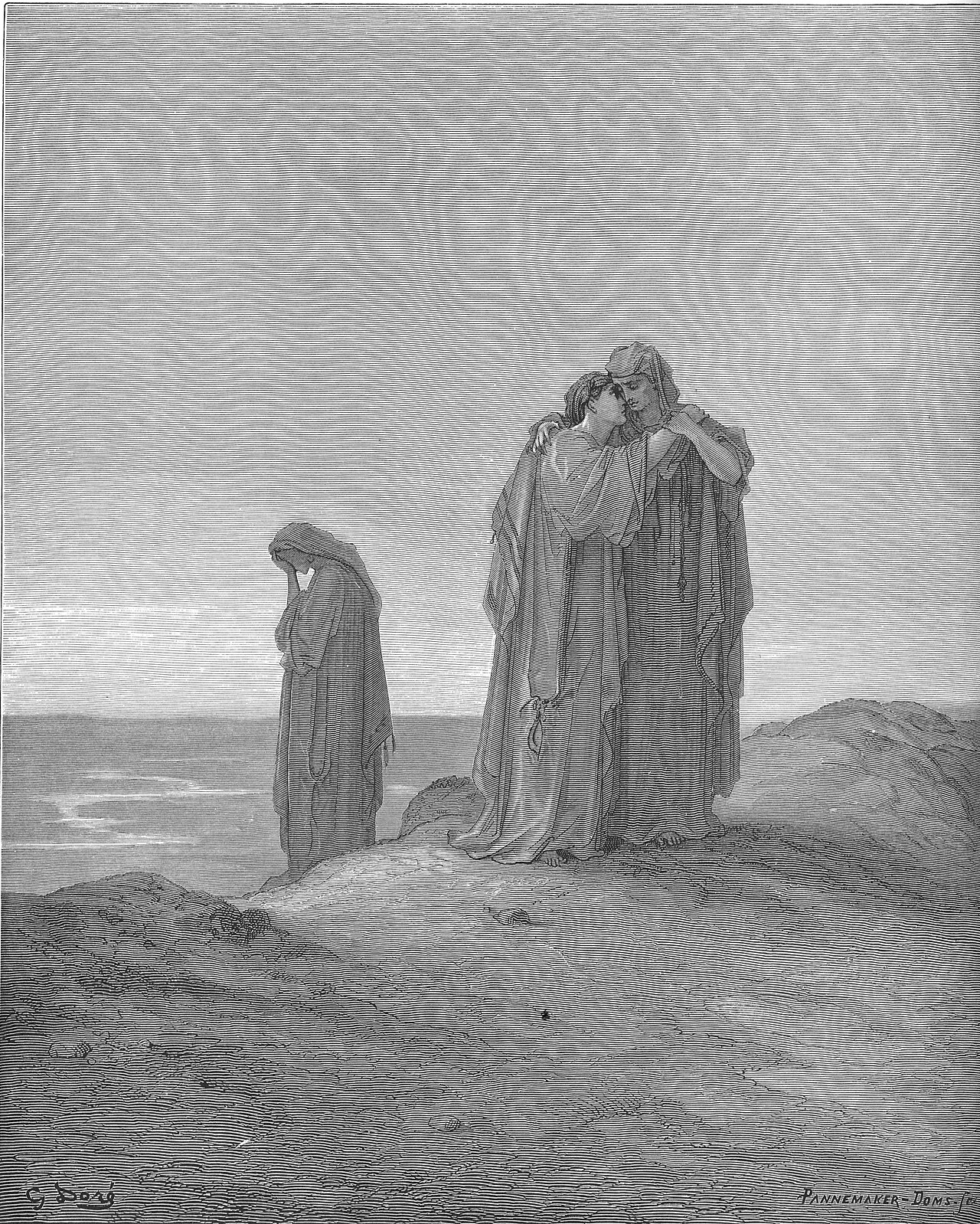
And Ruth said, Intreat me not to leave thee, or to return from following after thee: for whither thou goest, I will go; and where thou lodgest, I will lodge: thy people shall be my people, and thy God my God:Chesed embodied: loyal love that binds itself to another beyond obligation
Like as a father pitieth his children, so the Lord pitieth them that fear him.God's compassion pictured as a father's pity for his children
O give thanks unto the Lord; for he is good: for his mercy endureth for ever.The refrain of chesed — steadfast love that endures across every stanza
Set me as a seal upon thine heart, as a seal upon thine arm: for love is strong as death; jealousy is cruel as the grave: the coals thereof are coals of fire, which hath a most vehement flame."Love is strong as death" — one of the canon's most direct meditations on love's intensity (the unquenchable-waters line follows in v. 7)
For the mountains shall depart, and the hills be removed; but my kindness shall not depart from thee, neither shall the covenant of my peace be removed, saith the Lord that hath mercy on thee.God's lovingkindness pledged as more permanent than the mountains
Show the remaining 27 key verses, book by book ▾
Jeremiah1
Lamentations1
Hosea2
1 Corinthians2
Galatians1
Ephesians2
1 Peter1
Revelation1