
Ruth 1:16
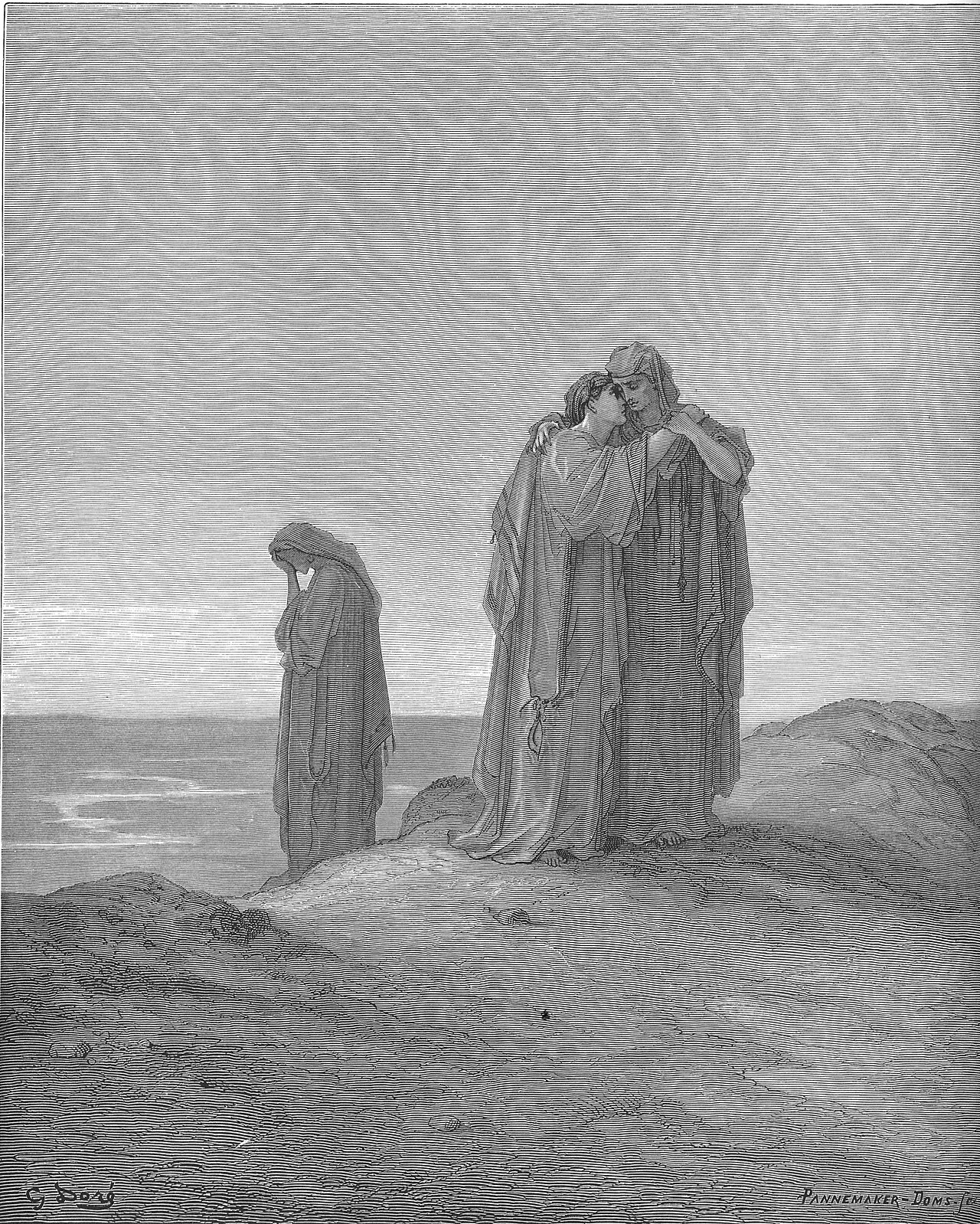
in Ruth 1But Ruth replied: “Do not urge me to leave you or to turn from following you. For wherever you go, I will go, and wherever you live, I will live; your people will be my people, and your God will be my God.
BSB
The same verse in ASV and KJV ▾
ASV
And Ruth said, Entreat me not to leave thee, and to return from following after thee, for whither thou goest, I will go; and where thou lodgest, I will lodge; thy people shall be my people, and thy God my God;
KJV
And Ruth said, Intreat me not to leave thee, or to return from following after thee: for whither thou goest, I will go; and where thou lodgest, I will lodge: thy people shall be my people, and thy God my God:
⋯
This verse in Ruth 1
Commentary
10 notes on this verseRuth, who surpassed the definition of the Law, and entered into the Church, and became an Israelite, and deserved to be counted among the greater ones of the Lord's family, because of the choice of her mind and not her body, is a great example for us, because in her the figure of our entrance into the Church of the Lord, who are gathered from the nations, preceded.
This site's exposition
Do not urge me to leave you
on Ruth 1:16-17
Her vow climbs through six clauses, and its hinge is "your people will be my people, and your God will be my God". She closes with the oath "May the LORD punish me, and ever so severely", sworn by the God she adopts rather than by Chemosh.
The record, by era
The Church Fathers2 voices
The constancy of Ruth, who because of the piety of her spirit and the memory of her husband preferred to her parents a woman worn out in old age and laboring in poverty, is praiseworthy.
Ruth, a foreigner, did not leave Naomi's side. See how much merit there is in standing by the deserted in solace. From her seed, Christ is born.
The Medieval Church1 voice
Now let us look at Ruth, for she is a type of the church. First she is a type because she is a stranger from the Gentile people who renounced her native land and all things belonging to it. She made her way to the …
The Puritans and the Awakening2 voices
And Ruth said, entreat me not to leave thee, or to return from following after thee,....
An oath for confirmation was an end of this strife, and would leave a lasting obligation upon her never to forsake that good way she was now making choice of. First, It is implied that death would separate between them for a time.
3 more voices on this verse
The Nineteenth Century3 voices
A commentator
Charles Spurgeon1834–1892
The Metropolitan Tabernacle Pulpit, Sermon No. 2680: “Ruth Deciding for God” (lightly modernized text, CCEL edition) · Written before 1892.
THIS was a very brave, outspoken confession of faith. Please notice that it was made by a woman, a young woman, a poor woman, a widow woman and a foreigner. Remembering all that, I should think there is no condition of gentleness, or of obscurity, or of poverty, or of sorrow which should prevent anybodyfrom making an open confession of allegiance to God when faith in the Lord Jesus Christ has been exercised.
A commentator
Charles Spurgeon1834–1892
The Metropolitan Tabernacle Pulpit, Sermon No. 2680: “Ruth Deciding for God” (lightly modernized text, CCEL edition) · Written before 1892.
proposed
THIS was a very brave, outspoken confession of faith. Please notice that it was made by a woman, a young woman, a poor woman, a widow woman and a foreigner. Remembering all that, I should think there is no condition of gentleness, or of obscurity, or of poverty, or of sorrow which should prevent anybodyfrom making an open confession of allegiance to God when faith in the Lord Jesus Christ has been exercised. If that is your experience, my dear Friend, then whoever you may be, you will find an opportunity, somewhere or other, of declaring that you are on the Lord's side. I am glad that all candidates for membership in our Church make their confession of faith at our Church Meetings. I have been told that such an ordeal must keep a great many from joining us, yet I notice that where there is no such ordeal, they often have very few members—but here we are with 5,600 or thereabouts, in Church fellowship and, very seldom, if ever, finding anybody kept back by having to make an open confession of faith in Christ. It does the man, the woman, the boy, or the girl—whoever it is—so much good for once, at least, to say right out straight, "I am a Believer in the Lord Jesus Christ and I am not ashamed of it," that I do not think we shall ever deviate from our custom. I have also noticed that when people have once confessed Christ before men, they are very apt to do it again somewhere else. And they thus acquire a kind of boldness and outspokenness upon religious matters—and a holy courage as followers of Christ—which more than make up for any self-denial and trembling which the effort may have cost them.
And Ruth said - A more perfect surrender was never made of friendly feelings to a friend: I will not leave thee - I will follow thee: I will lodge where thou lodgest - take the same fare with which thou meetest; thy people shall be my people - I most cheerfully abandon my own country, and determine to end my days in thine. I will also henceforth have no god but thy God, and be joined with thee in worship, as I am in affection and consanguinity.
How the passage was read
What the Jewish commentators add
On the verses either side of this one
See, your sister-in-law has gone back. In this [word], the accent is at the beginning [on the first syllable] under the shin, because it is in the past tense. [But,] “and in the morning she would return,” 22 Megillas Esther:14.
This section is reception history: how the passage was read and kept in the Jewish tradition. Where a reading parts from an essential of the Christian faith, the section says so at that point.
Texts and citation data: Sefaria; each excerpt follows its version’s licence. 4 further sources are cited on this chapter that carry no English text this site may quote or only restate the verse.
The words behind it
20 Hebrew wordsEvery Hebrew word of this verse in the order it stands, with what it means and the door to its own study. The last column counts the times a word stands in the whole Bible: the rarer the word, the more the places it appears belong together.
| Hebrew | Sound | Meaning | Word study | In the Bible |
|---|---|---|---|---|
| וַתֹּ֤אמֶר | vatomer | and she said | H559 → | 5305 times |
| רוּת֙ | rut | Ruth | H7327 → | 12 times |
| אַל־ | ʾal- | may not | H408 → | 724 times |
| תִּפְגְּעִי־ | tifgei- | you entreat | H6293 → | |
| בִ֔י | vi | <on> <the> me | ||
| לְעָזְבֵ֖ךְ | leazevekh | to abandon you | H5800 → | 215 times |
| לָשׁ֣וּב | lashuv | to turn back | H7725 → | 1056 times |
| מֵאַחֲרָ֑יִךְ | meacharayikh | from after you | H310 → | 715 times |
| כִּ֠י | ki | for | H3588 → | 4482 times |
| אֶל־ | ʾel- | to | H413 → | 5510 times |
| אֲשֶׁ֨ר | ʾasher | where | H834 → | 5497 times |
| תֵּלְכִ֜י | telekhi | you will go | H1980 → | 1546 times |
| אֵלֵ֗ךְ | ʾelekh | I will go | H1980 → | 1546 times |
| וּבַאֲשֶׁ֤ר | uvaasher | and at where | H834 → | 5497 times |
| תָּלִ֙ינִי֙ | talini | you will lodge | H3885 → | 84 times |
| אָלִ֔ין | ʾalin | I will lodge | H3885 → | 84 times |
| עַמֵּ֣ךְ | ʾamekh | people your | H5971 → | 1873 times |
| עַמִּ֔י | ʾami | [will be] people my | H5971 → | 1873 times |
| וֵאלֹהַ֖יִךְ | velohayikh | and God your | H430 → | 2601 times |
| אֱלֹהָֽי׃ | ʾelohai | [will be] God my | H430 → | 2601 times |
וַתֹּ֤אמֶרand she said
vatomerH559 →5305 times
רוּת֙Ruth
rutH7327 →12 times
אַל־may not
ʾal-H408 →724 times
תִּפְגְּעִי־you entreat
tifgei-H6293 →
בִ֔י<on> <the> me
vi
לְעָזְבֵ֖ךְto abandon you
leazevekhH5800 →215 times
לָשׁ֣וּבto turn back
lashuvH7725 →1056 times
מֵאַחֲרָ֑יִךְfrom after you
meacharayikhH310 →715 times
כִּ֠יfor
kiH3588 →4482 times
אֶל־to
ʾel-H413 →5510 times
אֲשֶׁ֨רwhere
ʾasherH834 →5497 times
תֵּלְכִ֜יyou will go
telekhiH1980 →1546 times
אֵלֵ֗ךְI will go
ʾelekhH1980 →1546 times
וּבַאֲשֶׁ֤רand at where
uvaasherH834 →5497 times
תָּלִ֙ינִי֙you will lodge
taliniH3885 →84 times
אָלִ֔יןI will lodge
ʾalinH3885 →84 times
עַמֵּ֣ךְpeople your
ʾamekhH5971 →1873 times
עַמִּ֔י[will be] people my
ʾamiH5971 →1873 times
וֵאלֹהַ֖יִךְand God your
velohayikhH430 →2601 times
אֱלֹהָֽי׃[will be] God my
ʾelohaiH430 →2601 times
A shaded row is a word that stands 400 times or fewer in the Bible.
The walk
8 stopsEach card is a verse this one points to, and under it the verses that one points to in turn. Where several paths arrive at the same place, that place is listed first: the text keeps returning to it.
Through
Psalms 45:10Listen, O daughter! Consider and incline your ear: Forget your people and your father’s house,
it leads to
- Song of Solomon 2:10–13
My beloved calls to me, “Arise, my darling. Come away with me, my beautiful one.
- Genesis 12:1
Then the LORD said to Abram, “Leave your country, your kindred, and your father’s household, and go to the land I will show you.
- Matthew 19:29
And everyone who has left houses or brothers or sisters or father or mother or wife or children or fields for the sake of My name will receive a hundredfold and will inherit eternal…
- Matthew 10:37
Anyone who loves his father or mother more than Me is not worthy of Me; anyone who loves his son or daughter more than Me is not worthy of Me;
- 2 Corinthians 6:17
“Therefore come out from among them and be separate, says the Lord. Touch no unclean thing, and I will receive you.”
- Song of Solomon 2:10–13
Through
2 Samuel 15:21But Ittai answered the king, “As surely as the LORD lives, and as my lord the king lives, wherever my lord the king may be, whether it means life or death, there will your…
it leads to
- Ruth 1:16–17
But Ruth replied: “Do not urge me to leave you or to turn from following you. For wherever you go, I will go, and wherever you live, I will live; your people will be…
- Proverbs 17:17
A friend loves at all times, and a brother is born for adversity.
- Ruth 1:16–17
Through
Matthew 8:19And one of the scribes came to Him and said, “Teacher, I will follow You wherever You go.”
it leads to
- Luke 22:33–34
“Lord,” said Peter, “I am ready to go with You even to prison and to death.”
- Luke 22:33–34
Where this verse is studied
By subject
Love35 verses
On this page
About Ruth
Who and where
1 name in this verse with a page on the site.
This page draws on 9 works. Open the list of works
This page draws on Adam Clarke, Commentary on the Bible; Ambrose of Milan, Commentary on Luke; Charles Spurgeon, The Metropolitan Tabernacle Pulpit, Sermon No. 2680: “Ruth Deciding for God” (lightly modernized text, CCEL edition); Isidore of Seville, ON RUTH; Jerome, LETTER 39.5; John Gill, Exposition of the Old Testament (1748-1763); Keil and Delitzsch, Biblical Commentary on the Old Testament: Joshua, Judges, Ruth; Matthew Henry, Commentary on the Whole Bible and Theodoret of Cyrus, QUESTIONS ON RUTH.