
Actschapter 2
47 verses · Luke · about AD 62 · Acts
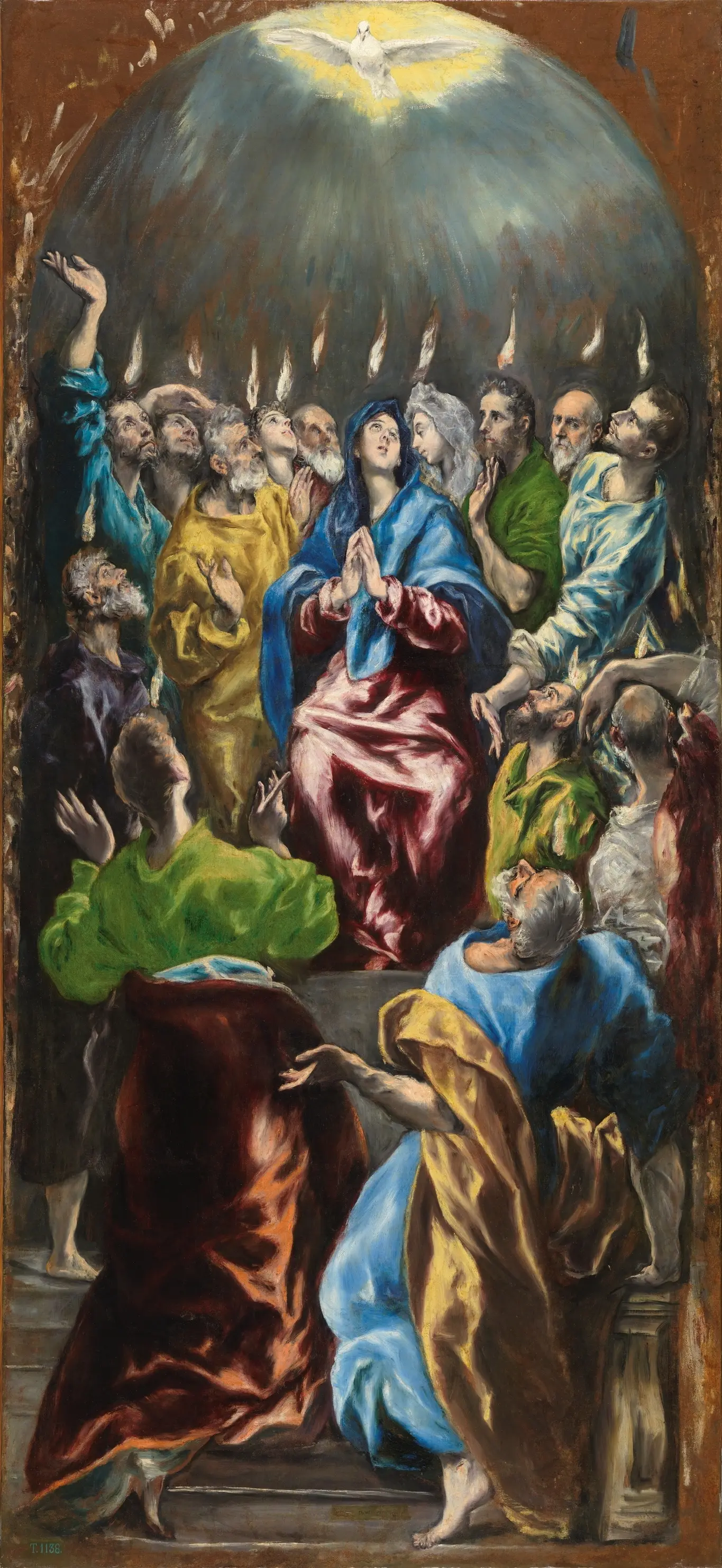
When the day of Pentecost came, they were all together in one place.
Introduction
Luke, Acts, Acts Overview.
Luke wrote this chapter for Theophilus and for readers far from Jerusalem, who needed to know how the church began. It tells of one day at a harvest feast, when the city was full of Jews from every part of the known world. The chapter holds the first Christian sermon, preached by the man who had denied Jesus some weeks before. Listen for the three passages of the Old Testament he builds on. Notice the question the crowd asks and the answer they are given. The chapter closes with a short picture of the new community, and it is worth reading slowly.
Context
- Who
- Theophilus and Gentile readers, being shown that the gospel spoke every language from its first day.
- What
- The coming of the Holy Spirit at Pentecost, Peter's sermon to the crowd, and the life of the first believers.
- Where
- Jerusalem, in a house and then among the crowds of the feast, probably near the temple.
- When
- The Feast of Weeks, fifty days after Passover, in the year of the resurrection, about AD 30 or 33.
- Why
- To show that the Spirit promised by the prophets had come and that the risen Jesus had been made Lord and Christ.
Historical context
Pentecost was one of three feasts that required Jewish men to come to Jerusalem. It celebrated the wheat harvest, and later tradition also tied it to the giving of the Law at Sinai. The city's population swelled several times over, and travelers slept in courtyards and on rooftops.
Show the rest of the historical context, 3 more paragraphs
The list of homelands Luke gives is a map of the Jewish dispersion: Parthians and Medes from beyond the Roman frontier, Egyptians and Libyans from Africa, visitors from Rome itself. These were Jews and converts who had settled abroad generations earlier and spoke the local tongues at home.
Baptizing three thousand people in one day sounds impossible until you know that Jerusalem was full of stepped stone pools called mikvaot, built for ritual washing before entering the temple. Dozens have been excavated on the southern slope. The water was already there.
The charge that the disciples were drunk is met with a time check: nine in the morning. In a world without clocks, the day was counted in hours from sunrise, and no respectable person was drinking that early.
Significance
To the first readers, the reversal was unmistakable. At Babel language divided the human race; here one message is heard by every language group at once. The Spirit poured out on ordinary men and women, sons and daughters alike, was the sign the prophet Joel had promised for the last days.
Show the rest of the significance, 1 more paragraph
It also showed the shape of the church's first community: shared meals, shared possessions, daily attendance at the temple. They were not yet leaving Judaism, they were a movement inside it, growing fast.
The heads below are this chapter's scenes. The numbered points under each are its verses.
Wind, Fire, and Tongues on the Day of Pentecost
Acts 2:1-4
the day of Pentecost: The sound like a mighty rushing wind and the tongues like flames of fire are likenesses, signs of the Spirit's coming. The promise of 1:5 and 1:8 is kept: they were all filled with the Holy Spirit and spoke as the Spirit enabled them.
Acts 2:1
“And when the day of Pentecost - The word “Pentecost” is a Greek word signifying the 50th part of a thing, or the 50th in order.”
2 more voices on this verseWhat preachers and commentators have said about this verse, in their own words.
Acts 2:1
“I will not refute that high and subtle interpretation of Augustine, that like as the law was given to the old people fifty days after Easter, being written in tables of stone by the hand of God, so the Spirit, whose office it is to write the same in our hearts, did fulfill that which was figured in the giving of the law as many days after the resurrection of Christ, who is the true Passover.”
John Calvin · Commentaries (1554)reformed
Acts 2:1
“At the pentecost of Sinai, in the Old Testament, and the pentecost of Jerusalem, in the New, where the two grand manifestations of God, the legal and the evangelical; the one from the mountain, and the other from heaven; the terrible, and the merciful one.”
John Wesley · Explanatory Notes upon the New Testament (1755)evangelical
a mighty rushing wind: Matthew Henry links the wind to Jesus' saying in John 3, where the Spirit moves like wind whose course no one can trace. John Calvin reasons that God roused every sense so the disciples would know the promised Spirit had come. Wesley places the house within the temple.
Acts 2:2
That the Holy Spirit has frequently appeared in fire. In Exodus: "And the whole of Mount Sinai smoked, because God had come down upon it in fire." Also in the Acts of the Apostles"And suddenly there was made a sound from heaven, as if a vehement blast were borne along, and it filled the whole of that place in which they were sitting. And there appeared to them cloven tongues as if of fire, which also settled upon each of them; and they were all filled with the Holy Ghost."
Cyprian · written before 258 · Treatise XII Three Books of Testimonies Against the Jewspatristic
3 more voices on this verse
Acts 2:2
“A sound from heaven - Probably thunder is meant, which is the harbinger of the Divine presence. Rushing mighty wind - The passage of a large portion of electrical fluid over that place would not only occasion the sound, or thunder, but also the rushing mighty wind; as the air would rush suddenly and strongly into the vacuum occasioned by the rarefaction of the atmosphere in that place, through the sudden passage of the electrical fluid; and the wind would follow the direction of the fire.”
Adam Clarke · Commentary on the Bible (1810-1826)evangelical
Acts 2:2
“For such is our slothfulness to consider the gifts of God, that unless he awake all our senses, his power shall pass away unknown. This was, therefore, a preparation that they might the better know that the Spirit was now come which Christ had promised.”
John Calvin · Commentaries (1554)reformed
Acts 2:2
FROM the descent of the Holy Spirit at the beginning we may learn something concerning His operations at the present time. Remember at the outset that whatever the Holy Spirit was at the first, He is that now, for as God, He remains forever the same—whatever He did then He is able to do still, for His power is by no means diminished. As says the Prophet Micah, "O you that are named the house of Jacob, is the Spirit of the Lord straitened?"
tongues like flames of fire: Matthew Henry notes that Pentecost recalled the law given in fire on Sinai. The gospel also comes as a fiery law, he says, fulfilling John the Baptist's word about a baptism with fire. John Wesley explains that tongues of fire means small flames in the language of the Septuagint.
Acts 2:3
“And there appeared unto them - There were seen by them, or they saw. The fire was first seen by them in the room before it rested in the form of tongues on the heads of the disciples. Perhaps the fire appeared at first as scintillations or coruscations, until it became fixed on their heads. Tongues - γλῶσσαι glōssai. The word “tongue” occurs often in the Scriptures to denote the member which is the instrument of taste and speech, and also to denote “language” or “speech” itself.”
3 more voices on this verse
Acts 2:3
“Please note: NOBODY LEFT THE UPPER ROOM WITH TWO FLAMES ON THEIR HEAD. Just “one sat upon each of them” (Acts 2:3). But this one flame represents the whole fire of God—its authority, power and glory.”
Reinhard Bonnke · Holy Spirit: Are We Flammable or Fireproof? (7-day study, YouVersion)Pentecostal-evangelical
Acts 2:3
“And there appeared distinct tongues, as of fire - That is, small flames of fire. This is all which the phrase, tongues of fire, means in the language of the seventy.”
John Wesley · Explanatory Notes upon the New Testament (1755)evangelical
Acts 2:3
“For you have heard that the Holy Spirit appeared upon the disciples in tongues of fire and gave them knowledge of all languages. What indeed was signified by this miracle, except that the holy Church, filled with the same Spirit, would speak with the voice of all nations? Those who attempted to build a tower against God lost the communion of one language, but in these who humbly feared God all languages were united. Here therefore humility merited virtue; there pride earned confusion.”
Gregory the Dialogist · written before 604 · Forty Gospel Homilies, Homily 30patristic
began to speak in other tongues: Gregory the Dialogist observes that men who hid in one room for fear, unwilling to speak of Christ in their own language, now spoke openly. Adam Clarke contrasts Babel, where confused speech scattered the nations, with this gift that begins to gather them.
Acts 2:4
“Let us consider what kind of men our holy preachers were when this day found them, and what kind it made them. Certainly those who were sitting in one room out of fear of the Jews knew each one the language of their birth, and yet they did not presume to speak openly of Christ even in that language which they knew. The Spirit came, and in their mouths taught them through the diversity of tongues, while in their minds he strengthened them with authority.”
Gregory the Dialogist · written before 604 · Forty Gospel Homilies, Homily 30patristic
2 more voices on this verse
Acts 2:4
“To speak with other tongues - At the building of Babel the language of the people was confounded; and, in consequence of this, they became scattered over the face of the earth: at this foundation of the Christian Church, the gift of various languages was given to the apostles, that the scattered nations might be gathered; and united under one shepherd and superintendent (επισκοπος) of all souls. As the Spirit gave them utterance - The word αποφθεγγεσθαι seems to imply such utterance as proceeded from immediate inspiration, and included oracular communications.”
Adam Clarke · Commentary on the Bible (1810-1826)evangelical
Acts 2:4
“And this family praising God together, with the tongues of all the world, was an earnest that the whole world should in due time praise God in their various tongues. As the Spirit gave them utterance - Moses, the type of the law, was of a slow tongue; but the Gospel speaks with a fiery and flaming one.”
John Wesley · Explanatory Notes upon the New Testament (1755)evangelical
Acts 2:5-8
from every nation under heaven: The speakers are known Galileans, yet each one heard them speaking his own language. The scene answers Babel in Genesis 11: there one language was scattered, and here the nations are gathered to hear.
Acts 2:5
“There were dwelling at Jerusalem - The word rendered “dwelling” - κατοικοῦντες katoikountes - properly means to have a fixed and permanent habitation, in distinction from another word - παροικοῦντες paroikeountes - which means to have a temporary and transient residence in a place. But it is not always confined to this signification; and it is not improbable that many wealthy foreign Jews had a permanent residence in Jerusalem for the convenience of being near the temple. This was the more probable, as about that time the Messiah was expected to appear, Matt.”
ConnectionsGenesis 11:4
each one heard them speaking: Theophylact reasons that the event happened in a house, so the crowd must have come from outside. Bede asks whether the miracle lay in the speaking or the hearing, and he held that the words could be read either way. Chrysostom notes that most of the world was assembled there.
Acts 2:6
“When this was noised abroad - If we suppose that there was a considerable peal of thunder, which followed the escape of a vast quantity of electric fluid, and produced the mighty rushing wind already noticed on Act 2:2, then the whole city must have been alarmed; and, as various circumstances might direct their attention to the temple, having flocked thither they were farther astonished and confounded to hear the disciples of Christ addressing the mixed multitude in the languages of the different countries from which these people had come.”
Adam Clarke · Commentary on the Bible (1810-1826)evangelical
who are speaking Galileans?: Albert Barnes explains that Galileans were scorned as unlearned, with a rough dialect, so their speech in foreign languages made the miracle more striking. Matthew Henry sees God choosing the weak things of the world to confound the wise. Theophylact notes that some marveled while others reviled.
Acts 2:7
“Galileans - Inhabitants of Galilee. It was remarkable that they should speak in this manner, because: (1) They were ignorant, rude, and uncivilized, Joh 1:46. Hence, the term Galilean was used as an expression of the deepest reproach and contempt, Mar 14:70; Joh 7:52. (2) Their dialect was proverbially barbarous and corrupt, Mar 14:70; Mat 26:73. They were regarded as an outlandish people, unacquainted with other nations and languages, and hence, the amazement that they could address them in the refined language of other people. Their native ignorance was the occasion of making the miracle more striking.”
1 more voice on this verse
Acts 2:7
“Everywhere alongside virtue there is vice. Some marveled, others reviled. The former were truly devout; they lived in Jerusalem precisely because the law permitted them to appear three times a year at the temple in Jerusalem.”
Theophylact of Ohrid · written before 1107 · Commentary on Actspatristic
his own native language?: Adam Clarke reports a view that the miracle worked on the hearers, who understood the disciples' own speech as if it were their native language. Gregory of Nazianzus holds that the disciples spoke foreign tongues they had never learned. Matthew Henry pictures each nation hearing one disciple speak its tongue.
Acts 2:8
“And how hear we every man in our own tongue,.... Them speaking, as the Ethiopic version reads; that is, we everyone of us hear one or another, speak in the same language, wherein we were born; our native language; for though these men were Jews by descent, yet were born and brought up in other countries, which language they spake; and not the Hebrew, or Syriac, or Chaldee.”
2 more voices on this verse
Acts 2:8
“They spoke with strange tongues, and not those of their native land; and the wonder was great, a language spoken by those who had not learnt it. And the sign is to them that believe not, and not to them that believe, that it may be an accusation of the unbelievers, as it is written, With other tongues and other lips will I speak unto this people, and not even so will they listen to Me saith the Lord. But they heard. Here stop a little and raise a question, how you are to divide the words.”
Gregory of Nazianzus · written before 390 · On Pentecost, Oration 41.15patristic
Acts 2:8
“How hear we every man in our own tongue - Some have supposed from this that the miracle was not so much wrought on the disciples as on their hearers: imagining that, although the disciples spoke their own tongue, yet every man so understood what was spoken as if it had been spoken in the language in which he was born.”
Adam Clarke · Commentary on the Bible (1810-1826)evangelical
Acts 2:9-11
Parthians, Medes, and Elamites: The fifteen names begin with Parthians, Medes, and Elamites, the lands of Israel's exile, then run east to west to Rome, Crete and Arabia. The nations of 1:8 are present already in their firstfruits, both Jews and converts to Judaism.
Acts 2:9
“Parthians, &c.--Beginning with the farthest east, the Parthians, the enumeration proceeds farther and farther westward till it comes to Judea; next come the western countries, from Cappadocia to Pamphylia; then the southern, from Egypt to Cyrene; finally, apart from all geographical consideration, Cretes and Arabians are placed together.”
Jamieson, Fausset & Brown · Commentary Critical and Explanatory on the Whole Bible (1871)reformed
1 more voice on this verse
Acts 2:9
“They took lodgings there, because there was at this time a general expectation of the appearing of the Messiah; for Daniel's weeks had just now expired, the sceptre had departed from Judah, and it was then generally thought that the kingdom of God would immediately appear, Luke xix.”
Matthew Henry · Commentary on the Whole Bible (1707-1721)puritan
visitors from Rome: Albert Barnes notes that vast numbers of Jews lived in Egypt, where the first translation of the Old Testament, the Septuagint, was made. John Wesley takes the visitors from Rome as Jews born there but now living in Jerusalem. Bede reads them as Jews living at Rome as foreigners.
Acts 2:10
“Phrygia - A country in Asia Minor, southward of Pontus. Pamphylia - The ancient name of the country of Natolia, now called Caramania, between Lycia and Cilicia, near the Mediterranean Sea. Egypt - A very extensive country of African bounded by the Mediterranean on the north; by the Red Sea and the Isthmus of Suez, which divide it from Arabia, on the east; by Abyssinia or Ethiopia on the south; and by the deserts of Barca and Nubia on the west. It was called Mizraim by the ancient Hebrews, and now Mesr by the Arabians.”
Adam Clarke · Commentary on the Bible (1810-1826)evangelical
1 more voice on this verse
Acts 2:10
“Roman sojourners - Born at Rome, but now living at Jerusalem. These seem to have come to Jerusalem after those who are above mentioned. All of them were partly Jews by birth, and partly proselytes.”
John Wesley · Explanatory Notes upon the New Testament (1755)evangelical
declaring the wonders of God: The list of nations closes with Jews and converts, and Adam Clarke concludes that no one present was strictly a heathen. John Wesley and Matthew Henry think these wonders were the works of Christ and the grace of the gospel, from His miracles to His ascension.
Acts 2:11
“Cretans - One island seems to be mentioned for all. The wonderful works of God - Probably those which related to the miracles, death, resurrection, and ascension of Christ, together with the effusion of his Spirit, as a fulfilment of his promises, and the glorious dispensations of Gospel grace.”
John Wesley · Explanatory Notes upon the New Testament (1755)evangelical
Acts 2:12-15
The sign divides its hearers, some asking what it means and others mocking that the men are drunk on new wine. Peter answers the mockery with the hour: it is only the third hour of the day, nine in the morning.
Acts 2:12
“Were in doubt - This expression, διηπόρουν diēporoun, denotes “a state of hesitancy or anxiety about an event.” It is applied to those who are traveling, and are ignorant of the way, or who hesitate about the road. They were all astonished at this; they did not know how to understand it or explain it, until some of them supposed that it was merely the effect of new wine.”
John Wesley notes that the Greek word means sweet wine, for no new wine was ready as early as Pentecost. Cyril of Jerusalem and Bede turn the taunt into a truth, and say the disciples were filled with the new wine of the Spirit's grace.
Acts 2:13
“Others, mocking, said - The word rendered “mocking” means “to cavil, to deride.” It occurs in the New Testament in only one other place: Act 17:32, “And when they heard of the resurrection of the dead, some mocked.” This was an effect that was not confined to the day of Pentecost. There has seldom been a revival of religion, a remarkable manifestation of the power of the Holy Spirit, that has not given occasion for profane mockery and merriment. One characteristic of wicked people is to deride those things which are done to promote their own welfare.”
2 more voices on this verse
Acts 2:13
“For in truth the wine was new, the grace of the New Testament. But this new wine was from a spiritual vine, which already had often borne fruit in the prophets and sprouted forth in the New Testament. For just as in the order of nature the vine, remaining ever the same, brings forth new fruit according to the seasons, so too the same Spirit, remaining what he is, having wrought in the prophets, now manifested something new and marvelous.”
Cyril of Jerusalem · written before 386 · Catechetical Lecture 17.18patristic
Acts 2:13
“These mockers appear to have been some of the natives of Judea, and inhabitants of Jerusalem, (who understood only the dialect of the country,) by the apostle's immediately directing his discourse to them in the next verse. They are full of sweet wine - So the Greek word properly signifies. There was no new wine so early in the year as pentecost.”
John Wesley · Explanatory Notes upon the New Testament (1755)evangelical
Peter Stands Up: This Is That Spoken by Joel
Peter stood up with the Eleven: Theophylact marvels that a simple, unlearned man raised his voice before a crowd that included slanderers. Matthew Henry thinks many of the hundred and twenty also preached that day. Only Peter's sermon is recorded, he says, as proof of his restoration after his fall.
Acts 2:14
“Peter, standing up with the eleven - They probably spoke by turns, not altogether; but Peter began the discourse. All ye that dwell at Jerusalem - Οἱ κατοικουντες would be better translated by the word sojourn, because these were not inhabitants of Judea, but the strangers mentioned in Act 2:9-11, who had come up to the feast.”
Adam Clarke · Commentary on the Bible (1810-1826)evangelical
2 more voices on this verse
Acts 2:14
“Men of Judea - That is, ye that are born in Judea. St. Peter spoke in Hebrew, which they all understood.”
John Wesley · Explanatory Notes upon the New Testament (1755)evangelical
Acts 2:14
“And it was not by Peter's preaching only, but that of all, or most, of the rest of the hundred and twenty, that three thousand souls were that day converted, and added to the church; but Peter's sermon only is recorded, to be an evidence for him that he was thoroughly recovered from his fall, and thoroughly restored to the divine favour.”
Matthew Henry · Commentary on the Whole Bible (1707-1721)puritan
the third hour: Albert Barnes explains that Jews counted twelve hours from sunrise, so the third hour was about nine in the morning, the hour of morning worship. Cyril of Jerusalem observes that Christ, crucified at the third hour in Mark's account, sent His grace at the same hour.
Acts 2:15
“For these are not drunken ... - The word these here includes Peter himself, as well as the others. The charge doubtless extended to all. The third hour of the day - The Jews divided their day into twelve equal parts, reckoning from sunrise to sunset. Of course the hours were longer in summer than in winter. The third hour would correspond to our nine o’clock in the morning. The reasons why it was so improbable that they would be drunk at that time were the following: (1) It was the hour of morning worship, or sacrifice.”
1 more voice on this verse
Acts 2:15
“The first infusion of the Holy Spirit into the congregated disciples took place at "the third hour." Peter, on the day on which he experienced the vision of Universal Community, (exhibited) in that small vessel, had ascended into the more lofty parts of the house, for prayer's sake "at the sixth hour.”
Tertullian · written before 220 · On Prayerpatristic
Acts 2:16-18
spoken by the prophet Joel: Peter's citation of Joel 2:28 to 32 is the longest Old Testament quotation in Acts. Where Joel has afterward, Peter reads In the last days, so the last days begin at Pentecost.
Acts 2:16
“But this is that which was spoken by the prophet Joel. This affair, which is a matter of wonder and amazement with some, and of speculation with others, and of ridicule and contempt with the most, not the effect of wine, but the fulfilment of a prophecy in Joe 2:28 and is that effusion of the Spirit there foretold; and this prophecy is by the Jews themselves allowed to belong to the world to come, or to the times of the Messiah.”
1 more voice on this verse
Acts 2:16
“Spoken by the prophet Joel - The prophecy which he delivered so long ago is just now fulfilled; and this is another proof that Jesus whom ye have crucified is the Messiah.”
Adam Clarke · Commentary on the Bible (1810-1826)evangelical
Cross references
Acts 2:16
- QuotingJoel 2:28“And afterward, I will pour out My Spirit on all people. Your sons and daughters will prophesy, your old men will dream dreams, your young men will see visions.”
touto estin to eiremenon dia tou prophetou ('this is that which was spoken by the prophet Joel'), the demonstrative fulfillment frame 'this is that', Peter at Pentecost; eiremenon = perf. pass. participle of g2046
Joel wrote afterward where Peter says in the last days. John Gill cites the Jewish commentator Kimchi, who took both to mean the days of the Messiah. Ambrose reads the promise as a measure of the Spirit given to each, since no one can receive His fulness.
Acts 2:17
“It refers to the last days, the times of the gospel, which are called the last days because the dispensation of God's kingdom among men, which the gospel sets up, is the last dispensation of divine grace, and we are to look for no other than the continuation of this to the end of time.”
Matthew Henry · Commentary on the Whole Bible (1707-1721)puritan
3 more voices on this verse
Acts 2:17
"I will pour out of My Spirit": He said not Spirit, but "of My Spirit," for we are not able to receive the fulness of the Holy Spirit, but we receive as much as our Master divides to us of His own according to His will.
Ambrose of Milan · written before 397 · On the Holy Spirit, Book 1patristic
Acts 2:17
“It shall come to pass - It shall happen, or shall occur. In the last days - Hebrew, Chaldee, Syriac, and Arabic, after these things, or afterward.”
Acts 2:17
“And it shall come to pass in the last days,.... In Joel it is, "afterwards"; instead of which Peter puts, "in the last days"; the sense is the same: and so R. David Kimchi, a celebrated commentator with the Jews, observes, that "afterwards" is the same "as in the last days", and which design the times of the Messiah; for according to a rule given by the same writer on Isa 2:2 wherever the last days are mentioned, the days of the Messiah are intended, Saith God, or "the Lord", as the Vulgate Latin and Ethiopic versions read.”
Cross references
Acts 2:17
- QuotingJoel 2:28“And afterward, I will pour out My Spirit on all people. Your sons and daughters will prophesy, your old men will dream dreams, your young men will see visions.”
'I will pour out of my Spirit', Peter at Pentecost ('this is that which was spoken by the prophet Joel')
My menservants and maidservants: Adam Clarke reads these servants as male and female slaves. Albert Barnes thinks Peter and the Septuagint meant servants of God, the worshippers Scripture often calls His servants. Barnes still holds that no class is shut out.
Acts 2:18
“On my servants and on my handmaidens - This properly means persons of the lowest condition, such as male and female slaves. As the Jews asserted that the spirit of prophecy never rested upon a poor man, these words are quoted to show that, under the Gospel dispensation, neither bond nor free, male nor female, is excluded from sharing in the gifts and graces of the Divine Spirit.”
Adam Clarke · Commentary on the Bible (1810-1826)evangelical
2 more voices on this verse
Acts 2:18
“The Jewish doctors taught that the Spirit came only upon wise and rich men, and such as were of the seed of Israel; but God will not tie himself to their rules. [2.] That the Spirit should be in them a Spirit of prophecy; by the Spirit they should be enabled to foretel things to come, and to preach the gospel to every creature.”
Matthew Henry · Commentary on the Whole Bible (1707-1721)puritan
Acts 2:18
“And on my servants, and on my handmaidens,.... In Joel it is only the servants and the handmaids; and which Kimchi interprets of strangers that should stand in the land of Israel, and serve the Israelites.”
Acts 2:19-21
wonders in the heavens above: The quotation ends on the widest promise in the prophets, that everyone who calls on the name of the Lord will be saved. Paul cites it at Romans 10:13.
Acts 2:19
“And I will show wonders in heaven above,.... The word above is not in Joel, nor in the Syriac version here, as neither the word "beneath", in the next clause.”
1 more voice on this verse
Acts 2:19
“The blood points at the wars of the Jews with the neighbouring nations, with the Samaritans, Syrians, and Greeks, in which abundance of blood was shed, as there was also in their civil wars, and the struggles of the seditious (as they called them), which were very bloody; there was no peace to him that went out nor to him that came in.”
Matthew Henry · Commentary on the Whole Bible (1707-1721)puritan
The sun will be turned to darkness: Bede holds that these signs were partly fulfilled at the Passion and wait partly for the Day of Judgment. Basil calls them signs of the end of the world. Adam Clarke reads them as figures for the fall of the civil and religious state in Judea.
Acts 2:20
“The sun shall be turned into darkness, and the moon into blood - These are figurative representations of eclipses, intended most probably to point out the fall of the civil and ecclesiastical state in Judea: see the notes on Mat 24:29. That the Sun is darkened when a total eclipse takes place, and that the Moon appears of a bloody hue in such circumstances, every person knows.”
Adam Clarke · Commentary on the Bible (1810-1826)evangelical
2 more voices on this verse
Acts 2:20
“The moon shall be turned into blood - A bloody colour: before the day of the Lord - Eminently the last day; though not excluding any other day or season, wherein the Lord shall manifest his glory, in taking vengeance of his adversaries.”
John Wesley · Explanatory Notes upon the New Testament (1755)evangelical
Acts 2:20
“It was a little day of judgment; it was a notable day: in Joel it is called a terrible day, for so it was to men on earth; but here epiphane (after the Septuagint), a glorious, illustrious day, for so it was to Christ in heaven; it was the epiphany, his appearing, so he himself spoke of it, Matt. xxiv.”
Matthew Henry · Commentary on the Whole Bible (1707-1721)puritan
calls on the name: Albert Barnes explains that the name of the Lord is a Hebrew way of saying the Lord Himself. Wesley calls this the whole of religion, especially prayer in faith. Chrysostom notes that the verse speaks of Christ, though Peter does not yet venture to say so.
Acts 2:21
“Whosoever shall call - In the midst of these wonders and dangers, whosoever should call on the Lord should be delivered (Joel). The name of the Lord is the same as the Lord himself. It is a Hebraism, signifying to call on the Lord, Psa 79:6; Zec 13:9. Shall be saved - In Hebrew, shall be delivered, that is, from impending calamities. When they threaten, and God is coming forth to judge them, it shall be that those who are characterized as those who call on the Lord shall be delivered. This is equally true at all times.”
1 more voice on this verse
Acts 2:21
“Those that distinguish themselves by singular piety shall be distinguished by special preservation. And observe, the saved remnant are described by this, that they are a praying people: they call on the name of the Lord, which intimates that they are not saved by any merit or righteousness of their own, but purely by the favour of God, which must be sued out by prayer.”
Matthew Henry · Commentary on the Whole Bible (1707-1721)puritan
Peter Preaches Jesus Crucified and Raised
Acts 2:22-24
a man certified by God: One sentence gives the cross two causes, God’s set plan and foreknowledge and the hands of the lawless, and holds both together. God raised Him because it was impossible for Him to be held in its clutches.
Acts 2:22
“For Peter said, "Ye men of Israel, hear my words; Jesus of Nazareth, a man approved by God among you by powers, and wonders, and signs, which God did by Him in the midst of you, as ye yourselves also know: Him, being delivered by the determined counsel and foreknowledge of God, by the hands of wicked men ye have slain, affixing [to the cross]: whom God hath raised up, having loosed the pains of death; because it was not possible that he should be holden of them.”
Irenaeus · written before 202 · Against Heresies Book IIIpatristic
1 more voice on this verse
Acts 2:22
“A man approved of God - Αποδεδειγμενον, celebrated, famous. The sense of the verse seems to be this: Jesus of Nazareth, a man sent of God, and celebrated among you by miracles, wonders, and signs; and all these done in such profusion as had never been done by the best of your most accredited prophets. And these signs, etc., were such as demonstrated his Divine mission.”
Adam Clarke · Commentary on the Bible (1810-1826)evangelical
set plan and foreknowledge: Peter holds God's plan and the hearers' guilt together, and Sproul notes that he by no means absolves them. Albert Barnes explains that the word for delivered is used of a person handed over to enemies by those who should have protected him. Oecumenius adds that the Lord suffered willingly.
Acts 2:23
“And yet he was approved of God, and there was nothing in this that signified the disapproving of him; for it was done by the determinate counsel and foreknowledge of God, in infinite wisdom, and for holy ends, which Christ himself concurred in, and in the means leading to them. Thus divine justice must be satisfied, sinners saved, God and man brought together again, and Christ himself glorified.”
Matthew Henry · Commentary on the Whole Bible (1707-1721)puritan
ConnectionsGenesis 50:20
the agony of death: John Wesley notes that the Greek word for agony means the pains of a woman in labor. Two reasons are given why death could not hold Him: Wesley says Scripture had to be fulfilled, and Athanasius says He was God made man. Clarke notes that God alone raised Him.
Acts 2:24
“Accordingly what is here said, `Wherefore God also hath highly exalted Him,' answers to Peter's words in the Acts, `Whom God raised up, having loosed the bonds of death, because it was not possible that He should be holden of it.' For as Paul has written, `Since being in form of God He became man, and humbled Himself unto death, therefore God also hath highly exalted Him,' so also Peter says, `Since, being God, He became man, and signs and wonders proved Him to beholders to be God, therefore it was not possible that He should be holden of death.'”
Athanasius of Alexandria · written before 373 · Discourses Against the Arians 1.44patristic
2 more voices on this verse
Acts 2:24
“PETER is here speaking of the risen Christ, whom God had raised up, "having loosed the pains of death." So it is clear that whatever those pains were, our blessed Lord Jesus Christ felt them—He felt them much more than His followers do, for, in His death-agony, He was left without the sustaining help of God and the light of His Father's Countenance was hidden from Him. His death was a bitter one, indeed! He took the deepest draughts of wormwood and gall, for He had to "taste death for every man," whatever that mysterious expression may mean.”
Charles Spurgeon · written before 1892 · The Metropolitan Tabernacle Pulpit, Sermon No. 2712: “Bonds Which Could Not Hold” (lightly modernized text, CCEL edition)Particular Baptist
Acts 2:24
“Having loosed the pains of death - The word properly means, the pains of a woman in travail. As it was not possible that he should be held under it - Because the Scripture must needs be fulfilled.”
John Wesley · Explanatory Notes upon the New Testament (1755)evangelical
Acts 2:25-28
David says about Him: In Psalm 16:8 to 11 David says to God, You will not abandon my soul to Hades. Hades translates the Hebrew sheol, the place of the dead, which the King James renders hell.
Acts 2:25
“For Daniel speaketh ... - This doctrine that the Messiah must rise from the dead Peter proceeds to prove by a quotation from the Old Testament. This passage is taken from Psa 16:8-11. It is made from the Greek version of the Septuagint, with only one slight and unimportant change. Nor is there any material change, as will be seen, from the Hebrew. In what sense this Psalm can be applied to Christ will be seen after we have examined the expressions which Peter alleges. I foresaw the Lord - This is an unhappy translation.”
1 more voice on this verse
Acts 2:25
“But it does not appear, that ever our Lord went into hell. His soul, when it was separated from the body, did not go thither, but to paradise, Luke xxiii, 43. The meaning is, Thou wilt not leave my soul in its separate state, nor suffer my body to be corrupted.”
John Wesley · Explanatory Notes upon the New Testament (1755)evangelical
Cross references
Acts 2:25
- QuotingPsalms 16:8“I have set the LORD always before me. Because He is at my right hand, I will not be shaken.”
'Thou wilt not leave my soul in hell', resurrection proof ('David speaketh concerning him')
ConnectionsPsalms 16:8
will dwell in hope: Adam Clarke notes that the Hebrew psalm reads glory where Peter follows the Septuagint's tongue, and he takes glory to mean the soul. Bede reads the body's rest as sleep in hope of resurrection. Cassiodorus calls joy perfect when the heart conceives it and the tongue speaks it.
Acts 2:26
Again, David expressly (or rather the Lord in the person of the saint, and the same from the foundation of the world is each one who at different periods is saved, and shall be saved by faith) says, "My heart was glad, and my tongue rejoiced, and my flesh shall still rest in hope. For Thou shalt not leave my soul in hell, nor wilt Thou give Thine holy one to see corruption. Thou hast made known to me the paths of life, Thou wilt make me full of joy in Thy presence."
Clement of Alexandria · written before 215 · The Stromata Book 6patristic
1 more voice on this verse
Acts 2:26
“And my tongue was glad - In the Hebrew it is ויגל כבודי vaiyagel kebodi, “And my glory was glad:” but the evangelist follows the Septuagint, in reading και ηγαλλιασατο ἡ γλωσσα μου, what all the other Greek interpreters in the Hexapla translate δοξα μου, my glory. And what is to be understood by glory here! Why the soul, certainly, and not the tongue; and so some of the best critics interpret the place.”
Adam Clarke · Commentary on the Bible (1810-1826)evangelical
Your Holy One see decay: Adam Clarke explains that Hades means the state of the dead, the place of departed spirits. He adds that Jesus, conceived without sin, was not under the sentence of returning to dust, so His body could not decay. Cassiodorus notes that the third day proved this.
Acts 2:27
Truly the prophet David also, according to the interpretation of the great Peter, said with foresight of him, "You will not leave my soul in hell, neither will you suffer your holy one to see corruption," while the apostle Peter thus expounds the saying, that "his soul was not left in hell, neither did his flesh see corruption."
Gregory of Nyssa · written before 395 · Refutation of Eunomius's 'confession of Faith' 2.13patristic
1 more voice on this verse
Acts 2:27
“Thou wilt not leave my soul - The word “soul,” with us, means “the thinking, the immortal part of man,” and is applied to it whether existing in connection with the body or separate from it.”
the paths of life: John Wesley and John Gill read the paths of life as the Father raising Him from the dead. Wesley places the joy of God's presence at His ascent to the right hand. Theophylact adds that the righteous dead walked this path with Him.
Acts 2:28
“Thou hast made known to me the ways of life--that is, resurrection-life. thou shalt make me full of joy with thy countenance--that is, in glory; as is plain from the whole connection and the actual words of the Psalm.”
Jamieson, Fausset & Brown · Commentary Critical and Explanatory on the Whole Bible (1871)reformed
1 more voice on this verse
Acts 2:28
“Thou hast made known to me the ways of life - That is, the way from the region of death, or state of the dead and separate spirits; so that I shall resume the same body, and live the same kind of life, as I had before I gave up my life for the sin of the world.”
Adam Clarke · Commentary on the Bible (1810-1826)evangelical
Acts 2:29-32
the patriarch David: David's tomb is with us to this day, so the psalm's Holy One who does not see decay cannot be David. As a prophet who knew God's oath of 2 Samuel 7, David spoke about the resurrection of the Christ.
Acts 2:29
“Men and brethren - This passage of the Psalms Peter now proves could not relate to David, but must have reference to the Messiah. He begins his argument in a respectful manner, addressing them as his brethren, though they had just charged him and the others with intoxication. Christians should use the usual respectful forms of salutation, whatever contempt and reproaches they may meet with from opposers.”
1 more voice on this verse
Acts 2:29
“The Psalm is then affirmed to have had its only proper fulfilment in JESUS, of whose resurrection and ascension they were witnesses, while the glorious effusion of the Spirit by the hand of the ascended One, setting an infallible seal upon all, was even then witnessed by the thousands who stood listening to Him.”
Jamieson, Fausset & Brown · Commentary Critical and Explanatory on the Whole Bible (1871)reformed
promised him on oath: Theophylact notes that God bound the promise with an oath to show that it could not change. Chrysostom asks how Christ sits on David's throne and answers that His kingdom is in heaven, where He reigns even over those who crucified Him.
Acts 2:30
“Then he proceeds to speak confidently to them concerning the patriarch David, that he was dead and buried, and that his sepulchre is with them to this day. He said, "But since he was a prophet, and knew that God had sworn with an oath to him, that of the fruit of his body one should sit in his throne; foreseeing this, he spake of the resurrection of Christ, that He was not left in hell, neither did His flesh see corruption.”
Irenaeus · written before 202 · Against Heresies Book IIIpatristic
2 more voices on this verse
Acts 2:30
“Therefore being a prophet,.... Who could foretell things to come, as he did many things concerning the sufferings and death of Christ, and the circumstances attending it, concerning his resurrection, ascension, and session at the right hand of God. So the title of his "Psalms", in the Syriac version, runs thus; the "Book of the Psalms of David, King and Prophet": and in the Arabic version, "the First Book of the Psalms of David the Prophet, King of the Children of Israel".”
Acts 2:30
“According to the flesh, he would raise up Christ - This whole clause is wanting in ACD, one of the Syriac, the Coptic, Ethiopic, Armenian, and Vulgate; and is variously entered in others. Griesbach rejects it from the text, and Professor White says of the words, “certissime delenda,” they should doubtless be expunged. This is a gloss, says Schoettgen, that has crept into the text, which I prove thus: 1. The Syriac and Vulgate, the most ancient of the versions, have not these words. 2. The passage is consistent enough and intelligible without them.”
Adam Clarke · Commentary on the Bible (1810-1826)evangelical
Cross references
Acts 2:30
- QuotingPsalms 132:11“The LORD swore an oath to David, a promise He will not revoke: “One of your descendants I will place on your throne.”
'of the fruit of his loins... he would raise up Christ' (Davidic oath)
Connections2 Samuel 7:12, Psalms 132:11
the resurrection of the Christ: Albert Barnes concludes that David saw the Messiah's resurrection ahead of time by the spirit of prophecy. Clarke reports that the oldest manuscripts lack the words his soul, so Peter's sentence says only that He was not abandoned to Hades. Theophylact notes that Peter gives the Father the credit throughout.
Acts 2:31
"To raise up Christ in the flesh." He says this because according to His Divinity He has from eternity and always sat together with the Father; and he ascribes everything to the Father, so that the listeners might more easily accept what is being said.
Theophylact of Ohrid · written before 1107 · Commentary on Actspatristic
ConnectionsPsalms 16:10
we are all witnesses: Adam Clarke and Albert Barnes take the witnesses to be the whole hundred and twenty, who saw Jesus alive and stood ready to testify. Barnes sets out Peter's order: prophecy showed that the Messiah would rise, and eyewitnesses now show that Jesus did. Chrysostom notes Peter's plain name, this Jesus.
Acts 2:32
“Whereof we all are witnesses - That is, the whole 120 saw him after he rose from the dead, and were all ready, in the face of persecution and death, to attest this great truth.”
Adam Clarke · Commentary on the Bible (1810-1826)evangelical
1 more voice on this verse
Acts 2:32
“He foreseeing this, spake of the resurrection Of Christ - St. Peter argues thus: It is plain, David did not speak this of himself. Therefore he spake of Christ's rising. But how does that promise of a kingdom imply his resurrection?”
John Wesley · Explanatory Notes upon the New Testament (1755)evangelical
Acts 2:33-36
to the right hand of God: The morning's sign is the act of the ascended Christ, who has poured out what you now see and hear. God has made this Jesus, whom you crucified, both Lord and Christ, Lord from Psalm 110 and Christ from Psalm 16.
Acts 2:33
"And He had in His right hand seven stars." He said that in His right hand He had seven stars, because the Holy Spirit of sevenfold agency was given into His power by the Father. As Peter exclaimed to the Jews: "Being at the right hand of God exalted, He hath shed forth this Spirit received from the Father, which ye both see and hear." Moreover, John the Baptist had also anticipated this, by saying to his disciples: "For God giveth not the Spirit by measure unto Him.
Victorinus of Pettau · written before 304 · Victorinus Commentary on the Apocalypse of the Blessed Johnpatristic
1 more voice on this verse
Acts 2:33
“Being exalted by the right hand of God - By the right hand; that is, the mighty power of God. Our Lord was exalted at his ascension to God's right hand in heaven.”
John Wesley · Explanatory Notes upon the New Testament (1755)evangelical
David did not ascend into heaven: Gill explains that David's body still lay in his tomb, so the call to sit at God's right hand cannot mean David. Jerome recalls that Jesus used this psalm to ask the Pharisees how David's son could be David's Lord. Bede notes that the Hebrew uses two words for Lord.
Acts 2:34
“For David is not ascended into the heavens,.... In his body, that being still in the grave, in his sepulchre, which remained to that day, though in his soul he was ascended to heaven; his Spirit had returned to God that gave it, and was among the spirits of just men made perfect: but he saith himself, in Psa 110:1 "the Lord said unto my Lord, sit thou on my right hand"; see Gill on Mat 22:44.”
2 more voices on this verse
Acts 2:34
“David is not ascended - Consequently, he has not sent forth this extraordinary gift, but it comes from his Lord, of whom he said, The Lord said unto my Lord, etc. See the note on these words, Mat 22:44 (note).”
Adam Clarke · Commentary on the Bible (1810-1826)evangelical
Acts 2:34
“The Savior has revealed the meaning of these words in the Gospel when He asked: 'If the Christ is the Son of David, how then does David in the Spirit call him Lord? (Mt. 22:43)' The Lord was interrogating the Pharisees because they were acknowledging Christ simply as the son of David.”
Jerome · written before 420 · HOMILY 36 ON PSALM 109 (110), (pp. 270-279)patristic
Cross references
Acts 2:34
- QuotingPsalms 110:1The LORD said to my Lord: “Sit at My right hand until I make Your enemies a footstool for Your feet.”
'The Lord said unto my Lord, Sit thou on my right hand' (ascension proof)
ConnectionsPsalms 110:1
Clarke explains that conquerors put their feet on the necks of defeated leaders as a sign of total subjection. John Wesley hears a skilful warning, since David, the hearers' own prophet king, foretells the ruin of those who oppose Christ. Oecumenius adds that Peter assigns the conquest to the Father.
Acts 2:35
“Until I make thy foes thy footstool - It was usual with conquerors to put their feet on the necks of vanquished leaders, as emblematical of the state of subjection to which they were reduced, and the total extinction of their power. By quoting these words, Peter shows the Jews, who continued enemies to Christ, that their discomfiture and ruin must necessarily take place, their own king and prophet having predicted this in connection with the other things which had already been so literally and circumstantially fulfilled.”
Adam Clarke · Commentary on the Bible (1810-1826)evangelical
Jamieson, Fausset and Brown observe that naming the crucified One as Lord, the One David adored, is what brought the hearers to mourn over Him. Theophylact explains that made here means appointed, so the word speaks of His office. Adam Clarke reads Lord as supreme Governor of all.
Acts 2:36
For David has not ascended into the heavens; but he saith himself, The Lord said unto my Lord, Sit Thou on My right hand, until I make Thy foes Thy footstool. Therefore let all the house of Israel know assuredly, that God hath made [that same Jesus, whom ye have crucified, both Lord and Christ." And when the multitudes exclaimed, "What shall we do then?" Peter says to them, "Repent, and be baptized everyone of you in the name of Jesus for the remission of sins, and ye shall receive the gift of the Holy Ghost."
Irenaeus · written before 202 · Against Heresies Book IIIpatristic
2 more voices on this verse
Acts 2:36
To prove to them merely that Jesus was the Messiah might have left them all unchanged in heart. But to convince them that He whom they had crucified had been by the right hand of God exalted, and constituted the "LORD" whom David in spirit adored, to whom every knee shall bow, and the CHRIST of God, was to bring them to "look on Him whom they had pierced and mourn for Him."
Jamieson, Fausset & Brown · Commentary Critical and Explanatory on the Whole Bible (1871)reformed
Acts 2:36
“Lord - Jesus, after his exaltation, is constantly meant by this word in the New Testament, unless sometimes where it occurs, in a text quoted from the Old Testament.”
John Wesley · Explanatory Notes upon the New Testament (1755)evangelical
Pricked in the Heart: Three Thousand Baptized
Acts 2:37-40
they were cut to the heart: The hearers were cut to the heart, the Greek katanysso, stabbed through, used only here in the New Testament. Peter answers, Repent and be baptized, every one of you, for the forgiveness of your sins.
Acts 2:37
“Now when they heard this - When they heard this declaration of Peter, and this proof that Jesus was the Messiah. There was no fanaticism in his discourse; it was cool, close, pungent reasoning. He proved to them the truth of what he was saying, and thus prepared the way for this effect. They were pricked in their heart - The word translated were “pricked,” κατενύγησαν katenugēsan, is not used elsewhere in the New Testament.”
1 more voice on this verse
Acts 2:37
And when the multitudes exclaimed, "What shall we do then? "Peter says to them, "Repent, and be baptized everyone of you in the name of Jesus for the remission of sins, and ye shall receive the gift of the Holy Ghost."
Irenaeus · written before 202 · Against Heresies Book IIIpatristic
Jamieson, Fausset and Brown define repentance as a change of mind and read baptism as the visible seal of forgiveness. Cyril of Jerusalem holds that baptism cleanses from sin, while Adam Clarke stresses it as a public profession of following Christ. Bede ties the promised gift back to Joel's prophecy.
Acts 2:38
“Peter said unto them, Repent - Μετανοησατε; Humble yourselves before God, and deeply deplore the sins you have committed; pray earnestly for mercy, and deprecate the displeasure of incensed justice. For a definition of repentance, see on Mat 3:2 (note). And be baptized every one of you - Take on you the public profession of the religion of Christ, by being baptized in his name; and thus acknowledge yourselves to be his disciples and servants.”
Adam Clarke · Commentary on the Bible (1810-1826)evangelical
2 more voices on this verse
Acts 2:38
“For whereas in the Gospels, and in the epistles of the apostles, the name of Christ is alleged for the remission of sins; it is not in such a way as that the Son alone, without the Father, or against the Father, can be of advantage to anybody; but that it might be shown to the Jews, who boasted as to their having the Father, that the Father would profit them nothing, unless they believed on the Son whom He had sent.”
Cyprian · written before 258 · Epistle LXXIIpatristic
Acts 2:38
“Repent--The word denotes change of mind, and here includes the reception of the Gospel as the proper issue of that revolution of mind which they were then undergoing. baptized . . . for the remission of sins--as the visible seal of that remission.”
Jamieson, Fausset & Brown · Commentary Critical and Explanatory on the Whole Bible (1871)reformed
Jamieson, Fausset and Brown and Adam Clarke read those far off as the Gentiles, and Clarke adds the Jews scattered abroad. Clarke notes that Peter did not yet grasp the calling of the Gentiles, though the Spirit speaking through him had it in view.
Acts 2:39
“For the promise - That is, the promise respecting the particular thing of which he was speaking - the influences of the Holy Spirit. This promise he had adduced in the beginning of his discourse Act 2:17, and he now applies it to them. As the Spirit was promised to descend on Jews and their sons and daughters, it was applicable to them in the circumstances in which they then were.”
2 more voices on this verse
Acts 2:39
“WE learn from the text a fact worth remembering, namely, that in the first stage of the Christian ministry, the thing to be aimed at is that men should be pricked in the heart. Then, in the second stage, the thing to be desired is that they should gladly receive the Word of God. Notice what is said in the 37th verse—"When they heard this, they were pricked in their heart." Then in the 41st verse—"Then they that gladly received his word were baptized." Hence, in the beginning, the preacher's business is not to convert men, but the very reverse!”
Charles Spurgeon · written before 1892 · The Metropolitan Tabernacle Pulpit, Sermon No. 2586: “A Far-reaching Promise” (lightly modernized text, CCEL edition)Particular Baptist
Acts 2:39
For the promise--of the Holy Ghost, through the risen Saviour, as the grand blessing of the new covenant. all afar off--the Gentiles, as in Eph 2:17, but "to the Jew first."
Jamieson, Fausset & Brown · Commentary Critical and Explanatory on the Whole Bible (1871)reformed
Clarke links the warning to the unbelief that would bring the destruction of Jerusalem by the Romans. Jamieson, Fausset and Brown think Peter already foresaw the nation's impenitence. Albert Barnes notes that the sermon, one of the longest in the New Testament, is only an outline of what Peter said.
Acts 2:40
“Save yourselves from this untoward generation - Separate yourselves from them: be ye saved, σωθητε: the power is present with you; make a proper use of it, and ye shall be delivered from their obstinate unbelief, and the punishment that awaits it in the destruction of them and their city by the Romans.”
Adam Clarke · Commentary on the Bible (1810-1826)evangelical
Acts 2:41-42
Those who embraced his message: were baptized, and about three thousand were added, the harvest feast yielding its firstfruits. At Sinai about three thousand fell (Exodus 32:28).
Acts 2:41
“For this reason, too, did the apostles, collecting the sheep which had perished of the house of Israel, and discoursing to them from the Scriptures, prove that this crucified Jesus was the Christ, the Son of the living God; and they persuaded a great multitude, who, however, [already] possessed the fear of God. And there were, in one day, baptized three, and four, and five thousand men.”
Irenaeus · written before 202 · Against Heresies Book IVpatristic
1 more voice on this verse
Acts 2:41
“They that gladly received - The word rendered “gladly” means “freely, cheerfully, joyfully.” It implies that they did it without compulsion, and with joy. Religion is not compulsion. They who become Christians do it cheerfully; they do it rejoicing in the privilege of becoming reconciled to God through Jesus Christ. Though so many received his word and were baptized, yet it is implied that there were others who did not. It is probable that there were multitudes assembled who were alarmed, but who did not receive the word with joy.”
Breaking Bread House to House: The First Church's Life
the breaking of bread: Adam Clarke reads the fellowship as association for spiritual purposes. He finds it hard to say whether the breaking of bread means the Lord's Supper or common meals, though the Syriac version takes the first. The Didache has believers breaking bread every Lord's day.
Acts 2:42
“They continued steadfastly in the apostles’ doctrine - They received it, retained it, and acted on its principles. And fellowship - Κοινωνιᾳ, community; meaning association for religious and spiritual purposes, The community of goods cannot be meant; for this is mentioned Act 2:44, Act 2:45, where it is said, they had all things common. And in breaking of bread - Whether this means the holy eucharist, or their common meals, it is difficult to say. The Syriac understands it of the former.”
Adam Clarke · Commentary on the Bible (1810-1826)evangelical
3 more voices on this verse
Acts 2:42
“But every Lord's day do ye gather yourselves together, and break bread, and give thanksgiving after having confessed your transgressions, that your sacrifice may be pure. But let no one that is at variance with his fellow come together with you, until they be reconciled, that your sacrifice may not be profaned. For this is that which was spoken by the Lord: In every place and time offer to me a pure sacrifice; for I am a great King, saith the Lord, and my name is wonderful among the nations.”
Didache · written before 100 · The Didache, Chapter 14patristic
Acts 2:42
“But it was at Jerusalem, because this had been the place which God chose, to put his name there, and the prophecy was that thence the word of the Lord should go forth to all nations, Isa. ii. It was now the place of the general rendezvous of all devout people: here God had promised to meet them and bless them; here therefore he meets them with this blessing of blessings.”
Matthew Henry · Commentary on the Whole Bible (1707-1721)puritan
Acts 2:42
“And the class of oblations in general has not been set aside; for there were both oblations there [among the Jews], and there are oblations here [among the Christians]. Sacrifices there were among the people; sacrifices there are, too, in the Church: but the species alone has been changed, inasmuch as the offering is now made, not by slaves, but by freemen.”
Irenaeus · written before 202 · Against Heresies Book IVpatristic
Acts 2:43-47
A sense of awe came: The believers shared with anyone who was in need, and the sharing is described as voluntary and driven by need. Peter's words to Ananias confirm it at 5:4.
Acts 2:43
“And fear came - That is, there was great reverence or awe. The multitude had just before derided them Act 2:13; but so striking and manifest was the power of God on this occasion, that it silenced all clamors, and produced a general veneration and awe. The effect of a great work of God’s grace is commonly to produce an unusual seriousness and solemnity in a community, even among those who are not converted. It restrains, subdues, and silences opposition.”
had everything in common: Theophylact and Chrysostom read together as unity of mind and love, and Chrysostom points to the shared goods that follow as proof. Adam Clarke notes that the Greek phrase can mean one time, one place, or one thing. Chrysostom calls it an angelic commonwealth.
Acts 2:44
“And, all that believed - Οἱ πιστευοντες, The believers, i.e. those who conscientiously credited the doctrine concerning the incarnation, crucifixion, resurrection, and ascension of Jesus Christ, and had, in consequence, received redemption in his blood. Were together - Επι το αυτο. “These words signify either, in one time, Act 3:1; or in one place, Act 2:1; or in one thing.”
Adam Clarke · Commentary on the Bible (1810-1826)evangelical
Selling their possessions and goods: Albert Barnes explains that possessions meant fixed property such as land and houses, and goods meant movable property. Barnes and Gill read the sales as limited by need. Theophylact and Chrysostom contrast this careful sharing with Greek philosophers who threw their wealth away.
Acts 2:45
“And sold - That is, they sold as much as was necessary in order to procure the means of providing for the needs of each other. Possessions - Property, particularly real estate. This word, κτήματα ktēmata, refers properly to their fixed property, as lands, houses, vineyards, etc. The word rendered “goods,” ὑπάρξεις huparxeis, refers to their personal or movable “property.” And parted them to all - They distributed them to supply the needs of their poorer brethren, according to their necessities. As every man had need - This expression limits and fixes the meaning of what is said before.”
1 more voice on this verse
Acts 2:45
“And if the whole Christian Church had continued in this spirit, this usage must have continued through all ages. To affirm therefore that Christ did not design it should continue, is neither more nor less than to affirm, that Christ did not design this measure of love should continue.”
John Wesley · Explanatory Notes upon the New Testament (1755)evangelical
break bread from house to house: Adam Clarke explains that the believers kept the temple's hours of public prayer and praise. John Wesley reads the bread broken in homes as the Lord's Supper, kept daily by many churches for some ages. Oecumenius reads it as their simple daily food.
Acts 2:46
“Continuing daily - breaking the bread - in the Lord's Supper, as did many Churches for some ages. They partook of their food with gladness and singleness of heart - They carried the same happy and holy temper through all their common actions: eating and working with the same spirit wherewith they prayed and received the Lord's Supper.”
John Wesley · Explanatory Notes upon the New Testament (1755)evangelical
1 more voice on this verse
Acts 2:46
“They, continuing daily with one accord in the temple - They were present at all the times of public worship, and joined together in prayers and praises to God; for it in not to be supposed that they continued to offer any of the sacrifices prescribed by the law.”
Adam Clarke · Commentary on the Bible (1810-1826)evangelical
the favor of all: Albert Barnes reads all the people as the community at large, whose goodwill was won by humble and devoted lives. Theophylact credits their almsgiving and purity, while the priests turned against them out of envy. Bede notes that the Greek reads added to the Church.
Acts 2:47
“Praising God - See Luk 24:53. And having favour - See Luk 2:52. With all the people - That is, with the great mass of the people; with the people generally. It does not mean that all the people had become reconciled to Christianity; but their humble, serious, and devoted lives won the favor of the great mass of the community, and silenced opposition and cavil. This was a remarkable effect, but God has power to silence opposition; and there it nothing so well suited to do this as the humble and consistent lives of his friends.”
How this psalm is built
The form: The Spirit poured out, a sermon that explains from Scripture what the crowd saw, and the life of the church that followed, as 2 classes it.
The patterns in this chapter
| Device | What it does | Where to see it |
|---|---|---|
| Three Scriptures in one sermon | Peter's sermon quotes three passages and explains each one. Joel stands in verses 17 to 21 and answers the charge that the men are drunk. David stands in verses 25 to 28, and verses 29 to 32 argue that David died and was buried, so he spoke of the Christ. David is quoted again in verses 34 and 35, and verse 36 draws the conclusion that God has made this Jesus both Lord and Christ. Irenaeus describes the apostles discoursing from the Scriptures to prove that the crucified Jesus was the Christ.Counted from the Berean Standard Bible text of Acts 2, The chapter's own text, verses 14 to 36. | Acts 2:16, Acts 2:25, Acts 2:29, Acts 2:34, Acts 2:36 |
| The nations named from east to west | Verses 9 to 11 list the peoples who heard the apostles in their own languages. Jamieson, Fausset and Brown observe that the list begins with the Parthians in the farthest east and moves westward to Judea. It then turns to the lands from Cappadocia to Pamphylia, then south from Egypt to Cyrene, and places Cretans and Arabs together at the end. John Chrysostom makes the same point, that the names run from east to west. The list closes on the words the wonders of God in our own tongues.Jamieson, Fausset & Brown, Commentary Critical and Explanatory on the Whole Bible. | Acts 2:9, Acts 2:10, Acts 2:11 |
| A summary of growth around the common life | Verses 41 to 47 close the chapter with a summary. It opens with about three thousand added that day and ends with the Lord adding to their number daily. Between those two reports of growth stand the believers' teaching, fellowship, meals, prayers and shared goods.Counted from the Berean Standard Bible text of Acts 2, The chapter's own text, verses 41 to 47. | Acts 2:41, Acts 2:42, Acts 2:46, Acts 2:47 |
How this chapter is built
1 more paragraph on the patterns
Acts 2 moves in three stages. Verses 1 to 13 tell of the sound, the tongues like flames of fire and the crowd from every nation, and they end with a question and a mocking answer. Verses 14 to 36 give Peter's sermon, which answers both, first from Joel and then from two passages of David. Verses 37 to 40 turn the sermon into a call when the hearers ask what they should do. Verses 41 to 47 close with a summary of the church's growth and common life.
Keep studying
Studies54
- The Day of the LORD: yom YHWH
- Afterlife Vocabulary
- Baptism in the Holy Spirit (the Acts Evidence)
- The Twelve
- Bread
- David
Show the next 6 titles
- David, a Type of Christ
- Dreams in Scripture and in Egypt
- The Fall Feasts
- The Hebrew Feasts
- Fire
- Father, Forgive Them
Show the next 6 titles
- God and the Nations, from Abraham to the New Jerusalem
- Head Coverings
- The Words Tiqvah and Elpis
- How Prophecy Works
- Infant Baptism and Believers' Baptism
- Jesus on the Holy Spirit
Show the next 6 titles
Show the next 6 titles
Show the next 6 titles
- The Appointed Times Read as a Calendar of Prophecy
- The Christian Year
- The Church
- The early and the latter rain
- The Elders of Israel
- The Intertestamental Period
Show the next 6 titles
People and groups1
Words12
Sources for this chapter
The summary
Jamieson, Fausset & Brown, Commentary Critical and Explanatory; John Calvin, Commentaries; John Wesley, Explanatory Notes Upon the New Testament and Matthew Henry, Complete Commentary.
The context
Albert Barnes, Notes on the Book of Psalms; Charles Spurgeon, The Treasury of David on Psalm 110; John Calvin, Commentaries on the Twelve Minor Prophets and Matthew Henry, Commentary on the Whole Bible.
The form and classifications
Counted from the Berean Standard Bible text of Acts 2, The chapter's own text, verses 1 to 47 and Leo the Great, SERMON 75.
The exposition
Adam Clarke, Commentary on the Bible; Albert Barnes; Ambrose of Milan, On the Holy Spirit, Book 1; Athanasius of Alexandria, Discourses Against the Arians 1.44; Basil of Caesarea, Commentary (church-history corpus); Bede; Carl Friedrich Keil, The Twelve Minor Prophets, on Joel 2; Cassiodorus, Commentary (church-history corpus); Cyril of Jerusalem; Didache, The Didache, Chapter 14; Gregory of Nazianzus, ON PENTECOST, ORATION 41.15; Gregory the Dialogist, Forty Gospel Homilies, Homily 30; J. A. Alexander, The Acts of the Apostles Explained; J. C. Ryle, Expository Thoughts on the Gospels; Jamieson, Fausset & Brown, Commentary Critical and Explanatory on the Whole Bible; Jerome, HOMILY 36 ON PSALM 109 (110), (pp. 270-279); John Calvin; John Chrysostom; John Gill, Exposition of the New Testament (1746-1748); John Lightfoot, Horae Hebraicae et Talmudicae; John Wesley, Explanatory Notes upon the New Testament; Matthew Henry, Commentary on the Whole Bible; Oecumenius, Commentary on Acts; R. C. Sproul, The Sovereign God of Blessing and Calamity; Theophylact of Ohrid, Commentary on Acts and William Ramsay, St. Paul the Traveller and the Roman Citizen.