
The Book of the Twelve
The Twelve
We call them the Minor Prophets, but the ancient canon called them one thing: the Twelve: a single scroll, Hosea to Malachi, copied and cited as a unit long before anyone shelved them as twelve separate books. Read that way, one phrase turns out to stitch every seam together: the Day of the LORD, carrying the whole collection from covenant lawsuit to a messenger still to come.
Summary
This page walks the Twelve as one scroll, showing the ancient case for reading them together and the Day of the LORD phrase that ties six of the books to one theme. It also sorts the twelve books into three historical eras and links out to five deeper studies.
- Four ancient witnesses, Josephus, the Talmud, Jerome, and Augustine, treated the Twelve as a single scroll.
- The Day of the LORD phrase runs through Joel, Amos, Obadiah, Zephaniah, Zechariah, and Malachi.
- The twelve books group into three eras: covenant lawsuit, empires falling, and return and waiting.
- Joel and Obadiah are marked as undated on purpose, since neither book names a king.
- Doors lead to five studies built on individual books in the Twelve.
One Scroll, Twelve Seams
every seam a door
Scribes copied Hosea through Malachi onto a single roll, in a single order, the Aramaic name for the whole is Trei Asar, simply “the Twelve.” The strip below renders that scroll: twelve cells, one per book, coloured by the era each prophet spoke into. Two seams are hatched rather than smoothed over: Joel and Obadiah, whose dates are genuinely open. They are placed here by canonical order and left uncoloured by era, because assigning either one a century would assert what the evidence does not.
read as early as the 9th century BC (under Joash) or as late as the post-exilic period; the book names no king
read early, c. 845 BC, the Edomite raid under Jehoram (2 Ch 21:16-17), or after Jerusalem's fall in 586 BC, when Edom stood by (Ps 137:7); no serious reading places it in the 8th century
The one-scroll case: four ancient witnesses
Numbers the whole Hebrew canon at twenty-two books: a count that only works if the Twelve are reckoned as one.
Lists Hosea through Malachi in a fixed sequence, as a single unit copied onto one scroll.
States plainly, introducing his Latin translation of the Latter Prophets, that the twelve prophets are to be reckoned a single book.
Explains “minor” as a measure of length, not of standing, the shorter prophets, not the lesser.
The Day of the LORD
one phrase, six books, one thread
yom YHWH(the day of God's reckoning and His people's vindication) surfaces across the Twelve like a bar-line marking the same theme in a different key each time. Read in sequence, six appearances trace one thread from Joel's first exposition of it to Malachi's closing word.
The Day is not only wrath. The scroll's very last movement turns the phrase toward healing: “unto you that fear my name shall the sun of righteousness arise, with healing in its wings” (Malachi 4:2). Peter preaches Joel's own words on the Day of Pentecost (Acts 2:20): the thread the Twelve began, the apostles pick back up.
“As there is another consummating advent of Messiah Himself, so also of His forerunner Elijah; perhaps in person, as at the transfiguration.”
Jamieson, Fausset & Brown, Commentary Critical and Explanatory on the Whole Bible (1871), on Malachi 4:5 — public domain
From Hosea to Malachi
the order is theological before it is chronological
Prosperous, unjust Israel and Judah are charged and warned, while mercy reaches even to Nineveh.
Assyria falls, Babylon rises, and Judah's last reforming king, Josiah, buys a final generation of grace.
The returned exiles rebuild the temple, and the scroll closes on a promised messenger, then four centuries of silence.
Joel and Obadiah sit outside these three movements on purpose: neither book names a king, and both are argued across centuries. They keep their canonical seats in the scroll without being assigned a century they cannot carry.
And the scroll does not end on a period. Malachi closes with a messenger still to come and an Elijah still to arrive: a colon before four centuries of silence, held open until a voice starts crying in the wilderness of Judaea. Read the Twelve as one book and its last line is unfinished by design.
The Major Prophets: the four long scrolls these twelve stand beside →
The Books
all twelve hubs, live
A marriage becomes a message: God's relentless love for a faithless bride (11:1).
A locust plague becomes the shadow of the Day of the LORD itself (2:31).
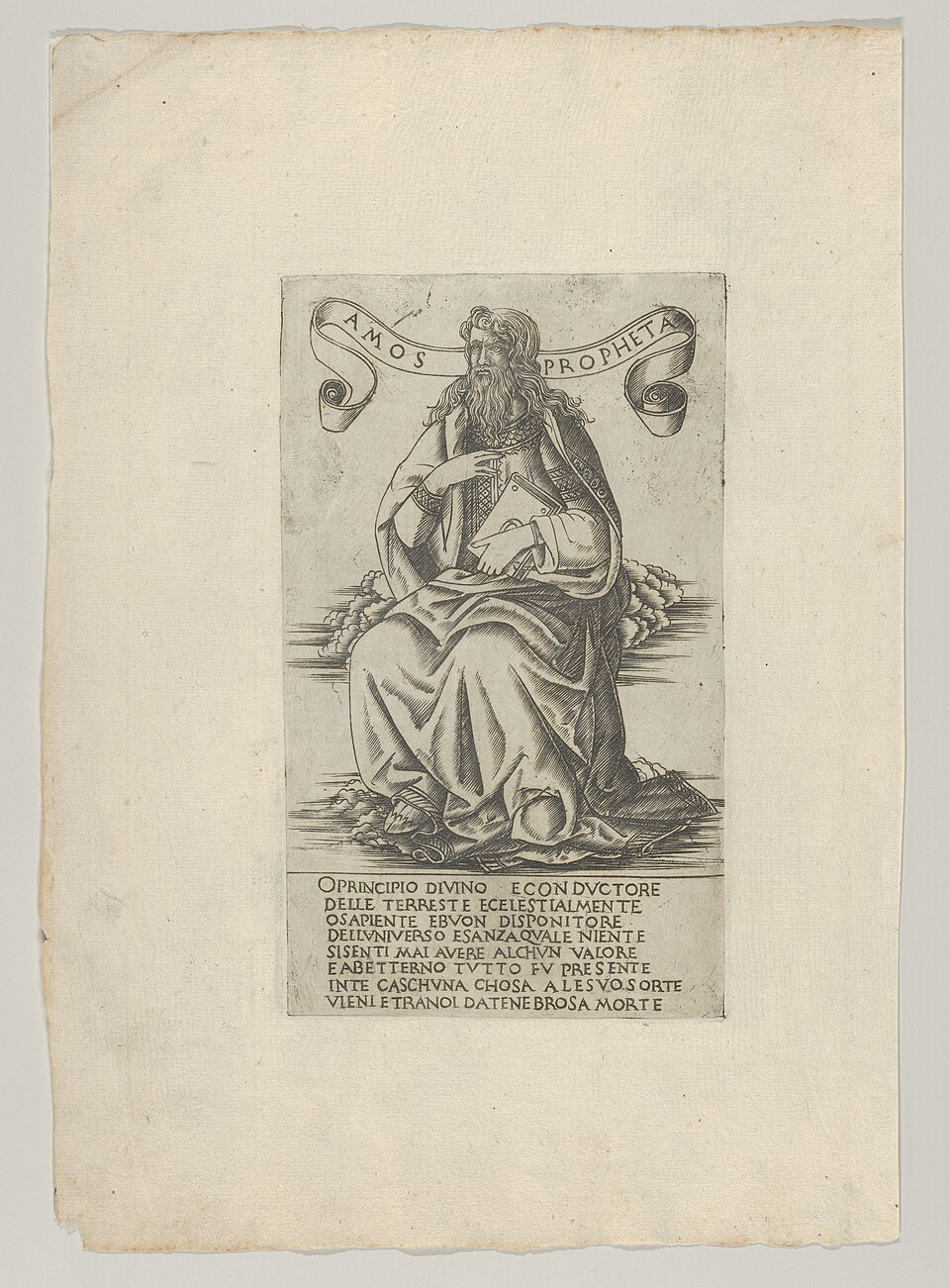
A shepherd from Tekoa thunders against a prosperous, unjust nation.
Twenty-one verses, the shortest book in the Old Testament, against Edom's betrayal.
The reluctant prophet, the great fish, and Nineveh's astonishing repentance.
Names the town of the coming Ruler (5:2), and asks what the LORD truly requires (6:8).
Nineveh's mercy in Jonah runs out: a century later, judgment falls.
A prophet wrestles God over Babylon's rise, and learns to live by faith (2:4).
The Day of the LORD is near and hastening greatly, preached under good king Josiah.
The returned exiles are told: finish the house before you finish your own.
Eight night-visions, a King on a donkey (9:9), and the One they have pierced (12:10).
A cooled, cynical worship confronted: and a messenger promised before the Day.
Studies Built on the Twelve
doors this shelf opens
Keep Studying
By subject
The return6 pages
The divided kingdom20 pages
On this page
Studies17
Places1