
Genesis 11 · Babel · Featured Study
The Tower of Babel
On the plain of Shinar, humanity unites to build a city and a tower “to make us a name,” the same self-exalting renown the Nephilim sought (6:4). God confuses their language and scatters them across the earth. The scattering of tongues at Babel is answered and reversed at Pentecost (Acts 2).
Summary
This page traces the tower to Nimrod, named a chapter earlier as its builder, then lays Babel's scattering directly against Pentecost's gathering in a four-row contrast. Genesis 10's Table of Nations sets the wider stage the scattering happens inside.
- Genesis 10:8-10 identifies Nimrod as the tower's builder, a fact chapter 11 itself never states
- A four-row table sets Babel's confusion and scattering directly against Pentecost's understanding and gathering
- The Table of Nations in Genesis 10 is shown as the frame the scattering happens inside, seventy nations still counted as one
- Bruegel's painting is presented as a monument caught mid-build, never finished
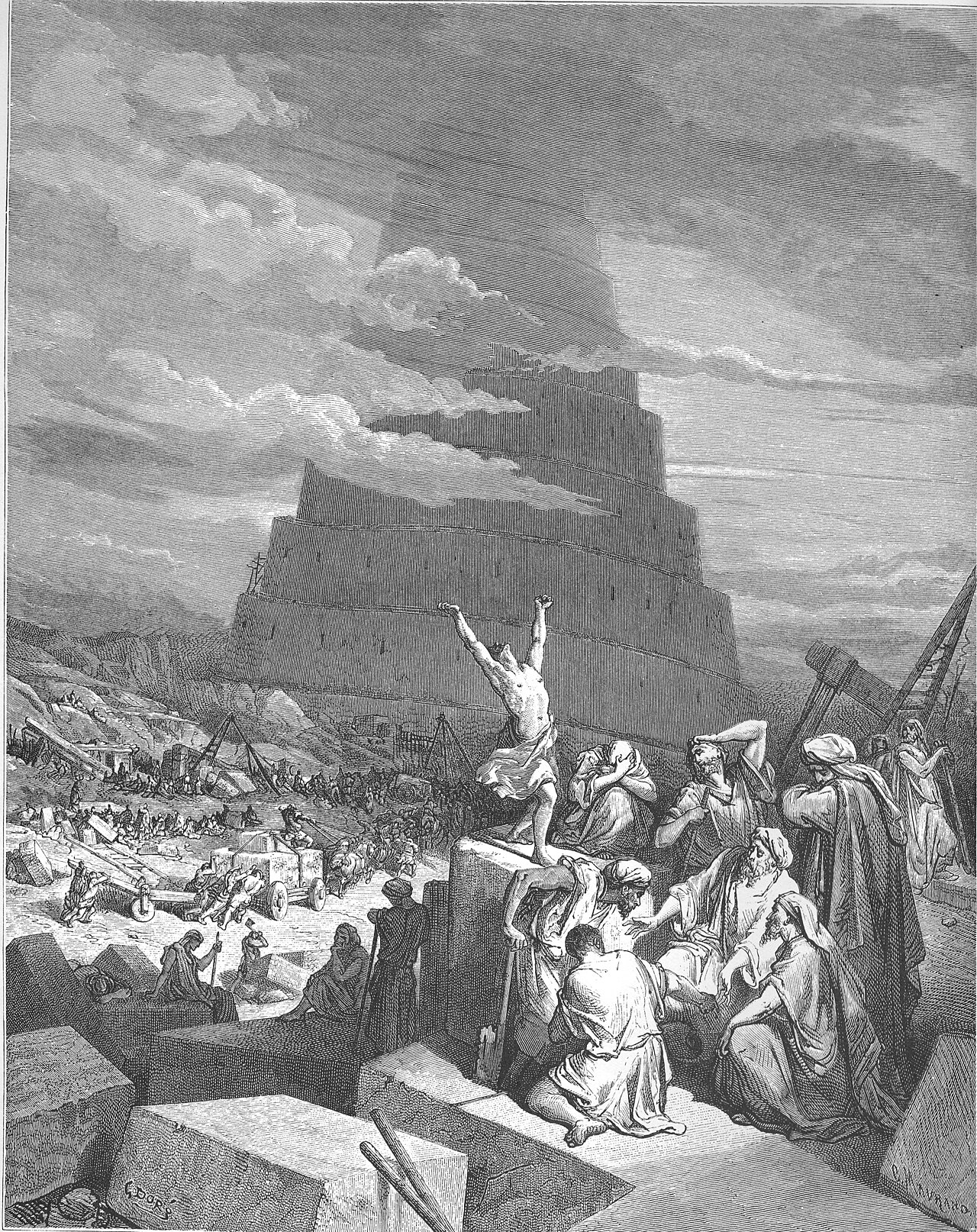
The Tower, Painted
Bruegel's Babel : the ziggurat still unfinished

Bruegel paints the tower mid-build, its lower storeys already carved into a ziggurat's ring-on-ring rise, cranes and scaffolding still climbing, the topmost arches unfinished and out of true. It is a monument still under construction when God comes down to look at it (11:5), a project that never gets to stand finished.
Nimrod, Before the Story Starts
Genesis 10:8–10 : the builder Babel never names
Chapter 11 never names who built the tower. Chapter 10 already has: Nimrod, a grandson of Ham through Cush, introduced as a mighty one in the earth and a mighty hunter, and the same verse names the beginning of his kingdom as Babel, in the very plain of Shinar where chapter 11 opens. Genesis 10 is written before Babel's story, but it is the reason a reader already knows whose ambition the tower answers to.
Babel Reversed at Pentecost
the great inclusio of the tongues
Babel : Genesis 11
Pentecost : Acts 2
One tongue, turned to rebellion
Many tongues, turned to praise
“Let us make us a name” (11:4)
The wonderful works of God proclaimed (Acts 2:11)
A tower reaching up to heaven
The Spirit poured down from heaven
Confusion and scattering
Understanding and gathering : every nation hears
The Table of Nations
Genesis 10 : the seventy nations
Genesis 10 charts the descent of all peoples from the three sons of Noah, Shem, Ham, and Japheth, seventy nations spreading over the earth. Babel (ch. 11) explains how they were scattered. The whole scattering sets the stage for one man, Abraham, through whom “all the families of the earth” will be blessed (12:3).
The place-name itself carries the point: Babel plays on the Hebrew word for confusion, and the chapter says outright that this is the reason the name stuck (11:9), a scattered humanity, still counted as one Table of Nations, now speaking in each other's direction instead of one voice raised against heaven.
Keep studying
Read it1
Doctrines1
Go further1