
Subject
Salvation
Saved from what, by whom, and for what, gathered into one word.
Part of What God has done
Also called: saved, born again, eternal life, deliverance, yeshua, how to be saved
This subject covers being saved: from what, by whom, and for what. The price the rescue cost belongs to Redemption. The favour that gives it without being earned belongs to Grace.
What Salvation covers, and where it stops
This subject covers being saved: from what, by whom, and for what. The price the rescue cost belongs to Redemption. The favour that gives it without being earned belongs to Grace.
On this page, 8 sections
The one drawing
Across the canon
Old Testament
New Testament
- Matthew1
- Luke1
- John3
- Acts3
- Romans4
- 1 Corinthians1
- 2 Corinthians1
- Galatians1
- Ephesians1
- Titus1
- Hebrews1
- 1 Peter1
- 1 John1
- Revelation1
The other 43 books of the canon carry none.
12 passages
Where Scripture speaks
The passages this subject stands on, in canon order.
And I will put enmity between you and the woman, and between your seed and her seed. He will crush your head, and you will strike his heel.”Abram believed the LORD, and it was credited to him as righteousness.The blood on the houses where you are staying will distinguish them; when I see the blood, I will pass over you. No plague will fall on you to destroy you when I strike the land of Egypt.But Moses told the people, “Do not be afraid. Stand firm and you will see the LORD’s salvation, which He will accomplish for you today; for the Egyptians you see today, you will never see again.For the life of the flesh is in the blood, and I have given it to you to make atonement for your souls upon the altar; for it is the blood that makes atonement for the soul.Restore to me the joy of Your salvation, and sustain me with a willing spirit.Surely God is my salvation; I will trust and not be afraid. For the LORD GOD is my strength and my song, and He also has become my salvation.”Turn to Me and be saved, all the ends of the earth; for I am God, and there is no other.We all like sheep have gone astray, each one has turned to his own way; and the LORD has laid upon Him the iniquity of us all.“Come, all you who are thirsty, come to the waters; and you without money, come, buy, and eat! Come, buy wine and milk without money and without cost!“But this is the covenant I will make with the house of Israel after those days, declares the LORD. I will put My law in their minds and inscribe it on their hearts. And I will be their God, and they will be My people.I will give you a new heart and put a new spirit within you; I will remove your heart of stone and give you a heart of flesh.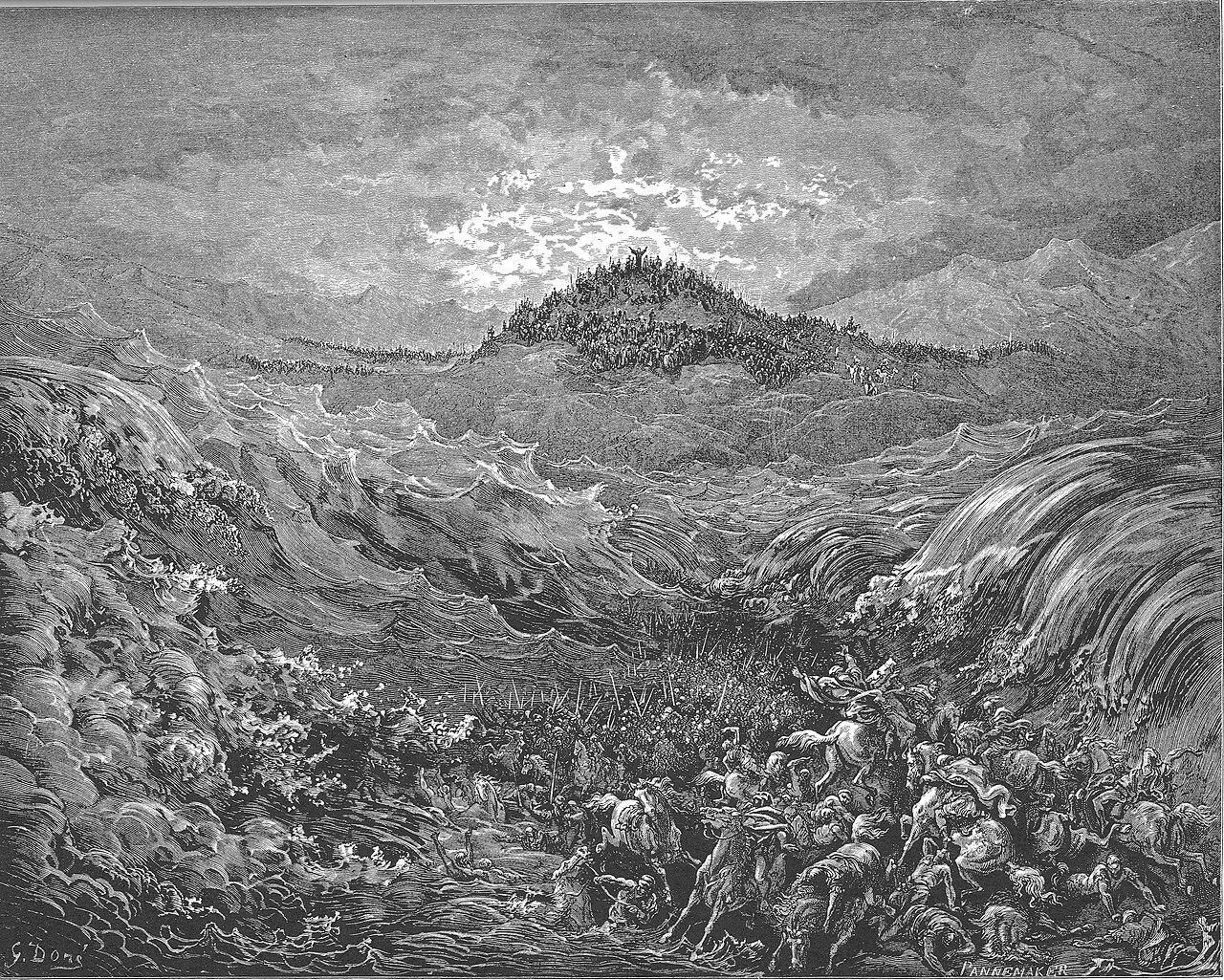
Salvation in Scripture, in full
Salvation in Scripture is not a single transaction but a single story told from Eden to Revelation: God rescues a people who cannot rescue themselves, and He does it on His own initiative, at His own cost. The seed is planted at the very moment sin enters — the promise of a deliverer who will crush the serpent (Gen 3:15) — and from there the Old Testament builds the vocabulary and the pattern before the person arrives.
Israel's founding memory is a salvation: not a philosophy but an event, blood on a doorframe and a sea standing back (Exod 12:13; 14:13), read forward at every Passover as the template for every later rescue.
The sacrificial system teaches the grammar of substitution — life for life, blood for the soul (Lev 17:11) — while the prophets keep pressing the promise inward: an external law cannot save a people whose problem is a heart, so God promises to write it on the heart Himself, to give a new heart, a new spirit (Jer 31:33; Ezek 36:26).
Isaiah names the theme outright — his own name means 'Yahweh saves' — and his book supplies both the universal invitation ('Look unto me, and be ye saved, all the ends of the earth,' Isa 45:22) and the mechanism behind it, a Servant wounded for others' iniquity (Isa 53:6). Joel's promise that 'whosoever shall call on the name of Jehovah shall be delivered'
(Joel 2:32) becomes the single verse the New Testament leans on hardest to open the door to 'whosoever' — quoted at Pentecost and again in Romans.
The Gospels present salvation as arrival, not just teaching: the child is named Jesus specifically 'for it is he that shall save his people from their sins' (Matt 1:21), and he defines his own mission as seeking and saving the lost (Luke 19:10). John frames him as the Lamb who removes sin at its root (John 1:29) and as the only way to the Father (John 14:6) — narrowing the path even as John 3:16 states its scope as wide as 'the world.'
Acts then narrates the promise going public: Peter opens Pentecost by quoting Joel's 'whosoever' (Acts 2:21), the apostles declare there is salvation in no other name (Acts 4:12), and the terse answer given a jailer — believe on the Lord Jesus — is about as short as the canon's formulas for how a person enters in ever get (Acts 16:31).
Paul is where the theme gets its architecture. Romans lays the diagnosis and the remedy side by side: all have sinned (Rom 3:23), yet God commends his love in that Christ died for the ungodly while they were still enemies (Rom 5:8), so that the wage sin earns is death but what God gives is a gift, life (Rom 6:23) — received, Paul says, by a confession and a belief that reach the heart (Rom 10:9).
The earliest creed Paul hands on states it as received tradition, not innovation: Christ died for our sins according to the Scriptures (1 Cor 15:3). Paul's sharpest formula for the mechanism is the great exchange — the sinless one made sin, so that sinners might become righteousness in him (2 Cor 5:21) — paired with his sharpest polemic: a person is justified by faith in Christ, not by the works of the law (Gal 2:16), grace through faith, not of works, so no one can boast (Eph 2:8).
The prison and pastoral letters keep both halves in view — mercy alone saves (Titus 3:5), yet the same Paul tells a church to work out its own salvation, because it is God who works in them to will and to do (Phil 2:12-13) — a tension the New Testament never resolves by collapsing one side into the other.
Hebrews calls it 'so great a salvation' precisely because neglecting it, not merely rejecting it, is the danger the book warns against (Heb 2:3).
Peter locates salvation's full receipt not fully in hand yet but as 'the end of your faith,' something being obtained even as it is possessed (1 Pet 1:9), and John writes so that believers 'may know' they have eternal life rather than merely hope for it (1 John 5:13) — assurance offered as a promise to rest in, held here alongside the warning passages rather than against them: this site's tradition is that the security is real and kept by Christ, so a believer in the Father's hand is held there, and assurance is grounded in Christ's finished work without ever licensing presumption.
The reading that takes the warning passages as conditions a believer can fail is held by many in the church, and it stands here as a named position. James supplies the counterweight the canon needs: a faith that produces no works is a corpse, not a rescue (Jas 2:17) — not a different gospel from Paul's but the same gospel insisting that genuine faith is never inert. The whole story ends where it began, with rescued people naming the source out loud: 'Salvation unto our God' (Rev 7:10).
Honest tensions remain live and are not flattened here — assurance versus perseverance, Paul versus James on faith and works, the timing of regeneration versus response — because Scripture itself holds them together rather than resolving them into a single formula.
5 voices
What teachers have said
“All that shall be saved love the salvation not only as a salvation from hell, but a salvation from sin.”
Matthew Henry · Commentary on the Whole Bible, 1710
“If … we have any sense of our own salvation, let us, while we still have time, abandon evil ways, concern ourselves with virtue and despise vainglory.”
John Chrysostom · Homilies on Genesis 22:21
Written before 407.
“Acknowledge the Lord Jesus Christ as the only Savior. Believe in thy heart that he who died for thy offenses has been raised for thy justification; and depend solely on him for that justification, and thou shalt be saved.”
Adam Clarke · Commentary on the Bible
Written before 1832.
“Jesus is a Hebrew word, meaning Saviour. He points to the etymology of the name, saying, For He shall save His people from their sins.”
Jerome · Catena Aurea by Aquinas
Written before 420.
“This present time, therefore, in which men are called and saved by the Lord, is properly understood to be denoted by ‘the acceptable year of the Lord;’ and there follows on this ‘the day of retribution,’ that is, the judgment.”
Irenaeus · Against Heresies Book 2.22.2
Written before 202.
Where it leads
Everything the site holds on salvation
On this page
Studies13
The words underneath
Each card is one Hebrew or Greek word behind salvation. It gives the sense, the count across the canon, and the number in Strong's 1890 concordance.
natsal: to rescue
Hebrew · H5337Strong's entry: to snatch away, whether in a good or a bad sense
salvation as God's active deliverance from danger
212 times in the Old Testament · natsal, in full →
yasha: to save
Hebrew · H3467Strong's entry: properly, to be open, wide or free, i.e. (by implication) to be safe; causatively, to free or succor
the Hebrew root behind salvation, Savior, and Joshua's name
206 times in the Old Testament · yasha, in full →
23 verses
The complete list
This subject carries 35 curated verses. 12 of them are quoted above, and the other 23 stand here, book by book. Open a book to read the references with a clause of each verse.
Joel1
John3
- John 1:29The next day John saw Jesus coming toward him and said, “Look, the Lamb of God, who takes away...
- John 3:16For God so loved the world that He gave His one and only Son, that everyone who believes in Him...
- John 14:6Jesus answered, “I am the way and the truth and the life. No one comes to the Father except...
Acts3
Romans4
- Romans 3:23for all have sinned and fall short of the glory of God,
- Romans 5:8But God proves His love for us in this: While we were still sinners, Christ died for us.
- Romans 6:23For the wages of sin is death, but the gift of God is eternal life in Christ Jesus our Lord.
- Romans 10:9that if you confess with your mouth, “Jesus is Lord,” and believe in your heart that God raised...
1 Corinthians1
2 Corinthians1
What God has done
The subjects beside it
On this page