
Place
Moab
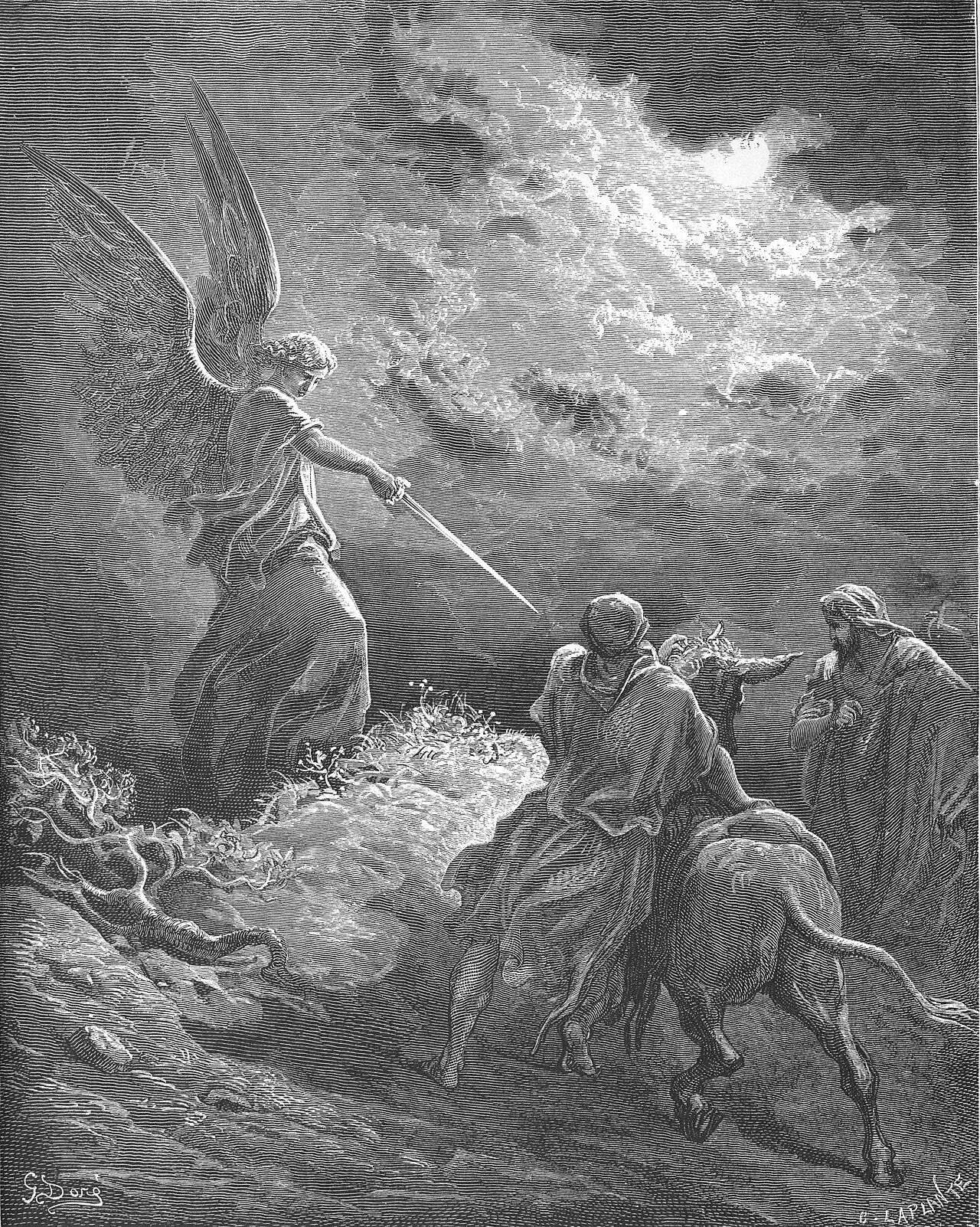
Gustave Doré, La Sainte Bible (Tours: Alfred Mame et fils, 1866). Public domain.
Summary
The high country east of the Dead Sea, home of Lot's descendants, where Balak hired Balaam, where Ruth was born, and where Moses looked on the land and died.
- Moab was the high tableland east of the Dead Sea, born of Lot's line, and Israel camped across from Jericho in its plains.
- Balak king of Moab hired Balaam to curse Israel, and the curses turned into blessings, ending in the star out of Jacob.
- No Moabite could enter the assembly of the LORD, yet Ruth the Moabitess is named in the line of David and of Jesus.
- Mesha king of Moab rebelled against Israel after Ahab's death, and the campaign against him is told in 2 Kings 3.
- The prophets pronounce a heavy judgment on Moab, and Jeremiah closes it with a promise to restore Moab in the latter days.
On this page
In Scripture
- Verses
- 151
- Books
- 23
Where it is
- Region
- Transjordan
- Kind of place
- Region
Why Moab matters
Balak hires Balaam, and the curses become blessings
Numbers 22 to 24, in the order it happens
Read Numbers 22 to 24, in the order it happens
- Balak of Moab sends for BalaamNumbers 22:6So please come now and put a curse on this people, because they are too mighty for me. Perhaps I may be able to defeat them and drive them out of the land; for I know that those you bless are blessed, and those you curse are cursed.
- God refuses the curseNumbers 22:12But God said to Balaam, “Do not go with them. You are not to curse this people, for they are blessed.”
- The donkey speaksNumbers 22:28Then the LORD opened the donkey’s mouth, and she said to Balaam, “What have I done to you that you have beaten me these three times?”
- The angel with the drawn swordNumbers 22:31Then the LORD opened Balaam’s eyes, and he saw the angel of the LORD standing in the road with a drawn sword in his hand. And Balaam bowed low and fell facedown.
- The first oracle: God has not cursedNumbers 23:8How can I curse what God has not cursed? How can I denounce what the LORD has not denounced?
- The second oracle: God does not change His mindNumbers 23:19God is not a man, that He should lie, or a son of man, that He should change His mind. Does He speak and not act? Does He promise and not fulfill?
- The third oracle: the beauty of the tents of JacobNumbers 24:5How lovely are your tents, O Jacob, your dwellings, O Israel!
- The fourth oracle: a star out of JacobNumbers 24:17I see him, but not now; I behold him, but not near. A star will come forth from Jacob, and a scepter will arise from Israel. He will crush the skulls of Moab and strike down all the sons of Sheth.
The fourth oracle looks past Balaam's own day. "A star will come forth from Jacob, and a scepter will arise from Israel" has been read by many readers as a promise of the Messiah, alongside its plainer sense of a king rising in Israel.
Balaam's Donkey: the full studyWhat happened here, in order
in the order the canon tells it
- Moab is bornGenesis 19:37The older daughter gave birth to a son and named him Moab. He is the father of the Moabites of today.
- Israel joins Moab in worship at Baal-peorNumbers 25:3So Israel joined in worshiping Baal of Peor, and the anger of the LORD burned against them.
- The LORD tells Moses not to harass MoabDeuteronomy 2:9Then the LORD said to me, “Do not harass the Moabites or provoke them to war, for I will not give you any of their land, because I have given Ar to the descendants of Lot as their possession.”
- No Moabite may enter the assembly of the LORDDeuteronomy 23:3No Ammonite or Moabite or any of their descendants may enter the assembly of the LORD, even to the tenth generation.
- Moses is buried in the land of MoabDeuteronomy 34:6And He buried him in a valley in the land of Moab facing Beth-peor, and no one to this day knows the location of his grave.
- Eglon king of Moab rules over IsraelJudges 3:12Once again the Israelites did evil in the sight of the LORD. So He gave Eglon king of Moab power over Israel, because they had done evil in the sight of the LORD.
- Famine sends a family from Bethlehem to MoabRuth 1:1In the days when the judges ruled, there was a famine in the land. And a certain man from Bethlehem in Judah, with his wife and two sons, went to reside in the land of Moab.
- Ruth's confession to NaomiRuth 1:16But Ruth replied: “Do not urge me to leave you or to turn from following you. For wherever you go, I will go, and wherever you live, I will live; your people will be my people, and your God will be my God.
- Obed is born, grandfather of DavidRuth 4:17The neighbor women said, “A son has been born to Naomi,” and they named him Obed. He became the father of Jesse, the father of David.
- David entrusts his parents to the king of Moab1 Samuel 22:3From there David went to Mizpeh of Moab, where he said to the king of Moab, “Please let my father and mother stay with you until I learn what God will do for me.”
- Mesha king of Moab rebels2 Kings 3:5But after the death of Ahab, the king of Moab rebelled against the king of Israel.
- Mesha offers his firstborn son on the wall2 Kings 3:27So he took his firstborn son, who was to succeed him, and offered him as a burnt offering on the city wall. And there was great fury against the Israelites, so they withdrew and returned to their own land.
- A throne of David set against Moab's fallIsaiah 16:5in loving devotion a throne will be established in the tent of David. A judge seeking justice and hastening righteousness will sit on it in faithfulness.
- Jeremiah promises Moab's restorationJeremiah 48:47Yet in the latter days I will restore Moab from captivity,” declares the LORD. Here ends the judgment on Moab.
- Amos pronounces judgment on MoabAmos 2:1This is what the LORD says: “For three transgressions of Moab, even four, I will not revoke My judgment, because he burned to lime the bones of Edom’s king.
- Zephaniah likens Moab to SodomZephaniah 2:9Therefore, as surely as I live,” declares the LORD of Hosts, the God of Israel, “surely Moab will be like Sodom and the Ammonites like Gomorrah—a place of weeds and salt pits, a perpetual wasteland. The remnant of My people will plunder them; the remainder of My nation will dispossess them.”
- Ruth named in the genealogy of JesusMatthew 1:5Salmon was the father of Boaz by Rahab, Boaz the father of Obed by Ruth, Obed the father of Jesse,
Moab in Scripture
151 verses name it, in 23 books
Open a book to read its mentions here. Text: Berean Standard Bible.
Old TestamentNew Testamentsegment width = share of mentions
Old Testament23 books · 151 mentions
Genesis2 mentions
Exodus1 mention
Numbers28 mentions
- Numbers 21:11They journeyed from Oboth and camped at Iye-abarim in the wilderness opposite Moab to the east.
- Numbers 21:15even the slopes of the wadis that extend to the site of Ar and lie along the border of Moab.”
- Numbers 21:20and from Bamoth to the valley in Moab where the top of Pisgah overlooks the wasteland.
- Numbers 21:26Heshbon was the city of Sihon king of the Amorites, who had fought against the former king of Moab and taken all his land as far as the Arnon.
- Numbers 21:28For a fire went out from Heshbon, a blaze from the city of Sihon. It consumed Ar of Moab, the rulers of Arnon’s heights.
- Numbers 21:29Woe to you, O Moab! You are destroyed, O people of Chemosh! He gave up his sons as refugees, and his daughters into captivity to Sihon king of the Amorites.
- Numbers 22:1Then the Israelites traveled on and camped in the plains of Moab near the Jordan, across from Jericho.
- Numbers 22:3and Moab was terrified of the people because they were numerous. Indeed, Moab dreaded the Israelites.
20 further mentions in Numbers, read them in the book.
Deuteronomy9 mentions
- Deuteronomy 1:5On the east side of the Jordan in the land of Moab, Moses began to explain this law, saying:
- Deuteronomy 2:8So we passed by our brothers, the descendants of Esau, who live in Seir. We turned away from the Arabah road, which comes up from Elath and Ezion-geber, and traveled along the road of the Wilderness of Moab.
- Deuteronomy 2:18“Today you are going to cross the border of Moab at Ar.
- Deuteronomy 29:1These are the words of the covenant that the LORD commanded Moses to make with the Israelites in the land of Moab, in addition to the covenant He had made with them at Horeb.
- Deuteronomy 32:49“Go up into the Abarim Range to Mount Nebo, in the land of Moab across from Jericho, and view the land of Canaan, which I am giving to the Israelites as their own possession.
- Deuteronomy 34:1Then Moses went up from the plains of Moab to Mount Nebo, to the top of Pisgah, which faces Jericho. And the LORD showed him the whole land—from Gilead as far as Dan,
- Deuteronomy 34:5So Moses the servant of the LORD died there in the land of Moab, as the LORD had said.
- Deuteronomy 34:6And He buried him in a valley in the land of Moab facing Beth-peor, and no one to this day knows the location of his grave.
1 further mention in Deuteronomy, read them in the book.
Joshua2 mentions
Judges11 mentions
- Judges 3:12Once again the Israelites did evil in the sight of the LORD. So He gave Eglon king of Moab power over Israel, because they had done evil in the sight of the LORD.
- Judges 3:14The Israelites served Eglon king of Moab eighteen years.
- Judges 3:15And again they cried out to the LORD, and He raised up Ehud son of Gera, a left-handed Benjamite, as their deliverer. So they sent him with tribute to Eglon king of Moab.
- Judges 3:17and brought the tribute to Eglon king of Moab, who was an obese man.
- Judges 3:28“Follow me,” he told them, “for the LORD has delivered your enemies the Moabites into your hand.” So they followed him down and seized the fords of the Jordan leading to Moab, and did not allow anyone to cross over.
- Judges 3:30So Moab was subdued under the hand of Israel that day, and the land had rest for eighty years.
- Judges 10:6And again the Israelites did evil in the sight of the LORD. They served the Baals, the Ashtoreths, the gods of Aram, Sidon, and Moab, and the gods of the Ammonites and Philistines. Thus they forsook the LORD and did not serve Him.
- Judges 11:15to tell him, “This is what Jephthah says: Israel did not take away the land of Moab or of the Ammonites.
3 further mentions in Judges, read them in the book.
Ruth7 mentions
- Ruth 1:1In the days when the judges ruled, there was a famine in the land. And a certain man from Bethlehem in Judah, with his wife and two sons, went to reside in the land of Moab.
- Ruth 1:2The man’s name was Elimelech, his wife’s name was Naomi, and the names of his two sons were Mahlon and Chilion. They were Ephrathites from Bethlehem in Judah, and they entered the land of Moab and settled there.
- Ruth 1:4who took Moabite women as their wives, one named Orpah and the other named Ruth. And after they had lived in Moab about ten years,
- Ruth 1:6When Naomi heard in Moab that the LORD had attended to His people by providing them with food, she and her daughters-in-law prepared to leave the land of Moab.
- Ruth 1:22So Naomi returned from the land of Moab with her daughter-in-law Ruth the Moabitess. And they arrived in Bethlehem at the beginning of the barley harvest.
- Ruth 2:6The foreman answered, “She is the Moabitess who returned with Naomi from the land of Moab.
- Ruth 4:3And he said to the kinsman-redeemer, “Naomi, who has returned from the land of Moab, is selling the piece of land that belonged to our brother Elimelech.
1 Samuel3 mentions
- 1 Samuel 12:9But they forgot the LORD their God, and He sold them into the hand of Sisera the commander of the army of Hazor, and into the hands of the Philistines and the king of Moab, who fought against them.
- 1 Samuel 22:3From there David went to Mizpeh of Moab, where he said to the king of Moab, “Please let my father and mother stay with you until I learn what God will do for me.”
- 1 Samuel 22:4So he left them in the care of the king of Moab, and they stayed with him the whole time David was in the stronghold.
2 Samuel2 mentions
- 2 Samuel 8:12from Edom and Moab, from the Ammonites and Philistines and Amalekites, and from the spoil of Hadadezer son of Rehob, king of Zobah.
- 2 Samuel 23:20And Benaiah son of Jehoiada was a man of valor from Kabzeel, a man of many exploits. He struck down two champions of Moab, and on a snowy day he went down into a pit and killed a lion.
1 Kings2 mentions
- 1 Kings 11:1King Solomon, however, loved many foreign women along with the daughter of Pharaoh—women of Moab, Ammon, Edom, and Sidon, as well as Hittite women.
- 1 Kings 11:7At that time on a hill east of Jerusalem, Solomon built a high place for Chemosh the abomination of Moab and for Molech the abomination of the Ammonites.
2 Kings8 mentions
- 2 Kings 1:1After the death of Ahab, Moab rebelled against Israel.
- 2 Kings 3:4Now Mesha king of Moab was a sheep breeder, and he would render to the king of Israel a hundred thousand lambs and the wool of a hundred thousand rams.
- 2 Kings 3:5But after the death of Ahab, the king of Moab rebelled against the king of Israel.
- 2 Kings 3:7And he sent a message to Jehoshaphat king of Judah: “The king of Moab has rebelled against me. Will you go with me to fight against Moab?” “I will go,” replied Jehoshaphat. “I am like you, my people are your people, and my horses are your horses.”
- 2 Kings 3:10“Alas,” said the king of Israel, “for the LORD has summoned these three kings to deliver them into the hand of Moab!”
- 2 Kings 3:13Elisha, however, said to the king of Israel, “What have we to do with each other? Go to the prophets of your father and of your mother!” “No,” replied the king of Israel, “for it is the LORD who has summoned these three kings to deliver them into the hand of Moab.”
- 2 Kings 3:23“This is blood!” they exclaimed. “The kings have clashed swords and slaughtered one another. Now to the plunder, Moab!”
- 2 Kings 3:26When the king of Moab saw that the battle was too fierce for him, he took with him seven hundred swordsmen to break through to the king of Edom, but they could not prevail.
1 Chronicles5 mentions
- 1 Chronicles 1:46When Husham died, Hadad son of Bedad, who defeated Midian in the country of Moab, reigned in his place. And the name of his city was Avith.
- 1 Chronicles 4:22Er the father of Lecah, Laadah the father of Mareshah and the clans of the linen workers at Beth-ashbea, Jokim, the men of Cozeba, and Joash and Saraph, who ruled in Moab and Jashubi-lehem. (These names are from ancient records.)
- 1 Chronicles 8:8Shaharaim had sons in the country of Moab after he had divorced his wives Hushim and Baara.
- 1 Chronicles 11:22And Benaiah son of Jehoiada was a man of valor from Kabzeel, a man of many exploits. He struck down two champions of Moab, and on a snowy day he went down into a pit and killed a lion.
- 1 Chronicles 18:11and King David dedicated these to the LORD, along with the silver and gold he had carried off from all these nations—from Edom and Moab, and from the Ammonites, Philistines, and Amalekites.
2 Chronicles2 mentions
- 2 Chronicles 20:10And now, here are the men of Ammon, Moab, and Mount Seir, whom You did not let Israel invade when they came out of the land of Egypt; but Israel turned away from them and did not destroy them.
- 2 Chronicles 20:22The moment they began their shouts and praises, the LORD set ambushes against the men of Ammon, Moab, and Mount Seir who had come against Judah, and they were defeated.
Ezra3 mentions
Nehemiah4 mentions
- Nehemiah 3:11Malchijah son of Harim and Hasshub son of Pahath-moab repaired another section, as well as the Tower of the Ovens.
- Nehemiah 7:11the descendants of Pahath-moab (through the line of Jeshua and Joab), 2,818;
- Nehemiah 10:14And the leaders of the people: Parosh, Pahath-moab, Elam, Zattu, Bani,
- Nehemiah 13:23In those days I also saw Jews who had married women from Ashdod, Ammon, and Moab.
Psalms3 mentions
Isaiah16 mentions
- Isaiah 11:14They will swoop down on the slopes of the Philistines to the west; together they will plunder the sons of the east. They will lay their hands on Edom and Moab, and the Ammonites will be subject to them.
- Isaiah 15:1This is the burden against Moab: Ar in Moab is ruined, destroyed in a night! Kir in Moab is devastated, destroyed in a night!
- Isaiah 15:2Dibon goes up to its temple to weep at its high places. Moab wails over Nebo, as well as over Medeba. Every head is shaved, every beard is cut off.
- Isaiah 15:4Heshbon and Elealeh cry out; their voices are heard as far as Jahaz. Therefore the soldiers of Moab cry out; their souls tremble within.
- Isaiah 15:5My heart cries out over Moab; her fugitives flee as far as Zoar, as far as Eglath-shelishiyah. With weeping they ascend the slope of Luhith; they lament their destruction on the road to Horonaim.
- Isaiah 15:8For their outcry echoes to the border of Moab. Their wailing reaches Eglaim; it is heard in Beer-elim.
- Isaiah 15:9The waters of Dimon are full of blood, but I will bring more upon Dimon—a lion upon the fugitives of Moab and upon the remnant of the land.
- Isaiah 16:2Like fluttering birds pushed out of the nest, so are the daughters of Moab at the fords of the Arnon:
8 further mentions in Isaiah, read them in the book.
Jeremiah33 mentions
- Jeremiah 9:26Egypt, Judah, Edom, Ammon, Moab, and all the inhabitants of the desert who clip the hair of their temples. For all these nations are uncircumcised, and the whole house of Israel is uncircumcised in heart.”
- Jeremiah 25:21Edom, Moab, and the Ammonites;
- Jeremiah 27:3Send word to the kings of Edom, Moab, Ammon, Tyre, and Sidon through the envoys who have come to Jerusalem to Zedekiah king of Judah.
- Jeremiah 40:11When all the Jews in Moab, Ammon, Edom, and all the other lands heard that the king of Babylon had left a remnant in Judah and had appointed Gedaliah son of Ahikam, the son of Shaphan, over them,
- Jeremiah 48:1Concerning Moab, this is what the LORD of Hosts, the God of Israel, says: “Woe to Nebo, for it will be devastated. Kiriathaim will be captured and disgraced; the fortress will be shattered and dismantled.
- Jeremiah 48:2There is no longer praise for Moab; in Heshbon they devise evil against her: ‘Come, let us cut her off from nationhood.’ You too, O people of Madmen, will be silenced; the sword will pursue you.
- Jeremiah 48:4Moab will be shattered; her little ones will cry out.
- Jeremiah 48:9Put salt on Moab, for she will be laid waste; her cities will become desolate, with no one to dwell in them.
25 further mentions in Jeremiah, read them in the book.
Ezekiel3 mentions
- Ezekiel 25:8This is what the Lord GOD says: ‘Because Moab and Seir said, “Look, the house of Judah is like all the other nations,”
- Ezekiel 25:9therefore I will indeed expose the flank of Moab beginning with its frontier cities—Beth-jeshimoth, Baal-meon, and Kiriathaim—the glory of the land.
- Ezekiel 25:11So I will execute judgments on Moab, and they will know that I am the LORD.’
Daniel1 mention
Amos3 mentions
- Amos 2:1This is what the LORD says: “For three transgressions of Moab, even four, I will not revoke My judgment, because he burned to lime the bones of Edom’s king.
- Amos 2:2So I will send fire against Moab to consume the citadels of Kerioth. Moab will die in tumult, amid war cries and the sound of the ram’s horn.
- Amos 2:3I will cut off the ruler of Moab and kill all the officials with him,” says the LORD.
Micah1 mention
Zephaniah2 mentions
- Zephaniah 2:8“I have heard the reproach of Moab and the insults of the Ammonites, who have taunted My people and threatened their borders.
- Zephaniah 2:9Therefore, as surely as I live,” declares the LORD of Hosts, the God of Israel, “surely Moab will be like Sodom and the Ammonites like Gomorrah—a place of weeds and salt pits, a perpetual wasteland. The remnant of My people will plunder them; the remainder of My nation will dispossess them.”
Common questions
Why did Balak hire Balaam, and why did the curses become blessings?
Balak was afraid of Israel's numbers and hired Balaam to curse them for a fee. God met Balaam before he went and told him Israel was already blessed, and every time Balaam opened his mouth to speak against them a blessing came out instead. The text gives the reason directly: God is not a man, that he should lie, and he does not change his mind about what he has promised.
What is the star out of Jacob in Numbers 24:17, and who has read it as a promise of the Messiah?
Readers differ; the positions are named
Balaam's fourth oracle looks past his own day to a ruler who will rise out of Israel and defeat Moab. Read in its plain historical sense it points to a king such as David. Many readers across church history have also read it as a Messianic promise, one star pointing ahead to another, the star the magi later followed. Both readings stand on the same text, and this page states them without choosing between them.
No Moabite could enter the assembly of the LORD, so how does Ruth the Moabitess end up in the line of David and of Jesus?
Deuteronomy 23:3 bars Moab from the assembly because of what happened at the time of the exodus, hiring Balaam to curse Israel. Ruth is a later, individual Moabite woman who confesses Israel's God as her own and joins herself to his people by her own choice. Scripture does not resolve the tension by argument; it simply tells her story, names her among David's ancestors, and Matthew places her in the genealogy of Jesus.
What happened at the end of the battle in 2 Kings 3, and how is Mesha's act read?
Readers differ; the positions are named
Cornered inside Kir-haraseth, Mesha took his firstborn son, the heir to his throne, and offered him as a burnt offering on the city wall in view of the attacking armies. The text reports that great fury came upon Israel and the coalition withdrew, without explaining whose fury it was or why it caused the retreat. Readers differ on both points, and the text is left exactly where it stands.
In August 1868 the missionary Frederick Klein found a large inscribed stone at Dibon, Mesha's own former capital. It is Mesha's own account of his reign, in his own words, outside the Bible.
Does the judgment on Moab in the prophets leave any hope for Moab?
Isaiah, Jeremiah, Amos and Zephaniah all pronounce heavy judgment on Moab, for pride, for violence, and for turning against Israel. Jeremiah's oracle is the longest of them, and it does not end with the ruin. Its last line promises that the LORD will restore Moab from captivity in the latter days.
Notable art
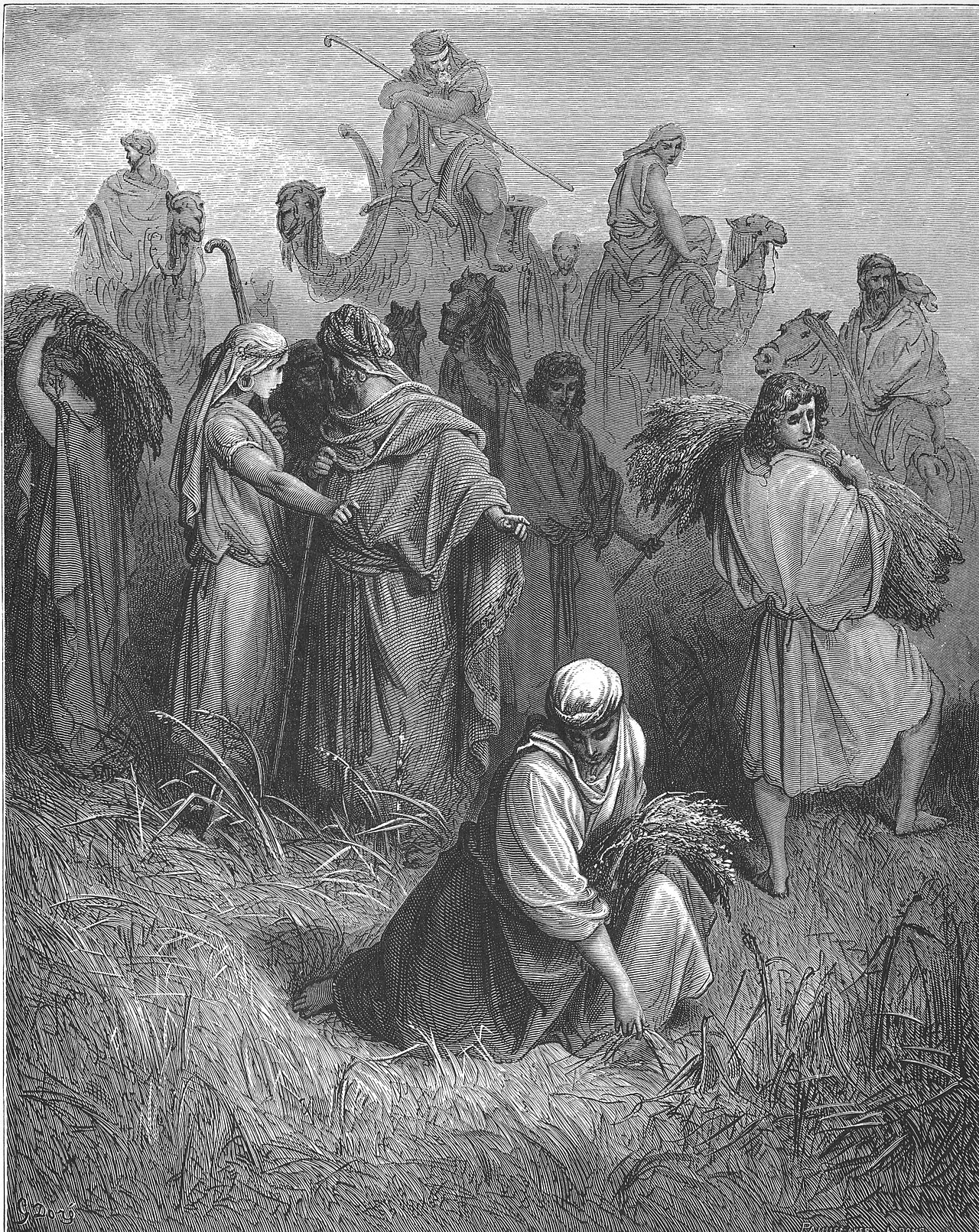
1 verified piece depicting Moab
Sources cited
- Berean Standard BiblePublic domain since 2023. All Scripture quoted on this page, from the site's own verse store.
- Gustave Doré, La Sainte Bible (Tours: Alfred Mame et fils, 1866)The engravings on this page. Public domain.
- The Mesha Stele (the Moabite Stone), about 840 BC, Musée du LouvreNamed on this site's Mount Nebo page as the record of Mesha's own reign outside the Bible; not quoted here, as the wording is not held in this site's own store.
- New World Encyclopedia, "Mesha Stele"Confirms the stele's discovery by the missionary Frederick Klein at Dibon in August 1868. Confirmed by web search, 2026-09-02; the discovery date and finder are widely reported across standard reference works.
Keep studying
On this page
Studies7
Books that name it8
Lives that run through it2
Doorway2
Keep this page