

Numbers 11–20 · 1 Corinthians 10 · Hebrews 3–4 · Featured Study
Today, If Ye Will Hear His Voice
This is Numbers' distinctive contribution to the canon: not merely that God saves (Exodus) or that God legislates (Leviticus), but that God persists with a people who fail Him, generation after generation, without abandoning the promise. And it is the Old Testament passage the New Testament weaponizes most directly as a warning to the church: not ancient history, but a mirror.
Nicolas Poussin, The Israelites Gathering the Manna in the Desert (1637-1639) — Public domain, via Wikimedia Commons
Summary
Four hinge-points of the wilderness cycle are walked in order, from Taberah to Meribah, before the page follows the same failure into the New Testament's own reading of it. Paul's case study in 1 Corinthians 10 and the standing warning of Hebrews 3-4 close the page.
- Four cycle cards trace Taberah, Kadesh-Barnea, Korah's revolt, and Meribah in the order Numbers gives them
- Kadesh-Barnea gets its own section as the hinge, where the sentence and the mercy are both severe
- 1 Corinthians 10 is shown reading Numbers as typoi, a redeemed people's own case study in falling
- Hebrews 3-4 is traced quoting Psalm 95 back to Meribah as a standing warning addressed to the church, not only Israel's history
- Wesley and Henry are named from the roster as public-domain voices who worked through the wilderness narratives book by book
The Cycle
the same failure, four hinge-points, one book
- 1Taberah & the graves of cravingNumbers 11:1–34
The people complain; fire consumes the camp's edge. Then the craving for meat, the quail sent “until it come out at your nostrils”, and a plague named for the graves it fills.
- 2Kadesh-Barnea: the great rebellionNumbers 13–14
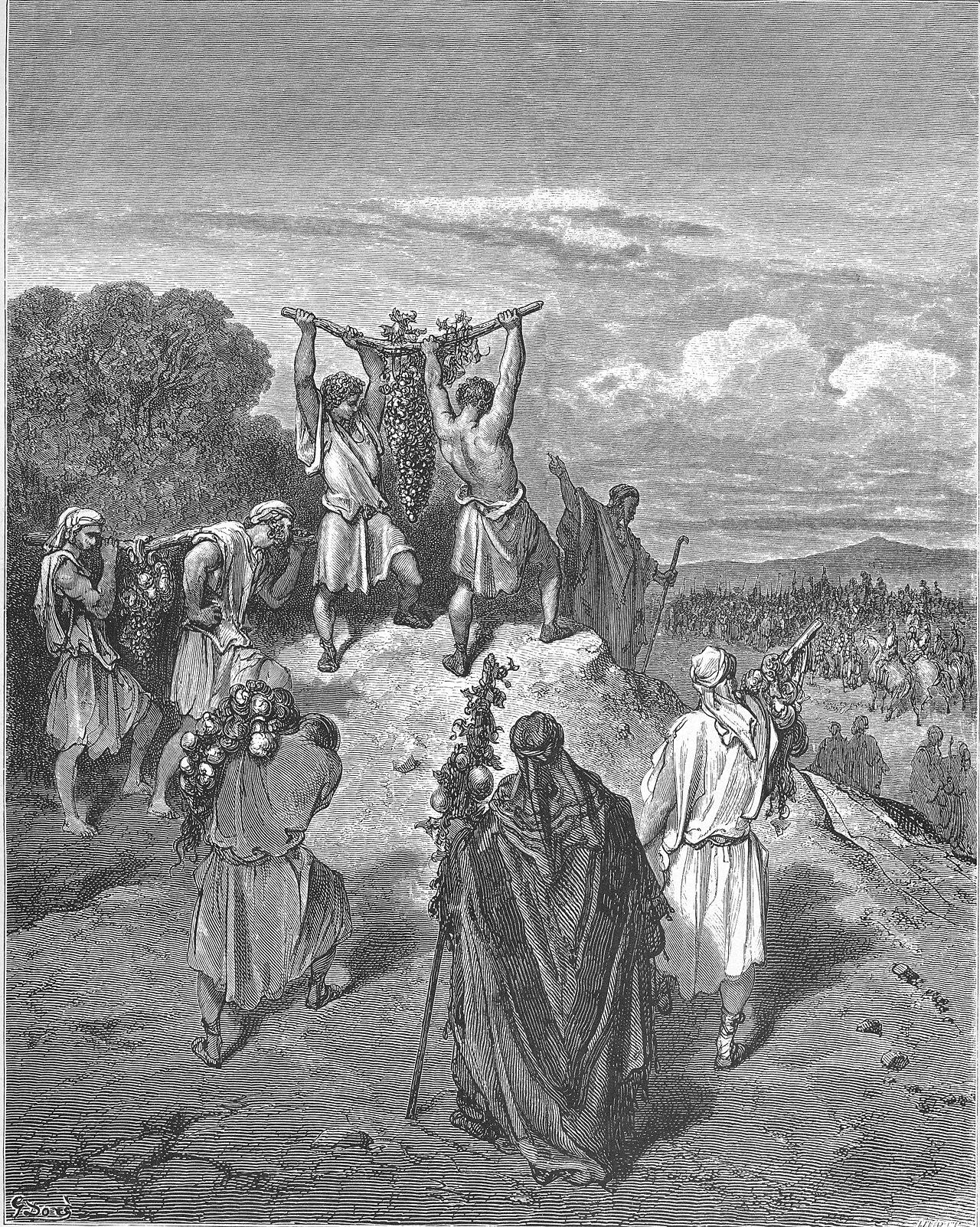
Ten spies bring an evil report; the people believe them over Caleb and Joshua, and refuse to go up. An entire adult generation is condemned to a forty-year death march, one year for each day the spies searched the land (14:34).
- 3Korah's revoltNumbers 16
A challenge to Moses' and Aaron's unique authority, “ye take too much upon you”, answered when the ground opens beneath the rebels.
- 4Meribah: Moses' own sinNumbers 20:1–13
The last of the cycle claims even the mediator: told to speak to the rock, Moses strikes it in anger, and is barred from the land he has led toward for forty years.
The repetition is itself the point: the same unbelief recurs until an entire generation is spent. God's central question sits at the hinge of the cycle's worst turn: “How long shall I bear with this evil congregation…?” (14:27).
Kadesh-Barnea: the Hinge
the border they refused to cross
Israel stands at the very edge of the promise and refuses to trust the God who parted the sea. The sentence is severe, an adult generation's death march (14:29–35), and the mercy is severe too: He does not disinherit the nation. “I have pardoned according to thy word” (14:20), even as He disciplines it.
Moses intercedes here as he had at the golden calf, the office that saves the nation from itself (14:13–19), and the sentence, not the mercy, becomes the pattern the rest of the canon remembers this book by.
Paul's Case Study: 1 Corinthians 10
“Now these things happened unto them by way of example; and they were written for our admonition, upon whom the ends of the ages are come” (1 Cor 10:11).
Paul reads Numbers as typoi: the craving of ch. 11, the idolatry at Baal-Peor (Num 25; “neither let us commit fornication, as some of them committed… and fell in one day three and twenty thousand,” 1 Cor 10:8), as a redeemed people's own case study in falling. Numbers is Paul's primary evidence that having been saved does not make a person untestable.
Hebrews 3–4: the Standing Warning
“Harden not your hearts, as in the provocation… in the wilderness… they were not able to enter in because of unbelief” (Heb 3:8, 15, 19; 4:2, 6–7): quoting Psalm 95, itself keyed to Meribah and Massah, Numbers 20's very location.
The writer's argument runs the same road this page has walked: a redeemed people, a border in sight, and a choice the wilderness generation made wrong. “Today” is the word that makes it the church's own warning, not merely Israel's history.
From the Roster
voices who have sat with this book
- John Wesley (public domain): his Explanatory Notes Upon the Old Testament works through Numbers' wilderness narratives book by book, reading the repeated failures as a standing lesson for every generation of the redeemed, not only Israel's.
- Matthew Henry (public domain): his Commentary on the Whole Bible covers each hinge-point in turn, tracing Moses' own office as intercessor through Kadesh-Barnea and Korah alike.
Keep studying
On this page
Studies4