
Study trail
Prayers of the Bible
Learn to pray by studying the greatest prayers recorded in Scripture.
Where this trail goes
This walk stops at ten prayers Scripture actually records, not teaching about prayer, but prayer itself, caught mid-sentence. Abraham drawing near to bargain for a city. Moses standing between God's wrath and God's people. Elijah's sixty-second prayer that pulled fire from heaven. A king with no army, a cupbearer in tears, a prophet inside a fish.
Every one of these prayers works the same way: it starts with who God is (covenant-keeper, ruler of the nations, maker of heaven and earth) and only then asks for something. That is the pattern to watch for at every stop.
The trail runs from the first great intercessor in Genesis to the greatest one: Jesus, who first teaches His disciples how to pray, then prays for them, and for everyone who would believe through their word. That includes anyone walking this trail.
The route
The stops are in the order the Bible presents them.
The route: 10 stops, Genesis 18:23 to Acts 4:24
10 stops, in order
Stop 1 of 10: Genesis 18:23
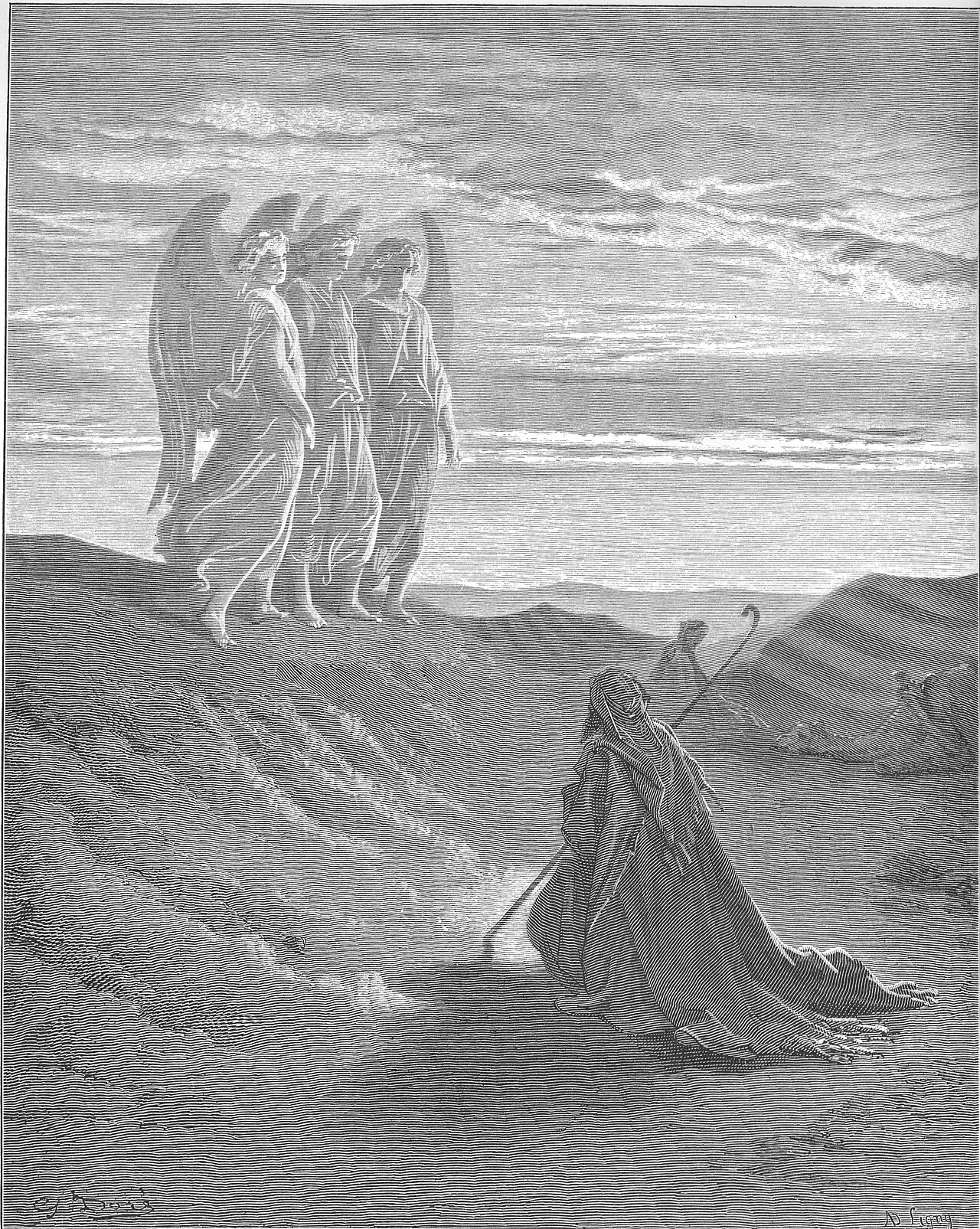
Abraham stepped forward and said, “Will You really sweep away the righteous with the wicked?Intercession means standing in front of God on somebody else's behalf.
The walk opens with intercession: a man draws near and appeals to the Judge's own justice.
Abraham moves from fifty righteous down to ten in six steps and God concedes every time; the negotiation is never once refused. His argument is God's own character:
"Shall not the Judge of all the earth do right?"
Standing before the LORD to plead for a city that would have destroyed him is the first recorded shape of intercession.
Show more on this stopthe exposition
The exposition on this verse
Abraham remained standing before the LORD: The two men turned away toward Sodom, and Abraham remained standing before the LORD. Clarke reads those two as the angels who reach Lot's gate. Abraham stepped forward and asked whether God would sweep the righteous away with the wicked, and he had rescued this city once, in chapter 14.
sweep away the righteous with the wicked: Abraham speaks for the righteous in the city. Adam Clarke calls his ground an unchanging rule of justice, that the LORD will never sweep away the righteous with the wicked. Every plea from fifty down to ten is built on it.
This exposition draws on Adam Clarke, Commentary on the Bible and Matthew Henry, Commentary on the Whole Bible.
Stop 2 of 10: Exodus 32:11
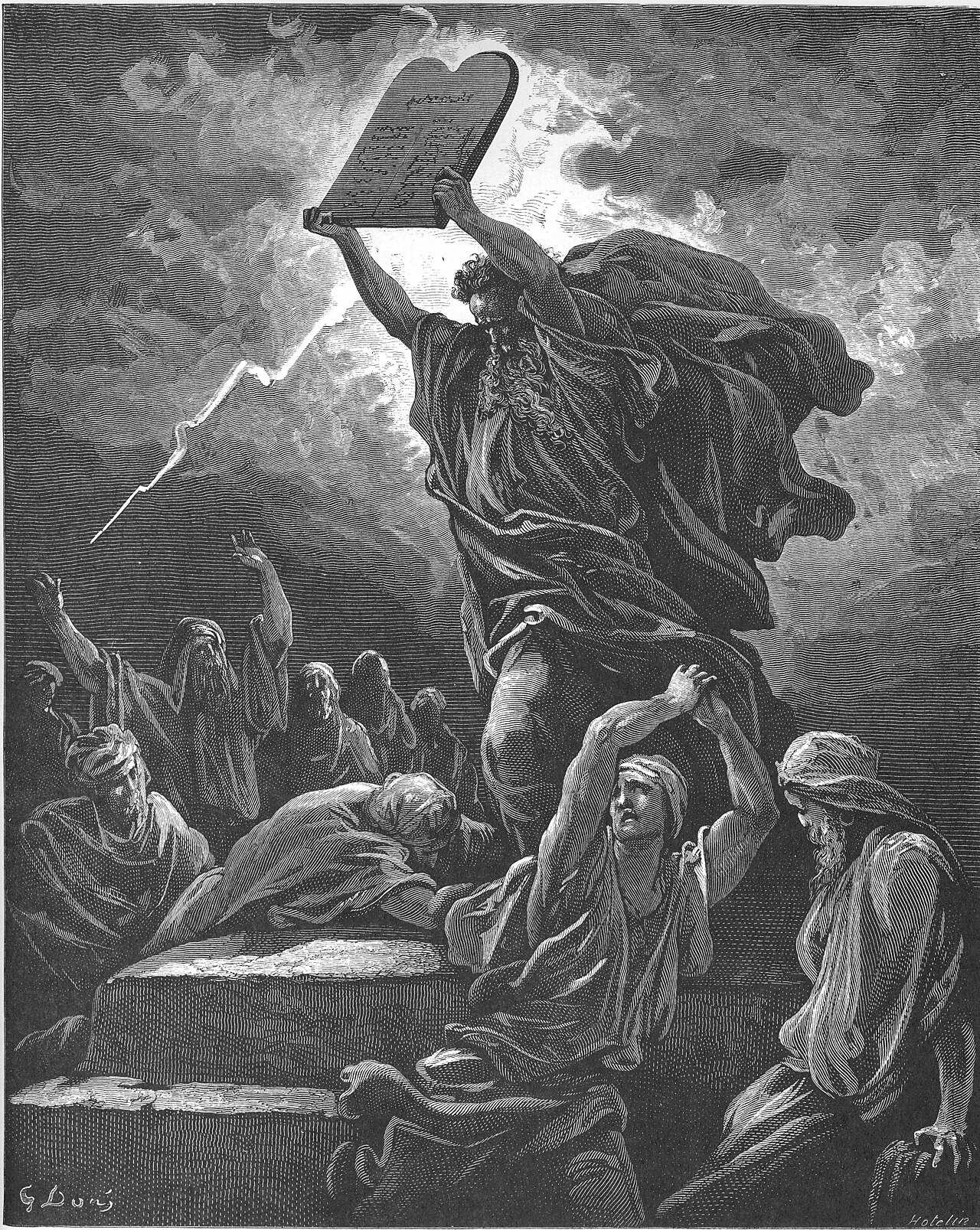
But Moses sought the favor of the LORD his God, saying, “O LORD, why does Your anger burn against Your people, whom You brought out of the land of Egypt with great power and a mighty hand?Moses sets the pattern of pleading God's past deliverance and reputation back to Him.
Moses never defends Israel. He appeals to God's reputation among the Egyptians and to the oath sworn to Abraham, Isaac and Jacob, and later offers to be blotted out himself (verse 32). The prayer works because it asks God to be consistent with what He has already said.
Show more on this stopthe exposition
The exposition on this verse
why does Your anger burn against Your people: Moses hands the people straight back, calling them Your people, whom You brought out of Egypt, and reversing the pronoun of verse 7. He argues from what Egypt would say and claims nothing Israel has earned.
This exposition draws on Keil and Delitzsch, Biblical Commentary on the Old Testament: The Pentateuch and Matthew Henry, Commentary on the Whole Bible.
Stop 3 of 10: 1 Kings 18:36
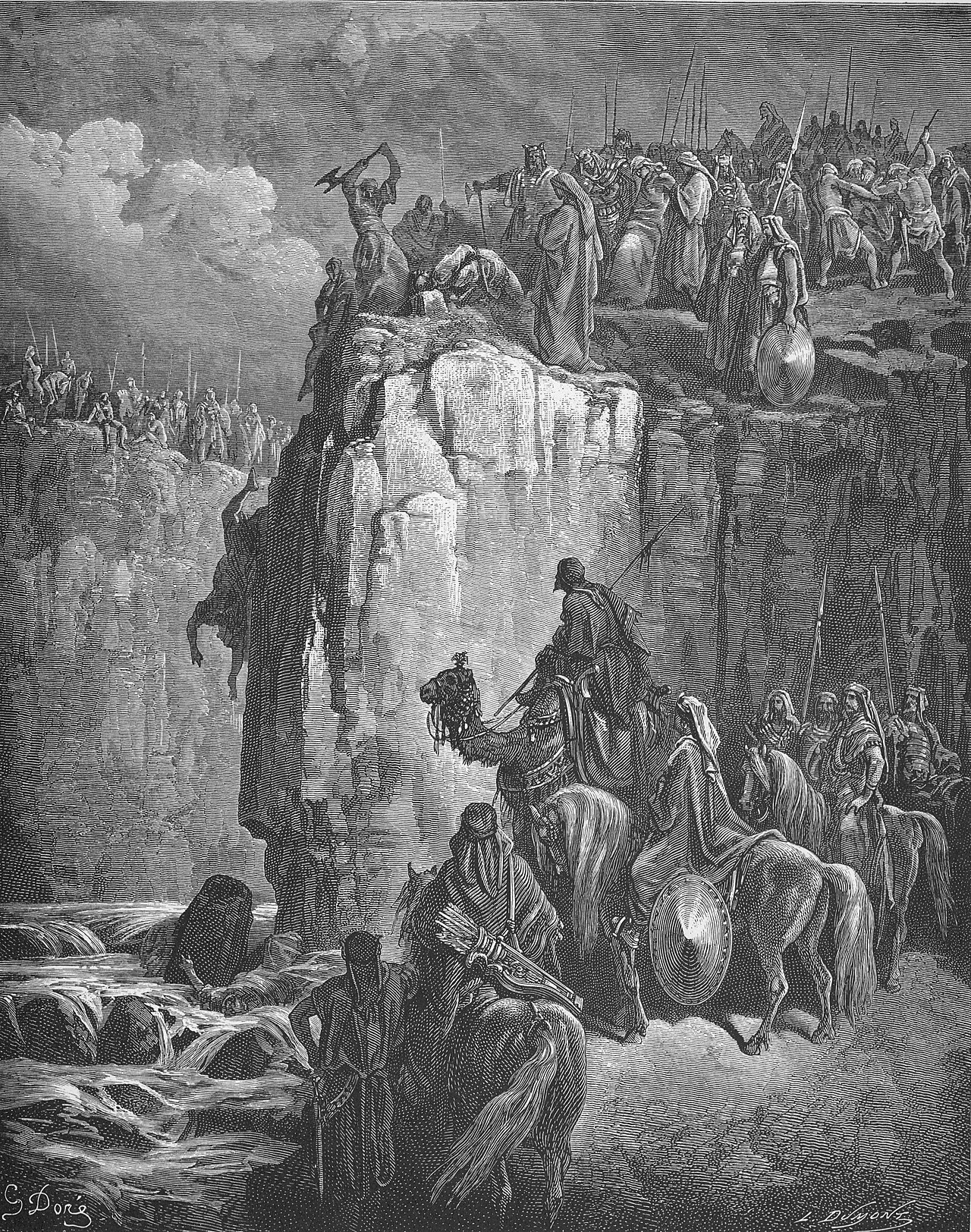
At the time of the evening sacrifice, Elijah the prophet approached the altar and said, “O LORD, God of Abraham, Isaac, and Israel, let it be known this day that You are God in Israel and that I am Your servant and have done all these things at Your command.Proof that power lies in the God invoked, not the prayer's length: one sentence, public fire.
Elijah's prayer on Carmel is about sixty words against the Baal prophets' six hours of shouting, and he asks for one thing: that the people would know who God is. The fire falls on the sentence. James 5:17 insists he was
"a man subject to like passions as we are"
Show more on this stopthe rest of the note and the exposition
More from the trail's own note
: length and pedigree are not the variables.
The exposition on this verse
O LORD, God of Abraham, Isaac, and Israel: Elijah prays once, at the hour of the evening sacrifice. He asks that it be known “that You are God in Israel and that I am Your servant”. The prayer names its end before the fire falls: “that You have turned their hearts back again”.
This exposition draws on Keil, The Books of the Kings and Matthew Henry, Commentary on the Whole Bible.
Stop 4 of 10: 2 Chronicles 20:6
and said, “O LORD, God of our fathers, are You not the God who is in heaven, and do You not rule over all the kingdoms of the nations? Power and might are in Your hand, and no one can stand against You.When outmatched, prayer's first move is God's throne: 'art not thou ruler over all kingdoms?'
Jehoshaphat prays with three armies on the march and ends with the most honest line in the chapter:
"neither know we what to do: but our eyes are upon thee."
He recites what God has already done before asking for anything. The army goes out with the choir in front.
Show more on this stopthe exposition
The exposition on this verse
in front of the new courtyard: Jehoshaphat prays in the temple court and quotes Solomon's dedication back to God. Verse 9 restates Solomon's petition at 6:28-30: if disaster comes, the people will stand before the temple, and God will hear and save. He calls Abraham “Your friend”, a title Isaiah 41:8 and James 2:23 repeat.
Power and might are in Your hand: The prayer begins with who God is: God in heaven, who rules “all the kingdoms of the nations”, with “Power and might” in His hand. The words echo David's blessing at 1 Chronicles 29:12. The king who proclaimed the fast leads the prayer himself, as Clarke observes.
This exposition draws on Adam Clarke, Commentary on the Bible; Keil, The Books of the Chronicles and Matthew Henry, Commentary on the Whole Bible.
Stop 5 of 10: Nehemiah 1:4
When I heard these words, I sat down and wept. I mourned for days, fasting and praying before the God of heaven.Shows prayer's posture before its petition: weeping, fasting, and confession precede the bold ask.
Nehemiah hears the walls are down and sits, weeps, fasts and prays for days, then prays a one-sentence prayer in front of the king four months later (2:4). Confession comes before petition, and he puts himself inside it:
"I and my father's house have sinned."
Show more on this stopthe exposition
The exposition on this verse
are burned with fire: Hanani's answer is stark: "The wall of Jerusalem is broken down, and its gates are burned with fire," a report reaching Susa. Nehemiah "sat down and wept," mourning, fasting and praying "before the God of heaven" (1:4). The mourning falls in Chislev, and the request waits until Nisan.
I sat down and wept: Mourners sat down on the ground, and Gill compares Job among the ashes (Job 2:8). Fasting and prayer before the God of heaven filled these days. Clarke draws the lesson that a good work begun in haste is often ruined, and that prayer before God carries it through.
This exposition draws on Adam Clarke, Commentary on the Bible and John Gill.
Stop 6 of 10: Daniel 9:4
And I prayed to the LORD my God and confessed, “O, Lord, the great and awesome God, who keeps His covenant of loving devotion to those who love Him and keep His commandments,A covenant is a binding agreement, sworn once and kept for good.
Confession goes corporate: Daniel owns his people's sins, anchored in the God who keeps covenant.
Daniel is reading Jeremiah's seventy years when he prays; the promise provokes the intercession rather than replacing it. He says
"we have sinned"
throughout, though the book never accuses him personally.
Show more on this stopthe rest of the note and the exposition
More from the trail's own note
Gabriel arrives while he is still speaking, carrying the seventy weeks.
The exposition on this verse
with fasting, and sackcloth, and ashes: Daniel seeks the Lord “with fasting, sackcloth, and ashes,” and his confession runs in the key of Ezra 9 and Nehemiah 9. He prays as one of the guilty people, the pattern the older commentators find in Moses and Nehemiah, a righteous man confessing with his nation.
the great and awesome God: Jerome read awesome as terrible toward those who despise the commandments, and noted God keeps His covenant toward those who love Him and obey. Jamieson, Fausset and Brown held that God is feared for His justice and trusted for His mercy. Albert Barnes thought Daniel recorded the prayer's substance afterward.
This exposition draws on Albert Barnes, Notes, Explanatory and Practical, on the Old and New Testaments (1832-1869); Jamieson, Fausset & Brown, Commentary Critical and Explanatory on the Whole Bible; Jerome, St. Jerome, Commentary on Daniel, CHAPTER NINE; John Gill, Exposition of the Old Testament and Matthew Henry, Commentary on the Whole Bible.
Stop 7 of 10: Jonah 2:1
From inside the fish, Jonah prayed to the LORD his God,The floor of the walk: prayer rises from the fish's belly, so no depth is beyond it.
The prayer from inside the fish is stitched almost entirely out of the Psalms: a drowning man praying the songbook he had memorized. It is thanksgiving offered before the deliverance is complete, and it ends on the sentence the whole book is arguing:
"Salvation is of the LORD."
Show more on this stopthe exposition
The exposition on this verse
From inside the fish, Jonah prayed to the LORD his God: Jonah prays from inside the fish. He says, "From the belly of Sheol I called for help, and You heard my voice," using Sheol, the place of the dead. Gill and Henry both note that the prayer is built almost entirely from the language of the Psalms.
This exposition draws on John Gill, Exposition of the Old Testament and Matthew Henry, Commentary on the Whole Bible.
Stop 8 of 10: Matthew 6:9
So then, this is how you should pray: ‘Our Father in heaven, hallowed be Your name.The turn: Jesus distills every pattern so far into the model: Father first, name hallowed.
Jesus gives a pattern rather than a formula: the name and the kingdom first, then bread, forgiveness and deliverance. It is plural the whole way through (our, us, we) with no first-person singular anywhere in it. Fifty-two words, given immediately after a warning against long prayers.
Show more on this stopthe exposition
The exposition on this verse
hallowed be Your name: "Our Father in heaven" opens the prayer with the address Jesus uses of God, nearness held together with God's height. The first petition, "hallowed be Your name," asks that God's name be treated as holy. The order teaches the shape of prayer, God's glory sought before personal need.
This exposition draws on John Calvin, Commentary on a Harmony of the Evangelists and John Gill, Exposition of the New Testament.
Stop 9 of 10: John 17:1
When Jesus had spoken these things, He lifted up His eyes to heaven and said, “Father, the hour has come. Glorify Your Son, that Your Son may glorify You.The summit: the Son Himself intercedes, doing perfectly what Abraham and Moses foreshadowed.
The longest recorded prayer of Jesus is not in Gethsemane but at the table the night before, and He prays for Himself, then for the eleven, then explicitly
"for them also which shall believe on me through their word"
: the reader is named in it. The thing He asks for is oneness, twice measured against His own union with the Father.
Show more on this stopthe exposition
The exposition on this verse
the hour has come: The hour has come is the hour held back at 2:4, 7:30 and 8:20. Jesus prays it aloud with His eyes lifted to heaven. The request turns back on itself, the Son glorified so that the Father is glorified in Him.
This exposition draws on J. C. Ryle, Expository Thoughts on the Gospels, John and Matthew Henry, Commentary on the Whole Bible.
Stop 10 of 10: Acts 4:24
When the believers heard this, they lifted up their voices to God with one accord. “Sovereign Lord,” they said, “You made the heaven and the earth and the sea and everything in them.The pattern goes to the whole church: Creator invoked first, one accord, boldness granted.
Threatened by the same council that had killed Jesus, the church asks for exactly one thing: boldness. They quote Psalm 2 and identify their opponents as its fulfilment. The building shakes, and the answer is the request itself:
"they spake the word of God with boldness."
Show more on this stopthe exposition
The exposition on this verse
On their release: Peter and John report the chief priests' threats to their own people, and the believers answer with one accord in prayer. The prayer opens on God as Creator of heaven, earth and sea before a word about the threat.
Sovereign Lord: Clarke notes that the word used for Lord means a sovereign master whose rule reaches heaven, earth and sea. Theophylact and Oecumenius observe the church fitted each prayer to its need, calling on the knower of hearts in Acts 1:24 and the Creator here.
This exposition draws on Adam Clarke, Commentary on the Bible; John Calvin, Commentary upon the Acts of the Apostles; John Wesley, Explanatory Notes upon the New Testament; Matthew Henry, Commentary on the Whole Bible; Oecumenius, Commentary on Acts and Theophylact of Ohrid, Commentary on Acts.
What this trail means
Walk all ten stops and one pattern stands out: biblical prayer argues from God's character to man's need, never the reverse. Abraham appeals to the Judge's justice. Moses appeals to God's own deliverance and reputation. Elijah invokes "the God of Abraham, of Isaac, and of Israel." Jehoshaphat opens with "art not thou God in heaven?" Daniel grounds confession in the God "who keepeth covenant and lovingkindness." The early church begins with "thou that didst make the heaven and the earth." Ten different crises, one grammar: You are, therefore hear.
A second pattern: these prayers are overwhelmingly for others. Abraham prays for Sodom, Moses for Israel, Nehemiah for Jerusalem, Daniel confesses sins he shares with his people. Intercession is not an advanced technique; it is the mainstream of recorded biblical prayer.
Both streams meet in Jesus. In Matthew 6 He hands His disciples the pattern the saints had been groping toward: begin with the Father, hallow the name, then ask. In John 17 He does what Abraham and Moses could only foreshadow: the Son stands before the Father and intercedes for His people, including "them also that believe on me through their word." And in Acts 4 the church prays exactly as He taught: God's character first, one accord, bold petition, and the place is shaken. Prayer in Scripture ends where it was always heading: a people praying through the Son who prays for them.
Show what you now know
- Length is not the variable. Elijah's sixty words brought fire; Nehemiah's four-month burden fit into one sentence before a king.
- The prayers that move God argue from what God has already said: His character, His oath, His written promise.
- Confession comes before petition, and the great intercessors put themselves inside the sin they confess.
- Jesus taught a pattern with no singular pronoun in it, then prayed for people who did not yet exist, including the reader.