
Genesis 22:7
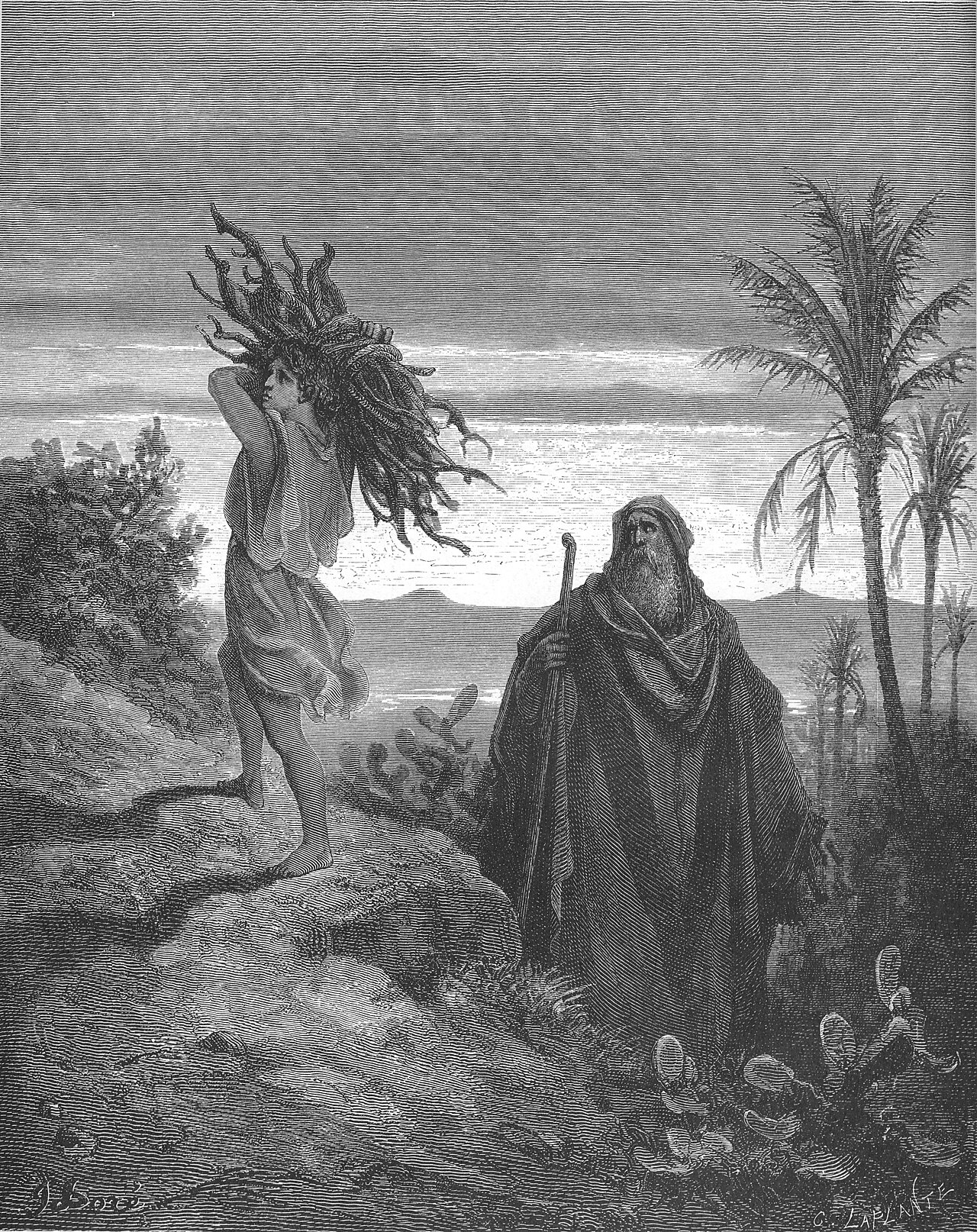
in Genesis 22Then Isaac said to his father Abraham, “My father!” “Here I am, my son,” he replied. “The fire and the wood are here,” said Isaac, “but where is the lamb for the burnt offering?”
BSB
The same verse in ASV and KJV ▾
ASV
And Isaac spake unto Abraham his father, and said, My father: and he said, Here am I, my son. And he said, Behold, the fire and the wood: but where is the lamb for a burnt-offering?
KJV
And Isaac spake unto Abraham his father, and said, My father: and he said, Here am I, my son. And he said, Behold the fire and the wood: but where is the lamb for a burnt offering?
⋯
This verse in Genesis 22
Commentary
9 notes on this verseA commentator
Ambrose of MilanOn the Decease of His Brother Satyrus, Book 2, Section 97 · Written before 397.
Therefore he brings his well-beloved son to be sacrificed, and offered promptly him whom he had received late; nor is he restrained by being called by the name of father, when his son called him "Father," and he replied, "My son." Dear pledges of love are these names, but the commands of God are loved still more. And so although their hearts felt for each other, their purpose remained firm.
This site's exposition
where is the lamb for the burnt offering
on Genesis 22:7-8
These are the only words Isaac speaks in the account, and they are the right question. Abraham answers that God Himself will provide the lamb, and what God provides is a ram. Clarke takes the answer as prophecy and points to the Lamb of God at John 1:29.
The record, by era
The Church Fathers2 voices
What happens after this? "Isaac," the text says, "said to Abraham, his father, 'Father.' " And in this moment the word of testing is uttered by the son. For how do you suppose the son to be killed struck the father's heart with this word? And although Abraham was very rigid by virtue of his faith, nevertheless he also returned an expression of affection and responded, "What is it, son?" And Isaac says, "Behold the fire and the wood. Where is the sheep for the burnt offering?"
In two things then was Abraham victorious: that he killed his son although he did not kill him and that he believed that after Isaac died he would be raised up again and would go back down with him.
The Puritans and the Awakening3 voices
Behold the fire and the wood, but where is the lamb? - This is, 1. A trying question to Abraham; how could he endure to think that Isaac is himself the lamb? 'Tis a teaching question to us all, that when we are going to worship God, we should seriously consider whether we have every thing ready, especially the lamb for a burnt-offering.
Behold the fire and the wood, but where is the lamb? - This is, 1. A trying question to Abraham; how could he endure to think that Isaac is himself the lamb? 'Tis a teaching question to us all, that when we are going to worship God, we should seriously consider whether we have every thing ready, especially the lamb for a burnt-offering.
And Isaac spake unto Abraham his father,.... As they were walking together: and said, my father; a cutting word to Abraham, who knew what he was going to do with him, so contrary to the relation and affection of a parent: and he said, here am I, my son; what hast thou to say to me?
2 more voices on this verse
The Puritans and the Awakening1 voice
Thus, First, Christ, the great sacrifice of atonement, was of God's providing; when none in heaven or earth could have found a lamb for that burnt-offering, God himself found the ransom, Ps. lxxxix. Secondly, All our sacrifices of acknowledgment are of God's providing too. It is he that prepares the heart, Ps. x.
The Nineteenth Century1 voice
Behold the fire and the wood: but where is the lamb - Nothing can be conceived more tender, affectionate, and affecting, than the question of the son and the reply of the father on this occasion. A paraphrase would spoil it; nothing can be added without injuring those expressions of affectionate submission on the one hand, and dignified tenderness and simplicity on the other.
The words behind it
17 Hebrew wordsEvery Hebrew word of this verse in the order it stands, with what it means and the door to its own study. The last column counts the times a word stands in the whole Bible: the rarer the word, the more the places it appears belong together.
| Hebrew | Sound | Meaning | Word study | In the Bible |
|---|---|---|---|---|
| וַיֹּ֨אמֶר | vaiyomer | and he said | H559 → | 5305 times |
| יִצְחָ֜ק | yitzchak | Isaac | H3327 → | 108 times |
| אֶל־ | ʾel- | to | H413 → | 5510 times |
| אַבְרָהָ֤ם | ʾavraham | Abraham | H85 → | 175 times |
| אָבִיו֙ | ʾaviv | father his | H1 → | 1212 times |
| וַיֹּ֣אמֶר | vaiyomer | and he said | H559 → | 5305 times |
| אָבִ֔י | ʾavi | O father my | H1 → | 1212 times |
| וַיֹּ֖אמֶר | vaiyomer | and he said | H559 → | 5305 times |
| הִנֶּ֣נִּֽי | hineni | here [am] I | H2009 → | 843 times |
| בְנִ֑י | veni | O son my | H1121 → | 4930 times |
| וַיֹּ֗אמֶר | vaiyomer | and he said | H559 → | 5305 times |
| הִנֵּ֤ה | hineh | here! | H2009 → | 843 times |
| הָאֵשׁ֙ | haesh | the fire | H784 → | 378 times |
| וְהָ֣עֵצִ֔ים | vehaetzim | and the wood<s> | H6086 → | 328 times |
| וְאַיֵּ֥ה | veaiyeh | and where? | H346 → | 45 times |
| הַשֶּׂ֖ה | haseh | [is] the sheep | H7716 → | 47 times |
| לְעֹלָֽה׃ | leolah | for a burnt offering | H5930 → | 287 times |
וַיֹּ֨אמֶרand he said
vaiyomerH559 →5305 times
יִצְחָ֜קIsaac
yitzchakH3327 →108 times
אֶל־to
ʾel-H413 →5510 times
אַבְרָהָ֤םAbraham
ʾavrahamH85 →175 times
אָבִיו֙father his
ʾavivH1 →1212 times
וַיֹּ֣אמֶרand he said
vaiyomerH559 →5305 times
אָבִ֔יO father my
ʾaviH1 →1212 times
וַיֹּ֖אמֶרand he said
vaiyomerH559 →5305 times
הִנֶּ֣נִּֽיhere [am] I
hineniH2009 →843 times
בְנִ֑יO son my
veniH1121 →4930 times
וַיֹּ֗אמֶרand he said
vaiyomerH559 →5305 times
הִנֵּ֤הhere!
hinehH2009 →843 times
הָאֵשׁ֙the fire
haeshH784 →378 times
וְהָ֣עֵצִ֔יםand the wood<s>
vehaetzimH6086 →328 times
וְאַיֵּ֥הand where?
veaiyehH346 →45 times
הַשֶּׂ֖ה[is] the sheep
hasehH7716 →47 times
לְעֹלָֽה׃for a burnt offering
leolahH5930 →287 times
A shaded row is a word that stands 400 times or fewer in the Bible.
The walk
8 stopsEach card is a verse this one points to, and under it the verses that one points to in turn. Where several paths arrive at the same place, that place is listed first: the text keeps returning to it.
Through
Romans 8:15For you did not receive a spirit of slavery that returns you to fear, but you received the Spirit of sonship, by whom we cry, “Abba! Father!”
it leads to
- Galatians 4:5–7
to redeem those under the law, that we might receive our adoption as sons.
- 2 Timothy 1:7
For God has not given us a spirit of fear, but of power, love, and self-control.
- 1 Corinthians 2:12
We have not received the spirit of the world, but the Spirit who is from God, that we may understand what God has freely given us.
- Romans 8:16
The Spirit Himself testifies with our spirit that we are God’s children.
- Ephesians 1:5
He predestined us for adoption as His sons through Jesus Christ, according to the good pleasure of His will,
- Galatians 4:5–7
Through
Matthew 26:42A second time He went away and prayed, “My Father, if this cup cannot pass unless I drink it, may Your will be done.”
it leads to
- Matthew 26:39
Going a little farther, He fell facedown and prayed, “My Father, if it is possible, let this cup pass from Me. Yet not as I will, but as You will.”
Reached by 2 separate paths from here.
- Matthew 26:39
Through
Matthew 26:39Going a little farther, He fell facedown and prayed, “My Father, if it is possible, let this cup pass from Me. Yet not as I will, but as You will.”
it leads to
- John 6:38
For I have come down from heaven, not to do My own will, but to do the will of Him who sent Me.
- Philippians 2:8
And being found in appearance as a man, He humbled Himself and became obedient to death—even death on a cross.
- John 6:38
Where this verse is studied
On this page
Studies26
On this chapter
About Genesis
Who and where
2 names in this verse with a page on the site.
This page draws on Adam Clarke, Commentary on the Bible; Ambrose of Milan, On the Decease of His Brother Satyrus, Book 2, Section 97; Ephrem the Syrian, COMMENTARY ON GENESIS 20:2; John Gill, Exposition of the Old Testament (1748-1763); John Wesley, Explanatory Notes upon the Old Testament; Matthew Henry, Commentary on the Whole Bible and Origen of Alexandria, HOMILIES ON GENESIS 8.6.