
Place
Beersheba
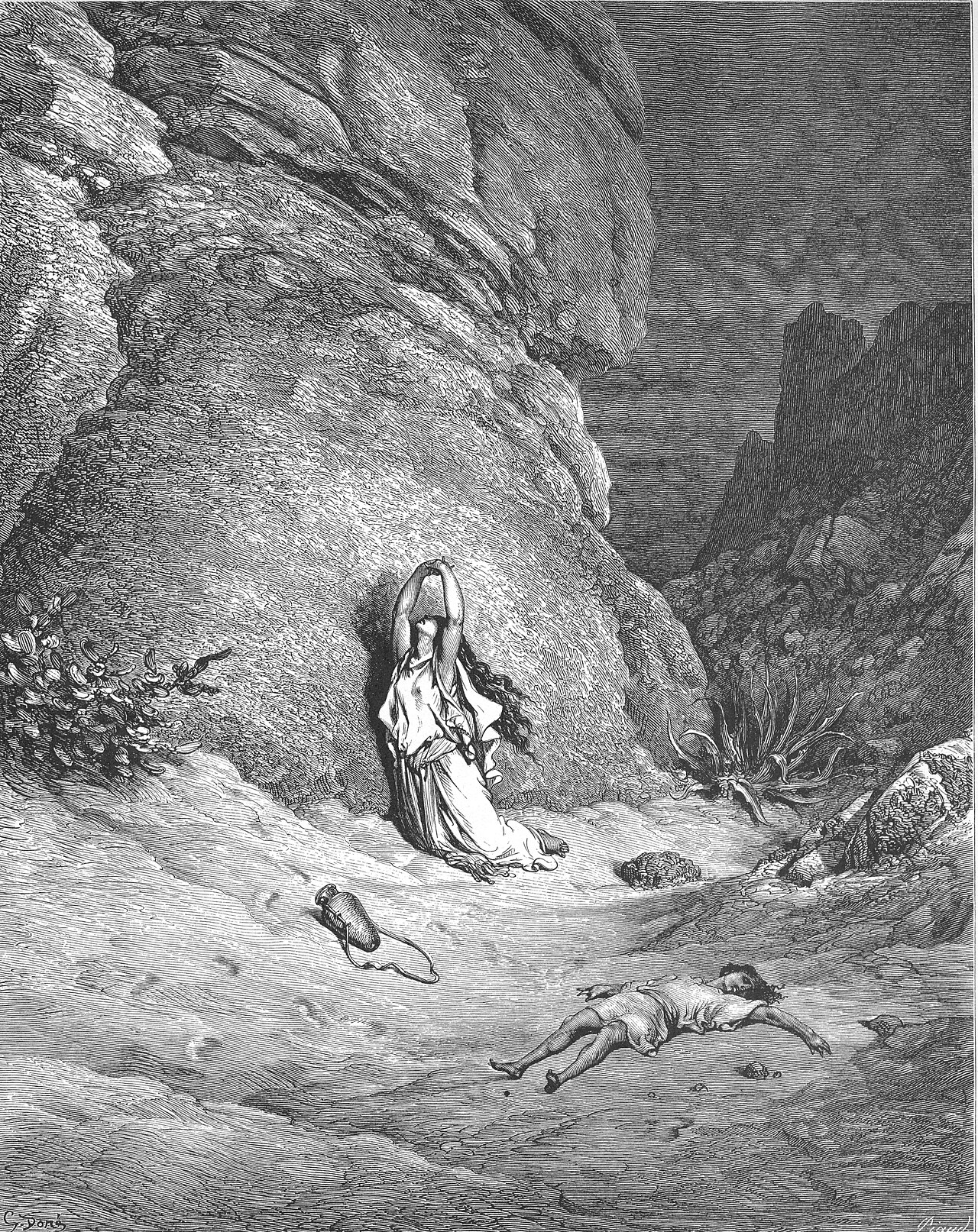
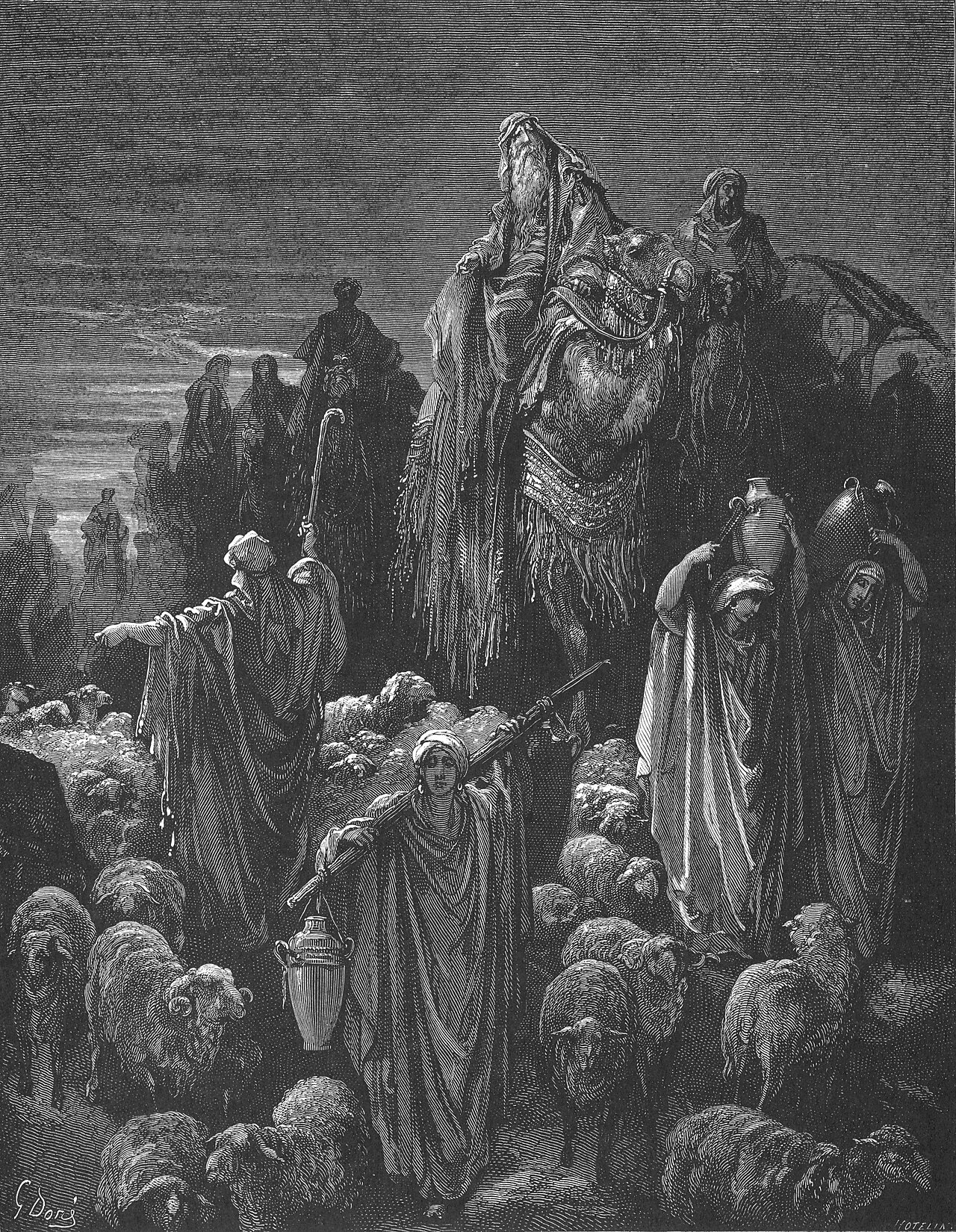
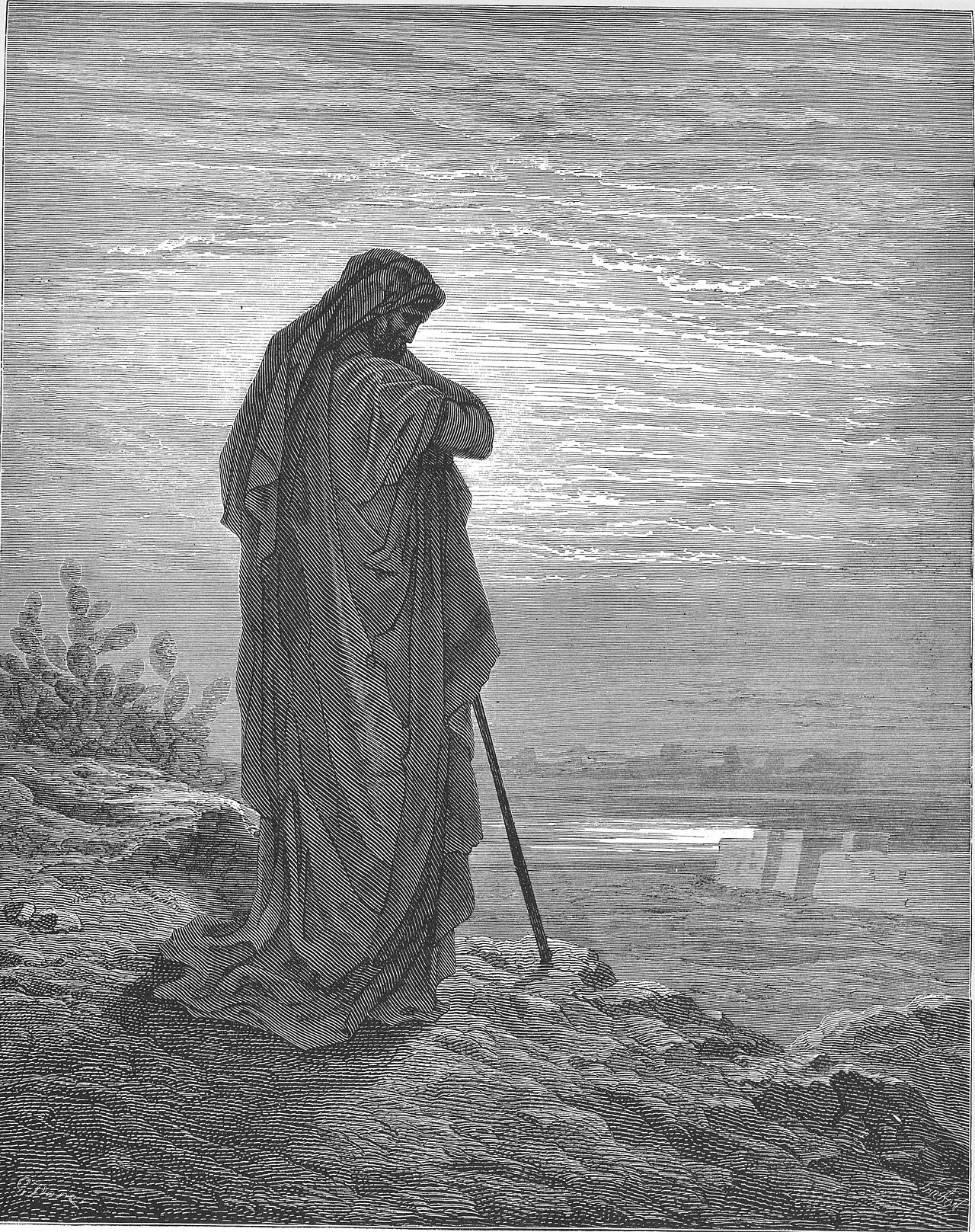
Gustave Doré, La Sainte Bible (Tours: Alfred Mame et fils, 1866). Public domain.
Summary
The well of the oath at the south of the land, where Abraham made his covenant with Abimelech and planted a tamarisk, where Isaac dug again, and where Elijah lay under the broom tree before the road to Horeb.
- Beersheba is a town named for a well and an oath, at the southern edge of the settled land.
- Abraham cut a treaty with Abimelech here over a seized well, and seven ewe lambs stood as the receipt.
- Isaac dug at the same place a lifetime later, named the well Shibah, and swore a second oath with the same royal house.
- Jacob left the land from here twice, and Elijah stopped here when he ran from Jezebel.
- Amos told Israel to stop making pilgrimage to it, because a holy place had become a substitute for God.
On this page
In Scripture
- Verses
- 33
- Books
- 11
Near Beersheba
- Ziklag15 km · 9.4 mi N
- Lachish36 km · 22 mi N
- Machpelah40 km · 25 mi NE
- Hebron40 km · 25 mi NE
- Mamre41 km · 26 mi NE
- Gaza50 km · 31 mi NW
Straight-line distances, computed from the gazetteer coordinates.
Where it is
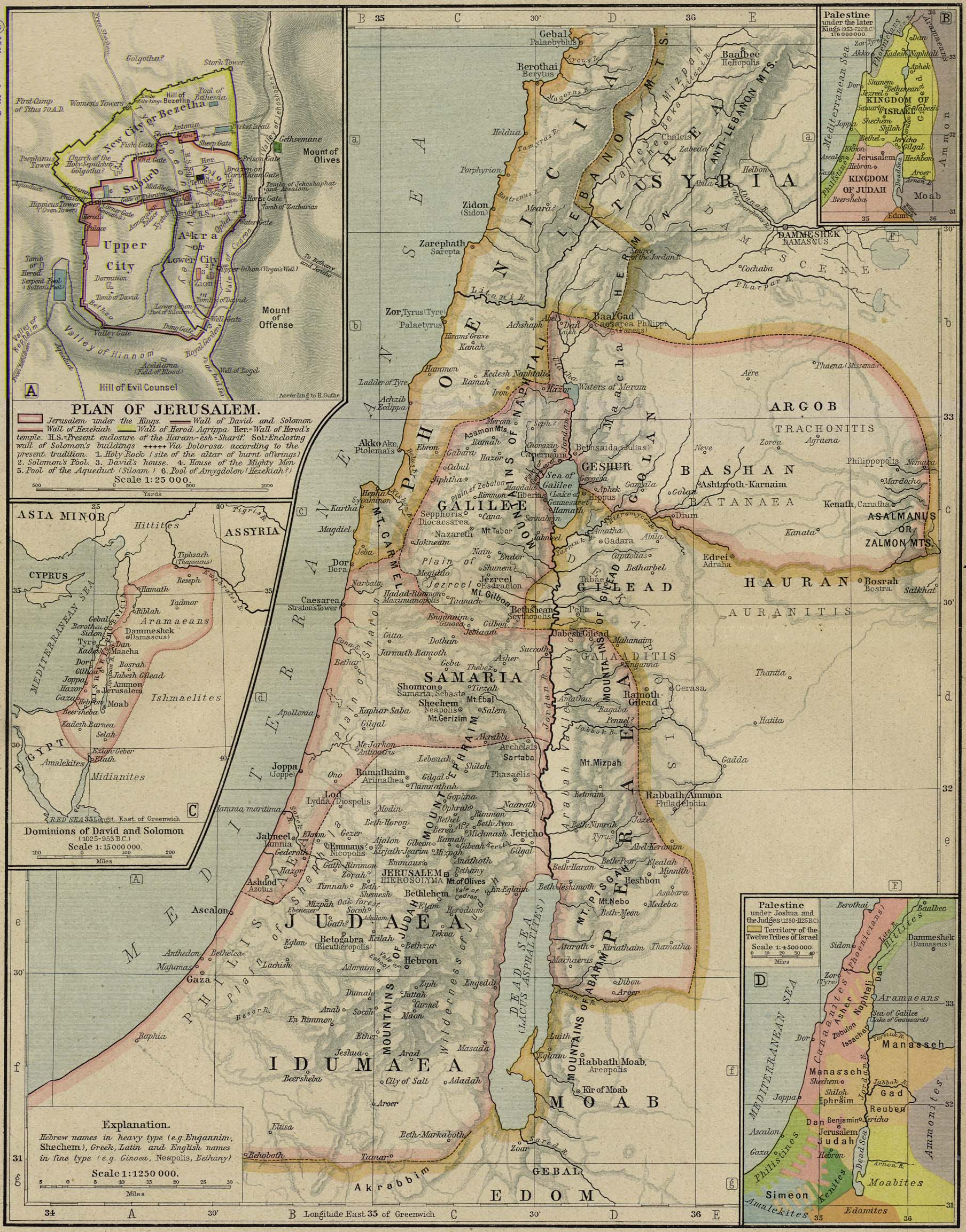
the country around it
- Coordinates
- 31.2450° N, 34.8409° Efind it on the Atlas →
- Region
- The Negev
- Located: the gazetteer fixes one site
Not located: Egypt. The gazetteer records no location for it, so it is not marked.
Why Beersheba matters
What has been found
the evidence, and where it is disputed
The oath at the well
Genesis 21:22 to 21:34, in the order it happens
Read Genesis 21:22 to 21:34, in the order it happens
- The king comes out with the commander of his armyGenesis 21:22At that time Abimelech and Phicol the commander of his army said to Abraham, “God is with you in all that you do.
- Swear to me here before GodGenesis 21:23Now, therefore, swear to me here before God that you will not deal falsely with me or my children or descendants. Show to me and to the country in which you reside the same kindness that I have shown to you.”
- Abraham swearsGenesis 21:24And Abraham replied, “I swear it.”
- The seized well is raisedGenesis 21:25But when Abraham complained to Abimelech about a well that Abimelech’s servants had seized,
- The covenant is madeGenesis 21:27So Abraham brought sheep and cattle and gave them to Abimelech, and the two men made a covenant.
- Seven ewe lambs set apartGenesis 21:28Abraham separated seven ewe lambs from the flock,
- The lambs are a receipt, not a giftGenesis 21:30He replied, “You are to accept the seven ewe lambs from my hand as my witness that I dug this well.”
- The place gets its nameGenesis 21:31So that place was called Beersheba, because it was there that the two of them swore an oath.
- The king goes home to his own countryGenesis 21:32After they had made the covenant at Beersheba, Abimelech and Phicol the commander of his army got up and returned to the land of the Philistines.
- The tamarisk, and the name of GodGenesis 21:33And Abraham planted a tamarisk tree in Beersheba, and there he called upon the name of the LORD, the Eternal God.
Genesis explains the name twice. At 21:31 it is the oath the two men swore. At 26:33 Isaac names a well Shibah on the day his servants find water, and the narrator adds that the city is called Beersheba to this day. In Hebrew the word for seven and the word for swearing are the same root, so both readings stand in one name.
The covenant God cut with Abraham: the full studyWhat happened here, in order
in the order the canon tells it
- The place is named for the oathGenesis 21:31So that place was called Beersheba, because it was there that the two of them swore an oath.
- Abraham plants a tamarisk and calls on the Eternal GodGenesis 21:33And Abraham planted a tamarisk tree in Beersheba, and there he called upon the name of the LORD, the Eternal God.
- Abraham comes back from Moriah and settles hereGenesis 22:19Abraham went back to his servants, and they got up and set out together for Beersheba. And Abraham settled in Beersheba.
- The LORD appears to Isaac at BeershebaGenesis 26:24and that night the LORD appeared to him and said, “I am the God of your father Abraham. Do not be afraid, for I am with you. I will bless you and multiply your descendants for the sake of My servant Abraham.”
- Isaac builds an altar, pitches his tent, and digsGenesis 26:25So Isaac built an altar there and called on the name of the LORD, and he pitched his tent there. His servants also dug a well there.
- Isaac names the well ShibahGenesis 26:33So he called it Shibah, and to this day the name of the city is Beersheba.
- Jacob leaves the land from here for HaranGenesis 28:10Meanwhile Jacob left Beersheba and set out for Haran.
- Jacob stops here and sacrifices before going down to EgyptGenesis 46:1So Israel set out with all that he had, and when he came to Beersheba, he offered sacrifices to the God of his father Isaac.
- The household leaves Beersheba in Pharaoh's wagonsGenesis 46:5Then Jacob departed from Beersheba, and the sons of Israel took their father Jacob in the wagons Pharaoh had sent to carry him, along with their children and wives.
- The town falls to Simeon inside Judah's portionJoshua 19:2Their inheritance lay within the territory of Judah and included Beersheba (or Sheba), Moladah,
- All Israel from Dan to Beersheba knows Samuel is a prophet1 Samuel 3:20So all Israel from Dan to Beersheba knew that Samuel was confirmed as a prophet of the LORD.
- Under Solomon the whole span dwells securely1 Kings 4:25Throughout the days of Solomon, Judah and Israel dwelt securely from Dan to Beersheba, each man under his own vine and his own fig tree.
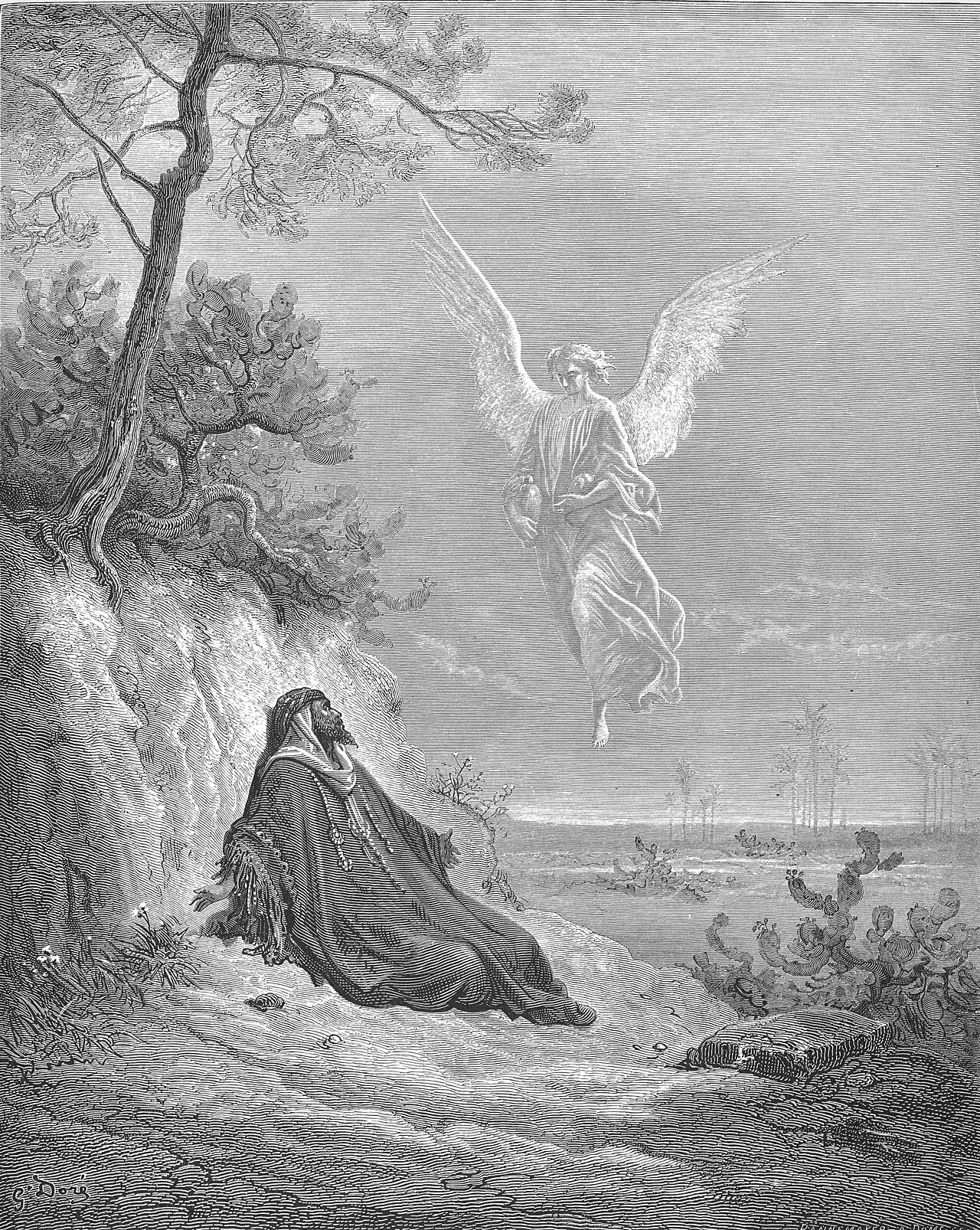
- Elijah runs here from Jezebel and leaves his servant1 Kings 19:3And Elijah was afraid and ran for his life. When he came to Beersheba in Judah, he left his servant there,
- A day beyond the town, under the broom tree1 Kings 19:4while he himself traveled on a day’s journey into the wilderness. He sat down under a broom tree and prayed that he might die. “I have had enough, LORD,” he said. “Take my life, for I am no better than my fathers.”
- On the angel's bread he walks forty days to Horeb1 Kings 19:8So he got up and ate and drank. And strengthened by that food, he walked forty days and forty nights until he reached Horeb, the mountain of God.
- Josiah's reform reaches this far south2 Kings 23:8Then Josiah brought all the priests from the cities of Judah and desecrated the high places, from Geba to Beersheba, where the priests had burned incense. He tore down the high places of the gates at the entrance of the gate of Joshua the governor of the city, which was to the left of the city gate.
- Amos tells Israel to stop comingAmos 5:5Do not seek Bethel or go to Gilgal; do not journey to Beersheba, for Gilgal will surely go into exile, and Bethel will come to nothing.
- Swearing by the way of BeershebaAmos 8:14Those who swear by the guilt of Samaria and say, ‘As surely as your god lives, O Dan,’ or, ‘As surely as the way of Beersheba lives’— they will fall, never to rise again.”
Where it points
The voices
each quoted from the work named
(Verse 30) And he said, 'You shall take these seven ewes from me, that they may be a witness for me that I have dug this well.' Therefore he called that place Beersheba, because both of them swore an oath there. Where this is read, Beersheba, in Hebrew it is called Beersheba. But there are two reasons why it is so named: either because Abimelech received seven lambs from the hand of Abraham, for seven are called Sheba, or because they swore there, for an oath is also called Sheba in the same way.
Seven ewe lambs - These were either given as a present, or they were intended as the price of the well; and being accepted by Abimelech, they served as a witness that he had acknowledged Abraham’s right to the well in question.
Abraham planted a grove--Hebrew, "of tamarisks," in which sacrificial worship was offered, as in a roofless temple.
4 more teachers on these versesOrigen of Alexandria · Adam Clarke · Charles Spurgeon · Matthew Henry
And for this reason perhaps Isaac is said to have gone up to the well of the oath and there the Lord is said to have appeared to him. For through the prophets "the Lord has sworn and he will not repent, that he is a priest forever according to the order of Melchizedek." God appeared to him, therefore, "at the well of the oath" confirming the fulfillment of the promises made to him.
All Israel from Dan even to Beer-sheba - Through the whole extent of Palestine; Dan being at the northern, Beer-sheba at the southern extremity.
THE GREATEST BELIEVERS ARE SOMETIMES SUBJECT TO FAINTING FITS. The Apostle James tells us that "Elijah was a man subject to like passions as we are." And this fact was very clearly manifest on the occasion to which our text refers.
They had sought to Bethel, where one of the golden calves was; they had frequented Gilgal, a place which they chose to set up idols in, because it had been made famous in the days of Joshua by God's wonderful appearances to and for his people.
Beersheba in Scripture
33 verses name it, in 11 books
Open a book to read its mentions here. Text: Berean Standard Bible.
Old TestamentNew Testamentsegment width = share of mentions
Old Testament11 books · 33 mentions
Genesis10 mentions
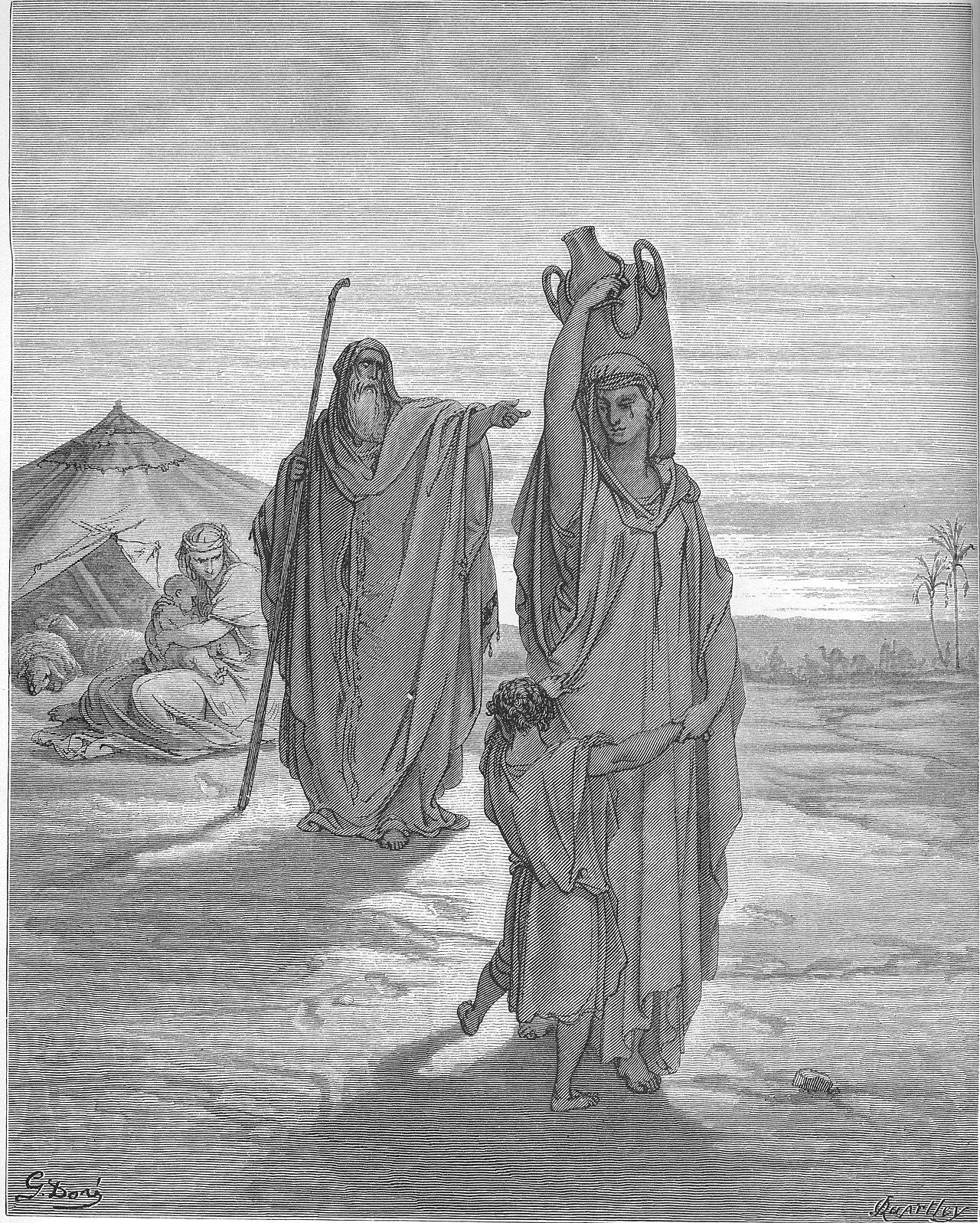
- Genesis 21:14Early in the morning, Abraham got up, took bread and a skin of water, put them on Hagar’s shoulders, and sent her away with the boy. She left and wandered in the Wilderness of Beersheba.
- Genesis 21:31So that place was called Beersheba, because it was there that the two of them swore an oath.
- Genesis 21:32After they had made the covenant at Beersheba, Abimelech and Phicol the commander of his army got up and returned to the land of the Philistines.
- Genesis 21:33And Abraham planted a tamarisk tree in Beersheba, and there he called upon the name of the LORD, the Eternal God.
- Genesis 22:19Abraham went back to his servants, and they got up and set out together for Beersheba. And Abraham settled in Beersheba.
- Genesis 26:23From there Isaac went up to Beersheba,
- Genesis 26:33So he called it Shibah, and to this day the name of the city is Beersheba.
- Genesis 28:10Meanwhile Jacob left Beersheba and set out for Haran.
2 further mentions in Genesis, read them in the book.
Joshua2 mentions
Judges1 mention
1 Samuel2 mentions
2 Samuel5 mentions
- 2 Samuel 3:10to transfer the kingdom from the house of Saul and to establish the throne of David over Israel and Judah, from Dan to Beersheba.”
- 2 Samuel 17:11Instead, I advise that all Israel from Dan to Beersheba—a multitude like the sand on the seashore—be gathered to you, and that you yourself lead them into battle.
- 2 Samuel 24:2So the king said to Joab the commander of his army, who was with him, “Go now throughout the tribes of Israel from Dan to Beersheba and register the troops, so that I may know their number.”
- 2 Samuel 24:7They went toward the fortress of Tyre and all the cities of the Hivites and Canaanites. Finally, they went on to the Negev of Judah, to Beersheba.
- 2 Samuel 24:15So the LORD sent a plague upon Israel from that morning until the appointed time, and seventy thousand of the people from Dan to Beersheba died.
1 Kings2 mentions
2 Kings2 mentions
- 2 Kings 12:1In the seventh year of Jehu, Joash became king, and he reigned in Jerusalem forty years. His mother’s name was Zibiah; she was from Beersheba.
- 2 Kings 23:8Then Josiah brought all the priests from the cities of Judah and desecrated the high places, from Geba to Beersheba, where the priests had burned incense. He tore down the high places of the gates at the entrance of the gate of Joshua the governor of the city, which was to the left of the city gate.
1 Chronicles2 mentions
2 Chronicles3 mentions
- 2 Chronicles 19:4Jehoshaphat lived in Jerusalem, and once again he went out among the people from Beersheba to the hill country of Ephraim and turned them back to the LORD, the God of their fathers.
- 2 Chronicles 24:1Joash was seven years old when he became king, and he reigned in Jerusalem forty years. His mother’s name was Zibiah; she was from Beersheba.
- 2 Chronicles 30:5So they established a decree to circulate a proclamation throughout Israel, from Beersheba to Dan, that the people should come to keep the Passover of the LORD, the God of Israel, in Jerusalem. For they had not observed it as a nation as prescribed.
Nehemiah2 mentions
Amos2 mentions
- Amos 5:5Do not seek Bethel or go to Gilgal; do not journey to Beersheba, for Gilgal will surely go into exile, and Bethel will come to nothing.
- Amos 8:14Those who swear by the guilt of Samaria and say, ‘As surely as your god lives, O Dan,’ or, ‘As surely as the way of Beersheba lives’—they will fall, never to rise again.”
The account
Read the account as one telling
Common questions
Why is the place called Beersheba?
Genesis gives two explanations and both come out of the same Hebrew root. At Genesis 21:31 the name is the oath: the place was called Beersheba because it was there that the two of them swore. At Genesis 21:28 to 21:30 it is the seven ewe lambs Abraham set apart as his witness that he had dug the well.
Sheba means seven and shaba means to swear, and Strong's glosses the verb as to seven oneself, so the well of seven and the well of the oath are the same name. Jerome noticed both readings around AD 420 and set them side by side rather than choosing between them.
Is the well shown to visitors really Abraham's well?
Two different wells carry the name and neither is proven. The one shown in the old city of modern Be'er Sheva is a local tradition, and no excavation ties it to the patriarchs. The other is a genuine ancient shaft, about 70 metres deep, cut just outside the gate of the ancient mound at Tel Beersheba, and the excavators date its cutting to the Iron Age town rather than to Abraham's day.
What is not in doubt is the condition the whole story assumes. In this valley water has always had to be dug for, and a dug well was property worth swearing over.
Did Abraham and Isaac each make a covenant here, or is one story told twice?
Readers differ; the positions are named
The traditional reading, held across the church and by the commentators this site quotes, takes them as two events a lifetime apart. Abraham deals with Abimelech at Genesis 21:22 to 21:32, and Isaac deals with an Abimelech and a Phicol at Genesis 26:26 to 26:33, after the wells had been stopped up and had to be dug again. On that reading the repeated names are either a standing royal title, as Adam Clarke argues, or a father and a son.
A critical reading holds that the two accounts are variant tellings of one tradition, on the strength of how closely they run in parallel. The text as it stands presents two events, and this page prints both readings with their reasons.
What does "from Dan to Beersheba" mean, and what was Dan?
It means the whole country and therefore the whole people, the way an American says coast to coast. Dan was the northernmost settled town and Beersheba the southernmost, roughly 235 km apart in a straight line, and the formula runs seven times from Judges through Kings. Chronicles reverses it to from Beersheba to Dan, which is the order the phrase takes when it is spoken from Jerusalem. Albert Barnes read the formula as the writer's proverb for all Israel rather than a claim about when Dan was settled.
Dan itself has a hard story. The tribe could not hold its allotment, went north, took the quiet town of Laish by the sword and renamed it after their forefather, and set up a stolen idol with a Levite for hire. Jeroboam later put one of his two golden calves there. The mound is Tel Dan, at the foot of Mount Hermon by a headwater of the Jordan, excavated by Avraham Biran from 1966 for more than thirty seasons. He uncovered a mudbrick arched gate of the eighteenth century BC, preserved to full height under a rampart and called Abraham's Gate by guides, which is a modern nickname and nothing more, and a large stepped stone platform that the excavators read as the sanctuary of 1 Kings 12:29. In 1993 and 1994 his team recovered three fragments of an Old Aramaic victory stele naming a king of the house of David, and the reading of those letters is disputed among epigraphers. Beersheba has a page on this site and Dan does not yet.
Why did Amos tell Israel to stop going to Beersheba?
Because a real shrine had become a substitute for God. Amos names Beersheba beside Bethel and Gilgal, three places where God had genuinely acted, and puts the command to seek the LORD and live in front of the command to stop travelling there.
People were going south out of the northern kingdom to swear by the way of Beersheba. That is swearing by the shrine instead of by the LORD. The prophet is not attacking the town's history. He is attacking the traffic.
Was Elijah under the broom tree at Beersheba?
No, and the difference matters. He reached Beersheba, left his servant in the town, and then went a day's walk further into the wilderness before he sat down under the tree and asked to die.
Beersheba is the last town in Judah, so the town is where he stopped running from Jezebel and the wilderness is where he gave up. Albert Barnes noted that the tree the King James calls a juniper is the Hebrew rethem, a desert broom big enough to shade a traveller.
What is the horned altar found at Tel Beersheba, and does it prove Hezekiah's reform?
Readers differ; the positions are named
Excavators recovered a set of dressed limestone blocks reused in a later wall, and assembled they form a large four-horned altar with its horns intact. It is the first monumental horned altar found in Israel. Nobody disputes that it existed, that it was taken apart, or that its stones ended up in a wall.
What the dismantling means is disputed. Yohanan Aharoni read it as a royal reform of the cult and tied it to Hezekiah, whose reform 2 Kings 18:4 places before Sennacherib's campaign of 701 BC. Yigael Yadin dated the wall that reused the stones much later, nearer 587 BC, and read the blocks as belonging to a different structure. Ze'ev Herzog and others have argued for an earlier dismantling still, and some connect the reform evidence with Josiah, who reached from Geba to Beersheba.
An altar that size means public sacrifice happened here, which is what Amos assumes. It does not by itself name the king who stopped it.
What is a tamarisk, and why did Abraham plant one?
A tamarisk is a slow desert tree with deep roots and fine leaves that lives where almost nothing else will. Abraham planted one at Beersheba and called on the name of the LORD, the Eternal God, which the King James renders the everlasting God. The Hebrew behind both is one phrase, El Olam.
The King James says grove because the older translators read the word that way; Jamieson, Fausset and Brown explain it as tamarisks, worshipped in as though in a roofless temple. The rabbis argued over the same word. Sotah 10a in the Babylonian Talmud, closed around the sixth century AD, records one opinion that Abraham planted an orchard and another that he opened an inn, which is where the tradition of Abraham's open tent comes from.
Is Beersheba in the New Testament?
No. The town is named around thirty-three times in the Old Testament and never once in the New. Its last appearance is Nehemiah 11, where returning exiles resettle it and its villages.
The place is a foundation the New Testament stands on rather than a place it visits. That is why the section on Christ below works through the well, the oath and the name of God rather than through a Gospel scene.
Notable art
4 verified pieces depicting Beersheba
Sources cited
- OpenBible.info Bible Geocoding: Beershebaread 2026-08-20The coordinates on this page. Used under CC-BY with attribution to OpenBible.info.
- Gustave Doré, La Sainte Bible (Tours: Alfred Mame et fils, 1866)The five engravings on this page. Public domain.
- Yohanan Aharoni (ed.), Beer-Sheba I: Excavations at Tel Beer-Sheba, 1969 to 1971 Seasons (Tel Aviv University, 1973)The first excavation report, and the source of Aharoni's reading of the horned altar.
- UNESCO World Heritage List, property 1108, Biblical Tels: Megiddo, Hazor, Beer ShebaThe 2005 inscription, cited as a bare fact.
- Jean Perrot, excavation reports on the Chalcolithic sites of the Beersheba valley, from 1951Bir es-Safadi and Abu Matar, published in the Israel Exploration Journal and in Syria. Cited by series.
- Avraham Biran, Biblical Dan (Israel Exploration Society, 1994)The excavation of Tel Dan, cited for the Dan half of the formula.
- Avraham Biran and Joseph Naveh, "An Aramaic Stele Fragment from Tel Dan", Israel Exploration Journal 43 (1993), and "The Tel Dan Inscription: A New Fragment", Israel Exploration Journal 45 (1995)The publication of the stele and the reading of the letters as the house of David.
- Philip R. Davies, "'House of David' Built on Sand", Biblical Archaeology Review 20:4 (1994)The challenge to that reading, with the replies printed in the same volume.
- André Lemaire, "'House of David' Restored in Moabite Inscription", Biblical Archaeology Review 20:3 (1994)A second and separately contested piece of evidence for the same phrase.
- Jerome, Hebrew Questions on Genesis, c. AD 420Public domain. The quotation giving both explanations of the name.
- Origen of Alexandria, Homilies on Genesis, c. AD 253Public domain. The earliest surviving Christian reading of Beersheba by name.
- Cyril of Alexandria, Commentary on the Gospel of John, c. AD 444Public domain. Cited in prose for his reading of the formula as the old limit of the mission field.
- Matthew Henry, Commentary on the Whole Bible (1710)Public domain, CCEL edition.
- Adam Clarke, Commentary on the Bible (1832)Public domain, CCEL edition.
- Albert Barnes, Notes, Explanatory and Practical, on the Old and New Testaments (1832 to 1869)Public domain. Cited in prose for the broom tree of 1 Kings 19:4 and for the formula as a proverb.
- Jamieson, Fausset & Brown, Commentary Critical and Explanatory on the Whole Bible (1871)Public domain.
- Charles H. Spurgeon, The Metropolitan Tabernacle Pulpit, Sermon No. 3110Public domain, CCEL edition, lightly modernized text.
- Genesis Rabbah 54:4An aggadic midrash compiled in the Land of Israel, generally dated to the fifth century AD. Summarised on this page as reception history, not adopted.
- Babylonian Talmud, Sotah 10aCompiled in Babylonia and closed around the sixth century AD. Cited for the rabbis' argument over the word rendered tamarisk.
- The site's own stores, queried 2026-09-02The places row, the verses table at translation_id 3 for every Scripture quotation, the pull_quotes pool for every voice, and lexicon_entries for the Strong's ids linked here.
Keep studying
On this page
Studies7
Books that name it8
Lives that run through it1
Doorway2
Keep this page