
Biblical Theme
Holiness
Holiness begins as a claim about God before it becomes a summons to His people. The Hebrew qadosh carries a double sense — "set apart" and "whole, intact" — and Leviticus builds an entire legal architecture on it: a grid of holy/common crossed with clean/unclean, worked out in food, body, disease, sex, and calendar, because for Israel holiness was never confined to the altar.
- 35Key verses
- 22Books touched
- 3Related themes

Across the Canon
Holiness in Scripture
Exodus supplies the founding pictures — ground made holy by God's presence at the burning bush, a nation constituted as "a kingdom of priests and a holy nation," a priestly plate engraved "HOLY TO JEHOVAH" — and Leviticus's so-called Holiness Code (chs. 17–26) fuses ritual law and ethical law so tightly that the text never lets a reader separate "ceremonial" holiness from "moral" holiness; both flow from the same repeated refrain, be holy, because I am holy. The rationale is never abstract: it is that God's holiness makes nearness costly, and God himself repeatedly supplies the cost — the Day of Atonement's two goats, the sacrificial system's whole logic of substitution.
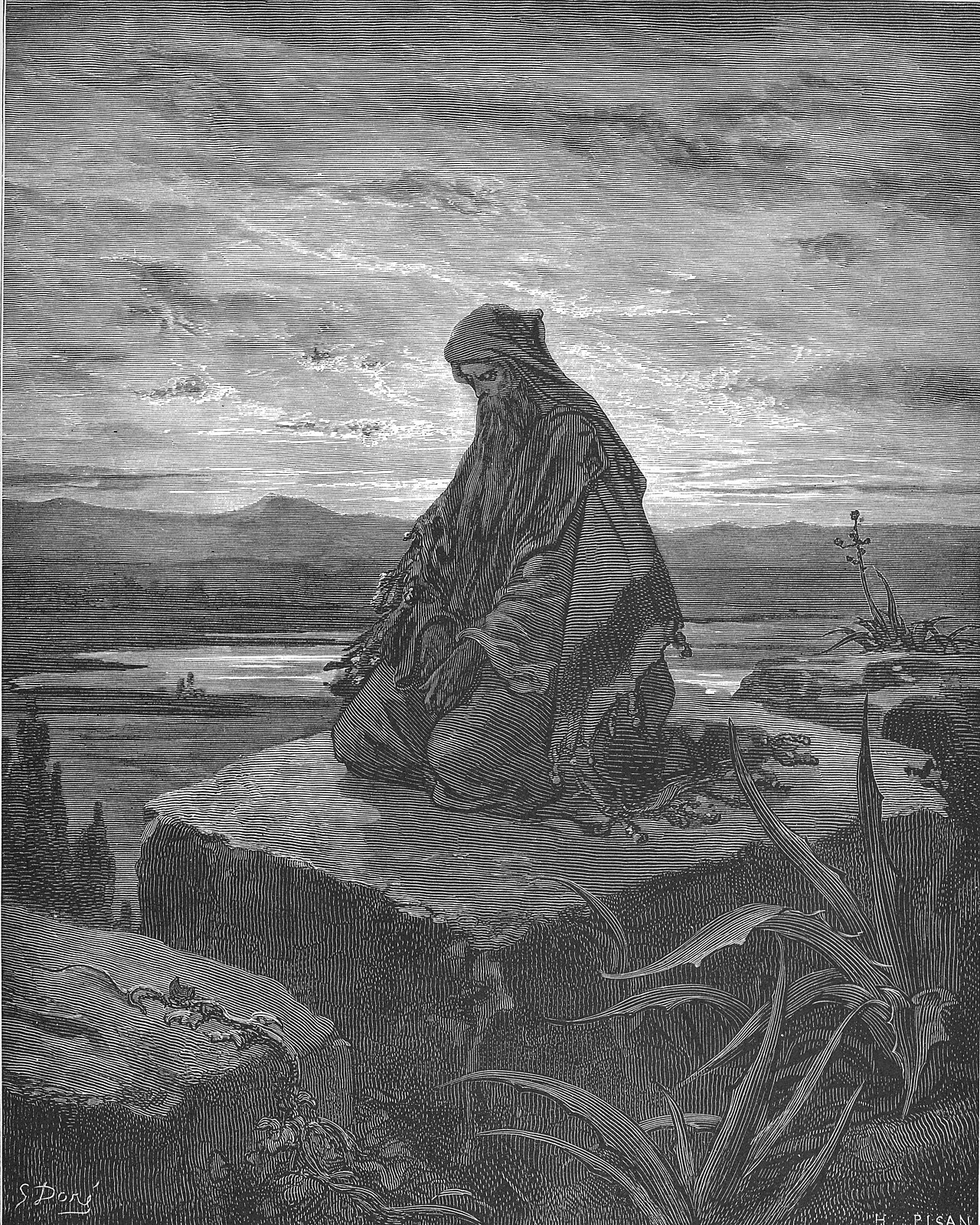
The Prophets press the same claim into a register of overwhelming otherness. Isaiah's temple vision gives Scripture one of its most concentrated holiness statements — the seraphim's threefold cry — and the vision undoes the prophet before it commissions him; holiness here is not primarily moral tidiness but God's utter difference from creation, an otherness that produces both the trauma of exposure ("woe is me") and the gift of cleansing (the live coal).
Ezekiel ties holiness to God's own name and reputation among the nations, making Israel's conduct a live variable in how God's character is read by the watching world. Zechariah's eschatological vision — holiness inscribed even on the bells of horses — pictures holiness eventually saturating everyday life rather than staying confined to priest and altar, an image later interpreters read as holiness's ultimate trajectory: not less separation, but total permeation.
The Gospels present Jesus as holiness embodied and self-consciously offered: unclean spirits name him "the Holy One of God" on contact, Luke's angel calls the child born of Mary "that holy thing," and John's Jesus says he sanctifies himself "that they also might be sanctified" — holiness now flows through a person rather than only through a code. The cross reframes the Levitical logic rather than discarding it: it is where holiness's demand and mercy's offer meet in one event, the reason substitution was necessary rather than optional.
From Pentecost forward, holiness becomes something worked in believers by the Spirit rather than approached only through mediated ritual — Paul's language shifts to indicative-and-imperative in the same breath: you are already sanctified in Christ, now pursue the sanctification that is God's expressed will for you.
The epistles turn holiness into sustained pastoral instruction rather than a single doctrine. Paul asks believers to present their bodies as a living, holy sacrifice, to perfect holiness in the fear of God, and reminds the Colossian and Thessalonian churches that they were chosen as holy and are being sanctified wholly, spirit and soul and body.
Go deeper169 more words
Peter roots the command directly in Leviticus's own wording — "be ye holy, for I am holy" — making the calling of Israel the explicit template for the church. Hebrews supplies the sharpest edge: pursue holiness, "without which no man shall see the Lord," language stern enough that it has generated real, unresolved-by-easy-formula debate across church history over how positional holiness (already true in Christ) and progressive holiness (a lifelong pursuit, with real stakes) relate.
This site's tradition holds both at once — sanctification is positional and progressive, a status conferred in Christ and a pursuit with genuine stakes — and states the tension between the traditions rather than flattening it. A second honest tension sits alongside it: holiness-as-separation can read as withdrawal, yet the same canon that commands separation from sin sends its holy people directly into the world's need.
Revelation's four living creatures still crying "holy, holy, holy" around the throne closes the theme where it opened — worship, not achievement, as holiness's first and last word.
Key Verses
The spine of this theme, in the order it was traced : the first 8 here, all 35 beneath them.
And he said, Draw not nigh hither: put off thy shoes from off thy feet, for the place whereon thou standest is holy ground.God's presence alone makes ordinary ground holy — the theme's founding picture
Who is like unto thee, O Lord, among the gods? who is like thee, glorious in holiness, fearful in praises, doing wonders?Moses' song names holiness as one of Jehovah's defining, incomparable attributes
And ye shall be unto me a kingdom of priests, and an holy nation. These are the words which thou shalt speak unto the children of Israel.Israel constituted as a holy nation and kingdom of priests, not just a holy individual
And thou shalt make a plate of pure gold, and grave upon it, like the engravings of a signet, HOLINESS TO THE LORD.The high priest's engraved plate makes holiness the visible motto of the whole priestly office
And that ye may put difference between holy and unholy, and between unclean and clean;Leviticus states its own hermeneutical key: distinguish holy from common, clean from unclean
For I am the Lord your God: ye shall therefore sanctify yourselves, and ye shall be holy; for I am holy: neither shall ye defile yourselves with any manner of creeping thing that creepeth upon the earth.The root command later quoted directly by Peter — holiness patterned on God's own nature
Speak unto all the congregation of the children of Israel, and say unto them, Ye shall be holy: for I the Lord your God am holy.The Holiness Code's thesis statement, addressed to the whole congregation
And ye shall be holy unto me: for I the Lord am holy, and have severed you from other people, that ye should be mine.Holiness explained as being severed out from the nations for God
Show the remaining 27 key verses, book by book ▾
Numbers1
Deuteronomy1
1 Samuel1
Ezekiel1
Habakkuk1
Zechariah1
Mark1
Luke1
John1
Acts1
Romans2
2 Corinthians1
Ephesians1
Colossians1
1 Thessalonians1
Hebrews2
1 Peter2
Revelation1