
Subject
Worship
Bowing and serving together, from the tabernacle to the throne room of Revelation.
Part of What God asks
Also called: praise, bow down, adoration, service, the assembly, proskuneo
This subject covers bowing and serving before God, alone and together, and the forms Scripture gives it. Talking with God in petition belongs to Prayer. Being set apart to come near belongs to Holiness.
What Worship covers, and where it stops
This subject covers bowing and serving before God, alone and together, and the forms Scripture gives it. Talking with God in petition belongs to Prayer. Being set apart to come near belongs to Holiness.
On this page, 7 sections
The one drawing
Across the canon
Old Testament
New Testament
The other 48 books of the canon carry none.
12 passages
Where Scripture speaks
The passages this subject stands on, in canon order.
“Stay here with the donkey,” Abraham told his servants. “The boy and I will go over there to worship, and then we will return to you.”“I will surely be with you,” God said, “and this will be the sign to you that I have sent you: When you have brought the people out of Egypt, all of you will worship God on this mountain.”After that, Moses and Aaron went to Pharaoh and said, “This is what the LORD, the God of Israel, says: ‘Let My people go, so that they may hold a feast to Me in the wilderness.’”You shall not bow down to them or worship them; for I, the LORD your God, am a jealous God, visiting the iniquity of the fathers on their children to the third and fourth generations of those who hate Me,How quickly they have turned aside from the way that I commanded them! They have made for themselves a molten calf and have bowed down to it. They have sacrificed to it and said, ‘These, O Israel, are your gods, who brought you up out of the land of Egypt.’”Fire came out from the presence of the LORD and consumed the burnt offering and the fat portions on the altar. And when all the people saw it, they shouted for joy and fell facedown.Fear the LORD your God, serve Him only, and take your oaths in His name.Instead, you must seek the place the LORD your God will choose from among all your tribes to establish as a dwelling for His Name, and there you must go.But Samuel declared: “Does the LORD delight in burnt offerings and sacrifices as much as in obedience to His voice? Behold, obedience is better than sacrifice, and attentiveness is better than the fat of rams.When all the people saw this, they fell facedown and said, “The LORD, He is God! The LORD, He is God!”The trumpeters and singers joined together to praise and thank the LORD with one voice. They lifted up their voices, accompanied by trumpets, cymbals, and musical instruments, in praise to the LORD: “For He is good; His loving devotion endures forever.” And the temple, the house of the LORD, was filled with a cloudO come, let us worship and bow down; let us kneel before the LORD our Maker.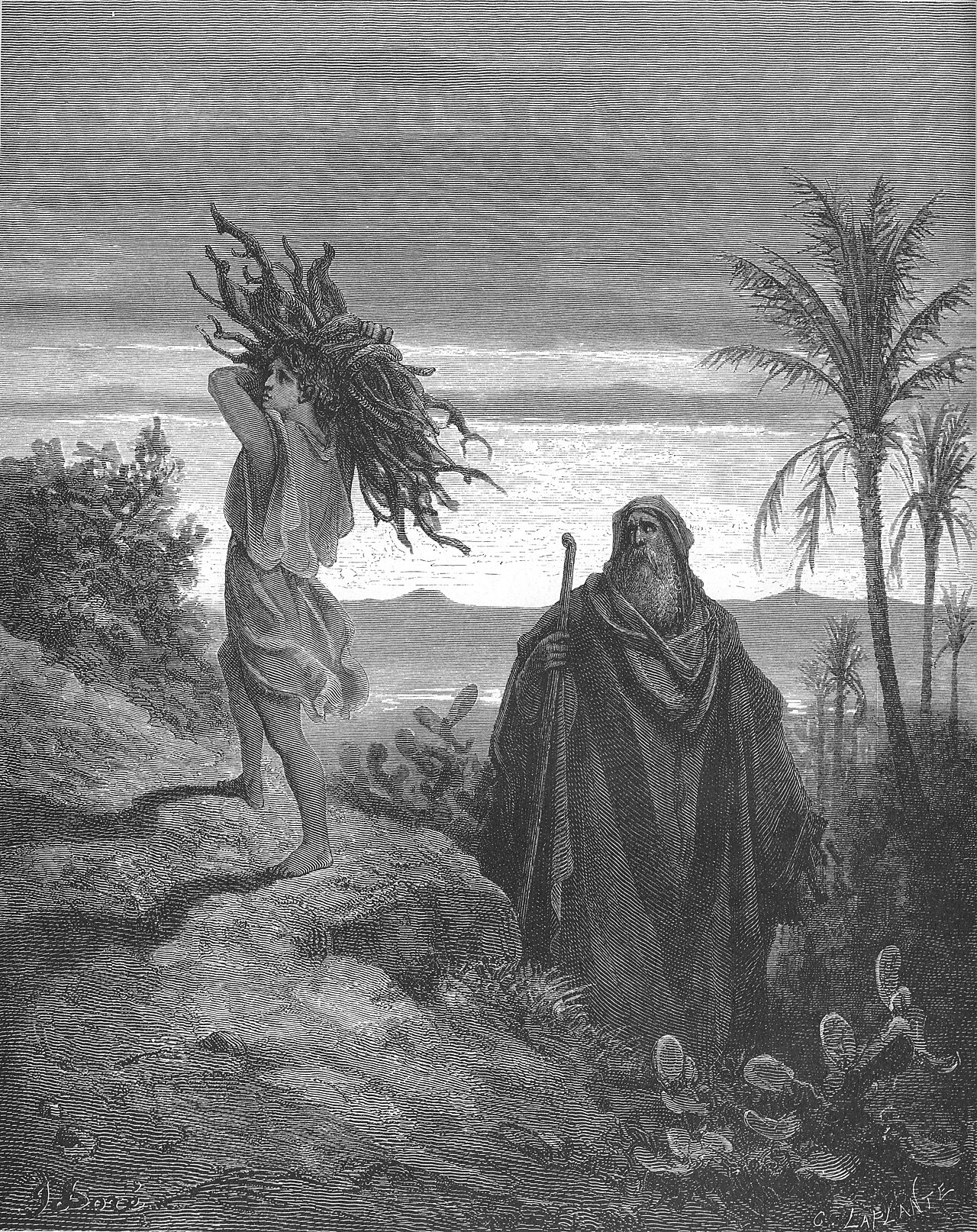
Worship in Scripture, in full
Scripture's worship vocabulary carries two roots held together: shachah (to bow down, prostrate) and abad (to serve, to labor for). Shachah is first rendered "worship" at the Aqedah — Abraham tells his servants he and Isaac are going "yonder" to worship (Genesis 22:5) — though the verb itself appears earlier for bowing before men (Genesis 18:2; 19:1); before the word is ever used of a temple or a liturgy, it names an act of costly obedience on a mountain.
The Exodus narrative then makes worship the entire point of the deliverance: the demand opens as "let my people go, that they may hold a feast unto me in the wilderness" (Exodus 5:1) and is restated across the plague cycle as "let my people go, that they may serve me" (Exodus 7:16; 8:1; 9:1; 10:3) — freedom is for something, not an end in itself.
That worship gets shape almost immediately: the Ten Commandments forbid other gods and carved images before any positive instruction is given (Exodus 20:3-5), and the golden calf (Exodus 32) proves how fast worship corrupts once the object shifts, even among people who had just heard the voice at Sinai.
The tabernacle and Levitical offerings, and later Deuteronomy's insistence on one place the LORD chooses (Deuteronomy 12:5), give worship a structure — that structure exists to protect right worship from becoming Israel's own invention.
The Psalter functions as Israel's worship handbook rather than a private diary — imperative psalms ("O come, let us worship," Psalm 95:6; "serve the LORD with gladness," Psalm 100:2) call the assembly to a shared act, and the Psalter's own arrangement ends in unmixed praise (Psalm 150:6).
Narrative confirms the pattern: Solomon's temple dedication draws the glory-cloud so thick the priests cannot stand to minister (2 Chronicles 5:13), and Elijah's contest on Carmel stakes the whole question of Israel's God on which altar answers by fire (1 Kings 18:39). But the Old Testament refuses to let worship collapse into ritual performance. Samuel's rebuke to Saul — "to obey is better than sacrifice"
(1 Samuel 15:22) — and Isaiah's charge that the people "draw near with their mouth" while their heart is far (Isaiah 29:13) both distinguish the form of worship from the reality it is supposed to carry, decades and centuries before the prophets' warnings culminate in Malachi's complaint about blemished offerings.
Christ's arrival relocates worship rather than abolishing it. Magi worship the child at Bethlehem (Matthew 2:11); Jesus, quoting Deuteronomy 6:13 back at the tempter, names worship of God alone as non-negotiable even under pressure (Matthew 4:10). The hinge text is his exchange with the Samaritan woman: worship is no longer tied to a mountain or a temple but to "spirit and truth," because "God is a Spirit"
(John 4:23-24) — a claim that does not cancel the temple's history but reframes where true worship now happens. Striking against that backdrop is how casually the Gospels let worship be offered to Jesus himself: the healed blind man "worshipped him" (John 9:38), an early and pointed claim about who Jesus is. The New Testament also polices the boundary carefully — Peter refuses Cornelius's worship (Acts 10:25-26), and Revelation's angel refuses John's worship twice, insisting "worship God"
(Revelation 19:10; 22:9) — which makes it load-bearing, not incidental, that the same book has every creature in the throne room worshipping "him that liveth for ever and ever" (Revelation 4:11) and then extending that identical worship to "the Lamb that was slain" (Revelation 5:13).
Paul's letters press worship past the sanctuary into ordinary life. Romans opens with an indictment of humanity worshipping "the creature more than the Creator" (Romans 1:25) — worship misdirected is Paul's diagnosis for the whole human predicament — and then, once the argument reaches mercy, reframes worship again: "present your bodies a living sacrifice… which is your reasonable service" (Romans 12:1), collapsing the old category of an animal on an altar into a life offered daily.
Corinth needed the corrective that spiritual gifts exercised in worship still answer to order, "for God is not a God of confusion, but of peace"
(1 Corinthians 14:33) — the same chapter in which an unbeliever, hearing an intelligible gathering, falls down and worships God (1 Corinthians 14:25); Philippians identifies true circumcision as those who "worship by the Spirit of God" rather than trust the flesh (Philippians 3:3, ASV; KJV "worship God in the spirit"), while also anticipating a day when "every knee should bow" to Jesus (Philippians 2:10-11). Colossians warns against a specific counterfeit — the "worshipping of angels"
(Colossians 2:18) — and Hebrews answers the same instinct doctrinally, insisting the angels themselves worship the Son (Hebrews 1:6) and that worshippers offer service "well-pleasing to God with reverence and awe" (Hebrews 12:28, ASV; KJV "reverence and godly fear").
Real tensions remain unresolved on the page rather than smoothed over. Revelation stages an eschatological worship war — "all that dwell on the earth shall worship him," the beast, every one not written in the Lamb's book of life (Revelation 13:8), with a second beast that "maketh the earth… to worship the first beast" (Revelation 13:12), set against the repeated refrain "worship God" — a war the church still lives inside.
Paul's insistence on order (1 Corinthians 14) sits in ongoing tension with the Spirit-led freedom he assumes is normal in the same chapters, a tension traditions resolve differently: cessationist readings emphasize the order, continuationist readings (the posture this study keeps, following Bevere, Dutch Sheets, Derek Prince, Bill Johnson, and others in the approved roster) emphasize that the gifts being regulated are still expected to be operating.
And the plain fact that Scripture lets worship be offered to Jesus without correction, while correcting it toward angels and toward Peter, is itself part of its case for who Jesus is — an argument made in narrative texture, not just in explicit statement.
4 voices
What teachers have said
“My spirit bows in adoration to the cross, which is a stumbling-block to those who do not believe, but is to you for salvation and eternal life.”
Ignatius of Antioch · Second Epistle of Ignatius to the Ephesians (Syriac)
Written before 108.
“Let no man seek to exalt his own name. Will you be exalted? Subject yourself to Him who cannot be humbled.”
Augustine of Hippo · Exposition on Psalm 148
Written before 430.
“How humiliating to Satan, thus to be obliged to acknowledge the superiority of Christ!”
Adam Clarke · Commentary on the Bible
Written before 1832.
“God hath exalted thee far above all men and angels, to a state of joy and endless glory at his right hand”
John Wesley · Explanatory Notes upon the Old Testament, 1765
The words underneath
Each card is one Hebrew or Greek word behind worship. It gives the sense, the count across the canon, and the number in Strong's 1890 concordance.
shachah: to bow
Hebrew · H7812Strong's entry: to depress, i.e. prostrate (especially reflexive, in homage to royalty or God)
the posture worship takes
172 times in the Old Testament · shachah, in full →
yadah: to give thanks
Hebrew · H3034Strong's entry: physically, to throw (a stone, an arrow) at or away; especially to revere or worship (with extended hands); intensively, to bemoan (by wringing the hands)
worship with open, lifted hands
114 times in the Old Testament · yadah, in full →
qatar: to offer: burn
Hebrew · H6999Strong's entry: to smoke, i.e. turn into fragrance by fire (especially as an act of worship)
worship rising like fragrant smoke
116 times in the Old Testament · qatar, in full →
barak: to bless
Hebrew · H1288Strong's entry: to kneel; by implication to bless God (as an act of adoration), and (vice-versa) man (as a benefit); also (by euphemism) to curse (God or the king, as treason)
adoration that moves both ways
330 times in the Old Testament · barak, in full →
23 verses
The complete list
This subject carries 35 curated verses. 12 of them are quoted above, and the other 23 stand here, book by book. Open a book to read the references with a clause of each verse.
Psalms3
Isaiah2
Matthew2
John2
Romans2
1 Corinthians1
Philippians2
Hebrews2
Revelation5
- Revelation 4:11“Worthy are You, our Lord and God, to receive glory and honor and power, for You created all...
- Revelation 5:13And I heard every creature in heaven and on earth and under the earth and in the sea, and all...
- Revelation 13:8And all who dwell on the earth will worship the beast—all whose names have not been written...
- Revelation 19:10So I fell at his feet to worship him. But he told me, “Do not do that! I am a fellow servant...
- Revelation 22:9But he said to me, “Do not do that! I am a fellow servant with you and your brothers the...
What God asks