

Patriarch
Joseph
Vizier of Egypt · Patriarchal · c. 1915-1805 BC
Joseph Interpreting Pharaoh's Dream, Peter von Cornelius
Summary
Joseph rose from pit to palace through God's providence. Sold by jealous brothers, he became Egypt's vizier and saved his family from famine. His life powerfully prefigures Christ's rejection and exaltation.
- Joseph was seventeen when his brothers sold him to a caravan and thirty when Pharaoh set him over Egypt, so thirteen years of his story are a slave's years and a prisoner's years.
- Genesis 45 is the scene he is known for. He clears the room, weeps until the Egyptians outside hear it, and tells the men who sold him that God sent him ahead of them.
- Genesis 50:20 says the brothers intended evil and God intended good, and the Hebrew uses the same verb on both sides of the sentence.
- Acts 7:9-16 and Hebrews 11:22 are the New Testament's own handling of him, and neither one calls him a type of Christ.
- He died the second man in Egypt and asked to be carried out of it. Moses took his bones on the night of the Exodus and Joshua buried them at Shechem.
On this page
Start here
No one in this house is greater than I am. He has withheld nothing from me except you, because you are his wife. So how could I do such a great evil and sin against God?”
Genesis 39:9→- 6 key events in order
- 262 verses name Joseph, across 23 books
In Scripture
- Verses
- 262
- Books
- 23
Joseph
- Role
- Vizier of Egypt
- Era
- Patriarchal
- Dates
- c. 1915-1805 BC
- Tribe
- Hebrew (Israel)
- Father
- Jacob
- Mother
- Rachel
- Spouse
- Asenath
- Children
- Manasseh, Ephraim
The life in order
in the order the canon tells it
- Rachel names him, and asks for one more sonGenesis 30:24She named him Joseph, and said, “May the LORD add to me another son.”
- Jacob gives him the robeGenesis 37:3Now Israel loved Joseph more than his other sons, because Joseph had been born to him in his old age; so he made him a robe of many colors.
- He tells the dreams, and the hatred growsGenesis 37:8“Do you intend to reign over us?” his brothers asked. “Will you actually rule us?” So they hated him even more because of his dream and his statements.
- Sent out from Hebron, he finds them at DothanGenesis 37:17So Joseph set out after his brothers and found them at Dothan.
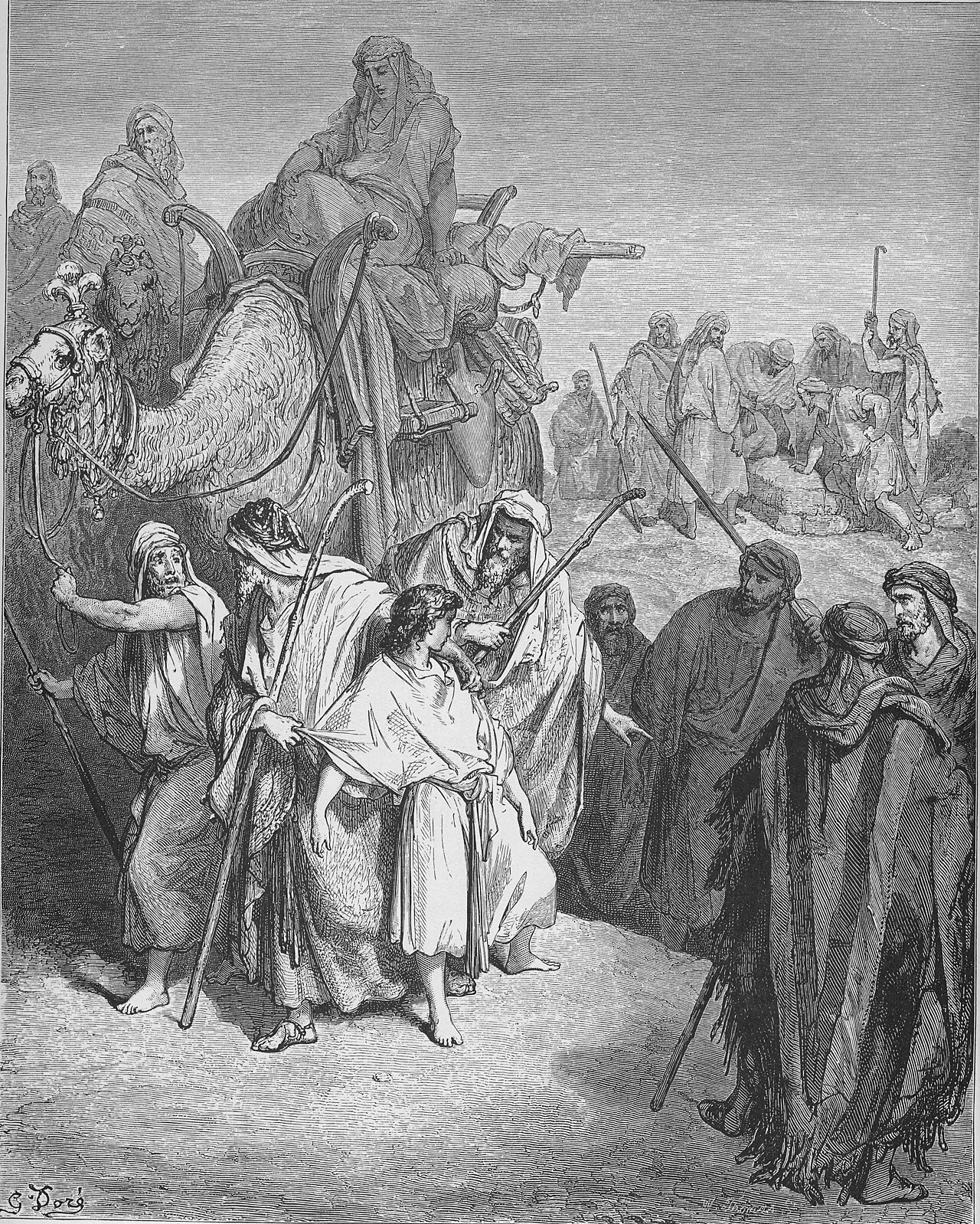
- Sold for twenty shekels of silverGenesis 37:28So when the Midianite traders passed by, his brothers pulled Joseph out of the pit and sold him for twenty shekels of silver to the Ishmaelites, who took him to Egypt.
- In Potiphar's house he refuses, and says whyGenesis 39:9No one in this house is greater than I am. He has withheld nothing from me except you, because you are his wife. So how could I do such a great evil and sin against God?”
- Accused, and put in the king's prisonGenesis 39:20So Joseph’s master took him and had him thrown into the prison where the king’s prisoners were confined.
- The cupbearer goes free and forgets himGenesis 40:23The chief cupbearer, however, did not remember Joseph; he forgot all about him.
- Pharaoh sets him over all of EgyptGenesis 41:41Pharaoh also told Joseph, “I hereby place you over all the land of Egypt.”
- He is thirty years old when he enters Pharaoh's serviceGenesis 41:46Now Joseph was thirty years old when he entered the service of Pharaoh king of Egypt.
- The brothers come to buy grain, and bowGenesis 42:6Now Joseph was the ruler of the land; he was the one who sold grain to all its people. So when his brothers arrived, they bowed down before him with their faces to the ground.
- Judah offers to take the slavery himselfGenesis 44:33Now please let your servant stay here as my lord’s slave in place of the boy. Let him return with his brothers.
- He tells them who he is, and who sent himGenesis 45:8Therefore it was not you who sent me here, but God, who has made me a father to Pharaoh
- He meets his father again, in GoshenGenesis 46:29Joseph prepared his chariot and went there to meet his father Israel. Joseph presented himself to him, embraced him, and wept profusely.
- Jacob crosses his hands over Joseph's two sonsGenesis 48:14But Israel stretched out his right hand and put it on the head of Ephraim, the younger; and crossing his hands, he put his left on Manasseh’s head, although Manasseh was the firstborn.
- After the funeral, the sentence everyone knowsGenesis 50:20As for you, what you intended against me for evil, God intended for good, in order to accomplish a day like this—to preserve the lives of many people.
- He makes them swear about his bonesGenesis 50:25And Joseph made the sons of Israel take an oath and said, “God will surely attend to you, and then you must carry my bones up from this place.”
- Four centuries later, Moses carries them outExodus 13:19Moses took the bones of Joseph with him because Joseph had made the sons of Israel swear a solemn oath when he said, “God will surely attend to you, and then you must carry my bones with you from this place.”
- Buried at Shechem, in the field Jacob boughtJoshua 24:32And the bones of Joseph, which the Israelites had brought up out of Egypt, were buried at Shechem in the plot of land that Jacob had purchased from the sons of Hamor, Shechem’s father, for a hundred pieces of silver.
- The one act the New Testament calls his faithHebrews 11:22By faith Joseph, when his end was near, spoke about the exodus of the Israelites and gave instructions about his bones.
Why Joseph matters
Joseph is Jacob's eleventh son and the first child of Rachel, the wife Jacob had worked fourteen years for. Genesis picks him up at seventeen, tending flocks with his brothers, wearing a robe his father gave him and telling dreams his brothers could not stand. In that same chapter they sell him to a caravan going down to Egypt. He never saw Canaan again. The errand itself covered real ground: Hebron to Shechem is reckoned at roughly sixty-five to eighty kilometers by the ridge road, and Genesis 37:17 has him go on from there to Dothan, another twenty-five kilometers north, before he found them. The middle of his life is the part the retelling skips. He was a household slave in Potiphar's house, then a convict, and Genesis 41:46 says he was thirty years old when he entered Pharaoh's service. That is thirteen years between the pit and the palace, and Genesis spends almost all of them on a man working for other people and waiting. What he got right is in the text. He refused his master's wife and gave his own reason for it, that it would be sin against God. He kept refusing, day after day. He ran the household, then the jail, then the country. He noticed that two frightened prisoners looked downcast one morning and asked them why, and the whole deliverance runs through that question. When he finally stood in front of Pharaoh he opened by disowning the skill: “I myself cannot do it.” The same book records what a reader would rather skip past. He told the dreams to the people the dreams were about, and Genesis says twice that the hatred grew afterward. He put his brothers through a long ordeal and never explains why, and their father is left grieving through most of it. He ran the famine as a grain monopoly that ended with the Egyptian people handing Pharaoh their money, their livestock, their land and finally themselves. Genesis reports all of it and praises and blames none of it. The one story he is known for is Genesis 45. He has had them in front of him for two chapters, speaking through an interpreter, and Judah has just offered to stay a slave in Benjamin's place. Joseph clears the room and tells them who he is. He names the crime plainly, that they sold him into Egypt, and in the next breath he says God sent him ahead of them to save lives. Five chapters later, after their father's funeral, they come back afraid he has only been waiting, and he says the same thing again in the sentence everyone knows. He brought his father and the whole household into the district of Goshen and fed them there. He lived a hundred and ten years and saw his great-grandchildren. Then he made his brothers swear that when God brought them out of Egypt they would carry his bones with them. Four centuries later Moses took the coffin out on the night of the Exodus, and Joshua put it in the ground at Shechem, in the field his father had bought. Hebrews 11:22 names that instruction, and nothing else in his life, as his faith.
Biography
Joseph, the eleventh son of Jacob and firstborn of beloved Rachel, lived one of the most remarkable lives in Scripture—a story of rejection, suffering, and exaltation that powerfully prefigures Christ. As Jacob's favorite, Joseph received a special coat and shared dreams of his family bowing to him. His brothers' jealousy led them to sell him to slave traders, telling Jacob he had been killed by a wild animal. In Egypt, Joseph served Potiphar faithfully until falsely accused by Potiphar's wife and imprisoned. Even in prison, Joseph prospered. He interpreted dreams for fellow prisoners, and two years later was brought before Pharaoh to interpret dreams of coming famine. Joseph not only interpreted but proposed a solution, and Pharaoh elevated him to second-in-command over all Egypt. At thirty, the slave became vizier. During seven years of abundance, Joseph stored grain throughout Egypt. When famine struck, his brothers came to buy food, bowing before him without recognition. Joseph tested their character before revealing himself in one of Scripture's most emotional scenes: "I am Joseph! Is my father still alive?" His forgiveness was complete: "You meant evil against me, but God meant it for good, to bring it about that many people should be kept alive." Joseph brought his family to Egypt, cared for them during the famine, and made Jacob's family prosper in Goshen. He lived 110 years, extracting a promise that his bones would be carried to the Promised Land—a faith that looked beyond death to resurrection.
No one in this house is greater than I am. He has withheld nothing from me except you, because you are his wife. So how could I do such a great evil and sin against God?”
Joseph resisted temptation for God's sake
Genesis 45: I am Joseph
The revelation, in the order the chapter has it
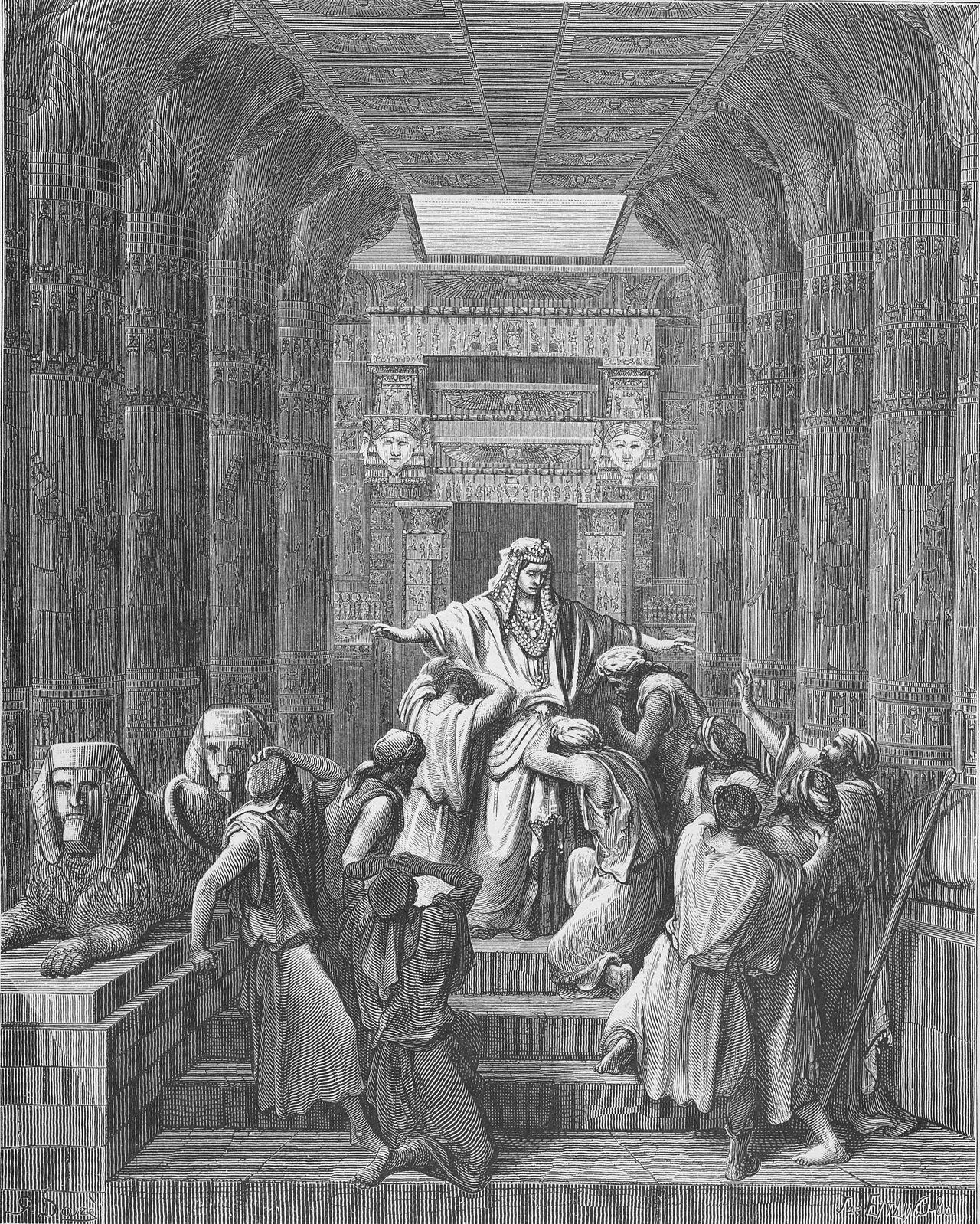
- He sends the room outGenesis 45:1Then Joseph could no longer control himself before all his attendants, and he cried out, “Send everyone away from me!”
- The Egyptians hear him weepingGenesis 45:2But he wept so loudly that the Egyptians heard him, and Pharaoh’s household soon heard of it.
- The first question is about his fatherGenesis 45:3Joseph said to his brothers, “I am Joseph! Is my father still alive?”
- He calls them closer and names the crimeGenesis 45:4Then Joseph said to his brothers, “Please come near me.” And they did so. “I am Joseph, your brother,” he said, “the one you sold into Egypt!
- Do not be distressed with yourselvesGenesis 45:5And now, do not be distressed or angry with yourselves that you sold me into this place, because it was to save lives that God sent me before you.
- Sent ahead to keep a remnant aliveGenesis 45:7God sent me before you to preserve you as a remnant on the earth and to save your lives by a great deliverance.
- It was not you who sent me hereGenesis 45:8Therefore it was not you who sent me here, but God, who has made me a father to Pharaoh
- Benjamin first, then all of themGenesis 45:14-15Then Joseph threw his arms around his brother Benjamin and wept, and Benjamin wept as they embraced. Joseph kissed each of his brothers as he wept over them. And afterward his brothers talked with him.
- The last thing he says as they leaveGenesis 45:24Then Joseph sent his brothers on their way, and as they were leaving, he said to them, “Do not quarrel on the way!”
- Five chapters later, after the funeralGenesis 50:19-20But Joseph replied, “Do not be afraid. Am I in the place of God? As for you, what you intended against me for evil, God intended for good, in order to accomplish a day like this—to preserve the lives of many people.
The brothers had been speaking to him through an interpreter since Genesis 42:23, and Judah had just offered to stay a slave in Benjamin's place. Joseph says both halves of it and softens neither: you sold me, and God sent me. The last beat here jumps five chapters, to the answer he gives them after their father's funeral, because Genesis has him say the same thing twice.
Joseph: Genesis 37 to 50, the full studyKey events
- 1Dreams of greatnessGenesis 37:5-11→
Joseph dreamed his family would bow to him
Read the verse here
Genesis 37:5-11Then Joseph had a dream, and when he told it to his brothers, they hated him even more.
- 2Sold into slaveryGenesis 37:12-36→
Brothers sold Joseph to traders heading to Egypt
Read the verse here
Genesis 37:12-36Some time later, Joseph’s brothers had gone to pasture their father’s flocks near Shechem.
- 3Imprisoned falselyGenesis 39:7-20→
Potiphar's wife falsely accused Joseph
Read the verse here
Genesis 39:7-20and after some time his master’s wife cast her eyes upon Joseph and said, “Sleep with me.”
- 4Interpreted Pharaoh's dreamsGenesis 41:14-45→
Joseph interpreted dreams and was elevated to vizier
Read the verse here
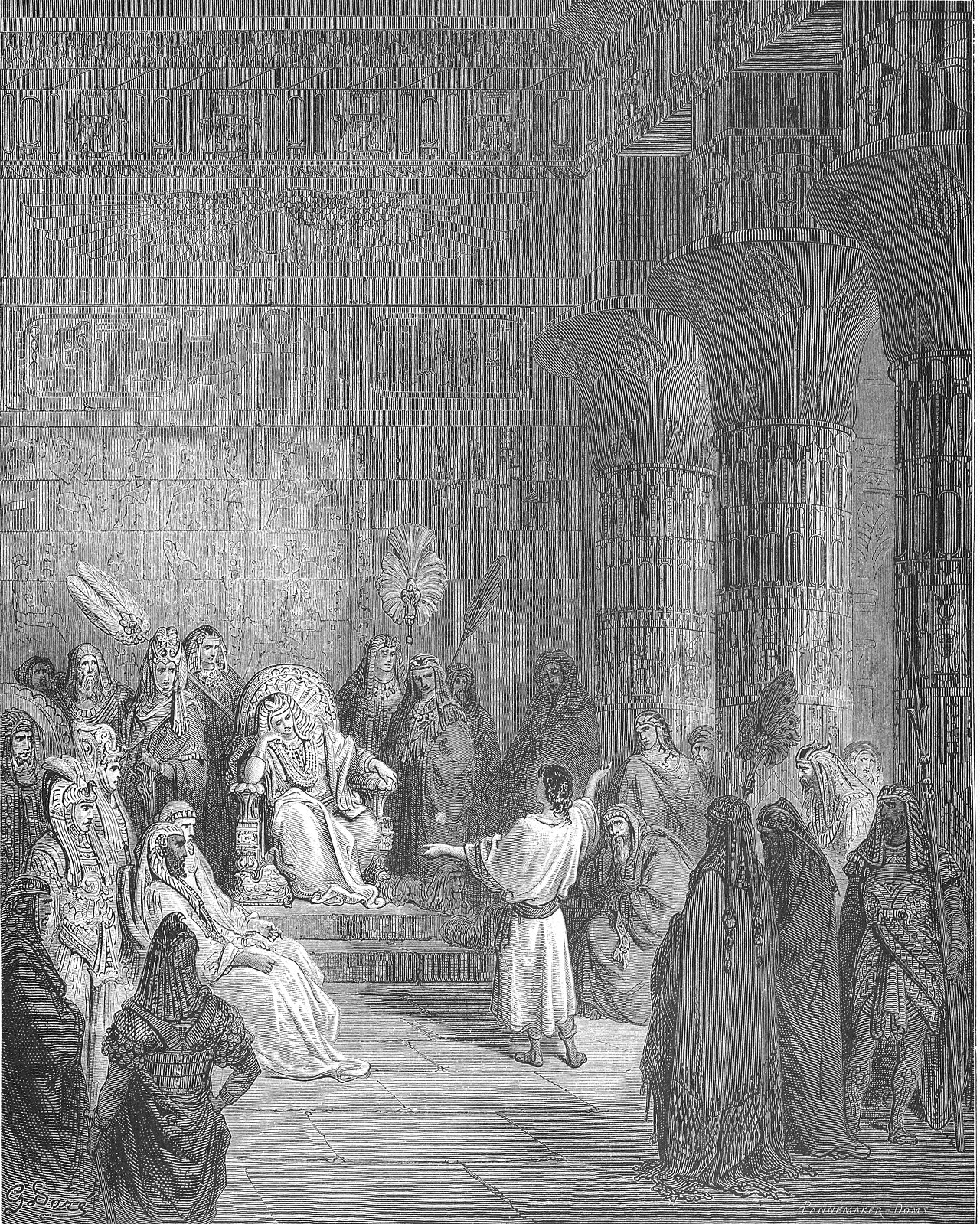
Genesis 41:14-45So Pharaoh sent for Joseph, who was quickly brought out of the dungeon. After he had shaved and changed his clothes, he went in before Pharaoh.
- 5Revealed to brothersGenesis 45:1-15→
Joseph revealed his identity and forgave his brothers
Read the verse here
Genesis 45:1-15Then Joseph could no longer control himself before all his attendants, and he cried out, “Send everyone away from me!” So none of them were with Joseph when he made himself known to his brothers.
- 6Brought family to EgyptGenesis 46:1-7→
Joseph reunited with Jacob and settled family in Goshen
Read the verse here
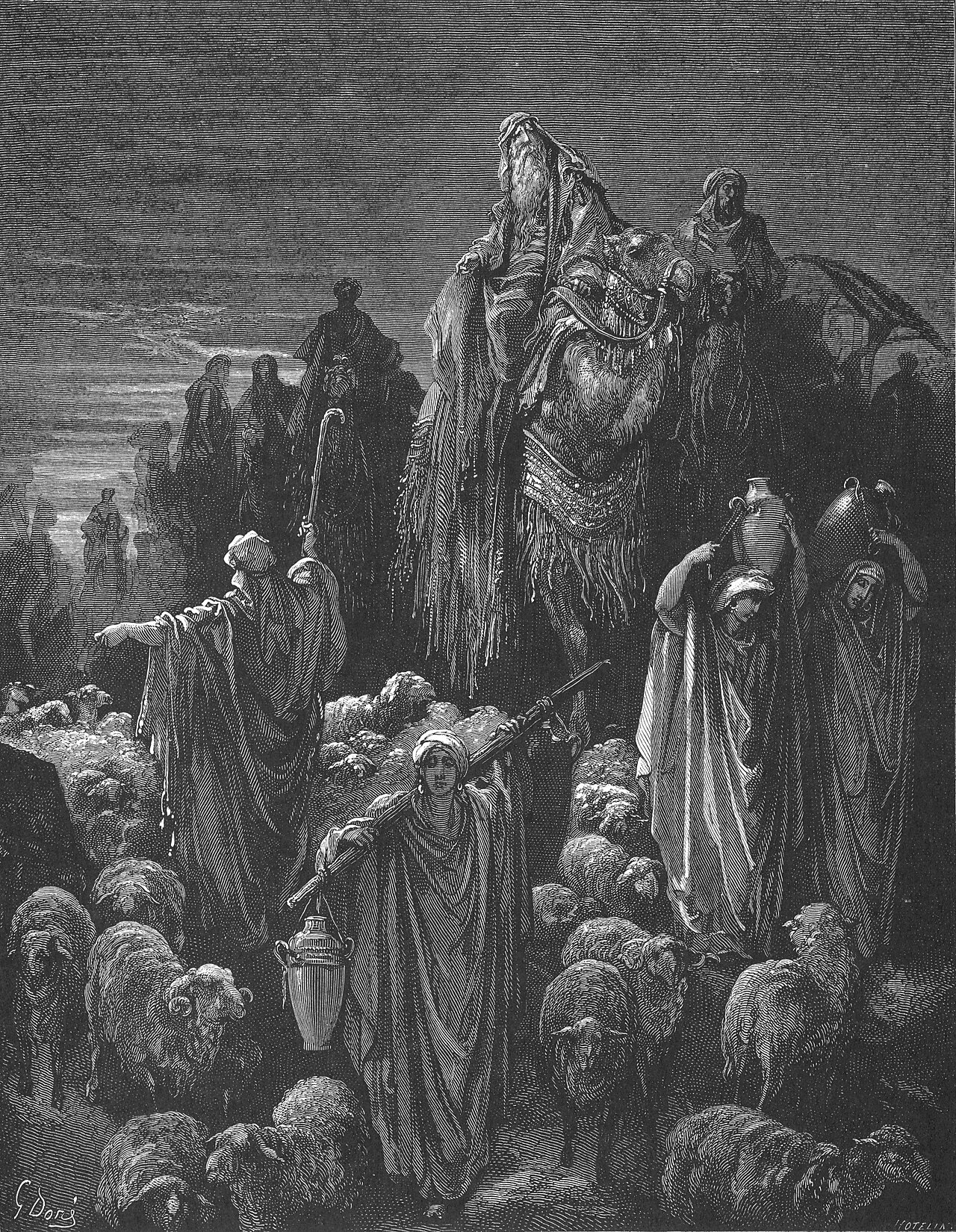
Genesis 46:1-7So Israel set out with all that he had, and when he came to Beersheba, he offered sacrifices to the God of his father Isaac.
More key verses
Text: Berean Standard Bible.
“As for you, what you intended against me for evil, God intended for good, in order to accomplish a day like this—to preserve the lives of many people.”
“By faith Joseph, when his end was near, spoke about the exodus of the Israelites and gave instructions about his bones.”
What they got right, and what they got wrong
Strengths
Maintained integrity in temptation, faithful in suffering, wisdom in leadership, complete forgiveness of brothers, trusted God's sovereignty
Weaknesses
Initial pride in sharing dreams, possibly naive about brothers' hatred
Lessons
God can use evil for good purposes. Integrity matters even in suffering. Forgiveness brings reconciliation. God's plans unfold over many years. Faith looks beyond death.
Spiritual significance
Joseph's life demonstrates God's sovereign control over human evil, turning betrayal into blessing. His forgiveness models divine forgiveness, and his preservation of Israel enabled the nation's future.
How Joseph points to Jesus
The New Testament handles Joseph in two places, and it is worth knowing what each one actually claims. The longer is Stephen's, in Acts 7:9-16, spoken on trial in Jerusalem. He opens with the crime and with God's answer to it: “Because the patriarchs were jealous of Joseph, they sold him as a slave into Egypt. But God was with him and rescued him from all his troubles. He granted Joseph favor and wisdom in the sight of Pharaoh king of Egypt, who appointed him ruler over Egypt and all his household.” He goes on through the famine, the two journeys, the revelation on their second visit, and the sending for Jacob and all his relatives, seventy-five in all at Acts 7:14. Stephen is not drawing a portrait of Christ out of Joseph's biography. He is laying down the first beat of the pattern his whole speech is built on. God sends a deliverer, the man's own people refuse him, and God sends him again. Moses is the second beat at Acts 7:35, and the pattern lands on the Just One at Acts 7:52. Hebrews 11:22 picks one act out of the whole life and calls it faith: “By faith Joseph, when his end was near, spoke about the exodus of the Israelites and gave instructions about his bones.” Not the refusal in Potiphar's house, not the thirteen years of slavery and prison, not the scene in Genesis 45. A funeral instruction. Theodoret of Cyrus gave the logic in one line in the fifth century, that Joseph would not have given directions about his remains if he had not believed the divine promises. Jamieson, Fausset and Brown, writing in 1871, read two claims out of the verse, that Joseph had no doubt his descendants would obtain the land, and that he believed in the resurrection of the body. That second claim is their reading and this page gives it as theirs. Beyond those two passages, the parallels most readers know were drawn by the church rather than by the apostles. This site scores them on its Joseph and Joshua page, which sets nine parallels beside their texts and marks each one for what stands behind it. Four rest on something Stephen states as fact in Acts 7. Five are readings the church has drawn with no New Testament text behind them. The number of times the New Testament itself calls Joseph a type of Christ is zero. That ledger is the instrument this page defers to, and nothing here contradicts its scoring. Genesis 50:20 is the sentence everyone knows and no apostle quotes. Joseph tells his brothers that they intended evil against him and that God intended the same act for good. The Hebrew verb is chashab, which means to weave or to fabricate, and it stands on both sides of the sentence. The brothers wove the act one way and God wove it another out of the same threads. Peter makes the identical move about the cross at Acts 2:23, an act carried out by wicked men and handed over by God's set purpose. No apostle cites Genesis 50:20 of the cross, so the logic is apostolic where the citation is not. The fathers who built the tradition said plainly what they were doing. Ambrose of Milan wrote the most sustained ancient reading of the cycle, On Joseph the Patriarch, in the late fourth century, and takes “Please come near me” at Genesis 45:4 as Christ speaking to his own. Chromatius of Aquileia, preaching around AD 400, set the twenty pieces of Genesis 37:28 beside the thirty of Matthew 26:15 and observed that the servant was sold at the higher price. Caesarius of Arles, in the early sixth century, opens his own treatment by calling it mystical or allegorical interpretation, which is an author telling his hearers that Genesis is not making the claim he is about to make. These readings are given here at full strength and named for what they are. None of this takes anything from Israel. Genesis 48 gives Joseph two tribes inside the land, and Genesis 49:22-26 gives him the long blessing. Ezekiel 37:16-19 makes the stick of Joseph half of a promised reunion of the whole house of Israel in their own country, joined into one stick in God's hand. Acts 7 is a Jewish man arguing from Jewish history in the Temple courts, in front of Jewish judges. The type is a reading laid over a history that stays Israel's own, and this site's tradition holds that God's promises to Israel stand.
Joseph prefigures Christ: rejected by his brothers, sold for silver, falsely accused, exalted after suffering, became bread-giver to the world, and forgave those who wronged him.
The voices
each quoted from the work named
"Come to me," because I have come near to you, yes, even so far that I made myself a sharer in your nature by taking on flesh. At least do not flee a partaker of your fellowship, if you do not know the Author of your salvation. "And they came to him, and he said, 'I am Joseph your brother, whom you sold into Egypt.
A coat of many colors - כתנת פסים kethoneth passim, a coat made up of stripes of differently colored cloth. Similar to this was the toga praetexta of the Roman youth, which was white, striped or fringed with purple; this they wore till they were seventeen years of age, when they changed it for the toga virilis, or toga pura, which was all white. Such vestures as clothing of distinction are worn all over Persia, India, and China to the present day.
Let us observe a great mystery: for Joseph twenty pieces of gold were given, for the Lord thirty pieces of silver. The servant was sold at a higher price than the Master.
4 more teachers on these versesCaesarius of Arles · John Chrysostom · R. C. Sproul · Charles Spurgeon
The young man is desired by his mistress but is not provoked to lust. He is asked and runs away. She who commanded in other matters, in this one thing coaxes and pleads. She loved him, or was it rather herself?
See once again the good man, as though competing in some gymnasium or wrestling ring, giving a demonstration of his characteristic virtue by not showing signs of alarm, panic or disappointment. I mean, had it been somebody else, any one of a thousand, he might have said, What's this? The chief cupbearer was all too ready to regain his former prosperity by my interpreting what he saw in his dream but now has no thought for me despite my predicting it. He is enjoying great relief, whereas I, who committed no crime, am locked up here with murderers, grave robbers, thieves and perpetrators of countless crimes. Joseph said nothing of the sort; he entertained no such thoughts. He realized that the race was longer for him, so that by striving consistently he might win a glorious crown.…Joseph, you see, had to await the right moment for release from there to come his way along with renown. After all, if before Pharaoh's dreams the chief cupbearer had by his own intervention freed him from prison, perhaps his virtue would not have become known to many people. As it was, however, the wise and creative Lord, who like a fine craftsman knew how long the gold should be kept in the fire and when it ought be taken out, allowed forgetfulness to affect the chief cupbearer for a period of two years so that the moment of Pharaoh's dreams should arrive and that by force of circumstances the good man should become known to the whole of Pharaoh's kingdom.
Joseph's brothers meant his suffering for evil, and insofar as this was their motivation, they were culpable before God.
WE cannot readily tell which action in a gracious life God may set the most store by. The Holy Spirit in this chapter selects out of good men's lives the most brilliant instances of their faith. I should hardly have expected that He would have mentioned the dying scene of Joseph's life as the most illustrious proof of his faith in God. That eventful life, perhaps the most interesting in all sacred Scripture, with the exception of One, abounds with incidents of which the Holy Spirit might have said by His servant Paul, "By faith Joseph did this and that," but none is mentioned save the closing scene. The triumph especially of his chastity under well-known and exceedingly severe temptation, might have been very properly traced to the power of his faith, but it is passed over, and the fact that he gave commandment concerning his bones is singled out as being the most illustrious proof of his faith. Does not this tell us, dear Brothers and Sisters, that we are very poor judges of what God will most delight in? Very likely, when we least please ourselves, God is best pleased with us. That prayer over which we groaned, and thought it was not prayer, may have had more true supplication in it than another intercession of which we thought far more highly. That sermon which made us lament in the bitterness of our soul because we thought we had delivered it so feebly, may have been, in God's sight, more precious than many a fluent discourse concerning which we congratulated ourselves. That trial which we thought we passed through with so much impatience, may have been before God an exhibition of true patience as He looked deep down into our souls. The tests by which we try ourselves are very inaccurate.
Joseph in Scripture
Open a book to read its mentions here. Text: Berean Standard Bible. Names repeat in Scripture, so some of these verses may speak of another person called Joseph. The two marks are drawn from the chapters this page's own references stand in.
Old TestamentNew Testamentsegment width = share of mentions
Old Testament16 books · 224 mentions
Genesis169 mentions
- Genesis 30:24She named him Joseph, and said, “May the LORD add to me another son.”
- Genesis 30:25Now after Rachel had given birth to Joseph, Jacob said to Laban, “Send me on my way so I can return to my homeland.
- Genesis 33:2He put the maidservants and their children in front, Leah and her children next, and Rachel and Joseph at the rear.
- Genesis 33:7Leah and her children also approached and bowed down, and then Joseph and Rachel approached and bowed down.
- Genesis 35:24The sons of Rachel were Joseph and Benjamin.
164 further mentions in Genesis, read them in the book.
Exodus4 mentions
- Exodus 1:5The descendants of Jacob numbered seventy in all, including Joseph, who was already in Egypt.
- Exodus 1:6Now Joseph and all his brothers and all that generation died,
- Exodus 1:8Then a new king, who did not know Joseph, came to power in Egypt.
- Exodus 13:19Moses took the bones of Joseph with him because Joseph had made the sons of Israel swear a solemn oath when he said, “God will surely attend to you, and then you must carry my bones with you from this place.”
Numbers12 mentions
- Numbers 1:10from the sons of Joseph: from Ephraim, Elishama son of Ammihud, and from Manasseh, Gamaliel son of Pedahzur;
- Numbers 1:32From the sons of Joseph:
- Numbers 13:7from the tribe of Issachar, Igal son of Joseph;
- Numbers 13:11from the tribe of Manasseh (a tribe of Joseph), Gaddi son of Susi;
- Numbers 26:28The descendants of Joseph included the clans of Manasseh and Ephraim.
7 further mentions in Numbers, read them in the book.
Deuteronomy3 mentions
- Deuteronomy 27:12“When you have crossed the Jordan, these tribes shall stand on Mount Gerizim to bless the people: Simeon, Levi, Judah, Issachar, Joseph, and Benjamin.
- Deuteronomy 33:13Concerning Joseph he said: “May his land be blessed by the LORD with the precious dew from heaven above and the deep waters that lie beneath,
- Deuteronomy 33:16with the choice gifts of the land and everything in it, and with the favor of Him who dwelt in the burning bush. May these rest on the head of Joseph and crown the brow of the prince of his brothers.
Joshua10 mentions
- Joshua 14:4The descendants of Joseph became two tribes, Manasseh and Ephraim. And no portion of the land was given to the Levites, except for cities in which to live, along with pasturelands for their flocks and herds.
- Joshua 16:1The allotment for the descendants of Joseph extended from the Jordan at Jericho to the waters of Jericho on the east, through the wilderness that goes up from Jericho into the hill country of Bethel.
- Joshua 16:4So Ephraim and Manasseh, the sons of Joseph, received their inheritance.
- Joshua 17:1Now this was the allotment for the tribe of Manasseh as Joseph’s firstborn son, namely for Machir the firstborn of Manasseh and father of the Gileadites, who had received Gilead and Bashan because Machir was a man of war.
- Joshua 17:2So this allotment was for the rest of the descendants of Manasseh—the clans of Abiezer, Helek, Asriel, Shechem, Hepher, and Shemida. These are the other male descendants of the clans of Manasseh son of Joseph.
5 further mentions in Joshua, read them in the book.
Judges2 mentions
2 Samuel1 mention
1 Kings1 mention
1 Chronicles6 mentions
- 1 Chronicles 2:2Reuben, Simeon, Levi, Judah, Issachar, Zebulun, Dan, Joseph, Benjamin, Naphtali, Gad, and Asher.
- 1 Chronicles 5:1These were the sons of Reuben the firstborn of Israel. Though he was the firstborn, his birthright was given to the sons of Joseph son of Israel, because Reuben defiled his father’s bed. So he is not reckoned according to birthright.
- 1 Chronicles 5:2And though Judah prevailed over his brothers and a ruler came from him, the birthright belonged to Joseph.
- 1 Chronicles 7:29And along the borders of Manasseh were Beth-shean, Taanach, Megiddo, and Dor, together with their villages. The descendants of Joseph son of Israel lived in these towns.
- 1 Chronicles 25:2From the sons of Asaph: Zaccur, Joseph, Nethaniah, and Asarelah. These sons of Asaph were under the direction of Asaph, who prophesied under the direction of the king.
1 further mention in 1 Chronicles, read them in the book.
Ezra1 mention
Psalms5 mentions
- Psalms 77:15With power You redeemed Your people, the sons of Jacob and Joseph. Selah
- Psalms 78:67He rejected the tent of Joseph and refused the tribe of Ephraim.
- Psalms 80:1Hear us, O Shepherd of Israel, who leads Joseph like a flock; You who sit enthroned between the cherubim, shine forth
- Psalms 81:5He ordained it as a testimony for Joseph when he went out over the land of Egypt, where I heard an unfamiliar language:
- Psalms 105:17He sent a man before them— Joseph, sold as a slave.
Ezekiel4 mentions
- Ezekiel 37:16“And you, son of man, take a single stick and write on it: ‘Belonging to Judah and to the Israelites associated with him.’ Then take another stick and write on it: ‘Belonging to Joseph—the stick of Ephraim—and to all the house of Israel associated with him.’
- Ezekiel 37:19you are to tell them that this is what the Lord GOD says: ‘I will take the stick of Joseph, which is in the hand of Ephraim, and the tribes of Israel associated with him, and I will put them together with the stick of Judah. I will make them into a single stick, and they will become one in My hand.’
- Ezekiel 47:13This is what the Lord GOD says: “These are the boundaries by which you are to divide the land as an inheritance among the twelve tribes of Israel; Joseph shall receive two portions.
- Ezekiel 48:32On the east side, which will be 4,500 cubits long, there will be three gates: the gate of Joseph, the gate of Benjamin, and the gate of Dan.
Amos3 mentions
- Amos 5:6Seek the LORD and live, or He will sweep like fire through the house of Joseph; it will devour everything, with no one at Bethel to extinguish it.
- Amos 5:15Hate evil and love good; establish justice in the gate. Perhaps the LORD, the God of Hosts, will be gracious to the remnant of Joseph.”
- Amos 6:6You drink wine by the bowlful and anoint yourselves with the finest oils, but you fail to grieve over the ruin of Joseph.
Obadiah1 mention
New Testament7 books · 38 mentions
Matthew12 mentions
- Matthew 1:16and Jacob the father of Joseph, the husband of Mary, of whom was born Jesus, who is called Christ.
- Matthew 1:18This is how the birth of Jesus Christ came about: His mother Mary was pledged in marriage to Joseph, but before they came together, she was found to be with child through the Holy Spirit.
- Matthew 1:19Because Joseph her husband was a righteous man and was unwilling to disgrace her publicly, he resolved to divorce her quietly.
- Matthew 1:20But after he had pondered these things, an angel of the Lord appeared to him in a dream and said, “Joseph, son of David, do not be afraid to embrace Mary as your wife, for the One conceived in her is from the Holy Spirit.
- Matthew 1:24When Joseph woke up, he did as the angel of the Lord had commanded him, and embraced Mary as his wife.
7 further mentions in Matthew, read them in the book.
Mark4 mentions
- Mark 15:43Joseph of Arimathea, a prominent Council member who himself was waiting for the kingdom of God, boldly went to Pilate to ask for the body of Jesus.
- Mark 15:45When Pilate had confirmed it with the centurion, he granted the body to Joseph.
- Mark 15:46So Joseph bought a linen cloth, took down the body of Jesus, wrapped it in the cloth, and placed it in a tomb that had been cut out of the rock. Then he rolled a stone against the entrance to the tomb.
- Mark 15:47Mary Magdalene and Mary the mother of Joseph saw where His body was placed.
Luke8 mentions
- Luke 1:27to a virgin pledged in marriage to a man named Joseph, who was of the house of David. And the virgin’s name was Mary.
- Luke 2:4So Joseph also went up from Nazareth in Galilee to Judea, to the city of David called Bethlehem, since he was from the house and line of David.
- Luke 2:16So they hurried off and found Mary and Joseph and the Baby, who was lying in the manger.
- Luke 3:23Jesus Himself was about thirty years old when He began His ministry. He was regarded as the son of Joseph, the son of Heli,
- Luke 3:24the son of Matthat, the son of Levi, the son of Melchi, the son of Jannai, the son of Joseph,
3 further mentions in Luke, read them in the book.
John4 mentions
- John 1:45Philip found Nathanael and told him, “We have found the One Moses wrote about in the Law, the One the prophets foretold—Jesus of Nazareth, the son of Joseph.”
- John 4:5So He came to a town of Samaria called Sychar, near the plot of ground that Jacob had given to his son Joseph.
- John 6:42They were asking, “Is this not Jesus, the son of Joseph, whose father and mother we know? How then can He say, ‘I have come down from heaven?’”
- John 19:38Afterward, Joseph of Arimathea, who was a disciple of Jesus (but secretly for fear of the Jews), asked Pilate to let him remove the body of Jesus. Pilate gave him permission, so he came and removed His body.
Acts7 mentions
- Acts 1:23So they proposed two men: Joseph called Barsabbas (also known as Justus) and Matthias.
- Acts 4:36Joseph, a Levite from Cyprus, whom the apostles called Barnabas (meaning Son of Encouragement),
- Acts 7:9Because the patriarchs were jealous of Joseph, they sold him as a slave into Egypt. But God was with him
- Acts 7:10and rescued him from all his troubles. He granted Joseph favor and wisdom in the sight of Pharaoh king of Egypt, who appointed him ruler over Egypt and all his household.
- Acts 7:13On their second visit, Joseph revealed his identity to his brothers, and his family became known to Pharaoh.
2 further mentions in Acts, read them in the book.
Hebrews2 mentions
Common questions
How old was Joseph at each stage of the story?
Genesis gives four numbers and they fit together. He is seventeen in the chapter that ends with the sale, thirty when he enters Pharaoh's service, and thirty-nine at the reunion, because Genesis 45:6 puts it two years into the famine that follows the seven good years. He dies at a hundred and ten.
That means thirteen years between the pit and the palace, most of them as a slave and a prisoner. It also means his brothers had more than twenty years to live with what they had done before he stood in front of them.
Egyptian inscriptions and wisdom texts, including the Middle Kingdom Papyrus Westcar, name a hundred and ten years as the ideal lifespan, a marker of a full and virtuous life rather than a common outcome. Genesis records Joseph reaching that exact number.
What did the coat actually look like?
Readers differ; the positions are named
The Hebrew is kethoneth passim, and the second of those two words occurs five times in the whole Hebrew Bible. Four of the five are in 2 Samuel 13, where the same garment marks the king's virgin daughters.
The colour reading comes through the Greek and Latin translations into English, and Adam Clarke argued it in 1832, comparing the striped toga praetexta worn by Roman youths. The long-sleeved or ornamented reading rests on the Hebrew root and on the 2 Samuel 13 usage. Both readings are old and this page names both.
What is not in dispute is the point of the garment. It marked rank, and the brothers stripped it off him first.
Was Joseph wrong to tell his brothers the dreams?
Genesis reports the telling and the consequence and passes no judgment on either. It says he told them the first dream and they hated him more, that he told them a second, and that his father rebuked him for it while keeping the matter in mind.
What the text does say is that the dreams came true exactly as given. The brothers' own objection, “Do you intend to reign over us?”, is the thing they later did in his court without knowing who he was.
Ishmaelites or Midianites, and does it matter?
Readers differ; the positions are named
Genesis 37 uses both names in the same passage. Verses 25, 27 and 28 say Ishmaelites, and verses 28 and 36 say Midianites. Genesis does not explain the double name.
Readers have proposed that the two names overlapped for one caravan in this period, and that both groups were genuinely part of the transaction. This site's Dothan page states it the same way and says the text does not settle which reading is right.
Is there archaeological evidence for Joseph in Egypt?
There is a great deal of evidence for Semitic-speaking people in Egypt, and it lines up with what Genesis describes. Tell el-Dab'a in the eastern Delta, excavated by Manfred Bietak since 1966, is a Canaanite settlement that became the capital of the Hyksos, the foreign kings who held the Delta from roughly 1650 to 1550 BC. Papyrus Brooklyn 35.1446, of about 1740 BC, lists the servants on an Egyptian estate, of whom more than forty carry Northwest Semitic names.
David Rohl in 1995 and Charles Aling on a different chronology have argued that one Syrian-plan house at Tell el-Dab'a, with an emptied tomb holding a statue of an Asiatic official in a multicoloured coat, is Joseph's. Bietak, who dug it, rejects the identification and reads the statue as one of several high Asiatic officials the site attests. Nothing excavated in Egypt names Joseph, and this site says so here and on its Egypt and Goshen pages.
Genesis never names the Pharaoh Joseph served, and it never gives a date. The king who did not know Joseph at Exodus 1:8 is a different man, generations later.
What happened to Joseph's bones?
He made the sons of Israel swear to carry them out of Egypt. Exodus 13:19 says Moses took them on the night of the Exodus. Joshua 24:32 says they were buried at Shechem in the plot Jacob had bought from the sons of Hamor, and that the plot became the inheritance of Joseph's descendants. That is roughly four centuries between the oath and the burial.
A traditional tomb of Joseph stands near the mound at Shechem, and the Bordeaux pilgrim already names a tomb of Joseph in that area in AD 333. Its later history is disputed, and that is all this site says about it.
Why does Hebrews name the bones and not the temptation?
Hebrews 11:22 selects one act as Joseph's faith, the instruction about his remains. Theodoret of Cyrus gave the logic in the fifth century, that Joseph would not have given directions about his remains if he had not believed the divine promises.
Jamieson, Fausset and Brown read two claims out of the verse in 1871, that Joseph had no doubt his descendants would obtain the land and that he believed in the resurrection of the body. The second is their reading. Spurgeon preached a whole sermon on the oddity of the choice in 1870 and drew the lesson that we are very poor judges of what God will most delight in.
Did Joseph forgive his brothers?
The text is careful here and this page should be too. Genesis reports him weeping over them seven times, providing for them, speaking kindly to them, and telling them twice that God sent him ahead of them.
The word forgive appears in Genesis 50:17, in their request, and not in his answer. His answer is a question, “Am I in the place of God?”, followed by a promise to provide for them and their little ones. What Genesis records is a man refusing to take the judge's seat and then feeding the people who sold him.
Was Joseph a type of Christ?
Readers differ; the positions are named
The New Testament never says so. Stephen retells the whole story in Acts 7:9-16 to show a pattern, that God sends a deliverer and his own people refuse him, and the pattern lands on Christ at Acts 7:52. Hebrews 11:22 names his faith about his bones. Psalm 105:16-22 makes God the actor in every line.
The parallels most readers know, the beloved son, the silver, the false accusation, the two prisoners, the bread-giver, were drawn by the church rather than by the apostles, and the fathers who drew them said so. Caesarius of Arles introduces his own reading with the words mystical or allegorical interpretation.
This site scores all nine parallels on its Joseph and Joshua page and prints the count. Four rest on something Stephen states in Acts 7, five are the church's own, and none is the New Testament calling Joseph a type of Christ. That is the page to read for the whole argument.
Notable art
6 verified pieces depicting Joseph
Sources cited
- Berean Standard BibleThe Scripture quoted on this page, byte for byte. Public domain since 2023.
- Ambrose of Milan, Chromatius of Aquileia, John Chrysostom, Theodoret of Cyrus and Caesarius of Arles, in the Ante-Nicene and Nicene and Post-Nicene FathersThe early Christian readings quoted and named on this page. Public domain, CCEL editions. Each is placed by the century of the work rather than by the author's death year.
- Adam Clarke, Commentary on the Bible (1832)Quoted on Genesis 37:3, and cited for the striped reading of the coat. Public domain.
- Jamieson, Fausset & Brown, Commentary Critical and Explanatory on the Whole Bible (1871)Cited on Hebrews 11:22 for the two claims they read out of the verse, the second of which is presented as theirs. Public domain.
- Charles H. Spurgeon, The Metropolitan Tabernacle Pulpit, Sermon No. 966, “Joseph’s Bones” (1870)The sermon on why Hebrews chose the funeral instruction. Public domain, CCEL edition.
- R. C. Sproul, How Can God Bring Good Out of Evil?Modern and in copyright, quoted here at twenty-one words under the cite-only rule. The work carries no year in the site's quote store and none is invented.
- Manfred Bietak, Avaris: The Capital of the Hyksos. Recent Excavations at Tell el-Dab'a (London: British Museum Press, 1996)The Austrian excavation of Tell el-Dab'a, cited for the Canaanite settlement in the eastern Delta and for the excavator's own reading of the Asiatic official's statue.
- William C. Hayes, A Papyrus of the Late Middle Kingdom in the Brooklyn Museum, Papyrus Brooklyn 35.1446 (Brooklyn Museum, 1955)The publication of the servant list with more than forty Northwest Semitic names.
- David Rohl, A Test of Time: The Bible from Myth to History (London: Century, 1995)The Tell el-Dab'a proposal about Joseph, cited for the position it argues.
- Joseph P. Free, Tell Dothan excavation reports (Wheaton College expeditions, 1953-1964)The identification of Tell Dothan, cited in general terms as reported in standard Bible archaeology handbooks.
- Itinerarium Burdigalense, the Bordeaux pilgrim, AD 333The earliest dated witness to a tomb of Joseph at Shechem. Public domain in translation.
- Gustave Doré, La Sainte Bible (Tours: Alfred Mame et fils, 1866)The four engravings on this page, plates 26 to 29, the only scenes from these fourteen chapters Doré drew. Public domain.
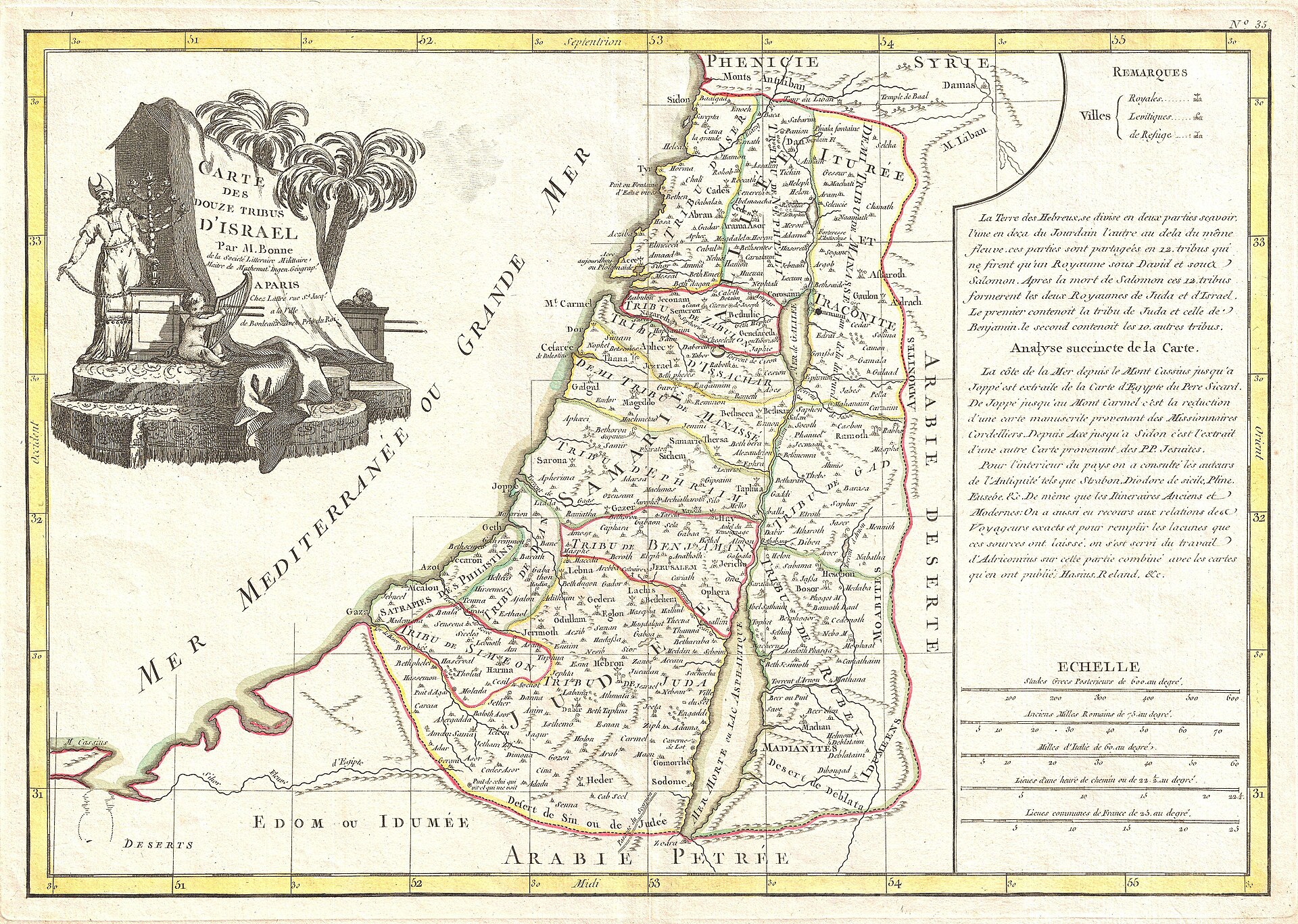
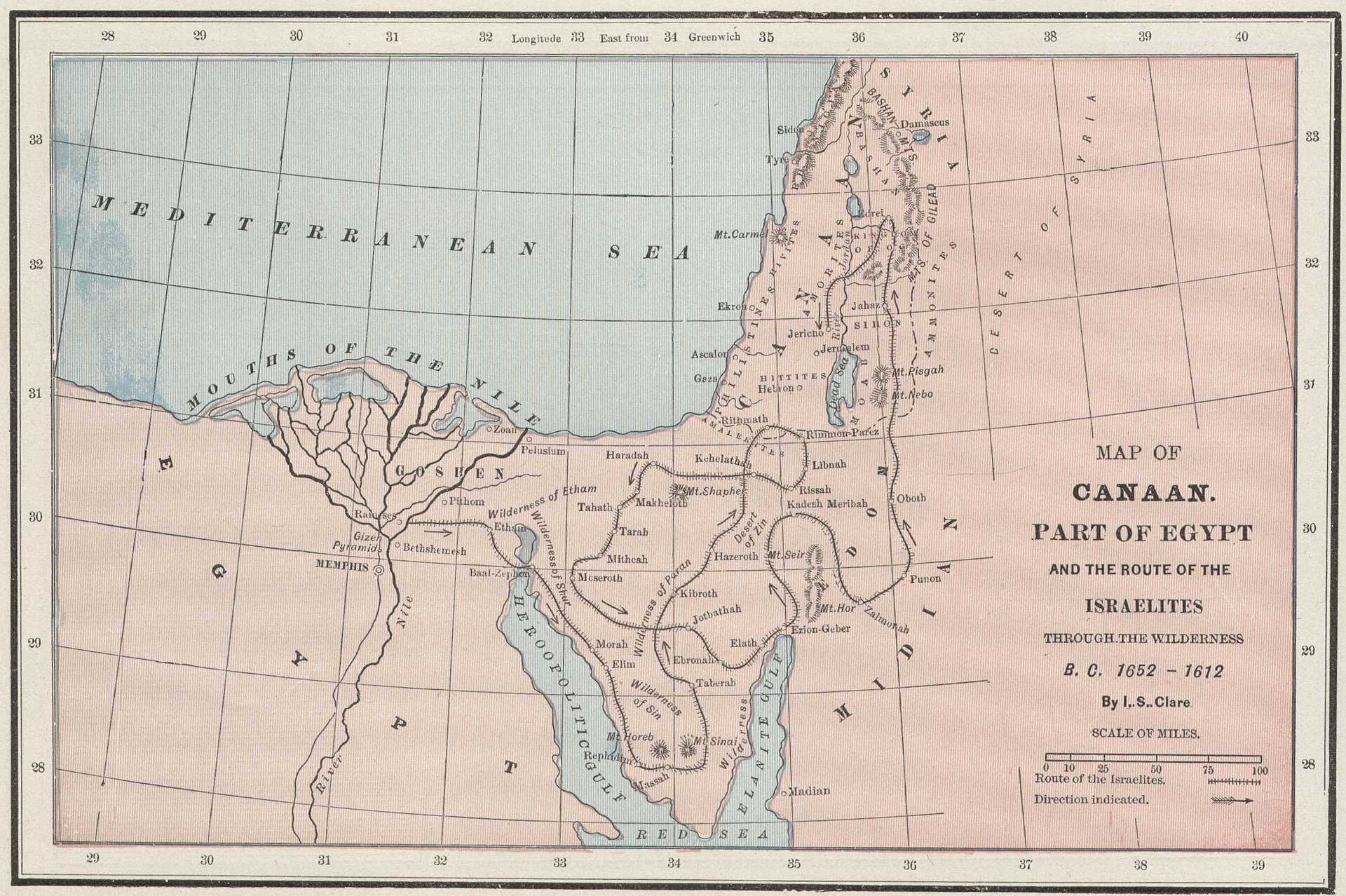
- Wikimedia Commons, for the maps and for the portraitRigobert Bonne's map of the Twelve Tribes (1770) and the George F. Cram atlas plate, both public domain. The portrait beside this page, Peter von Cornelius, Joseph Interpreting Pharaoh's Dream, is also served from Commons and its licence is checked when the page renders. There is no painting of Joseph in this site's own image files, which is why the art here is engravings and maps.
- UCL Digital Egypt for Universities, "Life span in Ancient Egypt"Cited for the hundred-and-ten-year ideal lifespan named in Egyptian inscriptions and the Papyrus Westcar, confirmed by search 2026-09-02.
- BiblePlaces.com, "Genesis 37", and Bible Lands Notes, "Distances from Jerusalem" (biblecharts.org)Cited for the approximate distance from Hebron to Shechem by the ridge road, given as a range because the two references differ slightly, confirmed by search 2026-09-02.
Keep studying
On this page
Studies19
On this person
On this passage
Trails1
Every page that names them1
Books22
Doorway1
Keep this page