
Place
Goshen
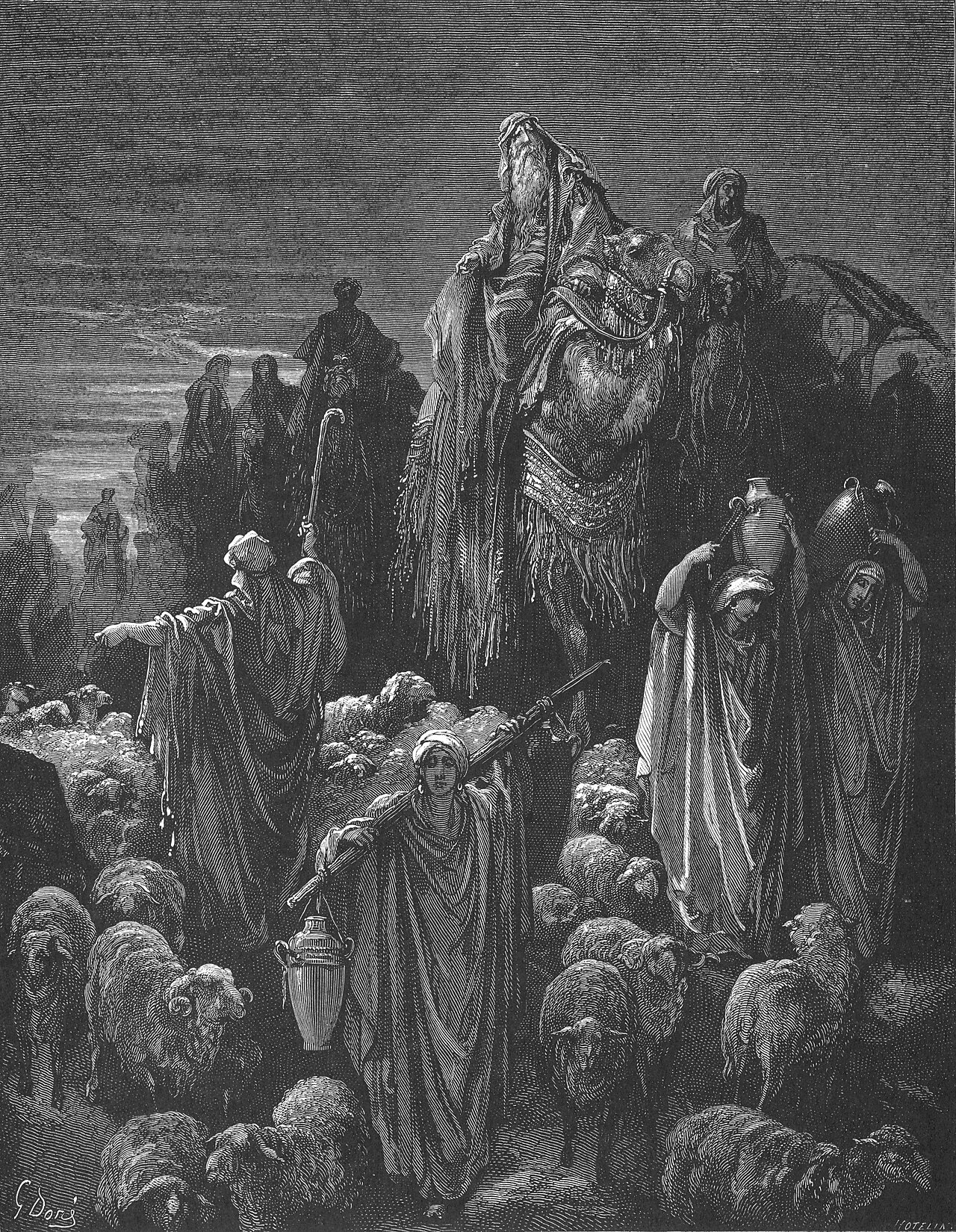
Gustave Doré, La Sainte Bible (Tours: Alfred Mame et fils, 1866). Public domain.
Summary
The fertile delta region where Jacob's family settles in Egypt (Gen 47).
- Goshen was the district in the eastern Nile Delta where Joseph settled his father Jacob and his brothers, kept apart from Egypt's cities because they were shepherds.
- Israel lived in Goshen for generations, grew "exceedingly numerous," and was later enslaved there under a Pharaoh "who did not know Joseph."
- During the plagues of flies and hail, Scripture says the LORD made a deliberate distinction and spared Goshen while the rest of Egypt suffered.
- The Passover night and Israel's departure from Egypt both happen from this same district, called Rameses in Exodus.
- A different "Goshen" also appears in Joshua, a region inside Judah with no connection to the Egyptian delta.
On this page
In Scripture
- Verses
- 13
- Books
- 3
Where it is
the country around it
- Coordinates
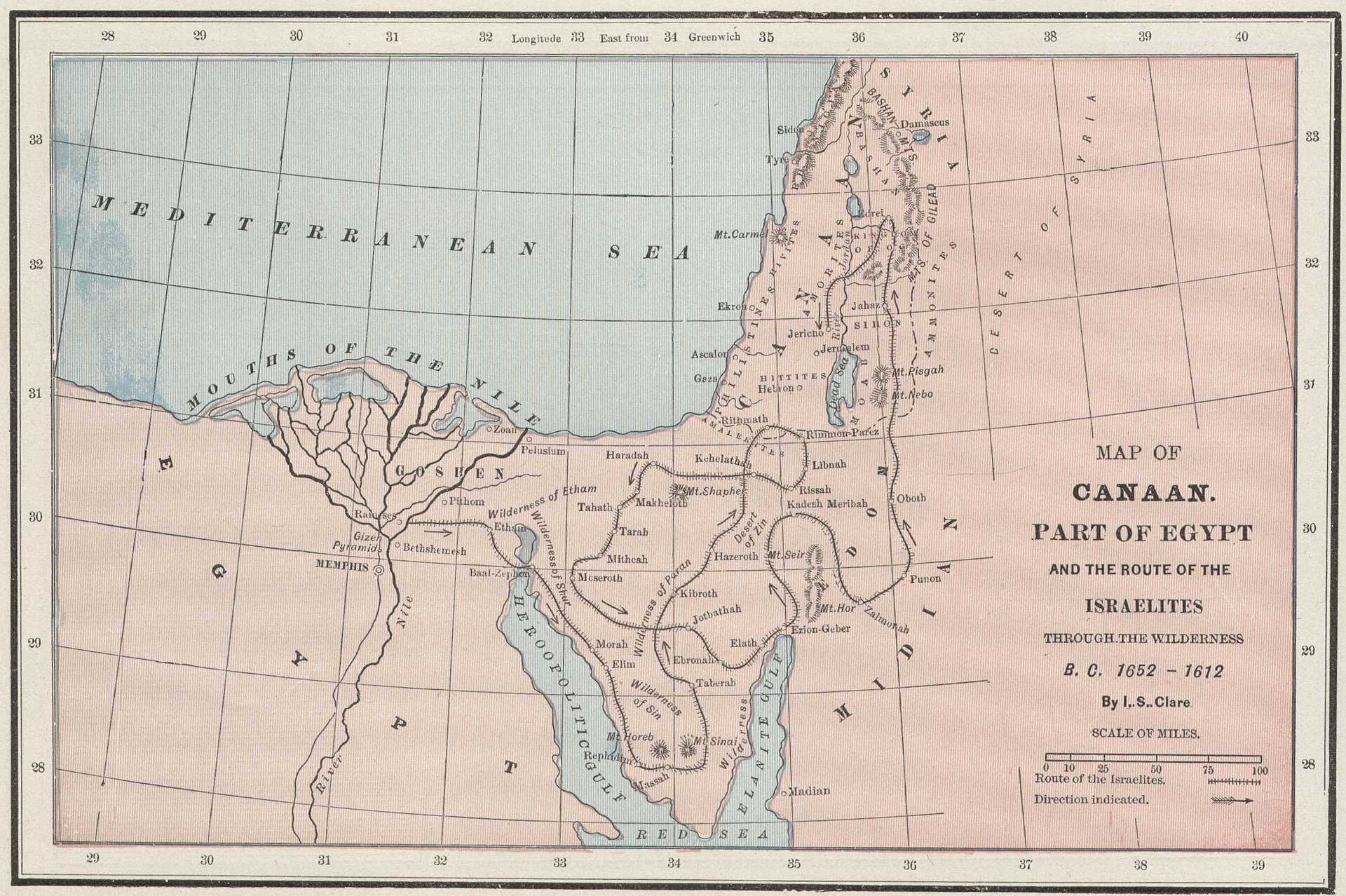
- 30.7285° N, 31.8047° Efind it on the Atlas →
- Region
- Nile Delta
- Located: the gazetteer fixes one site
Not located: Egypt. The gazetteer records no location for it, so it is not marked.
Why Goshen matters
Jacob's family settles in Goshen
Genesis 45-47, in the order it happens
Read Genesis 45-47, in the order it happens
- Joseph sends for his fatherGenesis 45:9Now return quickly to my father and tell him, ‘This is what your son Joseph says: God has made me lord of all Egypt. Come down to me without delay.
- "You shall settle in the land of Goshen"Genesis 45:10You shall settle in the land of Goshen and be near me—you and your children and grandchildren, your flocks and herds, and everything you own.
- Judah is sent ahead to get directions to GoshenGenesis 46:28Now Jacob had sent Judah ahead of him to Joseph to get directions to Goshen. When Jacob’s family arrived in the land of Goshen,
- Joseph coaches his brothers to say they are shepherdsGenesis 46:34you are to say, ‘Your servants have raised livestock ever since our youth—both we and our fathers.’ Then you will be allowed to settle in the land of Goshen, since all shepherds are detestable to the Egyptians.”
- Pharaoh grants the best of the landGenesis 47:6the land of Egypt is before you; settle your father and brothers in the best part of the land. They may dwell in the land of Goshen. And if you know of any talented men among them, put them in charge of my own livestock.”
- Israel settles and multiplies in GoshenGenesis 47:27Now the Israelites settled in the land of Egypt, in the region of Goshen. They acquired property there and became fruitful and increased greatly in number.
What happened here, in order
in the order the canon tells it
- Joseph invites his family to GoshenGenesis 45:10You shall settle in the land of Goshen and be near me—you and your children and grandchildren, your flocks and herds, and everything you own.
- Why shepherds were kept apart in GoshenGenesis 46:34you are to say, ‘Your servants have raised livestock ever since our youth—both we and our fathers.’ Then you will be allowed to settle in the land of Goshen, since all shepherds are detestable to the Egyptians.”
- Joseph settles his family in the district of RamesesGenesis 47:11So Joseph settled his father and brothers in the land of Egypt and gave them property in the best part of the land, the district of Rameses, as Pharaoh had commanded.
- Israel becomes fruitful in GoshenGenesis 47:27Now the Israelites settled in the land of Egypt, in the region of Goshen. They acquired property there and became fruitful and increased greatly in number.
- Only the children and flocks are left behind in GoshenGenesis 50:8along with all of Joseph’s household, and his brothers, and his father’s household. Only their children and flocks and herds were left in Goshen.
- A king who did not know JosephExodus 1:8Then a new king, who did not know Joseph, came to power in Egypt.
- Forced labor builds Pithom and RamesesExodus 1:11So the Egyptians appointed taskmasters over the Israelites to oppress them with forced labor. As a result, they built Pithom and Rameses as store cities for Pharaoh.
- Goshen spared the swarms of fliesExodus 8:22But on that day I will give special treatment to the land of Goshen, where My people live; no swarms of flies will be found there. In this way you will know that I, the LORD, am in the land.
- Goshen is the only place spared the hailExodus 9:26The only place where it did not hail was in the land of Goshen, where the Israelites lived.
- The blood on the doorframes at PassoverExodus 12:13The blood on the houses where you are staying will distinguish them; when I see the blood, I will pass over you. No plague will fall on you to destroy you when I strike the land of Egypt.
- Israel departs from RamesesExodus 12:37The Israelites journeyed from Rameses to Succoth with about 600,000 men on foot, besides women and children.
- Four hundred and thirty years in EgyptExodus 12:40Now the duration of the Israelites’ stay in Egypt was 430 years.
- A different Goshen, in Judah's NegevJoshua 10:41Joshua conquered the area from Kadesh-barnea to Gaza, and the whole region of Goshen as far as Gibeon.
- The land of Goshen listed among Joshua's conquestsJoshua 11:16So Joshua took this entire region: the hill country, all the Negev, all the land of Goshen, the western foothills, the Arabah, and the mountains of Israel and their foothills,
Goshen in Scripture
13 verses name it, in 3 books
Open a book to read its mentions here. Text: Berean Standard Bible.
Old TestamentNew Testamentsegment width = share of mentions
Old Testament3 books · 13 mentions
Genesis8 mentions
- Genesis 45:10You shall settle in the land of Goshen and be near me—you and your children and grandchildren, your flocks and herds, and everything you own.
- Genesis 46:28Now Jacob had sent Judah ahead of him to Joseph to get directions to Goshen. When Jacob’s family arrived in the land of Goshen,
- Genesis 46:34you are to say, ‘Your servants have raised livestock ever since our youth—both we and our fathers.’ Then you will be allowed to settle in the land of Goshen, since all shepherds are detestable to the Egyptians.”
- Genesis 47:1So Joseph went and told Pharaoh: “My father and my brothers, with their flocks and herds and all they own, have come from the land of Canaan and are now in Goshen.”
- Genesis 47:4Then they said to Pharaoh, “We have come to live in the land for a time, because there is no pasture for the flocks of your servants, since the famine in the land of Canaan has been severe. So now, please allow your servants to settle in the land of Goshen.”
- Genesis 47:6the land of Egypt is before you; settle your father and brothers in the best part of the land. They may dwell in the land of Goshen. And if you know of any talented men among them, put them in charge of my own livestock.”
- Genesis 47:27Now the Israelites settled in the land of Egypt, in the region of Goshen. They acquired property there and became fruitful and increased greatly in number.
- Genesis 50:8along with all of Joseph’s household, and his brothers, and his father’s household. Only their children and flocks and herds were left in Goshen.
Exodus2 mentions
- Exodus 8:22But on that day I will give special treatment to the land of Goshen, where My people live; no swarms of flies will be found there. In this way you will know that I, the LORD, am in the land.
- Exodus 9:26The only place where it did not hail was in the land of Goshen, where the Israelites lived.
Joshua3 mentions
- Joshua 10:41Joshua conquered the area from Kadesh-barnea to Gaza, and the whole region of Goshen as far as Gibeon.
- Joshua 11:16So Joshua took this entire region: the hill country, all the Negev, all the land of Goshen, the western foothills, the Arabah, and the mountains of Israel and their foothills,
- Joshua 15:51Goshen, Holon, and Giloh—eleven cities, along with their villages.
The account
Read the account as one telling
Common questions
Why did Joseph want his family settled specifically in Goshen?
Genesis 46:34 gives Joseph's own reason, in his coaching of his brothers: shepherds were "detestable to the Egyptians," so identifying the family as shepherds would lead Pharaoh to settle them apart from the Egyptian population, in a district set aside for herding rather than mixed into Egyptian cities.
Is Goshen the same place as the "land of Rameses"?
The two names appear to describe the same district. Genesis 47:11 says Joseph settled his family "in the district of Rameses," right after Pharaoh had granted them Goshen; Exodus 1:11 names the store city "Rameses" the enslaved Israelites are forced to build, and Exodus 12:37 has Israel leaving Egypt "from Rameses." The text uses both names for the same general area without marking a boundary between them.
Where exactly was Goshen, and is that connected to any known site?
Readers differ; the positions are named
This site's own /place/egypt page names Tell el-Dab'a, ancient Avaris, and nearby Qantir, identified with Pi-Ramesse, in the eastern Nile Delta as the district archaeologists generally connect to this region, following Manfred Bietak's excavation there since 1966. That page states plainly that nothing at the site names Israel or Joseph, and this page follows the same caution. Standard Bible dictionaries generally place the region in the Wadi Tumilat, a natural corridor of the eastern Nile Delta running about fifty kilometers from near the Nile toward the Bitter Lakes and covering roughly 900 square miles of cropland and grazing land.
Did Goshen protect Israel during every plague, or just some of them?
Scripture names two plagues specifically: the flies and the hail. Both verses say the LORD made "a distinction" between Goshen and the rest of Egypt. The text does not make the same explicit claim for every one of the ten plagues.
How does the date of the Exodus affect when Goshen's story unfolds?
Readers differ; the positions are named
This site's /place/egypt page holds two positions without a verdict: an early Exodus around 1446 BC, held by Bryant Wood and Eugene Merrill among others, and a late Exodus in the thirteenth century BC, held by Kenneth Kitchen and James Hoffmeier and tied to the building of Pi-Ramesse under Ramesses II. Either dating places Israel's centuries in Goshen before that point, but the two positions disagree by roughly two centuries on when the story begins and ends.
Is the "Goshen" in Joshua the same place as the Goshen of Genesis and Exodus?
No. Joshua 10:41 and 11:16 name a region called Goshen inside Judah's Negev and hill country, on the far side of Canaan from Egypt. That Goshen has no connection to the district Jacob's family settled in; the two simply share a name.
Notable art
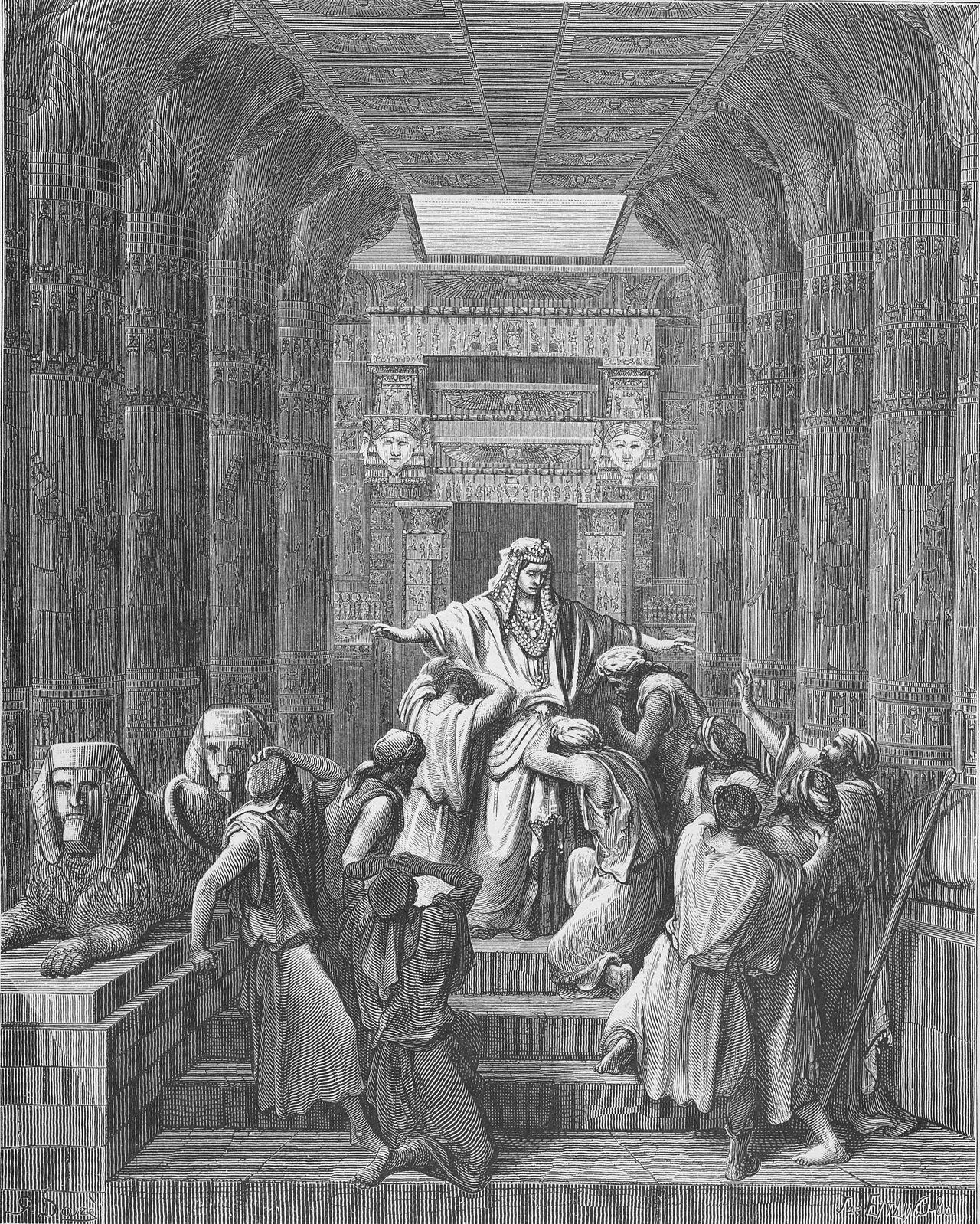
1 verified piece depicting Goshen
Sources cited
- OpenBible.info Bible Geocoding: Goshen 1read 2026-08-20The coordinates on this page. Used under CC-BY with attribution to OpenBible.info.
- Gustave Doré, La Sainte Bible (Tours: Alfred Mame et fils, 1866)The two engravings on this page. Public domain.
- Holman Bible Dictionary, "Goshen"The Wadi Tumilat identification, its length and area, used in the common_questions entry on Goshen's location.
Keep studying
On this page
Studies1
Lives that run through it1
Doorway2
Keep this page