
Obadiah 1:18
in Obadiah 1Then the house of Jacob will be a blazing fire, and the house of Joseph a burning flame; but the house of Esau will be stubble—Jacob will set it ablaze and consume it. Therefore no survivor will remain from the house of Esau.” For the LORD has spoken.
BSB
The same verse in ASV and KJV ▾
ASV
And the house of Jacob shall be a fire, and the house of Joseph a flame, and the house of Esau for stubble, and they shall burn among them, and devour them; and there shall not be any remaining to the house of Esau; for Jehovah hath spoken it.
KJV
And the house of Jacob shall be a fire, and the house of Joseph a flame, and the house of Esau for stubble, and they shall kindle in them, and devour them; and there shall not be any remaining of the house of Esau; for the Lord hath spoken it.
⋯
This verse in Obadiah 1
Commentary
14 notes on this verseIn mount Zion, there will be salvation, and it will be holy and possess the house of Jacob, those who possess it. And the house of Jacob will be a fire, and the house of Joseph a flame, and the house of Esau straw. They will set them on fire and consume them, and there will be no survivors in the house of Esau, for the Lord has spoken. The Septuagint version: In mount Zion there will be salvation, and it will be holy, and possess the house of Jacob, those who possess it.
This site's exposition
Mount Zion there will be deliverance
on Obadiah 1:17-18
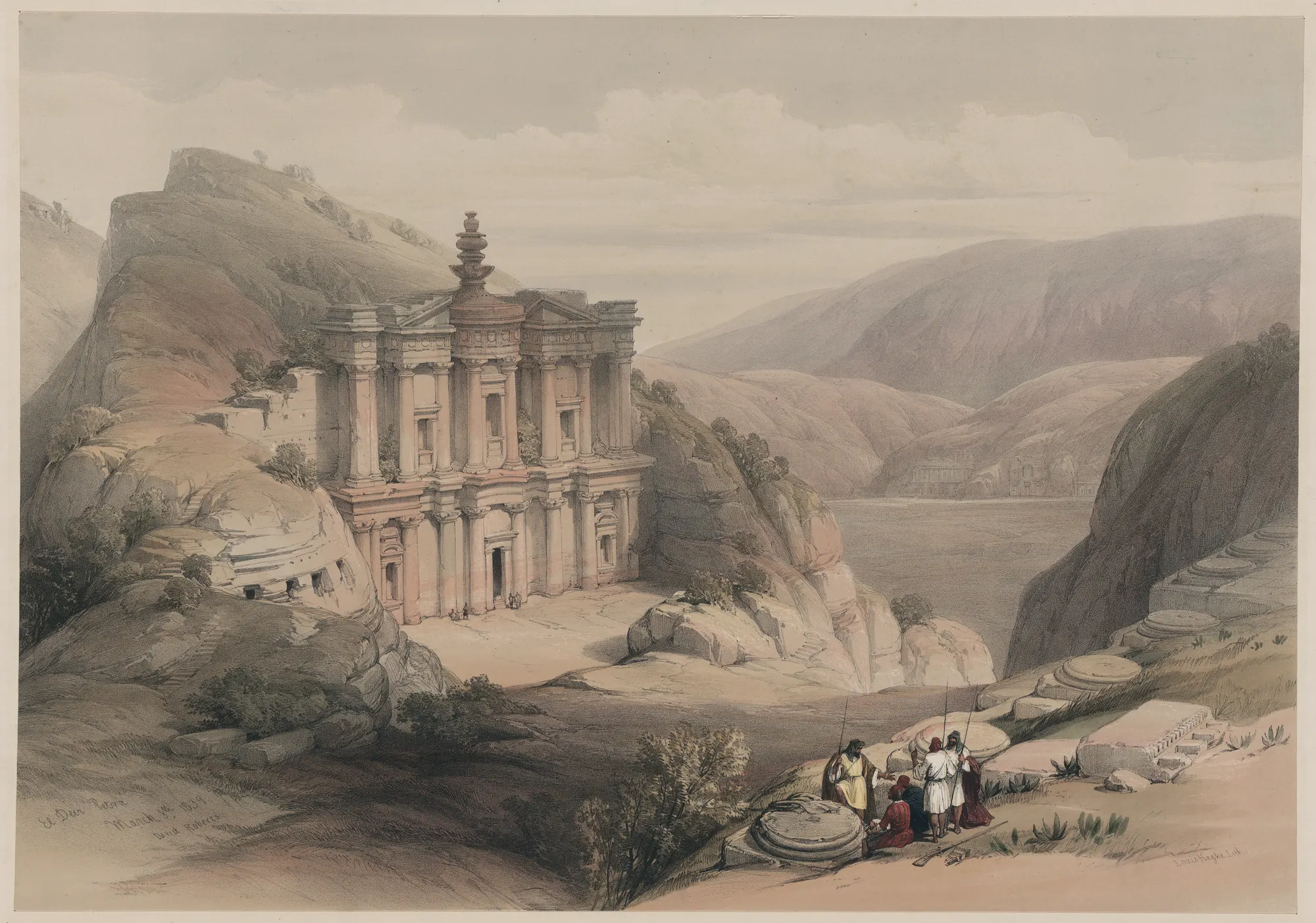
Against Edom's ruin the oracle sets Zion's deliverance and holiness, while "the house of Jacob will reclaim their possession". Verse 18 names Judah and the Joseph tribes "a blazing fire" against Esau as "stubble". The end is stated without remainder, "no survivor will remain from the house of Esau".
This site's exposition
the house of Jacob will be a blazing fire
Jacob and Joseph together name the southern and northern kingdoms, so the two halves of Israel stand as one again. Adam Clarke and John Wesley point to the wars of John Hyrcanus and the Maccabees against Edom, in 1 Maccabees 5:3, as a first fulfilment. Stubble leaves nothing behind.
The record, by era
The Church Fathers5 voices
The Hebrews, like a fire, will consume the Edomites like stubble. If anything remains, they will scatter it. What David and Amaziah had begun was accomplished by the Jews after their return, when many Israelites who came back from Persia joined them, and the Edomites …
The survivors of the house of Jacob will possess the land of Mount Zion. There will be deliverance and holiness, and the house of Jacob will possess their inheritance. The LORD Himself will return to the temple, which He had previously forsaken because of their sins, or it will be completely holy, that is, the Holy of Holies. And the house of Jacob shall possess Zorobabel, and Esdras, and Nehemiah, those who have inherited. And the house of Jacob, that is, Judah, shall be fire, and the house of Joseph, that is, the ten tribes, shall be flame. For from Joseph was born Ephraim, from which tribe the kingdom of Samaria arose; but the house of Esau, that is, the Edomites, who were so fierce and cruel against their brother, shall be turned into stubble. And just as fire and flame quickly devour stubble, so the two kingdoms under the rod of one alliance, according to the book of Ezekiel (Ezek. XVII), shall lay waste to Edom and consume it, and there shall be no remnant of the people who can announce the overthrow of their adversaries to neighboring nations. This is indeed what the LXX translated as πυροφόρον, which we render as Frumentarium, according to the language of ancient discourse; for they called those who are now called Agentes in rebus or Veredarios, the Ancient Frumentarios. But it is better to follow the Hebrew itself, that is, Sarid, which means either remaining, according to Aquila, or escaping, according to Symmachus, or according to Theodotion and the fifth edition, residue. But all these things will be done because the Lord has spoken, and what He has commanded, He has done.
The foolish Edomites thought that they alone were about to possess the house of Jacob. Instead the land was divided with them and with the Chaldeans. That very unforseen thing was turned against them, it says. They would be possessed by the house of Jacob and likewise be consumed like chaff or stubble by a flame. And the house of Jacob will be a fire, but the house of Joseph will be only a flame, and thus not as strong. And they will be devoured internally so that among all the tribes Jacob and Joseph will be unable to come together as one. But the other side of this fiery trope should also be seen, for the house of Jacob is called a fire and the house of Joseph a flame. It is not unreasonable to understand in the literal sense the house of Jacob as those from Judah and Benjamin. It is just as true that the house of Joseph represents Samaria, specifically, the ten tribes who were sometimes kings of the Ephraimites, since Manasseh and Ephraim were born from Joseph. Israel will possess the land of Edom and possess all of its confines to the south. They will capture no less than Mount Ephraim, Samaria, Benjamin and Gilead—which were the names of those areas when their leader, Joshua, the successor of Moses, apportioned the land to the tribes of Israel. But after Israel was devastated at the hand of Assyria and again after the attack of Nebuchadnezzar, ruled by Phua and Shalmanezer, he predicts they will once again inhabit the land after they are released from their former captivity.
The prosperity of Israel was made manifest as well as the punishment of their wicked enemies.… Yahweh proved himself as a true king to his people because he brought the very salvation they needed.
Otherwise: With the works of the flesh destroyed, and the earthly rule laid waste, there will be salvation in the Church for those who have not come forth from their mother. And in her will dwell the holy one, of whom it is said in Isaiah: Holy, holy, holy is the Lord God of hosts (Isaiah 6:3), for both the one who sanctifies and those who are sanctified are from one.
6 more voices on this verse
The Puritans and the Awakening3 voices
Shall kindle - This was fulfilled in part by Hyrcanus and the Maccabees, 1Macc v, 3, but will be more fully accomplished, when the Lord shall make his church as a fire to all its enemies.
The word of God in the mouth of his ministers is said to be like fire, and the people as wood to be devoured by it, Jer. v. 14 . And the man of sin is to be consumed by the breath of Christ's mouth, 2 Thess. ii. Those that are not refined as gold by fire of the gospel shall be consumed as dross by it; for it will be a savour either of life or of death.
And the house of Jacob shall be a fire, and the house of Joseph a flame,....
The Nineteenth Century3 voices
The house of Jacob shall be a fire - After their return from captivity, the Jews, called here the house of Jacob and the house of Joseph, did break out as a flame upon the Idumeans; they reduced them into slavery; and obliged them to receive circumcision, and practise the rites of the Jewish religion. See 1 Maccabees 5:3, etc.; 2 Maccabees 10:15-23; and Josephus Antiq., lib. 13 c. 17. There shall not be any remaining - As a people and a nation they shall be totally destroyed.
A commentator
Jamieson, Fausset & Brown1802–1910
Commentary Critical and Explanatory on the Whole Bible (1871)
proposed
10:17. house of Jacob . . . Joseph--that is, the two kingdoms, Judah and Ephraim or Israel [JEROME]. The two shall form one kingdom, their former feuds being laid aside (Isa 11:12, 13;
quarantine:debris (2026-07-29) — unbalanced-parens
A commentator
Albert Barnes1798–1870
Notes, Explanatory and Practical, on the Old and New Testaments (1832-1869)
proposed
Having given, in summary, the restoration and expansion of Judah, Obadiah, in more detail, first mentions a further chastisement of Edom, quite distinct from the former. In the first, for which God summoned the pagan, there is no mention of Judah, the desolation of whose holy City, Jerusalem, for the time, and their own captivity is presupposed. In the second, which follows on the restoration of its remnant, there is no mention of pagan. Obadiah, whose mission was to Judah, gives to it the name of the whole, “the house of Jacob.” It alone had the true worship of God, and His promises. Apart from it, there was no oneness with the faith of the fathers, no foreshadowing sacrifice for sin. Does the “house of Joseph” express the same in other words? or does it mean, that, after that first destruction of Jerusalem, Ephraim should be again united with Judah? Asaph unites, as one, “the sons of Jacob and Joseph” Psa 77:15, Israel and Joseph Psa 80:1; Israel, Jacob, Joseph Psa 81:4-5. Zechariah Zec 10:6 after the captivity, speaks of “the house of Judah” and “the house of Joseph,” as together forming one whole. Amos, about this same time, twice speaks of Ephraim Amo 5:15; Amo 6:6 under the name of Joseph. And although Asaph uses the name of Joseph, as Obadiah does, to designate Israel, including Ephraim, it does not seem likely that it should be used of Israel, excluding those whose special name it was. While then Hosea and Amos foretold the entire destruction of the “kingdom” of Israel, Obadiah foretells that some should be there, after the destruction of Jerusalem also, united with them. And after the destruction of Samaria, there did remain in Israel, of the poor people, many who returned to the worship of God. […]
The words behind it
21 Hebrew wordsEvery Hebrew word of this verse in the order it stands, with what it means and the door to its own study. The last column counts the times a word stands in the whole Bible: the rarer the word, the more the places it appears belong together.
| Hebrew | Sound | Meaning | Word study | In the Bible |
|---|---|---|---|---|
| וְהָיָה֩ | vehayah | and it will be | H1961 → | 3559 times |
| בֵית־ | veit- | [the] house of | H1004 → | 2046 times |
| יַעֲקֹ֨ב | yaako | Jacob | H3290 → | 350 times |
| אֵ֜שׁ | ʾesh | a fire | H784 → | |
| וּבֵ֧ית | uveit | and [the] house of | H1004 → | 2046 times |
| יוֹסֵ֣ף | yosef | Joseph | H3130 → | |
| לֶהָבָ֗ה | lehavah | [will be] a flame | H3852 → | |
| וּבֵ֤ית | uveit | and [the] house of | H1004 → | 2046 times |
| עֵשָׂו֙ | ʾesav | Esau | H6215 → | 97 times |
| לְקַ֔שׁ | lekash | [will become] <into> stubble | H7179 → | |
| וְדָלְק֥וּ | vedalku | and they will burn | H1814 → | |
| בָהֶ֖ם | vahem | <in> them | ||
| וַאֲכָל֑וּם | vaakhalum | and they will consume them | H398 → | |
| וְלֹֽא־ | velo'- | and not | H3808 → | 5168 times |
| יִֽהְיֶ֤ה | yihyeh | he will belong | H1961 → | 3559 times |
| שָׂרִיד֙ | sarid | a survivor | H8300 → | |
| לְבֵ֣ית | leveit | to [the] house of | H1004 → | 2046 times |
| עֵשָׂ֔ו | ʾesav | Esau | H6215 → | 97 times |
| כִּ֥י | ki | for | H3588 → | 4482 times |
| יְהוָ֖ה | yahweh | Yahweh | H3068 → | 6520 times |
| דִּבֵּֽר׃ | diber | he has spoken | H1696 → |
וְהָיָה֩and it will be
vehayahH1961 →3559 times
בֵית־[the] house of
veit-H1004 →2046 times
יַעֲקֹ֨בJacob
yaakoH3290 →350 times
אֵ֜שׁa fire
ʾeshH784 →
וּבֵ֧יתand [the] house of
uveitH1004 →2046 times
יוֹסֵ֣ףJoseph
yosefH3130 →
לֶהָבָ֗ה[will be] a flame
lehavahH3852 →
וּבֵ֤יתand [the] house of
uveitH1004 →2046 times
עֵשָׂו֙Esau
ʾesavH6215 →97 times
לְקַ֔שׁ[will become] <into> stubble
lekashH7179 →
וְדָלְק֥וּand they will burn
vedalkuH1814 →
בָהֶ֖ם<in> them
vahem
וַאֲכָל֑וּםand they will consume them
vaakhalumH398 →
וְלֹֽא־and not
velo'-H3808 →5168 times
יִֽהְיֶ֤הhe will belong
yihyehH1961 →3559 times
שָׂרִיד֙a survivor
saridH8300 →
לְבֵ֣יתto [the] house of
leveitH1004 →2046 times
עֵשָׂ֔וEsau
ʾesavH6215 →97 times
כִּ֥יfor
kiH3588 →4482 times
יְהוָ֖הYahweh
yahwehH3068 →6520 times
דִּבֵּֽר׃he has spoken
diberH1696 →
A shaded row is a word that stands 400 times or fewer in the Bible.
The walk
8 stopsEach card is a verse this one points to, and under it the verses that one points to in turn. Where several paths arrive at the same place, that place is listed first: the text keeps returning to it.
Through
Isaiah 5:24Therefore, as a tongue of fire consumes the straw, and as dry grass shrivels in the flame, so their roots will decay and their blossoms will blow away like dust; for they have rejected…
it leads to
- Isaiah 30:12
Therefore this is what the Holy One of Israel says: “Because you have rejected this message, trusting in oppression and relying on deceit,
- Joel 2:5
With a sound like that of chariots they bound over the mountaintops, like the crackling of fire consuming stubble, like a mighty army deployed for battle.
- Job 18:16
The roots beneath him dry up, and the branches above him wither away.
- Luke 3:17
His winnowing fork is in His hand to clear His threshing floor and to gather the wheat into His barn; but He will burn up the chaff with unquenchable fire.”
- Isaiah 47:14
Surely they are like stubble; the fire will burn them up. They cannot deliver themselves from the power of the flame. There will be no coals to warm them or fire to sit beside.
- Isaiah 30:12
Through
Isaiah 10:17And the Light of Israel will become a fire, and its Holy One a flame. In a single day it will burn and devour Assyria’s thorns and thistles.
it leads to
- Isaiah 27:4
I am not angry. If only thorns and briers confronted Me, I would march and trample them, I would burn them to the ground.
- Isaiah 27:4
Through
Micah 5:8Then the remnant of Jacob will be among the nations, in the midst of many peoples, like a lion among the beasts of the forest, like a young lion among flocks of sheep, which…
it leads to
- Zechariah 10:5
They will be like mighty men in battle, trampling the enemy in the mire of the streets. They will fight because the LORD is with them, and they will put the horsemen to shame.
- Micah 4:13
Rise and thresh, O Daughter of Zion, for I will give you horns of iron and hooves of bronze to break to pieces many peoples. Then you will devote their gain to the LORD,…
- Zechariah 10:5
Where this verse is studied
On this page
Studies6
About Obadiah
Who and where
3 names in this verse with a page on the site.
- PersonPatriarchsEsauIsaac's elder son who despised his birthright (Heb 12:16); father of Edom, Israel's perennial neighbor and adversary.
- PersonPatriarchsJacobThe heel-grasping supplanter reshaped at Peniel into 'Israel, he who strives with God' — father of the twelve tribes.
- PersonPatriarchsJosephThe rejected-then-exalted son — Genesis's great Christ-type; preserver of his family and of Egypt; the bridge into Exodus.
This page draws on 10 works. Open the list of works
This page draws on Adam Clarke, Commentary on the Bible; Albert Barnes, Notes, Explanatory and Practical, on the Old and New Testaments (1832-1869); Cyril of Alexandria, COMMENTARY ON OBADIAH; Ephrem the Syrian, COMMENTARY ON OBADIAH; Jamieson, Fausset & Brown, Commentary Critical and Explanatory on the Whole Bible; Jerome, Commentary on Obadiah; John Gill, Exposition of the Old Testament (1748-1763); John Wesley, Explanatory Notes upon the Old Testament; Matthew Henry, Commentary on the Whole Bible and Theodore of Mopsuestia, COMMENTARY ON OBADIAH.