
King
Pharaoh of the Exodus
King of Egypt · The Exodus · c. 1446 BC
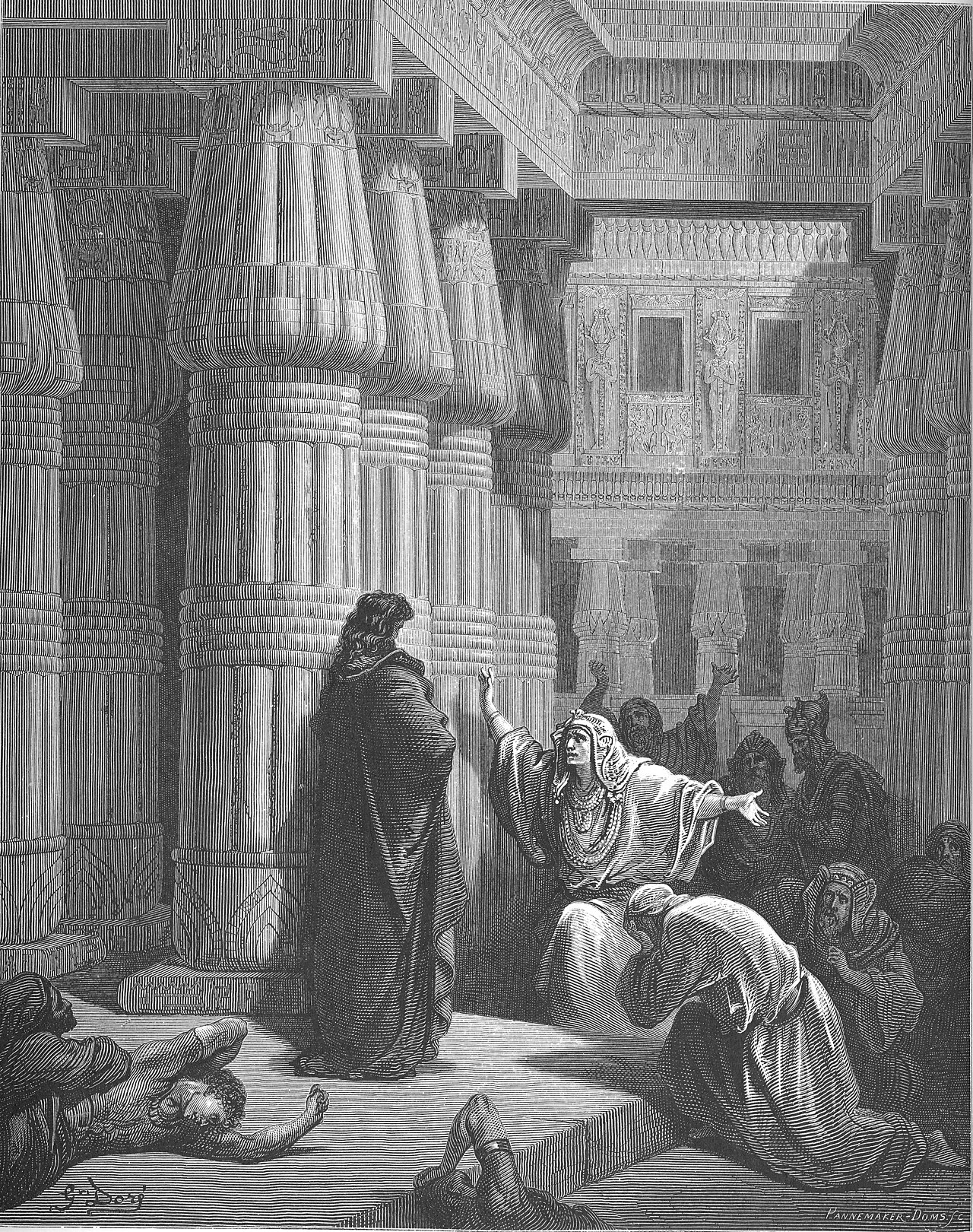
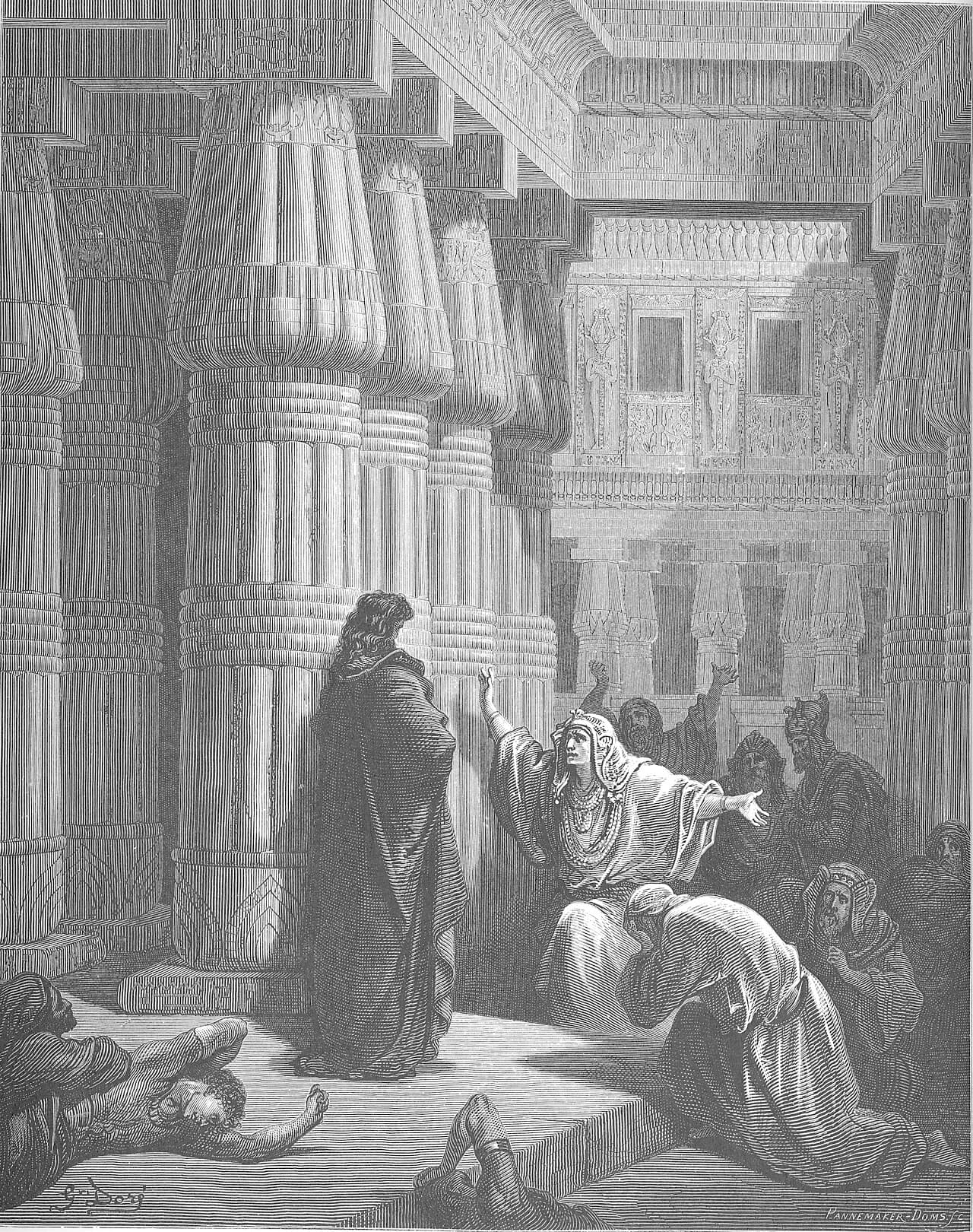
The Egyptians Ask Moses to Depart — Gustave Doré, The Holy Bible (1866), public domain
Summary
The unnamed Pharaoh who held Israel in slavery, resisted Moses through ten plagues, and lost his army in the Red Sea. His hardened heart became the occasion for the greatest display of God's power in the Old Testament.
- The record places Pharaoh of the Exodus in The Exodus.
- 6 moments stand in order on this page, each with its verse.
On this page
Start here
But I have raised you up for this very purpose, that I might display My power to you, and that My name might be proclaimed in all the earth.
Exodus 9:16→- 6 key events in order
Pharaoh of the Exodus
- Role
- King of Egypt
- Era
- The Exodus
- Dates
- c. 1446 BC
- Tribe
- Egypt
The life in order
from the events the row records, with the first and last verse that names the person among the passages this page stands on
1What the record holds, in its own order
- Moses' confrontation — 'Who is the LORD?'Exodus 5:2But Pharaoh replied, “Who is the LORD that I should obey His voice and let Israel go? I do not know the LORD, and I will not let Israel go.”
- Hardening of Pharaoh's heartExodus 4:21The LORD instructed Moses, “When you go back to Egypt, see that you perform before Pharaoh all the wonders that I have put within your power. But I will harden his heart so that he will not let the people go.
- Death of the firstborn and PassoverExodus 12:29-32Now at midnight the LORD struck down every firstborn male in the land of Egypt, from the firstborn of Pharaoh, who sat on his throne, to the firstborn of the prisoner in the dungeon, as well as all the firstborn among the livestock.
- Pursuit and drowning in Red SeaExodus 14:23-28And the Egyptians chased after them—all Pharaoh’s horses, chariots, and horsemen—and followed them into the sea.
- His victory song reversedExodus 15:4Pharaoh’s chariots and army He has cast into the sea; the finest of his officers are drowned in the Red Sea.
Biography
The Pharaoh of the Exodus stands as the supreme biblical example of a powerful human ruler set against the purposes of God. When Moses came demanding "Let my people go," Pharaoh's response was dismissive: "Who is the LORD, that I should obey his voice and let Israel go? I do not know the LORD" (Exodus 5:2).
God then used Pharaoh's stubbornness — both Pharaoh's own hardening and God's judicial hardening — as the occasion for ten increasingly catastrophic plagues: blood, frogs, gnats, flies, livestock disease, boils, hail, locusts, darkness, and finally the death of every firstborn in Egypt. Each plague targeted a specific Egyptian deity, systematically demonstrating the impotence of Egypt's gods.
After the tenth plague killed his own firstborn, Pharaoh released Israel, then reversed course and pursued them with chariots. At the Red Sea, the waters parted for Israel and closed on the Egyptian army, drowning them. God's victory over Pharaoh was so complete that it became the defining event of Israel's identity for all subsequent generations.
But I have raised you up for this very purpose, that I might display My power to you, and that My name might be proclaimed in all the earth.
Key events
- 2Ten plaguesExodus 7-12→
God sent ten plagues targeting Egyptian deities: blood, frogs, gnats, flies, livestock disease, boils, hail, locusts, darkness, death of firstborn
What they got right, and what they got wrong
Strengths
Immense political and military power, leadership of the world's greatest civilization
Weaknesses
Pride, refusal to acknowledge God, stubbornness that brought national catastrophe, enslaved God's people
Lessons
No human power can ultimately resist the purposes of God. Every resource Pharaoh wielded — armies, chariots, magicians, political will — was ultimately overcome. Resistance to God does not prevent His plans; it only increases the magnitude of the display of His glory.
Spiritual significance
Pharaoh of the Exodus serves a profound theological purpose: his resistance to God was itself used by God to display divine glory on an unprecedented scale. Romans 9:17 quotes his story as the definitive example that God works out His purposes even through human opposition. The plagues were a comprehensive judgment on Egypt's entire religious system.
How Pharaoh of the Exodus points to Jesus
Pharaoh's hardened firstborn-killing became the occasion for the Passover lamb — whose blood protected Israel. This is the foundational type of Christ's blood protecting believers from divine judgment. Pharaoh as oppressor points to Satan; Moses as deliverer points to Christ.
Keep studying
On this page
Doorway1
Keep this page