
Exoduschapter 34
35 verses · Moses, by tradition · 15th or 13th century BC · The Law
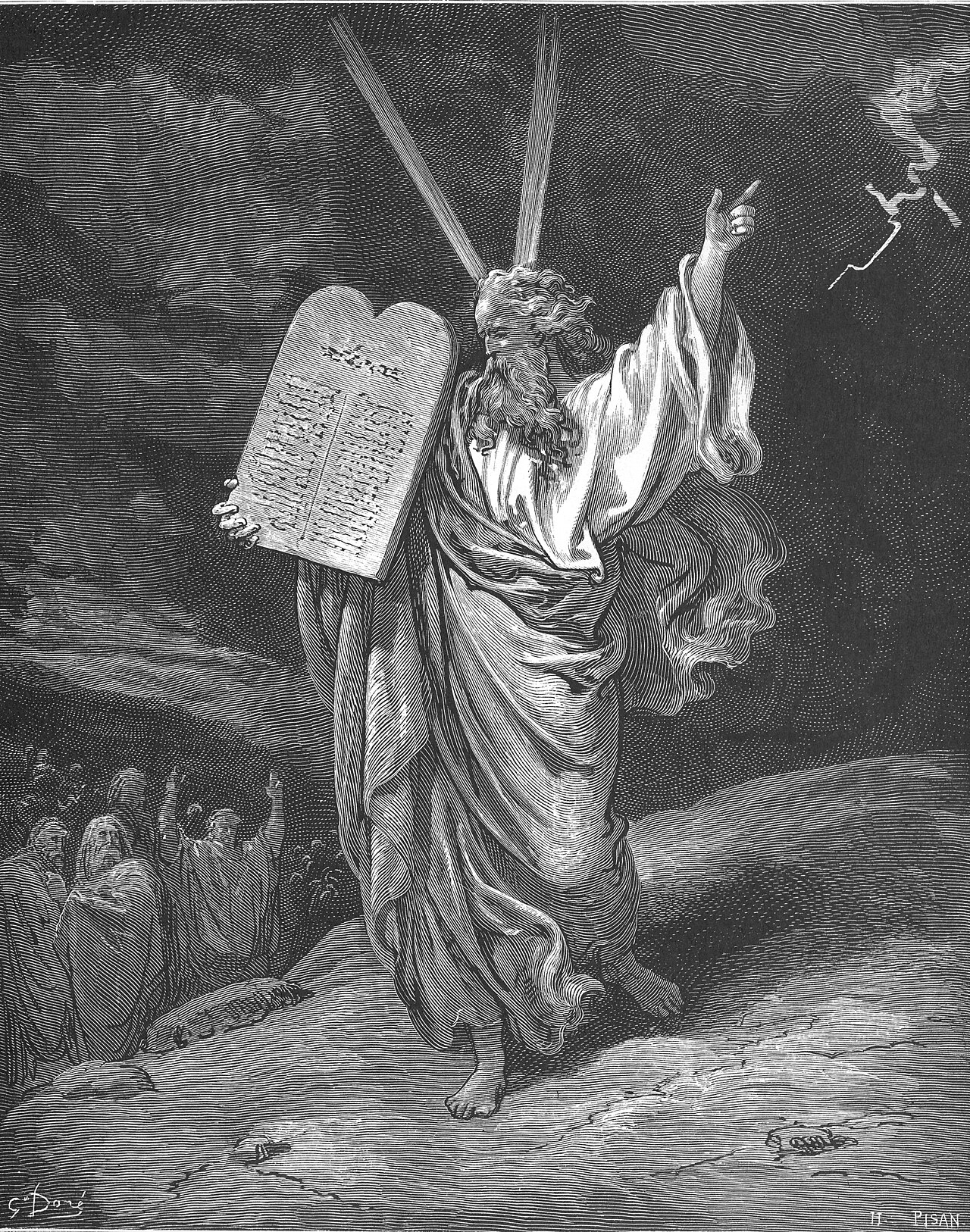
So Moses was there with the LORD forty days and forty nights without eating bread or drinking water. He wrote on the tablets the words of the covenant—the Ten Commandments.
Introduction
Moses, by tradition, The Law, Exodus Overview.
This chapter renews a covenant that was broken while it was still being given. Moses climbs the mountain a second time, and this time the stone in his arms is stone he cut himself. It was first heard by a people who had no claim left on God except His own character. Listen for the name God proclaims over Himself, because the rest of the Old Testament quotes it more than any other description of Him. Notice which of the old terms are restated and why. The chapter ends with a change in Moses that the whole camp could see.
Context
- Who
- Israel in the wilderness, hearing the words about God that they would quote for a thousand years
- What
- The renewal of the covenant, with God's proclamation of His name, the restated terms and the shining face of Moses.
- Where
- Mount Sinai, fenced again as at the first giving of the law, with even the flocks kept back.
- When
- About 1446 BC on the traditional early date, with a thirteenth-century date also held, in a second forty days on the mountain.
- Why
- To show that the covenant stands again because of who God is, and to hand Israel the words about Him they would pray for centuries.
Historical context
Moses is the one man on the mountain again, and this time he cuts the stone himself and carries it up, where 32:16 says the first pair were the work of God. The chapter falls in a second forty days, in the first year after the exodus. The place is Mount Sinai, fenced again as it was at 19:12 and 19:13, with even the flocks kept back from grazing in front of it.
Show the rest of the historical context, 2 more paragraphs
The occasion is the renewal of a covenant that had been broken while it was being given, and the terms are restored in the same words.
A first hearer knew how broken treaties were repaired in that world, since producing a fresh copy of the document was the ordinary diplomatic remedy. A first hearer also recognised the self-description of verses 6 and 7 the moment it was spoken over them. The rest of the Old Testament takes it up at Numbers 14:18, Nehemiah 9:17, Psalm 86:15, Psalm 103:8, Psalm 145:8, Joel 2:13, Jonah 4:2 and Nahum 1:3. The terms restated at verses 12 to 26 are the ones the calf had broken, with the ban on molten gods at verse 17 standing alone among them. The English of 1611 rendered the work of verse 10 a terrible thing, and in that English the word meant a thing that puts men in fear.
Significance
A nation that had broken the covenant in forty days was handed it back in writing by the God they had insulted. That is what the renewal meant to the people who received it.
Show the rest of the significance, 1 more paragraph
The shining face was the proof of where Moses had been. Israel could see on a man's skin that speaking with God leaves a mark, and they were afraid to come near him until he called them.
This chapter in Jewish lifeWhat this chapter is in Jewish life and reading.
How it is read
The second tablets and the renewed covenant carry some of the best known rabbinic readings in the book. On the command to hew the tablets Rashi reports a tradition about where the stone came from. God showed Moses a quarry of sapphire inside his own tent and gave him the chips. "It was from this that Moses became so rich" (Rashi on Exodus 34:1:1, citing Midrash Tanchuma 3:9:29 and Leviticus Rabbah 32:2). The order that no man come up with him he reads as a lesson drawn from what went wrong the first time. The first tablets were given "amidst great noises and alarms and a vast assembly", and the evil eye had power over them (Rashi on Exodus 34:3:1, citing Midrash Tanchuma 3:9:31). The doubled name at the sixth verse he reads as the attribute of mercy said twice over. The first stands for mercy before a man sins, the second for mercy after he has sinned and repented (Rashi on Exodus 34:6:1, citing Rosh Hashanah 17b). The mercy stored up at the seventh verse is mercy a person does in God's presence and God keeps (Rashi on Exodus 34:7:1). Six nations are named where seven are expected, because the Girgashites left the land of their own accord (Rashi on Exodus 34:11:1, citing Leviticus Rabbah 17:6). Eating at an idolater's table he treats as consent to the worship, since the table leads to marriage between the households (Rashi on Exodus 34:15:1, citing Avodah Zarah 8a). On the Sabbath of the twenty first verse he reports the Rabbis who tie ploughing and harvest to the sabbatical year rather than to the weekly rest (Rashi on Exodus 34:21:1). The feast of the first of the wheat harvest is named for the two loaves offered on it (Rashi on Exodus 34:22:1). Rashi is quoted from the Rosenbaum and Silbermann edition of 1929 to 1934, public domain. Ibn Ezra comments at Exodus 34:4:1, 34:12:1 and 34:17:1, and Malbim at Exodus 34:16:1, all cited by reference.
What the rabbis say
The corpus records forty places where the Midrash and the Talmud draw on this chapter, cited here by reference. The hewing of the second tablets is read at Devarim Rabbah 3:12 and 3:17, and at Bereshit Rabbah 36:1. The Mekhilta DeRabbi Yishmael carries it at Tractate Bachodesh 3:15 and Tractate Pischa 11:16. The Mekhilta DeRabbi Shimon Ben Yochai reads it at 14:22 and 34:1. Beitzah 5b:4 reads the order that no man come up. Bamidbar Rabbah carries the chapter at 2:25, 4:5, 11:3, 11:7, 12:3 and 21:16. It reads the veil over Moses' face at 14:19, and Midrash Tehillim at 75:4. The laws against the altars and the covenant with the nations are read at Chullin 62b:9 and 113a:18, and at Avodah Zarah 8a:17 and 36b:9. The three feasts are read at Gittin 25a:8, Horayot 4b:8 and Bekhorot 3a:16. Midrash Lekach Tov reads the chapter at Exodus 34:11:1, 34:31:1 and 34:32:1, and Midrash Aggadah at Exodus 34:5:1 and 34:33:1.
Sources: Rashi, Rashi on Exodus 34:1 to 34:24, the Pentateuch with Rashi's commentary by M. Rosenbaum and A. M. Silbermann, 1929 to 1934, public domain, 1040 to 1105; Ibn Ezra, Ibn Ezra on Exodus 34:4:1, 34:12:1 and 34:17:1, cited by reference, CC-BY-NC, 1089 to 1164; Malbim, Malbim on Exodus 34:16:1, cited by reference, no English version in the corpus; Midrash Tanchuma, 3:9:29 and 3:9:31, as Rashi cites them; Leviticus Rabbah, 17:6 and 32:2, as Rashi cites them; Babylonian Talmud, Rosh Hashanah 17b and Avodah Zarah 8a, as Rashi cites them, and Beitzah 5b:4 and Gittin 25a:8, cited by reference; Mekhilta DeRabbi Yishmael, Tractate Bachodesh 3:15 and Tractate Pischa 11:16, cited by reference; Bamidbar Rabbah, 2:25, 4:5, 11:3, 11:7, 12:3, 14:19 and 21:16, cited by reference; The Sefaria corpus, scripts/data/sources/sefaria/exodus/34.json, fetched 2026-09-19, 2026; MannaFest, the commentators and their dates, src/app/featured/the-jewish-writings/page.tsx, 2026.
The heads below are this chapter's scenes. The numbered points under each are its verses.
Merciful and Gracious, Slow to Anger
Exodus 34:1-3
The second set of tables is cut by Moses, where Exodus 32:16 says the first set was the work of God. What goes on them is the same writing, so the covenant that was broken is restored in its own words rather than replaced by easier ones. The mountain is fenced again as it was at Exodus 19:12 and 19:13, and this time even the flocks and herds are kept back from grazing before it.
Exodus 34:1
“Hew thee two tables of stone like unto the first - In Exo 32:16 we are told that the two first tables were the work of God, and the writing was the writing of God; but here Moses is commanded to provide tables of his own workmanship, and God promises to write on them the words which were on the first. That God wrote the first tables himself, see proved by different passages of Scripture at the end of Exodus 32 (Exo 32:35 (note)).”
Adam Clarke · Commentary on the Bible (1810-1826)evangelical
Be ready in the morning: Matthew Henry notes that the long absence of Moses had given occasion to the calf, and the LORD still calls him up for as long a stay. Moses is there forty days and forty nights again, by verse 28. At verse 5 the LORD descends in a cloud.
Exodus 34:2
“And be ready in the morning,.... This was, according to the Jewish chronology (e), on the twenty eighth day of the month Ab or July: and come up in the morning unto Mount Sinai; the same mount where he had been before: and present thyself there to me on the top of the mount; where the pillar of cloud removed and stood, and near it Moses was to stand and wait to hear what would be said unto him, and to see what would be made to pass before him. (e) Seder Olam Rabba, c. 6. p. 19.”
No one may go up with you: At the first ascent Aaron and seventy elders went partway up at 24:9. This time no one may go up with Moses. Jamieson, Fausset and Brown read the order as teaching the holiness of the LORD, whose law was given a second time.
Exodus 34:3
“The whole transaction was ordered so as to impress the people with an awful sense of the holiness of God; and that it was a matter of no trifling moment to have subjected Him, so to speak, to the necessity of re-delivering the law of the ten commandments.”
Jamieson, Fausset & Brown · Commentary Critical and Explanatory on the Whole Bible (1871)reformed
Exodus 34:4-5
Moses rose up early and carried the stones up himself, which is the work God assigned him after the first pair lay broken at the foot of the mount. The LORD came down in the cloud and proclaimed the name, which is the answer to the request of Exodus 33:18 and the promise of 33:19. God shows Moses his glory by telling him who he is.
the LORD descended in a cloud: Matthew Henry takes the cloud as the same pillar that had led Israel and met Moses at the tent door in 33:9. Its purpose, he says, was to keep Moses in awe. Jamieson, Fausset and Brown see in the cloud a sign that much of God stayed veiled from mortal sight.
Exodus 34:5
“6 , Lord, what is man, that he should be thus visited? He descended in the cloud, probably that pillar of cloud which had hitherto gone before Israel, and had the day before met Moses at the door of the tabernacle. This cloud was to strike an awe upon Moses, that the familiarity he was admitted to might not breed contempt.”
Matthew Henry · Commentary on the Whole Bible (1707-1721)puritan
1 more voice on this verse
Exodus 34:5
“It was the shadow of God manifest to the outward senses; and, at the same time, of God manifest in the flesh. The emblem of a cloud seems to have been chosen to signify that, although He was pleased to make known much about himself, there was more veiled from mortal view.”
Jamieson, Fausset & Brown · Commentary Critical and Explanatory on the Whole Bible (1871)reformed
God's own description of himself opens with mercy and grace, and the order of the words carries the sentence. The rest of the Old Testament quotes or echoes this line more often than any other statement about God, at Numbers 14:18, Nehemiah 9:17, Psalm 86:15, Psalm 103:8, Psalm 145:8, Joel 2:13, Jonah 4:2 and Nahum 1:3. It is spoken over a nation that had just made a calf, which is why it stands here and not back at chapter 20.
Exodus 34:6
“And the Lord passed by - and proclaimed, The Lord, etc. - It would be much better to read this verse thus: “And the Lord passed by before him, and proclaimed Jehovah,” that is, showed Moses fully what was implied in this august name.”
Adam Clarke · Commentary on the Bible (1810-1826)evangelical
1 more voice on this verse
Exodus 34:6
“Being about to republish His law--the sin of the Israelites being forgiven and the deed of pardon about to be signed and sealed by renewing the terms of the former covenant--it was the most fitting time to proclaim the extent of the divine mercy which was to be displayed, not in the case of Israel only, but of all who offend.”
Jamieson, Fausset & Brown · Commentary Critical and Explanatory on the Whole Bible (1871)reformed
The phrase forgiving iniquity occurs here for the first time in Scripture, and three words for sin stand behind it, iniquity and transgression and sin. The same sentence says that God will by no means clear the guilty and visits the iniquity of the fathers upon the children to the third and fourth generation. Exodus 20:5 and 20:6 set those two things side by side in the reverse order, and neither passage explains how they are held together.
Exodus 34:7
“That will by no means clear the guilty - This last clause is rather difficult; literally translated it signifies, in clearing he will not clear. But the Samaritan, reading לו lo, to him, instead of the negative לא lo, not, renders the clause thus: With whom the innocent shall be innocent; i.e., an innocent or holy person shall never be treated as if he were a transgressor, by this just and holy God.”
Adam Clarke · Commentary on the Bible (1810-1826)evangelical
Exodus 34:8-9
Moses hears mercy proclaimed and asks at once for the thing he has been asking since chapter 32, that God go among the people. His ground is the very sentence God had used to explain his distance, that they are a stiffnecked people, at Exodus 32:9 and 33:3 and 33:5. He takes the reason for judgment and makes it the reason for mercy, which is the shape Derek Prince and Dutch Sheets both point to when they teach intercession as standing in the gap.
Adam Clarke notes that both titles here are Adonai, the word the Berean prints as Lord, and he refers them to the Angel of the Covenant, the Messiah. Moses counts himself in the confession of iniquity and sin. John Wesley notes that he asks for what God had already granted at 33:17.
Exodus 34:9
“These things God had already promised Moses; and yet he prays for them, not as doubting the sincerity of God's grants, but as one solicitous for the ratification of them. But it is a strange plea he urges, for it is a stiff-necked people - God had given this as a reason why he would not go along with them, chap. xxxiii, 3.”
John Wesley · Explanatory Notes upon the Old Testament (1765)evangelical
Break Down Their Altars
Exodus 34:10-11
The covenant is made again on the far side of the calf, and the first thing promised is marvels such as have not been done in all the earth. Driving out the six nations runs back to Genesis 15:16, where God told Abram his seed would return when the iniquity of the Amorites was full. The work is called a terrible thing, which in the English of 1611 means a thing that puts men in fear rather than a thing that is wicked.
Exodus 34:10
“Behold I make a covenant - When the covenant was broke, it was Israel that broke it; now it comes to be renewed, it is God that makes it. If there be quarrels, we must bear all the blame; if there be peace, God must have all the glory.”
John Wesley · Explanatory Notes upon the Old Testament (1765)evangelical
1 more voice on this verse
Exodus 34:10
“I will do marvels - This seems to refer to what God did in putting them in possession of the land of Canaan, causing the walls of Jericho to fall down; making the sun and moon to stand still, etc. And thus God made his covenant with them; binding himself to put them in possession of the promised land, and binding them to observe the precepts laid down in the following verses, from Exodus 34:11-26 inclusive.”
Adam Clarke · Commentary on the Bible (1810-1826)evangelical
Observe what I command you this day: Adam Clarke reads the covenant as binding the LORD to drive out the nations and binding Israel to observe the commands of verses 11 to 26. Matthew Henry finds the wonders of verse 10 in Joshua, the Jordan dried up and the sun standing still. John Wesley ties the promise to the commands.
Exodus 34:11
“Observe that which I command thee - We cannot expect the benefit of the promises, unless we make conscience of the precepts. The two great precepts are, 1. Thou shalt worship no other gods - A good reason is annexed; for the Lord, whose name is Jealous, is a jealous God - As tender in the matters of his worship as the husband is of the honour of the marriage-bed.”
John Wesley · Explanatory Notes upon the Old Testament (1765)evangelical
Exodus 34:12-13
Verse 10 has God making a covenant and verse 12 forbids Israel to make one, so the same word carries the promise and the prohibition two verses apart. The danger named is a snare, which is a trap a man walks into rather than one he chooses. Israel is told to break the altars and the images and cut down the groves, so the order is to remove the apparatus and not merely to stay away from it.
chop down their Asherah poles: The Israelites must tear down the altars and sacred stones of the land and chop down its Asherah poles, for in verse 14 the LORD is a jealous God. Albert Barnes notes that this is the first mention of the Asherah in Scripture. The same command returns at Deuteronomy 7:5.
Exodus 34:13
“24 For I will cast out the nations before thee, and enlarge thy borders: neither shall any man desire thy land, when thou shalt go up to appear before the L ORD thy God thrice in the year. 25 Thou shalt not offer the blood of my sacrifice with leaven; neither shall the sacrifice of the feast of the passover be left unto the morning.”
Matthew Henry · Commentary on the Whole Bible (1707-1721)puritan
1 more voice on this verse
Exodus 34:13
“Ye shall destroy their images - See the subjects of this and all the following verses, to Exo 34:28, treated at large in the notes on Exodus 23 (note).”
Adam Clarke · Commentary on the Bible (1810-1826)evangelical
Exodus 20:5 had God calling himself jealous, and here the word is given as a name, whose name is Jealous. The picture behind it is marriage rather than envy, which is why the next two verses speak of going a whoring and of taking their daughters for sons. Hosea and Jeremiah build long stretches of prophecy on the same figure.
Exodus 34:14
“Jealousy is called the rage of a man ( Prov. vi. 34 ), but it is God's holy and just displeasure. Those cannot worship God aright who do not worship him alone.”
Matthew Henry · Commentary on the Whole Bible (1707-1721)puritan
1 more voice on this verse
Exodus 34:14
“THE PASSION OF JEALOUSY IN MAN is usually exercised in an evil manner, but it is not in itself necessarily sinful. A man may be zealously cautious of his honor, and suspiciously vigilant over another, without deserving blame. All thoughtful persons will agree that there is such a thing as virtuous jealousy.”
Exodus 34:15-16
These two verses lay out a sequence rather than a single act, running from a treaty to their sacrifices, to an invitation, to eating, to marriage, and at last to sons who go a whoring after their gods. No step in that chain is a decision to change gods, and the last step falls on a generation that made none of the earlier ones. 1 Kings 11:1 to 11:8 tells the story of a king who walked the whole sequence.
Exodus 34:15
“The way of sin is downhill: those that are in league with idolaters will come by degrees to be in love with idolatry; and those that are prevailed upon to eat of the idolatrous sacrifice will come at length to offer it.”
Matthew Henry · Commentary on the Whole Bible (1707-1721)puritan
take some of their daughters as brides for your sons: Verse 15 warns that the inhabitants of the land will invite Israel to eat their sacrifices, and the brides of verse 16 would lead the sons to their gods. Numbers 25:1 and 2 records this at Peor. Matthew Henry calls the way of sin downhill.
The word molten occurs first at Exodus 32:4, of the calf, and it comes back here in the one commandment the renewed covenant repeats on its own. Of the ten words given in chapter 20, this is the one the people had already broken while Moses was up the mountain receiving them. The renewal names the failure instead of passing over it.
Exodus 34:17
"You shall make for yourself no molten gods." You see that he forbids the making of images because of idolatry and that it is impossible to make an image of the bodiless, invisible and uncircumscribed God. "You saw no form on the day that the Lord spoke.…" And St. Paul, standing in the midst of the Areopagus, says, "Being therefore God's offspring, we ought not to think that the Deity is like gold, or silver or stone, a representation by the art and imagination of man."
John Damascene · written before 749 · ON DIVINE IMAGES 8patristic
Feasts, Firstborn, and Firstfruits
From here to verse 26 the terms of the renewed covenant repeat what Exodus 23:14 to 23:19 had already given, so the second tables carry the same law as the first. The feast is fixed to Abib because that is the month they came out, which Exodus 13:4 states and Exodus 12:2 had made the head of the year. The calendar is anchored to an event rather than to a season.
Exodus 34:18
“The feast of unleavened bread shalt thou keep,.... Which was instituted at the time of their coming out of Egypt, and on that account, and then observed, Exo 12:15 and afterwards repeated, and the month expressed in which they were to keep it, and the reason of it, as it here follows; see Gill on Exo 13:15.”
1 more voice on this verse
Exodus 34:18
“This feast was instituted, ch. xii. 13 , and urged again, ch. xxiii. The feast of weeks, that is, that of pentecost, seven weeks after the passover; and to this is annexed the law of the first-fruits.”
Matthew Henry · Commentary on the Whole Bible (1707-1721)puritan
Exodus 34:19-20
The claim on the firstborn goes back to the night in Egypt, where Exodus 13:2 said sanctify unto me all the firstborn and used the word sanctify for the first time in Scripture. The ass is redeemed with a lamb or else its neck is broken, so an unclean animal lives because a clean one dies in its place, and the same verse says all the firstborn of thy sons thou shalt redeem. Israel's sons are kept on the terms the passover set.
Exodus 34:19
“All the heretics have gone astray by not understanding the mystery of his nativity. The statement "He who opens the womb shall be called holy to the Lord" is more applicable to the special nativity of the Savior than to that of all humanity. For Christ alone opened the closed doors of the womb of virginity, which nevertheless remained permanently closed. This is the closed east door, through which only the high priest enters and leaves, and nevertheless it is always closed.”
Jerome · written before 420 · Against the Pelagians 2.4patristic
No one shall appear before Me empty-handed: The rule that no one appear before the LORD empty-handed closed the feast law of 23:15. John Gill applies it to the three feasts of this chapter, Unleavened Bread, Weeks and Ingathering, when all the males appear three times a year. Deuteronomy 16:17 sets the gift by what each can give.
Exodus 34:20
“Every firstling of an ass thou shalt redeem,.... This goes along with the former; see Gill on Exo 13:13, and none shall appear before me empty; at the grand festivals, the passover, pentecost, and tabernacles; see Gill on Exo 13:15.”
The sabbath is restated with the obvious exemption closed, since earing time and harvest are the two seasons a farmer would say he could not spare a day. The word sabbath first occurs at Exodus 16:23, in the manna chapter, four chapters before the commandment at 20:8, so the practice was taught by events before it was given as law. Here it is repeated at the point where keeping it costs a crop.
Exodus 34:21
“In earing time and in harvest thou shalt rest - This commandment is worthy of especial note; many break the Sabbath on the pretense of absolute necessity, because, if in harvest time the weather happens to be what is called bad, and the Sabbath day be fair and fine, they judge it perfectly lawful to employ that day in endeavoring to save the fruits of the field, and think that the goodness of the day beyond the preceding, is an indication from Providence that it should be thus employed. But is not the above command pointed directly against this?”
Adam Clarke · Commentary on the Bible (1810-1826)evangelical
1 more voice on this verse
Exodus 34:21
“Here is a repetition of several appointments made before, especially relating to their solemn feasts: when they had made the calf they proclaimed a feast in honour of it; now, that they might never do so again, they are here charged with the observance of the feasts which God had instituted.”
John Wesley · Explanatory Notes upon the Old Testament (1765)evangelical
Exodus 34:22-23
With unleavened bread at verse 18 this makes the three annual feasts, and verse 23 counts them, thrice in the year. The feast of weeks is the one Acts 2:1 names when the Spirit falls, since Pentecost is the Greek name for the fiftieth day counted from the wave sheaf. The feast of ingathering at the year's end is the one Leviticus 23:34 calls tabernacles.
all your males are to appear before the Lord GOD: The males appear at the feasts of verses 18 and 22. John Gill notes that the God of Israel is added here to the wording of 23:17. Matthew Henry reads the Lord GOD as calling for reverence, and the God of Israel as a covenant God to trust.
Exodus 34:23
“Thrice in the year shall all your men children appear before the Lord God,.... At the three above mentioned feasts; see Gill on Exo 23:17 here it is added: the God of Israel; who had chosen them to be his special people, had redeemed them out of Egypt, and done great things for them since; had made a covenant with them, and had now renewed that covenant with them, and was their covenant God, and they his people, and so were under great obligations to present themselves unto him at the times appointed by him.”
1 more voice on this verse
Exodus 34:23
“Thrice in the year shall all the men-children appear - But it might be suggested, when all the males slain every part were gone up to worship in the place that God should chuse, the country would he left exposed to the insults of their neighbours; and what would become of the poor women and children?”
John Wesley · Explanatory Notes upon the Old Testament (1765)evangelical
The command of verse 23 empties the farms and the borders three times a year, and this verse answers an objection nobody has raised yet. God undertakes to keep the land while the men are away, saying that no man shall desire it. Obedience is asked at the point where it looks like a risk, and the risk is the thing God says he will carry.
Exodus 34:24
“Neither shall any man desire thy land - What a manifest proof was this of the power and particular providence of God! How easy would it have been for the surrounding nations to have taken possession of the whole Israelitish land, with all their fenced cities, when there were none left to protect them but women and children! Was not this a standing proof of the Divine origin of their religion, and a barrier which no deistical mind could possibly surmount!”
Adam Clarke · Commentary on the Bible (1810-1826)evangelical
Exodus 34:25-26
The passover rules of Exodus 12:8 to 12:10 are restated in a line, no leaven with the blood and nothing left until morning. The ban on seething a kid in its mother's milk stands here for the second of three times in the Torah, with Exodus 23:19 before it and Deuteronomy 14:21 after. Rabbinic law from the Mishnah onward reads that threefold repetition as the ground for keeping meat and milk apart, a ruling worked out in the tractate Chullin of the Babylonian Talmud. Christian commentators have more often read the line as a ban on a particular Canaanite practice, and the two readings have long stood side by side.
Exodus 34:25
“Thou shall not offer the blood of my sacrifice with leaven,.... That is, not kill the passover, while there was any leaven in their houses; so the Targum of Jonathan; see Gill on Exo 23:18. neither shall the sacrifice of the feast of passover be left unto the morning; neither any of the flesh, nor of the fat of the passover lamb: if any were left, it was to be burnt, see Exo 12:10.”
Bring the best of the firstfruits of your soil: John Calvin reads the firstfruits as a yearly reminder of Israel's adoption, with the land their inheritance and its food given to them as children. Deuteronomy 26:2 to 10 gives the basket and its confession.
Exodus 34:26
“The first of the firstfruits of thy land thou shalt bring,.... This, and another law in this verse, concerning not seething a kid in his mother's milk, are repeated from Exo 23:19. See Gill on Exo 23:19.”
1 more voice on this verse
Exodus 34:26
“Thou shalt not seethe a kid in his mother’s milk - See this amply considered Exo 23:19 (note).”
Adam Clarke · Commentary on the Bible (1810-1826)evangelical
The Shining Face of Moses
Exodus 34:27-28
Moses is told to write, which Exodus 17:14 had first commanded of him over Amalek. The forty days without bread or water repeat the first ascent at Exodus 24:18, and Deuteronomy 9:9 and 9:18 count both fasts. Verse 28 says he wrote upon the tables, and readers have long divided over the subject, since verse 1 has God saying I will write and Deuteronomy 10:2 and 10:4 say the LORD wrote, while the nearest noun in verse 28 is Moses.
Exodus 34:27
“We can never be enough thankful to God for the written word. He is told that according to the tenour of these words God would make a covenant with Moses and Israel; not with Israel immediately, but with them in Moses a mediator. Thus the covenant of grace is made with believers through Christ, who is given for a covenant to the people, Isa. xlix.”
Matthew Henry · Commentary on the Whole Bible (1707-1721)puritan
1 more voice on this verse
Exodus 34:27
“Write thou these words - Either a transcript of the whole law now delivered, or the words included from Exo 34:11 to Exo 34:26. God certainly wrote the ten words on both sets of tables. Moses either wrote a transcript of these and the accompanying precepts for the use of the people, or he wrote the precepts themselves in addition to the ten commandments which were written by the finger of God. See Clarke on Exo 34:1 (note).”
Adam Clarke · Commentary on the Bible (1810-1826)evangelical
without eating bread or drinking water: Matthew Henry sets this fast beside Elijah's forty days on the road to Horeb and Christ's forty days in the wilderness. Augustine grounds the forty days of Lent in these three. Moses and Elijah later stand with Christ at the transfiguration, Matthew 17:3.
Exodus 34:28
“The kingdom of God is not meat and drink, neither the abundance nor delicacy of food, but righteousness and peace and joy in the Holy Ghost. As Moses, so Elijah and Christ, fasted forty days and forty nights. The more dead we are to the delights of sense the better prepared we are for the pleasures of heaven.”
Matthew Henry · Commentary on the Whole Bible (1707-1721)puritan
Exodus 34:29-30
when Moses came down from Mount Sinai: Moses comes down the mountain a second time carrying tables, and this time nothing gets broken. The shining is on the skin of his face and he does not know it, so the one man who cannot see the glory is the man carrying it. Israel had been afraid of the mountain at Exodus 20:18 and 20:19 and asked that God not speak to them directly, and now the same fear meets them on a man's face.
Exodus 34:29
“The two tables of testimony - Compare Exo 31:18. The skin of his face shone - Compare Mat 17:2. The brightness of the Eternal Glory, though Moses had witnessed it only in a modified manner Exo 33:22-23, was so reflected in his face, that Aaron and the people were stricken with awe, and feared to approach him until he gave them words of encouragement.”
3 more voices on this verse
Exodus 34:29
“Every soul is beautiful which is considered by the standard of its own virtues. But most beautiful, true and lovely, which can be contemplated by him alone who has purified his mind, is that of the divine and blessed nature. He who gazes steadfastly at the splendor and graces of it receives some share from it, as if from an immersion, tinging his own face with a sort of brilliant radiance. Whence Moses also was made resplendent in face by receiving some share of beauty when he held converse with God.”
Basil of Caesarea · written before 379 · EXEGETIC HOMILIES 14.5patristic
Exodus 34:29
“Moses wist not that the skin of his face shone while he talked with him--It was an intimation of the exalted presence into which he had been admitted and of the glory he had witnessed (2Co 3:18); and in that view, it was a badge of his high office as the ambassador of God.”
Jamieson, Fausset & Brown · Commentary Critical and Explanatory on the Whole Bible (1871)reformed
Exodus 34:29
“A FAST of 40 days does not improve the appearance of a man's countenance—he looks starved, wrinkled, old, haggard. Moses had fasted 40 days twice, at least, and, according to many competent authorities, the 10th chapter of Deuteronomy seems to imply that he fasted 40 days three times in quick succession. I will not assert or deny the third 40 days, but it is certain that, with a very slight interval, Moses fasted 40 days and then 40 days more—and it is probable that to these must be added a third forty.”
they were afraid to approach him: Adam Clarke traces the fear to the sin of the calf, still on the conscience of the people. John Wesley thinks they could not tell whether the radiant face was a sign of the LORD's favor or His anger. Sin makes men afraid of their friends, Matthew Henry says.
Exodus 34:30
“They were afraid to come nigh him - A sight of his face alarmed them; their consciences were still guilty from their late transgression, and they had not yet received the atonement. The very appearance of superior sanctity often awes the guilty into respect.”
Adam Clarke · Commentary on the Bible (1810-1826)evangelical
Exodus 34:31-32
Moses calls them back rather than letting the fear stand, and the order of return is Aaron and the rulers first, then all the children of Israel. Aaron made the calf in chapter 32, and he is the first man named coming near again. What Moses does with the light on his face is deliver commandments, so the glory is put to the work of getting the words to the people.
all the Israelites came near: Everything the LORD had told him on Mount Sinai reaches back past this chapter to the tabernacle instruction of chapters 25 to 31. Chapter 35 opens with that delivery, beginning with the Sabbath. Matthew Henry counts it an honour to deliver God's law to others, and Psalm 147:19 counts it Israel's privilege to receive it.
Exodus 34:33-35
The order in the text is that Moses speaks first and puts the vail on afterward, and he takes it off again whenever he goes in before the LORD. Paul takes the scene up at 2 Corinthians 3:7 to 3:18, where he writes that the vail lay over the reading of Moses and that in Christ it is taken away. He ends with unveiled faces beholding the glory of the Lord and being changed, which is the New Testament reading this chapter for itself.
Exodus 34:33
“For so long as a man does not attend to the spiritual meaning "a veil lies upon his heart," in consequence of which veil, in other words his duller understanding, the Scripture itself is said or thought to be veiled. This is the explanation of the veil which is said to have covered the face of Moses when he was speaking to the people, that is, when the law is read in public.”
Origen of Alexandria · written before 253 · ON FIRST PRINCIPLES 1.1.2patristic
1 more voice on this verse
Exodus 34:33
“Thirdly, This veil signified the darkness of that dispensation. The ceremonial institutions had in them much of Christ, much of the grace of the gospel, but a veil was drawn over it, so that the children of Israel could not distinctly and stedfastly see those good things to come which the law had the shadow of.”
Matthew Henry · Commentary on the Whole Bible (1707-1721)puritan
he would remove the veil until he came out: Moses removed the veil to speak with the LORD, and he told the Israelites what the LORD had commanded when he came out. John Wesley reads the verse through 2 Corinthians 3:16, where the veil is taken away whenever anyone turns to the Lord. The veil came off before the LORD.
Exodus 34:34
“When he went before the Lord, he put off the veil - Every veil must be thrown aside when we go to present ourselves unto the Lord. This signified also, as it is explained, 2 Cor. iii, 16, that when a soul turns to the Lord, the veil shall be taken away, that with open face it may behold his glory.”
John Wesley · Explanatory Notes upon the Old Testament (1765)evangelical
So Moses would put the veil back over his face: John Gill reads the verse as a practice repeated each time Moses came out from speaking with the LORD, his face radiant again. Matthew Henry takes the veil as a figure of the covenant of Sinai, which covered much of Christ. Paul at 2 Corinthians 3:13 calls that radiance fading.
Exodus 34:35
“And the children of Israel saw the face of Moses, that the skin of Moses's face shone,.... That is, not only when he came down from the mount, but whenever he came out of the tabernacle, where he had been inquiring of God, and conversing with him: and Moses put the vail upon his face again, until he went in to speak with him; this he did from time to time, when he came out from the Lord he put on his vail, and when he went in again, he put it off.”
How this psalm is built
The form: Covenant speech set in narrative, with the terms of verses 10 to 26 carried inside the account of the second ascent, as site classes it.
The patterns in this chapter
| Device | What it does | Where to see it |
|---|---|---|
| The same words on new stone | Exodus 32:16 says the first tablets were the work of God. Here Moses cuts the second pair himself at verses 1 and 4, and what goes on them is the same writing. The covenant that was broken is restored in its own terms rather than replaced by easier ones. | Exodus 34:1, Exodus 34:4, Exodus 34:28 |
| The name proclaimed, and quoted ever after | Verses 6 and 7 are God's own description of Himself, and the order of the words carries the sentence. Mercy and grace come first and the guilty are dealt with last. The rest of the Old Testament returns to this line at Numbers 14:18, Nehemiah 9:17, Psalm 86:15, Psalm 103:8, Psalm 145:8, Joel 2:13, Jonah 4:2 and Nahum 1:3. | Exodus 34:6, Exodus 34:7 |
| One word for the promise and for the ban | At verse 10 God says He is making a covenant. At verse 12 Israel is forbidden to make one with the people of the land. The same word carries the promise and the prohibition two verses apart, and the danger named at verse 12 is a snare, which is a trap a man walks into. | Exodus 34:10, Exodus 34:12 |
| The stiff neck turned into the argument for mercy | God gave the stiff neck at 32:9, 33:3 and 33:5 as the reason for anger and for distance. At verse 9 Moses asks God to come along with them because they are a stiff-necked people. He takes the ground of the judgment and makes it the ground of the plea. | Exodus 33:3, Exodus 33:5, Exodus 34:9 |
| The veil on and off | Verses 33 to 35 describe a practice rather than a single day. Moses speaks to the people, then puts the veil on. He takes it off whenever he goes in before the LORD, and puts it back when he comes out. The order in the text is speech first and veil afterward. | Exodus 34:33, Exodus 34:34, Exodus 34:35 |
The chapter closes the three-chapter unit that began with the calf. Chapter 32 broke the covenant, chapter 33 argued over the presence, and chapter 34 restores the covenant and proclaims the name. The renewal names the failure rather than passing over it, since verse 17 forbids the exact thing chapter 32 had made.
9 more paragraphs on the patterns
The calendar of verses 18 to 26 is anchored to an event. The Feast of Unleavened Bread is fixed to the month of Abib because that is the month Israel came out, which 13:4 states and 12:2 had made the head of the year. Verse 23 counts the three annual feasts, and verse 24 answers an objection nobody has raised by promising that no one will covet the land while the men are away.
The New Testament's use
Paul takes up verses 29 to 35 at 2 Corinthians 3:7 to 3:18, which is the fullest New Testament reading of any passage in these nine chapters. He writes that the veil lies over the reading of Moses and that in Christ it is taken away, and he ends with unveiled faces beholding the glory of the Lord and being changed. Acts 2:1 names the Feast of Weeks of verse 22 as the day the Spirit falls, since Pentecost is the Greek name for the fiftieth day counted from the wave sheaf.
The debated points
Who wrote on the second tablets. Verse 1 has God saying that He will write on them, and Deuteronomy 10:2 and 10:4 say the LORD wrote. Verse 28 says that he wrote upon the tablets the words of the covenant, and the nearest noun to that verb is Moses. One reading takes verse 28 as the plain sense and has Moses writing at God's dictation. The other reads verse 28 in the light of verse 1 and Deuteronomy 10, and takes God as the subject throughout. The Hebrew allows both, and readers have long divided.
The ban on cooking a young goat in its mother's milk at verse 26. The line stands three times in the Torah, here and at 23:19 and Deuteronomy 14:21. Rabbinic law from the Mishnah onward reads that threefold repetition as the ground for keeping meat and milk apart, a ruling worked out in the tractate Chullin of the Babylonian Talmud. Christian commentators have more often read the line as a ban on a particular Canaanite practice. The two readings have long stood side by side.
How verse 7 holds together. The same sentence maintains loving devotion to a thousand generations and forgives iniquity, and then says God will by no means leave the guilty unpunished. Exodus 20:5 and 20:6 set the same two things side by side in the reverse order. Neither passage explains how they are held together, and a student should notice that the text leaves the tension standing.
Where to go deeper
The veil of verse 33 is set out at the veil, which reads it together with the veil of the tent. The covenant renewed here stands at the Mosaic covenant. The name proclaimed at verses 6 and 7 stands with the name. The feast of verse 18 stands at unleavened bread, and the claim on the firstborn at verse 19 at the firstborn.
Keep studying
Studies5
Places1
Words12
Subjects3
Sources for this chapter
The summary
Jamieson, Fausset & Brown, Commentary Critical and Explanatory; John Calvin, Commentaries; John Wesley, Notes on the Old Testament and Matthew Henry, Complete Commentary.
The form and classifications
Charles Spurgeon and This site, the Study page standard, the form read from the chapter's own shape; Exodus stands in the law group at src/lib/bible/book-sections.ts.
The exposition
Adam Clarke, Commentary on the Bible; Albert Barnes, Notes, Explanatory and Practical, on the Old and New Testaments (1832-1869); Alfred Edersheim, The Temple: Its Ministry and Services; Augustine of Hippo, LETTER 55; Derek Prince, Shaping History Through Prayer and Fasting; Dutch Sheets, Intercessory Prayer; Jamieson, Fausset & Brown, Commentary Critical and Explanatory on the Whole Bible; John Calvin; John Gill; John Wesley, Explanatory Notes upon the Old Testament; Keil and Delitzsch, Biblical Commentary on the Old Testament: The Pentateuch and Matthew Henry, Commentary on the Whole Bible.