

Luke 10 · Value 14 of 41 · Featured Study
Mercy
Mercy is God's compassion toward the helpless.
Aquinas traced mercy to a heart that grieves.
Be merciful, just as your Father is merciful.
- Anchor text
- Luke 10:37 “The one who showed him mercy,” replied the…”
- Its opposite
- Cruelty that passes by need
- Hold in memory
- Luke 6:36
Summary
In Scripture mercy is first a fact about God and then a duty of His people. The psalms and the prophets return again and again to His compassion in judgment and in exile, and the New Testament finds it at its fullest in Christ. The Bible keeps one order from the law to the letters of the apostles. God's mercy comes first, and His command that people show mercy rests on what He has already shown them.
- Scripture teaches people to ask God for mercy, as David did after his sin and the tax collector did in the temple.
- Scripture compares God's mercy to a parent's love for a child and says that it outlasts His anger.
- God saves people by His mercy and not by any righteous deed of theirs.
- Jesus was moved with compassion by the needs He saw, and He healed, fed and taught the people He pitied.
- Mercy is to be shown to the poor, the sick, the stranger, the prisoner and the enemy.
What Mercy Is
Four words of Hebrew and Greek carry most of what Scripture means by mercy.
Mercy runs through the whole Bible, from the law of Moses to the closing lines of Jude's short letter, and every reader needs mercy before he can show it. This study asks what Scripture means when it calls God merciful and tells His people to be merciful, and why the second rests on the first. It gives the Hebrew and Greek words for mercy, its key texts, its commands and their ground, and what Jesus did and taught. It then gives the people and the stories of mercy in the Bible and in the church, its practice and its opposite, the voices of the centuries and three questions on which readers disagree.
Rachamim, compassion
45 uses in the canon
The Hebrew noun racham (Strong's H7356) means the womb, and in the plural, rachamim, it means compassion. Jacob uses it when he prays that God Almighty will grant his sons mercy before the man who governs Egypt, and the lexicon counts 45 uses.
Chesed, loving devotion
247 uses in the canon
The noun chesed (H2617) is glossed kindness in the lexicon, and the Berean Standard Bible renders it loving devotion. It is the word for the mercy God desires in Hosea 6:6, and the lexicon counts 247 uses.
Eleos, mercy
27 uses in the canon
The Greek noun eleos (G1656) means compassion, especially compassion that acts. Mary sings that this mercy reaches from generation to generation, and the lexicon counts 27 uses.
Splanchnizomai, to be moved with compassion
12 uses in the canon
The Greek verb splanchnizomai (G4697) is formed on the word for the inward parts and means to feel pity. Matthew uses it of Jesus when He saw a large crowd and healed their sick, and the lexicon counts 12 uses.
The lexicon in full
Rachamim, compassion, Chesed, loving devotion, Eleos, mercy, Splanchnizomai, to be moved with compassion
The Key Texts of Mercy
The key texts show mercy given by God and asked of His people, from the law to the letters.
Law
Then the LORD passed in front of Moses and called out: “The LORD, the LORD God, is compassionate and gracious, slow to anger, abounding in loving devotion and faithfulness,
Numbers, Nehemiah, the psalms, Joel and Jonah repeat these words, which God spoke of Himself to Moses.
Exodus 34:6BSB
Wisdom
As a father has compassion on his children, so the LORD has compassion on those who fear Him.
David sets the LORD's compassion beside a father's in a psalm that recounts the LORD's kind deeds.
Psalm 103:13BSB
Prophets
Because of the loving devotion of the LORD we are not consumed, for His mercies never fail. They are new every morning; great is Your faithfulness!
The poet writes these lines while he mourns the fall of Jerusalem.
Prophets
He has shown you, O man, what is good. And what does the LORD require of you but to act justly, to love mercy, and to walk humbly with your God?
Micah answers a worshipper who asks what offering would please the LORD.
Micah 6:8BSB
Epistles
But because of His great love for us, God, who is rich in mercy, made us alive with Christ even when we were dead in our trespasses. It is by grace you have been saved!
Paul sets God's mercy against the death in sin he has just described.
Epistles
He saved us, not by the righteous deeds we had done, but according to His mercy, through the washing of new birth and renewal by the Holy Spirit.
Paul tells Titus that salvation rests on God's mercy and on the renewal of the Holy Spirit.
Titus 3:5BSB
Epistles
Let us then approach the throne of grace with confidence, so that we may receive mercy and find grace to help us in our time of need.
Hebrews invites believers to the throne of grace because their high priest sympathizes with their weaknesses.
Hebrews 4:16BSB
Epistles
For judgment without mercy will be shown to anyone who has not been merciful. Mercy triumphs over judgment.
James closes his warning against favouring the rich with this verdict on judgment.
James 2:13BSB
Psalm 103:13, Lamentations 3:22 to 23, Micah 6:8, Ephesians 2:4 to 5, Titus 3:5, Hebrews 4:16, James 2:13
Where Scripture Commands Mercy
Proverbs, the prophet Zechariah and Jesus command mercy, and the letter of James praises it.
Proverbs tells the son, "Never let loving devotion or faithfulness leave you; bind them around your neck, write them on the tablet of your heart" (Proverbs 3:3). The same book says, "blessed is he who shows kindness to the poor" (Proverbs 14:21).
After the exile the word of the LORD of Hosts came through the prophet Zechariah: "Administer true justice. Show loving devotion and compassion to one another" (Zechariah 7:9).
Woe to you, scribes and Pharisees, you hypocrites! You pay tithes of mint, dill, and cumin. But you have disregarded the weightier matters of the law: justice, mercy, and faithfulness. You should have practiced the latter, without neglecting the former.Jesus names mercy among the weightier matters of the law in His rebuke of scribes who tithed their garden herbs.
But the wisdom from above is first of all pure, then peace-loving, gentle, accommodating, full of mercy and good fruit, impartial, and sincere.James lists mercy among the qualities of the wisdom God gives, beside purity and peace.
Matthew 23:23, James 3:17
Mercy Rests on God's Own Mercy
The law, the psalms and the prophets show God merciful before He asks mercy of anyone.
In the law God hears the poor man whose only cloak has been taken as collateral, "for I am compassionate" (Exodus 22:27). He tells Moses that His mercy is His own to give: "I will have mercy on whom I have mercy, and I will have compassion on whom I have compassion" (Exodus 33:19). Paul quotes those words in Romans 9:15.
Isaiah 54:8 sets God's anger against His compassion: "In a surge of anger I hid My face from you for a moment, but with everlasting kindness I will have compassion on you". In Isaiah 49:15 He compares His mercy with a mother's love: "Can a woman forget her nursing child, or lack compassion for the son of her womb? Even if she could forget, I will not forget you!"
A psalm says, "The LORD is good to all; His compassion rests on all He has made" (Psalm 145:9). The priest Zechariah praised "the tender mercy of our God, by which the Dawn will visit us from on high" (Luke 1:78), and the Greek of his words speaks of the inward parts of mercy.
How could I give you up, O Ephraim? How could I surrender you, O Israel? How could I make you like Admah? How could I treat you like Zeboiim? My heart is turned within Me; My compassion is stirred!The LORD speaks these words over Ephraim after He has named its long unfaithfulness.
Jesus and Mercy
Jesus showed mercy to the needy, taught it to His hearers and became a merciful high priest for His people.
Moved with compassionMark 1
The Gospels say eight times that Jesus was moved with compassion. He saw crowds "harassed and helpless, like sheep without a shepherd" (Matthew 9:36). He saw a leper who begged to be made clean and a widow at Nain whose only son was being carried out to burial, and each time He acted.
Moved with compassion, Jesus reached out His hand and touched the man. “I am willing,” He said. “Be clean!”
Mark 1:41BSB Mark sets the compassion of Jesus before His touch and His word to the leper.
Read the study of the Compassion of Jesus, twelve verses 8 sections, 7 verses set out
Mercy in His teachingMatthew 5, 9 and 12
Jesus twice sent the Pharisees back to the prophet Hosea. The first time they had objected to His eating with tax collectors and sinners (Matthew 9:13), and the second time they had condemned His disciples for picking grain on the Sabbath (Matthew 12:7).
Blessed are the merciful, for they will be shown mercy.
Matthew 5:7BSB The fifth blessing of the Sermon on the Mount promises mercy to those who show it.
Read the study of Blessed Are the Merciful 9 sections, 12 verses set out
A merciful high priestHebrews 2
In Luke 18:13 the tax collector of Jesus' parable prays, "God, have mercy on me, a sinner!" His verb for have mercy, hilaskomai, is the verb Hebrews uses for the atonement the high priest makes. Paul calls Christ the hilasterion (Romans 3:25), the word Hebrews uses for the mercy seat on the ark of the covenant (Hebrews 9:5).
For this reason He had to be made like His brothers in every way, so that He might become a merciful and faithful high priest in service to God, in order to make atonement for the sins of the people.
Hebrews 2:17BSB Hebrews says the Son shared the life of His brothers so that He could be a merciful high priest for them.
Read the study of the mercy seat in the tabernacle, kapporet in 22 verses
Read the doctrine of the Mercy Seat 7 sections, 12 verses set out
Mercy in His teaching (Matthew 5, 9 and 12), A merciful high priest (Hebrews 2)
People of Mercy
Five people of the Bible showed mercy or cast themselves on God's mercy, from a daughter of Pharaoh to Paul.
Pharaoh's daughter
She opened the basket, saw the Hebrew baby crying and had compassion on him.
Exodus 2:6The mother before Solomon
She yearned with compassion for her son and begged the king to give him alive to the other woman.
1 Kings 3:26
Given a choice of punishments, he chose to fall into the hand of the LORD, because His mercies are great.
2 Samuel 24:14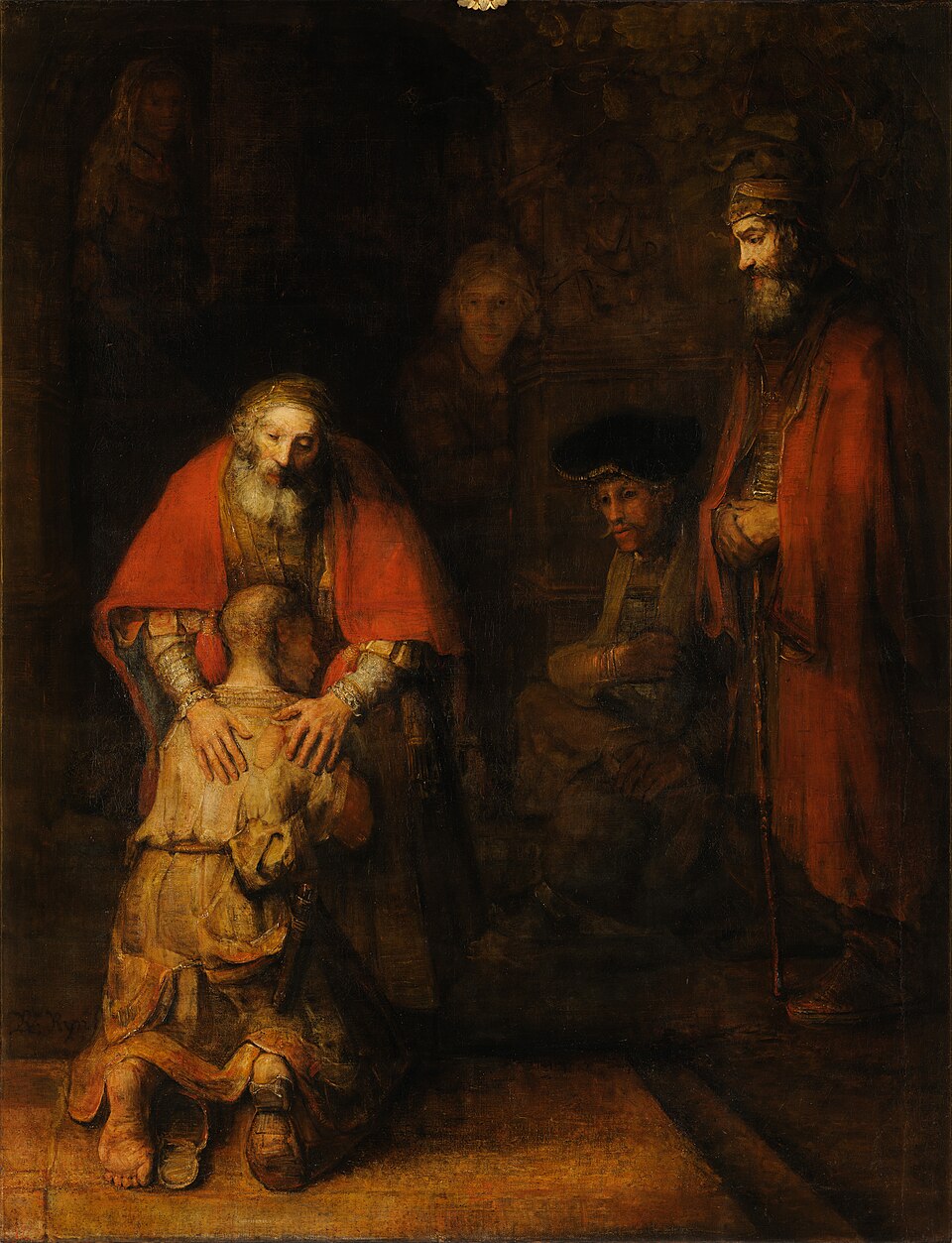
He saw his son while he was still far off, was filled with compassion, and ran to embrace him.
Luke 15:20
Once a persecutor, he wrote that he was shown mercy as an example to those who would believe.
1 Timothy 1:16
David, The father of the lost son, Paul
The Practice of Mercy
Scripture names twelve practices of mercy, each with the verse that gives it.
- 1Love your enemies and lend"But love your enemies, do good to them, and lend to them, expecting nothing in return."Luke 6:35
- 2Feed the hungry and take in the stranger"For I was hungry and you gave Me something to eat, I was thirsty and you gave Me something to drink, I was a stranger and you took Me in."Matthew 25:35
- 3Clothe, nurse and visit"I was naked and you clothed Me, I was sick and you looked after Me, I was in prison and you visited Me."Matthew 25:36
- 4Give in secret"But when you give to the needy, do not let your left hand know what your right hand is doing, so that your giving may be in secret."Matthew 6:3 to 4
- 5Be kind to the poor"Kindness to the poor is a loan to the LORD, and He will repay the lender."Proverbs 19:17
- 6Do not oppress the weak"Do not oppress the widow or the fatherless, the foreigner or the poor."Zechariah 7:10
- 7Forgive as you were forgiven"Be kind and tenderhearted to one another, forgiving each other just as in Christ God forgave you."Ephesians 4:32
- 8Show mercy cheerfullyPaul writes of the gifts of grace, "if it is showing mercy, let him do it cheerfully."Romans 12:8
- 9Put on compassionPaul tells the church to "clothe yourselves with hearts of compassion, kindness, humility, gentleness, and patience."Colossians 3:12
- 10Comfort othersGod "comforts us in all our troubles, so that we can comfort those in any trouble with the comfort we ourselves have received from God."2 Corinthians 1:4
- 11Have mercy on those who doubt"And indeed, have mercy on those who doubt; save others by snatching them from the fire."Jude 1:22 to 23
- 12Ask for mercy"Have mercy on me, O God, according to Your loving devotion."Psalm 51:1
Feed the hungry and take in the stranger, Clothe, nurse and visit, Give in secret, Be kind to the poor, Do not oppress the weak, Forgive as you were forgiven, Show mercy cheerfully, Put on compassion and 3 more
What Stands Against Mercy
Scripture names the merciless, the ear shut to the poor and the heart closed to a brother in need.
Paul ends his list of the sins of those God gave up to a depraved mind with the words "senseless, faithless, heartless, merciless" (Romans 1:31).
Proverbs warns, "Whoever shuts his ears to the cry of the poor, he too shall cry out and receive no answer" (Proverbs 21:13). It says that the one who oppresses the poor "taunts their Maker" (Proverbs 14:31).
If anyone with earthly possessions sees his brother in need, but withholds his compassion from him, how can the love of God abide in him?
John makes a heart shut against a brother in need a question about whether God's love lives in a person.
1 John 3:17BSB
1 John 3:17
Mercy in the Stories of the Bible
Six stories, from Sinai to the Jericho road, show the mercy God gives and the mercy He asks.
The golden calfExodus 32 to 34
While Moses was on the mountain with God, Israel made a golden calf and worshipped it. Moses pleaded for them, and "the LORD relented from the calamity He had threatened to bring on His people" (Exodus 32:14). Moses went back to the LORD and asked Him to forgive their sin, or else to blot Moses out of the book He had written (Exodus 32:32).
Read the study of the Golden Calf 8 sections, 8 verses set out
Jonah and NinevehJonah 3 to 4
When Nineveh turned from its evil ways, God "relented from the disaster He had threatened to bring upon them" (Jonah 3:10). Jonah was angry and prayed God's own words back to Him as a complaint, saying he had fled because he knew God was gracious and compassionate (Jonah 4:2). The book ends on God's question about the great city.
Read the debate Jonah: History or Parable? 10 sections, 11 verses set out
The Canaanite womanMatthew 15
In Matthew 15:22 a Canaanite woman cried out, "Lord, Son of David, have mercy on me! My daughter is miserably possessed by a demon." Jesus first gave no answer and then said He was sent only to the lost sheep of Israel. She replied that even the dogs eat the crumbs from their master's table, and He praised her faith and healed her daughter.
The servant who would not forgiveMatthew 18
Peter asked how often he should forgive. Jesus told of a king who had compassion on a servant and forgave him ten thousand talents. That servant then had a fellow servant thrown into prison over a hundred denarii. The king's question stands in Matthew 18:33: "Shouldn’t you have had mercy on your fellow servant, just as I had on you?"
Blind BartimaeusMark 10
In Mark 10:47 a blind beggar named Bartimaeus, sitting outside Jericho, cried out, "Jesus, Son of David, have mercy on me!" Many told him to be silent, and he cried out all the louder. Jesus called him, and he threw off his cloak and asked to see again. He received his sight at once and followed Jesus.
The Good SamaritanLuke 10
In Luke 10:29 a lawyer asked Jesus, "And who is my neighbor?" Jesus told of a man beaten by robbers, passed by a priest and a Levite and cared for by a Samaritan. The lawyer agreed that the neighbour was the one who showed mercy, and Jesus told him, "Go and do likewise."
Jonah and Nineveh (Jonah 3 to 4), The Canaanite woman (Matthew 15), The servant who would not forgive (Matthew 18), Blind Bartimaeus (Mark 10), The Good Samaritan (Luke 10)
Mercy in the Church's History
Five accounts from the second century to the thirteenth, each in the words of its source.
Justin Martyr2nd century
Justin Martyr described the Sunday of his own church for the emperor. After the prayers and the bread and wine, the well-to-do gave what each thought fit, and the president "succours the orphans and widows and those who, through sickness or any other cause, are in want". The words stand in his First Apology, chapter 67, translated by M. Dods and G. Reith in 1885.
Ambrose of Milan4th century
Ambrose wrote that he once broke up the sacred vessels of the church to redeem captives, and that the Arians blamed him for it. He defended the act: "The Church has gold, not to store up, but to lay out, and to spend on those who need" (On the Duties of the Clergy, book 2, chapter 28).
Fabiola399
In a letter the edition dates to 399, Jerome wrote that Fabiola sold her property for the poor and founded a hospital for the sick of the streets. He calls her "the first person to found a hospital", though Basil's house at Caesarea is commonly dated earlier. She "gave food to her patients with her own hand" (Letter 77, section 6).
Paulinus of Noladate not known
Gregory the Great reports, from what his elders told him, that when the Vandals carried captives from Campania to Africa, Paulinus of Nola gave the wealth of his bishopric to prisoners and the poor. To a widow seeking her son's ransom he said, "Good woman, nothing have I to help thee withal but myself". The captor took him as a gardener and freed the son (Dialogues, book 3, chapter 1).
Francis of Assisi1226
In his Testament Francis wrote that while he lived in sin it seemed very bitter to him to see lepers, "and the Lord Himself led me amongst them and I showed mercy to them". He wrote that what had seemed bitter was changed for him into sweetness of body and soul (The Writings of Saint Francis of Assisi, translated by Paschal Robinson, 1906).
Ambrose of Milan (4th century), Fabiola (399), Paulinus of Nola (date not known), Francis of Assisi (1226)
Voices on Mercy, by Century
Seven voices from the first century to the nineteenth, each under the line that says what he teaches.
died 99 · Clement of Rome
Letter to the Corinthians (Clement)
First century. The Lord's words on mercy are a rule for humble obedience.
The quotation1 quotation
“Let us therefore, brethren, be of humble mind, laying aside all haughtiness, and pride, and foolishness, and angry feelings; and let us act according to that which is written (for the Holy Spirit saith, ‘Let not the wise man glory in his wisdom, neither let the mighty man glory in his might, neither let the rich man glory in his riches; but let him that glorieth glory in the Lord, in diligently seeking Him, and doing judgment and righteousness’), being especially mindful of the words of the Lord Jesus which He spake, teaching us meekness and long-suffering. For thus He spoke: ‘Be ye merciful, that ye may obtain mercy; forgive, that it may be forgiven to you; as ye do, so shall it be done unto you; as ye judge, so shall ye be judged; as ye are kind, so shall kindness be shown to you; with what measure ye mete, with the same it shall be measured to you.’ By this precept and by these rules let us establish ourselves, that we walk with all humility in obedience to His holy words. For the holy word saith, ‘On whom shall I look, but on him that is meek and peaceable, and that trembleth at My words?’”
Clement of Rome · Letter to the Corinthians (Clement) · on Luke 6:36Patristic
died 220 · Tertullian
Against Marcion Book IV
Third century. Christ's command to be merciful agrees with the prophets' call to feed the hungry and plead for the widow.
The quotation1 quotation
“Compassion also does He teach: ‘Be ye merciful,’ says He, ‘as your Father also that had mercy upon you.’ This injunction will be of a piece with, ‘Deal thy bread to the hungry; and if he be houseless, bring him into thine house; and if thou seest the naked, cover him; ‘ also with, ‘Judge the fatherless, plead with the widow.’ I recognise here that ancient doctrine of Him who ‘prefers mercy to sacrifice.’”
Tertullian · Against Marcion Book IV · on Luke 6:36Patristic
died 533 · Remigius of Rheims
Catena Aurea by Aquinas
Sixth century. The Lord names six works of mercy in His words on the judgment.
The quotation1 quotation
“And it is to be noted, that the Lord here enumerates six works of mercy which whoso shall study to accomplish shall be entitled to the kingdom prepared for the chosen from the foundation of the world.”
Remigius of Rheims · Catena Aurea by Aquinas · on Matthew 25:34 to 36Patristic
died 585 · Cassiodorus
EXPLANATION OF THE PSALMS 23:6
Sixth century. The Lord's mercy goes before a person to give grace and follows him to guard him.
The quotation1 quotation
“Even though the Lord's mercy always goes before us, he says here, ‘it will follow me.’ It follows, particularly to guard, but it goes in front to grant grace. For if it were merely following, no one would perceive the gifts that are granted. If …”
Cassiodorus · Explanation of the Psalms 23:6 · on Psalm 23:6Patristic
died 1107 · Theophylact of Ohrid
Commentary on James
Twelfth century. Those who forgive and share with the poor will be received by God's mercy at the judgment.
The quotation1 quotation
“If we have forgiven our neighbors the sins they committed against us and from our possessions share a portion with the poor, then the mercy of God will also receive us when He judges our deeds. The accomplishment of this is important. On the contrary, …”
Theophylact of Ohrid · Commentary on James · on James 2:13Patristic
1834 to 1892 · Charles Spurgeon
The Treasury of David, Vol. 4
Nineteenth century. Mercy pardons sin, and grace gives favour.
The quotation1 quotation
“The Lord is merciful and gracious. Those with whom he deals are sinners. However much he favours them they are guilty and need mercy at his hands, nor is he slow to compassionate their lost estate, or reluctant by his grace to lift them out of it. Mercy pardons sin, grace bestows favour: in both the Lord abounds. This is that way of his which he made known to Moses (Ex 34:6), and in that way he will abide as long as the age of grace shall last, and men are yet in this life.”
Charles Spurgeon · The Treasury of David, Vol. 4 · on Psalm 103:8
1816 to 1900 · J.C. Ryle
Expository Thoughts on the Gospels: Matthew
Nineteenth century. Christ's rule is a spirit of mercy and forgiveness toward others.
The quotation1 quotation
“In these verses the Lord Jesus deals with a deeply important subject, the forgiveness of injuries. We live in a wicked world, and it is vain to expect that we can escape ill-treatment, however carefully we may behave. To know how to conduct ourselves when we are ill-treated is of great moment to our souls. In the first place, the Lord Jesus lays it down as a general rule that we ought to forgive others to the uttermost. Peter put the question, ‘How oft shall my brother sin against me and I forgive him? Till seven times?’ He received answer: ‘I say, not unto thee till seven times, but until seventy times seven.’ The rule here laid down must of course be interpreted with sober-minded qualification. Our Lord does not mean that offenses against the law of the land and the good order of society are to be passed over in silence; he does not mean that we are to allow people to commit thefts and assaults with impunity. All that he means is that we are to study a general spirit of mercy and forgivingness towards our brethren. We are to bear much, and to put up with much, rather than quarrel; we are to overlook much, and submit to much, rather than have any strife; we are to lay aside everything like malice, strife, revenge and retaliation. Such feelings are only fit for heathens: they are utterly unworthy of a disciple of Christ. What a happy world it would be if this rule of our Lord’s was more known and better obeyed! How many of the miseries of mankind are occasioned by disputes, quarrels, lawsuits, and an obstinate tenacity about what men call ‘their rights’! How many of them might be altogether avoided if men were more willing to forgive, and more desirous for peace! Let us never forget that a fire cannot go on burning without fuel; just in the same way it takes two to make a quarrel. Let us each resolve, by God’s grace, that of these two we will never be one.”
J.C. Ryle · Expository Thoughts on the Gospels: Matthew · on Matthew 18:21 to 35Reformed Evangelical
Remigius of Rheims, Cassiodorus, Theophylact of Ohrid, Charles Spurgeon, J.C. Ryle
How Mercy Has Been Taught
Lactantius, Aquinas, the Westminster Assembly and Wesley taught mercy from the fourth century to the eighteenth.
Lactantius set out the works of mercy1 paragraph
One chapter of the Divine Institutes of Lactantius bears the title "Of the Kinds of Beneficence, and Works of Mercy". In it he wrote that "it is the appropriate work of the just to support the poor and to ransom captives". He added, "The last and greatest office of piety is the burying of strangers and the poor" (book 6, chapter 12, translated by William Fletcher, 1886).
Aquinas counted fourteen works of mercy1 paragraph
Thomas Aquinas wrote, "On itself, mercy takes precedence of other virtues, for it belongs to mercy to be bountiful to others". The words stand in his Summa Theologiae, in the second part of the second part, question 30, article 4. He counted seven corporal works of mercy, from feeding the hungry to burying the dead. The first four of his seven spiritual works are "to instruct the ignorant, to counsel the doubtful, to comfort the sorrowful, to reprove the sinner". The other three are "to forgive injuries, to bear with those who trouble and annoy us, and to pray for all" (question 32, article 2).
The Westminster Confession counted mercy among the attributes of God1 paragraph
The Westminster Confession calls God "gracious, merciful, longsuffering, abundant in goodness and truth" (chapter 2, section 1, as Philip Schaff printed it in The Creeds of Christendom, volume 3).
Wesley read the merciful as the tender-hearted1 paragraph
John Wesley preached a series of sermons on the Sermon on the Mount. Of the fifth blessing he said, "The word used by our Lord more immediately implies the compassionate, the tender-hearted" (Sermon 22).
Where the Science Speaks
Trials of compassion training have measured giving and feeling, most of them in small samples.
In a trial reported in Psychological Science in 2013, Helen Y. Weng and others found that "compassion training increased altruistic redistribution of funds to a victim encountered outside of the training context".
Olga Klimecki and others reported in 2014 that training in empathy alone increased negative feeling, and that compassion training afterwards reversed the increase and raised positive feeling (Social Cognitive and Affective Neuroscience).
A review of twenty-one randomized trials with 1,285 participants found effects of compassion-based programmes on compassion, depression and well-being (Kirby, Tellegen and Steindl, Behavior Therapy, 2017). Its authors name small samples as the chief limit of the evidence.
These studies measure trained compassion and giving in a laboratory, which is narrower than the mercy Scripture asks toward the guilty and the enemy. They stand beside the command as later witnesses, and the command rests on the mercy God has shown.
Kindness and the Body, the study in brief
The Studies of Mercy
Each study takes one part of mercy further, grouped by the texts, the stories and the words.
The texts
3 studies
- Passages and psalms · 12 verses set outBlessed Are the Merciful
The fifth beatitude stands between the blessing on those who hunger and thirst for righteousness and the blessing on the pure in heart.
- Passages and psalms · 7 verses set outThe Compassion of Jesus
The Greek verb splanchnizomai, to be moved with compassion, stands twelve times in the Gospels, all of them in Matthew, Mark and Luke.
- Symbols and words · 12 verses set outThe Mercy Seat
The cover of the ark stood in the inner room of the tabernacle, and the New Testament reads it as a type of Christ.
- Passages and psalms · 12 verses set outBlessed Are the Merciful
The stories
1 study
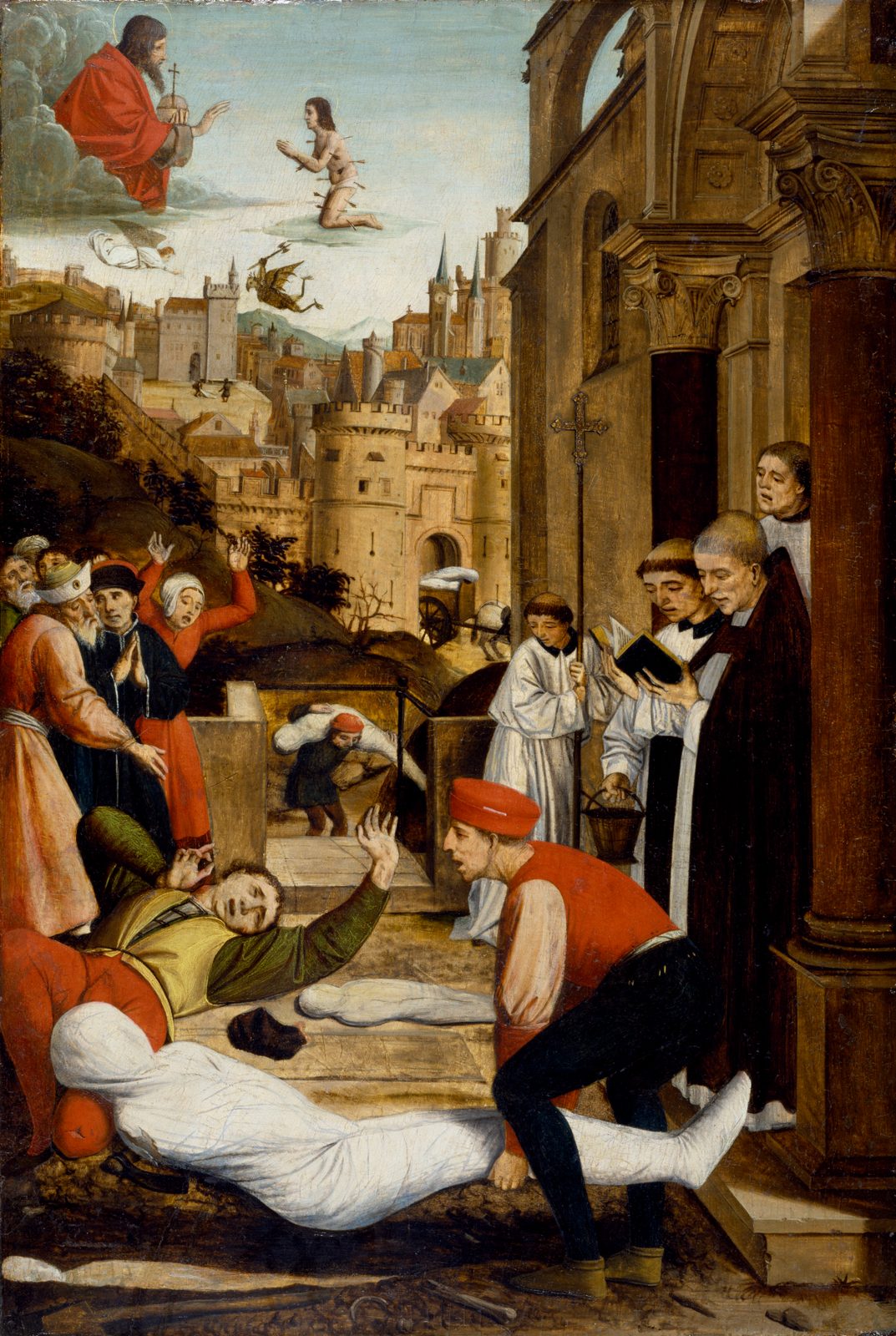
- Stories · 5 verses set outMercy in the Plague Years
Clergy at two cities of the third century wrote of the faithful who stayed with the dying through an epidemic, in letters, a sermon and a life of a bishop that still survive.
- Stories · 5 verses set outMercy in the Plague Years
The words
1 study
- Symbols and words · 13 verses set outThe Words Rachamim, Chesed and Eleos
Rachamim and chesed in Hebrew and eleos in Greek are the words Scripture uses most for mercy, from the Psalms and the prophets to the songs of Luke's Gospel.
- Symbols and words · 13 verses set outThe Words Rachamim, Chesed and Eleos
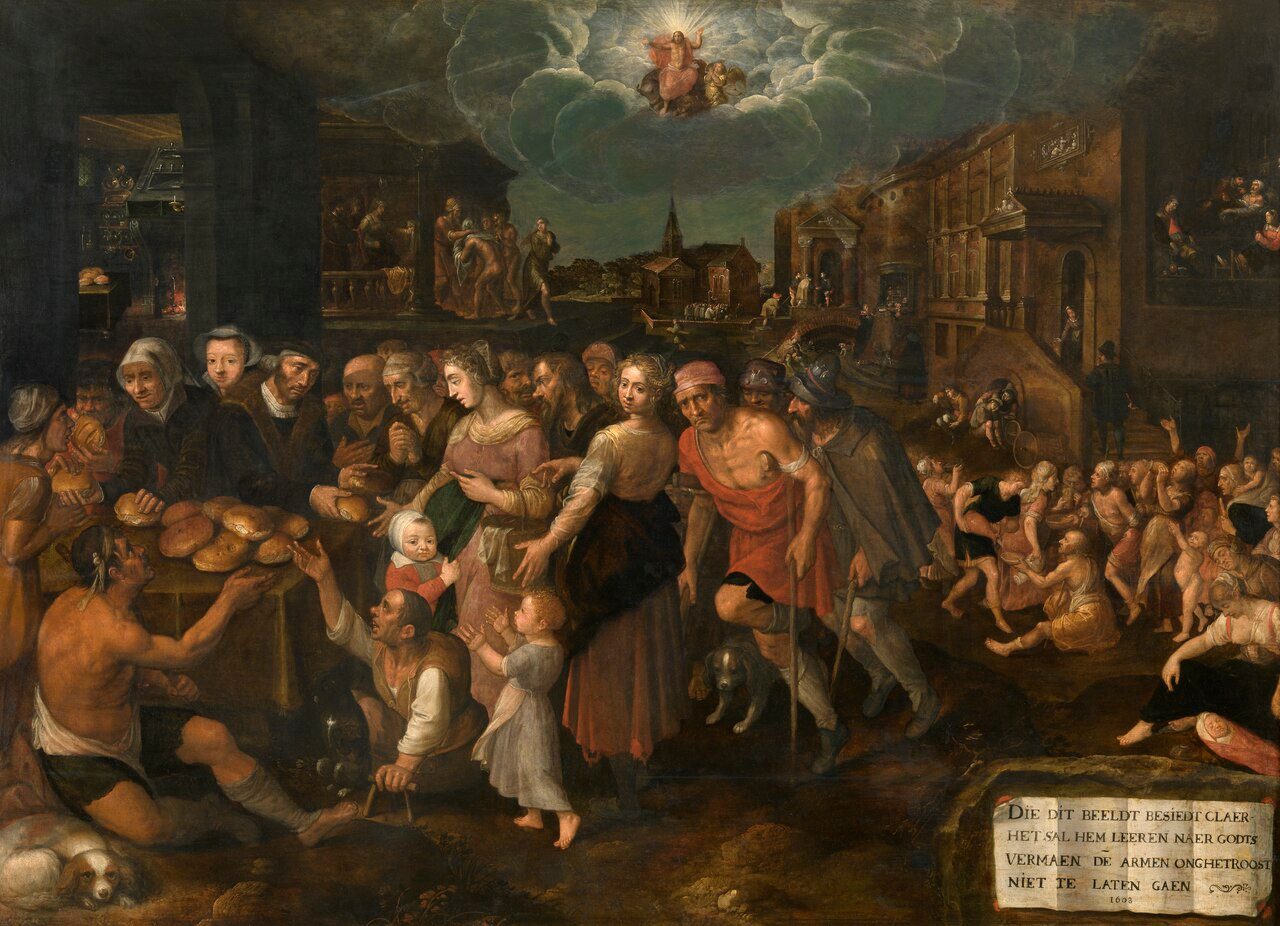
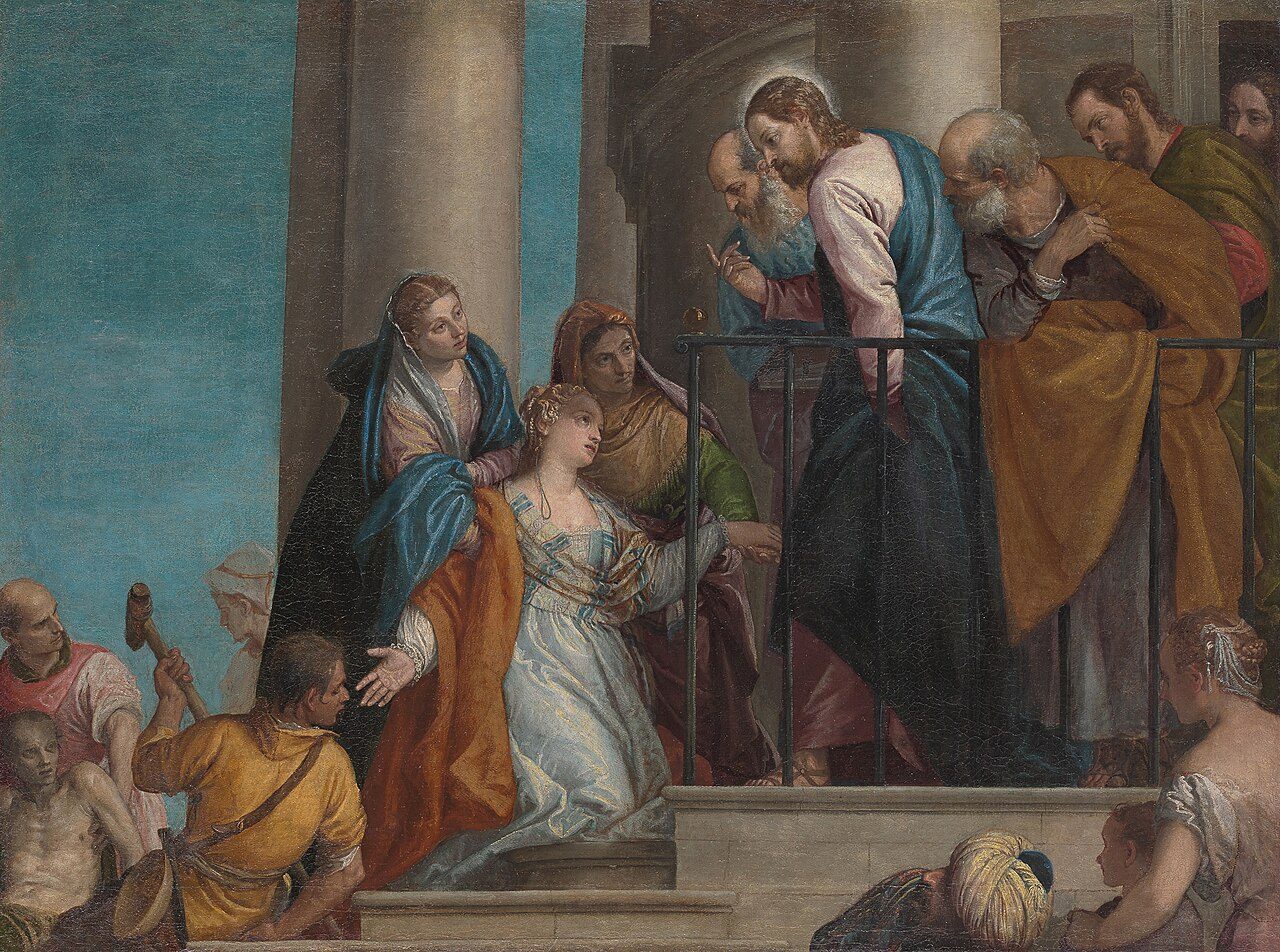
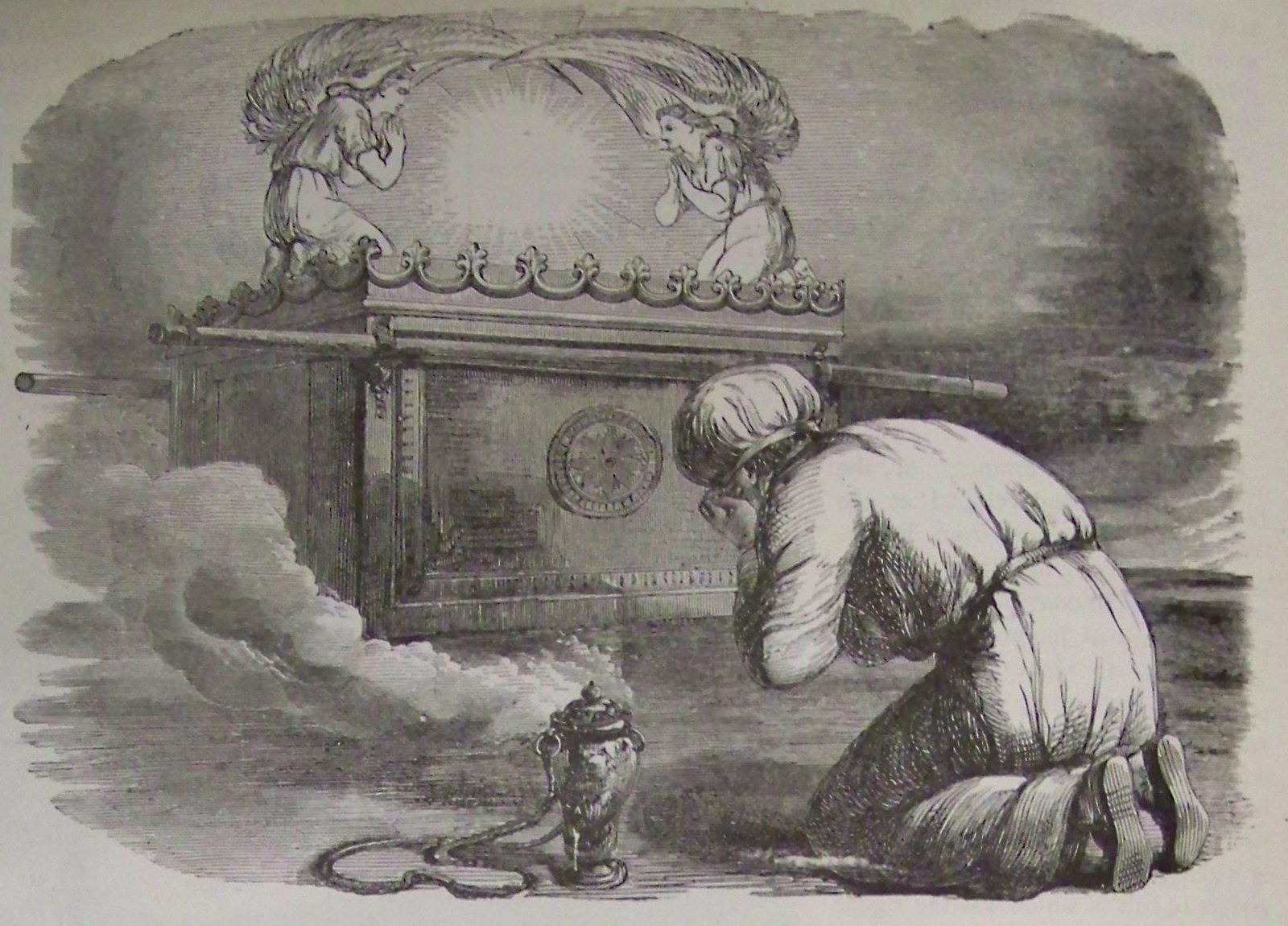
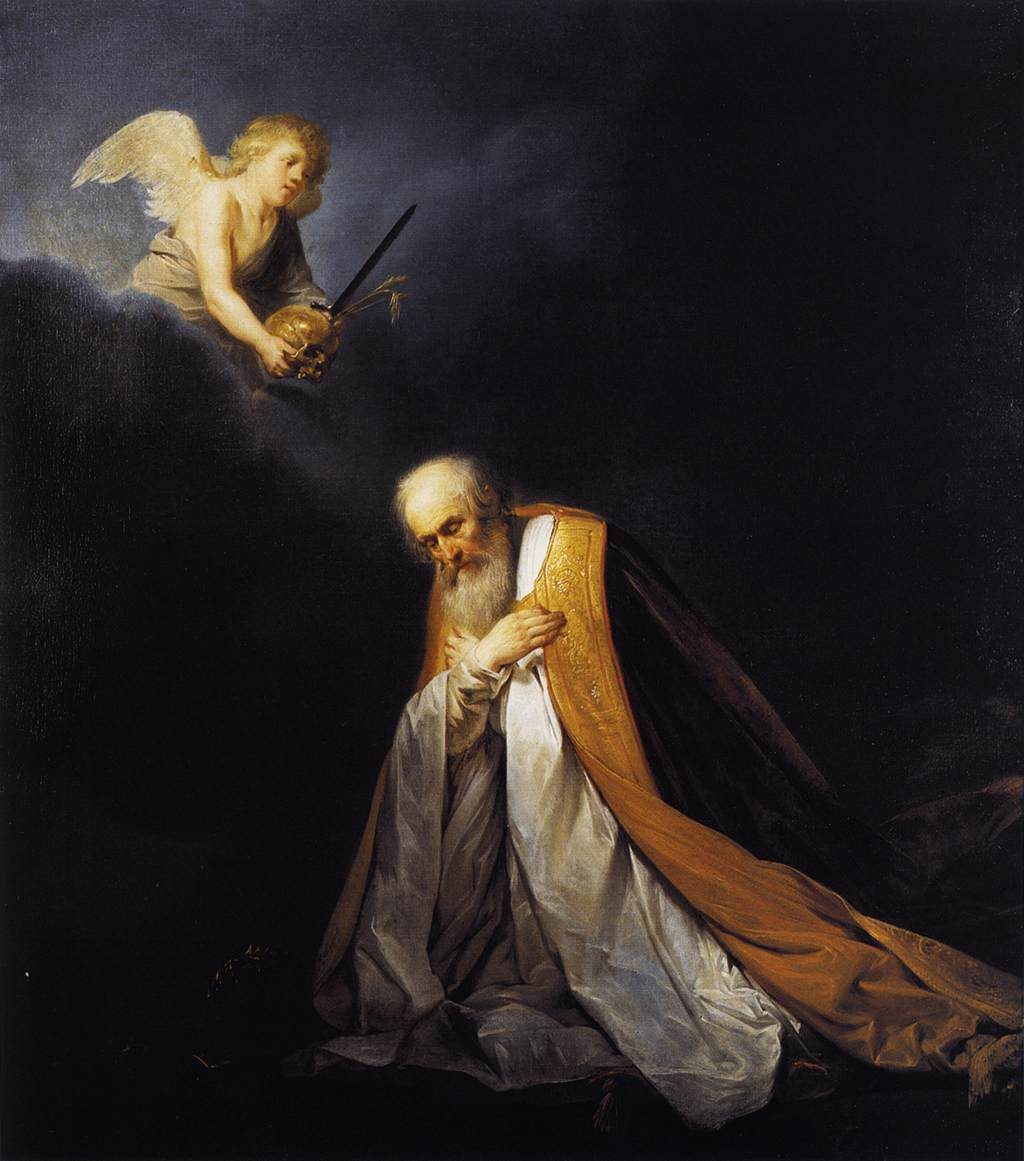
The Compassion of Jesus, The Mercy Seat, Mercy in the Plague Years, The Words Rachamim, Chesed and Eleos
Where Readers Disagree
Each reading names its holders, the work that argues it and the objection raised against it.
Mercy and justice in God
Read the study of the gracious and compassionate formula 11 sections, 19 verses set out
| Reading | Held by | Work | Objection |
|---|---|---|---|
| God pities the wicked because He is supremely just | Anselm of Canterbury (Medieval Latin theology) | Anselm, Proslogium, chapters 9 to 11 (translated by S. N. Deane, 1903) | Anselm himself confesses in chapter 11 that no one can comprehend why God saves some of the wicked rather than others. |
| Mercy fulfils justice and does not destroy it | Thomas Aquinas (Thomist) | Thomas Aquinas, Summa Theologiae, I question 21, articles 3 and 4 (English Dominican translation, 1920) | Romans 3:25 sets God's display of His righteousness in the atoning sacrifice of Christ, which a definition of the two virtues does not by itself explain. |
The promise of Matthew 5:7
Read the study of Blessed Are the Merciful 9 sections, 12 verses set out
| Reading | Held by | Work | Objection |
|---|---|---|---|
| God gives His mercy to the merciful as His promise to the deed | Hilary of Poitiers; Augustine of Hippo (Latin patristic writing) | Hilary of Poitiers on Matthew 5:7, in Thomas Aquinas, Catena Aurea on Matthew; Augustine of Hippo, Sermon 53, section 5 | In Matthew 18:27 the king forgives the whole debt before the servant has shown anyone mercy. |
| Mercy received comes first, and mercy shown answers it | Thomas Aquinas (Medieval scholastic commentary) | Thomas Aquinas, Commentary on Matthew, on Matthew 18:27 | Matthew 5:7 promises mercy in the future tense to those who show it, and Matthew 18:35 warns each hearer who does not forgive from the heart. |
The Good Samaritan and Christ
Read the study of the Good Samaritan
| Reading | Held by | Work | Objection |
|---|---|---|---|
| The parable also pictures Christ, who rescues fallen humanity | Augustine of Hippo; Ambrose of Milan (Latin patristic exposition) | Augustine, Quaestiones Evangeliorum, book 2, question 19, and Ambrose on Luke 10:36 to 37, both in Thomas Aquinas, Catena Aurea on Luke | Luke sets the parable between the lawyer's question in Luke 10:29 and the charge to go and do likewise in Luke 10:37, so its point falls on the hearer. |
| The parable answers the lawyer's question about the neighbour | John Calvin (Reformed commentary) | John Calvin, Commentary on a Harmony of the Evangelists, on Luke 10:30 (translated by William Pringle) | Calvin grants that the reading of the Samaritan as Christ had been held by almost universal consent before him. |
Sources
Scripture is the Berean Standard Bible.
- STEP Bible, Translators Brief lexicon of Extended Strongs for Hebrew and for Greek (Tyndale House, Cambridge), CC BY 4.0, with the Greek brief lexicon based on Abbott-Smith (1922)
- STEP Bible word index (TAHOT and TAGNT), Tyndale House, CC BY 4.0, the Hebrew and Greek words of each verse with Strong's numbers and glosses.
- Justin Martyr, The First Apology, chapter 67, translated by M. Dods and G. Reith, Ante-Nicene Fathers, volume 1 (1885)
- Ambrose of Milan, On the Duties of the Clergy, book 2, chapter 28, sections 136 to 137, translated by H. de Romestin, E. de Romestin and H. T. F. Duckworth, Nicene and Post-Nicene Fathers, second series, volume 10 (1896)
- Jerome, Letter 77, to Oceanus, section 6, translated by W. H. Fremantle, G. Lewis and W. G. Martley, Nicene and Post-Nicene Fathers, series 2, volume 6 (1893)
- Gregory the Great, Dialogues, book 3, chapter 1, the English edition of 1911.
- Francis of Assisi, The Testament, in The Writings of Saint Francis of Assisi, newly translated by Father Paschal Robinson (Philadelphia, 1906)
- Lactantius, The Divine Institutes, book 6, chapter 12, translated by William Fletcher, Ante-Nicene Fathers, volume 7 (1886)
- Thomas Aquinas, Summa Theologiae, I question 21, articles 3 and 4; II-II question 30, articles 1 and 4; II-II question 32, article 2, English Dominican translation, second edition (1920)
- Anselm of Canterbury, Proslogium, chapters 9 to 11, translated by Sidney Norton Deane (Chicago: Open Court, 1903), in the modernized text of the Fordham Internet Medieval Sourcebook.
- John Calvin, Commentary on a Harmony of the Evangelists, Matthew, Mark and Luke, volume 3, on Luke 10:30, translated by William Pringle (Calvin Translation Society)
- The Westminster Confession of Faith (1646), chapter 2, section 1, in Philip Schaff, The Creeds of Christendom, volume 3.
- John Wesley, Sermon 22, Upon our Lord's Sermon on the Mount, Discourse 2, part 3, section 1, in the 1872 edition of his works.
- Clement of Rome, The First Epistle to the Corinthians, chapter 13.
- Tertullian, Against Marcion, book 4, on Luke 6:36.
- Hilary of Poitiers on Matthew 5:7, in Thomas Aquinas, Catena Aurea on Matthew.
- Remigius of Rheims on Matthew 25:34 to 36, in Thomas Aquinas, Catena Aurea on Matthew, in a modern English translation.
- Cassiodorus, Explanation of the Psalms, on Psalm 23:6, in a modern English translation.
- Theophylact of Ohrid, Commentary on James, on James 2:13, in a modern English translation.
- Charles H. Spurgeon, The Treasury of David, volume 4 (1874), on Psalm 103:8.
- J. C. Ryle, Expository Thoughts on the Gospels: Matthew (1856), on Matthew 18:21 to 35.
- Augustine of Hippo, Sermon 53, section 5, on Matthew 5:7, in a modern English translation.
- Augustine of Hippo, Quaestiones Evangeliorum, book 2, question 19, in Thomas Aquinas, Catena Aurea on Luke 10:30.
- Ambrose of Milan on Luke 10:36 to 37, in Thomas Aquinas, Catena Aurea on Luke.
- Thomas Aquinas, Commentary on Matthew, on Matthew 18:27, in a modern English translation.
- H. Y. Weng, A. S. Fox, A. J. Shackman and others, Compassion training alters altruism and neural responses to suffering, Psychological Science 24(7): 1171 to 1180 (2013)
- O. M. Klimecki, S. Leiberg, M. Ricard and T. Singer, Differential pattern of functional brain plasticity after compassion and empathy training, Social Cognitive and Affective Neuroscience 9(6): 873 to 879 (2014)
- J. N. Kirby, C. L. Tellegen and S. R. Steindl, A Meta-Analysis of Compassion-Based Interventions: Current State of Knowledge and Future Directions, Behavior Therapy 48(6): 778 to 792 (2017)
Keep Studying
Studies13
In this value5
People and groups17
Symbols4
Doctrines8