
Exodus 34:30
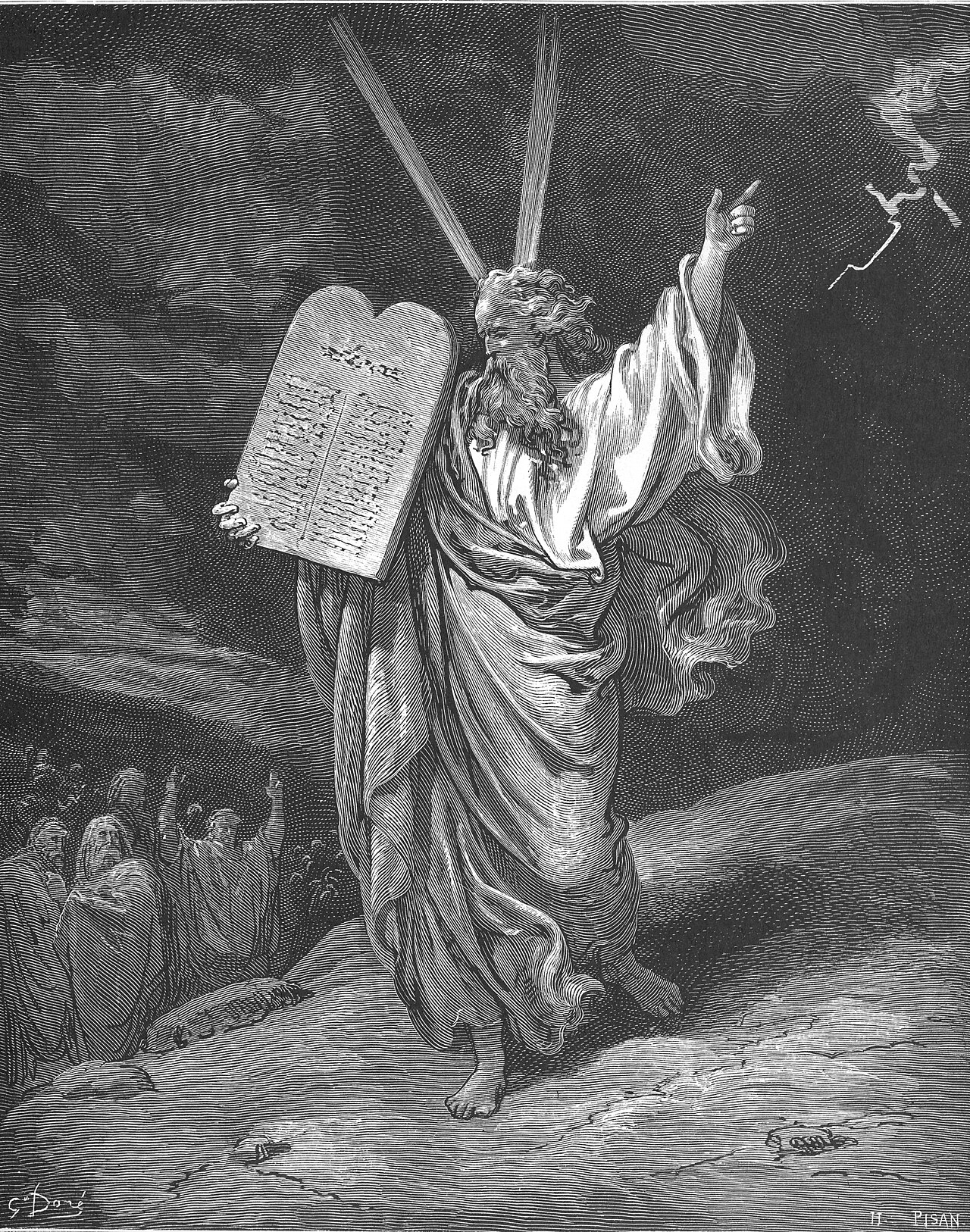
in Exodus 34Aaron and all the Israelites looked at Moses, and behold, his face was radiant. And they were afraid to approach him.
BSB
The same verse in ASV and KJV ▾
ASV
And when Aaron and all the children of Israel saw Moses, behold, the skin of his face shone; and they were afraid to come nigh him.
KJV
And when Aaron and all the children of Israel saw Moses, behold, the skin of his face shone; and they were afraid to come nigh him.
⋯
This verse in Exodus 34
Commentary
9 notes on this verseThey were afraid to come nigh him - A sight of his face alarmed them; their consciences were still guilty from their late transgression, and they had not yet received the atonement. The very appearance of superior sanctity often awes the guilty into respect.
This site's exposition
when Moses came down from mount Sinai
on Exodus 34:29-30
Moses comes down the mountain a second time carrying tables, and this time nothing gets broken. The shining is on the skin of his face and he does not know it, so the one man who cannot see the glory is the man carrying it. Israel had been afraid of the mountain at Exodus 20:18 and 20:19 and asked that God not speak to them directly, and now the same fear meets them on a man's face.
This site's exposition
they were afraid to approach him
Adam Clarke traces the fear to the sin of the calf, still on the conscience of the people. John Wesley thinks they could not tell whether the radiant face was a sign of the LORD's favor or His anger. Sin makes men afraid of their friends, Matthew Henry says.
The record, by era
The Puritans and the Awakening4 voices
And Aaron and the children of Israel saw it, and were afraid - It not only dazzled their eyes, but struck such an awe upon them as obliged them to retire. Probably they doubted whether it was a token of God's favour, or of his displeasure.
And when Aaron and all the children of Israel saw Moses,....
Holiness will command reverence; but the sense of sin makes men afraid of their friends, and even of that which really is a favour to them. [3.] Moses put a veil upon his face, when he perceived that it shone,
In all this God dealt with Moses as a public person, and mediator between him and Israel, and a type of the great Mediator. God's Proclamation of Himself.
The Nineteenth Century1 voice
A FAST of 40 days does not improve the appearance of a man's countenance—he looks starved, wrinkled, old, haggard. Moses had fasted 40 days twice, at least, and, according to many competent authorities, the 10th chapter of Deuteronomy seems to imply that he fasted 40 days three times in quick succession. I will not assert or deny the third 40 days, but it is certain that, with a very slight interval, Moses fasted 40 days and then 40 days more—and it is probable that to these must be added a third forty.
1 more voice on this verse
The Nineteenth Century1 voice
A FAST of 40 days does not improve the appearance of a man's countenance—he looks starved, wrinkled, old, haggard. Moses had fasted 40 days twice, at least, and, according to many competent authorities, the 10th chapter of Deuteronomy seems to imply that he fasted 40 days three times in quick succession. I will not assert or deny the third 40 days, but it is certain that, with a very slight interval, Moses fasted 40 days and then 40 days more—and it is probable that to these must be added a third forty. Small attractiveness would naturally remain in a face which had endured so stern an ordeal, but the Lord whom he served made his face brilliant with an unusual luster! The glory of the Light of God upon his countenance may have been the reason why he remained so free from infirmity in later years of old age. This man of 80 spent 40 more years in guiding Israel and in the end his eyes had not dimmed nor his natural force abated! He that could fast 40 days would be a hard morsel for death. Those eyes which had looked upon the Glory of God were not likely to wax dim amid earthly scenes— and that natural force which had endured the vision of the Supernatural could well support the fatigues of the wilderness. God so sustained His servant that his long and repeated fasts, during which he did not even drink water, did no harm to his physical constitution! The abstinence, even from water, renders the fast the more remarkable and lifts it out of similarity to modern feats of fasting. Moses did not know, at the time, that his face was shining—but he did know it afterwards—and he has here recorded it. He gives in detail the fact of the brightness of his own face, how others were struck with it and what he had to do in order to associate with them.
The words behind it
14 Hebrew wordsEvery Hebrew word of this verse in the order it stands, with what it means and the door to its own study. The last column counts the times a word stands in the whole Bible: the rarer the word, the more the places it appears belong together.
| Hebrew | Sound | Meaning | Word study | In the Bible |
|---|---|---|---|---|
| וַיַּ֨רְא | vaiyar' | and he saw | H7200 → | 1300 times |
| אַהֲרֹ֜ן | ʾaharon | Aaron | H175 → | 347 times |
| וְכָל־ | vekhol | and all | H3605 → | 5413 times |
| בְּנֵ֤י | benei | [the] people of | H1121 → | 4930 times |
| יִשְׂרָאֵל֙ | yisrael | Israel | H3478 → | 2507 times |
| אֶת־ | ʾet- | <obj.> | H853 → | 10935 times |
| מֹשֶׁ֔ה | mosheh | Moses | H4872 → | 765 times |
| וְהִנֵּ֥ה | vehineh | and there! | H2009 → | 843 times |
| קָרַ֖ן | karan | it shone | H7160 → | 4 times |
| ע֣וֹר | or | [the] skin of | H5785 → | 99 times |
| פָּנָ֑יו | panav | face his | H6440 → | 2123 times |
| וַיִּֽירְא֖וּ | vaiyireu | and they were afraid | H3372 → | 315 times |
| מִגֶּ֥שֶׁת | migeshet | from drawing near | H5066 → | 125 times |
| אֵלָֽיו׃ | ʾelav | to him | H413 → | 5510 times |
וַיַּ֨רְאand he saw
vaiyar'H7200 →1300 times
אַהֲרֹ֜ןAaron
ʾaharonH175 →347 times
וְכָל־and all
vekholH3605 →5413 times
בְּנֵ֤י[the] people of
beneiH1121 →4930 times
יִשְׂרָאֵל֙Israel
yisraelH3478 →2507 times
אֶת־<obj.>
ʾet-H853 →10935 times
מֹשֶׁ֔הMoses
moshehH4872 →765 times
וְהִנֵּ֥הand there!
vehinehH2009 →843 times
קָרַ֖ןit shone
karanH7160 →4 times
ע֣וֹר[the] skin of
orH5785 →99 times
פָּנָ֑יוface his
panavH6440 →2123 times
וַיִּֽירְא֖וּand they were afraid
vaiyireuH3372 →315 times
מִגֶּ֥שֶׁתfrom drawing near
migeshetH5066 →125 times
אֵלָֽיו׃to him
ʾelavH413 →5510 times
A shaded row is a word that stands 400 times or fewer in the Bible.
The walk
8 stopsEach card is a verse this one points to, and under it the verses that one points to in turn. Where several paths arrive at the same place, that place is listed first: the text keeps returning to it.
Through
Numbers 12:8I speak with him face to face, clearly and not in riddles; he sees the form of the LORD. Why then were you unafraid to speak against My servant Moses?”
it leads to
- Deuteronomy 34:10
Since that time, no prophet has risen in Israel like Moses, whom the LORD knew face to face—
- 1 Corinthians 13:12
Now we see but a dim reflection as in a mirror; then we shall see face to face. Now I know in part; then I shall know fully, even as I am fully known.
- Exodus 33:11
Thus the LORD would speak to Moses face to face, as a man speaks to his friend. Then Moses would return to the camp, but his young assistant Joshua son of Nun would not…
- Deuteronomy 34:10
Through
Luke 5:8When Simon Peter saw this, he fell at Jesus’ knees. “Go away from me, Lord,” he said, “for I am a sinful man.”
it leads to
- Isaiah 6:5
Then I said: “Woe is me, for I am ruined, because I am a man of unclean lips dwelling among a people of unclean lips; for my eyes have seen the King, the LORD…
- Job 42:5–6
My ears had heard of You, but now my eyes have seen You.
- Revelation 1:17
When I saw Him, I fell at His feet like a dead man. But He placed His right hand on me and said, “Do not be afraid. I am the First and the Last,
- Isaiah 6:5
Through
Mark 9:3His clothes became radiantly white, brighter than any launderer on earth could bleach them.
it leads to
- Matthew 28:3
His appearance was like lightning, and his clothes were white as snow.
- Daniel 7:9
As I continued to watch, thrones were set in place, and the Ancient of Days took His seat. His clothing was white as snow, and the hair of His head was like pure wool.…
- Matthew 28:3
Where this verse is studied
About Exodus
Who and where
2 names in this verse with a page on the site.
This page draws on Adam Clarke, Commentary on the Bible; Charles Spurgeon, The Metropolitan Tabernacle Pulpit, Sermon No. 2143: “The Shining of the Face of Moses” (lightly modernized text, CCEL edition); John Calvin, Commentary on the Four Last Books of Moses Arranged in the Form of a Harmony; John Gill, Exposition of the Old Testament (1748-1763); John Wesley, Explanatory Notes upon the Old Testament and Matthew Henry, Commentary on the Whole Bible.