
Exodus 34:2
in Exodus 34Be ready in the morning, and come up on Mount Sinai to present yourself before Me on the mountaintop.
BSB
The same verse in ASV and KJV ▾
ASV
And be ready by the morning, and come up in the morning unto mount Sinai, and present thyself there to me on the top of the mount.
KJV
And be ready in the morning, and come up in the morning unto mount Sinai, and present thyself there to me in the top of the mount.
⋯
This verse in Exodus 34
Commentary
6 notes on this verseAnd be ready in the morning,.... This was, according to the Jewish chronology (e), on the twenty eighth day of the month Ab or July: and come up in the morning unto Mount Sinai; the same mount where he had been before: and present thyself there to me on the top of the mount; where the pillar of cloud removed and stood, and near it Moses was to stand and wait to hear what would be said unto him, and to see what would be made to pass before him. (e) Seder Olam Rabba, c. 6. p. 19.
This site's exposition
Hew thee two tables of stone
on Exodus 34:1-3
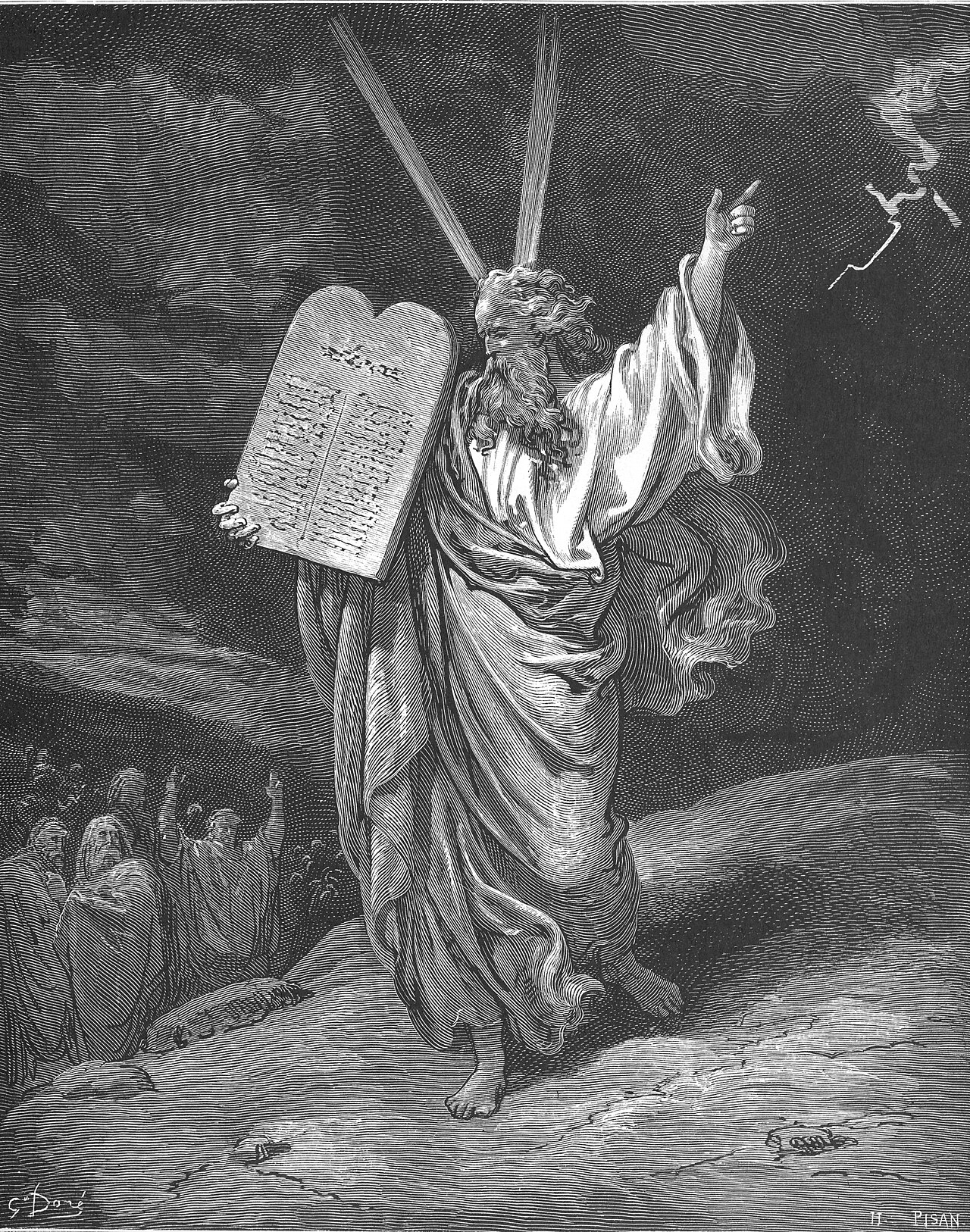
The second set of tables is cut by Moses, where Exodus 32:16 says the first set was the work of God. What goes on them is the same writing, so the covenant that was broken is restored in its own words rather than replaced by easier ones. The mountain is fenced again as it was at Exodus 19:12 and 19:13, and this time even the flocks and herds are kept back from grazing before it.
This site's exposition
Be ready in the morning
Matthew Henry notes that the long absence of Moses had given occasion to the calf, and the LORD still calls him up for as long a stay. Moses is there forty days and forty nights again, by verse 28. At verse 5 the LORD descends in a cloud.
The record, by era
The Reformation1 voice
There are, therefore, two clauses in this sentence; first, that God had gratuitously promised to grant that land to Abraham as the inheritance of his descendants; and, secondly, that He had performed His promise, not only when He had brought the children of Abraham into possession, but by adding' to His grace by their peaceful enjoyment of it.
The Puritans and the Awakening1 voice
Though the absence of Moses, and his continuance so long on the mount, had lately occasioned their making the golden calf, yet God did not therefore alter his measures, but he shall come up and tarry as long as he had done, to try whether they had learned to wait. To strike an awe upon the people, they are directed to keep their distance, none must come up with him,
The Nineteenth Century1 voice
A commentator
Jamieson, Fausset & Brown1802–1910
Commentary Critical and Explanatory on the Whole Bible (1871)
proposed
present thyself . . . to me in the top of the mount--Not absolutely the highest peak; for as the cloud of the Shekinah usually abode on the summit, and yet (Ex 34:5) it "descended," the plain inference is that Moses was to station himself at a point not far distant, but still below the loftiest pinnacle.
quarantine:debris (2026-07-29) — starts-lowercase
How the passage was read
What the Jewish commentators add
On the verses either side of this one
HEW THEE. Pesal lekha (hew thee) 1 The term lekha (thee) appears to be unnecessary. Hence I.E.
1 more on this passage, in their own words ▾
Adonoy said to Moshe, “Carve out two stone tablets for yourself just like the first ones.
This section is reception history: how the passage was read and kept in the Jewish tradition. Where a reading parts from an essential of the Christian faith, the section says so at that point.
Texts and citation data: Sefaria; each excerpt follows its version’s licence. 4 further sources are cited on this chapter that carry no English text this site may quote or only restate the verse.
The words behind it
14 Hebrew wordsEvery Hebrew word of this verse in the order it stands, with what it means and the door to its own study. The last column counts the times a word stands in the whole Bible: the rarer the word, the more the places it appears belong together.
| Hebrew | Sound | Meaning | Word study | In the Bible |
|---|---|---|---|---|
| וֶהְיֵ֥ה | vehyeh | and be | H1961 → | 3559 times |
| נָכ֖וֹן | nakhon | prepared | H3559 → | 217 times |
| לַבֹּ֑קֶר | laboker | to the morning | H1242 → | 214 times |
| וְעָלִ֤יתָ | vealita | and you will go up | H5927 → | 890 times |
| בַבֹּ֙קֶר֙ | vaboker | in the morning | H1242 → | 214 times |
| אֶל־ | ʾel- | to | H413 → | 5510 times |
| הַ֣ר | har | [the] mountain of | H2022 → | 546 times |
| סִינַ֔י | sinai | Sinai | H5514 → | 35 times |
| וְנִצַּבְתָּ֥ | venitzavta | and you will station yourself | H5324 → | 75 times |
| לִ֛י | li | for <the> me | ||
| שָׁ֖ם | sham | there | H8033 → | 834 times |
| עַל־ | ʾal- | on | H5921 → | 5755 times |
| רֹ֥אשׁ | rosh | [the] top of | H7218 → | 599 times |
| הָהָֽר׃ | hahar | the mountain | H2022 → | 546 times |
וֶהְיֵ֥הand be
vehyehH1961 →3559 times
נָכ֖וֹןprepared
nakhonH3559 →217 times
לַבֹּ֑קֶרto the morning
labokerH1242 →214 times
וְעָלִ֤יתָand you will go up
vealitaH5927 →890 times
בַבֹּ֙קֶר֙in the morning
vabokerH1242 →214 times
אֶל־to
ʾel-H413 →5510 times
הַ֣ר[the] mountain of
harH2022 →546 times
סִינַ֔יSinai
sinaiH5514 →35 times
וְנִצַּבְתָּ֥and you will station yourself
venitzavtaH5324 →75 times
לִ֛יfor <the> me
li
שָׁ֖םthere
shamH8033 →834 times
עַל־on
ʾal-H5921 →5755 times
רֹ֥אשׁ[the] top of
roshH7218 →599 times
הָהָֽר׃the mountain
haharH2022 →546 times
A shaded row is a word that stands 400 times or fewer in the Bible.
The walk
8 stopsEach card is a verse this one points to, and under it the verses that one points to in turn. Where several paths arrive at the same place, that place is listed first: the text keeps returning to it.
Through
Exodus 24:12Then the LORD said to Moses, “Come up to Me on the mountain and stay here, so that I may give you the tablets of stone, with the law and commandments I have written…
it leads to
- Deuteronomy 5:22
The LORD spoke these commandments in a loud voice to your whole assembly out of the fire, the cloud, and the deep darkness on the mountain; He added nothing more. And He wrote them…
- Exodus 31:18
When the LORD had finished speaking with Moses on Mount Sinai, He gave him the two tablets of the Testimony, tablets of stone inscribed by the finger of God.
- Exodus 32:15–16
Then Moses turned and went down the mountain with the two tablets of the Testimony in his hands. They were inscribed on both sides, front and back.
- Hebrews 9:4
containing the golden altar of incense and the gold-covered ark of the covenant. Inside the ark were the gold jar of manna, Aaron’s staff that had budded, and the stone tablets of the covenant.
- Jeremiah 31:33
“But this is the covenant I will make with the house of Israel after those days, declares the LORD. I will put My law in their minds and inscribe it on their hearts. And…
- Deuteronomy 5:22
Through
Deuteronomy 9:25So I fell down before the LORD for forty days and forty nights, because the LORD had said He would destroy you.
it leads to
- Deuteronomy 9:18
Then I fell down before the LORD for forty days and forty nights, as I had done the first time. I did not eat bread or drink water because of all the sin you…
- Deuteronomy 9:16
And I saw how you had sinned against the LORD your God; you had made for yourselves a molten calf. You had turned aside quickly from the way that the LORD had commanded you.
- Deuteronomy 9:18
Through
Exodus 19:24And the LORD replied, “Go down and bring Aaron with you. But the priests and the people must not break through to come up to the LORD, or He will break out against them.”
it leads to
- Hebrews 4:16
Let us then approach the throne of grace with confidence, so that we may receive mercy and find grace to help us in our time of need.
- Hebrews 4:16
Where this verse is studied
About Exodus
This page draws on Jamieson, Fausset & Brown, Commentary Critical and Explanatory on the Whole Bible; John Calvin, Commentaries; John Gill, Exposition of the Old Testament (1748-1763); Keil and Delitzsch, Biblical Commentary on the Old Testament: The Pentateuch and Matthew Henry, Commentary on the Whole Bible.