
Exodus 34:33
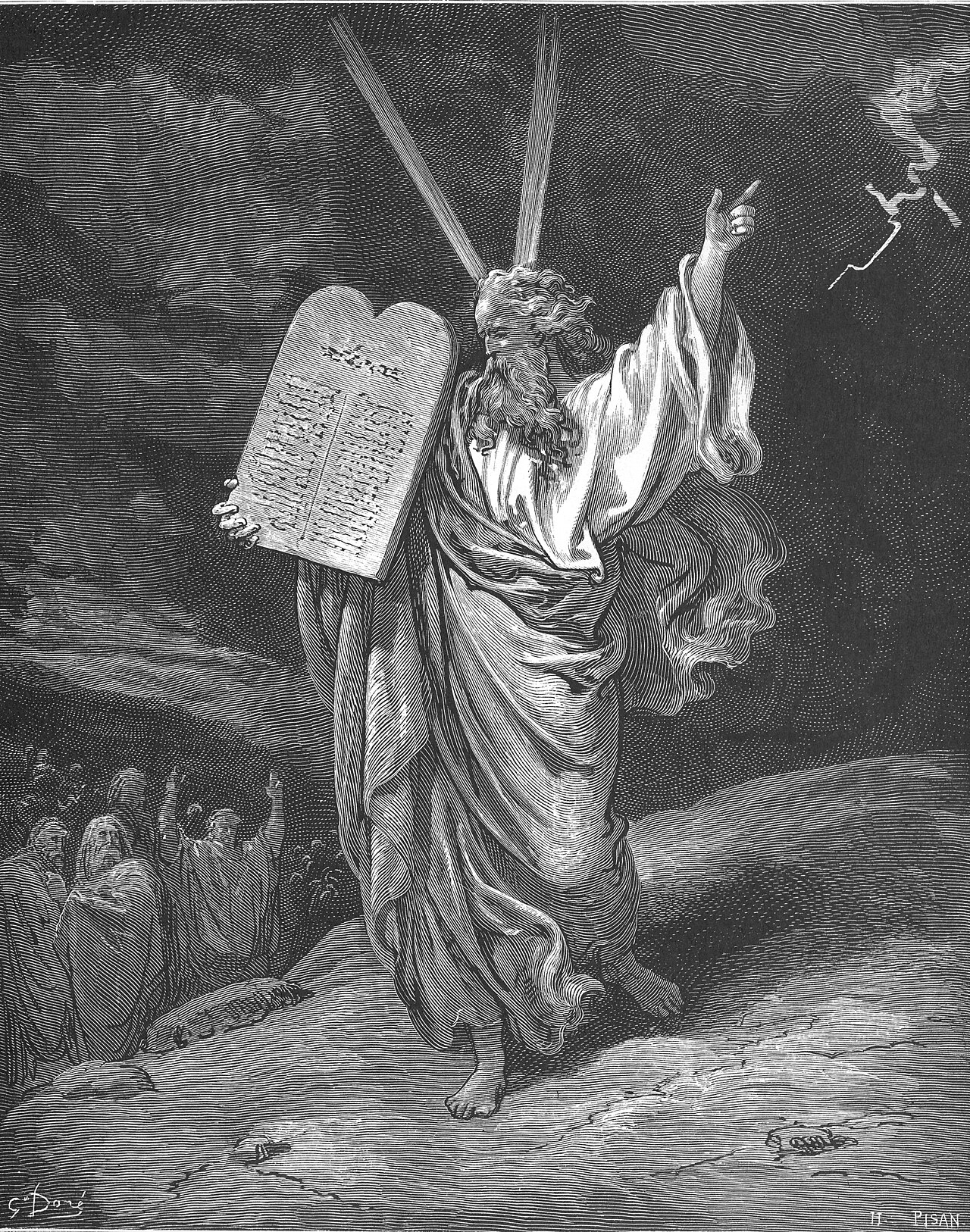
in Exodus 34When Moses had finished speaking with them, he put a veil over his face.
BSB
The same verse in ASV and KJV ▾
ASV
And when Moses had done speaking with them, he put a veil on his face.
KJV
And till Moses had done speaking with them, he put a vail on his face.
⋯
This verse in Exodus 34
Commentary
12 notes on this verseFor so long as a man does not attend to the spiritual meaning "a veil lies upon his heart," in consequence of which veil, in other words his duller understanding, the Scripture itself is said or thought to be veiled. This is the explanation of the veil which is said to have covered the face of Moses when he was speaking to the people, that is, when the law is read in public.
This site's exposition
till Moses had done speaking with them
on Exodus 34:33-35
The order in the text is that Moses speaks first and puts the vail on afterward, and he takes it off again whenever he goes in before the LORD. Paul takes the scene up at 2 Corinthians 3:7 to 3:18, where he writes that the vail lay over the reading of Moses and that in Christ it is taken away. He ends with unveiled faces beholding the glory of the Lord and being changed, which is the New Testament reading this chapter for itself.
The record, by era
The Church Fathers1 voice
The shadows bring forth the truth, even if they are not at all the truth themselves. Because of this, the divinely inspired Moses placed a veil upon his face and spoke thus to the children of Israel, all but shouting by this act that a person might behold the beauty of the utterances made through him, not in outwardly appearing figures but in meditations hidden within us.
The Puritans and the Awakening4 voices
Thirdly, This veil signified the darkness of that dispensation. The ceremonial institutions had in them much of Christ, much of the grace of the gospel, but a veil was drawn over it, so that the children of Israel could not distinctly and stedfastly see those good things to come which the law had the shadow of.
And Moses put a veil upon his face - This veil signified the darkness of that dispensation; the ceremonial institutions had in them much of Christ and the gospel, but a veil was drawn over it, so that the children of Israel could not distinctly and steadfastly see those good things to come which the law had a shadow of.
And till Moses had done speaking with them,....
In all this God dealt with Moses as a public person, and mediator between him and Israel, and a type of the great Mediator. God's Proclamation of Himself.
5 more voices on this verse
The Nineteenth Century5 voices
A commentator
Albert Barnes1798–1870
Notes, Explanatory and Practical, on the Old and New Testaments (1832-1869)
Paul refers to this passage as showing forth the glory of the law, though it was but a “ministration of condemnation,” and was to be done away, in order to enhance the glory of the gospel, “the ministration of the spirit,” which is concealed by no veil from the eyes of believers, and is to last forever 2Co 3:7-15. Exo 34:33 When rather than until should be supplied. Moses did not wear the veil when he was speaking to the people, but when he was silent. See Exo 34:
A FAST of 40 days does not improve the appearance of a man's countenance—he looks starved, wrinkled, old, haggard. Moses had fasted 40 days twice, at least, and, according to many competent authorities, the 10th chapter of Deuteronomy seems to imply that he fasted 40 days three times in quick succession. I will not assert or deny the third 40 days, but it is certain that, with a very slight interval, Moses fasted 40 days and then 40 days more—and it is probable that to these must be added a third forty.
A commentator
Jamieson, Fausset & Brown1802–1910
Commentary Critical and Explanatory on the Whole Bible (1871)
proposed
he put a veil on his face--That veil was with the greatest propriety removed when speaking with the Lord, for every one appears unveiled to the eye of Omniscience; but it was replaced on returning to the people--and this was emblematic of the dark and shadowy character of that dispensation (2Co 3:13, 14).
quarantine:debris (2026-07-29) — starts-lowercase
A FAST of 40 days does not improve the appearance of a man's countenance—he looks starved, wrinkled, old, haggard. Moses had fasted 40 days twice, at least, and, according to many competent authorities, the 10th chapter of Deuteronomy seems to imply that he fasted 40 days three times in quick succession. I will not assert or deny the third 40 days, but it is certain that, with a very slight interval, Moses fasted 40 days and then 40 days more—and it is probable that to these must be added a third forty. Small attractiveness would naturally remain in a face which had endured so stern an ordeal, but the Lord whom he served made his face brilliant with an unusual luster! The glory of the Light of God upon his countenance may have been the reason why he remained so free from infirmity in later years of old age. This man of 80 spent 40 more years in guiding Israel and in the end his eyes had not dimmed nor his natural force abated! He that could fast 40 days would be a hard morsel for death. Those eyes which had looked upon the Glory of God were not likely to wax dim amid earthly scenes— and that natural force which had endured the vision of the Supernatural could well support the fatigues of the wilderness. God so sustained His servant that his long and repeated fasts, during which he did not even drink water, did no harm to his physical constitution! The abstinence, even from water, renders the fast the more remarkable and lifts it out of similarity to modern feats of fasting. Moses did not know, at the time, that his face was shining—but he did know it afterwards—and he has here recorded it. He gives in detail the fact of the brightness of his own face, how others were struck with it and what he had to do in order to associate with them.
And till Moses had done speaking - The meaning of the verse appears to be this: As often as Moses spoke in public to the people, he put the veil on his face, because they could not bear to look on the brightness of his countenance; but when he entered into the tabernacle to converse with the Lord, he removed this veil, Exo 34:34. St. Paul, 2Co 3:7, etc., makes a very important use of the transactions recorded in this place. He represents the brightness of the face of Moses as emblematical of the glory or excellence of that dispensation; but he shows that however glorious or excellent that was, it had no glory when compared with the superior excellence of the Gospel. As Moses was glorious in the eyes of the Israelites, but that glory was absorbed and lost in the splendor of God when he entered into the tabernacle, or went to meet the Lord upon the mount; so the brightness and excellence of the Mosaic dispensation are eclipsed and absorbed in the transcendent brightness or excellence of the Gospel of Christ. One was the shadow, the other is the substance. One showed Sin in its exceeding sinfulness, together with the justice and immaculate purity of God; but, in and of itself, made no provision for pardon or sanctification. The other exhibits Jesus, the Lamb of God, typified by all the sacrifices under the law, putting away sin by the sacrifice of himself, reconciling God to man and man to God, diffusing his Spirit through the souls of believers, and cleansing the very thoughts of their hearts by his inspiration, and causing them to perfect holiness in the fear of God. The one seems to shut heaven against mankind, because by the law was the knowledge, not the cure, of Sin; the other opens the kingdom of heaven to all believers. The former was a ministration of death, the latter a dispensation of life. […]
The words behind it
8 Hebrew wordsEvery Hebrew word of this verse in the order it stands, with what it means and the door to its own study. The last column counts the times a word stands in the whole Bible: the rarer the word, the more the places it appears belong together.
| Hebrew | Sound | Meaning | Word study | In the Bible |
|---|---|---|---|---|
| וַיְכַ֣ל | vaykhal | and he finished | H3615 → | 208 times |
| מֹשֶׁ֔ה | mosheh | Moses | H4872 → | 765 times |
| מִדַּבֵּ֖ר | midaber | from speaking | H1696 → | 1141 times |
| אִתָּ֑ם | ʾitam | with them | H854 → | 929 times |
| וַיִּתֵּ֥ן | vaiyiten | and he put | H5414 → | 2011 times |
| עַל־ | ʾal- | over | H5921 → | 5755 times |
| פָּנָ֖יו | panav | face his | H6440 → | 2123 times |
| מַסְוֶֽה׃ | masveh | a veil | H4533 → | 3 times |
וַיְכַ֣לand he finished
vaykhalH3615 →208 times
מֹשֶׁ֔הMoses
moshehH4872 →765 times
מִדַּבֵּ֖רfrom speaking
midaberH1696 →1141 times
אִתָּ֑םwith them
ʾitamH854 →929 times
וַיִּתֵּ֥ןand he put
vaiyitenH5414 →2011 times
עַל־over
ʾal-H5921 →5755 times
פָּנָ֖יוface his
panavH6440 →2123 times
מַסְוֶֽה׃a veil
masvehH4533 →3 times
A shaded row is a word that stands 400 times or fewer in the Bible.
The walk
5 stopsEach card is a verse this one points to, and under it the verses that one points to in turn. Where several paths arrive at the same place, that place is listed first: the text keeps returning to it.
Through
Romans 10:4For Christ is the end of the law, to bring righteousness to everyone who believes.
it leads to
- Galatians 3:24
So the law became our guardian to lead us to Christ, that we might be justified by faith.
- Romans 8:3–4
For what the law was powerless to do in that it was weakened by the flesh, God did by sending His own Son in the likeness of sinful man, as an offering for sin.…
- Matthew 5:17–18
Do not think that I have come to abolish the Law or the Prophets. I have not come to abolish them, but to fulfill them.
- Acts 13:38–39
Therefore let it be known to you, brothers, that through Jesus the forgiveness of sins is proclaimed to you.
- John 1:17
For the law was given through Moses; grace and truth came through Jesus Christ.
- Galatians 3:24
Where this verse is studied
About Exodus
Who and where
1 name in this verse with a page on the site.
This page draws on 10 works. Open the list of works
This page draws on Adam Clarke, Commentary on the Bible; Albert Barnes, Notes, Explanatory and Practical, on the Old and New Testaments (1832-1869); Charles Spurgeon, The Metropolitan Tabernacle Pulpit, Sermon No. 2143: “The Shining of the Face of Moses” (lightly modernized text, CCEL edition); Cyril of Alexandria, LETTER 41.7; Jamieson, Fausset & Brown, Commentary Critical and Explanatory on the Whole Bible; John Calvin, Commentary on the Four Last Books of Moses Arranged in the Form of a Harmony; John Gill, Exposition of the Old Testament (1748-1763); John Wesley, Explanatory Notes upon the Old Testament; Matthew Henry, Commentary on the Whole Bible and Origen of Alexandria, ON FIRST PRINCIPLES 1.1.2.