
Exodus 34:11
in Exodus 34Observe what I command you this day. I will drive out before you the Amorites, Canaanites, Hittites, Perizzites, Hivites, and Jebusites.
BSB
The same verse in ASV and KJV ▾
ASV
Observe thou that which I command thee this day: behold, I drive out before thee the Amorite, and the Canaanite, and the Hittite, and the Perizzite, and the Hivite, and the Jebusite.
KJV
Observe thou that which I command thee this day: behold, I drive out before thee the Amorite, and the Canaanite, and the Hittite, and the Perizzite, and the Hivite, and the Jebusite.
⋯
This verse in Exodus 34
Commentary
6 notes on this verseA commentator
Jamieson, Fausset & Brown1802–1910
Commentary Critical and Explanatory on the Whole Bible (1871)
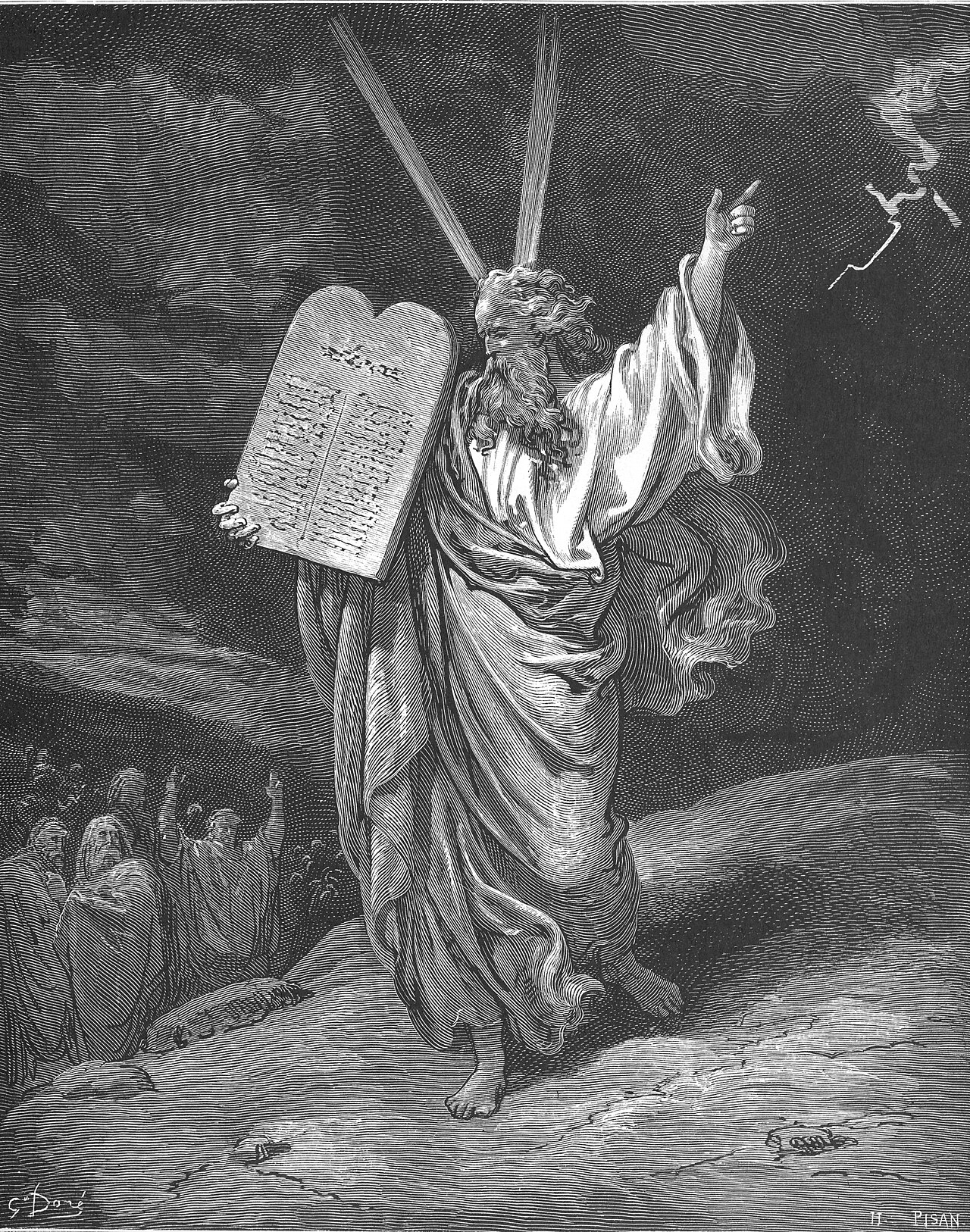
Moses bowed . . . and worshipped--In the East, people bow the head to royalty, and are silent when it passes by, while in the West, they take off their hats and shout.
This site's exposition
Behold, I make a covenant
on Exodus 34:10-11
The covenant is made again on the far side of the calf, and the first thing promised is marvels such as have not been done in all the earth. Driving out the six nations runs back to Genesis 15:16, where God told Abram his seed would return when the iniquity of the Amorites was full. The work is called a terrible thing, which in the English of 1611 means a thing that puts men in fear rather than a thing that is wicked.
This site's exposition
Observe what I command you this day
Adam Clarke reads the covenant as binding the LORD to drive out the nations and binding Israel to observe the commands of verses 11 to 26. Matthew Henry finds the wonders of verse 10 in Joshua, the Jordan dried up and the sun standing still. John Wesley ties the promise to the commands.
The record, by era
The Puritans and the Awakening3 voices
Observe that which I command thee - We cannot expect the benefit of the promises, unless we make conscience of the precepts. The two great precepts are, 1. Thou shalt worship no other gods - A good reason is annexed; for the Lord, whose name is Jealous, is a jealous God - As tender in the matters of his worship as the husband is of the honour of the marriage-bed.
Observe thou that which I command thee this day,....
In general: Before all thy people, I will do marvels. Note, Covenant-blessings are marvellous things ( Ps. xcviii. 1 ), marvels in the kingdom of grace; those mentioned here were marvels in the kingdom of nature, the drying up of Jordan, the standing still of the sun, &c.
How the passage was read
What the Jewish commentators add
Of all the commandments mentioned previously He did not say I am commanding thee.
This section is reception history: how the passage was read and kept in the Jewish tradition. Where a reading parts from an essential of the Christian faith, the section says so at that point.
Texts and citation data: Sefaria; each excerpt follows its version’s licence. 4 further sources are cited on this chapter that carry no English text this site may quote or only restate the verse.
The words behind it
17 Hebrew wordsEvery Hebrew word of this verse in the order it stands, with what it means and the door to its own study. The last column counts the times a word stands in the whole Bible: the rarer the word, the more the places it appears belong together.
| Hebrew | Sound | Meaning | Word study | In the Bible |
|---|---|---|---|---|
| שְׁמָ֨ר־ | shemar- | observe | H8104 → | 468 times |
| לְךָ֔ | lekha | for <the> yourself | ||
| אֵ֛ת | ʾet | <obj.> | H853 → | 10935 times |
| אֲשֶׁ֥ר | ʾasher | [that] which | H834 → | 5497 times |
| אָנֹכִ֖י | ʾanokhi | I | H595 → | 359 times |
| מְצַוְּךָ֣ | metzavekha | [am] commanding you | H6680 → | 494 times |
| הַיּ֑וֹם | haiyom | this day | H3117 → | 2304 times |
| הִנְנִ֧י | hini | here I | H2005 → | 316 times |
| גֹרֵ֣שׁ | goresh | [am] about to drive out | H1644 → | 46 times |
| מִפָּנֶ֗יךָ | mipaneikha | from before you | H6440 → | 2123 times |
| אֶת־ | ʾet- | <obj.> | H853 → | 10935 times |
| הָאֱמֹרִי֙ | haemori | the Amorite[s] | H567 → | 87 times |
| וְהַֽכְּנַעֲנִ֔י | vehakenaani | and the Canaanite[s] | H3669 → | 73 times |
| וְהַחִתִּי֙ | vehachiti | and the Hittite[s] | H2850 → | 48 times |
| וְהַפְּרִזִּ֔י | vehapperizi | and the Perizzite[s] | H6522 → | 23 times |
| וְהַחִוִּ֖י | vehachivi | and the Hivite[s] | H2340 → | 25 times |
| וְהַיְבוּסִֽי׃ | vehayvusi | and the Jebusite[s] | H2983 → | 41 times |
שְׁמָ֨ר־observe
shemar-H8104 →468 times
לְךָ֔for <the> yourself
lekha
אֵ֛ת<obj.>
ʾetH853 →10935 times
אֲשֶׁ֥ר[that] which
ʾasherH834 →5497 times
אָנֹכִ֖יI
ʾanokhiH595 →359 times
מְצַוְּךָ֣[am] commanding you
metzavekhaH6680 →494 times
הַיּ֑וֹםthis day
haiyomH3117 →2304 times
הִנְנִ֧יhere I
hiniH2005 →316 times
גֹרֵ֣שׁ[am] about to drive out
goreshH1644 →46 times
מִפָּנֶ֗יךָfrom before you
mipaneikhaH6440 →2123 times
אֶת־<obj.>
ʾet-H853 →10935 times
הָאֱמֹרִי֙the Amorite[s]
haemoriH567 →87 times
וְהַֽכְּנַעֲנִ֔יand the Canaanite[s]
vehakenaaniH3669 →73 times
וְהַחִתִּי֙and the Hittite[s]
vehachitiH2850 →48 times
וְהַפְּרִזִּ֔יand the Perizzite[s]
vehapperiziH6522 →23 times
וְהַחִוִּ֖יand the Hivite[s]
vehachiviH2340 →25 times
וְהַיְבוּסִֽי׃and the Jebusite[s]
vehayvusiH2983 →41 times
A shaded row is a word that stands 400 times or fewer in the Bible.
The walk
8 stopsEach card is a verse this one points to, and under it the verses that one points to in turn. Where several paths arrive at the same place, that place is listed first: the text keeps returning to it.
Through
Exodus 33:2And I will send an angel before you, and I will drive out the Canaanites, Amorites, Hittites, Perizzites, Hivites, and Jebusites.
it leads to
- Joshua 24:11
After this, you crossed the Jordan and came to Jericho. The people of Jericho fought against you, as did the Amorites, Perizzites, Canaanites, Hittites, Girgashites, Hivites, and Jebusites, and I delivered them into your…
Reached by 2 separate paths from here.
- Joshua 24:11
Through
Deuteronomy 6:3Hear, O Israel, and be careful to observe them, so that you may prosper and multiply greatly in a land flowing with milk and honey, just as the LORD, the God of your fathers,…
it leads to
- Exodus 3:8
I have come down to rescue them from the hand of the Egyptians and to bring them up out of that land to a good and spacious land, a land flowing with milk and…
Reached by 2 separate paths from here.
- Genesis 22:17
I will surely bless you, and I will multiply your descendants like the stars in the sky and the sand on the seashore. Your descendants will possess the gates of their enemies.
- Genesis 15:5
And the LORD took him outside and said, “Now look to the heavens and count the stars, if you are able.” Then He told him, “So shall your offspring be.”
- Genesis 28:14
Your descendants will be like the dust of the earth, and you will spread out to the west and east and north and south. All the families of the earth will be blessed through…
- Exodus 3:8
Through
Deuteronomy 6:25And if we are careful to observe every one of these commandments before the LORD our God, as He has commanded us, then that will be our righteousness.”
it leads to
- Deuteronomy 24:13
be sure to return it to him by sunset, so that he may sleep in his own cloak and bless you, and this will be credited to you as righteousness before the LORD your…
- Romans 10:3
Because they were ignorant of God’s righteousness and sought to establish their own, they did not submit to God’s righteousness.
- Deuteronomy 24:13
Through
Exodus 3:17And I have promised to bring you up out of your affliction in Egypt, into the land of the Canaanites, Hittites, Amorites, Perizzites, Hivites, and Jebusites—a land flowing with milk and honey.’
it leads to
- Genesis 15:13–21
Then the LORD said to Abram, “Know for certain that your descendants will be strangers in a land that is not their own, and they will be enslaved and mistreated four hundred years.
- Genesis 15:13–21
Where this verse is studied
About Exodus
This page draws on Adam Clarke, Commentary on the Bible; Jamieson, Fausset & Brown, Commentary Critical and Explanatory on the Whole Bible; John Gill, Exposition of the Old Testament (1748-1763); John Wesley, Explanatory Notes upon the Old Testament; Keil and Delitzsch, Biblical Commentary on the Old Testament: The Pentateuch and Matthew Henry, Commentary on the Whole Bible.