
Exodus 34:35
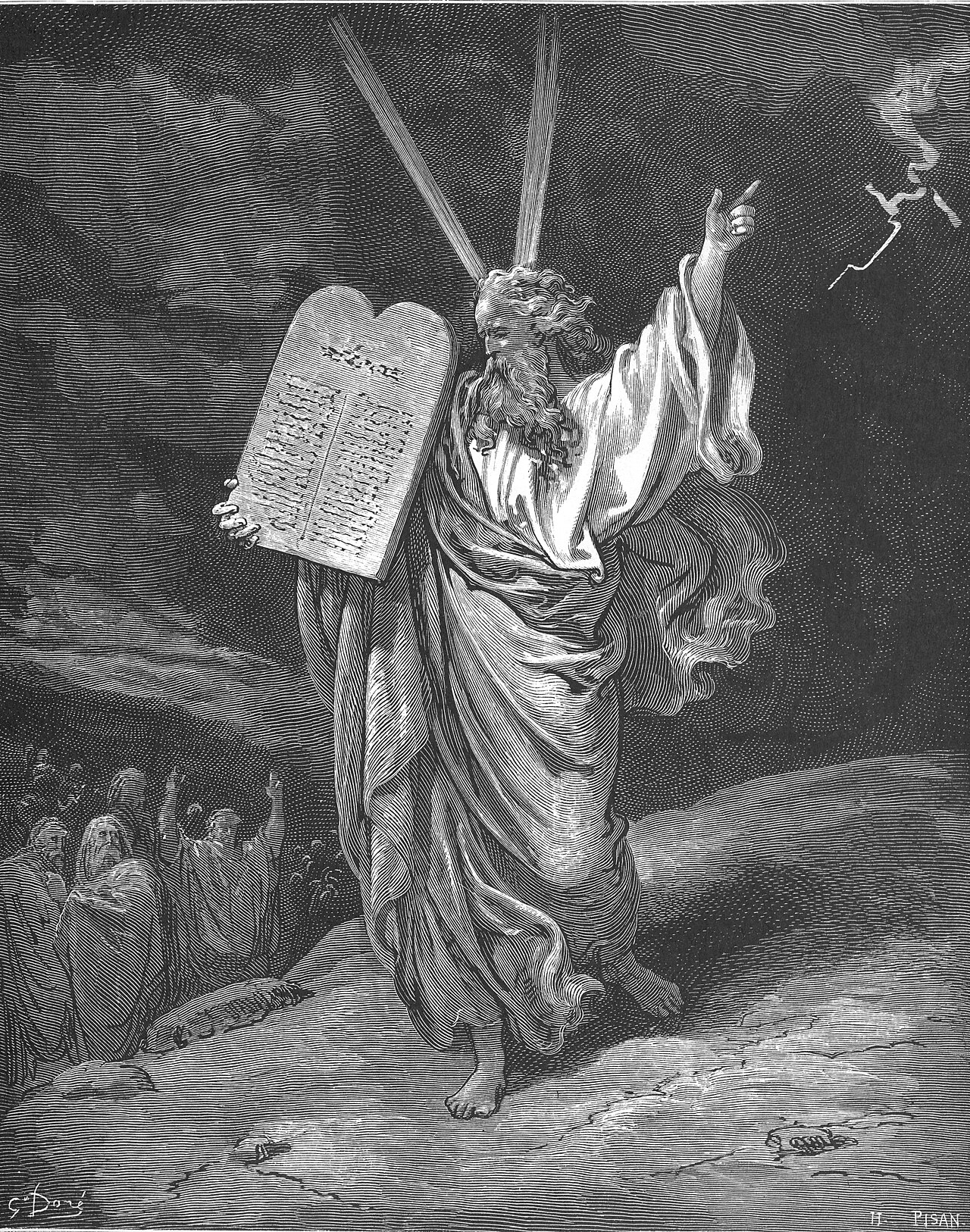
in Exodus 34and the Israelites would see that the face of Moses was radiant. So Moses would put the veil back over his face until he went in to speak with the LORD.
BSB
The same verse in ASV and KJV ▾
ASV
And the children of Israel saw the face of Moses, that the skin of Moses’ face shone: and Moses put the veil upon his face again, until he went in to speak with him.
KJV
And the children of Israel saw the face of Moses, that the skin of Moses’ face shone: and Moses put the vail upon his face again, until he went in to speak with him.
⋯
This verse in Exodus 34
Commentary
7 notes on this verseAnd the children of Israel saw the face of Moses, that the skin of Moses's face shone,.... That is, not only when he came down from the mount, but whenever he came out of the tabernacle, where he had been inquiring of God, and conversing with him: and Moses put the vail upon his face again, until he went in to speak with him; this he did from time to time, when he came out from the Lord he put on his vail, and when he went in again, he put it off.
This site's exposition
When Moses had finished speaking with them
on Exodus 34:33-35
Moses speaks first and puts the veil on afterward, and removes it whenever he goes in before the LORD. At 2 Corinthians 3:7 to 18 Paul writes that the same veil remains at the reading of the old covenant, removed only in Christ.
This site's exposition
So Moses would put the veil back over his face
John Gill reads the verse as a practice repeated each time Moses came out from speaking with the LORD, his face radiant again. Matthew Henry takes the veil as a figure of the covenant of Sinai, which covered much of Christ. Paul at 2 Corinthians 3:13 calls that radiance fading.
The record, by era
The Puritans and the Awakening2 voices
Thirdly, This veil signified the darkness of that dispensation. The ceremonial institutions had in them much of Christ, much of the grace of the gospel, but a veil was drawn over it, so that the children of Israel could not distinctly and stedfastly see those good things to come which the law had the shadow of.
In all this God dealt with Moses as a public person, and mediator between him and Israel, and a type of the great Mediator. God's Proclamation of Himself.
The Nineteenth Century2 voices
A FAST of 40 days does not improve the appearance of a man's countenance—he looks starved, wrinkled, old, haggard. Moses had fasted 40 days twice, at least, and, according to many competent authorities, the 10th chapter of Deuteronomy seems to imply that he fasted 40 days three times in quick succession. I will not assert or deny the third 40 days, but it is certain that, with a very slight interval, Moses fasted 40 days and then 40 days more—and it is probable that to these must be added a third forty.
A FAST of 40 days does not improve the appearance of a man's countenance—he looks starved, wrinkled, old, haggard. Moses had fasted 40 days twice, at least, and, according to many competent authorities, the 10th chapter of Deuteronomy seems to imply that he fasted 40 days three times in quick succession. I will not assert or deny the third 40 days, but it is certain that, with a very slight interval, Moses fasted 40 days and then 40 days more—and it is probable that to these must be added a third forty. Small attractiveness would naturally remain in a face which had endured so stern an ordeal, but the Lord whom he served made his face brilliant with an unusual luster! The glory of the Light of God upon his countenance may have been the reason why he remained so free from infirmity in later years of old age. This man of 80 spent 40 more years in guiding Israel and in the end his eyes had not dimmed nor his natural force abated! He that could fast 40 days would be a hard morsel for death. Those eyes which had looked upon the Glory of God were not likely to wax dim amid earthly scenes— and that natural force which had endured the vision of the Supernatural could well support the fatigues of the wilderness. God so sustained His servant that his long and repeated fasts, during which he did not even drink water, did no harm to his physical constitution! The abstinence, even from water, renders the fast the more remarkable and lifts it out of similarity to modern feats of fasting. Moses did not know, at the time, that his face was shining—but he did know it afterwards—and he has here recorded it. He gives in detail the fact of the brightness of his own face, how others were struck with it and what he had to do in order to associate with them.
The words behind it
21 Hebrew wordsEvery Hebrew word of this verse in the order it stands, with what it means and the door to its own study. The last column counts the times a word stands in the whole Bible: the rarer the word, the more the places it appears belong together.
| Hebrew | Sound | Meaning | Word study | In the Bible |
|---|---|---|---|---|
| וְרָא֤וּ | verau | and they saw | H7200 → | 1300 times |
| בְנֵֽי־ | venei- | [the] people of | H1121 → | 4930 times |
| יִשְׂרָאֵל֙ | yisrael | Israel | H3478 → | 2507 times |
| אֶת־ | ʾet- | <obj.> | H853 → | 10935 times |
| פְּנֵ֣י | penei | [the] face of | H6440 → | 2123 times |
| מֹשֶׁ֔ה | mosheh | Moses | H4872 → | 765 times |
| כִּ֣י | ki | that | H3588 → | 4482 times |
| קָרַ֔ן | karan | it shone | H7160 → | 4 times |
| ע֖וֹר | or | [the] skin of | H5785 → | 99 times |
| פְּנֵ֣י | penei | [the] face of | H6440 → | 2123 times |
| מֹשֶׁ֑ה | mosheh | Moses | H4872 → | 765 times |
| וְהֵשִׁ֨יב | veheshiv | and he returned | H7725 → | 1056 times |
| מֹשֶׁ֤ה | mosheh | Moses | H4872 → | 765 times |
| אֶת־ | ʾet- | <obj.> | H853 → | 10935 times |
| הַמַּסְוֶה֙ | hamasveh | the veil | H4533 → | 3 times |
| עַל־ | ʾal- | over | H5921 → | 5755 times |
| פָּנָ֔יו | panav | face his | H6440 → | 2123 times |
| עַד־ | ʾad- | until | H5704 → | 1261 times |
| בֹּא֖וֹ | boo | went he | H935 → | 2568 times |
| לְדַבֵּ֥ר | ledaber | to speak | H1696 → | 1141 times |
| אִתּֽוֹ׃ ס | ʾito | with him | H854 → | 929 times |
וְרָא֤וּand they saw
verauH7200 →1300 times
בְנֵֽי־[the] people of
venei-H1121 →4930 times
יִשְׂרָאֵל֙Israel
yisraelH3478 →2507 times
אֶת־<obj.>
ʾet-H853 →10935 times
פְּנֵ֣י[the] face of
peneiH6440 →2123 times
מֹשֶׁ֔הMoses
moshehH4872 →765 times
כִּ֣יthat
kiH3588 →4482 times
קָרַ֔ןit shone
karanH7160 →4 times
ע֖וֹר[the] skin of
orH5785 →99 times
פְּנֵ֣י[the] face of
peneiH6440 →2123 times
מֹשֶׁ֑הMoses
moshehH4872 →765 times
וְהֵשִׁ֨יבand he returned
veheshivH7725 →1056 times
מֹשֶׁ֤הMoses
moshehH4872 →765 times
אֶת־<obj.>
ʾet-H853 →10935 times
הַמַּסְוֶה֙the veil
hamasvehH4533 →3 times
עַל־over
ʾal-H5921 →5755 times
פָּנָ֔יוface his
panavH6440 →2123 times
עַד־until
ʾad-H5704 →1261 times
בֹּא֖וֹwent he
booH935 →2568 times
לְדַבֵּ֥רto speak
ledaberH1696 →1141 times
אִתּֽוֹ׃ סwith him
ʾitoH854 →929 times
A shaded row is a word that stands 400 times or fewer in the Bible.
The walk
8 stopsEach card is a verse this one points to, and under it the verses that one points to in turn. Where several paths arrive at the same place, that place is listed first: the text keeps returning to it.
Through
Matthew 5:16In the same way, let your light shine before men, that they may see your good deeds and glorify your Father in heaven.
it leads to
- 1 Peter 2:12
Conduct yourselves with such honor among the Gentiles that, though they slander you as evildoers, they may see your good deeds and glorify God on the day He visits us.
Reached by 2 separate paths from here.
- Titus 2:7
In everything, show yourself to be an example by doing good works. In your teaching show integrity, dignity,
- John 15:8
This is to My Father’s glory, that you bear much fruit, proving yourselves to be My disciples.
- 1 John 1:5–7
And this is the message we have heard from Him and announce to you: God is light, and in Him there is no darkness at all.
- Philippians 2:15–16
so that you may be blameless and pure, children of God without fault in a crooked and perverse generation, in which you shine as lights in the world
- 1 Peter 2:12
Through
Daniel 12:3Then the wise will shine like the brightness of the heavens, and those who lead many to righteousness will shine like the stars forever and ever.
it leads to
- Matthew 13:43
Then the righteous will shine like the sun in the kingdom of their Father. He who has ears, let him hear.
- Proverbs 4:18
The path of the righteous is like the first gleam of dawn, shining brighter and brighter until midday.
- Matthew 13:43
Through
Philippians 2:15so that you may be blameless and pure, children of God without fault in a crooked and perverse generation, in which you shine as lights in the world
it leads to
- Matthew 5:14–16
You are the light of the world. A city on a hill cannot be hidden.
- Matthew 5:14–16
Where this verse is studied
On this page
Studies27
- Six Days You Shall Labor
- The Words Nasa, Salach and Aphiemi
- Generational Curses
- Thanks for Who He Is
- Hesed, the LORD's Loving Devotion
- God Is Love
Show the next 6 titles
- The Words Rachamim, Chesed and Eleos
- The 153 Fish
- Patience
- The Farmer Waits for the Rain
- The Words Erek Appayim and Makrothymia
- Sinai, the Mountain of God
Show the next 6 titles
About Exodus
Who and where
1 name in this verse with a page on the site.
This page draws on Charles Spurgeon, The Metropolitan Tabernacle Pulpit, Sermon No. 2143: “The Shining of the Face of Moses” (lightly modernized text, CCEL edition); John Calvin, Commentary on the Four Last Books of Moses Arranged in the Form of a Harmony; John Gill, Exposition of the Old Testament (1748-1763) and Matthew Henry, Commentary on the Whole Bible.