
Exodus 34:3
in Exodus 34No one may go up with you; in fact, no one may be seen anywhere on the mountain—not even the flocks or herds may graze in front of the mountain.”
BSB
The same verse in ASV and KJV ▾
ASV
And no man shall come up with thee; neither let any man be seen throughout all the mount; neither let the flocks nor herds feed before that mount.
KJV
And no man shall come up with thee, neither let any man be seen throughout all the mount; neither let the flocks nor herds feed before that mount.
⋯
This verse in Exodus 34
Commentary
4 notes on this verseThis site's exposition
Hew thee two tables of stone
on Exodus 34:1-3
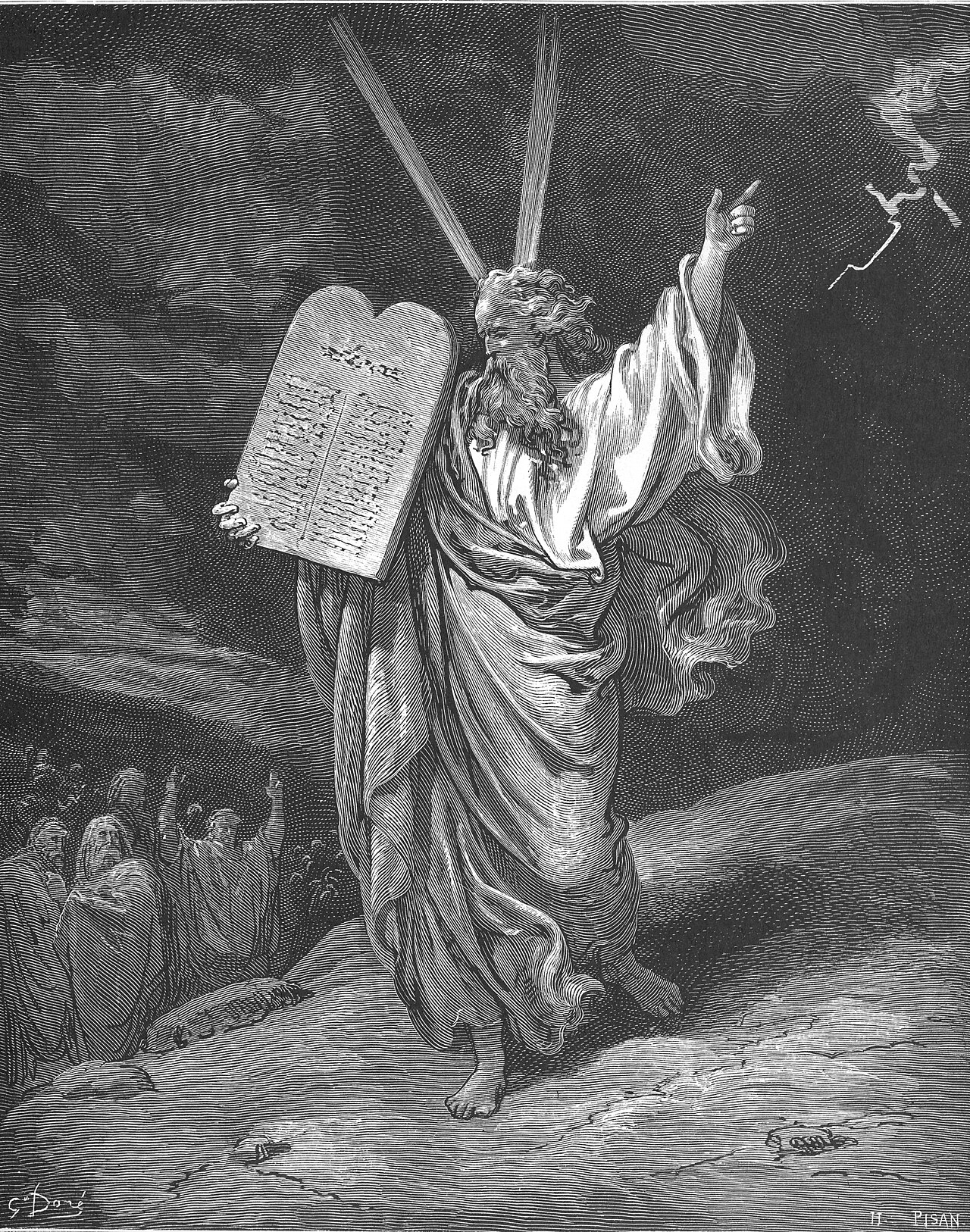
The second set of tables is cut by Moses, where Exodus 32:16 says the first set was the work of God. What goes on them is the same writing, so the covenant that was broken is restored in its own words rather than replaced by easier ones. The mountain is fenced again as it was at Exodus 19:12 and 19:13, and this time even the flocks and herds are kept back from grazing before it.
This site's exposition
No one may go up with you
At the first ascent Aaron and seventy elders went partway up at 24:9. This time no one may go up with Moses. Jamieson, Fausset and Brown read the order as teaching the holiness of the LORD, whose law was given a second time.
The record, by era
The Puritans and the Awakening1 voice
And no man shall come up with thee,....
The Nineteenth Century1 voice
A commentator
Jamieson, Fausset & Brown1802–1910
Commentary Critical and Explanatory on the Whole Bible (1871)
proposed
The whole transaction was ordered so as to impress the people with an awful sense of the holiness of God; and that it was a matter of no trifling moment to have subjected Him, so to speak, to the necessity of re-delivering the law of the ten commandments.
The words behind it
19 Hebrew wordsEvery Hebrew word of this verse in the order it stands, with what it means and the door to its own study. The last column counts the times a word stands in the whole Bible: the rarer the word, the more the places it appears belong together.
| Hebrew | Sound | Meaning | Word study | In the Bible |
|---|---|---|---|---|
| וְאִישׁ֙ | veish | and anyone | H376 → | 1663 times |
| לֹֽא־ | lo'- | not | H3808 → | 5168 times |
| יַעֲלֶ֣ה | yaaleh | he will go up | H5927 → | 890 times |
| עִמָּ֔ךְ | ʾimakh | with you | H5973 → | 1050 times |
| וְגַם־ | vegam- | and also | H1571 → | 769 times |
| אִ֥ישׁ | ʾish | anyone | H376 → | 1663 times |
| אַל־ | ʾal- | may not | H408 → | 724 times |
| יֵרָ֖א | yera' | he be seen | H7200 → | 1300 times |
| בְּכָל־ | bekhol | on all | H3605 → | 5413 times |
| הָהָ֑ר | hahar | the mountain | H2022 → | 546 times |
| גַּם־ | gam- | also | H1571 → | 769 times |
| הַצֹּ֤אן | hatzon | the sheep | H6629 → | 274 times |
| וְהַבָּקָר֙ | vehabakar | and the cattle | H1241 → | 183 times |
| אַל־ | ʾal- | may not | H408 → | 724 times |
| יִרְע֔וּ | yiru | they graze | H7462 → | 177 times |
| אֶל־ | ʾel- | to | H413 → | 5510 times |
| מ֖וּל | mul | [the] front of | H4136 → | 36 times |
| הָהָ֥ר | hahar | the mountain | H2022 → | 546 times |
| הַהֽוּא׃ | hahu' | <the> that | H1931 → | 1879 times |
וְאִישׁ֙and anyone
veishH376 →1663 times
לֹֽא־not
lo'-H3808 →5168 times
יַעֲלֶ֣הhe will go up
yaalehH5927 →890 times
עִמָּ֔ךְwith you
ʾimakhH5973 →1050 times
וְגַם־and also
vegam-H1571 →769 times
אִ֥ישׁanyone
ʾishH376 →1663 times
אַל־may not
ʾal-H408 →724 times
יֵרָ֖אhe be seen
yera'H7200 →1300 times
בְּכָל־on all
bekholH3605 →5413 times
הָהָ֑רthe mountain
haharH2022 →546 times
גַּם־also
gam-H1571 →769 times
הַצֹּ֤אןthe sheep
hatzonH6629 →274 times
וְהַבָּקָר֙and the cattle
vehabakarH1241 →183 times
אַל־may not
ʾal-H408 →724 times
יִרְע֔וּthey graze
yiruH7462 →177 times
אֶל־to
ʾel-H413 →5510 times
מ֖וּל[the] front of
mulH4136 →36 times
הָהָ֥רthe mountain
haharH2022 →546 times
הַהֽוּא׃<the> that
hahu'H1931 →1879 times
A shaded row is a word that stands 400 times or fewer in the Bible.
The walk
8 stopsEach card is a verse this one points to, and under it the verses that one points to in turn. Where several paths arrive at the same place, that place is listed first: the text keeps returning to it.
Through
1 Timothy 2:5For there is one God, and there is one mediator between God and men, the man Christ Jesus,
it leads to
- 1 Corinthians 8:6
yet for us there is but one God, the Father, from whom all things came and for whom we exist. And there is but one Lord, Jesus Christ, through whom all things came and…
- Galatians 3:20
A mediator is unnecessary, however, for only one party; but God is one.
- Hebrews 9:15
Therefore Christ is the mediator of a new covenant, so that those who are called may receive the promised eternal inheritance, now that He has died to redeem them from the transgressions committed under…
- Hebrews 7:25
Therefore He is able to save completely those who draw near to God through Him, since He always lives to intercede for them.
- Deuteronomy 6:4
Hear, O Israel: The LORD our God, the LORD is One.
- 1 Corinthians 8:6
Through
Hebrews 12:20For they could not bear what was commanded: “If even an animal touches the mountain, it must be stoned.”
it leads to
- Exodus 19:12–13
And you are to set up a boundary for the people around the mountain and tell them, ‘Be careful not to go up on the mountain or touch its base. Whoever touches the mountain…
- Exodus 19:12–13
Through
Exodus 19:21and the LORD said to him, “Go down and warn the people not to break through to see the LORD, lest many of them perish.
it leads to
- 1 Samuel 6:19
But God struck down some of the people of Beth-shemesh because they looked inside the ark of the LORD. He struck down seventy men, and the people mourned because the LORD had struck them…
- Exodus 3:5
“Do not come any closer,” God said. “Take off your sandals, for the place where you are standing is holy ground.”
- 1 Samuel 6:19
Where this verse is studied
About Exodus
This page draws on Jamieson, Fausset & Brown, Commentary Critical and Explanatory on the Whole Bible; John Gill, Exposition of the Old Testament (1748-1763); Keil and Delitzsch, Biblical Commentary on the Old Testament: The Pentateuch and Matthew Henry, Commentary on the Whole Bible.