
2 Corinthians 3-4 · Featured Study
The Unveiled Face
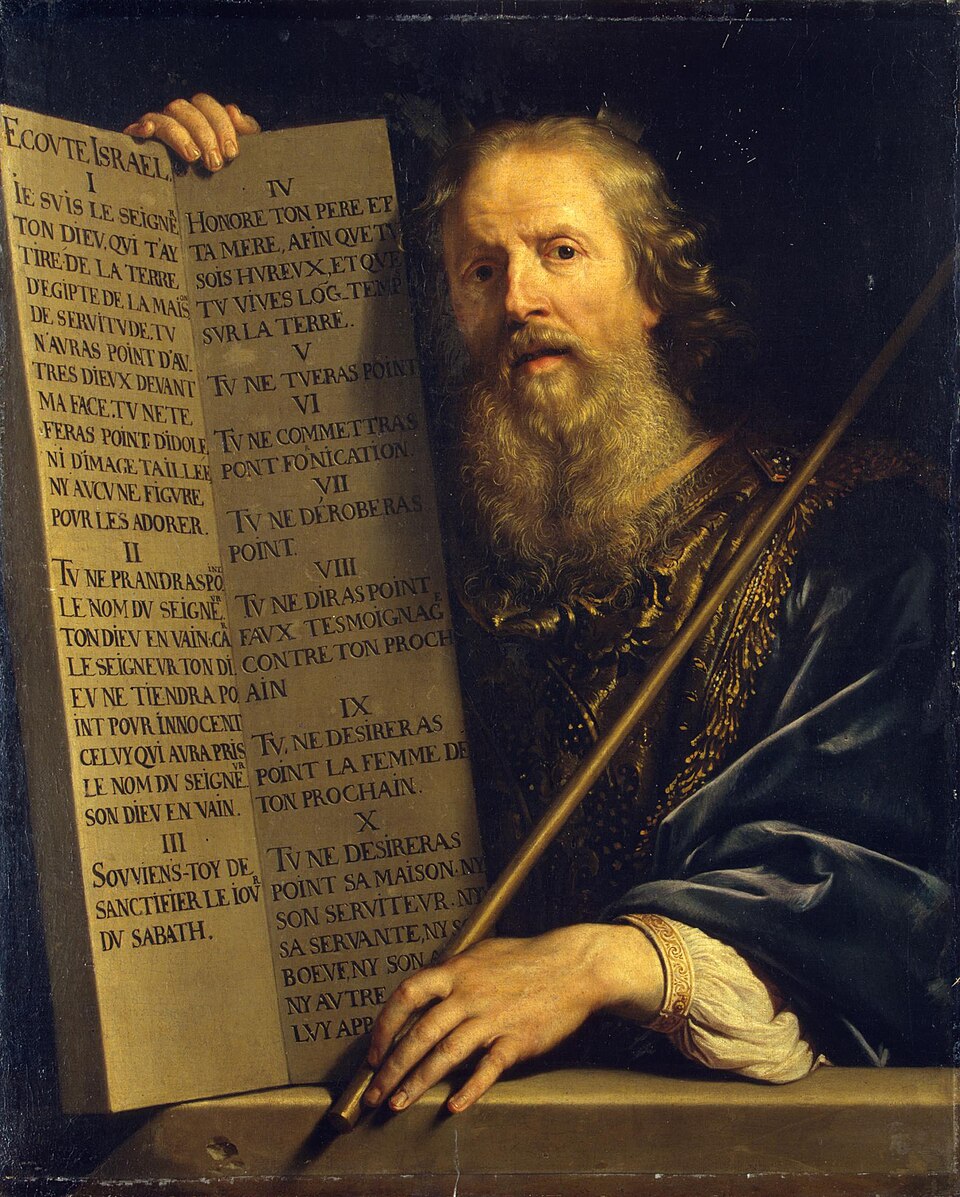
Moses veiled his face because its glory was fading. Paul says the new covenant’s glory does not fade, and its ministers hide nothing. “where the Spirit of the Lord is, there is liberty.” This page walks the two chapters in order: the church as a letter written on hearts, the letter and the Spirit, the glory that remains, the veil and the promise of its lifting, the mirror that transforms, and the treasure carried in earthen vessels.
Summary
Paul sets two ministries side by side: the covenant engraved on stone, whose glory faded from Moses' face, and the covenant written by the Spirit on hearts, whose glory remains. The veil that once hid a fading glory now lies on unbelieving reading, and it lifts the moment there is a turning to the Lord.
- The Corinthian church is Paul's letter of commendation, written "not with ink, but with the Spirit of the living God" (3:1-3)
- "the letter killeth, but the spirit giveth life": ministers of a new covenant (3:6)
- The veil lifts on turning to the Lord (3:16), and the chapter contrasts covenants, never peoples; Romans 11 holds God's promise to Israel standing
- With unveiled faces reflecting the Lord's glory, believers are "being transformed into His image with intensifying glory" (3:18)
- The treasure rides in jars of clay, and the outer self's wasting away is outweighed by "an eternal weight of glory" (4:7, 4:16-17)
Epistles Written on Hearts
3:1-3: the church itself is the letter
“You yourselves are our letter, inscribed on our hearts, known and read by everyone. It is clear that you are a letter from Christ, the result of our ministry, written not with ink but with the Spirit of the living God, not on tablets of stone but on tablets of human hearts.” 2 Corinthians 3:2-3
Traveling teachers in the first century carried letters of commendation from one church to the next. Paul’s rivals at Corinth apparently arrived with such letters and asked where his were. His answer is the section’s whole argument: the Corinthian believers themselves are his letter. Christ is its author, Paul its carrier, and the Spirit its ink. The phrase “tables of stone” against “hearts of flesh” reaches back to Jeremiah 31:33, where God promises to write his law on hearts, and Ezekiel 36:26, where he promises a heart of flesh for a heart of stone. The whole chapter grows out of those two promises.
“Ye are our recommendatory letter - More convincing than bare words could be. Written on our hearts - Deeply engraven there, and plainly legible to all around us.”
John Wesley · Explanatory Notes upon the New Testament, 1755Evangelical
2 Cor 3:2
Ministers of a New Covenant
3:4-6: the letter and the Spirit
“Not that we are competent in ourselves to claim that anything comes from us, but our competence comes from God. And He has qualified us as ministers of a new covenant, not of the letter but of the Spirit; for the letter kills, but the Spirit gives life.” 2 Corinthians 3:5-6
Paul had asked in the previous chapter, “who is sufficient for these things?” (2:16). Here is his answer: no one, from himself. The sufficiency is God’s, and what God makes men sufficient for is the ministry of a new covenant. The contrast of letter and Spirit is not a contrast between the Old Testament and the New, as if the older Scriptures were now discarded. It is a contrast between a code that commands from outside and a Spirit who gives life from within. The law is holy and its commandment holy, righteous and good (Romans 7:12); what it cannot do is raise the dead heart it addresses.
“The letter killeth; this the letter of the law does, for that is the ministration of death; and if we rest only in the letter of the gospel we shall be never the better for so doing, for even that will be a savour of death unto death; but the Spirit of the gospel, going along with the ministry of the gospel, giveth life spiritual and life eternal.”
Matthew Henry · Commentary on the Whole Bible, 1710Presbyterian
2 Cor 3:6
A letter can kill in any covenantHenry on 3:6
Henry’s observation deserves its own line: resting in the mere letter of the gospel kills as surely as resting in the letter of the law. The contrast Paul draws is not a verdict on Israel’s Scriptures; it is a verdict on any religion of text without Spirit, Christian religion included. The same warning returns at 3:16 in Origen’s reading, below.
The Glory That Remains
3:7-11: three times, if that had glory, how much more this
“Now if the ministry of death, which was engraved in letters on stone, came with such glory that the Israelites could not gaze at the face of Moses because of its fleeting glory, will not the ministry of the Spirit be even more glorious?” 2 Corinthians 3:7-8
The scene behind this section is Exodus 34:29-35. Moses came down from Sinai with his face shining, and the people were afraid to come near. Paul builds three steps on that scene, each with the same shape: if the covenant of stone came with real glory, how much more the covenant of the Spirit. Death against Spirit (3:7-8), condemnation against righteousness (3:9), what passes away against what remains (3:11). The argument never denies the first glory. It was real, given by God, and bright enough that Israel could not bear it. The point is comparison, not contempt.
“For if what was fading away came with glory, how much greater is the glory of that which endures!” 2 Corinthians 3:11
“For even the ministration of condemnation, the law, 2Co 3:7 (which has been glorified at Sinai in Moses' person), has now (English Version translates less fitly, ‘was made . . . had’) lost its glory in this respect by reason of the surpassing glory (of the Gospel): as the light of the stars and moon fades in the presence of the sun.”
Jamieson, Fausset & Brown · Commentary Critical and Explanatory on the Whole Bible, 1871Reformed
2 Cor 3:10
The Veil of Moses
3:12-16: where the veil was, where it lies now, and the promise of its lifting
“We are not like Moses, who would put a veil over his face to keep the Israelites from gazing at the end of what was fading away. But their minds were closed. For to this day the same veil remains at the reading of the old covenant. It has not been lifted, because only in Christ can it be removed.” 2 Corinthians 3:13-14
The veil moves in this paragraph. It begins on Moses’ face, hiding the fading of a glory Israel could not bear to watch. Then Paul relocates it: the veil now lies not on a face but on a reading, and not on a page but on a heart. What the veil hides is the end, the goal, of the old covenant, which is Christ himself (Romans 10:4). Wesley’s note below makes the relocation exact.
“On the public reading of the Old Testament - The veil is not now on the face of Moses or of his writings, but on the reading of them, and on the heart of them that believe not. Which is taken away in Christ - That is, from the heart of them that truly believe on him.”
John Wesley · Explanatory Notes upon the New Testament, 1755Evangelical
2 Cor 3:14
2 Corinthians 3:15-16 (BSB)
“And even to this day when Moses is read, a veil covers their hearts. But whenever anyone turns to the Lord, the veil is taken away.” 2 Corinthians 3:15-16
The sentence echoes Exodus 34:34: whenever Moses went in before the LORD, he took the veil off. Turning to the Lord and unveiling are one motion. The verse is a standing promise, with its condition named.
This passage has been misused. Readers have taken the veil as a permanent verdict on the Jewish people, and this page says plainly that the chapter teaches no such thing. Paul contrasts two covenants and two ministries: letter and Spirit, stone and heart, fading and remaining. He never contrasts two peoples, and he writes as an Israelite himself. The verse at the center of the paragraph, 3:16, is the chapter’s own hope: the veil lifts whenever anyone turns to the Lord. And the same apostle, in Romans 11, states the promise that stands behind that hope: a hardening in part, until the fulness of the Gentiles come in, and so all Israel shall be saved (Romans 11:25-26).
“For God’s gifts and His call are irrevocable.” Romans 11:29
The older commentators read 3:15-16 the same way, as a hope still standing and not a sentence passed.
“Thus it was formerly, and so it was especially as to those who remained in Judaism after the coming of the Messiah and the publication of his gospel. Nevertheless, the apostle tells us, there is a time coming when this veil also shall be taken away, and when it (the body of that people) shall turn to the Lord,”
Matthew Henry · Commentary on the Whole Bible, 1710Presbyterian
2 Cor 3:15
“When it shall turn to the Lord - When the Israelitish nation shall turn to the Lord Jesus, the veil shall be taken away; the true light shall shine; and they shall see all things clearly. There is an evident allusion here to the case of Moses, mentioned Exo 34:34. When he came from the Lord, and spoke to the Israelites, he put the veil over his face; but when he returned to speak with the Lord, then he took off the veil.”
Adam Clarke · Commentary on the Bible, 1832Methodist
2 Cor 3:16
Origen: the veil threatens every readerHomilies on Exodus 12, c. 253
The earliest surviving sermon on this passage refuses to let the Christian reader stand outside it. The veil is a condition of negligent, unbelieving reading, and no covenant’s book is exempt:
“Let us beware, therefore, lest not only ‘when Moses is read’ but also when Paul is read ‘a veil’ be ‘placed over’ our ‘heart.’”
Origen of Alexandria · Homilies on Exodus 12, 253
2 Cor 3:16
Liberty and the Mirror
3:17-18: from glory to glory
“Now the Lord is the Spirit, and where the Spirit of the Lord is, there is freedom.” 2 Corinthians 3:17
The liberty here is the unveiled state itself. A veiled man serves at a distance, afraid of what he cannot steadily look at. An unveiled man stands in the presence and looks. Wesley’s note counts what the liberty covers.
“Now the Lord - Christ is that Spirit of the law whereof I speak, to which the letter was intended to lead. And where the Spirit of the Lord, Christ, is, there is liberty - Not the veil, the emblem of slavery. There is liberty from servile fear, liberty from the guilt and from the power of sin, liberty to behold with open face the glory of the Lord.”
John Wesley · Explanatory Notes upon the New Testament, 1755Evangelical
2 Cor 3:17
2 Corinthians 3:18 (BSB)
“And we, who with unveiled faces all reflect the glory of the Lord, are being transformed into His image with intensifying glory, which comes from the Lord, who is the Spirit.” 2 Corinthians 3:18
The verse that names this page. Moses alone went in unveiled; now “we all” do. The Greek verb katoptrizomenoi covers both beholding in a mirror and reflecting; the BSB takes the second sense, the older English took the first, and Clarke below works from the mirror. And where Moses’ face reflected a glory that faded, the believer’s beholding works the opposite way: the image looked at is the image becoming, glory to glory, by the Spirit. Transformation here comes by beholding: the looking itself does the work.
“But we all, with open face - The Jews were not able to look on the face of Moses, the mediator of the old covenant, and therefore he was obliged to veil it; but all we Christians, with face uncovered, behold, as clearly as we can see our own natural face in a mirror, the glorious promises and privileges of the Gospel of Christ; and while we contemplate, we anticipate them by desire and hope, and apprehend them by faith, and are changed from the glory there represented to the enjoyment of the thing which is represented, even the glorious image - righteousness and true holiness - of the God of glory.”
Adam Clarke · Commentary on the Bible, 1832Methodist
2 Cor 3:18
Treasure in Earthen Vessels
4:1-15: an unveiled ministry carried in breakable men
Chapter 4 turns the unveiled face into an unveiled ministry. Because nothing is hidden from the minister, nothing is hidden by him: no craftiness, no handling the word of God deceitfully, only “the manifestation of the truth” before every conscience (4:1-2). If the gospel is veiled at all, the veil is in the perishing, and Paul names who holds it there.
“And even if our gospel is veiled, it is veiled to those who are perishing. The god of this age has blinded the minds of unbelievers so they cannot see the light of the gospel of the glory of Christ, who is the image of God.” 2 Corinthians 4:3-4
Satan is called “the god of this age”, the older English “the god of this world”, nowhere else in Scripture, and his one work named here is blinding. The answer to that blinding is light, and Paul reaches back to the first words God ever spoke to describe it.
“THE practice of blinding men is a horrible process, too horrible for us to say another word about it, but there is also a spiritual blindness which comes upon some men. These are, to begin with, unbelievers.”
Charles Spurgeon · The Metropolitan Tabernacle Pulpit, Sermon No. 2304: “Blinded By Satan”, 1893Particular (Reformed) Baptist
2 Cor 4:4
“For God, who said, ‘Let light shine out of darkness,’ made His light shine in our hearts to give us the light of the knowledge of the glory of God in the face of Jesus Christ.” 2 Corinthians 4:6
“For God, who commanded the light to shine out of darkness - The apostle refers here to Gen 1:3. For when God created the heavens and the earth Darkness was on the face of the deep; and God said, Let There Be Light; and there was light. Thus he caused the light to shine out of darkness. Hath shined in our hearts - He has given our hearts the glorious light of the Gospel, as he has given the world the glorious light of the sun.”
Adam Clarke · Commentary on the Bible, 1832Methodist
2 Cor 4:6
“Now we have this treasure in jars of clay to show that this surpassingly great power is from God and not from us.” 2 Corinthians 4:7
“We are hard pressed on all sides, but not crushed; perplexed, but not in despair; persecuted, but not forsaken; struck down, but not destroyed.” 2 Corinthians 4:8-9
The vessel is cheap clay so that no one mistakes where the power lives. Four pressures, four escapes, and each escape stops one step short of the end: pressed but not crushed, perplexed but not despairing, pursued but not abandoned, felled but not finished. The paragraph then goes deeper: the minister carries about “the dying of Jesus” in his body so that the life of Jesus may show there too (4:10-12), and holds it all in resurrection confidence, “he that raised up the Lord Jesus shall raise up us also with Jesus” (4:14).
“The treasure or ‘the light of the knowledge of the glory of God.’ The fragile ‘earthen vessel’ is the body, the ‘outward man’ (2Co 4:16; compare 2Co 4:10), liable to afflictions and death. So the light in Gideon's pitchers, the type (Jud 7:16-20, 22).”
Jamieson, Fausset & Brown · Commentary Critical and Explanatory on the Whole Bible, 1871Reformed
2 Cor 4:7
Gideon's pitchers: the picture behind the vesselJudges 7:16-20
JFB’s cross-reference is worth pausing on. Gideon’s three hundred carried torches hidden inside clay pitchers, and the light did its work at the moment the pitchers broke. The type runs the same direction as Paul’s argument: the breaking of the vessel is not the defeat of the light but its release. The dying of Jesus carried in the body (4:10) is how the life of Jesus becomes visible in it.
The Eternal Weight of Glory
4:16-18: the outward man decays, the inward man is renewed
“Therefore we do not lose heart. Though our outer self is wasting away, yet our inner self is being renewed day by day.” 2 Corinthians 4:16
The chapter ends on a set of scales. On one side, affliction: real, but light and momentary. On the other, glory: an eternal weight of it, and the affliction is not merely endured on the way to the glory but “worketh” it. The renewing of 3:18, glory to glory, is here given its daily tempo: day by day, while the vessel wears out.
“It is our happiness if the decays of the outward man do contribute to the renewing of the inward man, if afflictions outwardly are gain to us inwardly, if when the body is sick, and weak, and perishing, the soul is vigorous and prosperous.”
Matthew Henry · Commentary on the Whole Bible, 1710Presbyterian
2 Cor 4:16
2 Corinthians 4:17-18 (BSB)
“For our light and momentary affliction is producing for us an eternal weight of glory that is far beyond comparison. So we fix our eyes not on what is seen, but on what is unseen. For what is seen is temporary, but what is unseen is eternal.” 2 Corinthians 4:17-18
“PERHAPS someone here thoughtlessly says, ‘Well, whoever calls affliction, 'light,' must have been a person who knew very little about what affliction really is!’”
Charles Spurgeon · The Metropolitan Tabernacle Pulpit, Sermon No. 3244: “'Our Light Affliction'”, 1911Particular (Reformed) Baptist
2 Cor 4:17
Spurgeon’s answer to his imagined objector is the letter’s own catalogue: the man who wrote “light affliction” also wrote chapter 11’s list of beatings, shipwrecks and hunger. The word “light” is a weighing, and the other side of the scale is eternal.
“The things that are seen - Men, money, things of earth. The things that are not seen - God, grace, heaven.”
John Wesley · Explanatory Notes upon the New Testament, 1755Evangelical
2 Cor 4:18
The Words Underneath
the veil and the covenant, in the text's own Greek
Two words carry the chapter. The veil of 3:13-16 is a single Greek noun used four times in four verses and almost nowhere else in the New Testament. The covenant of 3:6 is the word the Septuagint chose for God’s covenants throughout, the same word Jesus spoke over the cup.
The words underneath
kalyma: veil
Greek · G2571Strong's entry: a cover, i.e. veil
Kalumma, the veil: 2 Corinthians 3:13, 14, 15, 16, its four New Testament occurrences, all in this one paragraph. On the face, then on the reading, then on the heart, then taken away.
4 times in the New Testament · kalyma, in full →
diatheke: covenant
Greek · G1242Strong's entry: properly, a disposition, i.e. (specially) a contract (especially a devisory will)
Diatheke, covenant: the "new covenant" of 3:6 is Jeremiah 31:31's promise in the Septuagint's own vocabulary, and the word of Luke 22:20, "the new covenant in my blood."
33 times in the New Testament · diatheke, in full →
The Voices
with the work named
Explanatory Notes upon the New Testament (1755) · public domain
Reads the church as Paul's living letter, and names the liberty of 3:17 in full: from servile fear, from guilt, from the power of sin.
Commentary on the Whole Bible (1710) · public domain
Holds the letter-and-Spirit contrast plainly, and reads 3:15-16 as a hope still standing for Israel: a time coming when the veil shall be taken away.
Commentary Critical and Explanatory on the Whole Bible (1871) · public domain
Gives the page its two best figures: the law's glory fading as starlight before the sun, and the treasure in earthen vessels as the light in Gideon's pitchers.
Commentary on the Bible (1832) · public domain
Anchors 3:16 in Exodus 34:34, Moses unveiling whenever he turned to the Lord, and hears Genesis 1:3 behind the light of 4:6.
The Metropolitan Tabernacle Pulpit, Sermons No. 2304 (1893) and No. 3244 (1911) · public domain
Preaches the blinding of 4:4 as a real spiritual condition, and answers the objector who thinks Paul never suffered enough to call affliction light.
Homilies on Exodus 12 (c. 253) · cite-only, modern English translation
Turns the veil warning on every reader: a veil can lie over the heart when Paul is read, not only when Moses is.
Marcus Brown's own commentary leads above all; within a tier, all voices are equal. No modern (living-copyright) roster voice appears in the site's quote pool for these chapters; the relevance gate is honored by carrying none rather than reaching for one.
Word studies
The Hebrew and Greek under this study, each word in its own room.
Keep Studying
Read it1
On this page
Doctrines6