
Exodus 34:28
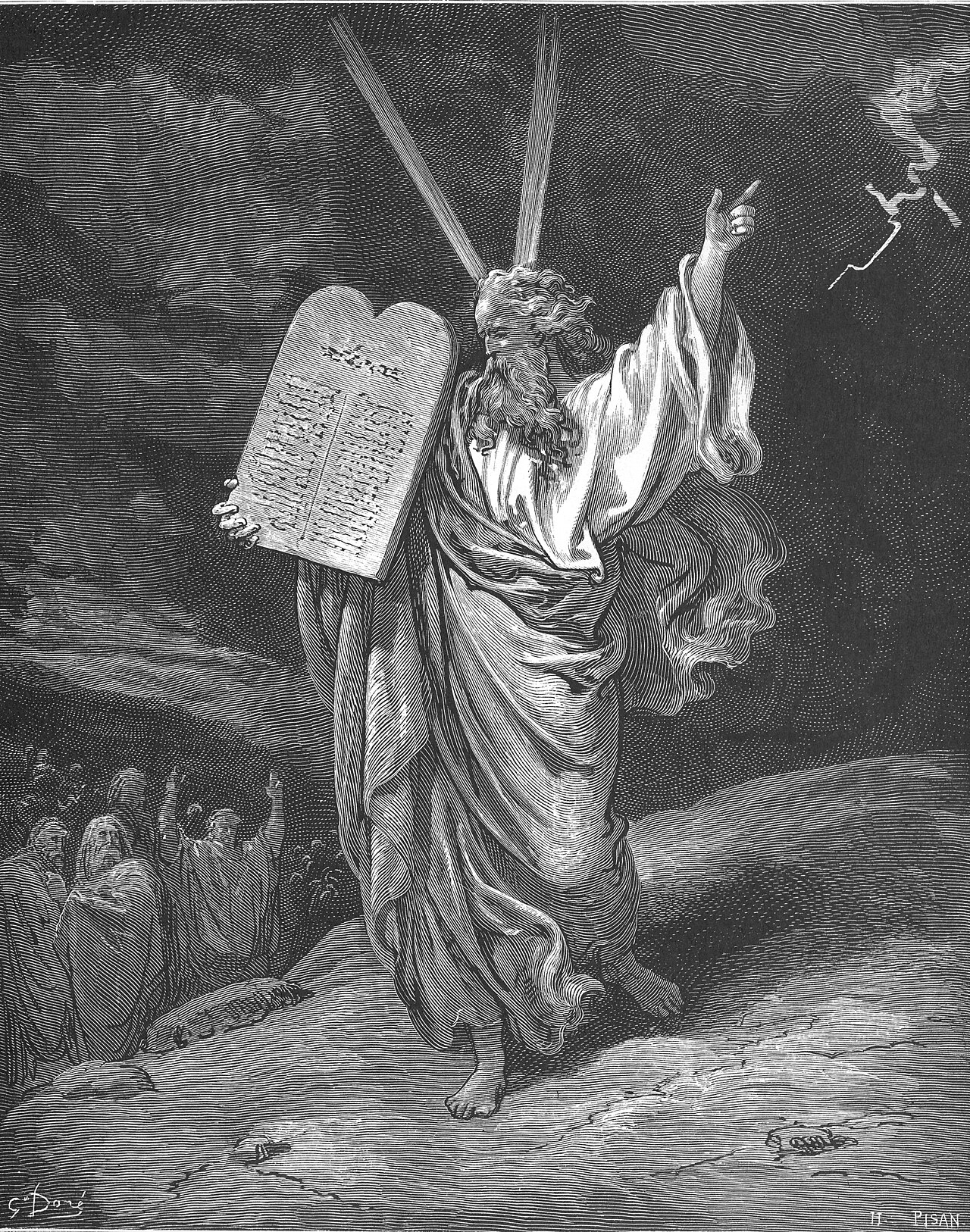
in Exodus 34So Moses was there with the LORD forty days and forty nights without eating bread or drinking water. He wrote on the tablets the words of the covenant—the Ten Commandments.
BSB
The same verse in ASV and KJV ▾
ASV
And he was there with Jehovah forty days and forty nights; he did neither eat bread, nor drink water. And he wrote upon the tables the words of the covenant, the ten commandments.
KJV
And he was there with the Lord forty days and forty nights; he did neither eat bread, nor drink water. And he wrote upon the tables the words of the covenant, the ten commandments.
⋯
This verse in Exodus 34
Commentary
10 notes on this verseThe kingdom of God is not meat and drink, neither the abundance nor delicacy of food, but righteousness and peace and joy in the Holy Ghost. As Moses, so Elijah and Christ, fasted forty days and forty nights. The more dead we are to the delights of sense the better prepared we are for the pleasures of heaven.
This site's exposition
Write thou these words
on Exodus 34:27-28
Moses is told to write, which Exodus 17:14 had first commanded of him over Amalek. The forty days without bread or water repeat the first ascent at Exodus 24:18, and Deuteronomy 9:9 and 9:18 count both fasts. Verse 28 says he wrote upon the tables, and readers have long divided over the subject, since verse 1 has God saying I will write and Deuteronomy 10:2 and 10:4 say the LORD wrote, while the nearest noun in verse 28 is Moses.
This site's exposition
without eating bread or drinking water
Matthew Henry sets this fast beside Elijah's forty days on the road to Horeb and Christ's forty days in the wilderness. Augustine grounds the forty days of Lent in these three. Moses and Elijah later stand with Christ at the transfiguration, Matthew 17:3.
The record, by era
The Church Fathers3 voices
The forty-day fast of Lent draws its authority from the Old Testament, from the fasts of Moses and Elijah, and from the gospel, because the Lord fasted that many days, showing that the gospel is not at variance with the Law and the Prophets. The Law is personified by Moses, the Prophets by Elijah, between whom the Lord appeared transfigured on the mountain.
The forty-day fast of Lent draws its authority from the Old Testament, from the fasts of Moses and Elijah, and from the gospel, because the Lord fasted that many days, showing that the gospel is not at variance with the Law and the Prophets. The Law is personified by Moses, the Prophets by Elijah, between whom the Lord appeared transfigured on the mountain.
A commentator
Philoxenus of Mabbug13 Ascetic Discourses, Discourse 11 -- On Abstinence · Written before 523.
proposed
And like this holy man the blessed Moses also was twice deemed worthy to go unto the thick darkness and to receive the law upon the tablets; and he was made pure by fasting like unto this, and then he was deemed worthy of the …
The Puritans and the Awakening2 voices
And he was there with the Lord forty days and forty nights,....
It is a great favour to have the law given us; this favour was shown to Israel, Ps. cxlvii. It is a great honour to be employed in delivering God's law to others; this honour was done to Moses.
2 more voices on this verse
The Nineteenth Century2 voices
A commentator
Jamieson, Fausset & Brown1802–1910
Commentary Critical and Explanatory on the Whole Bible (1871)
proposed
he was there with the Lord forty days and forty nights--as long as formerly [Ex 24:18], being sustained for the execution of his special duties by the miraculous power of God. A special cause is assigned for his protracted fast on this second occasion (De 9:18).
quarantine:debris (2026-07-29) — starts-lowercase
Forty days and forty nights - See Clarke’s note on Exo 24:18.
The words behind it
22 Hebrew wordsEvery Hebrew word of this verse in the order it stands, with what it means and the door to its own study. The last column counts the times a word stands in the whole Bible: the rarer the word, the more the places it appears belong together.
| Hebrew | Sound | Meaning | Word study | In the Bible |
|---|---|---|---|---|
| וַֽיְהִי־ | vayhi- | and he was | H1961 → | 3559 times |
| שָׁ֣ם | sham | there | H8033 → | 834 times |
| עִם־ | ʾim- | with | H5973 → | 1050 times |
| יְהוָ֗ה | yahweh | Yahweh | H3068 → | 6520 times |
| אַרְבָּעִ֥ים | ʾarbaim | forty | H705 → | 136 times |
| יוֹם֙ | yom | day[s] | H3117 → | 2304 times |
| וְאַרְבָּעִ֣ים | vearbaim | and forty | H705 → | 136 times |
| לַ֔יְלָה | laylah | night[s] | H3915 → | 233 times |
| לֶ֚חֶם | lechem | food | H3899 → | 298 times |
| לֹ֣א | lo' | not | H3808 → | 5168 times |
| אָכַ֔ל | ʾakhal | he ate | H398 → | 810 times |
| וּמַ֖יִם | umayim | and water | H4325 → | 581 times |
| לֹ֣א | lo' | not | H3808 → | 5168 times |
| שָׁתָ֑ה | shatah | he drank | H8354 → | 217 times |
| וַיִּכְתֹּ֣ב | vaiyikhto | and he wrote | H3789 → | 224 times |
| עַל־ | ʾal- | on | H5921 → | 5755 times |
| הַלֻּחֹ֗ת | haluchot | the tablets | H3871 → | 43 times |
| אֵ֚ת | ʾet | <obj.> | H853 → | 10935 times |
| דִּבְרֵ֣י | divrei | [the] words of | H1697 → | 1440 times |
| הַבְּרִ֔ית | haberit | the covenant | H1285 → | 284 times |
| עֲשֶׂ֖רֶת | ʾaseret | [the] ten | H6235 → | 176 times |
| הַדְּבָרִֽים׃ | hadevarim | the words | H1697 → | 1440 times |
וַֽיְהִי־and he was
vayhi-H1961 →3559 times
שָׁ֣םthere
shamH8033 →834 times
עִם־with
ʾim-H5973 →1050 times
יְהוָ֗הYahweh
yahwehH3068 →6520 times
אַרְבָּעִ֥יםforty
ʾarbaimH705 →136 times
יוֹם֙day[s]
yomH3117 →2304 times
וְאַרְבָּעִ֣יםand forty
vearbaimH705 →136 times
לַ֔יְלָהnight[s]
laylahH3915 →233 times
לֶ֚חֶםfood
lechemH3899 →298 times
לֹ֣אnot
lo'H3808 →5168 times
אָכַ֔לhe ate
ʾakhalH398 →810 times
וּמַ֖יִםand water
umayimH4325 →581 times
לֹ֣אnot
lo'H3808 →5168 times
שָׁתָ֑הhe drank
shatahH8354 →217 times
וַיִּכְתֹּ֣בand he wrote
vaiyikhtoH3789 →224 times
עַל־on
ʾal-H5921 →5755 times
הַלֻּחֹ֗תthe tablets
haluchotH3871 →43 times
אֵ֚ת<obj.>
ʾetH853 →10935 times
דִּבְרֵ֣י[the] words of
divreiH1697 →1440 times
הַבְּרִ֔יתthe covenant
haberitH1285 →284 times
עֲשֶׂ֖רֶת[the] ten
ʾaseretH6235 →176 times
הַדְּבָרִֽים׃the words
hadevarimH1697 →1440 times
A shaded row is a word that stands 400 times or fewer in the Bible.
The walk
8 stopsEach card is a verse this one points to, and under it the verses that one points to in turn. Where several paths arrive at the same place, that place is listed first: the text keeps returning to it.
Through
Deuteronomy 4:13He declared to you His covenant, which He commanded you to follow—the Ten Commandments that He wrote on two tablets of stone.
it leads to
- Exodus 31:18
When the LORD had finished speaking with Moses on Mount Sinai, He gave him the two tablets of the Testimony, tablets of stone inscribed by the finger of God.
Reached by 2 separate paths from here.
- Deuteronomy 9:9–11
When I went up on the mountain to receive the tablets of stone, the tablets of the covenant that the LORD made with you, I stayed on the mountain forty days and forty nights.…
- Exodus 24:12
Then the LORD said to Moses, “Come up to Me on the mountain and stay here, so that I may give you the tablets of stone, with the law and commandments I have written…
- Exodus 31:18
Through
Deuteronomy 9:25So I fell down before the LORD for forty days and forty nights, because the LORD had said He would destroy you.
it leads to
- Deuteronomy 9:18
Then I fell down before the LORD for forty days and forty nights, as I had done the first time. I did not eat bread or drink water because of all the sin you…
Reached by 2 separate paths from here.
- Deuteronomy 9:18
Through
Exodus 24:18Moses entered the cloud as he went up on the mountain, and he remained on the mountain forty days and forty nights.
it leads to
- Deuteronomy 9:9
When I went up on the mountain to receive the tablets of stone, the tablets of the covenant that the LORD made with you, I stayed on the mountain forty days and forty nights.…
Reached by 2 separate paths from here.
- Deuteronomy 10:10
I stayed on the mountain forty days and forty nights, like the first time, and that time the LORD again listened to me and agreed not to destroy you.
Reached by 2 separate paths from here.
- Deuteronomy 9:9
Through
Exodus 34:1Then the LORD said to Moses, “Chisel out two stone tablets like the originals, and I will write on them the words that were on the first tablets, which you broke.
it leads to
- Exodus 32:19
As Moses approached the camp and saw the calf and the dancing, he burned with anger and threw the tablets out of his hands, shattering them at the base of the mountain.
- Deuteronomy 10:1–4
At that time the LORD said to me, “Chisel out two stone tablets like the originals, come up to Me on the mountain, and make an ark of wood.
- Exodus 32:19
Where this verse is studied
On this page
Studies4
About Exodus
Who and where
1 name in this verse with a page on the site.
This page draws on Adam Clarke, Commentary on the Bible; Augustine of Hippo, LETTER 55; Jamieson, Fausset & Brown, Commentary Critical and Explanatory on the Whole Bible; John Gill, Exposition of the Old Testament (1748-1763); Keil and Delitzsch, Biblical Commentary on the Old Testament: The Pentateuch; Matthew Henry, Commentary on the Whole Bible and Philoxenus of Mabbug, 13 Ascetic Discourses, Discourse 11 -- On Abstinence.