
Exodus 34:29
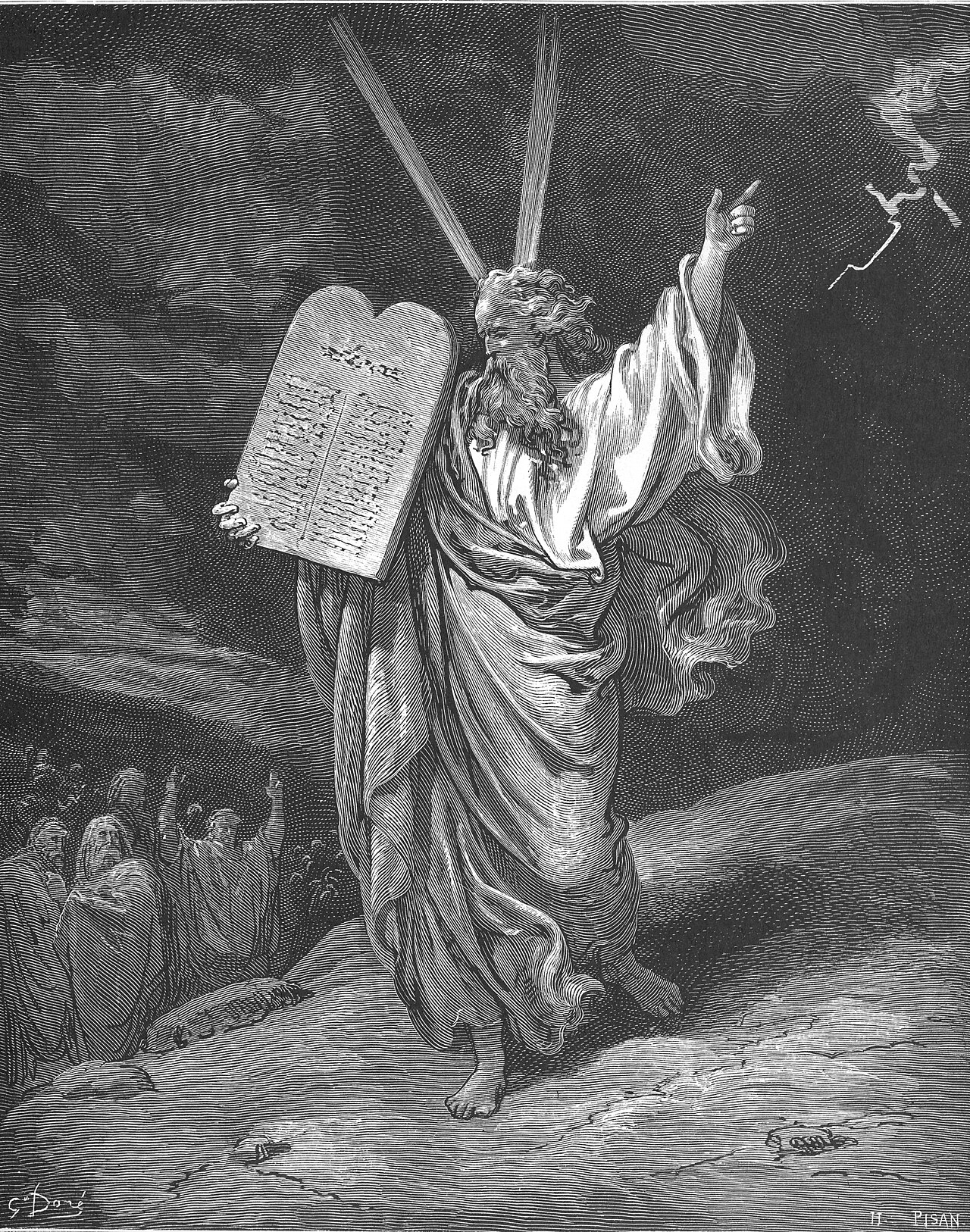
in Exodus 34And when Moses came down from Mount Sinai with the two tablets of the Testimony in his hands, he was unaware that his face had become radiant from speaking with the LORD.
BSB
The same verse in ASV and KJV ▾
ASV
And it came to pass, when Moses came down from mount Sinai with the two tables of the testimony in Moses’ hand, when he came down from the mount, that Moses knew not that the skin of his face shone by reason of his speaking with him.
KJV
And it came to pass, when Moses came down from mount Sinai with the two tables of testimony in Moses’ hand, when he came down from the mount, that Moses wist not that the skin of his face shone while he talked with him.
⋯
This verse in Exodus 34
Commentary
14 notes on this verseEvery soul is beautiful which is considered by the standard of its own virtues. But most beautiful, true and lovely, which can be contemplated by him alone who has purified his mind, is that of the divine and blessed nature. He who gazes steadfastly at the splendor and graces of it receives some share from it, as if from an immersion, tinging his own face with a sort of brilliant radiance. Whence Moses also was made resplendent in face by receiving some share of beauty when he held converse with God.
This site's exposition
when Moses came down from mount Sinai
on Exodus 34:29-30
Moses comes down the mountain a second time carrying tables, and this time nothing gets broken. The shining is on the skin of his face and he does not know it, so the one man who cannot see the glory is the man carrying it. Israel had been afraid of the mountain at Exodus 20:18 and 20:19 and asked that God not speak to them directly, and now the same fear meets them on a man's face.
The record, by era
The Church Fathers1 voice
In Moses he depicted for you a parable: his cheeks, ashen with age, became shining and fair, a symbol of old age that in Eden again becomes young.
The Puritans and the Awakening4 voices
The skin of his face shone - This time of his being in the mount he heard only the same he had heard before. But he saw more of the glory of God, which having with open face beheld, he was in some measure changed into the same image. This was a great honour done to Moses, that the people might never again question his mission, or think or speak slightly of him.
And it came to pass, when Moses came down Mount Sinai,....
But, when he came down from the mount, he quite laid aside that glory, it being his will that we should walk by faith, not by sight. [2.] It was also a great favour to the people, and an encouragement to them, that God put this glory upon him, who was their intercessor, thereby giving them assurance that he was accepted, and they through him.
Thus, First, It is the infelicity of some that, though their faces shine in true grace, yet they do not know it, to take the comfort of it. Their friends see much of God in them, but they themselves are ready to think they have no grace.
7 more voices on this verse
The Puritans and the Awakening2 voices
In all this God dealt with Moses as a public person, and mediator between him and Israel, and a type of the great Mediator. God's Proclamation of Himself.
It is a great favour to have the law given us; this favour was shown to Israel, Ps. cxlvii. It is a great honour to be employed in delivering God's law to others; this honour was done to Moses.
The Nineteenth Century5 voices
A commentator
Albert Barnes1798–1870
Notes, Explanatory and Practical, on the Old and New Testaments (1832-1869)
The two tables of testimony - Compare Exo 31:18. The skin of his face shone - Compare Mat 17:2. The brightness of the Eternal Glory, though Moses had witnessed it only in a modified manner Exo 33:22-23, was so reflected in his face, that Aaron and the people were stricken with awe, and feared to approach him until he gave them words of encouragement.
A FAST of 40 days does not improve the appearance of a man's countenance—he looks starved, wrinkled, old, haggard. Moses had fasted 40 days twice, at least, and, according to many competent authorities, the 10th chapter of Deuteronomy seems to imply that he fasted 40 days three times in quick succession. I will not assert or deny the third 40 days, but it is certain that, with a very slight interval, Moses fasted 40 days and then 40 days more—and it is probable that to these must be added a third forty.
A commentator
Jamieson, Fausset & Brown1802–1910
Commentary Critical and Explanatory on the Whole Bible (1871)
Moses wist not that the skin of his face shone while he talked with him--It was an intimation of the exalted presence into which he had been admitted and of the glory he had witnessed (2Co 3:18); and in that view, it was a badge of his high office as the ambassador of God.
A FAST of 40 days does not improve the appearance of a man's countenance—he looks starved, wrinkled, old, haggard. Moses had fasted 40 days twice, at least, and, according to many competent authorities, the 10th chapter of Deuteronomy seems to imply that he fasted 40 days three times in quick succession. I will not assert or deny the third 40 days, but it is certain that, with a very slight interval, Moses fasted 40 days and then 40 days more—and it is probable that to these must be added a third forty. Small attractiveness would naturally remain in a face which had endured so stern an ordeal, but the Lord whom he served made his face brilliant with an unusual luster! The glory of the Light of God upon his countenance may have been the reason why he remained so free from infirmity in later years of old age. This man of 80 spent 40 more years in guiding Israel and in the end his eyes had not dimmed nor his natural force abated! He that could fast 40 days would be a hard morsel for death. Those eyes which had looked upon the Glory of God were not likely to wax dim amid earthly scenes— and that natural force which had endured the vision of the Supernatural could well support the fatigues of the wilderness. God so sustained His servant that his long and repeated fasts, during which he did not even drink water, did no harm to his physical constitution! The abstinence, even from water, renders the fast the more remarkable and lifts it out of similarity to modern feats of fasting. Moses did not know, at the time, that his face was shining—but he did know it afterwards—and he has here recorded it. He gives in detail the fact of the brightness of his own face, how others were struck with it and what he had to do in order to associate with them.
The skin of his face shone - קרן karan, was horned: having been long in familiar intercourse with his Maker, his flesh, as well as his soul, was penetrated with the effulgence of the Divine glory, and his looks expressed the light and life which dwelt within. Probably Moses appeared now as he did when, in our Lord’s transfiguration, he was seen with Elijah on the mount, Matthew 17. As the original word קרן karan signifies to shine out, to dart forth, as horns on the head of an animal, or rays of light reflected from a polished surface, we may suppose that the heavenly glory which filled the soul of this holy man darted out from his face in coruscations, in that manner in which light is generally represented. The Vulgate renders the passage, et ignorabat quod cornuta esset facies sua, “and he did not know that his face was horned;” which version, misunderstood, has induced painters in general to represent Moses with two very large horns, one proceeding from each temple. But we might naturally ask, while they were indulging themselves in such fancies, why only two horns? for it is very likely that there were hundreds of these radiations, proceeding at once from the face of Moses. It was no doubt from this very circumstance that almost all the nations of the world who have heard of this transaction, have agreed in representing those men to whom they attributed extraordinary sanctity, and whom they supposed to have had familiar intercourse with the Deity, with a lucid nimbus or glory round their heads. This has prevailed both in the east and in the west; not only the Greek and Roman saints, or eminent persons, are thus represented, but those also among the Mohammedans, Hindoos, and Chinese.
The words behind it
22 Hebrew wordsEvery Hebrew word of this verse in the order it stands, with what it means and the door to its own study. The last column counts the times a word stands in the whole Bible: the rarer the word, the more the places it appears belong together.
| Hebrew | Sound | Meaning | Word study | In the Bible |
|---|---|---|---|---|
| וַיְהִ֗י | vayhi | and it was | H1961 → | 3559 times |
| בְּרֶ֤דֶת | beredet | when came down | H3381 → | 381 times |
| מֹשֶׁה֙ | mosheh | Moses | H4872 → | 765 times |
| מֵהַ֣ר | mehar | from [the] mountain of | H2022 → | 546 times |
| סִינַ֔י | sinai | Sinai | H5514 → | 35 times |
| וּשְׁנֵ֨י | ushenei | and [the] two | H8147 → | 768 times |
| לֻחֹ֤ת | luchot | [the] tablets of | H3871 → | 43 times |
| הָֽעֵדֻת֙ | haedut | the testimony | H5715 → | 59 times |
| בְּיַד־ | beyad- | [were] in [the] hand of | H3027 → | 1618 times |
| מֹשֶׁ֔ה | mosheh | Moses | H4872 → | 765 times |
| בְּרִדְתּ֖וֹ | beridto | when came down he | H3381 → | 381 times |
| מִן־ | min- | from | H4480 → | 1188 times |
| הָהָ֑ר | hahar | the mountain | H2022 → | 546 times |
| וּמֹשֶׁ֣ה | umosheh | and Moses | H4872 → | 765 times |
| לֹֽא־ | lo'- | not | H3808 → | 5168 times |
| יָדַ֗ע | yada' | he knew | H3045 → | 945 times |
| כִּ֥י | ki | that | H3588 → | 4482 times |
| קָרַ֛ן | karan | it shone | H7160 → | 4 times |
| ע֥וֹר | or | [the] skin of | H5785 → | 99 times |
| פָּנָ֖יו | panav | face his | H6440 → | 2123 times |
| בְּדַבְּר֥וֹ | bedabero | because had spoken he | H1696 → | 1141 times |
| אִתּֽוֹ׃ | ʾito | with him | H854 → | 929 times |
וַיְהִ֗יand it was
vayhiH1961 →3559 times
בְּרֶ֤דֶתwhen came down
beredetH3381 →381 times
מֹשֶׁה֙Moses
moshehH4872 →765 times
מֵהַ֣רfrom [the] mountain of
meharH2022 →546 times
סִינַ֔יSinai
sinaiH5514 →35 times
וּשְׁנֵ֨יand [the] two
usheneiH8147 →768 times
לֻחֹ֤ת[the] tablets of
luchotH3871 →43 times
הָֽעֵדֻת֙the testimony
haedutH5715 →59 times
בְּיַד־[were] in [the] hand of
beyad-H3027 →1618 times
מֹשֶׁ֔הMoses
moshehH4872 →765 times
בְּרִדְתּ֖וֹwhen came down he
beridtoH3381 →381 times
מִן־from
min-H4480 →1188 times
הָהָ֑רthe mountain
haharH2022 →546 times
וּמֹשֶׁ֣הand Moses
umoshehH4872 →765 times
לֹֽא־not
lo'-H3808 →5168 times
יָדַ֗עhe knew
yada'H3045 →945 times
כִּ֥יthat
kiH3588 →4482 times
קָרַ֛ןit shone
karanH7160 →4 times
ע֥וֹר[the] skin of
orH5785 →99 times
פָּנָ֖יוface his
panavH6440 →2123 times
בְּדַבְּר֥וֹbecause had spoken he
bedaberoH1696 →1141 times
אִתּֽוֹ׃with him
ʾitoH854 →929 times
A shaded row is a word that stands 400 times or fewer in the Bible.
The walk
8 stopsEach card is a verse this one points to, and under it the verses that one points to in turn. Where several paths arrive at the same place, that place is listed first: the text keeps returning to it.
Through
Revelation 1:16He held in His right hand seven stars, and a sharp double-edged sword came from His mouth. His face was like the sun shining at its brightest.
it leads to
- Hebrews 4:12
For the word of God is living and active. Sharper than any double-edged sword, it pierces even to dividing soul and spirit, joints and marrow. It judges the thoughts and intentions of the heart.
- Revelation 2:12
To the angel of the church in Pergamum write: These are the words of the One who holds the sharp, double-edged sword.
- Revelation 2:16
Therefore repent! Otherwise I will come to you shortly and wage war against them with the sword of My mouth.
- Revelation 19:15
And from His mouth proceeds a sharp sword with which to strike down the nations, and He will rule them with an iron scepter. He treads the winepress of the fury of the wrath…
- Isaiah 49:2
He made My mouth like a sharp sword; He hid Me in the shadow of His hand. He made Me like a polished arrow; He hid Me in His quiver.
- Hebrews 4:12
Through
Matthew 17:2There He was transfigured before them. His face shone like the sun, and His clothes became as white as the light.
it leads to
- Psalms 104:2
He wraps Himself in light as with a garment; He stretches out the heavens like a tent,
- Matthew 28:3
His appearance was like lightning, and his clothes were white as snow.
- Luke 9:29
And as He was praying, the appearance of His face changed, and His clothes became radiantly white.
- Psalms 104:2
Where this verse is studied
About Exodus
Who and where
1 name in this verse with a page on the site.
This page draws on 10 works. Open the list of works
This page draws on Adam Clarke, Commentary on the Bible; Albert Barnes, Notes, Explanatory and Practical, on the Old and New Testaments (1832-1869); Basil of Caesarea, EXEGETIC HOMILIES 14.5; Charles Spurgeon, The Metropolitan Tabernacle Pulpit, Sermon No. 2143: “The Shining of the Face of Moses” (lightly modernized text, CCEL edition); Ephrem the Syrian, HYMNS ON PARADISE 7.10; Jamieson, Fausset & Brown, Commentary Critical and Explanatory on the Whole Bible; John Calvin, Commentary on the Four Last Books of Moses Arranged in the Form of a Harmony; John Gill, Exposition of the Old Testament (1748-1763); John Wesley, Explanatory Notes upon the Old Testament and Matthew Henry, Commentary on the Whole Bible.