
Exodus 34:1
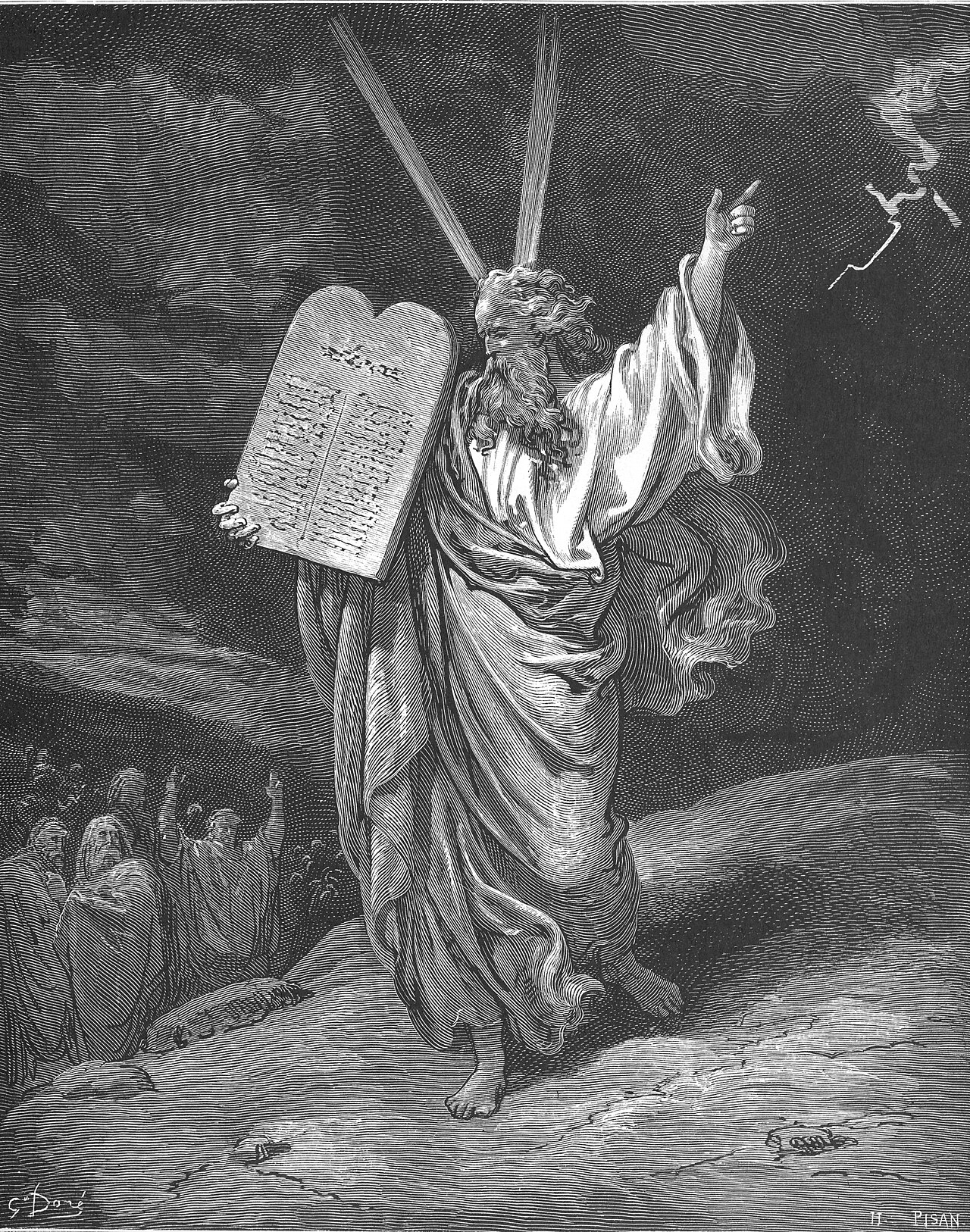
in Exodus 34Then the LORD said to Moses, “Chisel out two stone tablets like the originals, and I will write on them the words that were on the first tablets, which you broke.
BSB
The same verse in ASV and KJV ▾
ASV
And Jehovah said unto Moses, Hew thee two tables of stone like unto the first: and I will write upon the tables the words that were on the first tables, which thou brakest.
KJV
And the Lord said unto Moses, Hew thee two tables of stone like unto the first: and I will write upon these tables the words that were in the first tables, which thou brakest.
⋯
This verse in Exodus 34
Commentary
8 notes on this verseHew thee two tables of stone like unto the first - In Exo 32:16 we are told that the two first tables were the work of God, and the writing was the writing of God; but here Moses is commanded to provide tables of his own workmanship, and God promises to write on them the words which were on the first. That God wrote the first tables himself, see proved by different passages of Scripture at the end of Exodus 32 (Exo 32:35 (note)).
This site's exposition
Hew thee two tables of stone
on Exodus 34:1-3
The second set of tables is cut by Moses, where Exodus 32:16 says the first set was the work of God. What goes on them is the same writing, so the covenant that was broken is restored in its own words rather than replaced by easier ones. The mountain is fenced again as it was at Exodus 19:12 and 19:13, and this time even the flocks and herds are kept back from grazing before it.
The record, by era
The Reformation1 voice
This, then, was the object of the first-fruits, that they might renew every year the recollection of their adoption; because the land of Canaan was given to them as their peculiar inheritance, in which they were to worship God in piety and holiness, and at the same time reflect that they were not fed promiscuously, like the Gentiles, by God, but like children; whence also their food was sacred.
The Puritans and the Awakening3 voices
That the best evidence of the pardon of sin and peace with God is the writing of the law in the heart. The first token God gave of his reconciliation to Israel was the renewing of the tables of the law; thus the first article of the new covenant is, I will write my law in their heart ( Heb. viii.
quarantine:debris (2026-07-29) — unbalanced-parens
When God was reconciled to them, he ordered the tables to be renewed, and wrote his law in them, which plainly intimates to us, that even under the gospel (of which the intercession of Moses was typical) the moral law should continue to oblige believers. Though Christ has redeemed us from the curse of the law, yet not from the command of it, but still we are under the law to Christ.
And the Lord said unto Moses,.... Out of the cloudy pillar, at the door of the tabernacle, where he had been conversing with him in the most friendly manner, as related in the preceding chapter: hew thee two tables of stone like unto the first; of the same form, and of the same dimensions, and it may be of the same sort of stone, which perhaps was marble, there being great plenty of that kind on Mount Sinai.
The Nineteenth Century1 voice
A commentator
Jamieson, Fausset & Brown1802–1910
Commentary Critical and Explanatory on the Whole Bible (1871)
proposed
the like unto the first--God having been reconciled to repentant Israel, through the earnest intercession, the successful mediation of Moses, means were to be taken for the restoration of the broken covenant.
quarantine:debris (2026-07-29) — starts-lowercase
1 more voice on this verse
The Nineteenth Century1 voice
A commentator
Albert Barnes1798–1870
Notes, Explanatory and Practical, on the Old and New Testaments (1832-1869)
proposed
Hew thee - The former tables are called “the work of God;” compare Exo 32:16. The words - See Exo 34:28.
How the passage was read
What the Jewish commentators add
HEW THEE. Pesal lekha (hew thee) 1 The term lekha (thee) appears to be unnecessary. Hence I.E.
1 more on this passage, in their own words ▾
Adonoy said to Moshe, “Carve out two stone tablets for yourself just like the first ones.
This section is reception history: how the passage was read and kept in the Jewish tradition. Where a reading parts from an essential of the Christian faith, the section says so at that point.
Texts and citation data: Sefaria; each excerpt follows its version’s licence. 4 further sources are cited on this chapter that carry no English text this site may quote or only restate the verse.
The words behind it
22 Hebrew wordsEvery Hebrew word of this verse in the order it stands, with what it means and the door to its own study. The last column counts the times a word stands in the whole Bible: the rarer the word, the more the places it appears belong together.
| Hebrew | Sound | Meaning | Word study | In the Bible |
|---|---|---|---|---|
| וַיֹּ֤אמֶר | vaiyomer | and he said | H559 → | 5305 times |
| יְהוָה֙ | yahweh | Yahweh | H3068 → | 6520 times |
| אֶל־ | ʾel- | to | H413 → | 5510 times |
| מֹשֶׁ֔ה | mosheh | Moses | H4872 → | 765 times |
| פְּסָל־ | pesol- | cut out | H6458 → | |
| לְךָ֛ | lekha | for <the> yourself | ||
| שְׁנֵֽי־ | shenei- | two | H8147 → | 768 times |
| לֻחֹ֥ת | luchot | tablets of | H3871 → | 43 times |
| אֲבָנִ֖ים | ʾavanim | stone<s> | H68 → | 273 times |
| כָּרִאשֹׁנִ֑ים | karishonim | like the former [tablets] | H7223 → | 182 times |
| וְכָתַבְתִּי֙ | vekhatavti | and I will write | H3789 → | 224 times |
| עַל־ | ʾal- | on | H5921 → | 5755 times |
| הַלֻּחֹ֔ת | haluchot | the tablets | H3871 → | 43 times |
| אֶת־ | ʾet- | <obj.> | H853 → | 10935 times |
| הַדְּבָרִ֔ים | hadevarim | the words | H1697 → | 1440 times |
| אֲשֶׁ֥ר | ʾasher | which | H834 → | 5497 times |
| הָי֛וּ | hayu | they were | H1961 → | 3559 times |
| עַל־ | ʾal- | on | H5921 → | 5755 times |
| הַלֻּחֹ֥ת | haluchot | the tablets | H3871 → | 43 times |
| הָרִאשֹׁנִ֖ים | harishonim | the former | H7223 → | 182 times |
| אֲשֶׁ֥ר | ʾasher | which | H834 → | 5497 times |
| שִׁבַּֽרְתָּ׃ | shibarta | you shattered | H7665 → | 147 times |
וַיֹּ֤אמֶרand he said
vaiyomerH559 →5305 times
יְהוָה֙Yahweh
yahwehH3068 →6520 times
אֶל־to
ʾel-H413 →5510 times
מֹשֶׁ֔הMoses
moshehH4872 →765 times
פְּסָל־cut out
pesol-H6458 →
לְךָ֛for <the> yourself
lekha
שְׁנֵֽי־two
shenei-H8147 →768 times
לֻחֹ֥תtablets of
luchotH3871 →43 times
אֲבָנִ֖יםstone<s>
ʾavanimH68 →273 times
כָּרִאשֹׁנִ֑יםlike the former [tablets]
karishonimH7223 →182 times
וְכָתַבְתִּי֙and I will write
vekhatavtiH3789 →224 times
עַל־on
ʾal-H5921 →5755 times
הַלֻּחֹ֔תthe tablets
haluchotH3871 →43 times
אֶת־<obj.>
ʾet-H853 →10935 times
הַדְּבָרִ֔יםthe words
hadevarimH1697 →1440 times
אֲשֶׁ֥רwhich
ʾasherH834 →5497 times
הָי֛וּthey were
hayuH1961 →3559 times
עַל־on
ʾal-H5921 →5755 times
הַלֻּחֹ֥תthe tablets
haluchotH3871 →43 times
הָרִאשֹׁנִ֖יםthe former
harishonimH7223 →182 times
אֲשֶׁ֥רwhich
ʾasherH834 →5497 times
שִׁבַּֽרְתָּ׃you shattered
shibartaH7665 →147 times
A shaded row is a word that stands 400 times or fewer in the Bible.
The walk
8 stopsEach card is a verse this one points to, and under it the verses that one points to in turn. Where several paths arrive at the same place, that place is listed first: the text keeps returning to it.
Through
Psalms 119:89Your word, O LORD, is everlasting; it is firmly fixed in the heavens.
it leads to
- 1 Peter 1:25
but the word of the Lord stands forever.” And this is the word that was proclaimed to you.
- Matthew 5:18
For I tell you truly, until heaven and earth pass away, not a single jot, not a stroke of a pen, will disappear from the Law until everything is accomplished.
- Matthew 24:34–35
Truly I tell you, this generation will not pass away until all these things have happened.
- Psalms 119:160
The entirety of Your word is truth, and all Your righteous judgments endure forever.
- Psalms 119:152
Long ago I learned from Your testimonies that You have established them forever.
- 1 Peter 1:25
Through
Exodus 31:18When the LORD had finished speaking with Moses on Mount Sinai, He gave him the two tablets of the Testimony, tablets of stone inscribed by the finger of God.
it leads to
- Deuteronomy 4:13
He declared to you His covenant, which He commanded you to follow—the Ten Commandments that He wrote on two tablets of stone.
Reached by 2 separate paths from here.
- Exodus 32:15–16
Then Moses turned and went down the mountain with the two tablets of the Testimony in his hands. They were inscribed on both sides, front and back.
- Deuteronomy 4:13
Through
Exodus 34:28So Moses was there with the LORD forty days and forty nights without eating bread or drinking water. He wrote on the tablets the words of the covenant—the Ten Commandments.
it leads to
- Deuteronomy 9:25
So I fell down before the LORD for forty days and forty nights, because the LORD had said He would destroy you.
- Deuteronomy 9:25
Where this verse is studied
About Exodus
Who and where
1 name in this verse with a page on the site.
This page draws on Adam Clarke, Commentary on the Bible; Albert Barnes, Notes, Explanatory and Practical, on the Old and New Testaments (1832-1869); Jamieson, Fausset & Brown, Commentary Critical and Explanatory on the Whole Bible; John Calvin, Commentaries; John Gill, Exposition of the Old Testament (1748-1763); John Wesley, Explanatory Notes upon the Old Testament; Keil and Delitzsch, Biblical Commentary on the Old Testament: The Pentateuch and Matthew Henry, Commentary on the Whole Bible.